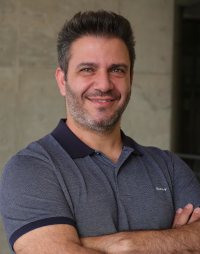
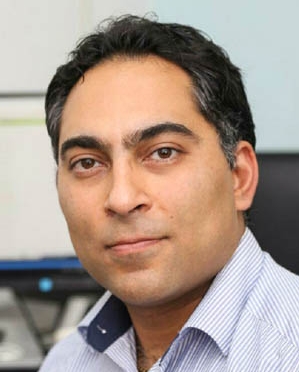
Kristis Alexandrou is a Researcher at the Science and Technology in Archaeology and Culture Research Center (STARC) of The Cyprus Institute. He holds a Master’s degree in Architecture (MA) and a Ph.D. in Architectural Engineering from the University of Cyprus, focusing on hybrid bending-active structural systems. His research emphasizes Structural Design, Computational Methods, and BIM applications in heritage conservation. He contributes to projects like ENI-CBC-MED BEEP, RIF-UrbanPeriscope, and Horizon Infra, advancing BIM interoperability for cultural heritage data management. His professional experience includes architectural design and heritage retrofitting in Cyprus. At STARC’s Virtual Environments Lab (VElab), he develops BIM-based workflows to address data interoperability challenges in arts and humanities. Key projects include 'BIM to BPS interoperability' leadership in the BEEP Project and semantic data integration for Mediterranean heritage sites. His work bridges computational innovation with sustainable heritage preservation.
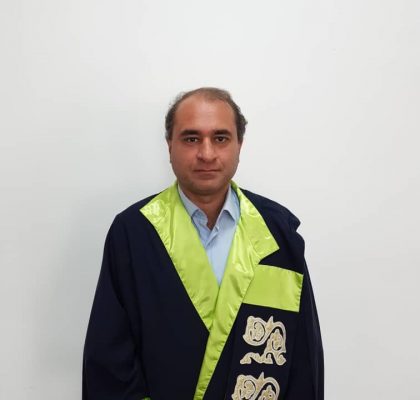
Ahsan Fayyaz is a Research Engineer I at the KIOS Research and Innovation Center of Excellence and a current M.Sc. student in Artificial Intelligence jointly offered by the Department of Electrical and Computer Engineering and the Department of Computer Science at the University of Cyprus. He holds a BS in Electrical Engineering from COMSATS University Islamabad (2021).
Prof. Nearchos Paspallis is the Head of the School of Sciences and Professor in Mobile and Distributed Systems at UCLan Cyprus. He holds a PhD in Computer Science from the University of Cyprus (2010) and has extensive academic leadership roles, including Deputy Head of School (2020–2022) and Chair of the Teaching and Learning Enhancement Committee (2018–2023). His teaching responsibilities include leading the BSc (Hons) Computing program and delivering modules on software development, mobile computing, and algorithms. Education: PhD Computer Science (University of Cyprus, 2010), MSc Computer Science (University of California, 2002), BEng/MEng Computer Engineering and Informatics (University of Patras, 2001). His research focuses on software engineering , distributed systems , and mobile computing , with recent work on machine learning applications, context-aware systems, and computer science education. He has pioneered initiatives like Code Cyprus to inspire youth in coding and co-led EU-funded projects such as WIDERa (€4.2M) and MentorME (€296K). Key Awards: Shortlisted for 2024 Outstanding Contribution award, Best Paper (2016), Fulbright Scholarship (2001). Prof. Paspallis has supervised multiple research projects, including a PhD on MMOG backend architectures. His outreach efforts extend to judging hackathons and robotics competitions, emphasizing STEM engagement.
Prof. Hakan Altınçay is a Full Professor in the Department of Computer Engineering at Eastern Mediterranean University (EMU). He holds a PhD from Middle East Technical University (METU), Turkey (2000), and has been at EMU since 2000, progressing from Assistant Professor (2000–2005) to Full Professor (2012–present). His research focuses on machine learning, including imbalance learning, feature selection, ensemble methods, and biomedical data analysis. He has supervised 10+ PhD and Master’s theses and authored over 50 journal and conference papers. Education: BEng in Electrical and Electronics Engineering (METU, 1993), MSc and PhD in Electrical Engineering (METU, 2000). Awards include the IEEE Third Best Paper Award (2003) and TÜBİTAK PhD Scholarship. He serves on editorial boards (e.g., Applied Intelligence Journal) and chairs academic committees at EMU. Key contributions include algorithms for imbalanced data classification (MaMiPot), feature selection techniques, and biomedical applications like diabetes prediction. His work addresses challenges in text categorization, speaker verification, and ensemble classifier design.
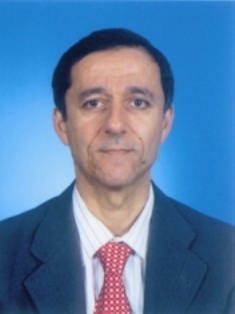
Professor Mavronicolas Marios is a faculty member in the Department of Computer Science at the University of Cyprus. His academic journey includes a Diploma in Electrical Engineering (Summa Cum Laude) from the National Technical University of Athens (1985) and a Ph.D. in Computer Science from Harvard University (1992). His research focuses on Algorithm Theory, Game Theory, Distributed Computing, Networking, and Internet Systems. He has held visiting positions at institutions such as the University of Connecticut and the University of Paderborn. Over 100 publications in top-tier venues highlight his contributions to computational complexity, Nash equilibria, and network security. His work bridges theoretical computer science with practical applications, emphasizing strategic decision-making and distributed systems. Research areas include the computational complexity of Nash equilibria, game-theoretic models for network security, and algorithmic challenges in distributed systems. He has explored topics like risk-averse equilibria, congestion games, and the structural properties of multi-player games. His recent work addresses decision problems in win-lose scenarios and the existence of equilibria under varying valuation functions.
Aristidou Andreas is an Associate Professor at the Department of Informatics, University of Cyprus. His academic journey includes a BSc from National and Kapodistrian University of Athens (2005), MSc from King's College London (2006), and a PhD from the University of Cambridge (2011). He has held postdoctoral positions at multiple institutions and served as a visiting professor at the University of Nicosia. His research focuses on human motion analysis, computer graphics, cultural heritage digitization, and geometric algebra applications. He is a senior member of IEEE, ACM, and Eurographics, and serves on editorial boards for journals like The Visual Computer. Research highlights include the FABRIK algorithm (widely used in game engines) and motion capture innovations for cultural heritage preservation. Awards include the DIDAKTOR scholarship, Erasmus Mundus Grant, and NVIDIA GPU grant. He leads projects funded by EU initiatives (e.g., ITN-DCH, SCHEDAR) and collaborates internationally on digital twins, virtual museums, and AI-driven motion synthesis. Key contributions span 3D motion analysis, motion reconstruction from sparse data, and emotion recognition in theater performances. His work bridges computational methods with cultural preservation, biomedical applications, and interactive VR systems.
Prof. Dr. Hadi Işık Aybay is a distinguished Professor of Computer Engineering at Eastern Mediterranean University (EMU), North Cyprus. He has held academic roles including Department Chairman of Computer Engineering (1994–2004 and 2013–present) and Director of EMU's Distance Education Institute (2000–2013). He earned his PhD in Electrical and Electronic Engineering from METU (1989) and served as an Assistant/Associate Professor before becoming a full Professor in 2013. His research spans neural networks, distributed systems, and e-learning technologies. Education: PhD, Electrical and Electronic Engineering, Middle East Technical University (1989) M.Sc., Electrical and Electronic Engineering, METU B.Sc., Electrical and Electronic Engineering, METU Research Interests: Prof. Aybay's work focuses on computer engineering innovations, including neural network hardware, distributed multimedia systems, and wireless communication protocols. He pioneered EMUOnline, a blended learning platform, and contributed to science park development in North Cyprus. His research also addresses challenges in video streaming optimization and adaptive resource allocation in cellular networks. Key Achievements: He led over 15 projects, including EU-funded initiatives like 'Deep Farm' (2024–2025). His publications (80+ papers) span IEEE journals and conferences, with 281 Google Scholar citations. Awards include the 1973 National Project Contest First Prize and the 1990 Best Thesis Award (supervised). Grants and advising: Supervised 3 PhD and 28 MSc students. Current projects include AI-driven agriculture (Erasmus+). Grants include EU funding (€1M) and Turkish Republic of Northern Cyprus initiatives. Labs/Teams: Active in the EMU Computer Engineering Department's research groups, focusing on distributed systems and e-learning infrastructure.
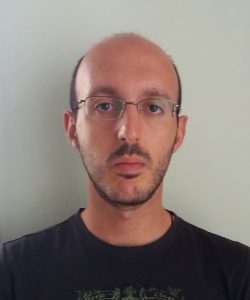
Antonis Savva serves as a Researcher at the KIOS Research and Innovation Center of Excellence, University of Cyprus, a role he has held since March 2020 focusing on computer vision applications for drone systems. His academic background includes: MEng in Electronics and Systems from the School of Electrical and Computer Engineering, National Technical University of Athens (2014) MSc in Management of Organizations and Entrepreneurship from the same institution (2018) PhD in medical data analysis from the School of Electrical and Computer Engineering, National Technical University of Athens (2019) Dr. Savva specializes in signal processing and computer vision with dual applications in medical imaging and autonomous systems. His doctoral work pioneered algorithms for aligning pre/post-operative CT scans in bone augmentation procedures, reconstructing panoramic jaw views, and quantifying dynamic brain region associations via fMRI analysis in both healthy and pathological states. Current research extends these methodologies to drone technology, emphasizing real-time visual data processing and pattern recognition for aerial applications. He operates within the KIOS Research and Innovation Center of Excellence, a specialized hub for intelligent systems and networks at the University of Cyprus driving cross-disciplinary innovation in computational methodologies.
Harald Gjermundrod is a Professor of Computer Science in the Department of Computer Science at the University of Nicosia's School of Sciences and Engineering, where he has served since September 2008. Previously, he was a Post-Doctorate Associate (2006-2008) at the High-Performance Computing Systems Laboratory, University of Cyprus. Education: PhD in Computer Science, Washington State University (2006) MS in Computer Science, Washington State University (2001) BS in Computer Science, Washington State University (1999) Dipl.-Ing, Oslo Metropolitan University (1998) His research spans Distributed Computing Systems , Computer Security , Blockchain Technology , and Data Protection , with emphasis on practical implementations like GridStat middleware for power grids and privacyTracker for GDPR compliance. As co-director of the Informatics Security Laboratory, he leads research on active defense mechanisms and data protection frameworks. His 87+ publications since 2001 show evolving focus from grid computing (2006-2010) to blockchain applications (2016-present), with recent work emphasizing privacy engineering, secure e-voting, and AI-driven security analytics. Key trends include transitioning from infrastructure-focused research (GridStat, ICGrid) to policy-compliant systems (privacyTracker, HoneyCY). Scientific Recognition: Senior Member of ACM Eclipse Committer Status (Alumni) Chair of ACM Cyprus Chapter (2015-2018) He has secured funding from EU programs, US National Science Foundation, and National Institute of Technology, developing software products including GridStat (critical infrastructure middleware), ICGrid (medical data sharing), and ReProTool (Bologna Process compliance). His supervision has produced student-developed prototypes like NoteLocker and HoneyCY. Current projects include privacyTracker (GDPR compliance) and SmartTeV (blockchain voting). As co-director of the Informatics Security Laboratory, he oversees research on active defense systems, honeypot frameworks (HoneyCY), and verifiable data traceability, with applications in e-government and healthcare security.
Assistant Professor Elbrus Beşir İMANOV serves in the Computer Engineering Department at Near East University, Northern Cyprus, since September 2005. Previously, he held academic positions at Odlar Yurdu University (Baku, Azerbaijan) as Vice-Dean and Assistant Professor (2001-2004) and at Georgia State University (USA) as MBA Program Instructor (2004-2005). Educational background includes a BSc from Azerbaijan Technical University (1990) and a PhD from Odlar Yurdu University (2001) with dissertation 'Development of planning, navigation and control systems for intelligent robot'. Research focuses on Artificial Intelligence and Soft Computing methodologies, specifically: Expert Systems and Neural Networks Fuzzy Logic applications Decision Making frameworks Rule-based simulation for business/industrial contexts His work develops intelligent control systems for real-world industrial automation and business process optimization. No scientific awards are documented. Dr. İMANOV teaches core courses including Soft Computing, Artificial Intelligence, Real Time Systems, and Control Systems while mentoring undergraduate projects in AI applications. Current affiliations show no dedicated research laboratories or specialized teams beyond standard departmental structures.
Dr. Mohammed Ziad ALTOBEL is a Lecturer in Software Engineering at the College of Engineering, Near East University. His research and teaching focus on software development, programming, and systems design. He can be contacted via email at mohamadziad.altobel@neu.edu.tr.
MSc. Sinem Alturjman is a Lecturer in the Department of Artificial Intelligence Engineering at Near East University's College of Engineering. Her academic work focuses on the intersection of artificial intelligence, blockchain technology, and internet of things (IoT) systems. Research areas include: Development of AI-powered learning facilitators and educational tools Integration of blockchain for secure IoT architectures Optimization of mobile cloud computing services Application of machine learning in cybersecurity frameworks 6G communication systems with intelligent routing protocols Recent publications demonstrate expertise in: AI-enhanced scheduling mechanisms Decentralized cloud-IoT architectures Reinforcement learning applications Smart healthcare systems with blockchain Energy-aware routing protocols for sensor networks
Vahid Nourani is an Adjunct Professor at Near East University and a Professor at the University of Tabriz (Iran), where he directs the Excellence Center in Hydroinformatics and serves as Editor-in-Chief for the Journal of Civil and Environmental Engineering . He holds B.Sc./M.S. degrees in Civil Engineering from the University of Tabriz and a Ph.D. in Civil and Environmental Engineering from Shiraz University and Tohoku University. Research Interests: His work spans hydrological modeling, AI-driven water resource solutions, hydroinformatics, and computational fluid dynamics, with applications in sustainable water management and predictive analytics. Publications: He has authored 162 journal articles, 2 books, 9 book chapters, and 180+ conference papers, primarily in hydrology and computational engineering. Student Advising: He has supervised 83+ Ph.D. and M.S. students, including recent graduates: Gebre Gelete Kebede, Tagesse Gichamo Lafamo, Muhktar Nuhu Yahya, and Ibrahim Khalil Umar. Leadership: Directs the Excellence Center in Hydroinformatics at the University of Tabriz, fostering research in data-driven water resource innovation.
Prof. Dr. HURİYE İCİL serves as a full-time faculty member in the Chemistry Department at Eastern Mediterranean University's Faculty of Arts & Sciences. Her academic career spans over three decades with continuous research output and student supervision. Educational background includes: PhD in Chemistry from Ege University (1993) MS in Chemistry from Eastern Mediterranean University (1991-1993) BS in Chemistry from Middle East Technical University (1879-1884) Her research focuses on photochemistry and materials science, specializing in perylene and naphthalene diimides for applications in fluorescent sensors, dye-sensitized solar cells, and biopolymer functionalization. Recent work explores chitosan-based fluorescent polymers for DNA detection and computational drug repurposing for diabetes treatment. Her publications demonstrate consistent innovation in molecular engineering of chromophores with tailored photophysical and electrochemical properties. Scientific contributions include: Research Grant from CNRS, France (1994) NATO Science Scholarship from USA (1993) EMU Research Incentive Award (2021) Prof. İcil has supervised 14 PhD students to completion and currently mentors 3 ongoing doctoral candidates, alongside 27+ master's theses. Her research projects include water-soluble naphthalene diimide chemosensors and multicromophoric systems for solar cells. She leads collaborative work on perylene-based metal complexes for efficient dye-sensitized solar cells.
Yrd. Doç. Dr. Shahin Mehdipour Ataee is an Assistant Professor in the Department of Computer Engineering at the Faculty of Engineering, Final University. His research focuses on semantic web services choreography, logic programming, and formal methods in computer engineering. He holds a PhD in Computer Engineering from Eastern Mediterranean University (2018), an MSc in Software Engineering from Qazvin Azad University (2010), and a BSc in Computer Engineering from Mazandaran University of Science and Technology (2006). His work emphasizes the application of abstract state machines (ASM) and F-Logic to solve complex problems in service-oriented architectures. Notable contributions include developing algorithms for semantic web service composition and applying logic-based frameworks like Flora-2 to AI challenges such as the Wumpus World. His research also extends to video analysis for periodic activity detection. No scientific awards or grants explicitly listed in the provided information. His academic profile includes a strong focus on both theoretical advancements and practical implementations in computer science domains. Currently affiliated with Final University’s Faculty of Engineering, his educational background spans multiple institutions across different countries, reflecting a global academic trajectory. No specific labs or teams are mentioned in the current data.