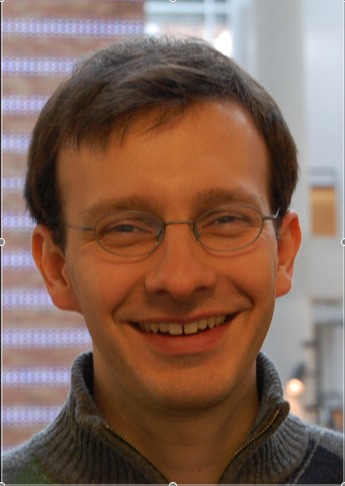
Paolo Noto is an Associate Professor at the Department of the Arts, Università di Bologna. He specializes in film studies, focusing on post-war Italian cinema, genre transformations, and intertextuality. He holds a PhD in Theatre and Film Studies from the University of Bologna. His research explores the interplay between national and foreign cinematic models, particularly in 1950s Italian cinema. He has presented at conferences such as the NECS Conference 2012 (Lisbon) and contributed to journals like The Italianist and Bianco e nero . His publications include works on Italian neorealism, digital media, and television history. Noto has collaborated with institutions like the University of Bristol and Harvard University through academic exchanges and research projects. His work bridges historical analysis with contemporary media practices, emphasizing cultural and technological intersections.
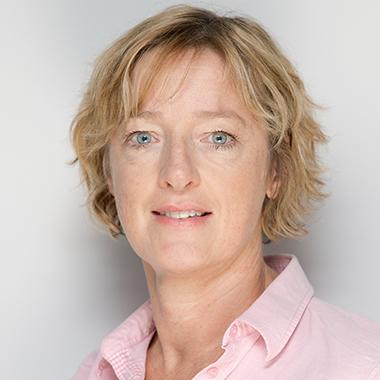
Professor Coral Dando is a Professor of Psychology at the University of Westminster, leading research in forensic cognition and investigative interviewing. With a background as a London Police Officer, she completed a BSc (Hons) Psychology and PhD in Applied Forensic Cognition. She is a Chartered Psychologist, National Teaching Fellow, and Registered Forensic Psychologist. Her research focuses on eyewitness memory, deception detection, and cross-cultural interviewing, with a particular emphasis on improving investigative methods in security and forensic contexts. Her academic roles include teaching forensic psychology modules (e.g., detecting deception, investigative interviewing) and supervising PhD students researching topics like virtual environments in interviews and neurodivergent credibility. She has secured significant research funding from entities like the Home Office, FBI, and CPNI, totaling over £2M across projects addressing insider threats, county lines exploitation, and aviation security. Key Research Themes: Eyewitness reliability, cognitive interviewing techniques, cross-cultural persuasion, and insider threat detection. Grants: Includes a 2024 €97,000 COST grant for implementing the Mendez Principles and a 2016 $469,000 FBI-funded study on intelligence interviewing. Professor Dando’s work bridges academia and practice, training professionals from police forces, security agencies, and NGOs. She contributes to policy development and has authored over 100 peer-reviewed publications, including seminal works on the cognitive interview and WAFA (Witness-Aimed First Account) for neurodivergent individuals. Her research emphasizes ethical, context-aware methodologies to enhance justice outcomes.
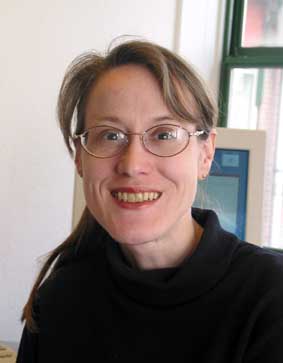
Marie-Colette van Lieshout is a Professor of Spatial Stochastics at the Faculty of Electrical Engineering, Mathematics and Computer Science, University of Twente, and a Scientific Staff Member in the Stochastics group at Centrum Wiskunde & Informatica (CWI), Amsterdam. She has been active in research since 1997 and is a leading expert in stochastic geometry, spatial statistics, and image analysis. Her educational and professional background includes positions at the University of Warwick and the Free University Amsterdam. She is currently engaged in advanced research on point processes, random fields, and tessellation models, with applications in seismic hazard, fire risk, and machine learning. Her research interests include: Stochastic Geometry Spatial Statistics Image Analysis Point Process Modeling Seismic Risk Assessment Machine Learning for Spatial Data Her recent publications (2023–2025) focus on spatial intensity estimation, marked point processes, and data-driven risk modeling, showing a strong integration of classical spatial statistics with modern computational and machine learning techniques. Key themes include adaptive kernel smoothing, infill asymptotics, and applications in environmental and public safety domains. She has received significant recognition, including: Elected Fellow, International Statistical Institute (ISI) She has been awarded multiple research grants from NWO and other agencies, including the KLEIN grant for fire risk management and the DeepNL grant for seismicity prediction in Groningen. She has supervised or collaborated with researchers such as C. Lu, Z. Baki, and R. Markwitz. She is also active in academic service, serving on editorial boards (e.g., Methodology and Computing in Applied Probability), advisory boards (InHolland University), and councils of learned societies (Bernoulli Society, KWG). She leads and participates in research clusters such as STAR and contributes to outreach and education through courses and public lectures on earthquake modeling and spatial statistics.
Dr. Mohammad Iftekhar Husain is a Professor and Graduate Coordinator in the Department of Computer Science at California State Polytechnic University, Pomona (Cal Poly Pomona). He serves as the Inaugural Director of the PolySec Cyber Lab, a federally funded center for cyber security and forensics education, research, and outreach (~$2.5M in grants), and directs the university's Virtual Reality Lab. His career spans over a decade of leadership in cyber security program development, extramural funding, and academic governance. Education: B.S., Computer Science, Yamagata University (Japan) M.S. & Ph.D., Computer Science and Engineering, SUNY-Buffalo Dr. Husain's research focuses on data privacy in social networks, neurophysiological cyber security solutions, and blockchain applications. He has secured $18.4M in principal investigator grants, including NSF SFS, EAGER, and REU Site projects, and trained students placed in top institutions like UC campuses, MIT Lincoln Lab, and government agencies such as NSA and DHS. His work on brainwave authentication earned a US patent (USPTO 10,198,566) and media coverage in Time Magazine and PC Magazine . Scientific Awards: 2016 College of Science Distinguished Teaching Award Early Promotion and Tenure (2016) 2020 Faculty Learning Community for Leadership Pipeline Development Cohort As academic leader, he founded the Cal-Bridge CS Ph.D. pathway program for underrepresented students, chairs the CPP Academic Senate Academic Programs committee, and led university IT initiatives including Cyber Security Cluster Hiring and High-Performance Computing Lab development.
Cynthia D. Rudin is the Gilbert, Louis, and Edward Lehrman Distinguished Professor of Computer Science at Duke University, with joint appointments in the Departments of Electrical and Computer Engineering, Statistical Science, Mathematics, and Biostatistics & Bioinformatics. She directs the Interpretable Machine Learning Lab and has held previous positions at MIT, Columbia, and NYU. Her educational background includes: Undergraduate degree from the University at Buffalo PhD from Princeton University (2004) Research Interests: Dr. Rudin's research focuses on interpretable machine learning and its applications across multiple domains. Her work emphasizes creating machine learning models whose reasoning processes people can understand, which includes algorithms for extremely sparse models, interpretable neural networks, interpretable matching methods for causal inference, and dimension reduction for data visualization. She applies these techniques to critical societal problems in healthcare, criminal justice, materials science, and other domains. Her lab has developed practical code for sparse models such as decision lists, decision trees, and additive models that provably optimize accuracy and sparsity. Dr. Rudin's recent publications (2024-2025) demonstrate a strong focus on interpretable AI applications across diverse fields including healthcare (mortality risk scores, breast cancer prediction), materials science (metamaterials design), and environmental justice (location-based health analysis). Her work consistently emphasizes practical implementations with real-world impact, particularly in high-stakes decision-making domains where model transparency is critical. Scientific Awards: Squirrel AI Award for Artificial Intelligence for the Benefit of Humanity (2022) - often described as the "Nobel Prize of AI" INFORMS Society on Data Mining Prize (2024) Guggenheim Fellowship (2022) Three-time winner of the INFORMS Innovative Applications in Analytics Award (2013, 2016, 2019) Winner of the 2023 John M. Chambers Statistical Software Award for PaCMAP Winner of the 2024 Award for Innovation in Statistical Programming and Analytics Dr. Rudin has advised numerous PhD students and postdocs who have co-authored significant publications with her. Her lab has received substantial funding for projects applying interpretable machine learning to healthcare (seizure prediction in ICU patients), criminal justice (crime series analysis), and energy infrastructure (underground electrical distribution networks). Her work on the Series Finder algorithm has been adapted by the NYPD and has been running live in NYC since 2016. She directs the Interpretable Machine Learning Lab at Duke, which includes the Almost-Matching-Exactly Lab focused on interpretable causal inference. Her team develops practical code implementations for all their research, emphasizing usability and real-world application in critical domains.
Dan Ariely is the James B. Duke Professor of Psychology & Behavioral Economics at Duke University's Fuqua School of Business, with joint appointments in Economics (Trinity College of Arts & Sciences), the Sanford School of Public Policy, and an adjunct role in Psychiatry & Behavioral Sciences. His research focuses on behavioral economics, exploring decision-making, dishonesty, consumer behavior, and the application of behavioral science to healthcare and policy. Education: Ph.D. in Cognitive Psychology and Business Administration from Duke University (1998), Ph.D. in Behavioral Economics from UNC Chapel Hill (1996), and B.A. in Psychology and Computer Science from Tel Aviv University (1991). Research interests span dishonesty reduction mechanisms, AI adoption barriers, health behavior interventions, and policy design. Recent work includes studies on honesty oaths, consumer resistance to AI, and the impact of workplace diversity on recruitment. He has led grants funded by organizations like Fundación Capital and Prudential Financial. His publications emphasize experimental methods to uncover behavioral patterns in ethics, decision-making, and societal challenges. While no explicit awards are listed, his work has been widely cited and featured in media including Nature Human Behaviour , Science Advances , and The New York Times . Grants include Behavioral Science for Strive Colombia and collaborations with Eli Lilly and Prudential. His interdisciplinary approach bridges academia and real-world applications, with a focus on improving societal outcomes through behavioral insights.
Dr. Abubakar Bello is a Senior Lecturer in Criminal Justice and Program Leader at Edge Hill University's School of Law, Policing, and Criminal Justice. Previously, he held roles at Western Sydney University, including Academic Program Advisor and Lecturer in Cyber Security and Behaviour. He holds a PhD in Cyber Criminology, an MBA in Business Law and Technology, and degrees in Computer Science. His research focuses on interdisciplinary approaches to cyber security risks, threat intelligence models, and behavioral aspects of cyber crime. Education: PhD (Cyber Criminology, Murdoch University), MBA (Business Law & Tech, Western Sydney University), MSc & BSc (Computer Science, University of Wolverhampton). Research Interests: Combating cyber crime through AI and machine learning, secure systems design, and behavioral cybersecurity. Key areas include ransomware defenses, social engineering, and cybersecurity frameworks for diverse populations. Grants & Projects: Awarded funding for initiatives such as 'Social Engineered Payment Diversion Fraud' (NSW Cyber Security Network), 'Brain-Inspired Algorithm for Network Anomaly Detection' (DST Group), and 'Cyber Security Awareness Framework' (ECR Grant). Awards: 'Award for Teaching and Learning Contributing to Public Good.' Active in professional networks like the International Centre on Racism and Centre for Applied Criminal Justice Research. Labs & Collaboration: Engages in cyber investigations, forensics, and community outreach through initiatives like Western Cyber Aid. Serves as a consultant for corporate espionage cases and a speaker on ransomware and AI in law enforcement.
Dr. Yijing Li is a Senior Lecturer in Urban Informatics at King’s College London, Department of Informatics. She joined King’s in 2018 and previously held roles at the University of Warwick and China Executive Leadership Academy Pudong. Her research focuses on spatial analysis of urban crime, counter-terrorism strategies, climate change impacts on crime, and risk management using big data. She holds a PhD in Geography of Crime from the University of Cambridge and an MSc in Urban Ecology from Peking University. Her work integrates theories from sociology, criminology, and economics with quantitative and qualitative methods. Key research areas include crime patterns during pandemic lockdowns, One Belt One Road security strategies, and environmental sustainability assessments. She has authored over 30 publications, including studies on London’s crime dynamics, spatial disparities in crime data, and vegetation change modeling using remote sensing. Dr. Li is affiliated with the Centre for Urban Science and Progress (CUSP) London and the Computing Education Research Centre (CERC). She has supervised interdisciplinary projects on employability in data science programs and collaborated with organizations like Transport for London and Westminster City Council. Her recent work examines health resilience in European countries post-pandemic and employs Bayesian models to analyze crime patterns during lockdowns.
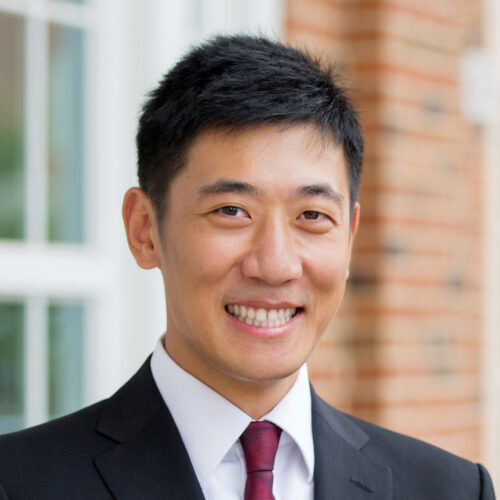
Weifeng Li serves as an Associate Professor in the Department of Management Information Systems at the University of Georgia's Terry College of Business. His academic foundation includes a Ph.D. in Management Information Systems from the University of Arizona (2017) and a B.S. from Shanghai Jiao Tong University (2012). Ph.D., Management Information Systems, University of Arizona (2017) B.S., Management Information Systems, Shanghai Jiao Tong University (2012) Dr. Li's research centers on AI security and cybersecurity applications , with methodological expertise in machine learning, natural language processing, and Bayesian modeling. His work spans critical domains including adversarial robustness in AI systems, dark web threat intelligence, disinformation detection, and phishing defense mechanisms. He develops frameworks for proactive cyber defense through generative adversarial learning and interpretable multi-modal models. His publication portfolio reveals a strong trajectory in top-tier venues, with recent work focusing on adversarial robustness (RADAR framework), dark web community analysis, and interpretable AI for security applications. Research consistently bridges theoretical machine learning advances with practical cybersecurity implementations, particularly in financial technology and social media contexts. Dr. Li's research has received funding from the National Science Foundation's Secure and Trustworthy Cyberspace (SaTC) program, supporting his work on AI security frameworks. His collaborations span multiple institutions and research groups focused on cyber threat intelligence. He contributes to cybersecurity infrastructure through systems like the AZSecure text mining platform for dark web monitoring and hacker community analysis. His work enables proactive threat detection through nonparametric topic modeling and generative adversarial approaches to counter cybercriminal tactics.
Maria Rita D’Orsogna is a Professor of Mathematics at California State University, Northridge (CSUN) and holds an Adjunct Associate Professor appointment in the Department of Computational Medicine at UCLA. She earned her PhD in Theoretical Physics from UCLA in 2003 and has since bridged mathematical modeling with interdisciplinary research in biology, social dynamics, and criminology. Her work utilizes statistical mechanics and applied mathematics to study collective behavior, viral dynamics, and societal challenges. Her research spans Biological swarming and self-organization Crime pattern modeling and policy analysis Drug addiction relapse dynamics Environmental activism against offshore oil drilling Recent publications focus on Medical decision-making optimization Age-specific overdose mortality forecasting Radicalization and social network dynamics Criminal career empirical studies Hematopoiesis modeling . She has secured funding from the NSF and Army Research Office. Teaching experience includes differential equations, multivariable calculus, and mathematical biology at CSUN and UCLA. She has mentored students through RIPS, IPAM, and PUMP programs. As Associate Director of UCLA’s Institute for Pure and Applied Mathematics (2018–2021), she promoted interdisciplinary research. Her environmental advocacy in Italy led to national policy changes banning coastal oil drilling, earning her recognition as the "Erin Brockovich of Italy".
Thomas S. Dee is the Barnett Family Professor at Stanford University's Graduate School of Education (GSE), a Research Associate at the National Bureau of Economic Research (NBER), a Senior Fellow at the Stanford Institute for Economic Policy Research (SIEPR), and a Senior Fellow (Joint) at the Hoover Institution. He serves as the Faculty Director of the John W. Gardner Center for Youth and Their Communities and holds multiple administrative appointments including Member of the Executive Committee of Stanford's Public Policy Program. Professor Dee's research focuses on the use of quantitative methods to inform contemporary issues of public policy and practice, with particular emphasis on education policy, economics of education, and program evaluation. His work spans critical areas including pandemic education effects, chronic absenteeism, school choice, educational equity, STEM education, and research methodology. He has made significant contributions to understanding how quantitative analysis can shape effective educational policy and practice. Dee's recent publications reveal a strong focus on pandemic-related educational disruptions, examining issues like chronic absenteeism, enrollment declines, and school reopening preferences. His research demonstrates expertise in quasi-experimental methods and has increasingly addressed questions of educational equity, particularly regarding underrepresented students in STEM fields. His 2025 work on Advanced Placement computer science shows how course design can broaden participation among female and minority students. Outstanding Public Communication of Education Research Award, American Educational Research Association (2024) Peter H. Rossi Award for Contributions to the Theory or Practice of Program Evaluation, Association for Public Policy Analysis and Management (2024) Research-Practice Partnership Award (co-recipient), California Educational Research Association (2023) Community Outcomes and Impact Award, International Association for Research on Service Learning and Community Engagement (2020) Raymond Vernon Memorial Award, Association for Public Policy Analysis and Management (2019) Raymond Vernon Memorial Award, Association for Public Policy Analysis and Management (2015) Professor Dee actively contributes to academic discourse through editorial roles on journals including the American Educational Research Journal and Education Finance and Policy. His teaching portfolio includes advanced courses in quantitative policy analysis and quasi-experimental research design, reflecting his methodological expertise. While specific grant information isn't detailed in the provided text, his extensive publication record and leadership roles suggest significant research funding support. As Faculty Director of the John W. Gardner Center for Youth and Their Communities, Dee leads initiatives connecting Stanford with community organizations to address youth development challenges. His work bridges academic research with practical community applications, emphasizing the importance of research-practice partnerships in creating meaningful educational change.
Dr Joseph Lee is a Reader in Corporate and Financial Law at the University of Manchester School of Law . Previously, he served as Senior Lecturer at the University of Exeter and Assistant Professor at the University of Nottingham. He directs the Manchester Online LLM in International Commercial and Technology Law and authored key publications including Crypto-Finance, Law and Regulation (2021) and Web3 Governance: Law and Policy (2025). Principal Investigator for UKRI/British Academy-funded projects Holds visiting positions at Bocconi University, KU Leuven, and National Taiwan University Acting Arbitrator in crypto-assets and fintech disputes His research focuses on commercial law intersecting with emerging technologies, including blockchain governance, AI systems in finance, and cybersecurity regulation. Recent work explores decentralized finance (DeFi), token transferability, and Web3 policy frameworks. Dr Lee contributes to the UN Sustainable Development Goals through digital trust initiatives. His projects include the AI Law and Policy: UK, US and EU Comparative Study (2023-2024), and he convenes the Digital Technology, Crime and the Law Conference 2025 .
Michael J. Cafarella is an Associate Professor in the Computer Science and Engineering department at the University of Michigan . His research focuses on databases, information extraction, data integration, and data mining, with applications in economics, social media analysis, and combating human trafficking. He leads the Software Systems Lab and Michigan Database Group . Scientific Awards NSF CAREER award Sloan Research Fellowship (2016) 2018 VLDB Ten-Year Best Paper award Research Impact : Cafarella co-founded the Hadoop open-source project and Lattice Data (acquired by Apple). His work on DeepDive and DARPA MEMEX was featured on 60 Minutes and in Scientific American . Funding from The Census Bureau, DARPA, Google, NSF, Yahoo!, General Electric, and Dow.
Charless C. Fowlkes is a Professor in the Department of Computer Science at the University of California, Irvine (UCI), and a member of the UCI Vision Group. His research focuses on computational vision, integrating visual recognition with 3D scene understanding and developing tools for biological image analysis. UCI Chancellor's Fellow (2019-2022) NSF CAREER Award recipient (2013) Helmholtz Prize winner (2015) Research Interests His work spans computational vision, image understanding, 3D scene reconstruction, and machine learning applications in biological and forensic domains. He develops methods for automated pollen classification, cardiac tissue analysis, and forensic shoeprint matching. Recent Publications His recent work includes 3D scene reconstruction with epipolar transformers, forensic shoeprint analysis, and image inpainting techniques. These show trends in integrating geometric understanding with deep learning. Scientific Awards Awarded the Marr Prize (2009), Helmholtz Prize (2015), and NSF CAREER Award (2013), he has received recognition for both theoretical and applied contributions to computer vision. Teaching & Advising He has taught graduate and undergraduate courses in computer vision since 2008 and advised numerous PhD, MS, and BS students who now work at institutions like Google, Apple, and CMU. Collaborations He collaborates with labs at UIUC (Punyasena Lab), Harvard (DePace Lab), and UCI (Cinquin Lab, Khine Lab) for biological applications of computer vision.
Robert Osgood is an Instructional Professor and Director of Digital Forensics in the Department of Electrical and Computer Engineering at George Mason University's Volgenau School of Engineering, also serving as Interim Director for TCOM. With 26 years of experience as an FBI Computer Forensics Examiner and Technically Trained Special Agent, he brings extensive operational expertise to academia. His research focuses on digital evidence collection and analysis across multiple domains including cybercrime investigations, network security, and counter-terrorism operations. He has developed specialized courses in Digital Media Forensics, Network Forensics, Incident Response, and Fraud Analytics, emphasizing practical applications in both law enforcement and private sector contexts. As a Certified Public Accountant, Mr. Osgood holds leadership positions including Treasurer of the Mid-Atlantic Chapter of the High Technology Crime Investigation Association (HTCIA), member of Infragard’s Cyber Special Interest Group, and Mason representative to the Northern Virginia Technology Council Data Analytics Subcommittee. He co-designed George Mason University's MS in Computer Forensics program and previously formed the FBI's first computer forensics squad in 2000 while serving as Chief of the Digital Media Exploitation Unit.