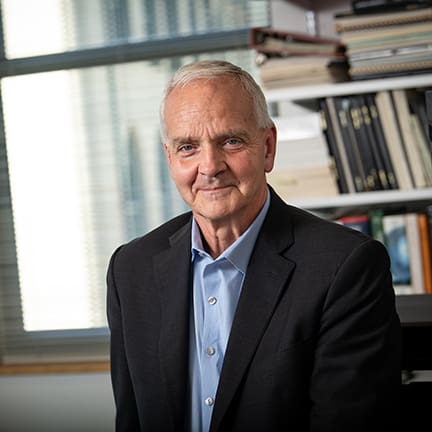
Martial Hebert serves as the Dean of the School of Computer Science at Carnegie Mellon University, a position he assumed in August 2019. He is the sixth dean to lead the school since its inception in 1988 and holds the title of University Professor of Robotics. Professor Hebert is an active participant in global AI discussions, with an upcoming speaking engagement at the AI and Planet session on May 30, 2024, where he will address "Generative AI and regulation: From local implementations to global standards." Professor Hebert is a leading researcher in the fields of computer vision and robotics. His work has contributed significantly to advancing these disciplines, which are critical components of modern artificial intelligence and autonomous systems. His expertise spans theoretical foundations and practical applications of vision systems and robotic technologies, positioning him as a key figure at the intersection of academic research and real-world AI implementation. As Dean of one of the world's most renowned computer science schools, Hebert oversees a diverse academic community dedicated to innovation and excellence in computing education and research. Under his leadership, the School of Computer Science continues to maintain its position at the forefront of technological advancement and academic achievement in the computing field, while also engaging with critical issues around AI governance and regulation.
Daniel Sierra Ramos is an Adjunct Professor at IE University, Spain, and Co-Founder of Fitizens, a startup developing AI-driven wearables for physical activity quantification. He has over 6 years of experience as a Lead Data Scientist at Telefónica and Synergic Partners, specializing in AI applications for industries like banking, retail, and telecommunications. His expertise includes machine learning models for customer segmentation, predictive maintenance, and demand forecasting, alongside Big Data and cloud technologies (AWS/Azure). Education: Master in Telecommunication Engineering (Carlos III University, 2015) Master in Multimedia and Communications (Carlos III University, 2015) Bachelor in Telematic Engineering (Carlos III University, 2013) His research focuses on integrating AI into wearable devices and industry-driven data solutions. He trains professionals in AI from technical and business perspectives, emphasizing autonomy in data-centric environments. Active in corporate roles since 2015, he bridges technological innovation with practical business applications.
Miguel Ángel Bernal Merino serves as a Part-Time Lecturer in the Department of Modern Philology, Translation and Interpretation at the University of Las Palmas de Gran Canaria. Concurrently, he acts as convener of the MA in Translation at the University of Roehampton in London, managing its Specialised Translation, Audiovisual Translation, and Intercultural Communication pathways since 2005. His academic profile bridges theoretical research and industry application in localization disciplines. PhD in The Localisation of Video Games, Imperial College London MSc in The Localisation of Multimedia Interactive Entertainment Software, Imperial College London Certificate in Software Localisation, University of Limerick CELTA, University of Cambridge MPhil in Lip-Synched Dubbing, Universidad de Alicante MA in Hispanic Literature, University of Rhode Island BA in English & Spanish Linguistics, Universidad de Alicante Bernal Merino's research pioneers the expansion of Translation Studies into interactive media domains. His work on video game localization examines interactivity, cultural adaptation, glocalisation, and playability, while his audiovisual translation research investigates creativity in lip-synched dubbing, subtitling, and audiodescription. He extends these frameworks into gaming-based language learning through haptic environments and multisensory reinforcement, exploring physiological aspects of multilingual cognition and polysemiotic neural networks. This multidisciplinary approach fundamentally challenges traditional boundaries in translation theory. His publication trajectory reveals evolving industry-academia integration, shifting from foundational game localization frameworks (2008-2015) toward user-centered research and educational applications (2018-2024). Recent work emphasizes measurable business impacts through quality localization, regional market adaptations, and crowd-sourced methodologies, demonstrating consistent influence on professional standards across gaming and translation sectors. Fellow of the Higher Education Academy Bernal Merino supervises doctoral research on mobile game localization, transmedia fan experiences, and historical game content translation while developing industry-academia pipelines through projects like AHRC's Media Across Borders. His funded initiatives—including Maximising ROI through Quality Game Localisation and Video Games for Language Learning—bridge theoretical innovation with commercial implementation, focusing on glocalisation strategies, interactivity metrics, and playability optimization. These collaborations connect European universities, gaming studios, and localization service providers. As chair of the IGDA Localization SIG and member of GIR Discourse, Communication and Society, he directs international forums for game localization discourse. His work with Routes into Languages promotes audiovisual media in language education, while REF-readiness collaborations enhance research excellence across European institutions through his professional network spanning industry conferences like GDC Summit and Game Global.
Michalis Vazirgiannis is a Professor at LIX, École Polytechnique (France) leading the Data Science and Mining (DaSciM) group. With academic backgrounds in Physics (Athens University), AI (Heriot-Watt University), and Informatics (Athens University), he has conducted research at Fraunhofer, Max Planck MPI, and INRIA/FUTURS while teaching at institutions across Greece, France, China, and Spain. His research spans Machine/Deep Learning for Graphs (GNNs, graph kernels, embeddings) Text Mining & NLP (Graph-of-Words, biomedical text analysis) Combinatorial Optimization for pandemic forecasting and energy systems Event/Anomaly Detection in time series and sensory data Industrial collaborations with Airbus, Google, Tencent, and BNP . He has supervised 29 completed PhD theses, published over 250 papers, and received prestigious awards including Marie Curie and Tencent Rhino-Bird Fellowships. His team leads the ANR-HELAS Chair (2020-2025) focusing on heterogeneous data deep learning.
Jordi Perelló Muntan is an Associate Professor in the Department of Computer Architecture at the Universitat Politècnica de Catalunya (UPC), Barcelona, Spain, where he is also affiliated with the Escola Tècnica Superior d'Enginyeria de Telecomunicació de Barcelona (ETSETB). He is a member of the Broadband Communications Systems and Architectures (CBA) and IDEAI-UPC research groups, focusing on advanced optical and future internet networking technologies. Research Interests: His research spans telecommunications networks, optical fiber and optical networking, resource optimization, network architectures, and the Future Internet. He investigates performance optimization in 5G transport networks, Spatial Division Multiplexing (SDM), Recursive Inter-Network Architecture (RINA), elastic optical networks, and cognitive networking. His work integrates SDN, network virtualization, and green networking principles for scalable and efficient infrastructures. Publication Trends: His recent publications focus on probabilistic constellation shaping in multicore fiber networks, cognitive strategies for optical margin reduction, RINA-based QoS assurance, and migration planning toward spectrally-spatially flexible optical networks. These reflect a strong trend toward intelligent, adaptive, and energy-efficient network design for future communication systems. Scientific Awards: Co-recipient of the 2020 Fabio Neri Best Paper Award Runner-up (Elsevier Journal of Optical Switching and Networking) Co-recipient of the ONDM 2021 Best Paper Award Co-recipient of the 2019 IEEE Communications Society Charles Kao Award Co-recipient of the ONDM 2012 Best Student Paper Award Advising and Grants: He has advised multiple PhD students on topics including RINA, optical network planning, and virtual provisioning. He has led or participated in major European (H2020, FP7) and national (PID, TEC) research projects such as SLICENET, PRISTINE, TRAINER, and ALLIANCE, focusing on 5G, RINA, and sustainable network infrastructures. Labs and Teams: He is an active member of the CBA research group at UPC, contributing to experimental and theoretical advancements in optical and programmable networks. His team collaborates internationally on testbed development and standardization efforts in next-generation networking.
Albert Atserias is a Professor in the Department of Computer Science at the Universitat Politècnica de Catalunya (UPC), affiliated with the Faculty of Informatics of Barcelona (FIB) and the ALBCOM research group (Algorithms, Bioinformatics, Complexity, and Formal Methods). He is also associated with the Institut de Matemàtiques de la UPC-BarcelonaTech. His research is central to theoretical computer science, with a strong emphasis on logic and complexity. Atserias's research interests span Computational Complexity, Logic in Computer Science, Finite Model Theory, Proof Complexity, and Constraint Satisfaction Problems . His work explores the fundamental limits of computation, the expressive power of logical languages over finite structures, and the complexity of proving mathematical statements. He investigates the algebraic and combinatorial properties of proof systems, the limits of efficient algorithms for constraint solving, and the theoretical foundations of databases. His research often bridges logic, algebra, and combinatorics to provide deep insights into computational phenomena. The trends in his recent publications show a sustained focus on the logical and algebraic underpinnings of computational problems. Key themes include the consistency and complexity of database queries , the power and limitations of proof systems (like resolution and sum-of-squares), and the expressive power of homomorphism counts in graph theory. His work on the hardness of automating resolution and the development of circular proof systems are particularly significant contributions to proof complexity. The 2024 PODS Best Paper Award for work on relational consistency underscores the impact and timeliness of his research. Among his notable scientific awards are the prestigious ICREA Acadèmia , the PODS 2024 Best Paper Award , the Premi Extraordinari de Doctorat (Extraordinary Doctoral Prize), and the Kleene Award for Best Student Paper . These accolades reflect both the excellence of his early work and his continued leadership in the field. Atserias has been a principal investigator on numerous competitive research projects, including funding from the European Research Council (ERC) and the Spanish Ministry of Science. He has advised doctoral students, such as Toni Hakoniemi, whose thesis on proof complexity he supervised. His extensive collaborative network includes leading researchers like Phokion Kolaitis, Anuj Dawar, and Victor Dalmau. He has also served on the scientific committees of major conferences, contributing to the academic community. He is a core member of the ALBCOM research group , a leading team at UPC focused on theoretical aspects of computer science, which provides a vibrant environment for research in algorithms, complexity, and formal methods. His work is also connected to the broader Institut de Matemàtiques de la UPC, fostering interdisciplinary collaboration between computer science and mathematics.
Carles Padro Laimon is a Professor at the Universitat Politècnica de Catalunya (UPC), affiliated with the Department of Mathematics and the School of Telecommunications Engineering. He is a leading researcher in cryptography and information security, focusing on secret sharing schemes, combinatorial structures, and cryptographic protocols. His work integrates discrete mathematics, coding theory, and algorithmic design to address security challenges in digital systems. Padro leads the MAK Research Group (Mathematics Applied to Cryptography) and the ISG-MAK Information Security Group. He has been involved in numerous competitive research projects, including initiatives on post-quantum cryptography and secure multi-user systems. His contributions span over 211 documented activities, including articles, theses, and conference participations. His research interests include the theoretical foundations of cryptography, with a focus on optimizing secret sharing schemes, analyzing matroid-based structures, and developing secure communication protocols. He has collaborated extensively with institutions like the UPC and European research networks, contributing to both academic and practical advancements in cybersecurity. Padro holds a PhD in Mathematics from UPC and has supervised doctoral theses and mentored researchers in his field. His work frequently appears in top journals like IEEE Transactions on Information Theory, Designs, Codes and Cryptography, and SIAM Journal on Discrete Mathematics.
Danfeng Zhang is a faculty member at Duke University whose research sits at the intersection of programming languages and security. Active across the premier PL conferences since 2015, Zhang has served on more than two-dozen program committees and currently co-chairs the POPL Student Research Competition. Education & Affiliation: Home page: users.cs.duke.edu/~dz132 Affiliation: Duke University, United States Research Interests: Zhang’s work spans programming-language design, static and dynamic analysis, formal verification, and security. A recurring theme is developing language-based techniques that guarantee strong security and privacy properties—ranging from side-channel resistance and constant-time execution to differential-privacy proofs—while preserving performance and usability. His recent projects combine type systems, program logics, and automated reasoning to build practical verification tools for concurrent, speculative, and approximate software. Publication Trends: Across nine representative papers (2015-2024) Zhang has advanced static detection of cache side channels, automated proofs of differential privacy, and relaxed concurrency models. The trajectory shows deepening integration of security concerns into language infrastructure, with tool-building (CtChecker, SpecSafe, LightDP) that bridge formal guarantees and real-world systems. Service & Leadership: 2024 POPL Student Research Competition Co-Chair 2025 POPL Program Committee member Repeated reviewer/PC member: PLDI, SPLASH/OOPSLA, ISSTA, ECOOP, APLAS, PriSC, PASS Zhang regularly mentors student researchers through SRC sessions and workshop panels, fostering diversity and early-career participation in the programming-languages community.
Leland Bybee is an Assistant Professor of Finance at the University of Chicago Booth School of Business . He leverages machine learning and natural language processing to address economic and financial questions, particularly focusing on belief measurement with applications to asset pricing and behavioral economics. Ph.D. in Financial Economics, Yale School of Management (2024) M.S. in Statistics, University of Michigan (2017) B.A. in Economics, University of Chicago (2013) His research integrates computational methods with economic theory to analyze: Textual analysis of business news for macroeconomic tracking Narrative-driven asset pricing models Memory-based belief formation using kernel methods Macroeconomic determinants of currency returns He has received multiple awards including: Dimension Fund Advisors Distinguished Paper Award BlackRock Applied Research Award HEC Top Finance Graduate Award The Brattle Group PhD Candidates Award EFA Engelbert Dockner Memorial Prize Bybee teaches Machine Learning in Finance and participates in finance seminars, contributing computational tools like regIPCA (Python) and changepointsHD (R) to the research community.
Karina Gibert is a Full Professor at Universitat Politècnica de Catalunya (UPC), specifically at the Faculty of Computer Science of Barcelona (FIB) in the Department of Statistics and Operations Research. With a permanent teaching position since 1990, she contributes to research and education with a focus on Data Science, Artificial Intelligence, Explainable AI, and Ethics in AI. Full Professor, UPC (since 1990) PhD in Informatics Engineering Postgraduate in Higher Education Teaching Director and co-founder of IDEAI research center Dean of the Official Professional College on Informatics Engineering of Catalonia Active in bridging the gender gap in STEAM through multiple initiatives Her research focuses on extracting strategic knowledge from data and intelligent systems with ethical and explainable perspectives. She has led various projects including Diet4You for personalized diets, INSESS-COVID19 for social vulnerability analysis, Top Rosies Talent for female AI development, and ciutadanIA for AI culture promotion. Her work spans health, environment, sustainability, tourism, and social technology applications. As an editor of Environmental Modeling and Software journal and active academic, she contributes to international conferences, working groups, and research collaborations. Her service includes membership on various ethics and AI strategy committees and advisory boards. Women Tech Award 2023 National Informatics Engineering Award in Digital Dissemination 2022 Ada Byron Award 2022 Honorific Mention of Creu Casas award 2021 donaTIC 2018 Award Finalist at AMETIC Awards 2021 Finalist of European Social Services Awards 2021
Pere-Pau Vázquez is an Assistant Professor in AI for Visual Computing at the Computer Vision Lab, TU Wien, Austria . Previously, he held academic positions at the ViRVIG Group and Facultat d'Informàtica de Barcelona (UPC) , where he taught courses in Programming, Computer Graphics, and Visualization for over 20 years. His research focuses on Information Visualization, Scientific Visualization, Medical Data Visualization, Molecular Visualization, and AI applications to Visual Computing . Current Teaching : Data Visualization, Fast Realistic Rendering, Information Visualization, Medical Images, Scientific Visualization, Virtual Reality, and 3D Medical Visualization. Former PhD Students : Elena Molina, Alexandra Cortez, Jesús Díaz, Pedro Hermosilla, Eva Monclús. His scientific awards include the Best PhD Thesis Award (UPC, 2003), Best Student Paper Award (SPIE, 2012), and Best Paper Award (International Conference on Computer Graphics Theory and Applications, 2013). Recent publications explore AI integration in biomedical visualization, molecular data analysis, and interactive techniques for volume rendering. He serves on the EuroGraphics Executive Board as Secretary and is active in steering committees for EuroVis and Visual Computing for Biology and Medicine . His work bridges Computer Graphics, Artificial Intelligence, and Human-Computer Interaction , with applications in medical and molecular data analysis.
Agustín Zaballos Diego is an Assistant Professor in the Department of Computer Engineering at University Ramon Llull (URL), Barcelona, Spain, since 1999. He serves as Research Coordinator in the Department of Engineering at La Salle Campus Barcelona and leads the R&D Networking and Security Area since 2002. His academic background includes a PhD in Data Networks and Internet Technologies (2012), an International MBA (2014), and an M.S. in Electronic Engineering (2000). University: University Ramon Llull (URL) Department: Department of Computer Engineering Research Group: GRITS Research Focus: Real-time QoS-aware routing protocols in Smart Grids, Ubiquitous Sensor Networks, and IoT communications. His work bridges telecommunications, computer science, and energy systems through projects like OPERA (FP6), INTEGRIS (FP7), and FINESCE (FP7). Publication Trends: Recent articles highlight advancements in HF communications for Antarctic research, hybrid genetic algorithms for traffic engineering, IPv6 testing, and Industry 4.0-related networking solutions. Keywords span Smart Grids, IoT, Sensor Networks, and QoS optimization. Collaborative Projects: Key initiatives include the Antarctica Project , ATHIKA (ICT in healthcare), ENVISERA (environmental sensor networks), HOTSUP (online teaching innovation), PLANET4 (AI/ML in industry), and XIoT (IoT scalability challenges).
Alejandro F. Villaverde is a Ramón y Cajal research fellow in the Department of Systems & Control Engineering at the School of Industrial Engineering, University of Vigo, Spain. He also serves as a Research fellow at CITMAga since 2022. Previously, he worked as a postdoctoral researcher at IIM-CSIC from 2016-2020. His research focuses on the modeling of dynamical systems with particular emphasis on biological applications. Villaverde earned his PhD in Systems and Control Engineering from University of Vigo between 2005 and 2009. His academic career has centered at Spanish institutions with a strong interdisciplinary approach bridging engineering, mathematics, and biology. His primary research interests include systems biology, control theory, and mathematical modeling, with specialized expertise in structural identifiability, observability analysis, and computational tools for dynamic modeling of biological systems. Villaverde's work addresses fundamental challenges in building reliable mathematical models of complex biological processes, with applications spanning immunology to microbial communities. His theoretical contributions have practical implications for improving model reliability and predictive power in biological research. Villaverde has published extensively in top journals including PLOS Computational Biology, Bioinformatics, and IEEE/ACM Transactions on Computational Biology. His recent publications (2023-2025) reveal a consistent research trajectory focused on developing theoretical frameworks for biological model analysis, creating practical software tools, and applying these methods to cutting-edge problems. His work shows particular strength in identifying and addressing fundamental limitations in modeling approaches, especially regarding parameter identifiability and model observability constraints. Among the top 2% Scientists Worldwide 2024 (Stanford University list) Recognition as one of the EEI's top valued instructors at University of Vigo's School of Industrial Engineering Villaverde leads multiple significant research projects including DYNAMO-bio (funded by Ministry of Science, Innovation and Universities), SICOMORO (focusing on symmetries in biological communities), and PREDYCTBIO. His group actively develops open-source software tools such as STRIKE-GOLDD for structural identifiability and observability analysis. The laboratory, part of the BICO research group, includes several researchers and students working on various aspects of dynamic modeling in biology, with recent additions including Mahmoud Shams Falavarjani, Adriana González Vázquez, and multiple interns working on specialized projects.
Alan Briones Delgado is a researcher at the La Salle School of Engineering , Universitat Ramon Llull , with a focus on Internet of Things , Cybersecurity , and Transport Protocols . His work spans projects funded by the European Commission and national grants, including EXCEL4HOUSING4.0 , WeB-Nimbus , and NG-SOC , addressing challenges in cloud computing education, ecological monitoring, and security operations. His research integrates Artificial Intelligence and Wireless Sensor Networks for sustainable solutions. Key research areas include Quality of Service in heterogeneous networks, Environmental Conservation via IoT, and Teaching and Learning strategies for Big Data. Projects like EcoSentinel and BTL-COP highlight his commitment to Environmental Monitoring and Community Policing applications. His collaborations extend to institutions in the UK , Albania , and Western Balkans . Contact: alan.briones@salle.url.edu
Wouter Lueks is a faculty member at the CISPA Helmholtz Center for Information Security in Saarbrücken, Germany. His research focuses on designing secure, practical, and privacy-friendly systems using applied cryptography, anonymous communication, and systems engineering. He leads a lab and actively mentors PhD and PostDoc researchers. Education: PhD in Computer Science (Radboud University, Netherlands), advised by Jaap-Henk Hoepman and Bart Jacobs. Postdoctoral Researcher at EPFL, Switzerland (SPRING Lab). Research Interests: Privacy-preserving systems for humanitarian aid and public health. Cryptography in decentralized networks and anonymous communication. Secure protocols for identity management and voting systems. Key Publications: Recent work includes privacy-preserving digital wallets for aid distribution (IEEE S&P 2025), biometric deduplication systems (IEEE S&P 2024), and decentralized proximity tracing protocols (Commun. ACM 2022). His research emphasizes practical applications of zero-knowledge proofs and attribute-based credentials. Awards: Distinguished Paper Award at IEEE S&P 2023. Runner-up Casper Bowden PET Award 2021 and CNIL-Inria Privacy Award 2021. Advising & Grants: Supervises PhD/PostDoc researchers and collaborates on projects funded by EU and industry grants. Active in open-source contributions, including the zksk library and Lightnion anonymous communication tool. Labs/Teams: Principal investigator at CISPA, collaborates with the SPRING Lab (EPFL) and leads interdisciplinary teams in privacy-enhancing technologies.