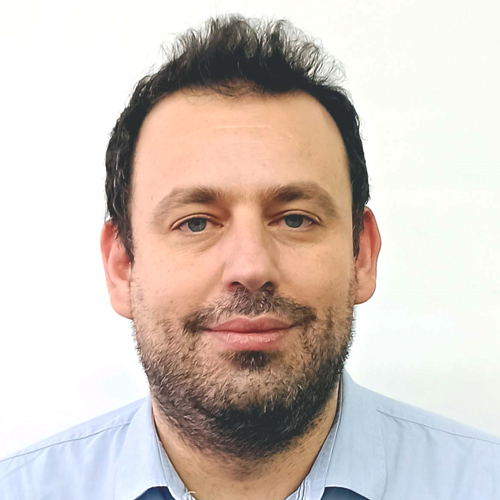
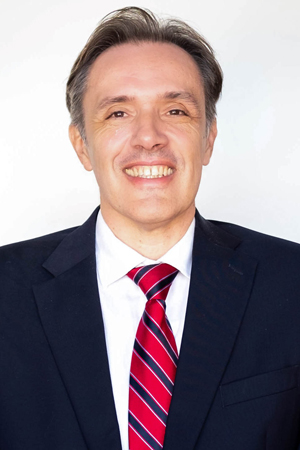
Petar J. Rajković is an Assistant Professor in the Department of Computing and Informatics at the Faculty of Electronic Engineering, University of Niš. His work focuses on medical information systems and algorithm development for specialized applications. He received his M.S. (2009) and B.S. (2002) from the University of Niš. Research includes string comparison algorithms for Serbian names and digital filter implementations. Key areas: Web-based medical information systems Adaptation of phonetic algorithms for Serbian language Content management for educational applications Noise reduction in digital signal processing
Nebojša S. Dončov is Full Professor at the Department of Telecommunications, Faculty of Electronic Engineering, University of Niš. As Vice-Dean for Science and IEEE Senior Member, he leads research in computational electromagnetics with applications in antenna design and electromagnetic compatibility. His TLM modeling techniques have been validated internationally. Education & Affiliations: PhD in Telecommunications (2002) Corresponding Member of Academy of Engineering Sciences of Serbia IEEE MTT/AP/EMC Society Senior Member Research Focus: Pioneers cylindrical TLM methods for: Conformal antenna analysis EM propagation modeling On-body communication systems Machine learning-assisted EM simulation Publication Trends: Recent IEEE Transactions papers demonstrate advances in neural network applications for antenna optimization and experimental validation of novel simulation techniques. Research consistently bridges theoretical electromagnetics with practical wireless system design. Awards & Projects: Aleksandar Marinčić Award (2017) URSI Young Scientist Award (2002) NATO SPS Project Director: UAV-Based Explosive Detection Royal Society projects on sensor networks Teaching & Service: Authors textbooks on antenna theory and simulation techniques. Chairs IEEE TELSIKS conferences and coordinates Erasmus+ collaborations with European technical universities.
Raka Jovanović is a Researcher at Singidunum University , affiliated with the Faculty of Informatics and Computing . His work bridges theoretical algorithm design with practical applications in transportation, energy systems, and optimization. Bachelor's, Matematički fakultet - Beograd (2002) Postgraduate, Matematički fakultet - Beograd (2007) Doctorate, Matematički fakultet - Beograd (2016) His research focuses on metaheuristics and matheuristics for complex optimization problems, including: Knapsack problems with penalty constraints Electric vehicle charging infrastructure planning Graph-based combinatorial optimization Energy management in extreme climates Integration of machine learning with traditional algorithms Recent publications demonstrate a strong emphasis on Fixed Set Search as a unifying methodology across diverse domains. Journal articles in 2024-2025 explore its application to: Maximum Diversity Problem Multidimensional knapsack Charging station placement Multi-objective optimization Conference papers from 2023-2024 highlight collaboration with international teams on: EV fleet scheduling Desert climate agricultural energy systems Max-Cut and disjoint dominating sets problems Waterway transport prediction models
Nebojša S. Doncov is a Full Professor at the Faculty of Electronics, University of Niš, Serbia, where he is affiliated with the Department of Telecommunications. He has been a leading academic and researcher in computational electromagnetics and antenna systems since earning his PhD in 2002 from the same institution. His research interests include: Computational Electromagnetics, particularly the Cylindrical TLM Method Antenna Design and Optimization using AI and Neural Networks Wearable and Smart Textile Antennas Direction of Arrival (DoA) Estimation Electromagnetic Compatibility and High-Frequency Modeling Biomedical and UAV-based GPR Applications His recent publications show a strong trend toward integrating artificial intelligence with electromagnetic modeling, especially in wearable and conformal antenna systems. He has published extensively in top IEEE and Wiley journals, with a focus on numerical methods and practical antenna applications for wireless and biomedical systems. His scientific awards include: URSI Young Scientist Award (2002) Aleksandar Marinčić Award (2017) Best Diploma Thesis Award (1995) Early Graduation Charter (1995) He has led or participated in numerous national and international research projects, including NATO Science for Peace, Royal Society International Exchange, and multiple COST Actions. He has advised students through research collaborations and co-authored works, though no formal list is provided. He has also contributed to academic education through textbooks and problem collections. He is actively involved in research labs and teams, including the Serbian research teams in SmartBridges, Predictive Design of Wearable Antennas, and Advanced UAV-Based GPR Imaging. He collaborates with institutions such as WIPL-D, University of Nottingham, and Technical University of Munich.
Bratislav B. Predic is a Full Professor in the Department of Computer Science at the Faculty of Electronic Engineering, University of Niš, elected to this rank in 2024 after serving since 2004 as an Assistant Trainee. His academic career spans two decades at the same institution within Serbia's premier technical university. He completed his Diploma, Master's, and PhD degrees in Electrical Engineering and Computing at the Electronic Faculty in Niš in 2003, establishing his foundational expertise in computational systems. Professor Predic's research focuses on the intersection of mobile computing and geospatial technologies, with significant contributions to context-aware GIS frameworks and transportation informatics. His work bridges theoretical computer science with practical field applications, particularly in real-time location systems and spatial data analysis for urban environments. Key innovations include motion prediction algorithms for public transit and optimized visualization techniques for mobile mapping. Analysis of his 2006-2007 publications reveals a concentrated research thrust in mobile GIS applications, characterized by three dominant themes: real-time vehicle tracking systems for public transportation, context-aware adaptation of geospatial services for mobile devices, and computational optimizations for terrain rendering and raster map visualization. These works demonstrate consistent methodological rigor in addressing latency and bandwidth constraints inherent in mobile geospatial computing. He currently leads 2 national and 1 international research projects, indicating active funding support for his work in transportation informatics and mobile computing. While no formal advisees are documented in the source material, his publications suggest collaborative supervision within multi-institutional research teams focused on geospatial technology deployment.
Наталија М. Стојановић serves as a full Professor at the Faculty of Electronic Engineering, University of Niš, specializing in Computer Science. Her academic career is anchored at this institution where she earned all her degrees and achieved professorship in 2020. Education: Diploma in Electrical Engineering and Computing (1999) Magister degree in Electrical Engineering and Computing (2003) Doctorate in Computer Science and Informatics Her research focuses on parallel computing architectures , particularly systolic arrays for matrix operations. She develops fault-tolerant systems and hardware acceleration techniques, with significant contributions to unidirectional/bidirectional array designs and transformation matrices for efficient computation. Her work bridges theoretical algorithms and practical hardware implementation. Publication analysis reveals a consistent focus on matrix-vector multiplication (70% of listed works) with emphasis on fault tolerance (30%) and non-planar architectures (20%). Recent work (2005-2007) shows increased specialization in unidirectional arrays and educational tools. Current Activities: Participates in 1 national research project No international projects listed 2 journal publications in impact-factor journals Based in Niš at Aleksandra Medvedeva 4, she maintains active research while contributing to academic infrastructure at the Faculty of Electronic Engineering.
Dr. Miodrag Dragoj is a Senior Research Associate at the Department of Neurobiology, Institute for Biological Research "Siniša Stanković" - National Institute of the Republic of Serbia, University of Belgrade. He has been employed at the institute since July 2014 and currently leads project work packages in the TargetedResponse project (IDEJE program) and BioengineeredTumor project (PRIZMA program), both supported by the Science Fund of the Republic of Serbia. Dr. Dragoj graduated in 2013 from the Faculty of Biology at the University of Belgrade, specializing in Molecular Biology and Physiology. He completed his doctoral studies in Molecular Biology (focusing on Molecular Biology of Eukaryotes) at the University of Belgrade in 2018, with a thesis titled "Effects of CXCR4 receptor and focal adhesion kinase inhibition in invasion suppression and overcoming resistance in non-small cell lung cancer." His doctoral research was conducted through the project "Identification of molecular markers for predicting tumor progression, response to therapy, and disease outcome" (III41031), funded by the Ministry of Education, Science, and Technological Development of the Republic of Serbia. Dr. Dragoj's research focuses on cancer biology, neurobiology, 3D cell culture techniques, and bioinformatics . His work primarily investigates non-small cell lung cancer (NSCLC), glioblastoma, and the development of biomimetic tumor models for drug testing. He has made significant contributions to understanding multidrug resistance mechanisms, particularly related to ABC transporters, and developing functional diagnostics for personalized cancer therapy. His research integrates molecular biology techniques with advanced cell culture models to improve cancer treatment strategies. Goran Ljubijankić Foundation award for the best doctoral thesis in molecular biology defended in 2018 in Serbia Dr. Dragoj is actively involved in multiple research projects, including leading work packages in the TargetedResponse project (focusing on functional diagnostics of NSCLC) and the BioengineeredTumor project (developing biomimetic tumor engineering approaches). His work contributes significantly to advancing personalized medicine approaches in oncology through functional screening and biomimetic models. His research group develops advanced 3D cell culture models, particularly using alginate-based microfibers, to create more accurate representations of tumor microenvironments for drug testing. This work bridges the gap between traditional 2D cell cultures and in vivo models, providing valuable insights for cancer drug development.
Milan Matijević is a Professor at the Faculty of Engineering , University of Kragujevac, Serbia. He holds a position in the Department for Applied Mechanics and Automatic Control , specializing in Automation and Mechatronics, Applied Informatics, and Control Systems. His research focuses on advanced control algorithms, remote laboratories, and educational technologies. Research Interests: His work emphasizes iterative learning control, digital motor control, SCADA systems, and the integration of virtual and remote laboratories into engineering education. Recent studies include applications in vibratory feeders, thermal power plants, and terrorism analysis. Publications: Dr. Matijević has contributed to over 50 articles, with a strong focus on control systems, robotics, and educational tools. Recent trends highlight advancements in reinforcement learning, cyber-physical systems, and problem-oriented learning methodologies. Awards: No scientific awards explicitly mentioned in the provided texts. Labs & Teams: He has developed multiple remote laboratory setups (e.g., hydraulic pump systems, LEGO web labs) and contributed to SCADA applications. His work emphasizes accessibility and innovation in engineering education through digital fabrication and web-based platforms.
Timea Bezdan is a researcher at Singidunum University, specializing in artificial intelligence, machine learning, and optimization algorithms. She holds a doctoral degree in Advanced Protection Systems (2021-2024) from Singidunum University, following master's degrees in Contemporary Information Technologies (2020-2021) and bachelor's degrees in Software and Data Engineering (2017-2020) and Marketing and Management (2013-2017). Her research focuses on applying AI to environmental science, healthcare, and computational efficiency, with notable work on air pollution modeling, disease detection, and algorithm optimization. Key research interests include neural network architecture design, hybrid metaheuristic approaches, and bias mitigation in AI systems. Recent projects address demographic bias in age estimation models and energy-efficient cloud-edge computing. Her work spans interdisciplinary collaborations, integrating machine learning with environmental monitoring and medical diagnostics. Education: Doctoral studies: Advanced Protection Systems, Singidunum University (2021–2024) Master's: Contemporary Information Technologies, Singidunum University (2020–2021) Bachelor's: Software and Data Engineering, Singidunum University (2017–2020) Bachelor's: Marketing and Management, Singidunum University (2013–2017) Publications highlight contributions to AI-driven environmental analysis, healthcare applications (e.g., Parkinson’s disease detection), and optimization techniques for neural networks. Her work often combines metaheuristic algorithms like firefly, bat, and particle swarm optimization with machine learning frameworks. Research groups and collaborations include Singidunum University’s Institute for Applied AI, with active participation in international conferences such as IEEE Symposia and Sinteza. Ongoing projects focus on explainable AI for emotion recognition and AI-based crisis analysis of environmental pollutants.
Nebojsa Mitrovic is a full Professor at the Faculty of Electronics, University of Niš, Serbia, where he is affiliated with the Department of Electrical Power Engineering. He has been a faculty member since earning his PhD in 1998 and was promoted to full professor in 2004. His research focuses on electric motor drives, power electronics, and control systems for industrial applications. His research interests span Electrical Power Engineering , Power Electronics , and Electric Motor Drives , with a strong emphasis on sensorless control of induction motors , direct torque control , and adjustable speed drives . His work integrates advanced control algorithms with practical power electronics to improve efficiency and reliability in industrial motor systems. The recent articles highlight a consistent research trajectory in motor drive control, particularly focusing on eliminating mechanical sensors, improving dynamic response, and enhancing power quality. Key themes include speed estimation , voltage and slip compensation , and real-time control implementation in PWM-based drives. His publications appear in IEEE journals and regional technical periodicals, reflecting both international engagement and regional impact. Total of 72 published papers Two university textbooks authored Participation in 6 scientific research projects Project leader for Ministry of Serbia-funded project on crane drive automation Industry collaboration on commissioning of electrical systems in industrial plants Nebojsa Mitrovic has contributed significantly to applied research in power engineering, particularly through projects funded by the Ministry of the Republic of Serbia and collaborations with industrial partners. His work bridges theoretical control strategies with real-world implementation in motor drive systems. He is affiliated with the Department of Electrical Power Engineering at the Faculty of Electronics in Niš, where he conducts research and teaching in power electronics and drive systems. His laboratory work likely supports student projects and industrial prototypes in motor control and power conversion.
Borisav D. Jovanovic is an Associate Professor at the Faculty of Electronics, University of Niš, Department of Electronics. He has been continuously affiliated with the same institution since 2003, progressing from assistant professor to his current academic rank achieved in 2025. His research interests include: Digital Signal Processing ECG Signal Analysis and Medical Instrumentation Software Defined Radio and PAPR Reduction Techniques Low-Power Embedded Controller Design Biomedical Signal Quality Assessment His recent publications focus on enhancing signal integrity in wireless communications and developing PC-based clinical diagnostic tools. Key themes across his work involve optimization of digital predistortion, artifact discrimination in ECG signals, and efficient hardware implementation for medical and communication systems. He is currently involved in one national research project and has contributed to multiple peer-reviewed journals including Journal of Circuits Systems and Computers and FACTA UNIVERSITATIS . Borisav Jovanovic has advised several graduate students (though names are not listed), and his technical contributions span both theoretical and applied domains in electronics and biomedical engineering. He maintains active research in embedded systems for healthcare and communication technologies, with a strong emphasis on practical, real-world implementations.
проф. др Никола Никачевић is a Full Professor at the Department of Chemical Engineering, Technical Faculty in Bor (TMF), University of Belgrade. He specializes in chemical engineering with a focus on process intensification, reaction engineering, and mathematical modeling of chemical processes. His research emphasizes optimizing fixed-bed reactors for Fischer-Tropsch synthesis, catalyst performance analysis, and multiphase flow dynamics. His work combines computational modeling (CFD, reaction kinetics) with experimental validation to enhance reactor efficiency and reduce environmental impacts. Key areas include: Fischer-Tropsch synthesis optimization, catalyst deactivation mechanisms, and process intensification via microreactor technologies. Prof. Nikčević has advised numerous PhD, master's, and undergraduate students on advanced topics like enzymatic reactor design, hydrodynamic studies of oscillating flow systems, and environmental impact assessments. His publications span high-impact journals like Chemical Engineering Science, Industrial & Engineering Chemistry Research, and Catalysis Today, focusing on reactor design, process modeling, and catalyst characterization.
проф. др Бранко Бугарски is a Professor at the Department of Chemical Engineering within the Faculty of Technical Sciences at the University of Belgrade. His academic career includes roles such as the Chair of the Department and involvement in numerous research projects. He holds a Ph.D. and has been a faculty member since at least 2000, contributing to academic administration and institutional development. Branko Bugarski's research focuses on encapsulation technologies, pharmaceutical engineering, and biochemical processes. His work emphasizes controlled release systems for bioactive compounds, utilizing materials like alginate, chitosan, and lipid nanoparticles. He has also explored applications in food science, biomedical materials, and blood-derived biomaterials. Key projects include optimizing hemoglobin isolation from slaughterhouse blood and developing drug delivery systems using erythrocyte membranes. Collaborations with institutions like TMF and international conferences (e.g., Engineering, Environment and Materials in Processing Industry) highlight his interdisciplinary approach. His teaching includes courses like 'Physico-chemical basis of pharmaceutical engineering' and 'Process design for biochemical engineering,' reflecting his expertise in both theoretical and applied aspects of chemical engineering. Branko Bugarski has mentored over 30 PhD and master's students since 2000, focusing on topics like encapsulation systems, biomaterials, and bioprocessing. His research has been published in journals such as Carbohydrate Polymers , Food & Feed Research , and Biotechnology Progress . He has also contributed to books on nanocarriers in food systems. His work addresses challenges in sustainable bioprocessing, pharmaceutical innovation, and the valorization of biological waste streams, aligning with broader goals in green chemistry and biomedical engineering.
Бранислав Тодић is an Associate Professor at the Department of Chemical Engineering, Faculty of Technical Sciences, University of Belgrade. His research focuses on process modeling, catalysis, and reactor design, with a particular emphasis on Fischer-Tropsch synthesis processes. He teaches courses such as Process Control Systems, Multidimensional Models and Simulation, and Process Optimization. His work integrates computational modeling with experimental studies to optimize catalytic processes and reactor performance. Education: Details not explicitly provided in the text, but inferred to align with academic qualifications required for associate professorship in chemical engineering. Research Interests: Development of kinetic models for Fischer-Tropsch synthesis over cobalt and iron-based catalysts Process optimization and heat management in fixed-bed reactors Effect of catalyst morphology and process parameters on product selectivity Simulation and validation of reactor dynamics in continuous processes Mentorship: Supervised master’s theses on topics such as experimental analysis of oligosaccharide synthesis reactors and reactor design for continuous production. Advised bachelor’s projects on fluid dynamics in oscillatory flow reactors and 3D-printed reactor configurations. Labs/Teams: Involved in research groups focused on chemical process intensification and catalytic reactor design within the Faculty of Technical Sciences.
Željko Santoši is an Assistant Professor in the Chair of Metrology, Quality, Equipment, Tools, and Ecological-Engineering Aspects at the Faculty of Technical Sciences, University of Novi Sad. His academic roles include serving as Secretary of Chair since 2021. He holds a PhD in Mechanical Engineering (2020) and has been with the faculty since 2013, progressing through roles like Teaching Associate and Assistant with PhD. His research focuses on 3D digitization techniques using photogrammetry, reverse engineering applications in art and dentistry, and metrology for industrial quality control. Notable projects include developing photogrammetric systems for dental models and analyzing multi-material components via computed tomography. He has published extensively in journals like Measurement , Facta universitatis - series: Mechanical Engineering , and Tehnički vjesnik - Technical Gazette . His work bridges computer vision, manufacturing engineering, and biomedical applications.