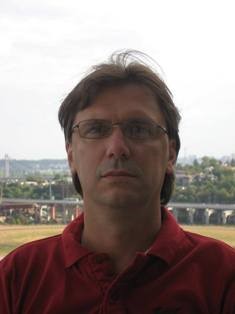
Srdjan Svrzic , an Associate Professor at the Faculty of Forestry, University of Belgrade , is a prominent researcher in wood processing, focusing on acoustic analysis, unconventional machining techniques, and energy efficiency. His work spans ionizing radiation effects on wood composites, vibro-acoustic diagnostics, and automation systems. B.Sc. (1999), M.Sc. (2004), PhD (2010) from the Faculty of Forestry Teaching areas include control technology, energy systems, and automation in wood processing Research keywords: Wood Processing, Acoustic Analysis, Radiation Effects, Automation . His recent publications (2024–2021) explore machine learning for noise diagnostics, energy optimization in Serbian wood industries, and rheological models for particleboard creep. He has also published on CNC machine precision, microwave-assisted drying, and surface roughness prediction. His textbooks cover automation in wood product manufacturing and physics entrance exam preparation.
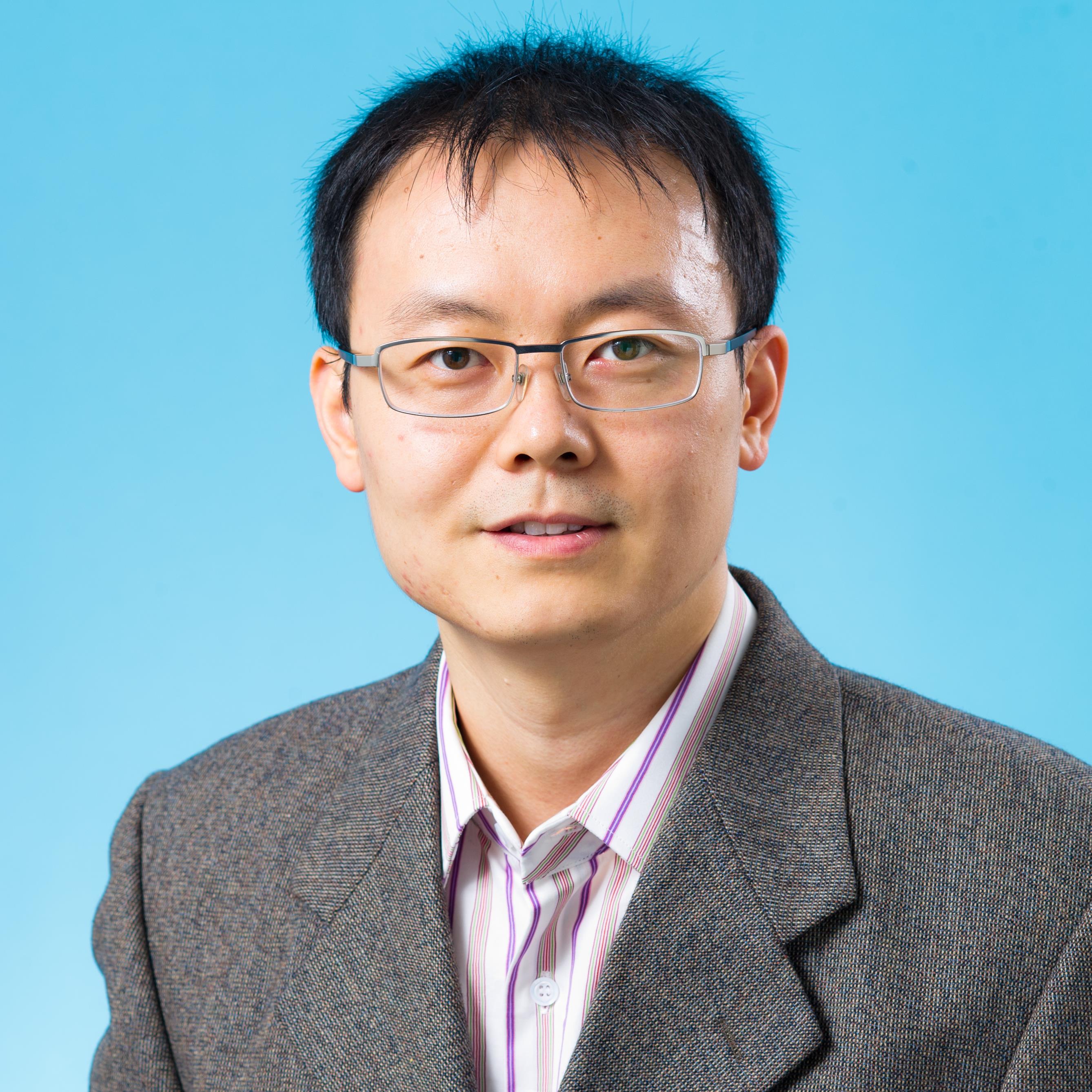
Le Yang is a Postdoctoral Research Fellow in the Department of Electrical and Computer Engineering at the National University of Singapore (NUS), working under Professors Vincent Y. F. Tan and Wang Chi Cheung since September 2024. Her research focuses on algorithmic decision-making under uncertainty with applications in optimization and learning systems. Her academic journey includes: Ph.D. in Systems Engineering from City University of Hong Kong (2020-2024) advised by Prof. Siyang Gao Master's in Financial Studies from Shandong University (2017-2020) supervised by Prof. Zhen Wu Bachelor's in Statistics from Shandong University's School of Mathematics (2013-2017) Her research integrates theoretical frameworks from stochastic processes with practical implementations in sequential decision problems. Key contributions advance computational methods for multi-armed bandit scenarios and simulation-based optimization, particularly addressing constrained environments through Bayesian approaches and Thompson sampling variants. Current work bridges reinforcement learning theory with operations research applications. Recent publications demonstrate evolving focus from foundational stochastic control during graduate studies toward cutting-edge bandit algorithms and knowledge gradient improvements. Her 2025 Automatica paper establishes theoretical guarantees for constrained best-arm identification, while 2023 NeurIPS work enhances simulation optimization efficiency. Actively seeking academic positions, Dr. Yang maintains collaborations with NUS faculty and CityU's Systems Engineering department. She welcomes research partnerships in her core domains of sequential decision making and stochastic optimization.
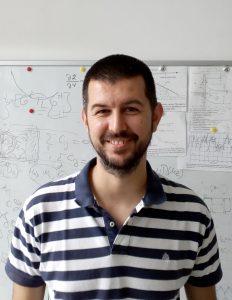
Aleksandar Panic is a teaching associate at the Faculty of Electronics, University of Niš, Serbia, where he was elected in 2024 in the scientific field of Electronics. He is actively contributing to academic instruction and research within the Department of Electronics. His research interests lie primarily in the domain of Electronics, with focus on analog and digital circuit design, microelectronics, embedded systems, signal processing, and VLSI design—core areas aligned with the technical orientation of his faculty. Aleksandar Panic has not yet published any listed scientific articles in journals with impact factors, based on the available information. There are no recorded scientific awards or recognitions mentioned in the current documentation. He is involved in academic instruction and supports the educational mission of the Faculty of Electronics. While no formal advisees are listed, he likely participates in supervising undergraduate and graduate student projects. There is no mention of external grants or funded research projects at this time. The Faculty of Electronics in Niš is known for its strong emphasis on electrical engineering and computing disciplines, and Aleksandar Panic contributes to its ongoing academic and research activities.
Vesna V. Paunović is a Full Professor in the Department of Materials for Electronics at the Faculty of Electronics, University of Niš, Serbia. She has been actively contributing to materials science research with a focus on ceramic materials and dielectric properties. PhD in Materials for Electronics, Faculty of Electronics, Niš (2008) Master’s in Materials for Electronics, Faculty of Electronics, Niš (2002) BSc in Chemistry, Faculty of Philosophy, Niš (1994) Her research is centered on advanced ceramic materials, particularly barium titanate (BaTiO₃)-based systems. She investigates dielectric properties , doping effects , microstructure development , and electrical characterization using impedance spectroscopy. Her work integrates fractal modeling and solid-state synthesis techniques to understand and improve functional ceramics for electronic applications. The analysis of her recent publications reveals a strong trend in the modification of BaTiO₃ ceramics through donor-acceptor doping, nanocrystalline synthesis, and impedance-based microstructural analysis. Her work spans disciplines such as materials engineering , solid-state physics , and ceramic technology , with applications in capacitors and smart electronic systems. She is a member of several prestigious professional organizations: Institute of Electrical and Electronics Engineers (IEEE) International Society of Stereology (ISS) European Microbeam Analysis Society (EMAS) Serbian Society for Microscopy (SDM) Serbian Ceramics Society (SKD) Vesna Paunović is currently involved in 2 national and international research projects. She has co-authored a 2012 monograph on impedance spectroscopy and has published over 43 papers in journals with impact factors. Her academic advising role is not explicitly mentioned, but her collaborative research suggests active mentorship and team leadership. Her work is closely tied to the research ecosystem at the Faculty of Electronics, particularly in laboratories focused on ceramic synthesis , microstructural analysis , and electrical characterization . These labs support advanced research in functional materials and contribute to both academic training and industrial applications.
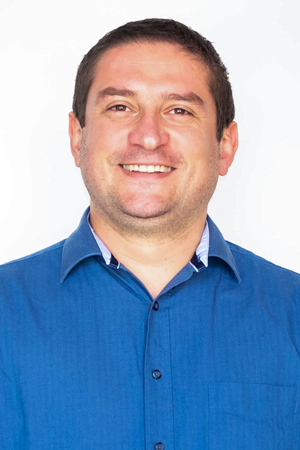
Vladimir Kraguljac is an Assistant Professor at the Faculty of Hotel Management and Tourism in Vrnjačka Banja, part of the University of Kragujevac, Serbia. He teaches Business Informatics and Information and Communication Technologies in the context of hotel and tourism education. His academic affiliation is deeply rooted in applied informatics within the tourism and hospitality sector. His research interests focus on the integration of Information Technology in education, particularly in e-learning , distance learning software , and the use of touchscreen devices in teaching. He explores how digital tools enhance pedagogical outcomes in business informatics, especially for tourism and hospitality management students. The trend in his scholarly work reflects a strong emphasis on educational technology , ICT in tourism education , and digital assessment methods . His publications span topics such as web security, academic integrity, and internet-enhanced language instruction, showing a multidisciplinary approach to modern educational challenges. Professional Affiliations: Institute of Electrical and Electronics Engineers (IEEE) Project Involvement: TEMPUS Project: 'Modernization and Harmonization of Tourism Study Programmes in Serbia – MHTSPS' Project: 'Improving English Language Teaching in the Health Tourism Study Program in Primary Academic Studies' He advises on curriculum development and digital integration in higher education, particularly in tourism studies. His work contributes to modernizing academic programs through international collaboration and technology adoption. He is actively involved in academic service and has contributed to multiple conference proceedings and thematic publications. He is affiliated with research teams focused on educational innovation and digital transformation in tourism. His lab or research environment appears to be collaborative, involving co-authors from technical and educational backgrounds, and is oriented toward practical implementation in higher education settings.
Dejan Lukić serves as Full Professor and Vice-Dean for Investments and Cooperation with Industry at the Faculty of Technical Sciences, University of Novi Sad. He has held progressively senior academic positions since joining the institution in 2000, including Director of the Department of Production Engineering (2021-2024) and Assistant Director (2018-2021). His academic journey began with undergraduate studies in Mechanical Engineering at the same faculty, followed by master's (2007) and doctoral degrees (2012) in specialized production engineering fields. His educational background includes: Bachelor's degree in Mechanical Engineering, Faculty of Technical Sciences (1999) Master's thesis: 'Development of a system for automated design of technological processes for manufacturing plastic injection molds' (2007) Doctoral dissertation: 'Development of a general model of technological preparation of production' (2012) Professor Lukić's research focuses on process planning, production optimization, and techno-economic analysis in manufacturing systems. His work bridges theoretical frameworks with practical industrial applications, particularly in virtual design, CAPP systems integration, and optimization of manufacturing processes. He has made significant contributions to the application of digital technologies in production engineering, including STEP-NC implementation, fuzzy logic for quality control, and collaborative process planning systems. His publication record demonstrates consistent advancement in manufacturing process optimization, with recent work emphasizing multi-criteria decision making, thin-walled structure machining, and digital integration of manufacturing systems. The research trajectory shows evolution from foundational work in traditional process planning toward contemporary applications involving artificial intelligence, collaborative systems, and Industry 4.0 technologies. Professor Lukić has been actively involved in academic service, participating in numerous evaluation committees, professional competitions, and serving as representative of Serbia in the Assembly of the Institute for Materials Testing. His industrial engagement includes consulting on CE/3A product marking, technical system maintenance, and implementation of application software solutions. As an educator and mentor, he has supervised more than 45 undergraduate and master's theses, completed one doctoral dissertation supervision, and currently guides three doctoral candidates. He teaches a comprehensive curriculum spanning process planning, production optimization, logistics, and technological preparation of production across all academic levels. His leadership extends to heading the Master of Professional Studies in Production Engineering program and serving on program committees for multiple scientific conferences and journals in mechanical engineering. Professor Lukić also maintains active industry collaboration through solving professional problems related to product development, manufacturing systems maintenance, and specialized training programs.
Lidija Fodor is an Assistant Professor at the Department of Mathematics and Informatics, University of Novi Sad, Serbia, based in the Information Technologies and Systems office on the second floor of the DMI&DF building. Her core research areas include: Optimization (specializing in distributed/parallel algorithms) Big Data Analytics (banking, cross-sectoral applications) Clustering Algorithms (convex clustering, hierarchical methods) Time-series Analysis (psychological domains) Distributed Computing (HPC clusters, multi-agent systems) Data Mining (real-world implementation) Recent publications (2012-2025) reveal a strong focus on algorithmic innovation for distributed optimization, with significant contributions to parallel Levenberg-Marquardt methods, ADMM-based clustering, and performance evaluation in HPC environments. Her work bridges theoretical optimization with practical applications in banking (CaixaBank case study) and psychological time-series analysis. Scientific Awards: No awards mentioned in provided text Advising and Grants: No student advisement information available No grant funding details provided
Dr. Željko Jovanović is an Assistant Professor at the Department of Computer and Software Engineering , Faculty of Technical Sciences in Čačak , University of Kragujevac , Serbia. He holds a PhD in Electrical Engineering and Computing (2020) from the University of Niš, with a focus on Application of IT in improving the quality of patient transport , and a Diploma Engineer in Computer Science (2008) from the University of Kragujevac. Current roles: Head of Department (2023–present), Coordinator of Undergraduate Studies (2021–present) Teaching areas: Programming basics, Object-oriented programming, Software engineering, Medical informatics (PhD studies) His research focuses on Computer Engineering and Software Engineering , with applications in Medical Informatics , Intelligent Transportation Systems , IoT , and Smart Cities . He has contributed to 15+ publications in journals and conferences, including IEEE Transactions on Intelligent Transportation Systems , Electronics , and Transactions in GIS , emphasizing artificial neural networks , data mining , and comfort assessment in healthcare and transportation contexts. Projects include the national TR32043 initiative on low-power computing systems and the international NeReLa project for remote labs. He has developed technical solutions for thermal comfort monitoring , smart suspension control , and IoT-based systems , and serves on academic committees for software engineering and computer science education.
Nikola Stanić serves as a Teaching Assistant at the Department of Information Technologies, Faculty of Technical Sciences, University of Kragujevac, where he has held academic positions since February 2021. His institutional affiliation includes active teaching duties across multiple technical disciplines at this Serbian research-intensive faculty. His academic credentials feature: Master of Academic Studies in Information Technology (2022, avg. grade 10.0) from University of Kragujevac with thesis on "Software Quality Management Using the Example of an Application for the Police Department" Bachelor of Academic Studies in Information Technology (2021, avg. grade 9.50) from same institution with thesis on "Example of Developing a Digital Game Using Unreal Engine Software" Technical secondary education in Computer Electrical Engineering from "Kolubara" School in Lazarevac Stanić's research focuses on the intersection of computer vision and practical software engineering, with significant contributions to medical diagnostics through YOLO-based detection systems for skin cancer and kidney stones. His work extends to public safety applications via real-time fire/smoke identification algorithms and explores Kotlin multiplatform development frameworks. Early career research included statistical modeling for demographic forecasting in regional healthcare planning, demonstrating methodological versatility across computer science subfields. His publication trajectory reveals concentrated expertise in deep learning applications (75% of recent work), particularly object detection systems adapted for medical and safety-critical domains. The remaining publications address software engineering challenges in cross-platform development and statistical prediction models, indicating a research program bridging theoretical computer science with societal applications in healthcare and public safety. While no scientific awards are documented, Stanić actively contributes to academic instruction through exercises in Programming Languages, Advanced Object-Oriented Programming, Software Testing, Mobile Application Development, and Databases. His teaching portfolio extends to programming instruction for children (ages 6-18) at Logiscool Srbija and online Serbian language tutoring, though no research grants or graduate student supervision are indicated. He operates within the Computer Science Laboratory infrastructure at the Faculty of Technical Sciences in Čačak, which supports his computational research through specialized equipment and collaborative environments for vision-based algorithm development and software engineering projects.
Vladimir Jovanović is a Senior Research Associate at the Institute for Multidisciplinary Research, University of Belgrade. He holds a Doctor of Physical Sciences degree in Condensed Matter Physics from the University of Belgrade (2010). Education : Doctor of Physical Sciences (2010), Master of Physical Sciences (2006), Bachelor of Science in Physics (2003), all from the University of Belgrade. His research focuses on electron transport in molecular systems, superconductivity in cuprate thin films, and optical characterization of organic nanomaterials. He employs advanced techniques such as density functional theory (DFT), non-equilibrium Green's functions (NEGF), molecular dynamics, and experimental methods like thermal vacuum deposition and Raman/UV-VIS spectroscopy. Recent publications highlight graphene-based nanogaps for DNA sequencing, oxidation effects in organic semiconductors, and critical current studies in superconducting thin films. His work spans interdisciplinary areas of physics, materials science, and biophysics. Scientific Awards : Marie Curie Host Fellowships for Early Stage Research Training. He has contributed to projects such as Transportne i termodinamičke osobine novih materijala: superprovodnik/feromagnet heterostrukture (2019-2020) and participated in Serbian national grants (2010-2019). Jovanović serves as a reviewer for journals and national scientific projects.
Ivan Krstić is an Associate Professor at the Department of Electrical Engineering and Computer Science, Faculty of Engineering, University of Kragujevac, Serbia. His contact email is ivan.krstic@kg.ac.rs . His primary research focuses on digital signal processing and electronic filter design, with specialization in: IIR filter structures (integrators, differentiators, notch filters) Optimization techniques for magnitude/phase responses (Chebyshev, maximally-flat) Microwave/RF filter implementations Allpass-based filter architectures Numerical methods for filter synthesis Recent publications demonstrate strong emphasis on: Linear-phase differentiator design Multi-notch filters with optimized pole configurations Chebyshev approximation methods Microstrip implementations for RF applications
Jovanka Lukić is a Professor and Chair of the Department for Motor Vehicles and Engines at the Faculty of Engineering, University of Kragujevac. Her research focuses on automotive engineering, vehicle dynamics, and ergonomics with a strong emphasis on environmental impact and sustainable transportation solutions. She leads studies on brake wear pollution, electric vehicle optimization, and driver comfort under vibration exposure. Her academic contributions span over three decades, addressing technical challenges in vehicle design, energy systems, and human-machine interaction. Key areas include: (1) Development of predictive models for brake wear particle emissions, (2) Optimization of vehicle suspension and transmission systems, (3) Application of AI/ML for comfort assessment, and (4) Sustainable materials in automotive manufacturing. She holds a prominent position within the Department’s Motor Vehicles and Motors unit, overseeing cutting-edge research facilities including specialized dynamometers and vibration testing laboratories. Her work integrates mechanical engineering principles with environmental science to address global transportation challenges.
Igor Z. Milovanovic serves as a Full Professor in the Department of Mathematics at the Faculty of Electronic Engineering, University of Nis, Serbia, a position he has held since his appointment in 1991. His academic career is deeply rooted in the institution where he completed all his formal education, establishing him as a cornerstone of the mathematics and computing disciplines within this engineering faculty. His educational background reflects a lifelong commitment to applied mathematical sciences at the University of Nis: PhD in Applied Mathematics (1980), Faculty of Electronic Engineering MSc in Applied Mathematics (1978), Faculty of Electronic Engineering BSc in Mathematics (1975), Faculty of Electronic Engineering Professor Milovanovic's research program bridges theoretical mathematics and practical computational engineering, with primary expertise in parallel computing architectures and algorithm optimization. His work focuses on systolic array implementations for matrix operations, graph algorithms, and linear algebra problems, consistently targeting hardware-efficient solutions for high-performance computing challenges. This interdisciplinary approach integrates mathematical rigor with computer architecture considerations to solve complex computational problems. Analysis of his publication trajectory reveals a sustained concentration on systolic array methodologies across three decades, evolving from foundational matrix algorithms in the 1990s toward FPGA-based hardware implementations and fault-tolerant systems in the 2000s. With 50 total publications including 32 in impact-factor journals, his contributions demonstrate significant impact in parallel processing and reconfigurable computing domains, particularly in optimizing classical algorithms for specialized hardware architectures. No scientific awards or major honors are documented in the available records. He currently participates in one national research project, though international collaborations appear absent from his active portfolio. His advisory activities are not explicitly detailed, but his extensive publication history suggests substantial mentorship of graduate researchers. The professor operates within the Department of Mathematics framework at the Faculty of Electronic Engineering, with no indication of dedicated laboratory facilities or named research teams in the provided documentation. His work remains closely integrated with the department's computational mathematics focus while maintaining strong connections to computer engineering applications.
Dragan B. Denić is a full professor at the Faculty of Electronics, University of Niš, specializing in Metrology and Measurement Technology. He earned his PhD in 1996, MSc in 1992, and BSc in 1988 from the same institution. His research focuses on sensor systems, ADC design, and signal processing, with 30+ papers in impact-factor journals. He has contributed to projects in linearization circuits, data acquisition systems, and encoder technologies. Between 2001-2004, he served as an independent consultant to GPI (Gurley Precision Instrumentation). Currently involved in 2 national research projects. Education: PhD (1996): Metrology and Measurement Techniques, Faculty of Electronics, Niš MSc (1992): Metrology and Measurement Technology, Faculty of Electronics, Niš BSc (1988): Electrical Engineering and Computer Science, Faculty of Electronics, Niš Research Interests: His work spans metrology instrumentation, sensor linearization techniques, analog-to-digital conversion, and precision measurement systems. He emphasizes practical applications like power quality analysis and cost-effective sensor solutions. Publications: Recent work includes advancements in ADC design for sensor linearization, novel thermistor linearization circuits, and power quality signal generation. His articles frequently appear in journals like Measurement , Measurement Science Review , and International Journal of Electronics . Consultancy & Projects: Consulted for GPI, a global leader in metrology instruments. Currently leads 2 national projects focused on measurement technology innovations.
Milan M. Simic is an Assistant Professor at the Faculty of Electronics in Niš, University of Nis, in the Department of Metrology and Measurement Technology. His academic career includes a PhD in Electrical Engineering and Computer Science (2013), a Master's degree in Technical Sciences (2008), and a Bachelor's in Telecommunications (2002), all from the Faculty of Electronics in Niš. His research focuses on power quality measurement, signal generation for instrumentation testing, wireless sensor networks, and harmonic analysis for nonintrusive load monitoring. He has contributed to the development of specialized systems like computer-based power quality signal generators and data acquisition frameworks for metrology validation. His publications emphasize technical innovation in measurement systems, including thermocouple linearization techniques and long-term complex signal generation for disturbance detection. He currently participates in 2 national research projects and has authored/co-authored over 9 peer-reviewed articles in journals like Measurement and Control (SAGE) and the Turkish Journal of Electrical Engineering. Notable contributions include a software-based experimental system using wireless sensor modules and analysis of measurement uncertainty in distributed power quality systems. His work aims to improve accuracy and reliability in electrical measurement technologies.