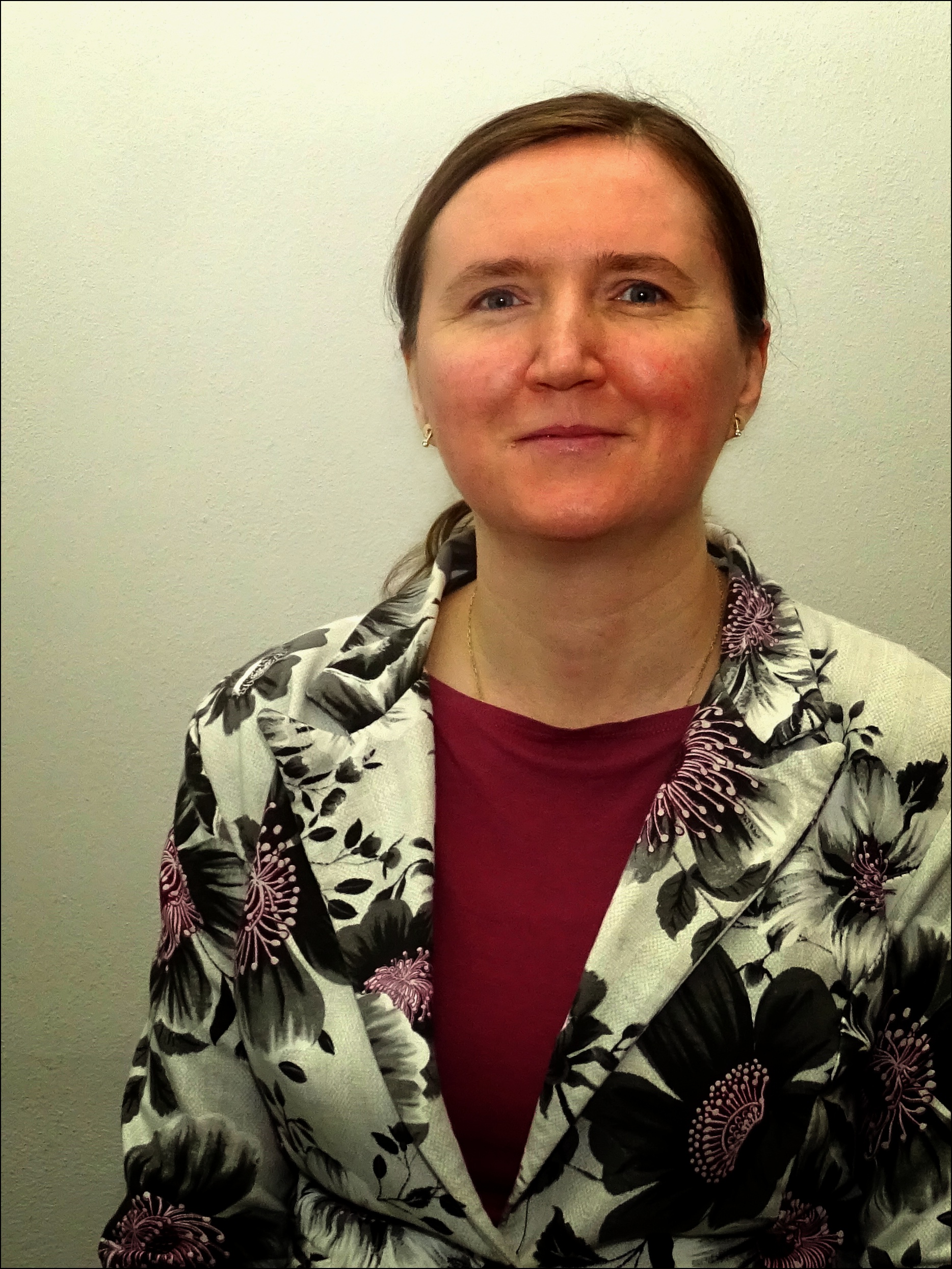
Prof. Ing. Juraj Beniak, PhD is a leading academic at the Institute of Production Engineering and Production Quality (Faculty of Mechanical Engineering, Slovak University of Technology in Bratislava, STU). He serves as a Professor CSc., PhD and holds external collaborator roles at the Institute of Computer Engineering and Applied Informatics (FIIT) and the Institute of Manufacturing Technologies (MTF). His research bridges mechanical engineering and sustainable production. Office: U.V.I.P. SjF, Office 537 Contact: +421 2 57296 537 | +421 905 593 953 (mobile) Beniak's research focuses on additive manufacturing , biomass compaction , and smart production technologies . He investigates 3D printing parameter optimization, surface modification techniques, and composite material development from renewable sources. His work addresses both industrial applications and environmental sustainability through advanced manufacturing. Key projects include: OP R&I: Automation in freight railway vehicle production (2019–2023) APVV-18-0527: Additive manufacturing technology development (2019–2022) Recovery Plan: AI-driven waste management systems (2024–2026) As a KEGA grant guarantor and APVV co-investigator , he leads initiatives in CAx education, virtual laboratories, and biofuel production optimization. His contributions span from experimental equipment design to mathematical modeling of compaction processes.
Assoc. Prof. Hana Vančová, PhD., is a dedicated academic at Trnava University's Faculty of Education, where she has served as an Associate Professor in the Department of English Language and Literature since 2013 (promoted from Assistant Professor following her 2022 habilitation). Currently Deputy Head of Department for Education, she oversees curriculum development and serves as study advisor for single-subject and combined English language teacher education programs at bachelor's, master's, and doctoral levels. Her institutional commitment spans over a decade with full-time employment since 2013. Education: 2004–2009: Master of Arts (Mgr.) in English Language and Literature – Slovak Language and Literature, Faculty of Education, Trnava University 2009–2012: Doctor of Philosophy (PhD.) in Pedagogy, Faculty of Education, Trnava University 2019: Professional Development: "Teaching languages in the digital era: the best apps, web platforms and ICT solutions for learning languages", Institute for Training, Employability and Mobile Learning Hana Vančová's scholarly work centers on English pronunciation pedagogy , with pioneering research in technology-enhanced instruction . Her primary domains include phonetics and phonology , lexicology , and digital language learning tools , investigating how AI, mobile applications, and multimedia resources optimize pronunciation acquisition. She bridges theoretical linguistics with practical classroom applications through ergonomic educational design, emphasizing learner-centered methodologies that address sociolinguistic factors like accent identity and intelligibility. Her habilitation thesis established her as a key innovator in pronunciation technology. Analysis of Vančová's publication trajectory (2014-2024) reveals a decisive shift from foundational studies on Slovak learners' pronunciation errors toward cutting-edge research on AI-driven pronunciation training. Her recent work explores karaoke-based methods and ethical AI implementation in CALL (Computer-Assisted Language Learning), highlighting human-AI interaction dynamics. The consistent thread is her commitment to making pronunciation instruction accessible through technological innovation, with publications increasingly addressing inclusivity, ethical considerations, and ergonomic design in digital language learning environments. While no specific scientific awards are documented beyond her academic promotion, Vančová's habilitation procedure—evaluated by an international committee including scholars from Poland, Czech Republic, and Slovakia—represents significant scholarly recognition. Her work has received 36 citations (14 foreign, 22 domestic) as of 2021. As study advisor for English language teacher training programs, Vančová mentors students across bachelor's, master's, and doctoral studies, guiding curriculum development for profile subjects in phonetics, lexicology, and digital language education. She maintains structured consultation hours (Wednesdays 10:00-11:30, study advising 11:30-13:00 via MS Teams) and demonstrates sustained research productivity through monographs, textbooks, and peer-reviewed articles. Though specific grant funding isn't detailed, her habilitation thesis exemplifies capacity for substantial scholarly projects with practical pedagogical impact. No dedicated laboratories or formal research teams are documented; Vančová's academic activities operate within the Department of English Language and Literature framework, focusing on individual research initiatives and departmental leadership in educational technology integration.
Marek Skoršepa is an Associate Professor at Matej Bel University in Banská Bystrica, Slovakia, where he serves as Vice-dean and Deputy Head of the Department of Chemistry within the Faculty of Natural Sciences. He also holds an Associate Professor position at Trnava University's Faculty of Education. With extensive experience in chemistry education and research, he contributes significantly to both Slovak and international academic communities. Faculty of Natural Sciences, Matej Bel University (Primary Affiliation) Department of Chemistry (Department) Vice-dean, Deputy Head of Department (Administrative Roles) Faculty of Education, Trnava University (Secondary Affiliation) Skoršepa's research spans three primary domains: computer-based chemical laboratories for educational applications, motivation and learning strategies in chemistry education, and computational studies of Vascular Endothelial Growth Factor Receptor (VEGFR2) and its inhibitors. His work demonstrates a strong commitment to innovative teaching methods and bridging theoretical knowledge with practical applications in science education. He has developed numerous educational resources for primary and secondary school chemistry instruction. Analysis of his recent publications (2020-2024) reveals a clear research trajectory focused on out-of-school learning environments, student motivation, and innovative chemistry education methods. His work shows increasing international collaboration, particularly with researchers from Turkey, Czechia, and Germany, as evidenced by the DOSLECTEP project and comparative studies across European countries. Simultaneously, he maintains active research in organic chemistry synthesis, particularly mechanochemical methods for sustainable chemistry applications. Skoršepa has been instrumental in developing comprehensive educational materials for chemistry teachers, including collections of innovative teaching methods for both primary and secondary schools. His research on computer-based laboratories explores how different technologies (tablets vs. notebooks) impact student learning experiences in chemistry education. His teaching portfolio includes Biochemistry 1 & 2, Biochemical Experimental Methods, Didactics of Chemistry, Computer-based Chemical Experiments, Digital Technologies in Chemistry Education, and History of Chemistry. This diverse teaching load reflects his interdisciplinary expertise spanning chemistry content knowledge and educational methodology.
Ing. Filip Gurbáľ PhD. serves as an Assistant Professor at the Technical University of Košice , focusing on software engineering education and research. He teaches Laboratory Exercises for the "Fundamentals of Software Engineering" course (ZSwI) in multiple sessions weekly and is located in Room 211, Building UVP. Research Focus: Evolving architectural knowledge in edge-to-cloud computing environments Key Technical Areas: Software testing automation, GitHub-based empirical studies Notable Projects : Evolving Architectural Knowledge in the Edge-to-Cloud Continuum (Participant) Developing architectural knowledge across the edge–cloud continuum (Solver role) Academic Contributions : Recent publications analyze test case implementation patterns in open-source projects and automate test framework identification in Java repositories Active in empirical software engineering research methodology
Ján Perháč is an Assistant Professor at the Faculty of Electrical Engineering and Informatics, Technical University of Košice. He teaches core courses including Database Systems, Logic for Informaticians, and Type Theory, while leading laboratory sessions on programming semantics and formal methods. His office is located at Letná 9 (Building B525), with consultations available by appointment. Research Focus: Dr. Perháč specializes in computational logic and formal methods, with emphasis on: Development of educational tools for teaching formal proofs and programming semantics Applications of non-traditional logical systems in computer science Type theory implementations and semantic modeling of programming languages Web-based interactive systems for logic visualization and automated theorem proving Publication Analysis: His recent articles (2022-2025) demonstrate strong focus on creating pedagogical tools for formal logic education, with multiple web-based proof assistants and visualization platforms. Secondary themes include advancements in intensional logic systems and programming language semantics, with occasional interdisciplinary work in environmental modeling and geoinformatics. Awards & Recognition: Best Presentation Award at SCYR 2019 Doctoral Conference (IT Section) Research Leadership: Principal Investigator for: European Research Network on Formal Proofs Modern Approaches in IT Education: Type Theory Participant in projects including compiler education innovations and edge-to-cloud computing architectures. Serves on program committees for IEEE Informatics conferences and the Modeling, Control and Information Technologies symposium.
Marek Ružička serves as an Assistant Professor at the Technical University of Košice (TUKE), where he teaches Stochastic Modeling and Data Analysis (SMaAD) and Modeling and Prototyping Systems (MaPS) across multiple laboratory sessions and lectures in buildings PK6, L9, and N9. His research spans Generative AI, Optimization, UAVs, 5G telecommunications, and Physical neural networks, with applications in engineering and data science. His research program emphasizes generative models for solving complex physical and engineering problems, particularly using GANs for data synthesis, trajectory correction, and system optimization. He bridges theoretical AI with practical implementations in UAV networks, aerodynamics simulation, and telecommunications infrastructure, demonstrating strong interdisciplinary connections between machine learning and physical systems. Analysis of his 2019-2024 publications reveals consistent focus on generative adversarial networks applied to UAV-based network optimization, physical system modeling (mass-spring systems, car aerodynamics), and data augmentation for mobility datasets. His work shows evolving specialization in deep learning integration with telecommunications (5G) and physical neural networks, with increasing emphasis on real-time optimization and energy efficiency. Scientific Awards: No scientific awards were mentioned in the provided text. Advising and Grants: The source material contains no information regarding graduate students, research grants, or funded projects.
Marcela Lascsáková is a Senior Lecturer at the Department of Applied Mathematics and Informatics within the Faculty of Mechanical Engineering at Technical University of Košice. Her work encompasses core areas of mathematics and informatics, with a focus on interdisciplinary applications. She is actively involved in teaching, research, and institutional collaboration. Her contact details include room A224, phone +421 55 602 2219, and email marcela.lascsakova@tuke.sk . Research interests span mathematical modeling, algorithm development, and computational methods, aligning with the department’s emphasis on applied sciences and informatics. Additional contributions include participation in grant projects, scientific collaboration, and laboratory-based research initiatives at the department.
Miroslav Ješkovský is a Researcher at Comenius University's Faculty of Mathematics, Physics and Informatics, Department of Nuclear Physics and Biophysics, where he works at the Center for Nuclear and Accelerator Technologies (CENTA). His primary responsibilities include teaching courses in Physics, Renewable Energy Sources, Biomedical Physics, and Nuclear Physics, while leading research in accelerator-based nuclear techniques. His research interests focus on accelerator mass spectrometry (AMS) of long-lived radionuclides , ion beam analysis techniques , and ultra-low radioactivity measurements . He has developed significant expertise in environmental radionuclide monitoring, meteorite analysis, and nuclear power plant impact studies using advanced accelerator facilities. His work bridges fundamental nuclear physics with practical environmental and biomedical applications. Analysis of his 15 most recent publications reveals strong emphasis on dark matter detection (through CRESST collaboration), environmental radioactivity monitoring (particularly radiocarbon and cesium in urban atmospheres), and development of accelerator-based analytical methods (PIXE, AMS). His research consistently applies nuclear techniques to solve environmental, planetary science, and particle physics challenges. Dr. Ješkovský actively supervises graduate students on thesis projects related to ion beam analysis, radiocarbon dating, and accelerator techniques. His research is supported by multiple international collaborations including CRESST, LEGEND, and IAEA projects, along with national grants from VEGA and APVV funding agencies. He operates within the CENTA facility, which houses accelerator mass spectrometry and ion beam analysis capabilities. His international collaborations span institutions in Vienna, Jyväskylä, Dresden, and CERN, reflecting his integration into major European nuclear physics networks.
Zita Jenisová is an Associate Professor at the Department of Chemistry, Faculty of Natural Sciences, University of Nitra, where she has worked since 1998. Her habilitation thesis Teaching Chemistry in the Digital Age (2015) established her as a leading figure in chemistry education and ICT integration. Education: Comenius University (1997), UKF Nitra (2000, 2009) Research Focus: Chemistry Education, ICT in Teaching, Science Experimentation Her publication trends emphasize the use of digital tools and empirical methods in chemistry education. She has authored monographs like Teaching Chemistry in the Context of Contemporary Requirements (2015) and textbooks on safe laboratory practices. Her work often bridges traditional pedagogy with modern technology, including computer-aided experiments and multimedia resources for secondary schools. Jenisová's contributions extend to environmental education through works like Environmental Aspects of the Urban Environment (2013). While no scientific awards are listed in the provided text, her habilitation process (completed in 2015) underscores her academic authority. She has no listed advisees or grants in the available data.
Alfonz Gajdoš serves as an Associate Professor at Matej Bel University in the Department of Geography and Geology, Faculty of Natural Sciences, where he has held a university teacher position since 2004. He additionally holds an Associate Professor appointment at Trnava University's Faculty of Education since 2015. His academic credentials include: MSc. in Chemistry-Biology from Matej Bel University (1999) RNDr. degree in Environmental Chemistry (2001) PhD. from Matej Bel University (2003) Dr. Gajdoš's research bridges chemistry education and computational biochemistry, with significant focus on computer-based chemical laboratories for pedagogical applications. His computational work centers on in silico analysis of Vascular Endothelial Growth Factor Receptor (VEGFR2) and its inhibitors, contributing to drug discovery methodologies through molecular modeling techniques. He teaches Biochemistry, Biochemical Experimental Methods, Didactics of Chemistry (Organic Chemistry & Biochemistry), Computer-based Chemical Experiments, and History of Chemistry. Consultation hours are held Wednesday 15:00-16:00. Prior to his university appointment, he conducted ecotoxicology research at the Slovak Academy of Sciences' Institute of Forest Ecology (2002-2004).
RNDr. Zuzana Gibová, PhD is a Lecturer at the Department of Physics , Faculty of Electrical Engineering and Informatics , Technical University of Košice , Slovakia. She specializes in physics education with a focus on mechanics, thermodynamics, and educational technology . Teaches Mathematics II and Numerical Methods, Probability and Mathematical Statistics Develops interactive teaching materials including applets and video experiments Research Interests : Her work concentrates on enhancing physics instruction through: Dynamic modeling in Coach software Video measurement techniques Development of laboratory exercises Didactic material creation Improving physics education via technology Recent Publications highlight her contributions to physics teaching, including: Interactive physics applets Rotational motion analysis Thermodynamics education Video-based experimental physics Conservation laws in mechanics Teaching Materials available include: Mechanical motion of particles and bodies (2014) Physics with applets video series Supplementary materials for waves and fields
Professor Liberios Vokorokos serves as a full-time Professor within the Faculty of Electrical Engineering and Informatics at the Technical University of Košice (TUKE), Slovakia, operating from the Dean's Office (Room 238, Letná 9 building). His institutional role encompasses academic leadership and administrative oversight for the faculty. His research profile, while formally listed as "Undefined" in university records, inherently aligns with the faculty's core disciplines including Electrical Engineering , Computer Science , and Information Technology , with contextual relevance to telecommunications infrastructure and electronic systems development. The absence of specified research focus suggests potential administrative prioritization over active laboratory-based research. Professor Vokorokos maintains a registered research presence via his Publons profile (ResearcherID: 3318480), though no granular publication metrics or collaborative projects are documented in available institutional sources. His contact accessibility through university channels indicates ongoing active service without noted teaching or consultation schedules.
Peter Feciľak, PhD, is an Associate Professor at Technical University of Košice (TUKE), specializing in computer networks and related technologies. He teaches undergraduate courses in Switched Network Based Technologies (TnBPS), Computer Networks (PS), and Computer Network Security (BPS), combining theoretical lectures with laboratory exercises. His research focuses on Methods for monitoring and managing computer networks Virtual laboratories SmartGrid technologies His publication activity is documented in TUKE's University Library, and his research profile is available on Publons. Contact: Email: peter.fecilak@tuke.sk Office: Letná 9 Building, Room B512 Consultation hours: By individual agreement via email
Ing. Marcel Vološin PhD is an Assistant Professor at the Technical University of Košice (TUKE), actively engaged in teaching and research related to database systems, blockchain technology, and wireless network optimization. His academic activities include laboratory exercises in Database Systems and their Security (DBSZ) at TUKE's Faculty of Electrical Engineering and Informatics, as indicated by room assignments and course schedules. Research Focus: Blockchain integration in 5G/6G mobile networks, autonomous vehicle systems, and AI-driven network coverage optimization Email: marcel.volosin@tuke.sk Marcel's publications highlight his expertise in blockchain technology for network security, generative adversarial networks for mobility data correction, and agent-based modeling for socioeconomic systems analysis. His work addresses challenges in real-time spectrum markets, dynamic network topology design, and decentralized resource allocation. Scientific Awards: No specific honors or fellowships mentioned in available sources.
Ing. Eugen Šlapak, PhD., is a researcher at the Intelligent Information Systems Laboratory (IISLAB) of the Technical University of Košice, Slovakia, where he has worked since 2017. His research focuses on machine learning applications for cellular wireless networks modeled as multi-agent systems, with emphasis on 5G/6G optimization and autonomous vehicle communications. Education: BSc in Informatics, Technical University of Košice (2016) MSc in Informatics, Technical University of Košice (2018) Dr. Šlapak's research integrates Deep Learning , Physics-based modeling , and Large Language Models to solve wireless network challenges. His work on HetNets, UAV-assisted communications, and blockchain-enabled resource allocation demonstrates expertise in applying unsupervised learning and evolutionary algorithms to coverage optimization, radio resource management, and network topology design for next-generation mobile systems. His 13 publications (2017-2023) reveal consistent focus on machine learning-driven wireless innovations, with increasing emphasis on deep learning for 5G/6G management and blockchain applications in vehicular networks. Key trends include UAV swarm coordination, HetNet spatial optimization via clustering algorithms, and multi-agent resource allocation frameworks addressing computational and radio resource constraints. Scientific Awards: No awards documented in source material Dr. Šlapak collaborates extensively with Assoc. Prof. Juraj Gazda and international researchers on EU-funded telecommunications projects. His laboratory work centers on developing self-organizing network frameworks through the Intelligent Information Systems Laboratory (IISLAB). As a core IISLAB researcher, he contributes to experimental validation of AI-driven network solutions using agent-based modeling and real-world wireless testbeds, with recent work focusing on autonomous vehicle communication stacks and UAV-based mobile network deployment.