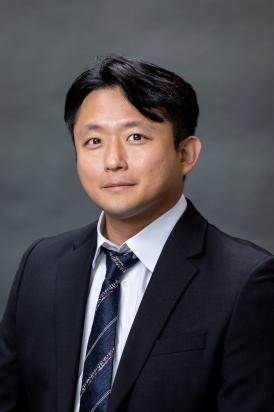
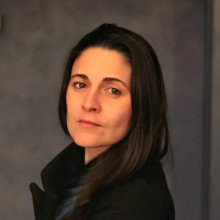
Aleksandra Sarcevic is a Professor of Information Science at Drexel University's College of Computing & Informatics (CCI), where she directs the Interactive Systems for Healthcare (IS4H) Research Lab. She earned her PhD (2009) and MLIS (2005) from Rutgers University's School of Communication and Information, and holds a BA in Film and TV Production from the University of Arts, Belgrade. PhD, Communication, Information and Library Studies MLIS, Library and Information Science BA, Film and TV Production Her research focuses on computer-supported cooperative work (CSCW) , human-computer interaction (HCI) , and healthcare informatics , with specializations in: Collaboration in high-risk environments Medical team coordination Context-aware systems for critical care Crisis informatics Socio-technical system design Recent publications examine AI-enabled decision support , PPE compliance monitoring , and real-time clinical alert systems , with funding from NIH , NSF , and AHRQ . She received the NSF CAREER award in 2013 and mentors both current and graduated PhD students in interdisciplinary research. The IS4H lab develops interactive healthcare systems for trauma resuscitation and infection control, employing ethnographic methods and sensor-based activity recognition to improve medical team performance.
Dana Cobzas is an Associate Professor at the MacEwan University in the Department of Computer Science , with adjunct appointments at the University of Alberta. Her academic journey includes a PhD in Computer Science (University of Alberta, 2004) MSc in Mathematics (Babes-Bolyai University, 1998) BSc in Mathematics (Babes-Bolyai University, 1997) . Her research focuses on imaging and computer vision , particularly mathematical models for medical image processing . Key areas include Medical image segmentation and registration 3D modeling from uncalibrated images Sparse classification for population studies Dynamic vision (tracking and modeling) Medical applications in neuroimaging and oncology . She has developed advanced techniques like deep learning-integrated level set methods and FEM-based segmentation. Scientific recognition includes: NSERC Discovery Grant (2015, 2010) Best Vision Paper at IEEE ICRA 2005 Best Student Paper at Vision Interface 2003 . She is actively involved in teaching and mentoring , with experience supervising senior students’ independent studies and contributing to collaborative projects in robotics and biomedical engineering .
Valerie San Juan is an Assistant Professor in the Psychology Department at Bradley University's College of Liberal Arts & Sciences. With a Ph.D. in Developmental Psychology and Education from the University of Toronto, she completed postdoctoral research at both the University of Toronto (under Dr. Patricia Ganea) and the University of Calgary (with Drs. Susan Graham and Suzanne Curtin), supported by the Eyes High Fellowship and SSHRC grants. Education: Ph.D. in Developmental Psychology and Education, University of Toronto Her research focuses on children's social cognitive development and language acquisition, particularly how children understand others' mental states and integrate this knowledge into social interactions. Using innovative methods like computer-based games and eye-tracking technology, she investigates perspective taking, desire reasoning, and false-belief understanding in children aged 2-6 years. Recent publications demonstrate her expertise in referential communication, epistemic verb development, and social category inference. Her work appears in top journals including Journal of Experimental Child Psychology , Cognitive Development , and Journal of Child Language . These studies consistently examine how children's cognitive control, language development, and social understanding interact. Scientific Awards: Eyes High Fellowship program (University of Calgary) Social Sciences and Humanities Research Council of Canada (SSHRC) grant As director of the Social Minds and Language Lab (S.M.A.L.L.), she mentors undergraduate researchers and collaborates with local families to conduct community-based developmental studies. Her teaching portfolio includes Principles of Psychology, Experimental Psychology, and Developmental Psychology courses.
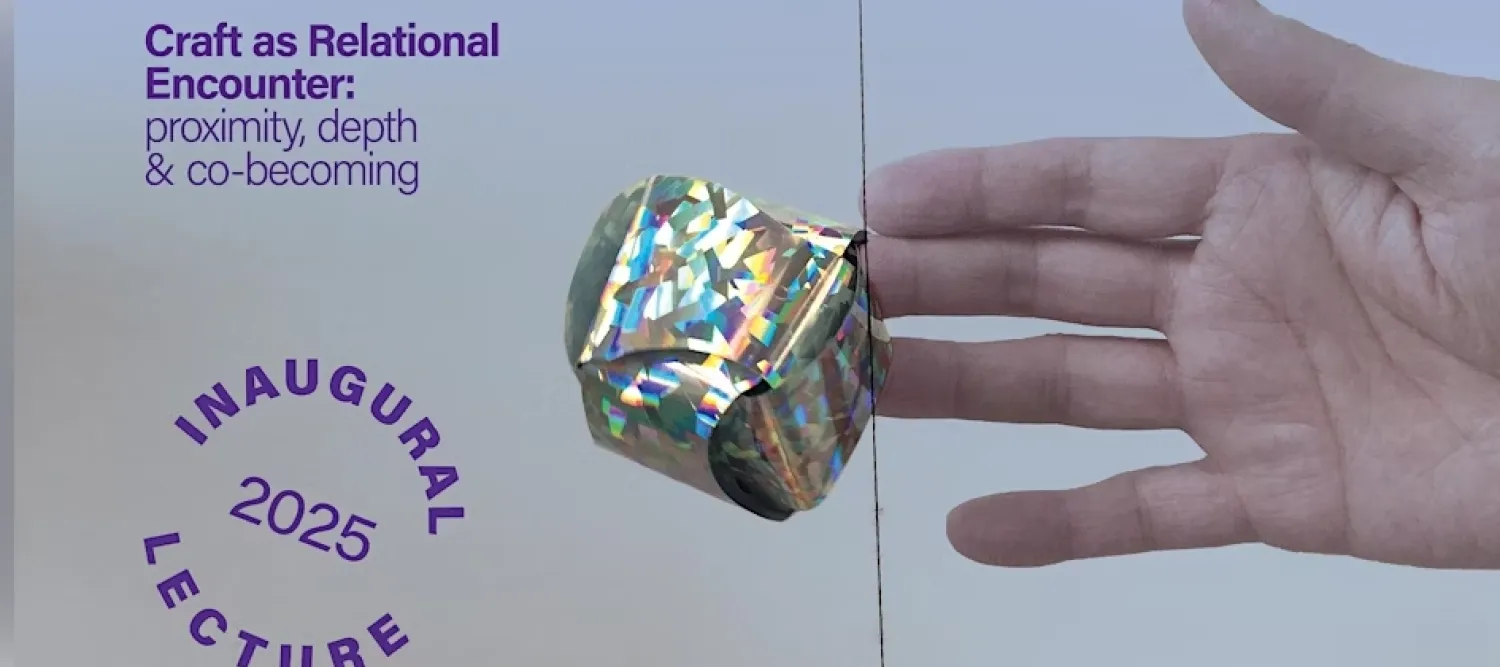
Professor Sarah Kettley is Chair of Material and Design Innovation at Edinburgh College of Art, University of Edinburgh . She leads multidisciplinary teams across social care and health services, championing participatory and co-design methodologies rooted in humanistic psychology. Educated originally in contemporary jewellery and holding a doctorate in computer science, she integrates craft knowledge with wearable technology research, most notably through the ‘ An Internet of Soft Things ’ project that introduces electronic-textile imaginaries to third-sector mental-health communities. Research Interests Craft as Relational Encounter: exploring proximity, depth and co-becoming in design Participatory and co-design methods for marginalised groups (autistic people, visually-impaired researchers, Scottish care workers) Electronic textiles, wearable health technologies and emotional durability Social, cultural and economic value creation in care innovation Recent Publication Trends Between 2023 and 2025 her work focuses on refining and evaluating the Ripple Framework , a generative co-design approach that produces social, cultural and economic value in care settings. Papers cluster around inclusive methodologies, mental-health technology, and craft-led innovation, signalling an integrated vision where material practice, digital technology and care ethics co-evolve. Scientific and Professional Recognition Fellow of the Royal Society of the Arts Founder member, Arcintex international research network Co-chair, RAFT research group, Edinburgh College of Art Research Teams & Networks She co-chairs the RAFT research group at Edinburgh College of Art and is a founding member of the Arcintex network, enabling transnational collaborations in practice-based textile, interaction and health-care research.
Dr. Viet-Huong Nguyen serves as an Associate Professor in Pharmacy Practice at Chapman University's School of Pharmacy, located at the Rinker Health Science Campus. Her expertise spans epilepsy, stroke, genetics, neuropharmacology, and epidemiology, with a focus on clinical and translational research. Her educational background includes: Bachelor of Arts in Biology and Classics with emphasis in Literature and Mythology from University of Southern California (2001) Master of Science in Cell and Neurobiology from University of Southern California (2003) Doctor of Pharmacy from University of California, San Francisco (2007) Master of Public Health in Epidemiology from University of California, Los Angeles (2014) Dr. Nguyen's research primarily focuses on epilepsy and stroke, with particular interest in the pharmacogenetics of drug response and resistance in epilepsy. She is an active member of GENESS, an international consortium dedicated to identifying genes causing genetic epilepsies including Juvenile Myoclonic Epilepsy, Childhood Absence Epilepsy, and Lafora Epilepsy to develop curative therapies. Her work bridges basic neuroscience with clinical applications, investigating molecular signaling pathways of the central nervous system and their implications for pharmacotherapy. She has contributed significantly to stroke outcomes/health services research, examining risk factor management and treatment protocols across multiple healthcare settings. Her extensive publication record demonstrates a consistent focus on neuropharmacology, with particular emphasis on epilepsy management and stroke care. The publications span clinical guidelines, pharmacogenetic research, and innovative approaches to treatment. Her work shows progression from basic pharmacokinetic studies to complex clinical applications and health services research, with increasing focus on genetic factors influencing drug response. The publications reveal a strong collaborative approach, frequently working with international research teams across multiple institutions. Her notable recognition includes: Fellowship grant from the American Foundation of Pharmaceutical Education (AFPE) to study drug transporters and pharmacogenetics in drug resistant epilepsy Dr. Nguyen has mentored and precepted over 80 students and residents from VAGLAHS, USC, UCSF, UOP, and Western University Schools of Pharmacy. She previously served as an Adjunct Assistant Professor of Pharmacy Practice at USC School of Pharmacy for 8 years, contributing to curriculum development for epilepsy and stroke education. Her clinical work has included developing the Anti-Epileptic Drug Response Phenotype Database and establishing pharmacist-managed Epilepsy and Stroke Prevention clinics with expanded scope of practice. She was instrumental in developing the PGY2 specialty pharmacy practice residency in Neurology at VA Greater Los Angeles Healthcare System (VAGLAHS), the first neurology pharmacy residency eligible for ASHP accreditation. Her clinical practice has centered around the VAGLAHS Epilepsy Center of Excellence and Stroke Program, where she implemented innovative pharmacy services that have improved patient outcomes through specialized pharmacotherapy management.
Clay Spinuzzi is a Professor in the Department of Rhetoric and Writing at the University of Texas at Austin, affiliated with the College of Liberal Arts. He earned his Ph.D. from Iowa State University in 1999. Education: Ph.D., Iowa State University (1999) His research spans activity theory, genre theory, actor-network theory, workplace studies, qualitative research, and entrepreneurship. He focuses on how individuals coordinate and collaborate in work environments, often analyzing communication practices in startups, coworking spaces, and rural communities. Recent work includes studying the Business Model Canvas in entrepreneurship, 5D Frameworks for community barriers, and Material Engagement Theory in historical contexts. His publications emphasize methodological innovations like fractional objects and project assemblages. He teaches graduate courses such as Designing Text Ecologies and Writing for Entrepreneurs in both the Department of Rhetoric and Writing and the Human Dimensions of Organizations MA program. His blog ( spinuzzi.blogspot.com ) frequently reviews interdisciplinary literature in sociology, cognitive archaeology, and workplace communication.
Professor Alexander Kushpel is affiliated with Çankaya University, Faculty of Arts and Sciences, Department of Mathematics, Turkey, since 2018. He has held academic roles at the University of Leicester (2011-2016), State University of Campinas (1997-2001, 2006-2010), and Ryerson University (2001-2006). PhD in Mathematics, University of Leicester (2015) PhD in Mathematics, Universidade Estadual de Campinas (2009) PhD in Mathematics, Institute of Mathematics of the National Academy of Sciences of Ukraine (1992) His research focuses on Mathematical Analysis , Applied Mathematics , and Geometry , with emphasis on approximation theory, Fourier analysis, and operator entropy. Key article trends include n-widths, Sobolev classes on manifolds, and financial mathematics applications. He has advised Regis Leonardo Braguim Stabile (MSc thesis: "N-width of set of smooth functions on the sphere SD").
Xu Zhang is an Associate Professor in the Department of Mathematics at Oklahoma State University, where he has been employed since 2019, initially as an Assistant Professor and promoted to Associate Professor in 2022. He is currently serving as the President of the SIAM Central States Section for 2024-2025. His academic journey includes a Golomb Visiting Assistant Professorship at Purdue University (2013-2016) and an Assistant Professor position at Mississippi State University (2016-2019). Dr. Zhang's educational background includes: Ph.D. in Mathematics from Virginia Tech (2013) M.S. in Mathematics from Virginia Tech (2009) M.S. in Computational Mathematics from Sichuan University (2008) B.S. in Computational Mathematics from Sichuan University (2005) Dr. Zhang's research focuses on numerical analysis and scientific computing, with particular emphasis on immersed finite element methods for interface problems. His work addresses both static and moving interface problems, developing innovative numerical techniques that avoid the need for body-fitting meshes. This research has significant applications in computational fluid dynamics, computational plasma physics, and other areas requiring simulations across material interfaces. He has developed methods including immersed finite element methods, partially penalized immersed finite element methods, and immersed weak Galerkin methods, with applications to Navier-Stokes equations, elasticity problems, and plasma-material interactions. Dr. Zhang's scientific contributions have been recognized with several prestigious awards, including: Distinguished Early Career Faculty Award from Oklahoma State University (2023) Ralph E. Powe Junior Faculty Enhancement Award from ORAU (2021) Holistic Science Prize from Oklahoma State University (2021) Dr. Zhang has successfully secured multiple research grants from the National Science Foundation, including DMS-2110833 ($212,822, 2021-2024), DMS-2224003 ($20,000, 2022-2023), and DMS-1720425 ($125,042, 2017-2021). He has mentored several graduate students, including Ph.D. student Derrick Jones (graduated 2021, now at Johns Hopkins University Applied Physics Lab), Ph.D. student Fang Liu (2024-present), and Master's students Hoang Nam Tran (graduated 2024) and Madylan Rusinek (2022-present). He also supervises postdoctoral fellow Dr. Ahmed Zytoon (2024-present). Dr. Zhang actively contributes to the academic community through conference organization, having organized multiple SIAM Central States Section meetings and other specialized workshops on numerical methods for interface problems. He serves on editorial boards for journals including Frontiers in Applied Mathematics and Statistics and has guest-edited special issues for several computational mathematics journals.
Adam Houston is a Professor in the Department of Earth and Atmospheric Sciences at the University of Nebraska-Lincoln, where he has served since 2006 after joining as an assistant professor. His research centers on severe local storms and cloud/mesoscale atmospheric phenomena. Education: Ph.D. in Atmospheric Sciences, University of Illinois at Urbana-Champaign (2004) B.S. in Meteorology, Texas A&M University Dr. Houston's expertise spans atmospheric convection , severe weather , mesoscale processes , and climate diagnostics . He leads the Severe Storms Research Group (SSRG), investigating deep convective initiation, supercell dynamics, and airmass boundary influences using numerical modeling and observational techniques including UAS and Doppler radar. Analysis of recent publications (2023-2025) reveals dominant themes in deep convection initiation mechanisms , supercell thunderstorm dynamics , and UAS-based atmospheric profiling . His work increasingly addresses urban impacts on convection and data assimilation for severe storm forecasting through major field campaigns. Research Infrastructure: Severe Storms Research Group (SSRG) Principal investigator in TORUS, LAPSE-RATE, and SCALES field campaigns NSF-funded collaborative projects including AGS-FIRP Track 1 initiatives
Dr. Rajesh Sathiyamoorthy is an Associate Professor in the Department of Civil Engineering at the Indian Institute of Technology Kanpur (IIT Kanpur), specialising in Geotechnical Engineering. Since joining IIT Kanpur in 2011, he has built a strong research portfolio, secured competitive funding, and received numerous accolades for his contributions to environmental geotechnology and unsaturated soil mechanics. Education PhD, Indian Institute of Technology Bombay, India (2010) M.E., College of Engineering Guindy, Anna University, India (2002) B.E., Vellore Engineering College, University of Madras, India (2000) Research Interests Dr. Sathiyamoorthy’s research is centred on the behaviour of unsaturated soils, environmental geotechnics, and innovative ground-improvement techniques. His work employs advanced numerical and physical modelling to address challenges in landfill barrier design, soil–structure interaction, and performance of geosynthetically reinforced systems. A distinctive feature of his investigations is the integration of field-scale problems with controlled laboratory and centrifuge testing, coupled with state-of-the-art computational tools. Scientific Awards & Fellowships IEI Young Engineers Award 2013-2014 (Civil Engineering) – The Institution of Engineers (India) Talented Young Scientist Fellowship 2019 – Ministry of Science and Technology, China Distinguished Alumni Award 2019 (Academic & Research) – VIT University Best Paper Awards (Environmental Geotechnology) – Indian Geotechnical Society, 2019 & 2015 Best Paper Award – International Geotechnical Engineering Conference on Sustainability 2016 IGS Prof. A.V. Shroff Biannual Award 2013 – Indian Geotechnical Society International Geosynthetics Society Student Award 2012 – IGS, USA Best Paper Award 2010 – Geotextiles and Geomembranes Research Funding & Collaborations Dr. Sathiyamoorthy has successfully led multiple sponsored projects worth several crores of rupees from agencies such as SERB-DST, BRNS-DAE, Shanghai Council of Science & Technology, RDSO Lucknow, and PAAB-MHRD. These projects span centrifuge modelling of embankments on encased stone columns, hydro-mechanical behaviour of compacted soils, reliability-based assessment of landfill slopes, and field validation of stabilised subgrade materials for pavements. His international collaboration includes joint research at Tongji University, Shanghai, under the Talented Young Scientist Fellowship. Laboratories & Teams He heads experimental activities in the Geotechnical Engineering Laboratory at IIT Kanpur, where his group maintains specialised equipment for unsaturated soil testing, geosynthetic evaluation, and centrifuge modelling. The research team comprises doctoral scholars, master’s students, and project staff working on inter-related themes of environmental geotechnology and ground improvement.
Helle F Jørgensen is an Associate Professor at the University of Cambridge, based at the Victor Phillip Dahdaleh Heart and Lung Research Institute (VPD-HLRI). She is a Principal Investigator in the Cardiovascular and Respiratory Medicine (CaRM) section of the Department of Medicine and a key member of the Cambridge Cardiovascular Interdisciplinary Research Centre and the British Heart Foundation (BHF) Cambridge Centre of Excellence. Dr. Jørgensen earned her PhD in molecular biology from Aarhus University in 2000 under Professor Brian Clarke. Her postdoctoral training included research on DNA-methylation-binding factors with Professor Sir Adrian Bird at the University of Edinburgh and investigations into transcription factors and epigenetic mechanisms in embryonic stem cell maintenance with Professor Dame Amanda G Fisher at the London Institute of Medical Research. Her research focuses on vascular smooth muscle cell (VSMC) plasticity and heterogeneity in vascular health and disease. She has demonstrated that a small number of pre-existing VSMCs undergo extensive proliferative expansion to generate the majority of cells in atherosclerotic lesions, with similar clonal expansion observed in other vascular disease models. Using single-cell transcriptome profiling, her group has revealed substantial VSMC heterogeneity both in lesions and healthy arteries. This work has significant implications for understanding VSMC behavior and developing selective targeting strategies for disease-associated VSMCs. Her laboratory employs single-cell approaches, lineage tracing, and global epigenetic profiling to study how gene expression programs are regulated and impact phenotypic plasticity in genetic disease models and human tissue. They investigate how VSMCs contribute to atherosclerosis development, the disease underlying heart attack and stroke, with focus on how these cells downregulate their contractile phenotype in response to injury and inflammation. British Heart Foundation Senior Basic Science Research Fellow Dr. Jørgensen's work has important translational implications for cardiovascular medicine. Her research on VSMC heterogeneity and clonal expansion provides critical insights into atherosclerosis pathogenesis and identifies potential therapeutic targets. As part of the BHF Cambridge Centre of Excellence, her research contributes to the broader mission of improving cardiovascular and lung health worldwide through collaborative research across university, NHS, commercial, and charitable sectors. The Jorgensen Group operates within the Victor Phillip Dahdaleh Heart and Lung Research Institute, a state-of-the-art facility that brings together researchers and clinicians to advance understanding of cardiovascular and respiratory diseases. Her work bridges fundamental molecular mechanisms with clinical applications in vascular medicine.
Hyeonchang Gim is an Assistant Professor in the Department of Communication at the University of North Dakota within the College of Arts and Sciences. His research focuses on intergroup communication, exploring how mediated and interpersonal interactions influence social attitudes and relationships. Education: Ph.D. in Communication (University of Arizona, 2024) Graduate Certificates: Natural Language Processing (2024), College Teaching (2023), Computational Social Science (2022) His work examines communication technologies and cultural messages, particularly analyzing music's role in cross-group understanding. Recent studies investigate: Mediated contact mechanisms through music and language learning Cultural adaptation challenges during study abroad experiences Music's dual role in both facilitating and hindering intergroup communication Language accommodation in film translation Social media discourse around public health crises Research spans communication theory, applied psychology, and cultural studies, with publications in Communication Monographs , Media Psychology , and related journals.
Miriam Stefania DE ROSA is an Associate Professor in the Department of Philosophy and Cultural Heritage at Ca' Foscari University of Venice, specializing in cinema, photography, and television. Previously, she served as Senior Lecturer at Coventry University (2016-2020) and taught at Catholic University of Milan/Brescia and University of Insubria (2009-2016). She founded the Cinema & Contemporary Visual Arts (CCVA) working group of NECS and chairs its committee. Research Focus : Film theory, media philosophy, experimental moving images, and domestic space in cinema. Current Projects : Exploring 'desktop cinema,' interface aesthetics, and gestural analysis in film. Her publications include Cinema e Postmedia (2013) and Post-what? Post-when? (2017), reflecting her work on post-cinema conditions and media archaeology. She is a DAAD Research Fellow (2014) and leads MUR-funded projects like ARTCHAE and Film Base Matters. De Rosa supervises PhD and thesis students on topics spanning artist films, found footage, and screen media studies.
Youngmoo Kim is Professor of Electrical and Computer Engineering at Drexel University, where he directs the Expressive and Creative Interactive Technologies (ExCITe) Center. His leadership extends to the Music & Entertainment Technology Laboratory (MET-lab), focusing on machine listening, robotics for expressive interaction, and STEM education through music technology. Education: PhD, Media Arts & Sciences, MIT (2003) MS, Electrical Engineering, Stanford University MA, Music, Stanford University BS, Engineering, Swarthmore College BA, Music, Swarthmore College Research Focus: Kim's interdisciplinary work bridges audio signal processing, machine learning for music information retrieval, human-robot interaction, and acoustic synthesis. His lab develops novel interfaces including brain-controlled robotics, augmented instruments, and AI-driven music systems, while championing K-12 STEAM education through technological innovation. Publication Trends: Recent articles demonstrate strong convergence of deep learning with music technology, particularly in neural audio synthesis, instrument recognition, and robotic control systems. Emerging themes include differentiable physical modeling of instruments, neuroadaptive interfaces using fNIRS/tDCS, and computational approaches to creative collaboration. Awards & Honors: 2021 College of Engineering Inclusive Excellence Award 2013 Apple Distinguished Educator 2012 Lindback Foundation Distinguished Teaching Award 2012 Philadelphia Geek Awards Scientist of the Year 2007 NSF CAREER Award Leadership & Funding: Kim has secured research support from the National Science Foundation and Knight Foundation. His ExCITe Center serves as an interdisciplinary hub for creative technology development, while MET-lab advances audio-machine intelligence through collaborations across engineering, computer science, and performing arts.
Marco Porta is a Full Professor at the University of Pavia, Department of Electrical, Computer and Biomedical Engineering. He teaches Web and Multimedia Technologies in the Computer Engineering Master's program and Web Design and Technologies in the interdepartmental CIM Bachelor's program. His research focuses on Eye Tracking, Vision-Based Perceptive Interfaces, and Human-Computer Interaction, with recent emphasis on AI applications for human-centered systems. He leads the Computer Vision & Multimedia Lab and chairs teaching councils for CIM and CoD programs. Education: Master's in Electronic Engineering (Polytechnic of Milan) and Ph.D. in Electronic & Computer Engineering (University of Pavia). Professional roles include vice-chair of IEEE's Technical Committee on Factory Automation. Over 118 publications in journals/conferences, with contributions to biometrics, e-learning interfaces, and industrial automation. Research highlights include gaze-based authentication systems, interactive museum interfaces, and ergonomic in-vehicle infotainment evaluations. Current projects explore gaze-driven intelligent tutoring systems and public space interaction frameworks.