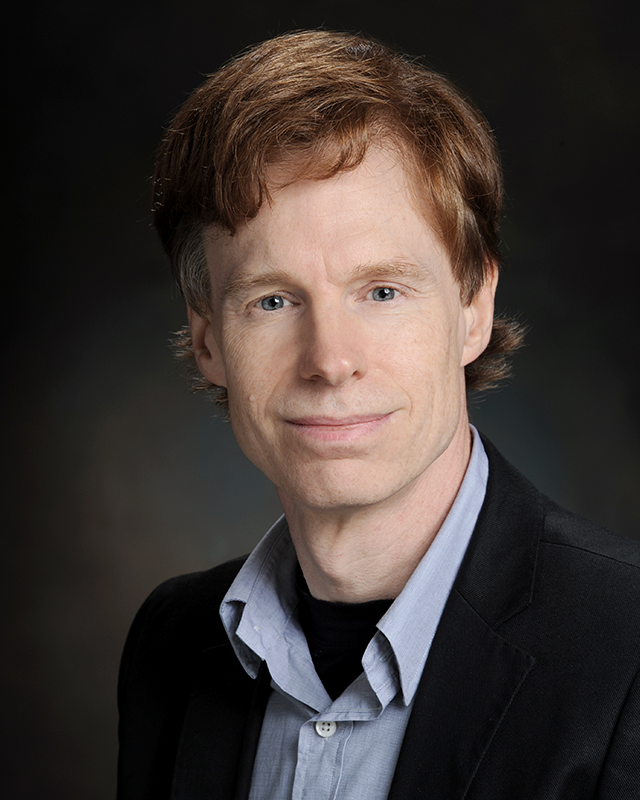
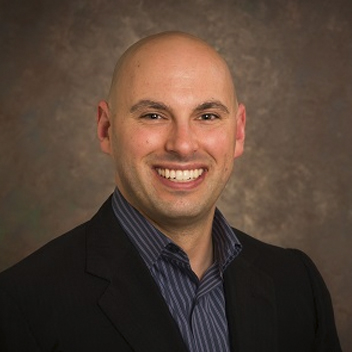
Professor Duncan Large is a Professor of European Literature and Translation at the University of East Anglia (UEA), affiliated with the School of Literature, Drama and Creative Writing. He serves as Executive Director of the British Centre for Literary Translation (BCLT) and chairs the PETRA-E Network for European literary translation training. His expertise spans translation theory, Anglo-German literary relations, and Friedrich Nietzsche studies. He holds a DPhil in Modern Languages from Oxford University and has held academic positions at institutions including Trinity College Dublin and Swansea University. Key research interests include translation philosophy, computer-assisted translation techniques, and the history of thought in German-speaking contexts. He leads major projects like the BCLT Summer Schools and international translation workshops funded by organizations such as Pro Helvetia and the Arts Council of England. Large is a General Editor of The Complete Works of Friedrich Nietzsche (Stanford University Press) and the Routledge Studies in Literary Translation series. His recent publications explore Nietzsche's reception in English contexts, Marx's literary influences, and interdisciplinary translation challenges. Awards include a Visiting Fellowship from the Charles Wallace India Trust (2023). He actively engages in global academic networks through conferences, invited lectures, and institutional collaborations across Europe and Asia.
Sezen Arslan is an Associate Professor at Bandirma Onyedi Eylul University, holding roles in the Department of English Translation and Interpreting (Faculty of Humanities and Social Sciences) and the Department of Foreign Languages. She previously served at Van Yuzuncu Yil University as a Doctor Lecturer and Research Assistant. Her academic leadership includes positions as Department Head and Erasmus Coordinator. Her research focuses on sustainable education, EFL pedagogy, teacher training, AI integration, and inclusive practices. Key contributions include work on dialogic teaching, EMI sustainability, and intercultural communication. She has authored over 20 books and 88 articles, with a TÜBİTAK Science Award recognition. Her projects involve national initiatives like TÜBİTAK-funded dialogical teaching workshops and language policy studies. Educationally, she teaches courses like 'Measurement and Evaluation in Foreign Language Teaching' and 'Pedagogical Grammar.' She advises one master’s thesis and has organized conferences like GLOBELT. Her administrative roles include coordinating Erasmus programs and managing academic research projects. Collaborations with institutions like Hacettepe University highlight her network. Her research spans topics from AI in EFL classrooms to sustainable curriculum reforms, reflecting a commitment to innovative and equitable education models.
Maura R. Grossman is a Research Professor at the University of Waterloo, specializing in High-Recall Information Retrieval, AI ethics, and legal technology. Her work focuses on ensuring comprehensive information retrieval in high-stakes contexts like electronic discovery in law, healthcare data curation, and medical evidence synthesis. She explores the intersection of artificial intelligence and legal systems, particularly addressing challenges posed by AI-generated evidence and deepfakes in judicial processes. Education: J.D. (Georgetown University Law Center, 1999), Ph.D. (Adelphi University, 1984), M.A. (Adelphi University, 1982), A.B. (Brown University, 1980). Research interests include AI accountability in courts, responsible data science practices, and improving electronic discovery methodologies. Recent work analyzes AI’s role in legal proceedings, ethical AI frameworks, and healthcare data governance. Her publications emphasize validating technology-assisted review (TAR) systems and evaluating generative AI impacts on marginalized communities. Her articles highlight trends in AI’s legal implications, healthcare data sharing protocols, and the need for transparent algorithmic systems in justice contexts. She contributes to TREC tracks, advancing high-recall retrieval techniques for legal and medical document analysis. Notable projects include developing frameworks for unbiased health data sharing and analyzing AI’s effects on marginalized writers. Her work underscores interdisciplinary collaboration between law, computer science, and healthcare to address emerging technological challenges.
Dr Paula McGrath is a Lecturer/Assistant Professor in the School of English, Drama and Film at University College Dublin. She has been a core faculty member since 2013, initially as an Occasional Lecturer and promoted to Assistant Professor/Lecturer in 2021. She currently serves as Acting Head of Creative Writing and coordinates multiple modules including Craft of Creative Writing, Life Writing, and Literary Editorship. Her academic home is UCD, where she earned her MA and MFA, and she completed her PhD at the University of Limerick as a Government of Ireland Postgraduate Fellow. BA (Hons) in Single Honour English Language and Literature – Trinity College Dublin MA in Women’s Studies – University College Dublin MFA in Creative Writing – University College Dublin PhD in Creative Writing – University of Limerick Professional Certificate in University Teaching & Learning – University College Dublin Her research and teaching focus on creative writing, contemporary fiction, environmental writing, and women’s writing. She supervises creative practice and narrative theory, with a particular interest in trauma representation and intergenerational storytelling. Her novels, Generation (2015) and A History of Running Away (2017), have been published internationally and translated into French and German, with critical acclaim from Joseph O’Connor, John Boyne, and others. Her recent publications include journal articles, book reviews, and media commentaries on feminism, literature, and Irish society. The 15 most recent publications reflect a consistent engagement with narrative innovation, feminist themes, and psychological depth across fiction, translation, and criticism. Her work spans creative output and scholarly review, often intersecting personal history with broader cultural questions, particularly around gender, migration, and belonging. She frequently contributes to public discourse through The Irish Times and literary journals. Arts Council literary bursary (2016) Government of Ireland Postgraduate Fellowship Irish Writers Centre/St. Mark’s English Church Writer in Residence in Florence (2016) Dr McGrath has supervised doctoral research under Joseph O’Connor at the University of Limerick and has taught creative writing across levels at UCD. She has not publicly listed her students, but she has coordinated the MFA module Pedagogic Strategies for Creative Writing (2019–2022), indicating a strong mentorship role. She has received research funding from the Arts Council and the British Academy. Her teaching philosophy is student-focused and research-led, emphasizing a supportive, creative environment. She is actively involved in curriculum development and creative writing pedagogy. She is a member of the academic and literary community, with affiliations to the Irish Writers Centre, participation in international literary events, and contributions to public intellectual life through media and translation. Her work bridges creative practice and academic scholarship, positioning her as a leading voice in contemporary Irish literature and creative writing education.
Ana Maria Bastos is an Assistant Professor in the Department of Education and Psychology at the School of Humanities and Social Sciences, University of Trás-os-Montes and Alto Douro (UTAD), Portugal. She is also affiliated with the CIIE (Centre for Research and Innovation in Educational Development) at the Faculty of Psychology and Educational Sciences, University of Porto. Her work bridges academic research and practical educational innovation. PhD in Educational Sciences, UTAD Master's in Education/Educational Technologies, University of Minho Her research focuses on Educational Technologies , Teacher Training for Basic Education , and Pedagogical Project Development . She explores how digital tools like blogs, Web 2.0 platforms, and programming environments (e.g., Scratch) enhance teaching and learning. Her work emphasizes formative assessment, supervised teaching practice, and curriculum articulation between pre-school and primary education. Her recent publications (2020–2023) reflect a strong interest in distance education during the pandemic , social media’s role in student behavior , and the integration of digital platforms in language and science education . The articles show a consistent focus on practical implementation, teacher training, and student engagement in diverse educational contexts. She is a peer reviewer for several academic journals, including the Portuguese Journal of Education and the Journal of AISTI, and is a member of the research unit Professor Faz a Diferença (Registration no. 3348/2013). She has contributed to national and international projects such as the ERASMUS+ TeachersMOD project, aimed at modernizing teacher training in Kurdistan, and the Step by Step with Science initiative funded by Ciência Viva. An active researcher, she has published extensively in journals, books, and conferences, with a career spanning over two decades. Her work demonstrates a sustained commitment to improving educational quality through technology integration and reflective teaching practices.
Hjalmar Alexander Bang Carlsen is an Associate Professor at the Copenhagen Center for Social Data Science (SODAS), Faculty of Social Sciences, University of Copenhagen. He specializes in mixed digital methods and is deeply engaged in research and teaching related to digital data analysis, particularly in the context of political and civic participation on social media. He is a key contributor to the Social Data Science master's degree program. University: University of Copenhagen School: Faculty of Social Sciences Department: Copenhagen Center for Social Data Science (SODAS) Position: Associate Professor in Mixed Digital Methods Email: hc@soc.ku.dk ORCID: https://orcid.org/0000-0002-2638-0932 His research centers on mixed methods strategies for digital data, with a substantive focus on civic and political engagement via social media. Key areas include informal volunteering during crises, gender inequality in online political participation, and the use of large language models (LLMs) for qualitative interviewing. He leads three major projects: SoMeVolunteer (on crisis volunteering), public participation on Facebook, and AInterviewer (an LLM-based interviewing tool). The recent publications reflect a strong trend in digital sociology, crisis response, and methodological innovation. His work combines large-scale social media data with surveys, interviews, and textual analysis, emphasizing ethical and epistemological considerations in computational social science. Topics span from refugee solidarity and pandemic volunteering to framing contests among climate NGOs and gender disparities in digital political engagement. While no formal scientific awards are listed in the provided text, Carlsen is actively funded by the Velux Foundation and UCPH Data+, and his work is widely disseminated through media and academic outlets. He collaborates closely with researchers like Jonas Toubøl and Snorre Ralund, and his projects often involve interdisciplinary teams. He has secured seed funding for innovative methodological development, indicating strong grant-writing capacity. He is involved in public engagement, with multiple media appearances discussing Danish civic response during the pandemic and refugee crises. His research outputs include journal articles, book chapters, and a co-authored textbook on mixed methods. He also participates in workshops and public lectures, contributing to both academic and public discourse on digital society. Carlsen is affiliated with SODAS and the Social Sciences Datalab, indicating active involvement in data-intensive research infrastructure. His work on AInterviewer suggests leadership in emerging AI-driven qualitative methods, positioning him at the forefront of digital social research innovation.
Ying Xie is an Associate Professor in the Department of Educational Technology, Research and Assessment at Northern Illinois University, College of Education. Her work bridges technology and pedagogy, with a focus on enhancing reflective learning, knowledge integration, and group cognition through innovative digital tools. Educational Background: Ph.D. in Instructional Systems, The Pennsylvania State University, with a minor in Educational Psychology B.S. in Computer Science and B.A. in Foreign Languages, University of Science and Technology of China Her research spans emerging technologies in education , including robotics in K–12 STEM learning, technology-assisted language acquisition, and mathematical problem posing. She explores how tools like word clouds, blogs, and mobile VR can scaffold reflective thinking and collaborative knowledge building. Her work is grounded in both cognitive and social learning theories. Analysis of her recent publications reveals a consistent focus on technology-enhanced learning environments , particularly using visual and interactive tools (e.g., tag clouds, blogs, VR) to support metacognition and collaboration. Her studies often employ mixed methods and design-based research, targeting diverse populations from K–12 to higher education. A growing interest in emergency remote learning and teacher self-efficacy is evident in her 2021 publications. Scientific Awards: No awards explicitly mentioned in the provided text. Dr. Xie actively advises graduate and doctoral students, as seen through her teaching of ETT 799 (Doctoral Research and Dissertation). She has contributed to curriculum development in instructional technology and research methodology. Her service includes participation in academic seminars and research guidance. She leads or contributes to research projects examining digital learning tools and their impact on cognition and engagement. Her lab or research team likely focuses on user experience in educational technology, possibly linked to the UX Lab mentioned in the departmental resources.
Qi Si serves as an Assistant Professor in the School of Teacher Education & Leadership at Utah State University's Emma Eccles Jones College of Education and Human Services. Based in EDUC 376 on the Logan, Utah campus, Dr. Si's work bridges teacher preparation with innovative literacy and technology integration practices for K-12 classrooms. Research focuses prominently on multimodal literacies and technology-enhanced instruction across elementary subject areas. Current investigations examine self-regulated multimodal composition frameworks, scaffolding coding through literacy development, and teachers' use of language as epistemic tools in science education. The research program consistently addresses practical classroom applications while emphasizing emergent bilingual learners' needs and pandemic-era remote/hybrid instructional adaptations. Analysis of recent publications reveals a cohesive trajectory in elementary teacher education, with 7 of 11 articles published since 2023 concentrating on technology integration in literacy and STEM. Recurring methodological approaches include case studies, survey research, and scoping reviews, all oriented toward practical implementation in diverse classroom settings. The work demonstrates particular strength in connecting multimodal composition with disciplinary literacy across science, mathematics, and reading instruction. While specific grant funding and advising activities aren't detailed in public directories, the active publication record in high-impact educational journals suggests ongoing mentorship of graduate researchers and potential external research support. The scholarly output reflects strong engagement with contemporary challenges in elementary teacher preparation and digital-age literacy instruction.
Vera Leier is a Senior Lecturer at Stockholm University in the Department of Slavic and Baltic Studies, Finnish, Dutch and German . She specializes in Computer-Assisted Language Learning (CALL) with a focus on digital pedagogy. Research: Social presence in virtual classrooms, social media integration for language learning, task-based language teaching (TBLT) Key Publications: 2024 study on synchronous online learning, 2021 collaborations on digital spaces and telecollaboration networks Teaching Experience: German language and teacher education in New Zealand, Sweden, Great Britain, and New Zealand
Patricia Phillips-Batoma is a Senior Lecturer at the Program in Translation & Interpreting Studies, part of the College of Liberal Arts & Sciences at the University of Illinois at Urbana-Champaign. Her work bridges academic scholarship and professional practice as a French-to-English translator. Education: PhD in French Literature from University of Illinois at Urbana-Champaign Her research focuses on translation pedagogy, translation theory, and quality assessment. She teaches courses in literary translation, translation theory, and writing for translators, with expertise spanning technical, medical, and legal translation domains. Recent publications highlight her interdisciplinary approach, including a translated work on Arab political thought (2020) and co-edited proceedings exploring science-humanities intersections (2016). She actively develops professional track courses while utilizing computer-assisted translation (CAT) tools.
Arvid Q.L. Keemink is an Assistant Professor in Biomechatronics and Rehabilitation Technology at the TechMed Centre , University of Twente. His research focuses on exoskeletons, neuromuscular modeling, and human-robot interaction for rehabilitation and dynamic balance assistance. Robotics and control systems Biomechanics and neuromuscular modeling Rehabilitation engineering Machine learning applications His recent publications emphasize lower-limb exoskeletons, momentum-based control algorithms, and spinal reflex circuitry modeling. Key subfields include dynamic trajectory optimization , disturbance recovery , and joint impedance analysis . Collaborations with researchers like Herman van der Kooij and Massimo Sartori highlight his interdisciplinary approach.
Dr. Mimi Li serves as Associate Professor of Applied Linguistics/TESOL in the Department of Literature and Languages within the College of Humanities, Social Sciences and Arts at East Texas A&M University. With over twenty years of teaching experience across multiple institutions including Georgia Southern University and Marshall University, she has established herself as an award-winning educator specializing in linguistics and TESOL instruction. Her academic journey reflects deep commitment to fostering critical inquiry and academic growth in students through research-infused pedagogy. Her educational foundation includes: Ph.D. in Second Language Acquisition/Instructional Technology from the University of South Florida (2014) M.A. in Foreign Linguistics and Applied Linguistics from Sichuan University, China (2008) B.A. in English Language and Literature from Sichuan Normal University, China (2002) Dr. Li's research program centers on second language writing, computer-assisted language learning, and language teacher education, with particular focus on collaborative writing in digital environments and multimodal composition. Her work examines how dynamic interactions in wiki-based platforms shape L2 writing development and how multimodal projects enhance linguistic knowledge representation. This research bridges theoretical frameworks with practical classroom applications in TESOL contexts. Analysis of her 2013-2023 publications reveals consistent innovation in digital writing pedagogy, with increasing emphasis on multimodal composition and collaborative learning structures. Her work demonstrates sophisticated integration of technology in L2 writing instruction while maintaining strong connections to foundational SLA principles, particularly evident in her 2022 Palgrave Macmillan monograph. Her recognition includes: Faculty Senate Research – Ceaseless Industry Award (2023) Paul W. Barrus Distinguished Faculty Award for Teaching (2022) Dr. Augustine “Chuck” Arize Junior Faculty Award (2021) “Best Article” Award from Journal of Second Language Writing (2017) Online Course Development Award from Georgia Southern University (2016) Dr. Li actively mentors master's and doctoral students while maintaining significant professional service through editorial roles as Associate Editor of Journal of Second Language Writing and Forum Editor of Language Learning & Technology. Her leadership extends to TESOL's Applied Linguistics Interest Section and AAAL conference coordination, demonstrating commitment to advancing the field. She contributes to the Applied Linguistics Lab and AI Lab within her department, focusing on technology-enhanced language learning solutions.
Xiwen Lu is an Assistant Professor in Chinese at Brandeis University, serving as Director of the Chinese Language Program, Undergraduate Advising Head, Study Abroad Liaison, and Co-Director of the Master of Arts Program in Chinese Language and Culture (Language Track). She holds a Ph.D. (Candidate) in Learning Sciences and Technology from Worcester Polytechnic Institute, an MA from Beijing Language and Culture University, and a BA from PLA University of Foreign Languages. Her research focuses on Teaching Chinese as a Second Language (TCSSL) , with specialties in Learning Sciences and Technology , Computer-Based Language Education , and Secondary Chinese Curriculum Design . She has developed innovative online platforms and textbooks, including Journeys (启程) and a computer-based advanced intermediate Chinese course pack. Dr. Lu has received significant recognition, including the 2019–2020 Provost’s Teaching Innovation Grant and multiple teaching fellowships. She teaches a broad range of courses from foundational to advanced levels, emphasizing conversation, composition, pedagogy, and practicum in the Chinese language curriculum. Her publications explore topics like handwriting efficiency in language learning, feedback mechanisms in online assignments, and bridging K-12 to college curricula. She has contributed to conferences globally, including the ACM Conference on Learning at Scale and the International Conference on Computer Supported Education.
Dr. John Nesbit is a Professor in the Faculty of Education at Simon Fraser University, specializing in educational psychology and learning sciences. His research focuses on self-regulated learning with multimedia resources, cognitive tools, log analysis, and argumentation. He has contributed to understanding how cognitive tools like concept maps and argument visualization enhance learning processes. Nesbit’s work often involves empirical studies on instructional efficacy and meta-analytic reviews of educational interventions. His research highlights include examining the impact of animated concept maps, verbal redundancy in multimedia environments, and the role of achievement goals in self-regulated learning. Nesbit has published extensively in top journals like the Journal of Educational Psychology and Metacognition and Learning , with a focus on bridging theory and practical educational design. His recent studies explore inquiry-based learning with simulations and the application of learning analytics to track student strategies. Nesbit has presented at major conferences such as the American Educational Research Association and contributed chapters to handbooks on educational data mining and metacognition. He advises graduate students in educational technology and learning sciences, though specific student names are not listed here. His work emphasizes evidence-based approaches to improving educational practices through cognitive and technological innovations.
Dr. Joshua Wilson is an Associate Professor in the School of Education at the University of Delaware, specializing in improving writing instruction through automated evaluation systems. His research focuses on leveraging technology to enhance teaching and learning, particularly in K-12 settings, and he has secured over $3.4 million in grants from federal, foundation, and industry sponsors. He coordinates the M.Ed. in Exceptional Child and Youth program and teaches courses on elementary special education methods. Education: Ph.D. in Special Education (University of Connecticut, 2014), M.S. in Special Education (Southern Connecticut State University, 2005), B.A. in Religion (Wesleyan University, 2000). Professional Experience: Joined University of Delaware in 2014 as Assistant Professor, promoted to Associate Professor in 2020. His research interests include automated writing evaluation systems, formative assessment, and the intersection of technology with writing pedagogy. He has published in top journals such as Computers & Education and sits on the editorial boards of Gifted Child Quarterly and Journal of Educational Psychology . Recent grants include a $1.49M project on Efficacy of “MI Write” Automated Writing Evaluation (Bill & Melinda Gates Foundation, 2020) and a $399,999 study on researcher-practitioner partnerships in writing assessment (U.S. Department of Education, 2017–2021). Awards: 2019 Gerard J. Mangone Young Scholars Award (Social Sciences/Humanities), 2017 Dean’s Faculty Research Award, 2015 Harris Kahn Dissertation Award. Wilson’s work emphasizes the practical application of AI tools to address writing proficiency gaps and improve educational outcomes for diverse student populations.