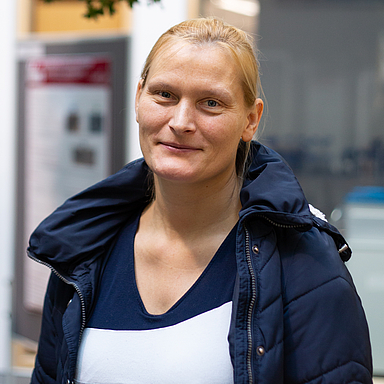
Kerstin Dautenhahnمشاهده پروفایل
استاد مهمان
Professor Kerstin Dautenhahn serves as Visiting Professor in Artificial Intelligence at the Centre for AI and Robotics Research, University of Hertfordshire. A pioneering researcher in socially assistive robotics, she directs therapeutic applications for children with autism and elderly care through human-robot collaboration frameworks. Her research spans Human-Robot Interaction, Social Robotics, and Robot-assisted therapy with expertise in autobiographic memory systems and narrative-driven social learning. Current work focuses on developing adaptive companion robots that evolve through longitudinal human engagement, particularly investigating trust dynamics during error recovery and continual learning mechanisms in therapeutic contexts. Recent publications (2022-2025) reveal concentrated exploration of robot curiosity frameworks, human perception of autonomous decision-making, and error consequence modeling. These studies establish foundational principles for socially intelligent robots that maintain user trust through transparent learning processes and context-aware adaptation. Professor Dautenhahn holds editorial leadership as founding Editor-in-Chief of Interaction Studies and Associate Editor for IEEE Transactions on Affective Computing , International Journal of Social Robotics , and Adaptive Behavior . She maintains Senior Membership in IEEE and active roles in ACM and SSAISB. She has supervised three graduate students and secured 23 research projects including Horizon 2020 initiatives BabyRobot (2016-2018) and SECURE (2015-2019), plus the KASPAR autism therapy project (2013-2018). Her funding portfolio demonstrates sustained focus on translating social robotics research into clinical and domestic applications through multi-institutional collaborations. As principal investigator for the Centre for AI and Robotics Research, she leads the KASPAR humanoid robot development team and coordinates the Robot House 2.0 facility. Her interdisciplinary teams integrate computer scientists, developmental psychologists, and clinical therapists to create evidence-based robotic interventions validated through longitudinal field studies.