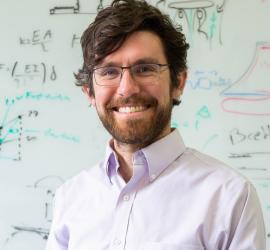
Elliot Hawkes is an Associate Professor in the Department of Mechanical Engineering at the University of California, Santa Barbara (UCSB). His research bridges design, mechanics, and non-traditional materials to develop robust, adaptable, human-safe robots for uncertain environments. He leads the Hawkes Lab, focusing on bio-inspired microstructured adhesives, nonlinear compliant mechanisms, soft actuators, exoskeletons, and growing robots. PhD from Stanford University, 2015 Postdoctoral Scholar at Stanford's CHARM Lab, 2015-2016 Assistant Professor at UCSB since 2016 Current projects include: Material-like robotic collectives with spatiotemporal control Variable friction shoe for locomotor therapy High-force soft actuators for industrial applications Vine-inspired robots for search and rescue Growing robots for biomedical and environmental use Recent publications in Science and Nature highlight breakthroughs in soft robotics and human-safe actuation. His team has received multiple NSF GRFP awards and a UCSB Regents Fellowship. The lab holds patents in adhesive gripping, soft actuation, and reconfigurable robotics.
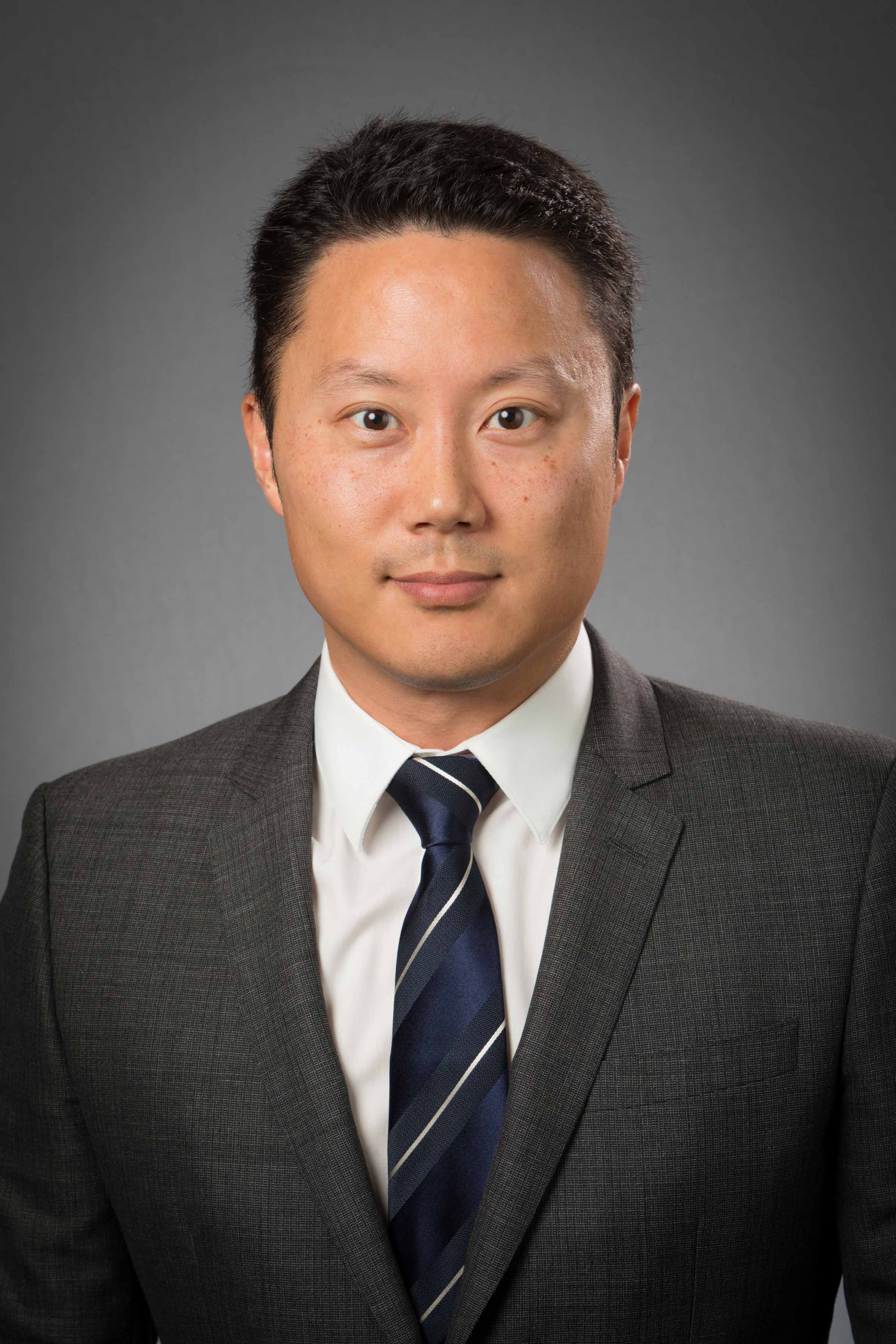
David R. Raleigh, MD, PhD, is an Assistant Professor in the Departments of Radiation Oncology and Neurological Surgery at the University of California San Francisco (UCSF). He serves as a Principal Investigator at the Brain Tumor Center and Director of the Preclinical Therapeutics Core. Education: BA in Molecular and Cell Biology and Cognitive Science (UC Berkeley, 2004), MD and PhD in Pathology (University of Chicago, 2012), Residency in Radiation Oncology (UCSF, 2017) His research focuses on the molecular mechanisms of brain tumor growth, particularly meningiomas, integrating developmental biology with oncology to identify novel treatments. Methodologies include biochemistry, mouse genetics, genomics, and pharmacology. Dr. Raleigh's recent publications highlight molecular classification of meningiomas, genomics, and targeted therapies. Awards include Phi Beta Kappa, multiple travel grants, and the Robert and Ruth Halperin Endowed Chair in Meningioma Research.
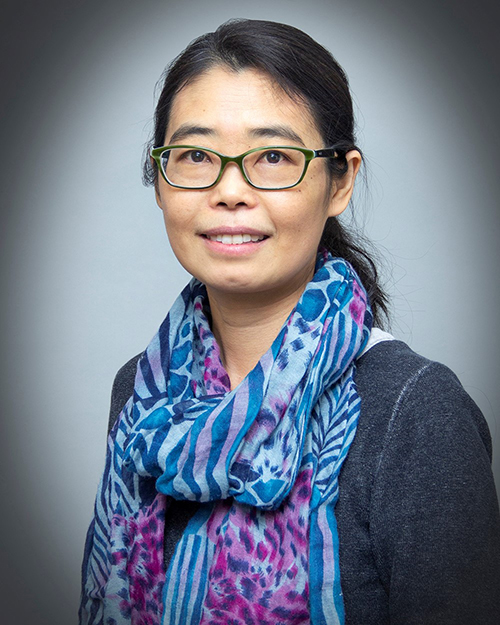
Dr. Yongjie Jessica Zhang is a Professor at Carnegie Mellon University, holding appointments in both the Department of Mechanical Engineering and the Department of Biomedical Engineering . She received her B.S. and M.S. in Engineering Mechanics from Tsinghua University, followed by an M.S. in Aerospace Engineering and a Ph.D. in Computational Engineering and Sciences from the University of Texas at Austin. After a postdoctoral fellowship at ICES, she joined CMU in 2007, advancing from assistant to full professor by 2016. Research Interests : Image-based geometric modeling, mesh generation, finite element analysis (FEA), isogeometric analysis, and applications in computational biomedicine, materials science, and computer-assisted surgery. Leadership Roles : Chair of Solid Modeling Association (2019-2020), USACM Executive Committee Member-at-Large (2017-2021), and ELATE Fellow (2017-2018). Her work addresses the critical challenge of automating high-fidelity geometric modeling and mesh generation for complex domains (e.g., human anatomy), which traditionally consumes ~80% of FEA time. Her group develops AI-driven methods for multiscale modeling (molecular to organ), with applications in neuroscience , biomechanics , and 4D printing . Notable awards include the Presidential Early Career Award (PECASE) , NSF CAREER Award , and ASME Van C. Mow Medal (2025) . Dr. Zhang’s publications span over 170 peer-reviewed articles, focusing on truncated hierarchical B-splines , polycube meshing , and neurite transport modeling . She has advised more than 40 students, including PhD candidates and postdoctoral fellows. Her editorial roles include Associate Editor of Computer Aided Geometric Design and editorial board memberships in Computer-Aided Design and Engineering with Computers .
Karol Budohoski, MD, PhD, FRCS, is an Assistant Professor in the Department of Neurosurgery at the University of Utah , with additional Adjunct Assistant Professor status in Radiology & Imaging Sciences. He specializes in cerebrovascular , endovascular , and skull base neurosurgery , treating complex pathologies like brain aneurysms, arteriovenous malformations, and skull base tumors. Education: PhD in Neurosurgery (University of Cambridge), MD (Medical University of Warsaw), Clinical Fellowships at University of Utah and UCSF His academic focus on subarachnoid hemorrhage pathophysiology and cerebral vasospasm has led to innovations in brain monitoring tools. Recent publications (2023-2025) span neurovascular surgery , stroke interventions , global neurosurgery , and cerebral autoregulation studies. He practices at the Clinical Neurosciences Center in Salt Lake City, Utah, with a patient rating of 4.9/5 (125 reviews), praised for clarity, attentiveness, and technical expertise.
Andrew C. Shin is an Assistant Professor at Texas Tech University within the Department of Nutritional Sciences . His work bridges metabolic health , neuroendocrinology , and neurodegenerative diseases , with a focus on how the brain regulates glucose homeostasis , BCAA metabolism , and bariatric surgery mechanisms . Ph.D. in Neuroscience, Michigan State University (2008) Postdoctoral Fellow, Pennington Biomedical Research Center and Icahn School of Medicine at Mount Sinai Dr. Shin’s research explores the neural pathways involved in appetite regulation , nutrient partitioning , and metabolic resistance . His NIH-funded projects investigate insulin signaling in POMC neurons , BCAA dynamics , and nicotine’s metabolic effects . Recent work highlights the role of the autonomic nervous system in BCAA regulation and its implications for obesity and diabetes . His 15 most recent publications reflect a focus on AI applications in nutrition , BCAA-related pathologies , Alzheimer’s disease , and metabolic surgery outcomes . Key themes include neuroendocrine control , nutritional interventions , and environmental impacts on metabolism . Scientific Awards NIH K01 Award Dr. Shin directs the Mouse Metabolic Phenotyping Facility and collaborates on synbiotic trials for cognitive aging . His work spans basic science and translational research , addressing metabolic disorders and their neurological consequences .
Fuchsia Howard, PhD, RN serves as an Associate Professor and PhD Coordinator at the University of British Columbia School of Nursing. Her office is located at T201 2211 Wesbrook Mall, Vancouver, BC V6T2B5, with contact via phone (1-604-822-4372) and email (fuchsia.howard@ubc.ca). Her research spans oncology nursing, reproductive health, critical care survivorship, and health equity . She investigates fertility preservation for cancer patients, endometriosis-associated dyspareunia management, and digital health interventions for sexual health. Her work emphasizes patient-reported and family-reported outcomes , particularly in chronic disease management and post-ICU recovery. Current projects address social determinants of health in critical illness survivorship and destigmatizing design for sexual health technologies. Her recent publications (2023-2025) demonstrate strong focus on Patient-centered outcome measures in oncology and gynecology Digital resource development for endometriosis and fertility challenges Family caregiver roles in critical illness recovery Health equity in Canadian cancer care systems Key methodologies include qualitative studies, scoping reviews, and mixed-methods approaches. As PhD Coordinator, she guides nursing doctoral candidates though specific students aren't listed in available materials. Her work connects with clinical practice through collaborations with BC Cancer and UBC-affiliated hospitals.
Benoit Rosa is currently a CNRS Researcher within the Robotics, Data science, and Healthcare technologies Team at the ICube Laboratory, University of Strasbourg. Previously, he was a Research Fellow at the Pediatric Cardiac Bioengineering Lab, Boston Children's Hospital, Harvard Medical School (2015-2016), and a postdoctoral fellow in the Robot Assisted Surgery group at the Mechanical Engineering department of KU Leuven, Belgium (2013-2015). He received his Ph.D. in 2013 from Pierre & Marie Curie University (now Sorbonne University) under the supervision of Pr. Guillaume Morel and Pr. Jerome Szewczyk. His PhD was awarded the best PhD thesis award by the CNRS research group on robotics for 2013. Prior to his PhD, he obtained an Engineering Degree (equivalent to a Master's) from Ecole Centrale Paris. Rosa's research focuses on surgical robotics and image-guided control, with particular expertise in the design and control of miniature, distally-actuated and flexible systems for minimally invasive surgery. His work spans from mechatronic design of minimally invasive surgical devices to advanced control algorithms for surgical robots. Key areas include continuum robotics, visual servo control, surgical tool segmentation, and OCT-guided interventions. His research has significant applications in cardiac surgery, endomicroscopy, and various minimally invasive procedures, with a strong emphasis on translating theoretical robotics into practical clinical solutions. His recent publications demonstrate a growing trend toward applying deep learning techniques to enhance surgical robotics, with focus on autonomous systems that improve precision and reduce surgeon cognitive load while addressing challenges in medical imaging and surgical navigation. Scientific Awards: Best PhD thesis award by the CNRS research group on robotics (2013) Rosa has led multiple significant research projects including Image-based tracking of continuum robots (ongoing), Robot-assisted endomicroscopy (2010-2013), Beating heart intracardiac cardioscopy-guided interventions (2015-2019), and Intuitive control of active catheters (2014-2015). His work has resulted in numerous patents and collaborations with leading medical institutions worldwide, securing research funding for advancing surgical robotics technology. He actively participates in the academic community through invited talks and workshops, and maintains strong collaborations with institutions including Harvard Medical School, KU Leuven, and various French research entities, bridging theoretical robotics with practical clinical applications across multiple medical specialties.
Dr. Jackie Cha serves as an Assistant Professor in the Department of Industrial Engineering within Clemson University's College of Engineering, Computing and Applied Sciences. Her research bridges human factors engineering with healthcare innovation, focusing on surgical robotics, physiological signal analysis, and wearable medical technologies to enhance clinical performance and safety. Her academic foundation includes advanced degrees from leading institutions: Ph.D. in Industrial Engineering from Purdue University M.S.E. in Biomedical Engineering from the University of Michigan B.S.E. in Biomedical Engineering from the University of Michigan Cha's research program centers on quantifying human performance in high-stakes medical environments through sensor-based metrics. She investigates nontechnical skills in surgical teams, mental workload during robotic procedures, and ergonomics of exoskeleton implementation in operating rooms. Her work integrates physiological signals, eye-tracking, and proximity sensors to develop objective assessment tools for surgical proficiency and team dynamics. Analysis of her 2023-2025 publications reveals consistent thematic focus on human-robot collaboration in surgery, with emerging trends in AI-driven workload detection (s-DResNet), neural correlates of surgical expertise, and environmental factors affecting robotic surgery outcomes. Key methodological approaches include scoping reviews of human-robot interaction metrics, mixed-methods evaluations of exoskeleton efficacy, and extended reality applications for nontechnical skills training. She leads the ECHO Lab (Engineering for Clinical and Human Outcomes) at Clemson, which develops translational solutions for healthcare human factors challenges. Her lab's work spans from fundamental physiological signal analysis to applied interventions in operating rooms and emergency medical settings.
Doug L. James is a Full Professor of Computer Science at Stanford University since 2015, following roles as Associate Professor at Cornell University (2006-2015) and Assistant Professor at Carnegie Mellon University (2002-2006). He holds a PhD in Applied Mathematics from the University of British Columbia (2001), alongside earlier degrees from the same institution and the University of Western Ontario. His research focuses on computer graphics, sound synthesis, and physically-based modeling, with notable contributions to fluid simulation, cloth animation, and medical modeling. Key achievements include the 2012 Technical Achievement Award from the Academy of Motion Picture Arts and Sciences for 'Wavelet Turbulence,' and the 2013 Katayanagi Prize. He serves as a consulting Senior Research Scientist at Pixar Animation Studios and has led roles like Technical Papers Chair at SIGGRAPH 2015. His work integrates physics-based principles with interactive systems, emphasizing real-time applications and data-driven methods. Research interests span sound synthesis for animations (e.g., cloth, water, impact sounds), deformable models for medical simulation, and tools like 'svMorph' for virtual surgery planning. His publications reflect a blend of algorithmic innovation and practical applications in film, gaming, and healthcare.
Brian Stemper is a Professor in the Joint Department of Biomedical Engineering at Marquette University and Medical College of Wisconsin, and Professor in the MCW Department of Neurosurgery. He serves as Director of the Neuroscience and Biomechanics Research Laboratories at the Zablocki VA Medical Center in Milwaukee, where his research bridges engineering principles with clinical applications in trauma biomechanics. Dr. Stemper holds a PhD in Biomedical Engineering from Marquette University (2004) and a BS from Milwaukee School of Engineering (1998). His career progression includes positions as Assistant Professor (2004-2008), Associate Professor (2008-2017), and Professor (2019-present) across both institutions, with tenure awarded in 2023. His research focuses on biomechanics of traumatic brain injury, spine injury mechanisms, and automotive safety. Stemper's work examines how mechanical forces translate to biological damage in neural and spinal tissues, with particular interest in repetitive head impacts in sports, military aviation injuries, and automotive collision biomechanics. His laboratory develops experimental models to characterize injury thresholds and mechanisms. Analysis of his 15 most recent publications reveals consistent focus on spinal biomechanics (60%), traumatic brain injury (30%), and military/aerospace applications (10%). His work increasingly integrates computational modeling with experimental validation, particularly in personalized injury prediction and the effects of repetitive impacts. 2004 Best Paper by a Young Researcher, International Research Council on the Biomechanics of Impact 2006-2008 Listed in Who's Who in Science and Engineering 2007-2010 Listed in Who's Who in America 2008 Listed in Who's Who in the World 2009 Best Student Paper, Rocky Mountain Bioengineering Symposium 2010 NASS Best Poster Presentation, North American Spine Society Dr. Stemper has secured significant grant funding from NIH, Department of Veterans Affairs, Department of Defense, and Air Force Research Laboratory. His current research examines head impact exposure in athletes, neck and back pain in high-performance aircrew, and factors influencing addiction outcomes following brain injury. He has mentored numerous graduate students and serves on the Institutional Animal Care and Use Committee at the Zablocki VA Medical Center.
Professor Hubert Shum is Professor of Visual Computing and Director of Research in the Department of Computer Science at Durham University. He co-directs the Durham University Space Research Centre and is a Fellow of the Wolfson Research Institute for Health and Wellbeing. His research develops responsible AI methods for computer vision and graphics. He leads projects funded by EPSRC, Ministry of Defence and Royal Society, focusing on human motion analysis, 3D reconstruction, and medical imaging. His work has applications in healthcare, autonomous systems and space technology. Recent publications in IEEE Transactions and CVPR conferences advance human motion prediction, surgical workflow modeling, and 3D vision. He has chaired leading conferences including Pacific Graphics and BMVC.
Xiajun Jiang is an Assistant Professor in the Department of Computer Science at the University of Memphis, joining in Fall 2024. He holds a PhD in Computing and Information Sciences from Rochester Institute of Technology (2024), an M.S. in Computer Science from the University of Southern California (2018), and a B.S. in Electrical Engineering and Automation from Zhejiang University (2016). His research focuses on adaptive AI computing, physics-informed deep learning, and their applications in healthcare, particularly in medical imaging and cardiac simulation. Key contributions include hybrid neural state-space modeling for electrocardiographic imaging and physics-informed frameworks for bi-ventricular electrophysiological simulations. Education: PhD, Rochester Institute of Technology, 2024 M.S., University of Southern California, 2018 B.S., Zhejiang University, 2016 Research Interests: Machine learning for healthcare Adaptive computing in AI models Physics-informed deep learning His work bridges machine learning and biomedical engineering, with applications in cardiac imaging and electrophysiology. Recent articles highlight advancements in hybrid models for ECGI and meta-learning approaches for personalized cardiac simulations. He has reviewed for top conferences like ICLR, NeurIPS, and MICCAI, and contributed to projects like the Computational Biomedical Lab (CBL).
Associate Professor Javad Tavakoli holds a dual appointment at RMIT University’s School of Engineering (Department of Biomedical Engineering) and serves as a Visiting Fellow at the University of Technology Sydney’s School of Biomedical Engineering. His research focuses on biomechanical engineering , biomaterials , and orthopaedic applications , with notable contributions to intervertebral disc-on-a-chip models and hydrogel-based drug delivery systems . He has pioneered cutting-edge technologies such as microfluidic platforms for hydrogel characterization and aggregation-induced-emission fluorogens for biomedical sensing. His academic journey includes a PhD from Flinders University (2015–2018) and postdoctoral work at Flinders University’s China-Australia International Laboratory for Health Technologies (2018–2020). He received the Chancellor’s Research Fellowship from UTS in 2020, enabling the development of the world’s first disc-on-a-chip model, which won the AO Spine Discovery and Innovation Award (2022) and David Findlay Award (2022). Key research interests include organ-on-a-chip systems , mechanobiology , and nanofabrication of biosensors . He leads a team recognized for student achievements such as the UTS Capstone Showcase Judges’ Choice Award (Stephanie Weiss, 2022) and Engineering Female Scientist Award (Maryam Rad, 2022). His work aligns with UN Sustainable Development Goals 3 (Good Health) and 9 (Industry Innovation). Notable awards also include the Best Spinal Research Award (2023), Engineers Australia Excellence Award (2023), and multiple Excellence in Reviewing Awards . His research outputs span biomechanical engineering , additive manufacturing , and microfluidics , with over 70 peer-reviewed publications and three commercialized products. Current initiatives include advancing 3D-printed orthopaedic implants , low back pain diagnostics , and fluorescent hydrogel applications . Collaborative projects with industry and global institutions underscore his translational research impact.
Dr. Farzan Sasangohar is an Associate Professor in the Department of Industrial & Systems Engineering at Texas A&M University, holding the Mike and Sugar Barnes Faculty Fellowship. He also serves as an Assistant Professor at Houston Methodist Hospital's Center for Outcomes Research and Department of Surgery. His academic roles include affiliations with the Environmental and Occupational Health, Biomedical Engineering, and multiple centers focused on health technologies and systems design. Education: PhD in Industrial Engineering (Human Factors Engineering), University of Toronto (2015) Research Interests: Human factors in healthcare delivery and telehealth systems Wearable technology for stress/health monitoring Crisis management team cognition and decision-making Remote patient monitoring systems Mental health self-management interventions Awards: Jack A. Kraft Innovator Award (HFES, 2023) Dr. Hamed K. Eldin Early Career Award (2022) William C. Howell Young Investigator Award (2021) TEES Young Faculty Fellow (2021) Nominated for Ergonomics Journal Best Paper (2021) Advising & Grants: Mentored over 15 graduate students including Dr. Mahnoosh Sadeghi (PhD 2023) Recipient of NSF PATHS-UP Engineering Research Center funding Active grants in offshore worker fatigue management and telehealth integration Labs/Teams: Director of the Applied Cognitive Ergonomics Lab (ACE-lab) , focusing on human-system interactions in healthcare, aviation, and disaster management. Current projects include: - Wearable stress monitoring systems - Telehealth integration frameworks - Crisis team cognition analysis
Dr. Anil Ufuk Batmaz is an Assistant Professor in the Department of Computer Science and Software Engineering at Concordia University. His research focuses on Virtual Reality (VR), Augmented Reality (AR), and Human-Computer Interaction, with emphasis on interaction techniques, immersive analytics, and motor skill training systems. He holds a BSc in Electrical and Electronics Engineering (2007-2011), an MSc in the same field (2011-2013), and a PhD in Biomedical Engineering (2015-2018). His work bridges engineering and cognitive science, investigating how visual and haptic feedback impact user performance in immersive environments. Research interests include: 3D interaction techniques for mid-air tasks Effects of display technologies on motor coordination Hybrid UI design for mixed reality systems Training systems for precision tasks using VR Recent publications emphasize evaluation of AR/VR interfaces in healthcare, sports training, and collaborative environments. His work has appeared in venues like IEEE TVCG, ACM CHI, and ISMAR, addressing challenges in spatial navigation, error feedback, and system reliability.