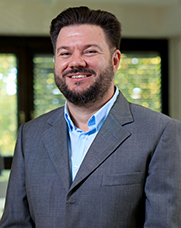
Mario Ančić is an Associate Professor at the Faculty of Forestry and Wood Technology, University of Zagreb. His role involves teaching Basics of Digital Cartography and conducting research in geospatial technologies. Located at the Green Building, 3rd floor, Room 315, he can be reached via +385 1 2352 508 or mancic@sumfak.unizg.hr . Professional Experience: 2002 - Present: Faculty of Forestry and Wood Technology, University of Zagreb 2001 - 2002: Hrvatske šume d.o.o. (Forest Management) Research Interests focus on: Cartography and Remote Sensing in Forestry GIS Applications for Environmental Modeling Integration of Satellite/UAV Imagery in Forestry Management His educational trajectory includes roles as Expert Associate (2002-2006), Assistant (2006-2012), Senior Assistant (2012-2016), and current Associate Professor (2016–). Advising and Grants: No formal advisee records provided. Active in curriculum development and educational technology innovation projects. Labs/Teams: Collaborates with institutions like the Institute of Wood Science and Institute for Materials Technology within the Faculty.
Nikola Vlahović, PhD is a Full Professor at the Department of Informatics , Faculty of Economics and Business, University of Zagreb. His work bridges informatics with business applications, focusing on data-driven decision making and digital transformation. University: University of Zagreb School: Faculty of Economics and Business Department: Informatics Academic Rank: Professor Email: nvlahovic@efzg.hr Research Focus Vlahović’s research spans information systems , process mining , and emerging technologies in business . His work emphasizes: Application of machine learning (e.g., Kohonen maps) to financial fraud detection Integration of blockchain into e-government frameworks Development of semantic analysis tools for website benchmarking Exploration of mobile-assisted learning and NLP in education Recent articles highlight his contributions to smart city technologies , retail innovation , and quality assurance in digital interfaces.
Assoc. Prof. Dr. Sc. Goran Đambić is an Associate Professor at Algebra University in Croatia, focusing on information sciences , computer science , and digital technologies applied to education and social/economic challenges. His work bridges software engineering , machine learning , and cybersecurity with pedagogical innovation in higher education. MSc in 2007, Faculty of Electrical Engineering and Computing, Zagreb His research emphasizes machine learning and automated assessment in education (via systems like AcpSQL), cybersecurity (honeypots), and IoT applications for environmental monitoring. He has published over 25 scientific papers and contributed to advancements in Kubernetes orchestration , ARM/RISC-V architectures , and LPWAN networks . Recent publications highlight trends in AI-driven education , smart public transport , and secure business systems . His work spans SQL query evaluation , containerization , and blockchain applications in communication systems. As a lecturer and researcher, he has held roles at Algebra University since 2007, advancing from lecturer to assistant professor and scientific associate . While no specific scientific awards are listed, his career reflects continuous engagement in digital transformation and pedagogical innovation .
Assistant Professor Juraj Benić is a control engineer at the School of Applied Mathematics and Informatics, Josip Juraj Strossmayer University of Osijek, Croatia . His interdisciplinary work bridges control theory, fluid power systems, IoT, and data-driven maintenance , with applications ranging from forestry vehicles to unmanned aerial systems. Education PhD in Control Theory and Mechanical Engineering, 2022 – University of Zagreb, Faculty of Mechanical Engineering and Naval Architecture MSc in Control Theory and Mechanical Engineering, 2017 – University of Zagreb, Faculty of Mechanical Engineering and Naval Architecture BSc in Control Theory and Mechanical Engineering, 2015 – University of Zagreb, Faculty of Mechanical Engineering and Naval Architecture Research Interests Prof. Benić’s core research areas include: Energy-efficient direct-driven hydraulic (DDH) systems for mobile machinery Hybrid-electric powertrains for forestry skidders and multirotor UAVs IoT-enabled predictive maintenance using convolutional neural networks and vibration analysis Fuzzy-logic and ontology-based controllers for electro-hydraulic systems Human-robot interaction and context-aware robotics Computational linguistics and digital corpora of Croatian dialects Publication Trends Since 2018 he has produced more than 25 peer-reviewed works. The 2023-2024 journal articles focus on hybrid UAV propulsion and comparative energy efficiency of hydraulic systems , while earlier works delve into fuzzy control ontologies , predictive maintenance via IIoT and fuel-saving hybrid skidders . Interspersed linguistic contributions showcase his versatility in digital dialectology. Scientific Awards & Recognition While explicit awards are not listed, he has delivered invited lectures (University of Maribor, 2021) and participated in study visits (South Kazakhstan State University, March 2024), indicating growing international recognition. Supervision & Collaboration He collaborates closely with colleagues from the University of Zagreb and University of Osijek, co-authoring with researchers such as D. Pavković, Ž. Šitum, M. Cipek, and D. Brezak. Student supervision is implied through experimental rigs and project descriptions, although specific advisee names are not provided. Laboratory & Field Infrastructure Research is supported by fully instrumented hydraulic test benches, a retrofitted deep-drilling rig, IoT accelerometer networks, and field-measurement campaigns on commercial skidders equipped with telematics (WIGO-E) for long-term fuel and energy-data logging.
Professor Irena Srdanović is a distinguished full professor at the Faculty of Philosophy, Juraj Dobrila University in Puli, Croatia, where she serves as head of the Department of Asian Studies and head of study. She is internationally recognized as an expert in Japanese corpus linguistics, computer-assisted language learning, lexicography, and teaching Japanese as a foreign language. She founded the first accredited undergraduate and graduate Japanology programs in Croatia at the University of Juraj Dobrila in Puli, where she leads the Department of Asian Studies. Professor Srdanović completed her first level of Japanology at the University of Belgrade, earned her Master's degree at the University of Ljubljana, and received her PhD jointly from Tokyo Institute of Technology and the University of Ljubljana in 2009. She conducted research at the prestigious 21st Century COE Program and was selected as a Special Researcher at TITECH. She also spent a year at the National Institute for Japanese Language and Linguistics to further her expertise. Her research focuses on empirical approaches to language learning and description based on large Japanese language corpora (BCCWJ, CEJC, JpTenTen), applying new technologies in language learning. She has made significant contributions to corpus linguistics and lexicography, particularly through developing the grammar file for lexical and grammatical profiling of Japanese in the Sketch Engine system, and participating in building web corpora (JpWaC, JpTenTen, tourism corpus). She is especially noted for developing systems for extracting collocations and remote relations, which have improved educational and lexicographic resources. She actively involves students in research, from conference presentations to lexicographic projects. Professor Srdanović is the author and editor of several scientific monographs with international review, including 'Introduction to Japanese Linguistics,' a pioneering work in Japanology in the region, and 'Digital Resources for Learning Japanese' (University of Bologna). She publishes in prestigious journals (Rasprave, Metodički ogledi, Nihongo kyouiku, Springer Lecture Notes in Computer Science, ALA, Natural Language Processing), and is a member of the editorial boards of three international journals (Acta Linguistica Asiatica, Slovenščina 2.0, Tabula). She has delivered invited lectures at international conferences and has been a guest researcher at institutions across Europe and Japan. Japanese Ministry of Foreign Affairs' Award for promoting mutual understanding between Japan and Croatia (awarded August 8, 2024) As the founder of Japanology in Pula, she has initiated innovative teaching approaches, collaborations with cultural and economic institutions, and established numerous international academic connections. She has organized multiple international conferences and mentored numerous students. She was awarded the Recognition from the Japanese Ministry of Foreign Affairs for her contribution to the development of Japanese-Croatian cultural relations and for promoting friendly relations between Japan and other nations.
Dr. Zdravko Kunić is an Assistant Professor at the University of Algebra, Department of Information Systems and Business Analytics, and a Senior Lecturer at the University of Zadar's Department of Tourism and Communication Sciences. He leads projects at AlgebraLAB, the university's research institution, focusing on data science, AI, and decision support systems. His work spans high-performance computing architectures, cybersecurity honeypots, wind forecasting algorithms, and automated video editing systems. He collaborates with the Jožef Stefan Institute in Slovenia and participates in EU initiatives like the Pan-European Network of Digital Innovation Centers. His research emphasizes visual business analytics, integrating data science into economic and educational progress. Notable projects include developing scientific web applications using Python, traffic management systems with weather forecasting corrections, and TLS security analyses for Croatian websites. He actively contributes to international conferences and the Erasmus+ program, enhancing his expertise in global academic networks. Dr. Kunić's teaching spans undergraduate and graduate courses in information systems, digital communication, and data-driven decision making. His applied work includes designing systems for insurance, telecoms, and public administration. Despite no explicitly listed awards, his extensive project portfolio underscores his impact in both academia and industry.
Igor Dobrača is an Adjunct Assistant Professor at the Juraj Dobrila University of Pula , affiliated with the Faculty of Medicine and working within the Department for Research/Arts, Technology and Entrepreneurship . He serves as a lecturer in charge for undergraduate and integrated graduate courses in Web Design and Tools 2.0 and Audio and Video Processing , focusing on integrating digital technologies into educational frameworks. Research Focus: Educational Technology, Digital Competence Development, Environmental Monitoring in Education, Gamification, Assistive Technologies, and Software Localization. Teaching Roles: Lecturer in charge for courses related to web design, ICT, and multimedia processing. Key Contributions: Work on classroom environmental monitoring, gamification in curricular education, and multilingual educational software adaptation.
Mirjana Radetić-Paić is a full Professor at the Faculty of Educational Sciences, Juraj Dobrila University of Pula, Croatia. Her academic career spans roles such as Vice-Rector for Students (2019-2025), Dean (2015-2018), and Head of the Department of Educational Sciences (2014-2015). She holds a PhD in Pedagogy and has over two decades of experience in higher education, specializing in inclusive education, social pedagogy, and behavioral disorders in children and youth. Education: BSc (1994), MSc (2002), PhD (2009) from University of Zagreb Key roles: Vice-Rector, Dean, Department Head, Editor-in-Chief of 'Metodički obzori' Her research focuses on inclusive education practices, behavioral intervention strategies, and youth risk behaviors. She has authored 13 books and over 70 scientific papers, emphasizing social pedagogy, family resilience, and teacher competencies. Awards include the 2012 Best Paper Prize and recognition from educational institutions and Policlinic Pula. Her work addresses community-based prevention programs and integrates modern technologies in education. She also contributes to teacher training initiatives and cross-cultural educational collaborations.
Ana Lokas Ćošković holds dual roles as a Lecturer in English Language Teaching and Head of the Department of General Courses at Algebra University College. She specializes in Business English, English for IT, and Computer-Assisted Language Learning (CALL). Her academic background includes a degree from the Faculty of Humanities and Social Sciences (University of Zagreb) and a Master's in Public Relations. Her research focuses on student attitudes toward technology integration in education, ESP methodologies, and regional higher education trends. Notable work includes analyses of AI adoption in writing pedagogy and netspeak patterns in student communication. Previously taught at institutions like Istanbul International Preschool and private language schools, she also contributes to curriculum development at Algebra d.o.o. where she prepares state exam materials.
Željka Car is a Professor at the Faculty of Electrical Engineering and Computing (FER) , University of Zagreb, Croatia. She serves as Head of the Department of Telecommunications and focuses on research in telecommunications, software engineering, and human-computer interaction. Research Interests : Accessibility in digital systems, augmented reality, assistive technology, serious games for education, machine learning applications, network reliability, and project management. Teaching : Leads courses in project management and software development methodologies. Projects : Involved in developing ICT-AAC applications for children with developmental disabilities, VR/AR tools for military and educational use, and software process improvement frameworks. Publications highlight trends in accessible software design, gesture-based interfaces, and integration of emerging technologies with augmentative and alternative communication (AAC) systems.
Marija Vukšić Pučar, PhD, is a Lecturer at the Department of Business Foreign Languages, Faculty of Economics and Business, University of Zagreb. Her academic work bridges linguistics, educational technology, and sociocultural analysis. Education: PhD in Ethnology and Anthropology (University of Zadar, 2024), MA in English and Ethnology (University of Zagreb, 2016), BA in English and Ethnology (University of Zagreb, 2013) Her research focuses on: Business English and English for Specific Purposes Game-based and E-learning methodologies Scientific communication and qualitative research applications Anthropological analysis of healthcare and sustainability frameworks Article trends highlight her expertise in: Educational technology implementation during the pandemic Digital solutions for elderly healthcare Language pedagogy in business contexts Cultural models of sustainable development
Ivan Lorencin is an Assistant Professor at the Faculty of Informatics in Pula , University of Pula. He holds a PhD in Electrical Engineering and Computer Science (2022) from the University of Rijeka, where he also graduated in 2018. His academic roles include Vice-Dean for Business Cooperation and Science, and he teaches courses such as Artificial Intelligence, Network Systems, and Mechatronics. PhD: 2022, University of Rijeka MSc: 2018, University of Rijeka Dr. Lorencin’s research focuses on Artificial Intelligence , Robotics , and High-Performance Computing . His work spans biomedical applications (e.g., cancer diagnostics), maritime domain (e.g., vessel recognition), and energy systems (e.g., power plant optimization). He has published over 90 papers, with 31 in Q1/Q2 journals. His recent publications emphasize machine learning in healthcare (bladder/cervical cancer diagnosis), symbolic regression for energy systems, and computer vision applications (YOLO algorithms, CLIP). He collaborates on international projects like DATACROSS , EDIH Adria , and Erasmus+ WICT . He serves as an editor for the journal Mathematics and contributes to scientific consortia including the Science Center for Excellence in Data Science . His teaching portfolio includes courses in artificial intelligence, data science, and robotics, with a focus on practical exercises and thesis supervision.
Assistant Professor Nikola Tanković, Ph.D. (born 1986 in Pula, Croatia) is affiliated with the Faculty of Informatics in Pula at Juraj Dobrila University of Pula . He received his B.Sc. (2009) and Ph.D. (2017) in Computer Science from University of Zagreb Faculty of Electrical Engineering and Computing. His roles include Project Leader of EDIH Adria , Vice Dean for Science and Industry Relations (2020-2024), and Member of University Informatics Committee (2019-present). Teaching: Offers courses in Programming, Software Engineering, Distributed Systems, and Web Applications Research: Focuses on Software Modeling, Quality Optimization, Distributed Systems, and Machine Learning applications across domains His 15 most recent publications span Cloud Computing , Peer-to-Peer Learning , Medical Imaging Optimization , and Business Process Modeling . Awards include the Rector's Award for SCORE 2009 Championship . He advises students on projects related to database systems, distributed architectures, and AI applications. Current initiatives include EDIAH Adria (European Digital Innovation Hub) and EVOSOFT (Software Evolution Analysis).
Luka Blašković, MSc in Informatics, is an Assistant Professor at the Faculty of Informatics in Pula, Croatia. He contributes to both undergraduate and graduate programs, teaching courses in Operating Systems, Programming in Scripting Languages, Business Process Management, Web Applications, and Distributed Systems. Department: Department of Informatics Research Focus: Computer Science, Game Development, Artificial Intelligence, User Experience Projects: Key participant in the EDIH Adria initiative (European Digital Innovation Hub) His research spans Human-Computer Interaction , Gaming Experience Evaluation , and Mobile Banking Applications . Recent work includes developing a conversational agent for personalized teaching materials (2024) and analyzing EDIH Adria TBI projects' impact (2025). Scientific publications include studies on Unity Engine game development (2023), vector databases (2022), and mobile banking quality (2022). While no explicit awards are listed, his active participation in international conferences like MIPRO underscores his academic engagement. Contact: luka.blaskovic@unipu.hr | Personal Website