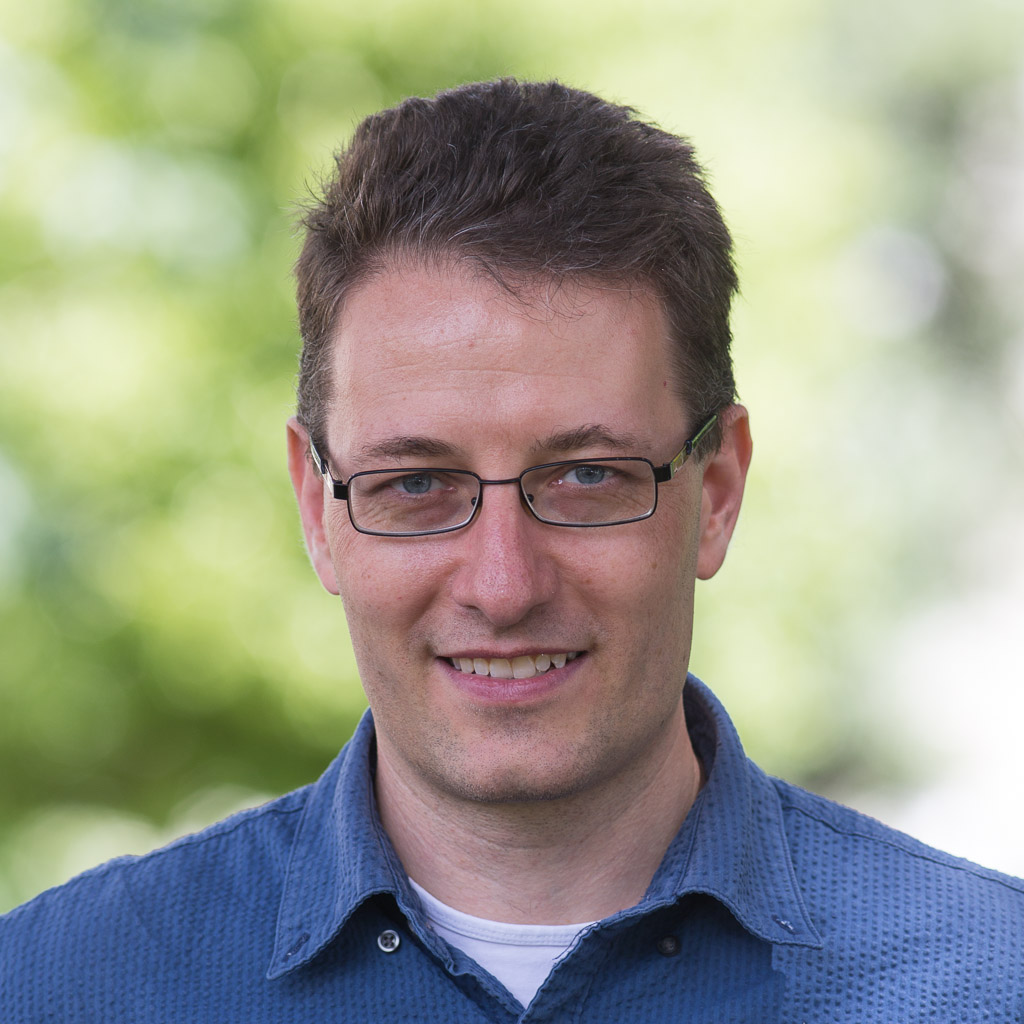
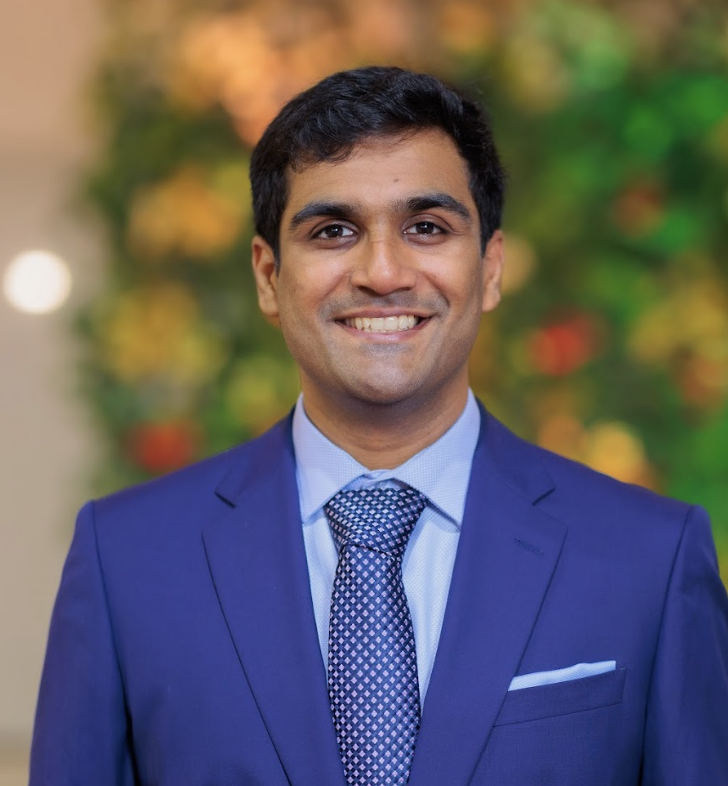
Dr. Johannes Graën is a Researcher at the University of Zurich , affiliated with the Department of Computational Linguistics under the Faculty of Arts and Social Sciences . He leads the Language Technology group within the Linguistic Research Infrastructure, focusing on corpus linguistics, computer-assisted language learning (CALL), and games with a purpose (GWAP). Primary Affiliation: University of Zurich Role: Researcher and Educator His research emphasizes corpus linguistics , NLP tools for education , and language learning games . He develops web-based infrastructures like the LiRI Corpus Platform and SwissBERT, a multilingual language model tailored for Swiss languages. His work often intersects with machine translation , word alignment , and multilingual resource exploitation . The trends in his publications highlight multimodal corpus analysis , CALL applications , and parallel corpora modeling . He has contributed to tools like Multilingwis and SPARCLING, which enhance the accessibility and annotation of multilingual datasets.
Matthias Hauswirth is an Associate Professor at the Faculty of Informatics of the Università della Svizzera italiana (USI), leading the Lugano Computing Education Research Lab (LuCE) and the Software and Programmer Efficiency (SAPE) research group. His research bridges programming language design and computing education, with a focus on how people learn to program. He actively contributes to Swiss national initiatives like GymInf to train high school informatics teachers and has co-authored influential textbooks such as Informatik - Programmieren und Robotik . His teaching spans undergraduate, graduate, and teacher-training courses, emphasizing engaging pedagogy. He pioneered USI's Undergraduate Research Opportunities Program (UROP) and developed educational tools like PyTamaro, Expression Tutor, and the Progmiscon inventory. His prior work on software performance explored system-layer interactions from hardware to applications. He serves on program committees for conferences like SIGCSE and ICER, and organized ICER 2022. His contributions include innovative teaching materials, national teacher-training programs, and open-source platforms enhancing programming education globally.
Nikolaos Tsourakis is a researcher affiliated with the University of Geneva , specifically the Faculty of Translation and Interpreting , and contributes to the TIM/ISSCO research groups. His work primarily focuses on natural language processing, speech technology, and computer-assisted language learning (CALL), with a strong emphasis on accessibility and medical applications. Research Interests Natural Language Processing Speech-to-Speech Translation Text Simplification Computer-Assisted Language Learning (CALL) Medical Informatics Multimodal Interaction Tsourakis's recent publications highlight advancements in French text simplification, robust synthetic data generation, and the use of BERT for complexity assessment. His work often integrates machine learning techniques with practical applications in medical and educational contexts. Notable Projects BabelDr : Web platform for rapid development of medical speech translation CALL-SLT : Spoken CALL systems for language learning MEDSLT : Medical speech translation systems Tsourakis has supervised no formal advisees but has contributed to numerous publications and research initiatives, particularly in low-resource language processing and ethical AI design.
Rishabh Iyer is an Assistant Professor in the Electrical Engineering and Computer Sciences department at the University of California, Berkeley. His research bridges computer systems, networking, and formal methods with a focus on performance predictability and reliability. Prior to Berkeley, he completed his PhD at EPFL and undergraduate studies at IIT Bombay. His educational background includes: PhD in Computer Science from École Polytechnique Fédérale de Lausanne (EPFL) Bachelor's degree from Indian Institute of Technology Bombay (IIT Bombay) Iyer's research centers on performance interfaces for computer systems – creating succinct abstractions that allow engineers to reason about system performance without understanding implementation details. His work spans three major directions: (1) Extracting performance interfaces from implementations, (2) Designing systems with predictable performance, and (3) Formally verifying performance claims. This research combines operating systems, networking, computer architecture, and formal verification techniques to address performance unpredictability in modern systems. His group develops tools like PIX for network functions, KFlex for kernel extensions, and Software LPN for hardware accelerators. His publications reveal strong focus on performance modeling for network functions, kernel extensions, and hardware accelerators, with recent work expanding into real-time systems and SD-WAN validation. The research consistently targets practical impact, with deployments at companies like Meta and Alibaba. Scientific recognition includes: ACM SIGOPS Dennis M. Ritchie Award Eurosys Roger Needham PhD Award Dimitris N. Chorafas Award Best Paper at VDAT 2019 Iyer actively advises students at UC Berkeley and teaches courses including CS 294-262 (Performance Analysis) and CS 168 (Internet Architecture). Previously at EPFL, he taught Principles of Computer Systems, Software Engineering, and Vector Calculus. His group seeks talented students interested in building reliable, high-performance systems. Current research directions include performance interfaces for distributed applications, next-generation kernel extensions, and formally verified network systems. He leads research within UC Berkeley's systems community and maintains strong connections with EPFL's Dependable Systems Lab where he completed his PhD.