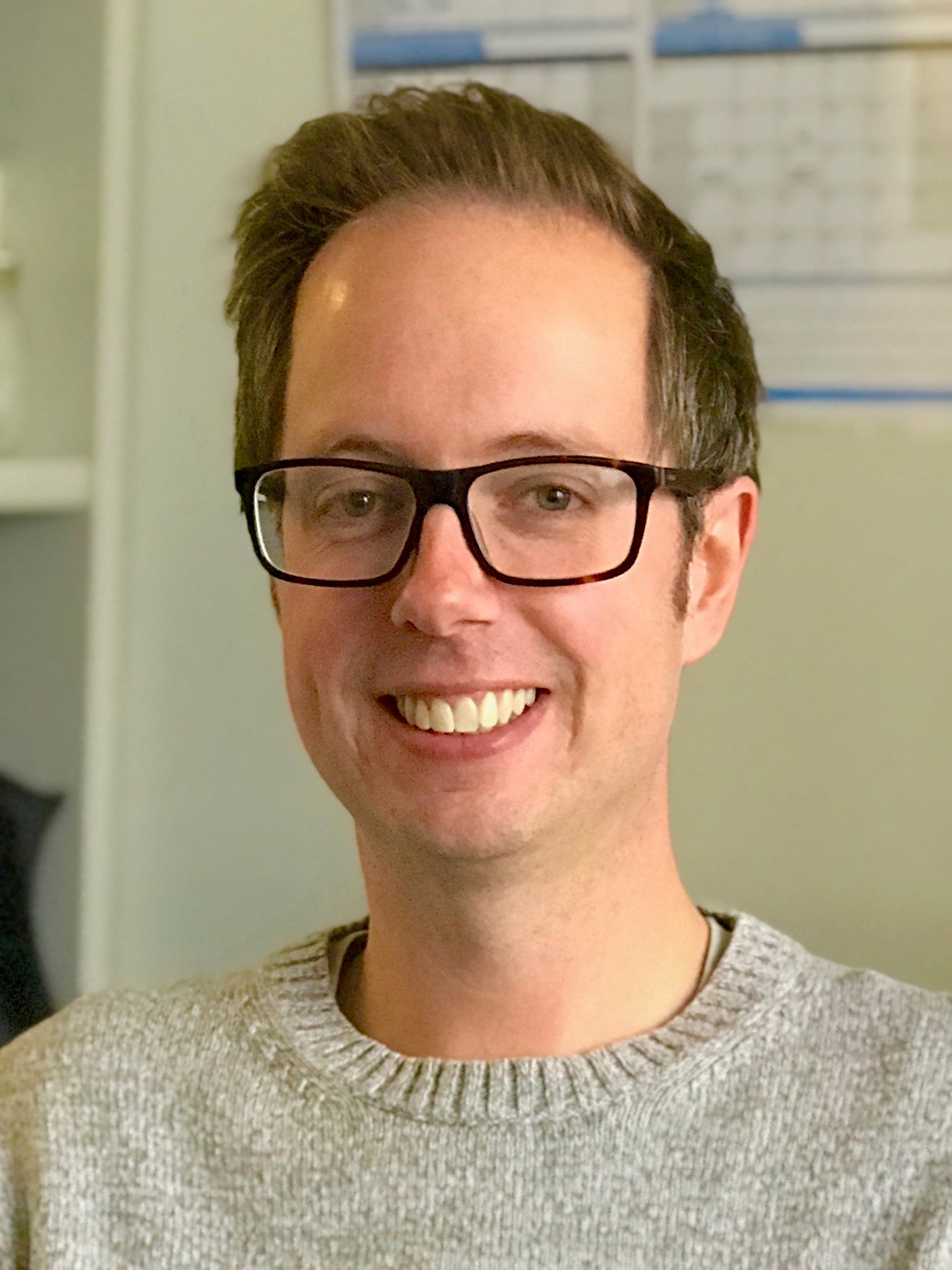
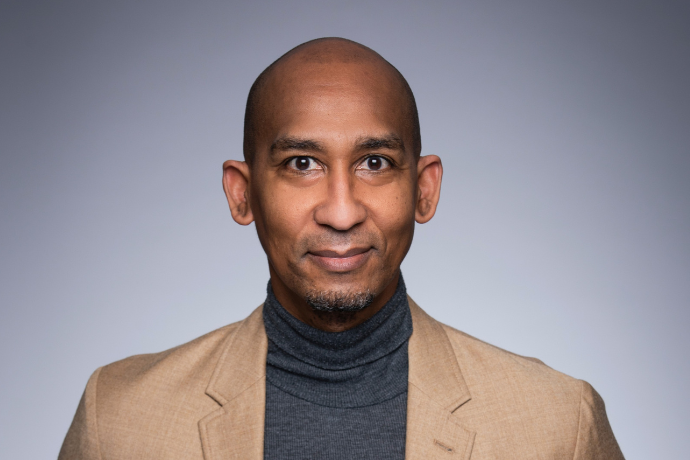
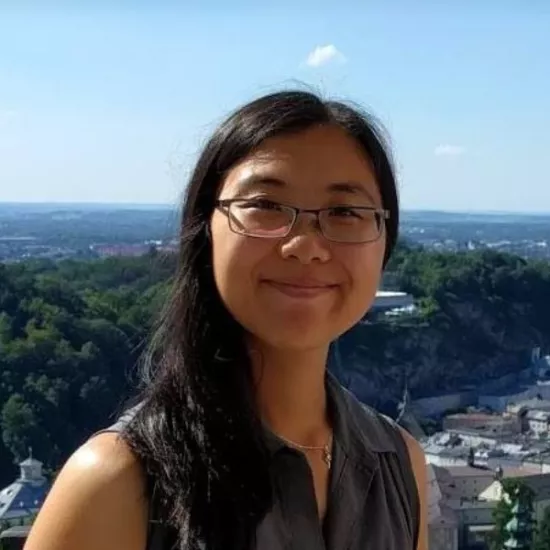
Zhi Li is a faculty member at the University of Saskatchewan in the Department of Linguistics . With expertise in applied linguistics and technology-assisted language learning , their work bridges language assessment and computational linguistics . Primary research: language testing , CALL , corpus-based analysis Key methodologies: NLP , text mining , multimodal analysis Research trends include: Automated Writing Evaluation (AWE): Systematic impact analysis on grammatical accuracy and ESL pedagogy . Assessment Validity: Argument-based approaches to placement tests and response time metrics . Technological Integration: Mobile-assisted learning, multimodal lecture analysis , and digital discourse patterns .
Dr. Sihang Liu is an Assistant Professor in the School of Computer Science at the University of Waterloo. Prior to this role, he served as a visiting faculty member at SystemsResearch@Google. He holds a PhD from the University of Virginia, where his research was supported by the Google Fellowship Award. His academic career has been marked by contributions to computer architecture, systems, and persistent memory technologies. Dr. Liu's research interests span computer architecture, systems, and cybersecurity, with a focus on persistent memory systems, energy-efficient computing, and data center optimization. His work bridges hardware-software co-design and explores challenges in scalable computing, fault tolerance, and sustainable AI systems. His recent publications highlight advancements in adaptive memory tiering (HybridTier), carbon intensity forecasting (EnsembleCI), and securing persistent memory (Side-Channel Attacks on Optane). These contributions underscore his commitment to addressing critical issues in modern computing systems' performance, security, and environmental impact. Awards: Google Fellowship Award (PhD), NVMW Memorable Paper Award Finalist (2019), 2019 MICRO Top Picks Honorable Mention Professional Service: Program committees for ISCA, MICRO, ASPLOS; Artifact evaluation roles in leading conferences As an advisor, Dr. Liu mentors a diverse group of students, including current PhD candidates Henry Tian and Desen Sun, and numerous undergraduates. His lab focuses on innovation in sustainable computing and resilient systems design.
Dr. Allyson Eamer is an Associate Professor and Associate Dean in the Faculty of Education at Ontario Tech University. She holds a PhD in Applied Linguistics from York University, an M.Ed. in Applied Psychology from the Ontario Institute for Studies in Education (OISE) at the University of Toronto, and a B.Ed. and B.A. in Psychology from York University and U of T, respectively. Her research focuses on online language learning, multilingualism, Indigenous language revitalization, and the sociopolitical dimensions of language education. Dr. Eamer has pioneered initiatives such as Ontario Tech University’s ESL School (2017) and the TESOL program (2020). She was awarded the 2013 Nantucket Project Fellowship for her work enabling Indigenous elders to teach Plains Cree and Dene languages online. Her research is cited in global linguistic literature, including by Dr. Tove Skutnabb-Kangas. She teaches courses like Computer Assisted Language Learning (CALL) and Second Language Theory and Pedagogy. Her research interests span digital literacy, cyber colonialism, and equitable access to education. She develops online courses to enhance English proficiency globally and advocates for multilingualism as a societal asset. Dr. Eamer also contributes to language preservation through technology and collaborates internationally on language revitalization projects.
Dr. Kent K. Lee is an Associate Professor in the Department of Educational Psychology at the University of Alberta's Faculty of Education, and serves as the Graduate Coordinator within the Faculty's Dean's Office. His expertise spans TESOL, second language acquisition, and adult literacy education. He holds certifications from Alberta Education and TESL Canada, and actively engages with the TESL community through professional development initiatives and volunteer work. Lee's research focuses on practical issues in language teaching, emphasizing teacher collaboration, self-regulated learning, and technology-enhanced instruction. He teaches undergraduate and graduate courses including EDEL 495, EDSE 369, and EDPY 573, covering topics like ESL methodology, CALL, and settlement education. His research explores metacognition in language learning, portfolio-based assessments, and the role of social platforms like X/Twitter in TESOL communities. Lee advocates for evidence-based practices in K-12 and settlement language programs, emphasizing partnerships between researchers and educators. Recent studies include examining high school ELLs' experiences with online instruction, the emotional dynamics of adult literacy learners, and the effectiveness of professional learning communities. His work bridges theory and practice, aiming to improve outcomes for diverse language learners and educators.
Kyle Scholz is an Educational Developer and Interim Managing Director of the Teaching Innovation Incubator at the University of Waterloo. His role focuses on advancing teaching innovation through experimentation, collaboration, and strategic communications. He holds a PhD in German Applied Linguistics (2015) and an MA in German (2010), with research expertise in digital game-based language learning, ePortfolios, and second language development. He chairs the annual University of Waterloo Teaching and Learning Conference and administers the LITE grant program. His work includes facilitating workshops on pedagogical research design and leading initiatives like the Integrity Matters academic integrity program. Scholz also teaches German language courses and serves as Co-Editor of the Canadian Journal for the Scholarship of Teaching and Learning (CJSoTL). His research interests span game-based learning frameworks, ePortfolio implementation in competency development, and the role of technology in enhancing equity in education. He actively contributes to academic communities through conference presentations and editorial roles, emphasizing practical innovations in higher education pedagogy.
Francis Bangou is the Dean of the Faculty of Education and a Full Professor of Second Language Education (French and English) at the University of Ottawa. His research focuses on adapting second language teachers and learners to unfamiliar environments, integrating digital technologies in language education, and post-structuralist perspectives. He holds a PhD from The Ohio State University (2003) and has been at the University of Ottawa since 2007. He directs the EducLang research group and leads projects on inclusive plurilingual practices and technology-enhanced language teaching. Education: PhD in Foreign and Second Language Education, The Ohio State University (2003) Research interests include second language teacher education, digital technologies in language pedagogy, and new materialist frameworks. His work emphasizes equity, diversity, and inclusion (EDI), particularly in francophone minority contexts. Notable contributions include co-editing Deterritorializing Language, Teaching, Learning, and Research (2020) and leading SSHRC-funded initiatives to build teachers’ digital competencies. Professor Bangou has received prestigious awards, including the 2022/2023 Excellence in Education Award for his transformative teaching and research. He actively promotes anti-racism and gender diversity through committees and community events, fostering inclusive educational practices both locally and globally.
Dr. Majid Majzoubi is an Assistant Professor of Strategic Management at the Schulich School of Business, York University . His research focuses on the interplay between organizational strategy and social evaluation, particularly how firms use communication to navigate external audiences' judgments. He employs advanced computational methods like machine learning and NLP to analyze vast datasets, pioneering novel approaches to strategic management questions. Key Research Themes: Category exemplar positioning, audience composition premiums, optimal distinctiveness, and security analyst evaluations. Awards: Multiple Seymour Schulich Teaching Excellence Awards, Foster’s Excellence in Teaching Award, and a SSHRC Insight Development Grant (2025). His work bridges strategic positioning and computational analysis, with publications in top journals such as Strategic Management Journal and Organization Science . Teaching includes undergraduate and graduate strategic management courses, where he consistently earns high evaluations. He actively supervises doctoral students and contributes to the academic community through journal reviewing and conference organizing.
Marie-Josée Hamel is Full Professor at the Official Languages and Bilingualism Institute, University of Ottawa. Education: Ph.D. in Language Engineering (UMIST, 2003), M.A. in Linguistics (Université de Montréal, 1994). Research develops technology-enhanced language tools, focusing on: Parser-based CALL systems Online learner dictionaries Usability testing frameworks Holds research chair for CALL innovations and directs graduate studies. Teaches technology-integrated French pedagogy.
Travis Gagie is an Associate Professor in the Faculty of Computer Science at Dalhousie University, where he conducts research on compact data structures with applications in bioinformatics and computational genomics. He is currently teaching CSCI 6905: Compact Data Structures in Computational Genomics and is funded by an NSERC Discovery Grant (RGPIN-07185-2020). His work bridges algorithmic design with real-world challenges in genomic data representation and equitable healthcare. His educational background includes: BSc in Cognitive Science from Queen's University (Canada) MSc in Computer Science from the University of Toronto Dr. rer. nat. in Genome Informatics from Bielefeld University (Germany) Travis Gagie's research focuses on overcoming biases in genomic data analysis, particularly those arising from the use of a single reference genome. He investigates pan-genomic data structures such as variation graphs, founder sequences, and r-index to enable more inclusive and accurate genomic medicine. His work emphasizes scalable indexing methods for diverse populations and rare disease diagnosis, intersecting with ethical considerations in precision medicine. He has collaborated with researchers globally and taught courses in Spain and Chile. The recent articles in his portfolio reflect a strong trend in developing and analyzing data structures for pan-genomic applications. These include variation graphs (vg, minigraph), compact indexes (r-index, MONI/PHONI), and alignment tools (Giraffe, PLAST), all aimed at improving scalability, accuracy, and inclusivity in genomics. His research integrates theoretical computer science with practical bioinformatics challenges, particularly in the context of human and microbial pan-genomes. Although no formal scientific awards are mentioned in the provided texts, his active research program, teaching responsibilities, and grant funding indicate strong academic recognition and productivity. Travis Gagie has previously served as a research assistant at the Italian National Research Council and the University of Eastern Piedmont, completed postdoctoral work at the University of Chile, Aalto University, and the University of Helsinki, and was an associate professor at Diego Portales University. He has also been a visiting researcher at Illumina, the University of A Coruña, and the Czech Technical University. While he is not currently seeking graduate students or interns, he maintains an open-door policy for academic discussion via Webex and email. He emphasizes the importance of ethical considerations in genomics, particularly in relation to Indigenous populations and equitable healthcare access. He is actively involved in academic outreach, recommending seminars such as the CGEM series on equity in genomic healthcare and promoting workshops like Data Structures in Bioinformatics (DSB '21). He supports student learning through video lectures, assignments, and collaborative discussions, often integrating real-world case studies like the Silent Genomes Project to contextualize technical work.
Andreas (Andi) Bergen is an Assistant Professor in the Department of Computer Science at the University of Toronto's Mathematical and Computational Sciences School. His work focuses on computer science education, software engineering, and energy-efficient computing. He is actively involved in the Computer Science Student Community (CSSC) and teaches courses that emphasize writing instruction and practical programming skills. His research spans topics like integrating AI tools into education, optimizing software energy consumption in cloud environments, and leveraging visualization tools for complex data analysis. He has contributed to projects such as Galyleo, an extensible visualization solution, and explored methods for documenting software knowledge via screencasts. While no scientific awards are listed, Bergen's articles reflect a commitment to advancing pedagogical strategies and sustainable computing practices. He advises no listed students and no grants are mentioned, though his involvement with CSSC highlights his dedication to student engagement. He is based in DH-3084 and reachable at andi.bergen@utoronto.ca.
Catherine Caws is a Professor in French and Francophone Studies at the Department of French and Francophone Studies within the Faculty of Humanities at the University of Victoria. She has been teaching at UVic since 2002. PhD (University of British Columbia) Her research focuses on technology-mediated language learning, data-driven learning, constructivist pedagogy, and socio-cultural theories of learning, particularly activity theory applied to CALL. She also explores digital literacy, lexicology, and socio-interactive competencies in language education. The articles highlight her expertise in CALL, digital literacy, and socio-interactive pedagogy. Recent works (2023-2024) emphasize digital citizenship, translation tools, and ergonomic design in language learning technologies, while earlier publications (2019-2021) analyze metacognitive scaffolding, Twitter-based learning, and open digital learning environments. Caws leads research projects funded by ACFAS and collaborates with the Council of Europe on digital citizenship initiatives. She has served as an associate partner in programs addressing digital literacy and language education from 2016-2022. Her work involves partnerships with institutions like the European Centre for Modern Languages, UC Louvain-La-Neuve, and the e-lang citizen team. She has presented keynotes on digital language pedagogy at international conferences since 2021.
Hongyang Zhang is an Assistant Professor at the University of Waterloo's David R. Cheriton School of Computer Science (part of the Faculty of Mathematics) and a faculty member of Vector Institute for AI. His research focuses on machine learning theory and applications, including inference acceleration for large language models (e.g., EAGLE series), world models for robotics and autonomous systems, and AI security. He leads the SafeAI Lab and is affiliated with the AI Institute and Cybersecurity and Privacy Institute. Education: Ph.D. in Machine Learning, Carnegie Mellon University (2019) Postdoc at Toyota Technological Institute at Chicago (2019–2021) Bachelor's degree from Peking University (2015) Research Interests: Inference acceleration (e.g., EAGLE-3 achieving 5× speedup) World models for infinite-horizon video generation (The Matrix) AI security, adversarial robustness, and watermarking System-2 LLMs for alignment and reasoning Awards & Recognition: 1st place in multiple adversarial vision challenges (NeurIPS 2018, CVPR 2021) AAAI New Faculty Highlights (2023) IEEE Senior Member (2024) Amazon Research Award and WAIC Yunfan Award Academic Leadership: Area Chair for ICML, NeurIPS, ACL, and ICLR Action Editor for Data-centric Machine Learning Research (DMLR) Teaching: Introduction to ML, Robustness of ML, and AI Security courses Labs & Teams: Leads the SafeAI Lab, collaborating on projects like EAGLE, The Matrix, and zkLLM.
Dr. Johanathan Woodworth is an Assistant Professor in the Faculty of Education at Mount Saint Vincent University (MSVU). His research focuses on critical perspectives of technology in education, equity/diversity/inclusion in digital pedagogies, and computer/mobile-assisted language learning (CALL/MALL). Prior to joining MSVU, he worked at York University as Academic Coordinator for the York English Language Test and held teaching roles in South Korea and China. His interdisciplinary background spans computer science, applied linguistics, and education. He teaches graduate/undergraduate courses on AI, data analytics in education, and critical digital literacy. Education : Ph.D. in Education, York University (2022) M.A. in Applied Linguistics, University of New England (2006) B.Sc. in Computer Science, University of Victoria (2001) Research Interests : Dr. Woodworth investigates how AI tools, adaptive learning systems, and learning analytics can enhance equitable access and participation in education. His work emphasizes inclusive digital pedagogies and the socio-cultural dimensions of technology-mediated learning. Recent studies include hybrid feedback systems in writing instruction and automated writing evaluation in ESL/EAP contexts. Teaching Philosophy : He prioritizes active engagement with educational technologies, critical digital literacy, and 21st-century skill development. Courses include 'AI and Data Analytics in Education' and 'Critical Examinations of Technology in Educational Praxis.'
Lisa Zhang is an Assistant Professor, Teaching Stream in the Department of Mathematical and Computational Sciences (MCS) at the University of Toronto Mississauga (UTM). She holds cross-appointments at the Institute for the Study of University Pedagogy (ISUP) and the Institute for Management and Innovation (IMI). Her teaching focuses on machine learning, programming languages, and writing across the curriculum (WAC) for computer science students. She coordinates the UTM CS Education Research Group and is known for research in machine learning education and pedagogical strategies for diverse learners. She has taught courses such as CSC311 (Machine Learning), CSC324 (Programming Languages), and CSC338 (Numerical Methods). Notably, she is on sabbatical for the 2025-2026 academic year, during which she will focus on grant-funded work and limited undergraduate collaboration. Zhang's research emphasizes undergraduate research projects, curriculum design, and AI education. She has advised numerous undergraduate students on CS education-related projects, contributing to over two dozen publications in venues like ITiCSE, SIGCSE, and Koli Calling. Her awards include the University of Toronto Cheryl Regehr Early Career Teaching Award (2025) and SIGCSE Best Paper (2023). Her work spans educational technology, mastery learning, and addressing challenges in AI curricula across institutions. She has collaborated with industry and academic partners to develop model AI assignments and pedagogical tools for STEM education.
Fred Liu is an Assistant Professor at the Department of Economics & Finance within the Gordon S. Lang School of Business and Economics at the University of Guelph. His research focuses on the intersection of financial econometrics, machine learning, and quantitative finance. Dr. Liu's work emphasizes applications in asset pricing, risk management, and big data analytics in financial markets. Key research themes include cryptocurrency market dynamics, high-frequency trading strategies, algorithmic methods for market predictability, and regulatory capital frameworks. He employs advanced machine learning techniques such as deep learning and quantile regression to solve complex financial problems. His publications address critical topics like intraday market behavior, executive communication analysis via AI, and Basel III regulatory impacts on risk models. While no specific awards are listed, his active publication record reflects engagement with cutting-edge financial research. Advising and grant details are not explicitly provided in the available text. Dr. Liu's work contributes to both academic discourse and practical applications in financial risk management and quantitative strategies.