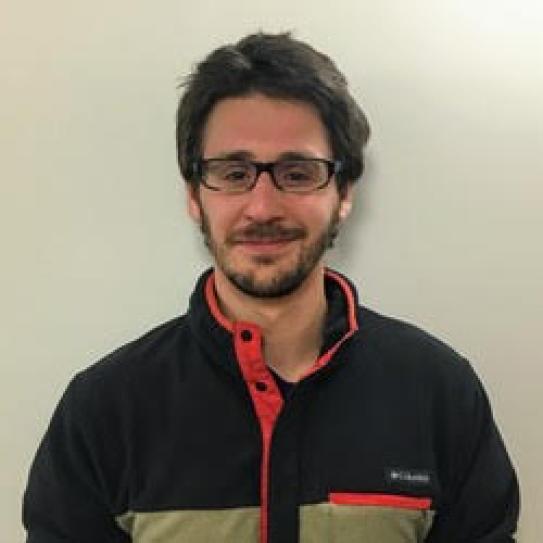
Eugene Vinitsky is an Assistant Professor at NYU Tandon School of Engineering, holding joint appointments in Civil and Urban Engineering and Computer Science. His research develops multi-agent reinforcement learning systems for autonomous vehicles and traffic control, with applications in robotics and intelligent infrastructure. He directs the Computational Transportation Systems Lab and leads projects like CIRCLES on congestion reduction. Research Focus: Designs algorithms enabling complex behaviors through unsupervised agent interactions, human-AI compatibility, and environment synthesis for autonomous systems. Awards & Leadership: NSF Graduate Fellow (2016), Eisenhower Fellow (2018, 2020), and PI on multiple grants including Amazon Research Awards. Mentored 14+ graduate students and organized international RL conferences.
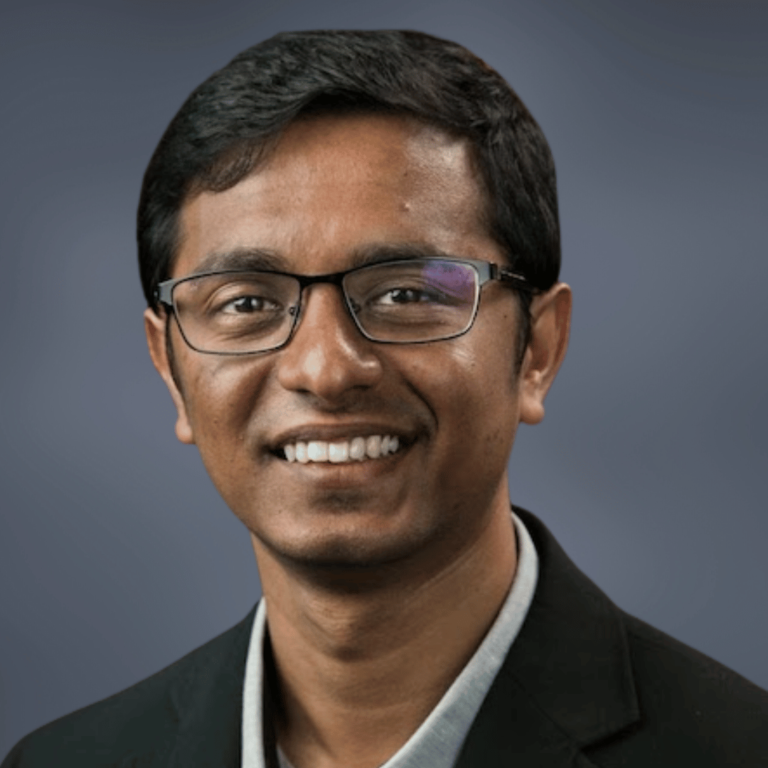
Srijan Sengupta is an Associate Professor of Statistics at North Carolina State University (NC State) since 2020. Previously, he served as an Assistant Professor at Virginia Tech from 2016 to 2020. He holds a Ph.D. in Statistics from the University of Illinois at Urbana-Champaign (2016) and degrees from the Indian Statistical Institute (B.Stat and M.Stat with Distinction). His research focuses on statistical methodology for network data, anomaly detection, bootstrap methods, and scalable inference, with applications in healthcare analytics, epidemiology, and cybersecurity. Education: Ph.D. in Statistics, University of Illinois at Urbana-Champaign (2011–2016) M.Stat (1st Division with Distinction), Indian Statistical Institute (2007–2009) B.Stat (1st Division with Distinction), Indian Statistical Institute (2004–2007) Research Interests: His methodological work includes statistical inference in networks, anomaly detection, bootstrap techniques, and scalable algorithms for big data. Applications span social determinants of health, healthcare analytics, space physics, epidemiology, and cybersecurity. He emphasizes interdisciplinary collaborations, particularly in patient safety event analysis and medical device safety. Awards and Grants: Norton Prize for Outstanding PhD Thesis (2015) NIH R01 Grant ($890,055, Principal Investigator) for statistical algorithms in patient safety (2019–2022) Multiple grants for network inference and anomaly detection (NSF, Socially Determined Inc., Virginia Tech Foundation) Advising and Service: Advises over 20 students across PhD, master’s, and undergraduate research programs. Serves as an Associate Editor for Sankhya, Series B and peer reviewer for top journals. Active in university service roles at NC State and Virginia Tech, including faculty hiring committees and curriculum development. Labs and Collaborations: Leads research on statistical network analysis, including projects funded by NIH and NSF. Collaborates with institutions globally on topics like epidemic thresholds, cybersecurity defenses (e.g., phishing detection), and healthcare analytics.
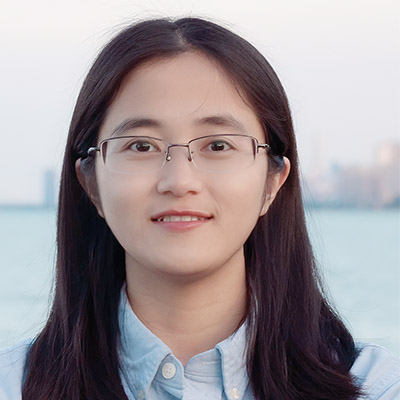
Dr. Farhad Maleki is an Assistant Professor in the Department of Computer Science at the University of Calgary, Faculty of Science. He holds a PhD in Computer Science from the University of Saskatchewan (2019). His postdoctoral research at McGill University’s Augmented Intelligence & Precision Health Laboratory focused on machine learning for medical image analysis. He has held leadership roles, including President of the Association of Postdoctoral Fellows at McGill and President of the Computer Science Graduate Council at the University of Saskatchewan. Currently, he serves on the Machine Learning Education Sub-Committee of the Society for Imaging Informatics in Medicine and as a guest editor for journals in medical data analysis. Dr. Maleki’s research spans Artificial Intelligence , Machine Learning , Biomedical Data Analysis , and Computer Vision . His work emphasizes medical applications, including tumor segmentation, clinical outcome prediction, and AI-driven diagnostics in oncology and cardiology. He also explores agricultural challenges, such as wheat head segmentation using generative models and domain adaptation. Key contributions include developing robust medical imaging tools (e.g., Rel-UNet for tumor segmentation) and frameworks for evaluating AI model reliability ( RIDGE ). His work bridges clinical needs with computational innovation, addressing issues like reproducibility, generalizability, and low-annotation learning across healthcare and agriculture domains. Dr. Maleki’s articles focus on advancing AI methods for precision health and agriculture. His recent work highlights interdisciplinary applications, such as integrating clinical and pathology data for cancer survival prediction, optimizing radiation therapy using Bayesian methods, and leveraging synthetic data for crop phenotyping. These studies emphasize practical deployment and ethical considerations in AI adoption.
Dr. Shiyan Jiang is an Assistant Professor in the Learning Design and Technology Program at North Carolina State University’s College of Education . She joined NC State in 2019 and specializes in integrating digital literacy into STEM education, particularly through AI-driven curriculum design and technology-enhanced interdisciplinary learning. Her work emphasizes empowering K-12 students with tools like narrative modeling, data visualization, and machine learning to explore STEM identities and career pathways. Education : Dr. Jiang holds a Ph.D. in Teaching and Learning (Specialization: Technology-Enhanced STEM Education) from the University of Miami (2018). Research Focus : Her research centers on: AI and data science education in K-12 classrooms Multimodal composing environments for STEM identity development Technology-mediated interdisciplinary learning Epistemic agency and data literacy Key Achievements : Recipient of NSF Awards #1949110 (2019) and #2241671 (2022) for AI-in-education projects Co-chair of the Technology Committee at the International Society of the Learning Sciences (ISLS) Editorial board member of Journal of Educational Technology Research and Development and Journal of Science Education and Technology Teaching : Courses include Data Visualization, Machine Learning, and Text Mining in Education, alongside doctoral seminars in Learning Sciences. Grants & Outreach : Collaborates with educators and institutions to design AI-infused curricula, such as the i-SAIL (integrated Science and AI Learning) program. She also develops tools like StoryQ for K-12 machine learning education. Labs & Teams : Active in the Friday Institute for Educational Innovation and the Belk Center, focusing on scalable educational technologies.
Piotr Przybyła is a tenure-track Assistant Professor at Universitat Pompeu Fabra in Barcelona, Spain, where he researches in the TALN (Natural Language Processing) Research Group. He maintains a significant affiliation with the Linguistic Engineering Group at the Institute of Computer Science, Polish Academy of Sciences (ICS PAS) in Warsaw, Poland, where he completed his PhD in Computer Science. Previously, he worked as a research fellow at the National Centre for Text Mining (NaCTeM) at the University of Manchester. Przybyła's research focuses primarily on Natural Language Processing with particular emphasis on misinformation detection, adversarial attacks on text classifiers, text simplification, and Polish language processing. His work bridges theoretical NLP with practical applications for credibility assessment and language understanding. He has developed innovative approaches for testing the robustness of text classifiers against adversarial examples and has made significant contributions to Polish language resources and processing tools. His recent publications demonstrate a strong trajectory in examining the robustness of NLP systems, particularly in the context of misinformation detection and credibility assessment. His work spans from foundational research on language model behavior to practical applications in Polish language processing and text simplification. The ERINIA project, funded by a prestigious Marie Skłodowska-Curie Postdoctoral Fellowship, represents a significant contribution to understanding how misinformation detection systems can be made more robust against adversarial attacks. Marie Skłodowska-Curie Postdoctoral Fellowship for the ERINIA project Computing grant of 10,000 hours on the Athena supercomputer for accelerating work in the ERINIA project Przybyła actively contributes to the NLP community through conference organization, shared tasks (such as coordinating the InCrediblAE shared task for CheckThat! 2024), and developing open-source tools like Plainifier for multi-word lexical simplification. His work demonstrates a commitment to both advancing NLP research methodology and addressing practical challenges in misinformation detection and language understanding across multiple languages, with special attention to Polish language processing.
Dr. Jean-Philippe Couderc is a Research Assistant Professor of Medicine in the Cardiology Department at the University of Rochester Medical Center and Chief Technology Officer of iCardiac Technology Inc. He holds a PhD in Biomedical Engineering from the French National Institute of Applied Sciences (1997), an MBA in Healthcare Management from the Simon School of Business (2003), and an MS in Medical Specialties from a French institution (1994). His research focuses on quantitative electrocardiography, ventricular repolarization, and cardiac safety, with contributions to clinical study design and medical software development. He leads the Heart Research Follow-up Program Laboratory and serves on the editorial board of Annals of Non-Invasive Electrocardiology . Notable awards include the Frost & Sullivan Technology Innovation Award (2006) and the Mirowski-Moss Career Development Award (2003). His work spans federal grants, industry collaborations, and over 100 peer-reviewed articles. Research Interests: Dr. Couderc’s work integrates computational science, electrophysiology, and clinical cardiology to address challenges in cardiac safety, drug evaluation, and wearable health technologies. His lab develops novel ECG analysis tools and evaluates their application in arrhythmia monitoring, drug-induced QT prolongation, and non-invasive diagnostics. Publications: His recent work includes advancements in video-based cardiac monitoring, demographic factors in ECG patch usage, and biomarker identification for epilepsy and heart conditions. He co-authored key consensus statements on mHealth in arrhythmia management, emphasizing digital tools for heart rhythm professionals. Awards & Grants: Dr. Couderc has secured NIH and industry grants, leading projects on repolarization dynamics and cardiac resynchronization therapy. He advises on FDA drug evaluation and contributes to international clinical guidelines.
Fatemeh Ganji is an Assistant Professor in the Department of Electrical & Computer Engineering at Worcester Polytechnic Institute (WPI), with an affiliation to the Cybersecurity program. She holds a Ph.D. in Electrical Engineering from the Technical University of Berlin (2017), where she received the BIMoS Ph.D. Award and was nominated for the ACM Dissertation Award. Prior to WPI, she served as a Post Doctoral Associate at the University of Florida (2018–2020) and at Telecom Innovation Laboratories/Technical University of Berlin (2017–2020). Her research focuses on interdisciplinary approaches in hardware security, combining machine learning and cryptography to design and evaluate security-critical hardware systems. Key areas include physically unclonable functions (PUFs), side-channel analysis, and countermeasures against tampering and counterfeiting. Her work is funded by the European Union (Horizon 2020, FP7), German BMBF, NSF, and NIST. Ganji actively contributes to the academic community as a reviewer for IEEE and ACM journals and serves on technical program committees for CHES, FPL, DATE, and SPACE conferences. Her recent projects include developing AI-driven forensic analysis for PCB tamper detection, secure multiparty computation frameworks for chiplet systems, and open-source tools for implementation security testing. Her awards include the BIMoS Ph.D. Award 2018 and recognition from the Technical University of Berlin for her doctoral work on PUF learnability. She has also pioneered methods to detect recycled integrated circuits and enhance hardware trust through reverse engineering and machine learning.
Spencer Caplan is an Assistant Professor in the Department of Linguistics at the CUNY Graduate Center. He directs the Psycholinguistics Lab, contributes to the Cognitive Science affiliation, and is the interim director of the master's program in computational linguistics through Fall 2025. Research Interests: His work integrates linguistics, computation, and cognition, focusing on language acquisition and processing. He develops computational and algorithmic models of language learning and mental representation, while also employing experimental methods such as eye-tracking, parsing, categorization, and perceptual learning. His research applies quantitative, corpus, and statistical techniques to address questions in theoretical linguistics. Secondary interests include Chinese languages, cognitive psychology (attention, memory, learning), formal language theory, NLP, phonology, and software engineering. Publication Trends: His recent publications appear in high-impact journals like PLOS One , Psychological Science , Cognition , PNAS , and Glossa . The work spans computational modeling of language learning, experimental investigations of linguistic computation, and corpus-based syntactic analysis, reflecting a strong interdisciplinary approach combining theoretical insight with empirical and quantitative rigor. Scientific Affiliations and Mentors: Ph.D. Advisor Team: Charles Yang, John Trueswell, Mitch Marcus Undergraduate Mentor: Eugene Charniak Collaborators: Deniz Beser, Kajsa Djärv, Neal Fox, Doug Guilbeault, Alon Hafri, Jordan Kodner, Eric Mandelbaum, Griffin Pion, Jake Quilty-Dunn, Katie Schuler, Elliot Schwartz, Hongzhi Xu, Chen Yu Advising and Grants: While specific advising and grant records are not detailed in the text, his leadership roles (lab director, interim program director) and active publication record suggest significant involvement in mentoring students and securing research support. His GitHub repositories indicate ongoing, computationally intensive research projects. Labs and Teams: He leads the Psycholinguistics Lab at CUNY Graduate Center and has been affiliated with the Language Learning Lab at the University of Pennsylvania and the Developmental Intelligence Lab at the University of Texas at Austin.
Jordan Boyd-Graber is a Professor in the Department of Computer Science at the University of Maryland's College of Computer, Mathematical, and Natural Sciences. He serves as a leading researcher in Natural Language Processing with significant contributions across multiple NLP subfields. His work bridges theoretical advances with practical applications requiring human-AI collaboration. His research interests span Natural Language Processing , Question Answering systems , Human-AI collaboration , Machine Translation , and Topic Modeling . He focuses on developing systems that work effectively with humans rather than replacing them, emphasizing interpretability and user-centered design. His work often involves creating evaluation frameworks that better capture real-world utility rather than just technical metrics. His publication record shows consistent leadership in the field, with numerous papers at top venues including ACL, EMNLP, and NAACL. Recent work (2023-2024) demonstrates strong engagement with LLMs, human evaluation methodologies, and practical applications in health and translation domains. His research often involves student collaborators, indicating active mentorship. ACL Fellow (2021) Program Chair for ACL 2023 Organizer of prompt hacking competition Leader in human-centered NLP evaluation Boyd-Graber has secured substantial funding for his research, particularly in projects involving human-AI collaboration and question answering systems. His work often involves interdisciplinary teams spanning computer science, linguistics, and domain-specific applications. He has mentored numerous graduate students who have gone on to successful careers in academia and industry. He leads research groups focused on developing interpretable NLP systems that work effectively with humans, particularly in high-stakes domains like healthcare and education. His lab frequently develops novel evaluation methodologies that better capture real-world utility rather than just technical metrics.
Daniel Müller-Gritschneder is an Adjunct Teaching Professor (Privatdozent) at the Technical University of Munich (TUM), affiliated with the Chair of Electronic Design Automation. He leads the 'Electronic System Level' research group, focusing on embedded systems, TinyML, virtual prototyping, and hardware resilience. He temporarily served as head of the Chair of Real-Time Systems (2019–2020) and holds a senior membership in IEEE. His research spans: TinyML : Optimizing neural network inference for microcontrollers. Virtual Prototyping : Fast simulation for embedded software development (e.g., ETISS simulator). Runtime Verification : Hardware monitoring for safety-critical systems. Fault Tolerance : Cross-layer resilience against soft errors. Design Automation : NoC synthesis and RISC-V toolchain optimization. His publications emphasize RISC-V-based systems, TinyML deployment, fault injection, and embedded AI. Recent works show trends toward compiler-assisted security, thermal management, and automated design-space exploration for edge devices. Awards: Best Paper Award (SiPS 2019) Habilitation Award (Bund der Freunde der TUM, 2019) 2nd Best Paper (SMACD'15) Best Paper nominations at DAC'07, DATE'10, Analog'10, NOCS'13 He advises researchers in the Electronic System Level group and contributes to EU projects (e.g., Scale4Edge). His lab develops tools like ETISS, MLonMCU, and Seal5 for RISC-V and TinyML ecosystems.
Andrew Bishara, MD, is an Assistant Professor in Residence in the Department of Anesthesiology within the School of Medicine at the University of California, San Francisco (UCSF). He is affiliated with multiple UCSF clinical sites, including Mission Bay, Mount Zion, and Parnassus, and is actively involved in the AI Clinical Innovation Lab, Transplant Anesthesia Research Group, and POCCO (PeriOperative Cardiac Complications Observatory). His clinical practice as an anesthesiologist is deeply integrated with his research in machine learning and artificial intelligence for perioperative care. Dr. Bishara's educational background includes a BSE in Mechanical Engineering from MIT (2009), an MD from Harvard Medical School (2014), and a D.ABA. in Anesthesiology from UCSF (2019). He also completed specialized training in Medical Informatics and Artificial Intelligence through the Bakar Computational Health Sciences Institute (2020) and a Diversity, Equity, and Inclusion Champion program at UCSF (2022). His research focuses on developing and validating machine learning models to predict and prevent surgical complications such as acute kidney injury, postoperative delirium, pain, and blood loss in real time. He emphasizes creating clinically usable models and improving AI-human interfaces for seamless integration into clinical workflows. His work also explores gender-based disparities in coronary artery disease diagnosis using EHR data analytics. His recent publications demonstrate expertise in AI quality improvement, model implementation in acute care, and predictive modeling across diverse surgical and critical care domains. He co-founded Bezel Health, a company focused on healthcare quality measurement, reflecting his commitment to translating research into real-world impact. Clinical Artificial Intelligence Quality Improvement Real-time Risk Assessment in Surgery AI Integration in Anesthesia Gender Disparities in Cardiac Care Transplant Anesthesia Research Regulatory Aspects of AI in Medicine Dr. Bishara is actively engaged in advancing perioperative medicine through innovation in data science and AI, with a strong emphasis on improving patient outcomes, equity, and clinical workflow efficiency.
Prof. Dr. Matthias Krauledat is a faculty member at Hochschule Rhein-Waal , specifically within the Faculty of Technology and Bionics . His academic career spans both theoretical research and industrial application, with a focus on Machine Learning and Brain-Computer Interfaces . After completing his PhD in Electrical Engineering/Computer Science at Technische Universität Berlin , he has contributed significantly to the advancement of EEG-based communication systems and neural signal processing methodologies. Born in Essen, Germany Studied Mathematics with a minor in Computer Science at University of Münster/Oxford Doctoral research at TU Berlin on Brain-Computer Interfaces Industrial experience at Henkel AG & DMT GmbH Research Interests focus on Machine Learning applications in Neuroscience and Biomedical Engineering , specifically Brain-Computer Interfaces , EEG Signal Processing , and Adaptive Classification Systems . His work explores how algorithms can be developed to enable self-learning computers to solve complex tasks involving neural data interpretation and prediction for previously unseen data in clinical and technological contexts. Publications demonstrate a consistent contribution to Neuroscience and Machine Learning fields, with particular emphasis on Brain-Computer Interface systems from 2004 through 2009. His research has focused on reducing training requirements, improving signal processing accuracy, and developing novel interaction paradigms like the Hex-o-Spell mental typewriter while addressing statistical challenges like covariate shift in neural data analysis. Professional Experience includes academic research at TU Berlin's Intelligent Data Analysis group, industrial software development roles at Henkel AG's Scientific Computing department, and TÜV Nord Group's Optical Metrology and Machine Diagnostics divisions. He maintains active research connections through collaborative publications with leading experts in the field.
Maria Kett is a Professor of Humanitarianism and Social Inclusion at University College London (UCL), working in the Epidemiology & Public Health department. She is a leading social anthropologist with cross-disciplinary expertise in disability, global health, development studies, and humanitarian policy. Education: PhD from the School of Oriental and African Studies (SOAS), University of London Her research focuses on disability inclusion in humanitarian contexts, climate justice, and health equity. She co-founded the Global Disability Innovation Hub and has shaped UN policies on disability inclusion. Publications Trends Recent work spans: assistive technology in disasters, AI ethics in humanitarianism, climate-resilient development, conflict health systems, and intersectional marginalization in Nepal. She emphasizes participatory approaches and policy translation. Teaching Programme Director for UCL's MSc Humanitarian Policy and Practice , with experience supervising PhD students in humanitarian research areas.
Christof Weiß is a Professor for Computational Humanities at the CAIDAS / Institute of Computer Science, Julius-Maximilians-Universität Würzburg (JMU), Germany. He serves as Head of the DFG-funded Emmy Noether group on Computational Analysis of Music Audio Recordings: A Cross-Version Approach. His academic journey includes previous positions as Visiting Researcher at University Télécom Paris (2021), Visiting Lecturer at Karlsruhe University of Music (2020, 2021), and Research Assistant at International Audio Laboratories Erlangen (2015-2022) and Fraunhofer Institute for Digital Media Technology (2012-2015). His educational background encompasses a PhD in Media Technology from University of Technology Ilmenau (2017), Concert Diploma in Composition from Würzburg University of Music (2012), Physics Diploma from University of Würzburg (2012), and Music Diploma in Composition from Würzburg University of Music (2011). This unique combination of technical and artistic training forms the foundation of his interdisciplinary research approach. Weiß's research operates at the critical intersection of computer science and musicology, developing novel computational methods for analyzing musical structures in audio recordings. His work bridges technical audio processing with musicological insights, creating methodologies for tonal analysis, key estimation, and cross-version comparison of musical performances. His approach combines deep learning techniques with music theory to extract meaningful patterns from large music corpora, enabling new forms of musicological corpus studies that were previously impossible. His recent publications reveal a clear research trajectory toward integrating advanced machine learning with fundamental musicological questions. The consistent theme across his work involves analyzing classical music structures through computational lenses, with particular emphasis on cross-version consistency in performances, tonal complexity measurement, and developing datasets that support computational musicology. His publications span both highly technical audio processing journals and musicology-focused venues, demonstrating his commitment to bridging these disciplines. Best paper award at the 4th conference on Computational Humanities Research (CHR), 2023 KlarText award for science communication of the Klaus Tschira Foundation, 2018 2nd prize at Festival Pablo Casals composition competition, Prades (France), 2013 Youth Cultural Advancement Award (Kulturförderpreis) of the city of Amberg, Germany, 2011 As principal investigator of the DFG Emmy Noether group, Weiß leads a multidisciplinary research team investigating computational analysis of music audio recordings through a cross-version approach. His research has secured significant funding including the prestigious Emmy Noether program, supporting doctoral and postdoctoral researchers working on various aspects of music information retrieval and computational humanities. His collaborative network spans institutions across Europe, including University Télécom Paris, Queen Mary University of London, and multiple German research centers. Weiß leads the Computational Humanities research group at CAIDAS, which focuses on developing computational methodologies for music analysis with particular emphasis on classical repertoire. The lab creates specialized datasets (including the Wagner Ring Dataset and Schubert Winterreise Dataset), develops algorithms for structural music analysis, and applies these tools to address musicological questions that require computational scale and precision. Their work bridges the gap between technical audio processing capabilities and humanities research questions, creating new pathways for understanding musical structure and evolution.
VARGA Gabriella is an Assistant Professor at the Department of Engineering Geology and Geotechnics under the Faculty of Civil Engineering at Budapest University of Technology and Economics. She serves as Head of the Faculty Committee on Career Orientation for Highschool Students and coordinates the University Open Days. Primary affiliation: Budapest University of Technology and Economics Academic role: Teaching and research in geotechnics Organizational leadership: Career orientation and university outreach Her research focuses on geotechnical stability and soil mechanics , with a strong emphasis on landfill engineering , slope stability analysis , and settlement modeling . She has developed expertise in evaluating safety factors for soil structures and integrating computational methods with field applications. Recent publications highlight her work in bioreactor landfill mechanics , cohesive soil slope stability , and geotechnical modeling . Key trends include environmental geotechnics, waste management systems, and sustainable earthwork design. Scientific Awards Magyar Felvételi #építő250 Scholarship Advising and Education : She teaches foundational courses in Earthworks and Soil Mechanics, guiding students through practical project work in structural design. Her pedagogical approach emphasizes real-world geotechnical challenges.