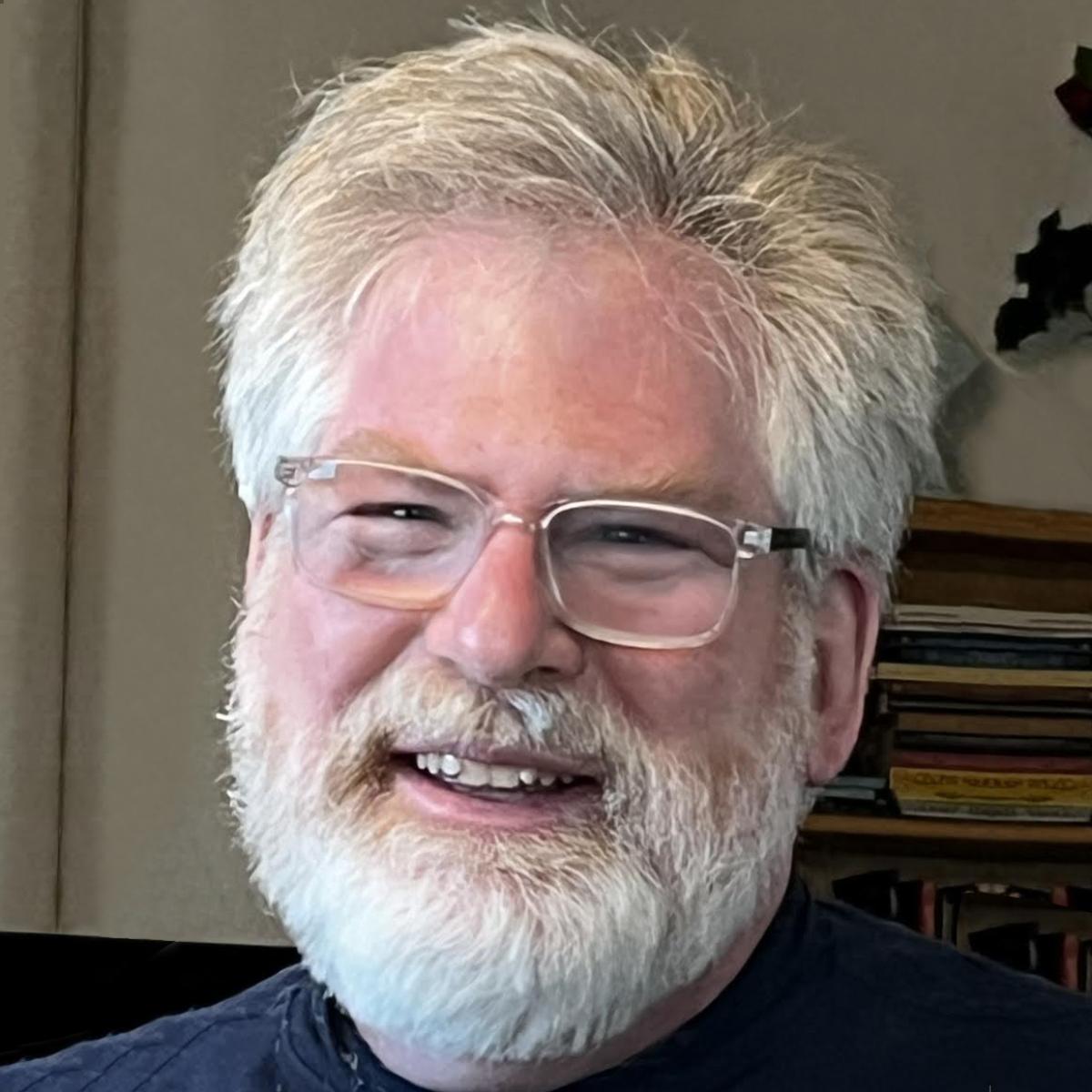
Marc Mezzarobba is a Researcher at École Polytechnique , affiliated with the LIX laboratory and MAX team. His work bridges symbolic computation, numerical analysis, and algorithm design for differential and recurrence equations. Key research themes: D-finite functions, rigorous numerical evaluation, symbolic-numeric methods, Mahler equations, precision analysis Recent publications focus on error bounds in linear recurrences, Stokes matrices computation, and high-precision differential equation solutions Active developer of tools like ore_algebra-analytic and NumGfun , with significant contributions to SageMath 2025 talk on "Solving Linear Differential Equations to High Precision" highlights ongoing work in numerical stability
Mioara Joldes is a Directeur de Recherche (DR) at CNRS working in the ROC team at LAAS-CNRS (Laboratory for Analysis and Architecture of Systems) in Toulouse, France. She has been a permanent CNRS researcher at LAAS since 2013. Her work bridges rigorous mathematical computing with practical aerospace applications, particularly in space surveillance and collision avoidance. She collaborates extensively with French space agencies like CNES and has developed algorithms that have been tested on satellites including the ESOC OPS-SAT CubeSat and embedded in the CNES ASTERIA software. Dr. Joldes received her Ph.D. from École Normale Supérieure de Lyon in 2011. In 2019, she earned her Habilitation from Toulouse III Paul Sabatier University with a dissertation focused on building efficient symbolic-numeric objects, algorithms, and software tools with space-based applications. Her academic journey reflects a strong foundation in mathematical computing translated into practical aerospace solutions. Her research spans three interconnected domains: Computer Arithmetic, where she improves the accuracy and reliability of numerical computations; Symbolic-Numeric Algorithms, developing methods that combine symbolic and numerical approaches for validated computing; and Aerospace Applications, particularly in Space Surveillance and Tracking. Her work enables mathematically rigorous error bounds for computations used in critical aerospace systems, ensuring safety in space operations through validated numerics that provide "sure, yet reasonably tight, error bounds." Her recent publications demonstrate a strong focus on collision probability computation in space, validated numerical methods for differential equations, and efficient implementations of mathematical functions. She frequently collaborates with Denis Arzelier, Florent Bréhard, and other researchers in developing algorithms that have transitioned from theoretical foundations to practical space applications, with several papers receiving significant recognition in their fields. Distinguished Paper Award at ISSAC 2019 for work on algebraic reconstruction of measures with holonomic density Best Paper Award at ASAP 2020 for efficient FPGA implementation of the Probit function CNRS Bronze medal in 2021 recognizing her research contributions Dr. Joldes leads the PRESTO International Emerging Actions Project on Probabilistic Reliable and Efficient numerics for Stochastically-constrained Trajectory Optimization. Her research has received funding from CNES and other space agencies, supporting technology transfer from theoretical mathematics to operational space systems. She has supervised multiple students working at the intersection of validated computing and aerospace applications, with her methods being implemented in operational systems used by space agencies worldwide. As a key member of the ROC (Robotique et Calcul) team at LAAS-CNRS, she develops critical software tools like CAMPARY (CudA Multiple Precision ARithmetic librarY) and contributes to Sollya, an environment for developing safe floating-point code. Her work on orbital collision probability evaluation has been featured in major publications including CNRS-Le Journal, La Tribune, Les Echos, and L'usine Nouvelle, demonstrating the real-world impact of her research in ensuring safe space operations.
Mercè Maureso Sánchez is a faculty researcher at the Department of Mathematics within the Barcelona School of Informatics (FIB) at Universitat Politècnica de Catalunya (UPC). She is affiliated with the DCCG - Discrete, Combinational, and Computational Geometry research group and holds an ORCID identifier 0000-0001-6429-2776 . Research Interests Graph Theory and Discrete Mathematics Computational Geometry and Metric Dimension Domination Theory in Graphs Algebraic Methods in Graph Theory Network Optimization and Resilience Publication Trends across 61 activities (1991-2023) show sustained focus on graph theory, combinatorial optimization, and computational geometry. Key contributions include metric dimension analysis in outerplanar/triangulated graphs, domination theory in near-triangulations, and algebraic investigations of Steinhaus/Pascal triangles. Notable Projects : Discrete and Computational Geometry research Network optimization studies Algebraic combinatorics applications Graph automorphism analysis
Edray Herber Goins is a Professor of Mathematics and Statistics at Pomona College, part of The Claremont Colleges. He has held positions at prestigious institutions including Purdue University, Stanford University, and the Max Planck Institute. His research focuses on number theory, elliptic curves, Belyi maps, and Galois theory. He leads the NSF-funded PRiME program (Pomona Research in Mathematics Experience), mentoring underrepresented students in mathematics research. Goins earned a B.S. in Mathematics and Physics from Caltech (1994) and a Ph.D. in Mathematics from Stanford (1999). He received an honorary LHD from Cooper Union (2019) and was named an AWM Fellow (2019). Notable awards include Purdue’s Spira Teaching Award (2011) and Black Issues in Higher Education’s 2004 Emerging Scholar of the Year. His research interests include Selmer groups for elliptic curves, Dessins d’Enfants, and origami as branched covers. He co-leads the MAD Pages project documenting African diaspora mathematicians. Grants include multiple NSF/NSA awards totaling over $1M for PRiME and ADJOINT programs.
Julie Desjardins is an Assistant Professor in the Mathematical and Computational Sciences department at the University of Toronto Mississauga (UTM). Her research focuses on Arithmetic Geometry and Number Theory, with particular interests in elliptic surfaces, del Pezzo surfaces, root numbers, and rational points density. She holds a PhD from Université Paris Diderot and has held postdoctoral positions at the Max Planck Institute and Université Grenoble Alpes. Her work bridges algebraic geometry and number theory, analyzing geometric structures and arithmetic properties of algebraic varieties. Her research explores topics such as the distribution of rational points on surfaces, variations of root numbers in elliptic curve families, and geometric properties of del Pezzo surfaces. Recent work includes studies on torsion points on del Pezzo surfaces, trisection constructions, and applications of modular surfaces. Desjardins is supported by an NSERC Discovery Grant and actively contributes to the academic community through publications and collaborations.
Dr. Zainab Aizaz is a Research Fellow at the School of Engineering and Informatics , University of Sussex, specializing in Artificial Intelligence hardware design and Field Programmable Gate Arrays (FPGA) . Her work focuses on creating energy-efficient and high-performance hardware solutions for AI applications, particularly through innovative pipelined vector processor architectures extending RISC-V open-source frameworks. Her research interests include: Approximate computing for neural networks Hardware acceleration of machine learning Computer architecture optimization Energy-efficient FPGA design Medical imaging applications using AI Signal integrity in nanoscale circuits Dr. Aizaz's recent publications highlight her work on: Spiking neural network acceleration (2025) Approximate multiplier architectures (2022-2024) Hardware-software co-design for edge computing (2023) Cognitive radio antenna optimization (2016) Contact: Z.Aizaz@sussex.ac.uk
Katherine Kosaian is an Assistant Professor in the Department of Computer Science at the University of Iowa, where she leads the Formal MATHods Lab and is affiliated with the Computational Logic Center. She previously held a postdoctoral position at Iowa State University and earned her PhD from Carnegie Mellon University, advised by André Platzer. Her work focuses on formal verification and interactive theorem proving, particularly in formalizing mathematical algorithms for safety-critical systems. Her recent research involves applying formal methods to real quantifier elimination, geometric algorithms, and cryptographic techniques. She has published in venues like CICM, CPP, FM, and ITP, and her thesis received the 2024 Bill McCune PhD Award. She is actively recruiting PhD students and organizing academic events, including VSTTE 2025. Distinguished Reviewer Award, iFM 2024 Bill McCune PhD Award, 2024 NSF GRFP Fellowship, 2017 University of Maryland Outstanding Senior Award, 2017 Barry M. Goldwater Scholarship, 2016 Katherine advises PhD students Sage Binder and Brooke Burson and provides safety-critical algorithm verification services to industry and academic partners. She frequently presents invited talks and collaborates on NSF-funded projects.
Florian Frohn is a tenured lecturer ("Lehrkraft für besondere Aufgaben") in the Programming Languages and Verification research group at the Department of Computer Science, RWTH Aachen University. He holds a Dr. rer. nat. (2018), MSc (2013), and BSc (2011) in Computer Science, all from German institutions, with his bachelor's studies completed part-time. His research interests center on formal methods for software verification, including automated termination and complexity analysis of imperative programs, satisfiability of Constrained Horn Clauses (CHCs), SMT solving with integer exponentiation, loop acceleration, term rewriting systems, and abstract interpretation. He is a key contributor to several influential tools: LoAT (Loop Acceleration Tool), AProVE (Automated Program Verification Environment), and SwInE; he also worked on Astrée and the CAGE toolchain developed under the DARPA STAC program. His recent publications (2023–2024) demonstrate continued leadership in top venues such as FM, IJCAR, FoSSaCS, and SAS, with work advancing loop acceleration, non-termination proofs, and SMT solving. These contributions reflect a strong trend in developing practical, automated techniques for program verification and analysis. IJCAR Best paper honourable mention (2024) EASST Award for best ETAPS paper (2020) iFM Best Tool Paper Award (2017) ISR Best Poster Award (2017) SEFM Recognition Award (2016) CADE Woody Bledsoe Travel Award (2016) Florian Frohn actively contributes to the research community through program committee roles for major workshops and conferences including TACAS, HCVS, WST, SMT, and LPAR. He has advised no listed students but has been involved in mentoring through research collaborations. His teaching portfolio includes courses on verification techniques, satisfiability checking, and advanced programming concepts. He leads the Termination and Complexity Competition (termCOMP) and participates in organizing key events in the formal methods community.
Mikael Olofsson is an Associate Professor and Head of Division at the Division of Electronics and Computer Engineering (ELDA), Department of Electrical Engineering (ISY), Linköping University. He is actively engaged in teaching and academic leadership, serving as director of studies for courses in Integrated Circuits and Systems since 2018. His research background lies at the intersection of telecommunications, electronics, and mathematics , particularly focusing on algorithms and architectures for arithmetic operations in finite fields . His PhD thesis, VLSI Aspects on Inversion in Finite Fields (2002), reflects this interdisciplinary focus. Though currently more focused on education, he continues to explore arithmetic-related algorithmic designs when time permits. The recent publications reflect a strong emphasis on signal theory and telecommunications education , including textbooks and pedagogical research. Topics span signal processing fundamentals, digital modulation, and Massive MIMO principles , indicating a consistent thread in communication systems education and foundational theory. Scientific Awards: No awards listed in the provided text. Advising and Grants: While no formal students or grant awards are listed, Mikael Olofsson plays a significant mentoring role through his extensive teaching and leadership as director of studies. He emphasizes the value of student discussions and strives to provide optimal learning opportunities, suggesting strong engagement in academic advising at the course and program level. Labs and Teams: He is affiliated with the Division of Electronics and Computer Engineering (ELDA), which conducts research in analog, digital, mixed-signal electronics, programmable systems, and processor design. This division is part of the broader Department of Electrical Engineering (ISY), known for strong industry and research collaborations.
Bernat Plans Berenguer is a researcher in the Department of Mathematics at the Universitat Politècnica de Catalunya (UPC), affiliated with the Escola Tècnica Superior d'Enginyeria Industrial de Barcelona (ETSEIB). His research focuses on algebraic number theory, Galois theory, and arithmetic geometry, with particular emphasis on rationality problems, field extensions, and group actions. He has contributed to foundational studies on Noether’s rationality problem, ramification theory, and special linear group extensions. Plans Berenguer has led and participated in numerous research projects, including those funded by competitive grants from the Catalan Government and Spanish national programs. His work spans pure mathematics, with applications in cryptography and computational algebra. Notable collaborations include projects on algebraic varieties, modular forms, and geometric mechanics through the GEOMVAP research group. He has published extensively in top-tier journals like Proceedings of the American Mathematical Society and Journal of Algebra , and has presented at international conferences such as the Journées Arithmétiques. His research bridges abstract algebraic structures with concrete computational methods in number theory.
Carl C. Kjelgaard Mikkelsen is an Associate Professor at the Department of Computing Science, Umeå University. He specializes in numerical analysis and high-performance parallel computing, focusing on robust algorithms that cannot fail. He co-authored the StarNEig library for nonsymmetric eigenvalue problems and works on parallel constraint solvers for molecular dynamics and ultra-sparse linear systems. Research Interests: Numerical analysis, parallel computing, eigenvalue problems, linear systems, algorithm design. His recent publications emphasize robust task-based algorithms, GPU acceleration, and precision requirements in Newton's method. He teaches numerical analysis and scientific computing, emphasizing finite precision arithmetic and software documentation.
Dr. Damodaran Radhakrishnan is an Associate Professor in the Engineering Programs department at the State University of New York at New Paltz. His work focuses on computer engineering and digital systems design. Teaching Interests: Digital Logic Fundamentals, Digital Systems Design, Computer Arithmetic, VLSI Design, Low Power VLSI Design Professional Affiliation: Life member, IEEE
Marcus Nilsson is a Lecturer in Mathematics at Linnaeus University's Faculty of Technology, where he focuses on teaching, research, and administrative responsibilities. He serves as the program manager for the Applied Mathematics program and vice dean for teacher education. Nilsson has taught at UC Berkeley, supported by the STINT Teaching Sabbatical program, and represents Linnaeus University on the National Committee for Mathematics at the Royal Academy of Sciences, addressing school collaboration issues. Teaching: Courses in discrete mathematics, number theory, and cryptography. Research: Specializes in dynamical systems, number theory, and cryptography, with external projects in information security. Commissions: Vice Dean for Teacher Education, project manager for Sonja Kovalevsky Days 2024-2025. Collaboration: Member of the International Center for Mathematical Modeling (ICMM), emphasizing interdisciplinary applications.
Jean Pierre David is a Full Professor in the Department of Electrical Engineering at Polytechnique Montréal. He has been with the institution since January 2006, was promoted to Associate Professor in June 2013, and became a Full Professor in June 2021. His research focuses on digital systems design, reconfigurable systems, and hardware implementations of artificial intelligence applications. David received his Electrical Engineering degree (specializing in electronics) from the University of Liège (Belgium) in 1995. He completed his Ph.D. in June 2002 at the Catholic University of Louvain, with research focused on reconfigurable systems (FPGAs). Before joining Polytechnique Montréal, he was a professor at the University of Montreal from August 2002 to January 2006. Jean Pierre David's research spans several key areas in electrical engineering and computer science. His primary focus is on digital systems design, configuration, and programming, with particular expertise in reconfigurable systems such as FPGAs and microcontrollers. He has made significant contributions to Hardware Description Languages (HDL), developing methodologies for fast, safe, and simple design of digital architectures. His work extends to Hardware-in-the-Loop (HIL) simulation, Deep Packet Inspection (DPI) for high-speed communications (10GBE, 40GBE, 100GBE), and applications of digital systems in artificial intelligence, particularly neural network implementations. David's recent research has increasingly focused on energy-efficient AI hardware, RISC-V processor design for neural network acceleration, and specialized architectures for low-precision computation. His publication record shows a clear evolution from foundational work in digital system design and FPGA implementation toward increasingly sophisticated applications in artificial intelligence and neural network acceleration. The most recent publications demonstrate expertise in creating specialized hardware for efficient AI computation, with a strong emphasis on low-precision and binary neural networks that can run efficiently on resource-constrained devices. His work bridges computer architecture, electrical engineering, and artificial intelligence, creating practical hardware solutions for emerging computational challenges. David is affiliated with several important research groups and institutions including the Strategic Microsystems Group of Quebec (ReSMiQ), the Institute of Electrical and Electronics Engineers (IEEE), and the Institute for Data Valorization (IVADO). His work has been recognized through numerous publications in high-impact journals and conferences, with a total of 108 publications to his name. Professor David has supervised an impressive number of graduate students throughout his career, mentoring 9 Ph.D. students and 24 Master's students to completion. His students have worked on diverse topics including FPGA-based neural network acceleration, hardware implementations of deep learning algorithms, energy harvesting systems for IoT devices, and specialized architectures for low-precision computation. His lab appears to maintain strong connections with industry through various research projects and collaborations with researchers like Yves Savaria. His research laboratory focuses on the intersection of hardware design and artificial intelligence, with particular emphasis on creating efficient implementations of neural networks on specialized hardware platforms. The lab maintains strong connections with industry partners and collaborates extensively on projects related to network processing, AI acceleration, and energy-efficient computing systems.
Russell Impagliazzo is a Professor in the Department of Computer Science and Engineering at the University of California, San Diego (UCSD). He has held positions as Assistant Professor, Associate Professor, and Professor at UCSD since 1991 and was a Visiting Professor at the Institute for Advanced Study (Princeton) from 2007 to 2012. His academic journey includes a BA in Mathematics from Wesleyan University and a PhD in Mathematics from UC Berkeley. His research focuses on computational complexity theory , with key contributions to: Randomness in computation Cryptography (e.g., pseudorandom generators) Circuit lower bounds Proof complexity (e.g., polynomial calculus, resolution) Structural complexity (e.g., average-case hardness) Optimization heuristics (e.g., local search) The trends in his publications include foundational work on derandomization, hardness amplification, and algebraic proof systems. His papers often bridge theoretical computer science with mathematics, particularly in analyzing the limits of computational models. Scientific awards and honors include: NSF Young Investigator Sloan Fellow Fulbright Scholar Guggenheim Fellow Simons Investigator Best Paper Award (Computational Complexity Conference) Best Paper Award (STOC) Outstanding Paper Award (SIAM) He actively advises students and has contributed to grants and programs such as the Simons Institute’s Fine-Grained Complexity and Algorithms and the Meta-Complexity program at the Simons Lab in Spring 2023.