Prof. Waldemar Kolanus leads the Molecular Immunology and Cell Biology department at the University of Bonn's Life & Medical Sciences Institute (LIMES) . His research bridges immunoregulation , stem cell dynamics , and metabolic stress responses in immune cells. Unit 2 member at LIMES Principal investigator in SFB 704 and ImmunoSensation Cluster Leads a multidisciplinary lab with postdocs, PhD students, and technical staff His work focuses on intracellular signaling pathways connecting immune activation to tissue homeostasis, particularly through: Cytohesin proteins in integrin-mediated adhesion and migration TRIM71 in stem cell regulation and congenital hydrocephalus High-salt environments affecting macrophage function Publication trends show expertise in immune cell migration , genetic models , and chemical inhibition , with frequent use of mice and zebrafish for in vivo studies. Key articles explore: TRIM71's dual role in auditory development and germ cell maintenance Cytohesin family's Golgi regulation and insulin signaling Ruxolitinib's off-target migration inhibition of dendritic cells Contact details: Address: LIMES Institute, Carl-Troll-Straße 31, Bonn Email: kolanus.sekretariat@uni-bonn.de Phone: +49 228 73-62788
Kevin A. Shinpaugh is Collegiate Professor in the Department of Aerospace and Ocean Engineering at Virginia Tech’s College of Engineering. Since 2019 he has led instruction and research in spacecraft design and propulsion, leveraging decades of experience in high-performance computing and space-systems engineering. Education Ph.D., Aerospace Engineering, Virginia Tech (1994) M.S., Aerospace Engineering, Virginia Tech (1989) B.S., Aerospace Engineering, Virginia Tech (1986) Research Focus Dr. Shinpaugh’s scholarship centers on the intersection of high-performance computing (HPC) and space systems engineering . He develops and applies advanced computational techniques to spacecraft design, propulsion analysis, and mission planning. His work spans numerical simulation of complex aerospace systems, optimization of propulsion architectures, and creation of scalable HPC frameworks that enable rapid design iteration for spacecraft and launch vehicles. Publication Trends Across more than thirty refereed papers and design-competition reports, a clear trajectory emerges: early contributions in experimental fluid-mechanics instrumentation (laser-Doppler velocimetry, fiber-optic sensors) evolved into large-scale computational studies of space systems, and most recently into student-led mission-concept designs for CubeSats, lunar exploration, and interplanetary missions. Keywords consistently include spacecraft design, propulsion, deployable structures, and mission architecture. Service & Committees Chair, Virginia Tech HPC User Committee (2004–2011) Member, VT HPC Advisory Board (2007–present) NSF TeraGrid/XSEDE Campus Champion for Virginia Tech (2006–2013) IBM HPC/AI Customer Advisory Council DC (2019–present) Member, VT AOE Seminar Committee (2019–present) Laboratory & Computing Resources Dr. Shinpaugh has long stewarded Virginia Tech’s high-performance computing ecosystem. He directs students and collaborators in leveraging the university’s Advanced Research Computing (ARC) clusters, as well as national facilities through XSEDE and DoD HPCMP, to execute spacecraft-design simulations and propulsion analyses at scale.
Ricardo Valerdi is a Professor and Department Head in the Department of Systems and Industrial Engineering at the University of Arizona's College of Engineering. He is a Distinguished Outreach Professor, Faculty Athletics Representative for the Big 12 Conference and NCAA, and a member of the Graduate Faculty. His academic journey includes positions at MIT (2005–2011) and continuous service at the University of Arizona since 2011, with current roles beginning in 2018 and ongoing leadership since 2020. His educational background includes a PhD in Industrial and Systems Engineering from the University of Southern California, an MS in System Architecture and Engineering from the same institution, and a BS in Electrical Engineering from the University of San Diego. Valerdi's research spans systems engineering, cost estimation, model-based systems engineering (MBSE), digital engineering, sports analytics, and test and evaluation of complex systems. He is renowned for his work on the Constructive Systems Engineering Cost Model (COSYSMO) and has pioneered the integration of virtual reality with MBSE. His recent publications reflect a strong focus on executable modeling, systems thinking education, cost modeling convergence, and applications in space and defense systems. His body of work from 2020 to 2025 shows a consistent trajectory in advancing digital engineering tools, integrating immersive technologies into systems design, refining parametric cost models, and assessing systems thinking competencies in education. The publications emphasize interdisciplinary applications, including space missions, ERP systems, and cyber resiliency, demonstrating a blend of theoretical and applied systems engineering. Best paper award, Journal of Systems Engineering International Council of Systems Engineering, Summer I 2016 Foreign Member, Mexican Academy of Engineering, Summer I 2016 Frank Freiman Award for Lifetime Achievement in Cost Estimation and Parametric Modeling, International Cost Estimating & Analysis Association, Fall 2015 Dr. Valerdi has advised numerous graduate students and led educational initiatives integrating industry-focused projects. He founded and co-edited the Journal of Enterprise Transformation and served as editor-in-chief of the Journal of Cost Analysis and Parametrics. He has received significant recognition and grants supporting research in systems engineering cost modeling, human systems integration, and digital transformation. His leadership extends to service as a Fulbright Scholar, visiting professor at West Point, and visiting fellow of the UK Royal Academy of Engineering. He leads research teams focused on cost estimation, digital engineering, and systems integration, often collaborating with defense and aerospace stakeholders. His labs and initiatives emphasize virtual reality integration, executable modeling, and systems thinking assessment. Future work is expected to further explore AI-driven cost models, digital twins for complex systems, and scalable frameworks for MBSE adoption across domains.
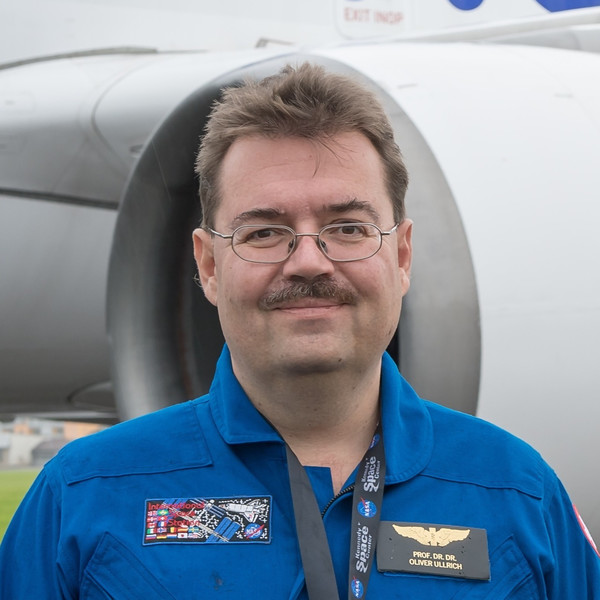
Oliver Ullrich is a Professor and Chair of Anatomy / Gravitational Biology and Cell Biomechanics at the University of Zurich. He also holds professorships in Space Biotechnology at Otto-von-Guericke-University Magdeburg, Space Medicine at EAH Jena, and an Adjunct Professor position at Beijing Institute of Technology. As an Academician of the International Academy of Astronautics , he leads the Swiss Parabolic Flight Program and directs the UZH Innovation Cluster “Space and Aviation” (UZH Space Hub). His research spans gravitational biology , space medicine , and cell biomechanics , focusing on cellular responses to altered gravity environments. His work explores Molecular changes in immune cells under microgravity/hypergravity Epigenetic adaptations to gravitational forces Medical challenges in space exploration Sustainable planetary resource utilization Innovations in spaceflight experiment platforms Recent publications highlight trends in space immunology , organoid analysis under gravity stress , and non-governmental parabolic flight infrastructure . Awards include the Albrecht-Ludwig-Berblinger Award of Aerospace Medicine . He serves on advisory boards for aerospace agencies and companies, and as a member of the executive board of the German Society for Aerospace Medicine : Albrecht-Ludwig-Berblinger Award of Aerospace Medicine As an active investigator in European, German, and U.S. space life sciences programs , he has led 19+ parabolic flight missions and contributed to ISS experiments.
Sheng Li is an Associate Professor of Cancer Biology at the University of Southern California's Keck School of Medicine. She co-leads the Epigenetic Regulation in Cancer Program at the Norris Comprehensive Cancer Center. Her research integrates multi-omics and computational approaches to study epigenetic heterogeneity in blood cancers, aging, and clonal hematopoiesis. Her lab focuses on single-cell spatial multi-omics, 3D epigenomics, and long-read sequencing to map epigenetic drivers of leukemogenesis. Awards include the Leukemia & Lymphoma Society Scholar Award and AACR NextGen Star recognition. She mentors PhD students and postdocs, with her team publishing extensively in high-impact journals. Her publications demonstrate a strong emphasis on computational epigenetics, cancer systems biology, and geroscience. Recent work includes developing tools for spatial transcriptomics interpretation and modeling IDH-mutant AML gene networks.
Iwijn De Vlaminck is an Associate Professor in the Meinig School of Biomedical Engineering at Cornell University. His research focuses on developing precision medicine technologies, including liquid biopsies for diagnosing infectious and immune-related diseases, and spatial profiling of microbiomes and host-microbiome interactions. He leads the De Vlaminck Lab, which integrates engineering, biophysics, and computational biology to advance diagnostics and therapeutics. Key affiliations include the College of Engineering and interdisciplinary graduate fields such as Biomedical and Biological Sciences and Computational Biology. Education: B.S., Electronic Engineering, Katholieke Universiteit Leuven (2000) M.S., Electronic Engineering, K.U. Leuven (2003) Ph.D., Science and Engineering, K.U. Leuven (2008) Research Interests: His lab develops high-throughput technologies for studying diseases like organ transplant rejection, urinary tract infections, and viral myocarditis. Innovations include spatial transcriptomics and methods to map microbial communities in tissues. Recent work addresses biomarkers for MIS-C in children and applications of cell-free DNA in spaceflight studies. Awards: NIH New Innovator Award (2017) Elected Fellow of the American Institute for Medical and Biological Engineering (2025) Rainin Foundation Synergy Award (2019) Teaching Excellence Awards (2017, 2022) Grants & Collaborations: Recipient of a $3M NSF grant for bio-inspired architecture and a $9.5M NIH grant for chronic fatigue syndrome research. Collaborates with institutions like Weill Cornell Medicine and NASA on spaceflight biology and clinical diagnostics. Labs & Teams: Directs the De Vlaminck Lab, which includes interdisciplinary researchers working on spatial omics, liquid biopsies, and microbiome technologies. Engaged in industry partnerships, including co-founding Kanvas Biosciences.
Pedro U. Lima is a Full Professor at Instituto Superior Técnico (IST), University of Lisbon, and President of the Institute for Systems and Robotics (ISR/IST), coordinating the Intelligent Robots and Systems group (IRSg). He holds a Ph.D. in Electrical Engineering from Rensselaer Polytechnic Institute (1994). His research focuses on intelligent control systems, multi-robot coordination, and human-robot interaction, with contributions to robotics competitions like RoboCup and initiatives like the European Robotics League (E.R.L.). Lima has served as Vice President of the RoboCup Federation, Trustee of IEEE Portugal RAS Chapter, and Portuguese National Delegate to the European Space Agency’s Human Spaceflight Program Board. He led the Cátedra de Excelencia sabbatical at UC3M (2010), contributing decision-theoretic approaches to human-robot interaction. His work integrates robotics with societal impact, including outreach through the Pavilhão do Conhecimento and media appearances. He coordinates large projects like euROBIN (EU Horizon Europe) and CRAI (Portugal’s PRR), advancing robotics in domains like autonomous delivery and social robotics.
Gianmarco Vizzeri, MD, is a Professor and Vice Chair of Clinical Operations in the Department of Ophthalmology and Visual Sciences at the University of Texas Medical Branch (UTMB). He serves as Medical Director of the Ophthalmology Clinical Research Center, leading advanced glaucoma diagnostics and therapeutic innovation. His clinical practice focuses on glaucoma management at UTMB Eye Centers in Galveston and Friendswood. Dr. Vizzeri earned his Medical Degree in Medicine and Surgery from the University of Turin, Italy, completed his Ophthalmology Residency at the same institution, and undertook a Clinical and Research Fellowship at the Hamilton Glaucoma Center, University of California San Diego. His research integrates ocular imaging, microgravity effects, and surgical outcomes. Key interests include: Spaceflight-associated neuro-ocular syndrome (VIIP) pathophysiology Retinal vascular patterning using VESGEN analysis Glaucoma neurodegeneration mechanisms Innovations in trabeculectomy techniques Translational applications of terrestrial microgravity analogs His recent publications (2020-2025) demonstrate a dominant focus on: Ocular adaptations to microgravity in astronauts Neuroprotective strategies for glaucoma Advanced imaging modalities for anterior/posterior segment analysis Surgical refinements to minimize refractive complications This reflects sustained contributions to space ophthalmology and glaucoma therapeutics. Dr. Vizzeri collaborates with NASA and leads the UTMB Ophthalmology Clinical Research Center team, investigating novel diagnostic and therapeutic approaches for vision preservation in extreme environments.
David Miles is an Assistant Professor at the University of Iowa , specializing in experimental space physics and magnetic field instrument development. His research focuses on space weather , auroral dynamics , and high-resolution magnetic field measurements . Instrument Co-PI for the Cassiope/e-POP spacecraft Developed a specialized furnace for manufacturing space-instrument components Co-created the course The Edge of Space: Mission and Instrument Design for Spaceflight His recent work involves magnetic interference mitigation and nanosatellite magnetometer design, with applications in missions like TRACERS and SelenITA. While no specific awards are mentioned, his contributions to international space programs are highlighted.
Javid Bayandor serves as Associate Professor in the Department of Mechanical and Aerospace Engineering at the University at Buffalo's School of Engineering and Applied Sciences. His research bridges theoretical aerospace engineering with practical applications in space exploration and bioinspired systems. Education: Postdoctoral Research in Aerospace Structures, The Royal Melbourne Institute of Technology (2000-2001) PhD in Aerospace Engineering, The Royal Melbourne Institute of Technology (2000) His research portfolio spans eight core areas: space mission design, collision dynamics, aerospace conceptualization, space physics, ballistics, bioinspired robotics, advanced structures, and fluid-structure interactions. This interdisciplinary approach integrates computational modeling with experimental validation to solve complex engineering problems across aerospace and biological domains. Current projects demonstrate particular strength in developing innovative solutions for extreme environments including space and underwater applications. Analysis of his 15 most recent publications (2023-2025) reveals three dominant research trajectories: (1) Space mission architectures for Mercury, Venus, and Mars featuring novel entry/landing systems; (2) Impact dynamics studies covering hypervelocity collisions, bird/drone strikes on urban air mobility vehicles, and spacecraft shielding; (3) Bioinspired flight mechanics focusing on bee and bat aerodynamics under environmental stressors. These threads consistently employ fluid-structure interaction methodologies across scales. Scientific Awards: No awards or honors were documented in the provided source material While specific student advising relationships aren't enumerated, his research scope suggests supervision of graduate students in computational mechanics, space systems, and bioinspired robotics. The publication record indicates sustained grant funding for hypervelocity impact studies, space mission design, and bioflight mechanics, though specific grant details aren't provided. His work likely connects with NASA mission development programs and urban air mobility safety initiatives. The research ecosystem appears centered around computational laboratories specializing in fluid-structure interaction modeling, with potential connections to experimental impact testing facilities and biological flight observation setups for bioinspired studies.
James Nabity is an Associate Professor and Associate Chair for Undergraduate Operations at the University of Colorado's College of Engineering and Applied Science, affiliated with BIOSERVE Space Technologies. His research focuses on Environmental Control & Life Support Systems (ECLSS), space habitat design, propulsion, and power systems for human spaceflight. He earned a Ph.D. in Mechanical Engineering from the University of Colorado (2007), an M.S. in Aeronautics & Astronautics from the Naval Postgraduate School (1989), and a B.S. in Mechanical Engineering from the University of Nebraska (1983). Professional experience includes roles as Principal Engineer at TDA Research (2007-2013) and Mechanical Engineer at the Naval Air Warfare Center Weapons Division (1983-1999). His work emphasizes advanced materials, thermal systems, and bioregenerative life support solutions. Research interests span CO2 capture technologies, ionic liquid membranes, and thermal control architectures. Notable achievements include the 2017 Outstanding Faculty Advisor Award and selection as a NASA astronaut candidate in 2009. His contributions bridge academic research with practical aerospace engineering challenges. Publications highlight innovations in ECLSS design, space habitat systems, and propulsion architectures for Mars missions. Labs/teams include BIOSERVE’s collaborative initiatives in space biotechnology and environmental control systems.
Pascale Ehrenfreund is a Research Professor of Space Policy and International Affairs at George Washington University's Space Policy Institute. She concurrently serves as President of the Committee on Space Research (COSPAR), Board Director of the Space Foundation, and Co-chair of the World Economic Forum's Global Future Council on Space. Active in planetary science for three decades, she has contributed to ESA/NASA missions involving the International Space Station and interstellar research. Her education includes a PhD in Astrophysics (University of Paris VII/University of Vienna) and master's degrees in Molecular Biology and Management/Leadership. Notable awards include the Harrie Massey Award (2022), Polarstern Preis (2022), and France's Legion of Honour (2019). She is ranked in Stanford's Top 2% Scientists (2022) and has an asteroid named after her (9826 Ehrenfreund). Research focuses on astrobiology, space policy, and interstellar medium studies. Over 216 peer-reviewed articles and 136 invited reviews highlight expertise in biosignature detection, planetary protection, and space mission instrumentation. Leadership roles include President of the International Space University (2021-2023), Chair of Germany's DLR Executive Board (2015-2020), and President of Austria's Science Fund (2013-2015). Key projects include EDIBLES interstellar band surveys, Mars analogue research (MASE project), and development of the ORIGIN space biosignature instrument. Her work bridges astrophysics, policy, and international collaboration across space exploration initiatives.
Ye Lu is an Assistant Professor in the Department of Aerospace Engineering at Worcester Polytechnic Institute (WPI). He holds a B.S. and M.S. in Aerospace Engineering from WPI (2013 and 2015, respectively) and a Ph.D. in Aeronautics and Astronautics from Purdue University (2019). Before joining WPI in 2023, he served as an Assistant Professor in the College of Aeronautics and Engineering at Kent State University. His research focuses on the intersections of orbital mechanics and hypersonic flight mechanics, with an emphasis on advancing space mission design through novel techniques and next-generation exploration architectures. Specific interests include planetary exploration mission concepts, such as orbiter co-delivery systems, sample returns from gas giants, and multi-probe exploration strategies. Dr. Lu leads the Laboratory for Spaceflight and Planetary Exploration , where his team addresses challenges in aerobraking, aerocapture, and entry-descent-landing systems. His work integrates computational modeling and experimental approaches to optimize mission parameters and enhance spacecraft resilience. Professional affiliations include the American Institute of Aeronautics and Astronautics (AIAA) and the American Astronautical Society. While his current academic role is in aerospace engineering, his scholarly publications span materials science and energy technologies, including studies on perovskite solar cells, flexible electronics, and battery mechanics. This interdisciplinary approach reflects his broader interest in applying mechanical principles to diverse engineering challenges.
Dr. Valeriya Gritsenko is an Associate Professor at West Virginia University School of Medicine with multiple appointments across the Department of Physical Therapy, Department of Neuroscience, and Rockefeller Neuroscience Institute. She leads the Neuroengineering and Rehabilitation Laboratory (NERL) where she conducts interdisciplinary research at the intersection of neuroscience, engineering, and rehabilitation medicine. Dr. Gritsenko holds a PhD from the University of Alberta, Canada, completed a postdoctoral fellowship at the University of Montreal, and received specialized training including an intensive course in transcranial magnetic simulation at Harvard Medical School and a fellowship in Computational Neuroscience at Woods Hole. Her research focuses on understanding human sensorimotor control through experimental and computational approaches, employing techniques such as motion capture, electromyography, transcranial magnetic stimulation, and biomechanical modeling. Her work spans several key research domains including neuromechanics of movement, sensorimotor integration, and quantitative assessment of motor deficits. She has made significant contributions to understanding how proprioception combines with internal predictive signals for movement execution and has developed innovative methods for assessing movement impairments using low-cost motion capture systems. Her research has important applications in stroke rehabilitation, surgical training, and space medicine. Analysis of Dr. Gritsenko's publication record shows a clear progression toward developing computational tools for movement analysis, with increasing emphasis on AI applications and real-time assessment methods. Her recent work demonstrates strong integration between basic neuroscience principles and clinical applications, particularly in creating more sensitive measures of motor function that go beyond traditional joint angle measurements. Dr. Gritsenko is actively involved in major research initiatives including NASA's BioAISense project developing AI for autonomous sensorimotor assessment and an AFOSR project on sensation-to-action transformation frameworks. Her laboratory in the Erma Byrd Biomedical Research Facility serves as a hub for interdisciplinary research that combines engineering approaches with clinical neuroscience to improve rehabilitation outcomes.
Prof. Fabian Ille is a Professor and Head of the Competence Center for Bioscience and Medical Engineering at Lucerne School of Engineering and Architecture (HSLU). He leads interdisciplinary research in biomedical engineering, space biology, and regenerative medicine. His academic background includes a Master's in Cell Biology from Heidelberg University and a PhD in Neuronal Stem Cell Biology from ETH Zurich, followed by postdoctoral work in the Space Biology Group. He combines clinical, computational, and engineering approaches to address challenges in musculoskeletal disorders and fertility treatments. Education: PhD in Neuronal Stem Cell Biology, ETH Zurich (Neuroscience Center Zurich) Master's in Cell Biology, University of Heidelberg Research Focus: Intervertebral disc and joint repair mechanisms under microgravity conditions Development of medical software solutions (CDSS, SaMD) for musculoskeletal and reproductive disorders Biomedical applications of microgravity research including space bioreactors and tissue engineering Data-driven approaches in fertility treatments and clinical decision support systems Key Projects: Space Bioreactor Development SORTHOdisc: Stem cell sorting technology for disc therapy PAEON Virtual Hospital System COSMOS Data Cockpit for personalized medicine Technical Contributions: Medical device testing methodologies (e.g., phacoemulsification instruments) Multi-omics analysis frameworks for space biology experiments AI-driven ERP data mining for service shop optimization Laboratory Infrastructure: Leads the Institute of Medical Engineering with specialized facilities for cell culture under microgravity simulation, electrophysiology labs, and biomedical software development hubs.