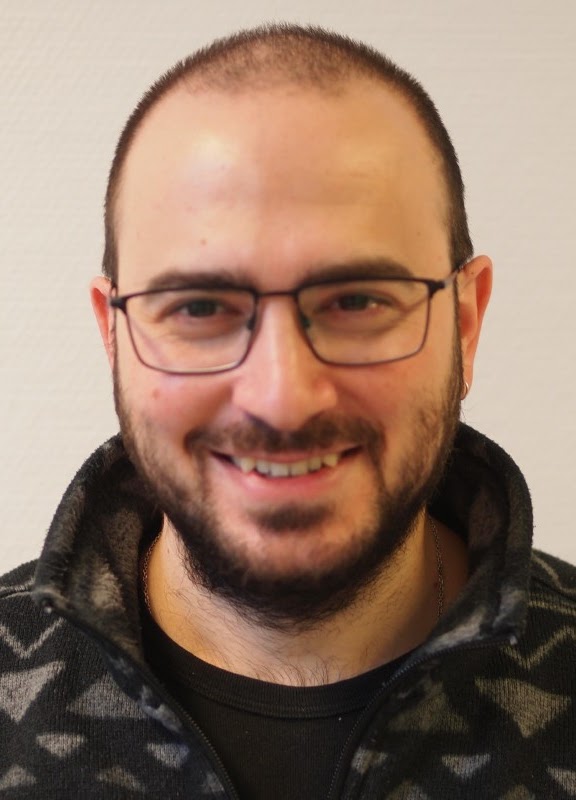
Thomas Bjørner is an Associate Professor at Aalborg University's Department of Architecture, Design and Media Technology within The Technical Faculty of IT and Design. He serves as Head of the Media Innovation & Game Research (Me-Ga) unit and co-founded the research network for qualitative methods (since 2007) with 40+ company collaborations. Specializes in qualitative/mixed methods for technology evaluation Teaches PhD courses in advanced qualitative methods EU expert evaluator for research grants His research focuses on gamified learning , VR for social communication , and technology acceptance studies , often addressing UN Sustainable Development Goals. Recent projects include: Audio-only VR for blind gamers Generative AI integration in education Plastic crisis awareness games Smart city implementation barriers Scientific Awards: Serious Game Competition Award (2022) International conference prizes (2020, 2018) With over 121 publications including two textbooks, his work emphasizes applied qualitative methods with improved validity in technology contexts, particularly for youth education and media research.
Georgios Arvanitidis is an Associate Professor at the Technical University of Denmark (DTU) in the Department of Applied Mathematics and Computer Science, specifically within the Section for Cognitive Systems (CogSys). He has established himself as a leading researcher in geometric machine learning, focusing on the application of differential geometry principles to enhance machine learning models. His work bridges theoretical mathematics with practical applications in artificial intelligence, with particular emphasis on understanding the geometric structure of data manifolds and latent spaces. Dr. Arvanitidis completed his educational journey with a Bachelor's degree from the Department of Informatics at the Aristotle University of Thessaloniki, followed by a Master's degree in Computer Science from Saarland University supported by the Max Planck Institute for Informatics. He earned his PhD at DTU's Cognitive Systems section under the supervision of Søren Hauberg, with additional research experience at Philipp Hennig's Probabilistic Numerics group. Prior to his current position as associate professor, he was a PostDoc at the Max Planck Institute for Intelligent Systems working with Bernhard Schölkopf. Dr. Arvanitidis's research primarily focuses on differential geometry in machine learning , where he explores how geometric structures can enhance representation learning and statistical modeling. His work in generative models investigates how learning the geometry of data manifolds can improve deep learning architectures. In the domain of deep learning theory , he examines why deep learning models generalize effectively on unseen data, with particular attention to the curvature properties of loss landscapes. His research in approximate Bayesian inference applies geometric principles to improve uncertainty quantification in neural networks. Through his innovative approaches, Dr. Arvanitidis has established himself as a leading researcher in geometric machine learning, contributing to both theoretical foundations and practical applications across various domains including robotics and life sciences. The publication trends of Dr. Arvanitidis reveal a consistent and evolving focus on geometric approaches to machine learning problems. His recent work (2023-2025) demonstrates increasing sophistication in applying Riemannian geometry to deep learning architectures, with particular emphasis on latent space geometry, optimization on manifolds, and geometric interpretations of neural network behavior. A notable pattern is the progression from foundational work on geometric representations to more applied research in areas like robotics and causal inference. His publications span top-tier conferences including NeurIPS, ICML, ICLR, and AISTATS, reflecting the high impact of his research. The interdisciplinary nature of his work is evident in collaborations across mathematics, computer science, and robotics domains, with recent papers addressing challenges in multimodal sampling, safety guarantees for dynamical systems, and counterfactual explanations. Dr. Arvanitidis has received several notable scientific awards and recognitions: Sapere Aude starting grant from the Independent Research Fund Denmark (DFF) GADL funding i-Rase, Pathfinder, and EIC (European Innovation Council) funding Best reviewer award for NeurIPS 2019 Best reviewer award for NeurIPS 2018 Best student paper award at Robotics: Science and Systems (R:SS) 2021 Dr. Arvanitidis actively mentors PhD students and researchers, currently supervising Alejandro Valverde, Johanna Gegenfurtner, and Albert Kjøller Jacobsen. He has previously co-supervised Alison Pouplin's PhD and worked with research assistant Georgios Pantis. His group receives substantial funding through multiple prestigious grants including the Sapere Aude starting grant from the Independent Research Fund Denmark, as well as European Innovation Council funding. He has been instrumental in creating opportunities for students interested in geometric machine learning, offering BSc and MSc thesis projects focused on generative models, deep learning theory, and optimization techniques. Dr. Arvanitidis also contributes significantly to the academic community as a reviewer for top conferences including ICLR and TMLR, and as an area chair for NeurIPS, ICML, AISTATS, and UAI. He co-organized the Machine Learning Summer School 2020 in Tübingen, further demonstrating his commitment to education and community building. Dr. Arvanitidis leads a vibrant research group focused on geometric machine learning within the Cognitive Systems section at DTU. His team includes multiple PhD students working on cutting-edge research at the intersection of differential geometry and artificial intelligence. The group has developed notable software tools, including the "geometric_ml" GitHub repository with over 70 stars, which contains implementations for applying Riemannian geometry in machine learning. His research has practical applications in robotics, where geometric approaches enable more robust motion planning, as evidenced by his work on "Reactive Motion Generation on Learned Riemannian Manifolds" which received a best student paper award. Additionally, his methodologies have found applications in life sciences, as mentioned in his 2022 AISTATS paper. The collaborative nature of his work is evident through extensive partnerships with researchers at institutions including the Max Planck Institute for Intelligent Systems, University of Cambridge, and various European universities. His recent news items indicate active engagement with the academic community through talks, conference presentations, and ongoing supervision of new PhD students joining his group.
Shashi Raj Pandey serves as Assistant Professor in the Department of Electronic Systems at Aalborg University's Technical Faculty of IT and Design, Denmark. His research is anchored in the Connectivity section and Connectivity Classique-Center for Classical Communication in the Quantum Era, with office location at Fredrik Bajers Vej 7C, C1-111, 9220 Aalborg Øst. His core research spans Network Economics, Game Theory, and Wireless Networks, with specialization in Decentralized Machine Learning and Semantic/Goal-oriented Communications. Current work integrates Digital Twin technologies with 6G systems for industrial automation and earth observation, emphasizing resource-efficient protocols for Internet of Things and edge intelligence applications. Recent publications (2024-2025) reveal a clear trajectory toward AI-6G convergence, featuring semantic communications for satellite imaging, game-theoretic network resource allocation, and digital twin implementations for autonomous systems. Key themes include communication efficiency in distributed learning and physical-digital world integration. Notable recognitions include: Best PhD Thesis Nominee (2021) Excellent Paper at Korea Software Congress, KIISE 2021 Student Best Paper Award at APNOMS 2019 Best Paper at Korea Software Congress, KIISE, 2018 Brain Korea 21st Century Plus Fellowship Academic service includes external PhD examination for EU SNS projects and peer review for premier conferences (AAAI, ICLR, ICML). His lab work within the Connectivity Classique-Center explores classical communication frameworks applicable to quantum-era networks, with focus on semantic information theory and decentralized network architectures.
Johannes Bjerva is a Full Professor at Aalborg University's Department of Computer Science (Campus Copenhagen), leading the Copenhagen branch and conducting interdisciplinary NLP research integrating linguistic typology. His work focuses on low-resource languages, language model security, and societal AI impact. PhD (University of Groningen, 2017): Thesis on multitask/multilingual lexical modeling M.A. & B.A. in Computational Linguistics (Stockholm University) Research interests span linguistically-informed NLP , language model security , and low-resource language technology . Current projects include the DFF Sapere Aude grant (2025) for language model detection security and the LM2-SEC project (2025–2030). His 2024 ACL paper on embedding inversion security and 2024 EMNLP paper on typological diversity exemplify recent work. Scientific awards include: 2021: Teacher of the Year (AAU Computer Science) 2019: Google Cloud research credits 2022: Carlsberg Semper Ardens (5M DKK) 2024: Novo Nordisk Data Science grant (~10M DKK) Supervision includes 8 PhD students across projects like CreoleVal and HiFi-KPI . He serves on the Industrial Researcher Committee at Innovation Fund Denmark and is a member of Det Unge Akademi (2023–2028).
Jes Frellsen is an Associate Professor at the Department of Applied Mathematics and Computer Science (DTU) since 2016. Previously, he held academic positions at the IT University of Copenhagen (2016-2019), postdoctoral roles at University of Cambridge (2013-2016) and University of Copenhagen (2011-2013). Education: PhD in Bioinformatics (2011), University of Copenhagen MSc in Bioinformatics (2007), University of Copenhagen BSc in Mathematics and Computer Science (2005), University of Copenhagen EAP Exchange at University of California, Santa Cruz (2004-2005) Research Focus Jes Frellsen specializes in statistical machine learning , particularly generative AI and deep generative models with applications in bioinformatics . His work integrates Bayesian inference , directional statistics , and Markov chain Monte Carlo methods to address challenges in macromolecular structure prediction and missing data imputation . Recent efforts explore uncertainty quantification in image segmentation and generative modeling for materials science. Advising & Collaborations He actively supervises PhD students and postdoctoral researchers in projects spanning news recommendation systems , medical imaging , and 3D structure generation . Collaborations include work with Zoubin Ghahramani (Cambridge) and Thomas Hamelryck (Copenhagen), with contributions to protein structure prediction and statistical methods in structural bioinformatics .
Tuukka Ruotsalo serves as Associate Professor in the Machine Learning Section at the Department of Computer Science, University of Copenhagen. His research bridges human cognition with computational systems through brain-computer interfaces and physiological computing. As Academy Research Fellow at University of Helsinki (2019-2024), he maintained dual institutional affiliations while leading cutting-edge work in neuro-linguistic modeling and affective relevance. His research focuses on brain-computer interfaces for information retrieval , where he pioneers methods to decode cognitive states from neural signals to improve search systems. Key areas include affective relevance modeling that integrates emotional states into search algorithms, and neuro-linguistic reconstruction that translates brain activity into language. His work on fairness-relevance tradeoffs in recommender systems established Pareto frontier evaluation frameworks now widely adopted in ethical AI research. Recent publications demonstrate how physiological signals like EEG and galvanic skin response can create more adaptive human-information interaction systems. Ruotsalo's scientific recognition includes the prestigious Academy Research Fellow position. His publications in IEEE Transactions on Human-Machine Systems , Journal of the Association for Information Science and Technology , and Communications Biology reveal growing interdisciplinary impact. His advising spans cognitive neuroscience and machine learning students, with notable collaborations across the SCIENCE AI Centre. Current projects include the TreeSense initiative for remote sensing of global tree resources and development of quantum-inspired neural architectures. His lab leverages the department's powerful compute cluster for large-scale physiological data analysis.
Arijit Khan is an Associate Professor in the Department of Computer Science at Aalborg University, Denmark. He leads the Data Engineering, Science and Systems group and is affiliated with the Technical Faculty of IT and Design. His research focuses on Graph Neural Networks , Blockchain , Data Management , and AI interpretability . He is the Principal Investigator (PI) of a major project on Data Management, Fundamental Algorithms, and Machine Learning for Emerging Problems in Large Networks (2022–2027). Research Interests : Graph Data Management & Machine Learning Blockchain Transaction Analysis Large Language Model + Knowledge Graph Synergies Healthcare AI (e.g., ICU glucose prediction) Explainable AI for Graph Neural Networks Research Trends : His publications emphasize neuro-symbolic systems , uncertain graph analysis , and AI-driven blockchain insights . Recent work bridges large language models with knowledge graphs and explores GPU performance optimization via shader code analysis. Awards & Grants : No explicit awards listed, but his active research grants include a 5-year project on large network analysis with interdisciplinary applications in life and health sciences. Funding emphasizes algorithmic innovation and data science integration. Labs/Teams : Head of the Data Engineering, Science and Systems research group, focusing on AI for societal impact ('AI for the People') and scalable graph data systems. Collaborations span blockchain analytics, healthcare informatics, and GPU architecture design.
Per Lynggaard is a Professor of Electronics at the Technical University of Denmark (DTU) , leading the B.Eng. program in Electronics. Previously, he held an Associate Professor role at Aalborg University, combining academic excellence with a robust industrial career in technical-scientific research and development. Education: M.Sc. in Electrical Engineering and Information Technology (EE and IT) Ph.D. in Electronics from Aalborg University Research Interests: Focus on Integrated Circuit Design, Wireless Sensor Networks (WSN), Machine Learning, IoT, and Smart City Technologies . His work emphasizes energy-efficient systems, cybersecurity in IoT, AI-driven interference mitigation, and sustainable energy harvesting solutions. He has contributed to UN Sustainable Development Goals through projects addressing smart infrastructure and environmental monitoring. Projects & Collaborations: Leads and participates in EU-funded initiatives such as InnoTech (2023–2025) for green transition solutions and TransportTech (2023–2026) for Industry 4.0 logistics. Active in cybersecurity research via projects like Jamming Against Critical Wireless Communication , aiming to protect critical infrastructure. Awards: Recognized with multiple honors and rewards during his industrial career, though specific names are not listed. His work has been cited widely, with notable impact in IoT security and energy-efficient systems. Advising & Grants: Supervises Turnip T.N. in a PhD project on 6G security protocols. Engaged in securing funding for projects like F2D2: The Community for Dynamic Data (2021–2030), focusing on dynamic data systems and cybersecurity. Labs & Teams: Collaborates in interdisciplinary teams such as the InnoTech TaskForce and F2D2 Community , advancing IoT and AI integration. His research bridges academia and industry, with outputs spanning smart cities, healthcare IoT, and sustainable energy systems.
Diego F. Aranha is an Associate Professor in the Department of Computer Science at Aarhus University . His research focuses on cryptographic systems, cybersecurity, and privacy-preserving technologies with applications in voting systems, post-quantum cryptography, and secure computation. He has contributed extensively to homomorphic encryption, secure multiparty computation (MPC), and cryptanalysis of cryptographic implementations. Key projects include: MPCC (2025-2028) : Multi-Party Computation in the Confidential Cloud SCI (2024-2027) : Secure Computation Infrastructures for the Retail Industry RENAIS (2021-2026) : Residue Number Systems for Cryptography His work emphasizes practical efficiency and formal verification of cryptographic protocols. Recent publications highlight advancements in lattice-based cryptography, secure voting schemes, and mitigating side-channel vulnerabilities in post-quantum algorithms. He actively collaborates on open-source cryptographic libraries and standards, with a focus on bridging theoretical security and real-world implementation challenges.
Prof. Dr. Markus List is a Professor of Data Science of Systems Biology at the TUM School of Life Sciences, Technical University of Munich (since 2023). He previously served as Group Leader at the Chair of Experimental Bioinformatics (2018–2023) and held a PostDoc position in Computational Biology at the Max-Planck Institute for Informatics (2015–2018). His educational background includes a PhD in Molecular Oncology, an MSc in Bioinformatics from the University of Southern Denmark, and BSc and further studies in Bioinformatics at Eberhard-Karls Universität Tübingen. Current Role: Professor of Data Science and Systems Biology Previous Roles: Group Leader, PostDoc, and Academic Researcher His research focuses on interdisciplinary applications of data science to systems biology, bioinformatics, and molecular oncology. He also explores organizational theory, innovation processes, and the dynamics of routines in management contexts. His work bridges computational methods and organizational challenges, addressing topics like digital twins, distributed innovation, and strategic adaptation. Key contributions include studies on organizational imprinting, digital transformation in firms, and the role of routines in institutional dynamics. His research has been published in top-tier journals and presented at international conferences.
Petar Popovski is a Professor at the Department of Electronic Systems within the Technical Faculty of IT and Design at Aalborg University, Denmark. His research focuses on next-generation wireless communication systems, with a strong emphasis on ultra-reliable low-latency communication (URLLC), Internet of Things (IoT), multiple access, and 6G technologies. He leads several high-impact research projects, including the Classique - Center for Classical Communication in the Quantum Era funded by the Danish National Research Foundation and WATER (Wireless Architectures for intelligent and Trusted connectivity in the posT-5G ERa) supported by Villum Fonden. His research interests span key areas in modern communication theory and systems, including random access , non-terrestrial networks , satellite communication , and machine learning for reliable communication . He is actively involved in advancing the integration of sensing and communication, digital twin technologies, and quantum-era classical communication frameworks. The recent publications highlight a strong trend toward deterministic and reliable access in wireless networks, integration of sensing and communication for industrial automation, and novel physical-layer techniques using reconfigurable intelligent surfaces. These works are published in top IEEE journals such as IEEE Transactions on Communications , IEEE Transactions on Haptics , and IEEE Transactions on Vehicular Technology . Award highlights include the Best Student Paper Award (2021) , recognizing his mentorship and collaborative research excellence. Prof. Popovski serves as a principal investigator (PI) and supervisor in multiple research projects, securing significant funding from national and international bodies such as the Danish National Research Foundation and the European Space Agency (ESA). He hosts visiting researchers regularly and contributes to scientific leadership through editorial roles and conference participation. He is a key figure in the Connectivity section at Aalborg University and leads cutting-edge research in future wireless systems, contributing to both theoretical foundations and practical implementations in smart infrastructure, space communication, and dependable 6G networks.
Jeppe Revall Frisvad is an Associate Professor in the Department of Applied Mathematics and Computer Science at the Technical University of Denmark (DTU), within the Visual Computing group. His work bridges computer graphics, material science, and applied optics, focusing on realistic rendering and material appearance modeling. Ph.D. in Computer Graphics, DTU Informatics (2008) M.Sc. in Engineering (Applied Mathematics), DTU (2004) Education in University Teaching, LearningLab DTU (2008–2009) His research centers on computing material appearance from physical and chemical properties, developing faster and more accurate physically based rendering methods. Key areas include light scattering, bidirectional reflectance distribution functions (BRDF), anisotropy, and translucency modeling. Applications span computer games, movies, digital prototyping, architectural visualization, and training simulators. His recent publications (2024–2025) reflect a strong trend in digitizing material appearance, especially for 3D printing and food science, using spectrophotometry and optical validation. The work combines computer graphics with interdisciplinary applications in food structure and biological imaging, emphasizing measurement, modeling, and simulation. Scientific Awards: Research travel prize from AEG Elektronfonden (2006) IGDA scholarship for GDCE 2005 DTU Ph.D. scholarship (2004) He actively supervises Ph.D. students and leads multiple research projects, including those on organ-on-chip imaging, cheese quality analysis, and optical modeling of teeth. He collaborates across disciplines and institutions, with external research stays at UC San Diego and the University of Otago. He is involved in projects integrating AI with 3D imaging and material digitization. Jeppe is a key member of the Visual Computing research environment at DTU, contributing to both fundamental rendering algorithms and practical applications in industry and science.
François Raymond J Cornet is a Postdoctoral Researcher in the Department of Energy Conversion and Storage and a PhD Student in the Department of Applied Mathematics and Computer Science at the Technical University of Denmark (DTU). His dual affiliation bridges energy conversion research and computational science, focusing on AI-driven molecular design. His research spans Organometallic Chemistry , Computational Chemistry , and Machine Learning , with specialization in catalyst design through diffusion models and inverse design methodologies. Key areas include metallocene chemistry, density functional theory applications, and generative modeling for chemical space exploration, targeting organometallic complexes like Vaska's complex. Cornet's publication trajectory reveals a concentrated effort in advancing equivariant diffusion models for molecular generation, particularly addressing small-data challenges in catalyst design. His work consistently integrates quantum chemistry with deep generative architectures, establishing new paradigms for inverse-design pipelines in computational chemistry. No scientific awards were documented in the source material. He recently completed the PhD project Machine learning for electronic scale inverse design of enzymatic catalysts (2021-2025) under supervisors M. N. Schmidt (primary), A. Bhowmik, and O. Winther, with examiners W. K. Boomsma and S. Olsson. Collaborators include P. Deshmukh, B. Benediktsson, and C. A. Naesseth across multiple publications. Research operations occur within DTU's interdisciplinary framework connecting the Department of Energy Conversion and Storage and Department of Applied Mathematics and Computer Science, leveraging computational infrastructure for molecular simulations and AI model training.
Jonathan Voersaa Wenshøj is an academic researcher at the Department of Computer Science, University of Copenhagen. He contributes to the Machine Learning section's activities spanning theoretical foundations and applications in diverse domains like information retrieval, medical data analysis, remote sensing, sustainability, and biological modeling. The section participates in the SCIENCE AI Centre and collaborates with initiatives like TreeSense for global tree resource analysis. His research intersects machine learning with quantum computing, medical informatics, and sustainability. Recent publications highlight applications in environmental monitoring, healthcare diagnostics, and energy-efficient AI systems. The department provides advanced compute resources including a powerful cluster for intensive machine learning tasks. This researcher's work appears in diverse machine learning domains, with recent publications addressing quantum-inspired architectures, explainable AI in medical imaging, and sustainable computing practices. The section actively hosts events including seminars, conferences, and PhD defences related to machine learning advancements.
Stefan Oehmcke is an Assistant Professor at the Machine Learning Section of the Department of Computer Science , University of Copenhagen. His research focuses on applying machine learning techniques to environmental and geospatial analysis, particularly in forest ecology, tree monitoring, and climate impact studies. Research Trends: His recent publications emphasize deep learning for LiDAR data processing, multi-modal geospatial representation, and sustainable AI practices. Key Collaborations: Frequently collaborates with researchers in environmental science, remote sensing, and climate change (e.g., Martin Brandt, Christian Igel). Applications: Develops tools for forest biomass estimation, tree mortality mapping, and urban safety analysis using satellite imagery. While no specific educational background or scientific awards are mentioned in the provided texts, Oehmcke's work demonstrates technical innovation in AI explainability and environmental monitoring, with significant contributions to journals like Remote Sensing of Environment and Nature Communications .