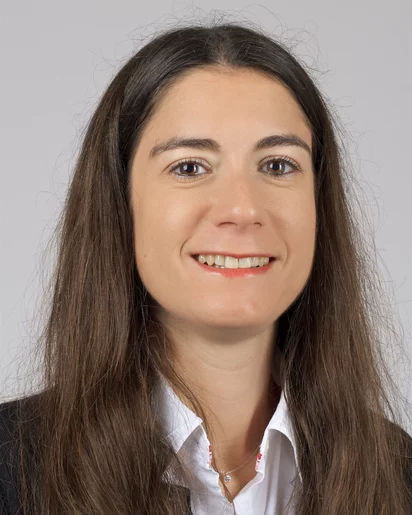
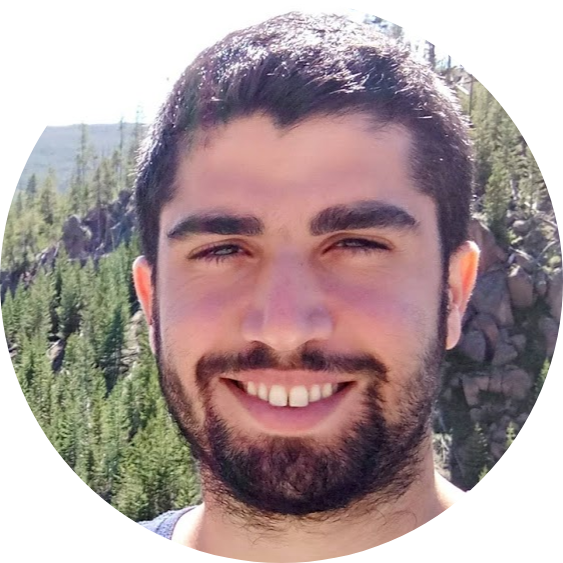
Dr. Adrian Soldati is a Researcher affiliated with the University of St Andrews' School of Psychology and Neuroscience. His work focuses on primate behavior and cognition, particularly the evolution of communication systems in chimpanzees and bonobos. He investigates how these primates' communication informs our understanding of human language origins. Dr. Soldati holds a cotutelle PhD from the University of St Andrews and the University of Neuchâtel, Switzerland. His research combines field observations with cutting-edge methodologies like thermal imaging and AI-driven analysis to study vocal ontogeny, gestural dialects, and social behavior in wild populations. Key research foci include chimpanzee vocal communication, the role of audience in displays, and cross-species comparisons to uncover evolutionary pathways. His collaborative projects span multiple field sites, including Uganda's Budongo Forest, and involve partnerships with institutions worldwide. Recent work highlights rhythmicity in chimpanzee drumming, dialect variation in gestures, and the application of neural networks to analyze primate vocalizations. These studies contribute broadly to primatology, cognitive science, and evolutionary biology.
Andrea Cavalli is an Adjunct Professor at the École Polytechnique Fédérale de Lausanne (EPFL), affiliated with both the VPA-AVP-CP CECAM-GE unit and the School of Basic Sciences (SB) within the ISIC department (SB-CECAM). His research focuses on advanced biosensor technologies, implantable medical devices, and personalized medicine applications. He teaches a course on drug discovery, emphasizing computational methods for drug design and pharmacokinetics. Key research interests include nanotechnology-driven biosensors, biocompatible materials for implantable devices, and multiplexed detection systems for infectious diseases. Cavalli leads projects on in vivo validation of biochips for metabolic monitoring and integrates electrochemical sensors with circuit design for real-time diagnostics. His work spans from fundamental material science to clinical translation, with a focus on HIV/tuberculosis diagnostics and chronic disease management. PhD Student: Alessia Ghidini Lab: CECAM (European Center for Atomistic and Molecular Simulations) Key collaborations: Molecular diagnostics platforms, nanomaterials for bioelectronics Publications highlight innovations in nanoplasmonic biosensors, biocompatible packaging solutions, and CNT-based bioelectronics. Ongoing work explores remote patient monitoring systems and multipanel biosensors for personalized therapy optimization.
Prof. Pavan Ramdya, the DSM-Firmenich Next Generation Chair in Neuroscience at École Polytechnique Fédérale de Lausanne (EPFL), leads the Neuroengineering Laboratory. His research focuses on reverse-engineering biological intelligence in Drosophila melanogaster to inspire neuroprosthetics, robotics, and AI. He holds a PhD in Neurobiology from Harvard University and completed postdoctoral training in robotics (EPFL), neurogenetics (UNIL), and bioengineering (Caltech). University: École Polytechnique Fédérale de Lausanne (EPFL) School: School of Life Sciences Academic Rank: Professor His lab employs computational, engineering, genetic, and microscopy approaches to study neural population dynamics, biomechanics, and gene expression in limb-dependent behaviors. Key research trends from his publications include neuromechanical modeling of Drosophila , sensory-motor integration, and AI-robotics synergy for biological discovery. HFSP Career Development Award Swiss National Science Foundation Eccellenza Grant UNIL Young Investigator Award in Basic Science FENS-Kavli Network of Excellence member The lab mentors doctoral researchers such as Sibo Wang, Victor Stimpfling, and Femke Hurtak, alongside postdoctoral fellows like Jasper Phelps and alumni including Victor Lobato Rios. Collaborations span robotics (Auke Ijspeert), microrobotics (Sakar), and computational imaging (Fua).
Lijing Xin is an Assistant Professor at the Department of Physics and a research staff scientist at the Center for Biomedical Imaging (CIBM) at Ecole polytechnique fédérale de Lausanne (EPFL), Switzerland. She teaches courses on Biomedical Imaging and Translational MR Neuroimaging, while also contributing to academic administration. PhD in Physics (2010, EPFL) Master's Project (2002-2005) on MRI instrumentation Her research focuses on high-field magnetic resonance spectroscopy (MRS) and MRI for studying brain function and neurological diseases. She develops novel acquisition and quantification methods for 1 H, 13 C, and 31 P nuclei, particularly on 7T clinical platforms . Her work bridges preclinical and clinical research , with collaborations in psychiatry to explore pathophysiology and biomarkers for disorders like schizophrenia and mood disorders. Recent publications include studies on epilepsy , Alzheimer's disease , brain energy metabolism , and neurochemical profiling using advanced MRS and deep learning for psychosis classification. She has contributed to RF coil design , macromolecule suppression , and metabolic pathway analysis across multiple disciplines. She advises PhD students and collaborates on interdisciplinary projects involving neuroimaging hardware , metabolic disease research , and psychiatric biomarker identification . Her lab at EPFL CIBM-AIT develops cutting-edge techniques for high-resolution brain metabolism analysis and clinical translation .
Xu Chen is a doctoral researcher at ETH Zurich specializing in 3D generative models and neural implicit shape animation . His work focuses on creating photo-realistic simulations of human activity for applications in human-centric perception tasks .
Markus Gross is a Professor of Computer Science at ETH Zurich, where he founded the Computer Graphics Laboratory in 1994. He also serves as the Chief Scientist of the Walt Disney Studios and Director of DisneyResearch|Studios, a position he has held since 2008. His work bridges academia and industry, with research that has been applied in Hollywood films, sports broadcasting, and medical applications. Professor Gross received his Master of Science in electrical and computer engineering and his Ph.D. in computer graphics and image analysis from Saarland University in Germany in 1986 and 1989. His research spans multiple domains of computer graphics and visual computing. Early in his career, he pioneered point-based graphics techniques that offered alternatives to traditional triangle-based rendering pipelines. More recently, his work has focused on digital humans, AI characters, and machine learning applications for visual computing. His research has led to significant practical applications, including the Medusa capture system used in Hollywood films, the blue-c immersive telepresence system, and the Liberovision technology now used by major sports broadcasters. Analysis of his recent publications reveals a strong focus on neural rendering techniques, particularly around Gaussian splatting and diffusion models. His work increasingly integrates AI with traditional computer graphics methods, with applications in digital humans, medical visualization, and video processing. Many papers demonstrate practical applications in film production, medical treatment planning, and interactive systems. Professor Gross has received numerous prestigious awards throughout his career: 2024 Eurographics Gold Medal 2021 Steven Anson Coons Award for outstanding creative contributions to computer graphics 2019 Technical Achievement Award from the Academy of Motion Picture Arts and Sciences 2013 Karl Heinz Beckurts-Preis 2013 Konrad-Zuse-Medaille für Informatik 2013 Technical Achievement Award from the Academy of Motion Picture Arts and Sciences 2012 Academy Sci-Tech Oscar award for Wavelet Turbulence Professor Gross has mentored numerous Ph.D. students throughout his career, with 20 Ph.D. students contributing to his blue-c project alone. His research has been supported by significant funding from both academic and industry sources, enabling the creation of multiple startups including Cyfex, Novodex, LiberoVision, Dybuster, and Animatico (acquired by Nvidia in 2022). He leads the Computer Graphics Laboratory at ETH Zurich and DisneyResearch|Studios, fostering collaboration between academic research and practical industry applications. His teams have developed groundbreaking technologies that have impacted film production, sports broadcasting, medical visualization, and educational technology.
Camille Delavaux is a researcher affiliated with ETH Zurich's Department of Global Ecosystem Ecology, part of the Professorship for Global Ecosystem Ecology. Her work focuses on plant-microbe interactions, ecosystem ecology, and biogeographic patterns. Key research interests include island biogeography, microbial diversity, invasion biology, and the application of environmental DNA (eDNA) techniques. She has conducted fieldwork in diverse locations like the Galapagos Islands, Panama, and semi-arid prairie ecosystems. Her research explores how mutualistic relationships (e.g., mycorrhizal fungi) influence plant diversity and community dynamics, with studies addressing topics such as latitudinal diversity gradients, invasive species impacts, and soil microbial feedback mechanisms. She has contributed to developing molecular tools for identifying arbuscular mycorrhizal fungi and advocated for integrative approaches in ecological research, including the use of large language models in science. Delavaux collaborates on projects spanning tropical forests, post-agricultural grasslands, and island ecosystems, emphasizing the role of microbes in planetary health and the Sustainable Development Goals. Her work bridges field ecology, molecular biology, and computational methods to address global ecological challenges.
Anne Göhring is an Academic Associate at the University of Zurich, working within the Language, Technology and Accessibility research team at the Institute of Computational Linguistics. With over a decade of experience in computational linguistics and natural language processing, she has established herself as a specialist in machine translation, sign language processing, and German language analysis. Her work bridges theoretical linguistics with practical applications, particularly focusing on accessibility technologies and resource-poor languages. Her educational background includes: 2001-2010: Studies in Spanish Linguistics and Literature, Computational Linguistics 2006-2007: Erasmus study year at Universidad Complutense Madrid Dr. Göhring's research spans multiple domains of computational linguistics with a strong emphasis on practical applications. She has made significant contributions to machine translation systems, particularly for hybrid approaches and low-resource languages like Quechua. Her recent work has increasingly focused on sign language processing, developing corpora and translation systems to improve accessibility. She also conducts important research in semantic role labeling, sentiment analysis, and German language processing, with applications ranging from social media analysis to veterinary text mining. Analysis of her recent publications reveals a clear trajectory toward accessibility-focused NLP research, particularly in sign language technologies. While maintaining expertise in German language processing and machine translation, her 2023-2024 work shows a strong emphasis on sign language corpora development (SwissSLi) and pose-based identification systems. Earlier work focused more on semantic analysis, sentiment detection, and cross-lingual processing, demonstrating remarkable versatility across NLP subfields. Dr. Göhring has been actively involved in numerous research projects: 2011-2014: SNSF project SQUOIA on Hybrid Machine Translation 2015: CTI project SentiSpider on expectation-based sentiment analysis 2016-2018: What's up, Switzerland? corpus project 2018-2022: Sentiment inference research 2021-2024: NCCR Evolving Language Project: IMAGINE 2022-2026: Flagship IICT Throughout her career, Dr. Göhring has supervised numerous student projects and taught courses ranging from introductory computational linguistics to specialized seminars on machine translation and NLP for medicine. Her teaching portfolio demonstrates commitment to both foundational knowledge and cutting-edge applications in the field. She is an active member of the Language, Technology and Accessibility research group at the University of Zurich, collaborating extensively with researchers like Manfred Klenner, Sarah Ebling, and Martin Volk on diverse NLP challenges.
Dr. Shuting Han leads a Junior Research Group at the University of Zurich under the Helmchen Lab, funded by the SNSF Ambizione Fellowship since 2024. She holds a Research Fellow position focusing on cortical dynamics underlying sensory processing and memory. Her research examines how distributed cortical areas interact during sensory processing and memory formation, utilizing multi-area two-photon calcium imaging, virtual reality behavior paradigms, electrophysiology, and advanced data analysis techniques. Key projects include investigating sensory representation in cortical areas, predictive processing in neural circuits, cortico-cortical interactions, memory consolidation across the neocortex, and developing high-throughput imaging methodologies. Her recent publications demonstrate expertise in cross-modal predictions, cortical microstates during consciousness alterations, and neural ensemble dynamics. She directs research on top-down predictive signals in neocortex and develops tools for volumetric neural imaging. SNSF Ambizione Fellowship Dr. Han mentors PhD students Maï Ly Leclair and Saidong Ma in the Helmchen Lab. Her group develops custom multi-area two-photon microscopes and applies machine learning for neural data analysis, bridging experimental neuroscience with computational approaches to decode cortical information processing.
Barbara Solenthaler is a Lecturer at the Department of Computer Science, ETH Zurich. Her research focuses on physics-based simulations, facial animation, and machine learning applications in computer graphics.
Michael Krützen is a Professor and Director of the Institute of Evolutionary Anthropology (IEA) at the University of Zurich. His research focuses on the social evolution of primates and cetaceans, particularly male cooperation strategies, genetic relationships, and cultural transmission. He leads the Evolutionary Genetics Group, employing genomic and ecological tools to study population dynamics, conservation genomics, and adaptive evolution in species like orangutans and dolphins. Key projects include analyzing genetic signatures of adaptation in marine and primate populations, reconstructing demographic histories, and investigating the role of culture in social evolution. His work integrates field studies, molecular genetics, and computational modeling to address questions about social behavior, reproductive success, and evolutionary processes. Notable contributions include uncovering complex male alliance systems in dolphins and identifying genetic markers for conservation efforts in endangered species. Krützen collaborates internationally, publishing extensively on topics such as dolphin vocal communication, tool use, and the genetic basis of social structures.
Dominique Pioletti is a Full Professor at École Polytechnique Fédérale de Lausanne (EPFL), holding multiple positions across the institution. He serves as Director of the Laboratory of Biomechanical Orthopedics (LBO) within the School of Engineering, and has additional appointments in the Institute of Bioengineering (IBI-STI), the School of Engineering Mechanical Engineering (STI-SGM), the Doctoral Program in Bioengineering (EDBB-ENS), and the Institute of Materials (IGM). His office is located at MED 3 2626, Station 9, 1015 Lausanne, Switzerland. Dr. Pioletti received his Master in Physics from EPFL in 1992 and continued at the same institution to earn his PhD in biomechanics in 1997, where he developed original constitutive laws accounting for viscoelasticity in large deformations. Following his doctoral studies, he spent two years as a post-doctoral fellow at UCSD (University of California, San Diego), gaining expertise in cell and molecular biology, particularly in gene expression of bone cells in contact with orthopedic implants. In April 2006, he was appointed Assistant Professor tenure-track at EPFL and became director of the Laboratory of Biomechanical Orthopedics. He was promoted to Associate Professor in 2013 and subsequently to Full Professor. His research focuses on orthopedic biomechanics, tissue engineering, and mechano-biology, with specific interests in biomechanics and tissue engineering of musculoskeletal tissues, mechano-transduction in bone, and development of orthopedic implants as drug delivery systems. The Laboratory of Biomechanical Orthopedics (LBO) under his direction is dedicated to advancing techniques and technology for patient care in the musculoskeletal system through fundamental research, applied research, and teaching. Analysis of his recent publications reveals a strong emphasis on hydrogel-based biomaterials for cartilage repair, with significant work on temperature effects in cartilage engineering, adhesive hydrogels, and mechanical properties of biomaterials. His research increasingly incorporates computational approaches including AI and deep learning for biomechanical modeling and prediction. There is also a consistent focus on understanding the relationship between mechanical stimuli and biological responses in musculoskeletal tissues. Professor Pioletti has supervised numerous doctoral students throughout his career, with current PhD candidates including Bouchez Mi-Lane Elodie, Mohammadi Ramin, Nottegar Alexander Arthur, Raja Sruthi, Reitzel Antoine, and Turgut Deniz Cemre. His past students form an extensive list spanning multiple cohorts, reflecting his long-standing commitment to academic mentorship. The Laboratory of Biomechanical Orthopedics (LBO) serves as the primary research hub for Professor Pioletti's work, focusing on the advancement of techniques and technology for patient care in the musculoskeletal system. The lab's mission encompasses fundamental research, applied research, and teaching, with current work emphasizing biomechanical considerations in orthopedic applications. The lab website (https://lbo.epfl.ch/) provides additional details about ongoing projects and team members.
Dr. Anne Bonnin serves as a Beamline Scientist at the Paul Scherrer Institute (PSI) in Switzerland, where she has been instrumental in X-ray imaging research since joining the X-ray Tomography Group in 2014 and assuming her current role at the TOMCAT Beamline in 2016. Affiliated with PSI's Center for Photon Science and Laboratory for Macromolecules and Bioimaging, she operates at the forefront of synchrotron-based imaging techniques. Her academic foundation includes a PhD from INSA de Lyon focused on material properties for explosive detection, followed by postdoctoral work at the European Synchrotron Radiation Facility (ESRF) in X-ray diffraction and phase contrast tomography, and an NSF Research Fellowship for paleontology research at Harvard University and ESRF. Specializing in X-ray imaging (micro/nano-tomography, phase-retrieval) and powder diffraction, Dr. Bonnin leads the bioimaging program at TOMCAT with particular emphasis on the international Heart Imaging Project. Her research develops novel methodologies for materials characterization across diverse domains including cardiac microstructure analysis, paleontology, and neurodegenerative disease modeling, with significant contributions to understanding material behavior at microscopic scales. Her recent publications (2019-2021) demonstrate strong interdisciplinary impact, advancing X-ray imaging applications in energy storage (battery materials), biomedical research (cardiac/auditory systems), and materials engineering (aerogels). A defining trend is the integration of machine learning for image analysis, alongside methodological innovations like non-rigid image stitching and Fourier ptychography. These works reflect extensive international collaboration and address critical challenges in healthcare, energy, and fundamental material science. Dr. Bonnin leads the Heart Imaging Project to quantify cardiac microstructure using contrast-agent-free X-ray phase-contrast imaging, while actively contributing to the SLS2.0 upgrade project preparing TOMCAT for multiscale, multimodal, and dynamic tomographic capabilities. Her collaborative framework spans global researchers in materials science, paleontology, and biomedical engineering. As manager of the TOMCAT nanoscope—a full-field imaging setup achieving 150 nm 3D resolution—she enables cutting-edge research in absorption and phase-contrast imaging. Her team within the X-Ray Tomography Group drives the bioimaging program forward, particularly through the Heart Imaging Project's dynamic cardiac studies using modified Langendorff setups.
Sagie Benaim is an Assistant Professor at the School of Computer Science and Engineering at the Hebrew University of Jerusalem. Previously, he was a postdoctoral researcher at DIKU (Department of Computer Science, University of Copenhagen) working with Professor Serge Belongie and was a member of the Pioneer Center for AI. He completed his PhD at Tel Aviv University in the Deep Learning Lab under the supervision of Professor Lior Wolf. Dr. Benaim's research spans computer vision, machine learning, and computer graphics, with a particular emphasis on generative models, neural signal representations, and inverse graphics. His work explores how disentangled representations can be leveraged to better understand and manipulate visual content. He has made significant contributions to 3D scene manipulation, image-to-video generation, and neural rendering techniques. His recent publications reveal a strong trajectory toward advancing generative AI capabilities, particularly in 3D understanding, multimodal generation, and video synthesis. His research consistently bridges theoretical foundations with practical applications, demonstrating innovation in neural representation manipulation for both creative and analytical purposes. Dr. Benaim is actively seeking excellent students and postdocs to join his research group, indicating his commitment to mentoring the next generation of researchers in computer vision and machine learning. His position at the Hebrew University of Jerusalem places him within a vibrant academic community focused on advancing the frontiers of computer science.
Marianne Schmid Daners is a Lecturer at the Department of Mechanical and Process Engineering at ETH Zürich, leading the Biomedical Systems Group within the Institute for Dynamic Systems and Control (IDSC). Her research integrates engineering and clinical perspectives to address challenges in biomedical systems, focusing on hydrocephalus therapy, cardiovascular support, and ventilator technology. She holds a PhD from ETH Zurich (2012) on adaptive shunt systems for cerebrospinal fluid control. Her work spans interdisciplinary projects funded by the Swiss National Science Foundation, Innosuisse, and the Botnar Research Centre. Key contributions include the development of the VIEshunt smart shunt system and the OxyHbMeter bedside device for CSF monitoring. She has received the ASAIO Mock Circulation Loop Challenge Award. Research interests include physiological control systems, biomedical device innovation, and translating engineering solutions to clinical practice. Notable recent studies explore ventilation dynamics, posture-induced pressure changes, and genetic algorithm optimization for ventricular assist devices. Projects emphasize rapid clinical translation, with a focus on low-resource medical devices during the pandemic. She collaborates on cardiovascular and neurological models, advancing sensor technology and control systems for medical applications.