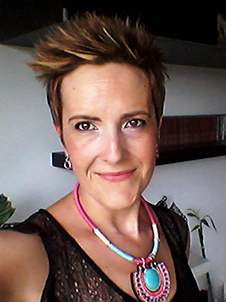
Arantza Campollo Urkiza is an Associate Professor in the Department of Languages, Arts, and Physical Education at the Complutense University of Madrid. She holds a PhD in Education, a Bachelor's in Musicology, a Piano Teaching Diploma, and a Master's in School Management. Her expertise spans interdisciplinary teaching, music education, and educational innovation. Her research focuses on disciplinary didactics, key competencies in education, and music education across different stages. She leads the Music Education from a Social and Psychological Perspective research group and has conducted projects such as: PR75/18-21612 on music's influence on adolescent stereotypes Madrid City Council project 115-2017 on music, equality, and adolescence Her teaching innovation projects include flipped classroom methodologies ( Project 120 ), creativity-centered pedagogy ( Project 365 ), and UDL approaches for entrepreneurship skills ( Project 231 ). Her publications address music's role in language development, STEM integration, and digital competence. Her work emphasizes interdisciplinarity and practical classroom applications, with a focus on leveraging music to address social and educational challenges.
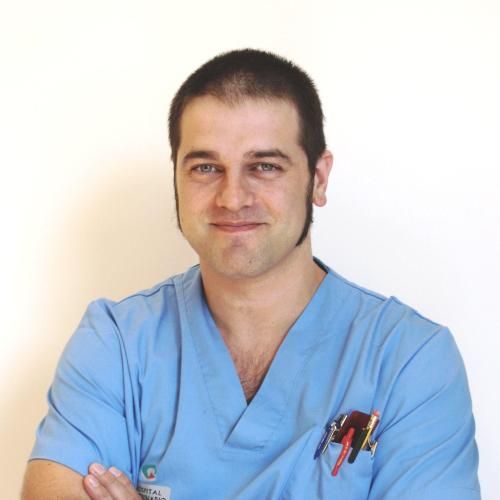
Rodrigo Muíño Otero is an Assistant Professor at the Faculty of Veterinary Medicine, University of Santiago de Compostela. He is affiliated with the Department of Animal Pathology and the Institute of Agricultural Biodiversity and Rural Development (IBADER), as well as the Strategic Grouping in Sustainable Management and Production of Bioresources (BioReDes). Education: PhD in Animal Pathology (2008) from the University of Santiago de Compostela His research focuses on animal metabolism and pathology, particularly evaluating bovine semen motility and viability using advanced technologies like CASA systems and flow cytometry. He specializes in identifying sperm subpopulations through data-driven approaches. Rodrigo is a member of the METANIMAL research group, which investigates animal metabolism and pathology, and contributes to the BioReDes strategic grouping focused on sustainable bioresource management. His work bridges reproductive biology with computational biotechnological methods.
Jose Daniel Barreiro Vazquez is an Assistant Professor in the Department of Anatomy, Animal Production and Veterinary Clinical Sciences at the Faculty of Veterinary Medicine, University of Santiago de Compostela. His work integrates clinical veterinary science with advanced imaging technologies. His research interests focus on Animal Medicine and Surgery , particularly experimental veterinary surgery, radiology, and ultrasound applications in livestock. He applies cutting-edge imaging techniques such as CT and SEM-EDX not only in veterinary diagnostics but also in interdisciplinary studies involving cultural heritage artifacts. The available publications indicate a strong trend toward the application of biomedical imaging in non-traditional domains, demonstrating expertise in non-invasive analytical methods and collaborative research across disciplines. He is affiliated with the Strategic Grouping in Sustainable Management and Production of Bioresources (BioReDes) and contributes to the research group on Experimental Surgery. His work often involves collaboration with experts in conservation and museology. Dr. Barreiro Vazquez completed his doctoral thesis in 2021 titled "Advances in transabdominal ultrasound in dairy cows" under the supervision of Dr. Andrés Barreiro Lois and Dr. Marta Inés Miranda Castañón. He has no listed scientific awards or formal advisees in the provided texts.
Ramon Mas Sansó is a Full Professor at the Department of Mathematical Sciences and Computer Science, University of the Balearic Islands (UIB), and has been a full-time academic since 2000. He serves as Director of the Master's Degree in Intelligent Systems (since 2018) and Secretary of the Doctoral School (since 2019), with past roles including Deputy Director of the Higher Polytechnic School (12 years, 8 months) and Secretary of his department (1 year, 5 months). Education: Graduated in Computer Science from the Autonomous University of Barcelona (1988), earned a PhD in Computer Science from UIB (1996, Cum Laude) with the thesis 'Balance Control of Multiple-Supported Articulated Systems for Computer Animation,' and holds a European Doctor Mention (1997). Research Focus: Specializes in computer graphics, vision, and artificial intelligence, with recent work on user interfaces, usability, and Human-Computer Interaction (HCI). He is a member of the Computer Graphics, Vision, and AI Unit (UGIVIA), affiliated with UIB's ANEP Computer Science and Information Technology area. Collaborates with UIB's Nursing and Physiotherapy Department on multidisciplinary research, resulting in indexed journal publications. Academic Contributions: Participated in curriculum design for UIB's Computer Science and Artificial Intelligence degrees. Supervised one doctoral thesis, numerous undergraduate and master's theses, and contributed to over 20 national/European research projects. His output includes over 20 international journal/book publications and 50+ conference contributions. Teaching: Currently teaches 'Algorithms and Data Structures II' across multiple UIB campuses and dual degrees (Computer Engineering/Mathematics) and supervises final degree/master's projects. Previously taught 'Intelligent Systems,' 'Human-Computer Interaction,' 'Data Structures,' and 'Artificial Intelligence' courses.
Juan Antonio Montes de Oca Durán is a Full Professor at the School of Mathematics and Computer Science, University of the Balearic Islands (UIB), where he has worked since 1988. He earned his Computer Science degree from the Autonomous University of Barcelona in 1987 and completed doctoral courses in Computer Graphics and Artificial Intelligence there (1988–1990). In 1998, he submitted his research thesis titled 'An Application for the Speech and Expression of 3D Synthetic Characters' at UIB. He has held leadership roles, including directing the MA ISCA 3D Animation Master’s Program (founded in 1990 under the EEC's MEDIA program) and leading the LADAT unit for animation and audiovisual technologies at UIB since 1995. His work spans research, development, and education in technological audiovisual creation. PhD thesis: 'Una aplicación para el habla y expresión de personajes sintéticos 3D' (1998) Doctoral courses: Computer Graphics and Artificial Intelligence at Autonomous University of Barcelona (1988–1990) His research focuses on Computer Graphics , Artificial Intelligence , and 3D Animation , particularly in creating synthetic 3D characters and audiovisual technologies. He has contributed to European research and training projects under the EEC framework, emphasizing technological innovation in animation. His academic work includes developing software features for 3D animation tools during his 1990 collaboration with BSCA in Paris. Scientific achievements include receiving the Mundos Digitales award (2008) for computer animation and being named a full member of the Royal Academy of Fine Arts of San Sebastián in 2008. The MA ISCA Master’s Program he co-founded has also garnered international awards and nominations. As an educator, he teaches foundational programming courses (20302 - Programming I, 21707 - Programming II, 21717 - Data Structures) across multiple degree programs at UIB, including Computer Engineering, Mathematics, and Telematics Engineering. He has served as director of the LADAT unit since 1995, focusing on training, production, and R&D in audiovisual technology.
JAVIER MATEO OYAGÜE is a Professor at the Department of Food Hygiene and Technology, Faculty of Veterinary Science, Universidad de León. His work focuses on ovine nutrition , meat quality optimization , and food safety , with a particular emphasis on dietary interventions and analytical methodologies. Research Interests: Metabolic programming in livestock, application of near-infrared spectroscopy (NIR) for meat analysis, sustainable feed ingredients (e.g., broccoli, cauliflower), and lipid metabolism. Scientific Contributions: Pioneering studies on methionine supplementation long-term effects, sodium reduction in traditional meats using glasswort, and microbial safety through natural antimicrobials. Awards: Received the XI Premio Andrés Pintaluba (2023) for innovative research in dairy sheep feed.
Juan Felipe García Sierra is a Professor at the University of León, affiliated with the College of Industrial, Computer and Aerospace Engineering within the Department of Mechanical, Computer and Aerospace Engineering. His academic career focuses on interdisciplinary research bridging robotics, computer architecture, and cybersecurity with applications in pharmacology and medical informatics. He earned a PhD in 2011 with the thesis Contributions to visual attention computation and application to the control of a humanoid robot , supervised by Dr. Vicente Matellán Olivera and Dr. Miguel Carriegos Vieira. Education: PhD (2011) from Universidad de León Research Interests García Sierra's work spans robotics (particularly humanoid robot control, augmented reality teleoperation, and elderly assistance systems), cybersecurity (malware analysis, secure coding standards, mobile application security), and medical applications (pharmacology teaching, respiratory training devices). His recent publications explore dynamic electricity tariff optimization, sports supplementation ethics, and workplace health risks in the hospitality industry. Scientific Contributions Developed visual attention models for RoboCup competitions Innovated parallel computation techniques for centrality measures in graphs Created robotics-based teaching tools for pharmacology education He has collaborated extensively with CAFE CIBERSEGURIDAD research groups and applied robotics to unconventional domains like animal herding and elderly assistance.
Iago Sanmartín Villar is an Assistant Professor at the University of León, Spain, affiliated with the Faculty of Biological and Environmental Sciences and the Department of Biodiversity and Environmental Management . His work bridges field and laboratory studies to explore behavioral variability in solitary and social insects , focusing on how early experiences, male harassment, and environmental shifts shape behavioral patterns and evolutionary trajectories. He has studied 21 species and collaborated with over 35 researchers globally. Education: PhD in Biology (2017), University of Vigo MSc in Ethology (2012), University of Córdoba BSc in Biology (2009), University of Santiago de Compostela His research interests span ecological and evolutionary mechanisms driving animal behavior, with recent studies on Argentine ants , amphibian communication , and invasive species dynamics . Articles emphasize neuroethology , conservation strategies , and biomechanical adaptations . Collaborative projects include work with the Polish Academy of Sciences and ECOEVO Laboratory . Advising: Mario Crespo Montalbán, MSc thesis on Lasius neglectus metapopulation analysis Íñigo Navidad, BSc thesis on urban pigeon antipredator behavior He actively participates in outreach (e.g., Expociencia 2025 ) and interdisciplinary initiatives, leveraging open science tools like AnimalTA for video tracking.
Rafael Balaña Foucault serves as a University Professor within the Department of Biomedical Sciences at the Faculty of Veterinary Medicine, University of León, Spain. His academic career centers on parasitic disease research with emphasis on tropical and zoonotic pathogens, particularly Leishmania species and gastrointestinal nematodes affecting livestock and wildlife. Education: PhD in Toxicology, Autonomous University of Madrid (1989). Dissertation: "Metabolism of polyamines in promastigotes of Leishmania donovani infantum: bases for the therapy of leishmaniasis," supervised by Dr. José María Alunda Rodríguez. Dr. Balaña Foucault's research spans molecular parasitology, antiparasitic drug discovery, and toxicology mechanisms. He investigates polyamine metabolism in trypanosomatids, develops novel compounds targeting trypanothione reductase and topoisomerases, and creates advanced models like sheep intestinal organoids for veterinary drug screening. His work integrates in-silico, in-vitro, and ex-vivo approaches to combat drug resistance in parasites, with significant focus on One Health implications of zoonotic diseases. Analysis of his 2023-2025 publications reveals dominant themes in leishmaniasis therapeutics (45% of output), anthelmintic discovery (30%), and innovative screening methodologies (25%). Key trends include AI-driven drug repurposing, organoid-based veterinary platforms, and socioeconomic analysis of anthelmintic resistance. His research consistently bridges molecular mechanisms with practical applications for livestock and wildlife health. Scientific Awards: No scientific awards were documented in the provided materials. Advising and Grants: While the provided documentation confirms Dr. Balaña Foucault completed his doctoral training under Dr. José María Alunda Rodríguez, it contains no records of his current advisees or grant funding. His extensive publication record suggests ongoing research activity, but specific mentoring roles and financial support mechanisms remain unreported in the source materials. Laboratory and Collaborative Framework: Primary affiliation with the ENTROPIA TROPICAL AND PARASITIC DISEASES research group, focusing on molecular parasitology, drug development, and resistance mechanisms in tropical pathogens. Active collaborations with veterinary diagnostic centers across Northwestern Spain, particularly in León and Zamora provinces. Integration of high-throughput screening platforms and organoid technology for veterinary pharmaceutical development.
Josep Maria Porta Pleite is an Associate Researcher at the Institut de Robòtica i Informàtica Industrial (IRI), a joint center of the Spanish National Research Council (CSIC) and Universitat Politècnica de Catalunya (UPC). He leads the Kinematics and Robot Design (KRD) research group and has been actively contributing to robotics and computational kinematics since 2007. His work bridges theoretical algorithm development and practical applications in robotics, molecular biology, and environmental toxicology. Porta’s research spans motion planning , robot kinematics , SLAM , and planning under uncertainty . He has made significant contributions to solving complex kinematic problems in closed-chain systems and molecular conformational spaces. His work often involves developing efficient algorithms and open-source software tools such as the CuikSuite , Cuik-KDtree , and Pose SLAM , which are widely used in robotics research. His recent publications (2019–2025) reveal a strong trend toward interdisciplinary applications, particularly in zebrafish behavioral analysis and neurotoxicology , where computational methods are applied to assess environmental contaminants. He also continues to advance core robotics problems, including trajectory optimization, hand-eye calibration, and closed-form solutions in rotation geometry. His work appears in top-tier journals such as IEEE Transactions on Robotics , Mechanism and Machine Theory , and Science of the Total Environment . Porta has served as an associate editor for IEEE Transactions on Robotics (2015–2018) and has supervised numerous students and collaborators. He has led long-term software development efforts and secured research funding through national and European projects. Scientific Contributions: Lead developer of the CuikSuite for motion analysis of closed-chain systems. Coordinator of the KRD research group since 2011. Contributor to ambient intelligence and robot localization during his postdoc at the University of Amsterdam. He advises multiple students in robotics, computer vision, and biomedical applications, and his team develops tools for path planning, singularity analysis, grasp optimization, and molecular modeling. There is no indication of part-time status, retirement, or former affiliation.
Diego Cabello Ferrer is a Professor at the University of Santiago de Compostela’s Department of Electronics and Computing under the Faculty of Physics. His research focuses on advanced CMOS technologies, embedded vision systems, energy harvesting, and biomedical devices. He holds a PhD from the same university (1984), specializing in cybernetic systems and microprocessor-based analysis of animal behavior. Education: PhD in Electronics and Computing, University of Santiago de Compostela (1984). His work spans artificial vision algorithms, low-power CMOS sensor design, and micro-energy harvesting systems. Key contributions include vision sensors with in-pixel computation, ultra-low power voltage regulators for biomedical implants, and solar energy harvesting integrated circuits. His research emphasizes real-time image processing, edge computing for embedded systems, and hardware acceleration for neural networks. Publications highlight innovations in CMOS vision sensors for background subtraction, energy-efficient LDO designs, and hyperdimensional computing architectures. His teams have developed perpetual wireless sensor networks for environmental monitoring and Snail pest detection. Current efforts focus on in-memory computing with FeFETs and SRAM-based neural network accelerators. Labs/Teams: Center for Research in Intelligent Technologies (CITIUS). Grants & Collaborations: Projects include iCaveats (embedded vision architectures) and energy harvesting integration in biomedical devices. His work bridges theoretical signal processing with practical hardware implementations, addressing challenges in power efficiency, miniaturization, and real-time performance for embedded vision systems.
Tomás Alarcón is an ICREA Research Professor at the Centre de Recerca Matemàtica (CRM) in Bellaterra, Barcelona, where he leads the Cancer Modelling Group. He has been affiliated with CRM since November 2010 and was appointed to an ICREA Research Professorship in October 2015. He also serves as deputy director of CRM since March 2016 and is an Affiliated Professor at the Department of Mathematics, Universitat Autònoma de Barcelona since September 2013. Dr. Alarcón earned his PhD in Theoretical Physics from the University of Barcelona in 2000. Following his PhD, he held postdoctoral positions at the University of Oxford (2001-2003), University College London (2003-2006), and Imperial College London (2006-2009). He briefly served as a senior researcher and group leader at BCAM in Bilbao, Spain (2009-2010) before joining CRM. His research focuses on mathematical modeling of complex biological systems, with particular emphasis on multiscale modeling of tumor growth, hybrid methods for multiscale models, stochastic modeling of somatic cell reprogramming, robustness and evolvability in relation to drug resistance, stochastic models in population dynamics, and membrane biophysics and microfluidics of biofluids. His work integrates phenomena across different biological scales, from angiogenesis to cell-cycle progression under oxygen starvation. Analysis of his recent publications reveals a strong focus on computational oncology, with particular attention to epigenetic regulation, tumor microenvironment mechanics, and cancer metabolism. His work combines mathematical rigor with biological relevance, often collaborating with experimentalists to validate theoretical predictions. Key themes in his recent work include chromatin dynamics, metabolic regulation in cancer, multiscale modeling approaches, and the application of dynamical systems theory to biological problems. ICREA Research Professorship (2015) Dr. Alarcón has mentored numerous PhD students and postdoctoral researchers, many of whom have gone on to successful academic careers. His group collaborates extensively with researchers at institutions including University of Oxford, University College London, Universitat Autònoma de Barcelona, and various international centers. He has received research funding for projects related to cancer modeling and mathematical biology, though specific grants are not detailed in the provided information. His laboratory, the Cancer Modelling Group at CRM, consists of research fellows, postdocs, PhD students, and collaborators working on various aspects of mathematical oncology and computational biology. The group is also part of the DysCoVir I2SysBio-CRM Associated Unit, indicating a broader collaborative network in systems biology.
Benigno Ruiz Nogueiras is a Professor at the University of Santiago de Compostela , affiliated with the Higher Polytechnic School of Engineering and the Department of Plant Production and Engineering Projects . He contributes to the Strategic Grouping in Sustainable Management and Production of Bioresources (BioReDes) and the Agronomy and Animal Science research group, focusing on Vegetable Production . Educational background: PhD from the University of Santiago de Compostela (1999) with a thesis on soybean yield modeling in Galicia. His research interests span sustainable agricultural systems, crop modeling, and bioresource management. The CROPGRO-soybean model and its adaptation to Galician agroclimatic conditions represent key technical methodologies in his work. His affiliations bridge plant production with engineering solutions, emphasizing interdisciplinary approaches to agricultural challenges. As a faculty member, he integrates agronomic practices with engineering projects, contributing to the strategic objectives of the BioReDes group. His career demonstrates a long-term commitment to advancing agronomic and animal science research through computational modeling and field experimentation.
Luis Miguel Botana Lopez is a Professor at the University of Santiago de Compostela, affiliated with the Faculty of Veterinary Medicine and the Department of Pharmacology, Pharmacy and Pharmaceutical Technology. He leads the FARMATOX research group, focusing on marine toxins, including their mechanisms, therapeutic applications, and detection methods. His work spans pharmacology, environmental toxicology, and food safety, with a strong emphasis on cyanotoxins, mycotoxins, and their impacts on human and environmental health. Botana holds a PhD from the University of Santiago de Compostela (1985), specializing in adrenergic mediation of mast cell activity. His research integrates analytical chemistry, molecular biology, and toxicology to address toxin-related challenges in aquatic ecosystems, food production, and public health. Key research interests include: Environmental and foodborne toxin detection and mitigation Neurotoxicology and mechanisms of toxin-induced cell damage Development of nanotechnology-based detoxification systems Interactions between toxins and cellular pathways (e.g., calcium signaling, mitochondria) Bioavailability and synergistic effects of mycotoxins and marine biotoxins His recent work highlights advancements in magnetic nanoparticle applications for toxin removal, cyclophilin proteins' roles in inflammation, and the toxicological evaluation of emerging contaminants in dairy and seafood products. Botana collaborates internationally on methodological improvements for toxin analysis (e.g., QuEChERS, LC-MS/MS) and participates in regulatory discussions on food safety standards. Botana has contributed to over 100 peer-reviewed articles, focusing on toxin detection, mechanisms of action, and mitigation strategies. His research often bridges basic science and applied solutions, addressing global challenges like climate-driven toxin proliferation and food chain contamination.
Professor Victor Manuel Arce Vázquez is affiliated with the University of Santiago de Compostela's Department of Physiology, part of the Faculty of Medicine and Dentistry. He is associated with the Center for Research in Molecular Medicine and Chronic Diseases (CIMUS) and leads the research group 'Physiology and pharmacology of chronic diseases.' His doctoral work (1990) focused on neuroregulation of growth hormone secretion under Dr. Jesus Devesa Múgica's supervision. His research interests span chronic disease mechanisms, with a focus on cancer biology, thermoregulation, epigenetic regulation, and molecular medicine. Recent work explores novel drug targets like PARP1, TRPM8 ion channel roles in circadian rhythms, and mechanisms of tumor immune evasion. He has contributed to SARS-CoV-2 mouse models and innovative approaches in oral microbiome analysis. Publications highlight breakthroughs in cancer therapy mechanisms, stem cell differentiation models, and temperature regulation pathways. His work integrates experimental and computational methods to address complex biomedical questions.