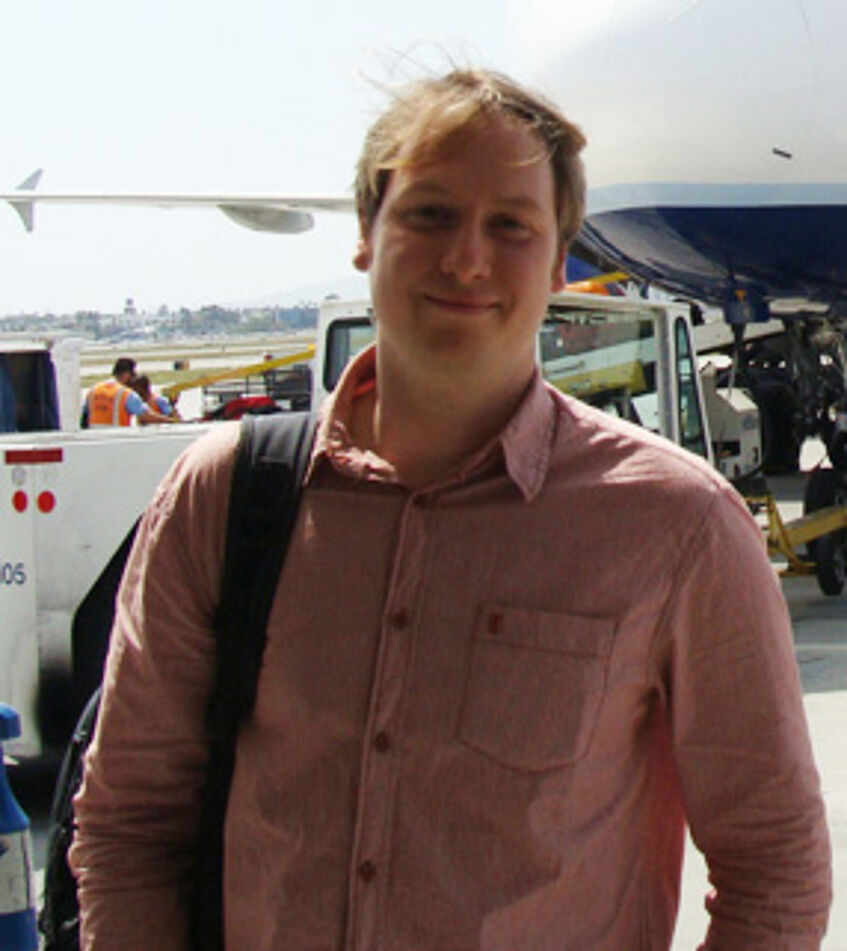
Christian Deininger is a Senior Physician and Researcher at the Department of Orthopaedics and Traumatology, Paracelsus Medical University. His work focuses on advancing surgical techniques in orthopaedics, fracture management, and bone regeneration, with a strong emphasis on integrating medical imaging and cost-effectiveness analyses in clinical practice. Research interests include spinal surgery innovations, bone density assessment, minimally invasive osteosynthesis, and applications of MRI in diagnostic workflows. His recent studies explore bone regeneration via vascularized periosteal flaps and the cost-benefit of post-procedural imaging in critical care settings. He has contributed to over 34 peer-reviewed articles since 2016, with notable work on surgical navigation systems and fracture healing mechanisms. Collaborations include interdisciplinary teams addressing trauma care in low-resource settings and translational research in bone tissue engineering.
Paul Griesberger is a Senior Researcher at the Institute of Wildlife Biology and Game Management under the University of Natural Resources and Life Sciences, Vienna , where he has contributed to both basic and applied research since 2017. He completed his Master’s in Wildlife Ecology and Wildlife Management (2014–2017) and Bachelor’s in Biology (Zoology) (2010–2014). Key research areas: Wildlife Management, Wildlife Ecology, Wild Ungulates, Spatio-Temporal Modeling, GPS Telemetry His recent work integrates decision-support tools for sustainable ungulate management, mathematical approaches like Benford’s Law for telemetry data validation, and climate adaptation strategies for forest protection. Collaborations span EU institutions and national parks. His 14 publications (2018–2025) focus on wild ungulate behavior, interspecies competition, telemetry analytics, and canid morphology, with methodologies bridging ecology, statistics, and conservation policy. He has advised 4 Master’s students and contributed to practical guidelines for red deer and chamois management. Scientific awards: Granser-United Global Academy Forschungspreis für eine Nachhaltige Jagd (2022) YO Research Award by CIC (2020) Nationalpark Hohe Tauern stipend (2021)
Iain BH Wilson is an Associate Professor at the Institute of Biochemistry within the Department of Biotechnology and Food Science at the University of Natural Resources and Life Sciences, Vienna (BOKU). With a PhD from the University of Oxford (1992) and habilitation completed in 2001, he has established himself as a leading researcher in glycobiology, specializing in the glycosylation patterns of invertebrates, nematodes, and parasites. His work bridges biochemistry, molecular biology, and parasitology, with a particular focus on N-glycosylation pathways. Wilson's research interests encompass glycobiology, glycomics, N-glycosylation, parasite glycobiology, mass spectrometry of glycans, and carbohydrate microarrays. His laboratory investigates the structural and functional aspects of glycans in model organisms like Caenorhabditis elegans and various parasites, revealing evolutionary conserved and specialized glycosylation pathways. His work has particular relevance for understanding host-parasite interactions and developing novel diagnostic and therapeutic approaches targeting glycan-mediated processes. Analysis of Wilson's recent publications (2022-2025) reveals a consistent research trajectory focusing on N-glycan structures in nematodes and parasites, enzyme characterization (particularly hexosaminidases), and the immunological recognition of unusual glycans. His work employs advanced mass spectrometry techniques, structural biology approaches, and glycan array technologies to unravel complex glycosylation patterns that challenge traditional mammalian-centric views of glycan biology. Scientific Awards: MCP/ASBMB Award Lectureship (2024) GlycoThera Award (2011) Novartis Prize for Chemistry (2007) Neose Glycoscience Research Award (1999) Wilson has supervised numerous graduate students whose theses focus on various aspects of glycobiology, including glycomics of Dictyostelium discoideum , glycosylation of Acanthamoeba castellanii , and immunomodulatory glycans in non-mammalian systems. His research has been consistently funded by major organizations including the Austrian Science Fund (FWF), European Commission, and the City of Vienna. He has served on editorial boards for prestigious journals including Journal of Biological Chemistry and Glycobiology , and has organized international workshops on comparative glycobiology.
Philip Riris is a Senior Lecturer in Archaeological & Palaeoenvironmental Modelling at Bournemouth University's Institute for the Modelling of Socio-Environmental Transitions (IMSET), following postdoctoral work at the UCL Institute of Archaeology. His research integrates archaeology, historical ecology, and computational methods to investigate past human societies in tropical South America through extensive fieldwork across Argentina, Brazil, Venezuela, Colombia, and Oman. Dr Riris earned his PhD in 2015 from the University of Southampton, focusing on hunter-gatherer land use in northern Argentina. His educational trajectory reflects deep specialization in quantitative archaeological methods and environmental reconstruction. His research centers on two interconnected domains: coupled human-environmental systems and computational approaches to rock art and sacred landscapes . Employing spatial analysis and agent-based modeling, he draws from physical geography, quantitative ecology, and complex systems theory to explore how ancient populations interacted with environmental change. Recent work demonstrates how frequent disturbances enhanced societal resilience, revealing sophisticated adaptation strategies to climate pressures in prehistory. His methodologies bridge archaeological data with ecological theory to model long-term socio-environmental dynamics. Analysis of his 2019-2024 publications reveals consistent focus on South American archaeology, particularly the Orinoco region and Amazonia. His work integrates computational techniques with traditional archaeological analysis to examine rock art sequences, demographic responses to climate change, and spatiotemporal patterns of cultural transmission. Key methodological contributions include developing resolution-aware approaches for cultural dispersal studies and formal resilience metrics for archaeological time series. Dr Riris has secured major research funding including the AHRC-funded Comparative Legacies of Human Land Use in the Brazilian Atlantic Forest (2023), British Academy's Connected Communities: Network approaches to rock art (2018), and Sainsbury Research Unit's Ancient Networks of Art project (2017). His external roles include Honorary Research Fellow at UCL Institute of Archaeology (2018-present) and visiting positions at Venezuelan and Argentinean research institutions. Media coverage of his work in National Geographic, Newsweek, and Archaeology Magazine highlights discoveries of monumental rock art in Venezuela and climate-demerography linkages in ancient South America.
Mark Steedman is a Professor of Cognitive Science at the School of Informatics , University of Edinburgh, and an Adjunct Professor in the Department of Computer and Information Science at the University of Pennsylvania. His research bridges Artificial Intelligence , Cognitive Science , and Computational Linguistics , with a focus on Combinatory Categorial Grammar (CCG) , Prosody and Intonation , and Temporal Semantics . He has led the Institute for Language, Cognition, and Computation and contributed to interdisciplinary research at the Human Communications Research Center and Centre for Speech Technology Research . Research Interests : Steedman's work explores the intersection of formal grammar, computational models, and cognitive processes. He investigates how CCG parsing can enhance semantic inference, how prosodic features improve speech processing, and the role of temporal semantics in language understanding. His projects often integrate language models with entailment graphs for question answering and dialogue systems. Scientific Awards : Fellow of the American Association of Artificial Intelligence (1993) Fellow of the Royal Society of Edinburgh (2002) Fellow of the British Academy (2002) Member of Academia Europaea (2006) Best Paper Awards at ACL 2023 and AACL/IJCNLP 2023 Influential Paper Award (IFAAMAS 2017) Recent Trends in Publications : His recent work emphasizes language models for semantic inference , entailment graphs in multilingual settings, and incremental parsing for brain-language interfaces. Papers address challenges in hallucination , cross-lingual transfer , and prosody-text alignment .
Dr. Matthias Schurz is an Associate Professor at the Institute of Psychology and Digital Science Center (DiSC) at the University of Innsbruck. He investigates social cognition, brain mechanisms of empathy, theory of mind, and emotion processing using neuroimaging techniques. His work spans clinical applications (e.g., borderline personality disorder), developmental conditions (e.g., dyslexia), and comparative neuroscience (e.g., primate temporal cortex studies). Affiliation: University of Innsbruck, Institute of Psychology (Grauer Bär building), Digital Science Center (DiSC) Prior Positions: Postdoctoral Researcher at University of Oxford, academic roots at University of Salzburg Research Focus: Schurz's research explores the neural basis of social cognition, including: Meta-analyses of brain activation patterns in empathy and theory of mind tasks Functional brain connectivity during social interactions Temporal cortex's role in human-specific cognitive processes Neural correlates of developmental dyslexia and psychiatric disorders Comparative studies of primate temporal lobe evolution Recent Publications: His 2025 work includes quantitative reviews of brain activation in social cognition, hyperscanning studies of relational neuroscience, and investigations into visuo-spatial perspective-taking. Earlier studies (2024-2021) cover bipolar disorder's neural fingerprints, hierarchical social cognition models, and gradient-based brain organization for empathy-based decisions. These works demonstrate expertise in fMRI, meta-analysis, and network neuroscience.
Jozsef Arato is a Research Fellow at the Vienna Cognitive Science Hub, University of Vienna, where he has worked as a senior scientist for data science since 2019. His research spans multiple interdisciplinary domains within cognitive science, with particular expertise in computational modeling of eye-movement patterns and visual statistical learning. His research interests focus on understanding the principles that guide learning and decision-making through computational modeling approaches. He investigates how eye-movement patterns can reveal learning processes, comparing gaze patterns across different observers. His work spans diverse application areas including art perception, environmental psychology, and animal communication systems. His publication record from 2020-2024 shows a strong focus on eye-tracking methodologies applied to art perception, with significant contributions to understanding how gaze patterns relate to aesthetic experiences. His research also extends to environmental conservation psychology and comparative studies of vocal learning in birds, demonstrating remarkable interdisciplinary breadth. Dr. Arato has been actively involved in academic service, having served as Program Chair of the Pattern Recognition in Neuroimaging Summer School in 2020. He organizes the CogData reading group and contributes to the academic community through collaborative research projects. As an educator, he teaches Scientific Computing in Python (TEWA 1) for the Psychology master's program at the University of Vienna. Previously, he taught Cognitive Modelling at both the University of Vienna and Eötvös University in Budapest, demonstrating his commitment to training the next generation of cognitive scientists and data analysts.
Oleg Simakov is an Associate Professor and Head of the Department of Neuroscience and Developmental Biology at the University of Vienna. His research focuses on metazoan genome architecture, evolutionary transitions, and cephalopod-specific genomic innovations through comparative and computational approaches. BS in Biology, University of Karlsruhe MS in Biology, University of Heidelberg PhD in Biology, EMBL/University of Konstanz Key research areas include: Evolutionary genomics of metazoans Syntenic gene cluster analysis 3D chromatin modeling Cephalopod molecular evolution His publications reveal trends in chromosomal evolution , gene linkage dynamics , and repetitive element expansion across diverse taxa including octopuses, hydra, and lungfish. Current work involves genomic investigations of Euprymna scolopes and Hydra magnipapillata to elucidate evolutionary novelties. Current research team includes: PhD students: Koto Kon, Lisa Rouressol Master's students: Georgios Efthymiadis, Gözde Yalcin Postdocs: Darrin Schultz, Thea Rogers Technicians: Fatih Sarigöl, Nina Znidaric
Georg Stary is a Professor of Dermatology at the Medical University of Vienna, where he leads research on translational immunology of the skin and mucous membranes. As an Adjunct Principal Investigator at CeMM and LBI-RUD, he applies advanced omics technologies to study host-pathogen interactions and tissue-resident leukocyte dynamics. His work bridges clinical dermatology with cutting-edge immunological research. Member of Immuno-Board for Rare and Undiagnosed Diseases Chair of Austrian Society for STDs and Dermatological Microbiology Ferdinand von Hebra Prize (2022) for skin immunology research His research focuses on understanding immune cell longevity, turnover, and function in peripheral tissues, particularly the skin. Using human immunology models, he investigates chronic inflammation, graft-versus-host disease, and microbial interactions. Recent publications highlight his work on mast cell mediators in pain, T cell heterogeneity, and metabolic pathways in inflammatory skin disorders. Georg Stary has co-authored studies on Chlamydia trachomatis vaccines, bacterial vaginosis multiomics, and mTOR inhibition for sarcoidosis. His 15 most recent articles span immunology, dermatology, and molecular biology, emphasizing translational approaches to immune-mediated diseases. Scientific Awards Ferdinand von Hebra Prize (2022) His lab team includes postdoctoral and predoctoral fellows studying skin immunology, with collaborations across CeMM, LBI-RUD, and international institutions. He contributes to clinical guidelines and biomarker discovery in chronic inflammatory conditions.
Florian Grebien is a Professor at the Department for Biological Sciences and Pathobiology, University of Veterinary Medicine Vienna, and Principal Investigator at the St. Anna Children’s Cancer Research Institute (CCRI) and Adjunct PI at CeMM. His research focuses on molecular mechanisms of pediatric leukemia driven by oncoproteins. Research Interests: Pediatric leukemia Fusion oncoproteins Transcriptional/epigenetic networks CRISPR/Cas9 screening Targeted degradation of oncoproteins Proteomic/transcriptomic analysis Scientific Awards: ERC Starting Grant His lab combines cellular models, animal models, and primary human samples to validate molecular mechanisms, collaborating with institutions like Ludwig Boltzmann Institute and CeMM. Funding sources include the European Research Council.
Thomas Vogl serves as Assistant Professor and Group Leader at the Center for Cancer Research, Medical University of Vienna, where he investigates the critical interplay between the immune system and gut microbiome in cancer development and therapy response. His multidisciplinary team integrates molecular biology, biochemistry, and bioinformatics to analyze systemic antibody responses against microbial components, with particular focus on how microbiome composition influences immunotherapy efficacy and cancer progression. Dr. Vogl's research program centers on antibody-microbiome interactions in oncology, exploring how microbial factors modulate immune responses to tumors. His work reveals connections between gut microbiota diversity and therapeutic outcomes in colorectal cancer, while identifying specific antibody signatures associated with inflammatory conditions like Crohn's disease and chronic fatigue syndrome (ME/CFS). This research bridges computational immunology and clinical oncology to develop microbiome-based diagnostics and therapeutic strategies. His publication record demonstrates consistent innovation in systems immunology, with recent work establishing links between microbiome-derived flagellins and immune dysregulation across multiple diseases. Key trends include the development of high-throughput methods for antibody epitope mapping and the discovery of cross-reactive immune responses with implications for cancer and infectious disease diagnostics. Scientific recognition includes: ERC Starting Grant (2022) for "EarlyMicroAbs" project Nature Research Global Grant for Gut Health (2023/24) Elisabeth Lutz Prize of the Austrian Academy of Sciences (2024) Dr. Vogl currently supervises five PhD students and leads a research group comprising postdoctoral scientists and technical staff. His major funding includes coordination of the €8.4 million EU Horizon Health consortium "ID-DarkMatter-NCD" and partnership in the ZonMW ME/CFS Lines consortium, supporting translational research into microbiome-immune interactions. He actively promotes equitable research environments as a contributor to the SAFE Labs initiative, having co-authored the SAFE Labs Handbook and associated white paper to advance laboratory inclusivity and fairness.