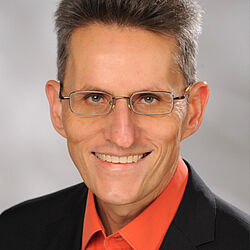
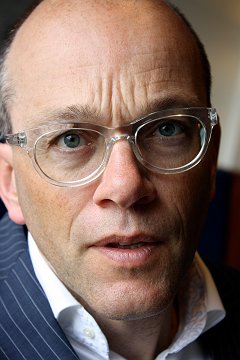
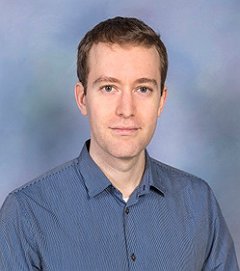
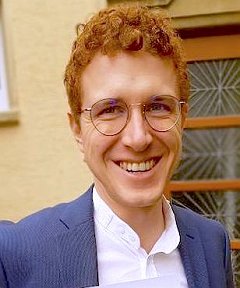
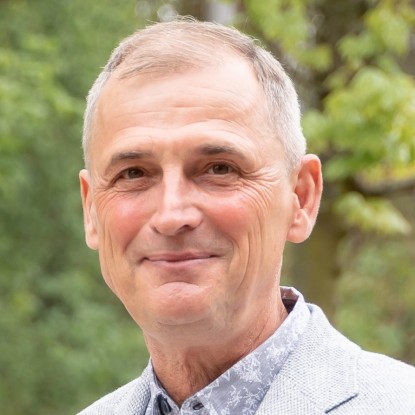
Prof. Stefan Friedenberg is a mathematics professor at the Department of Mathematics for Engineering at Stralsund University of Applied Sciences, affiliated with the School of Electrical Engineering and Computer Science. His primary research focuses on abelian groups, modules, and homological algebra, particularly the Ext functor's role in structural theorems and connections to logic/set theory. He leads the HoDiMa (University Didactics Mathematics) project and teaches mathematics for engineering disciplines. Research interests include characterizing abelian groups via homological properties (e.g., acd-groups) and exploring the Whitehead problem's implications. His work bridges algebra with foundational mathematics, addressing questions like the existence of non-free Whitehead groups under different set-theoretic assumptions. Contact: Room 332b (House 4), +49 3831 45 7311.
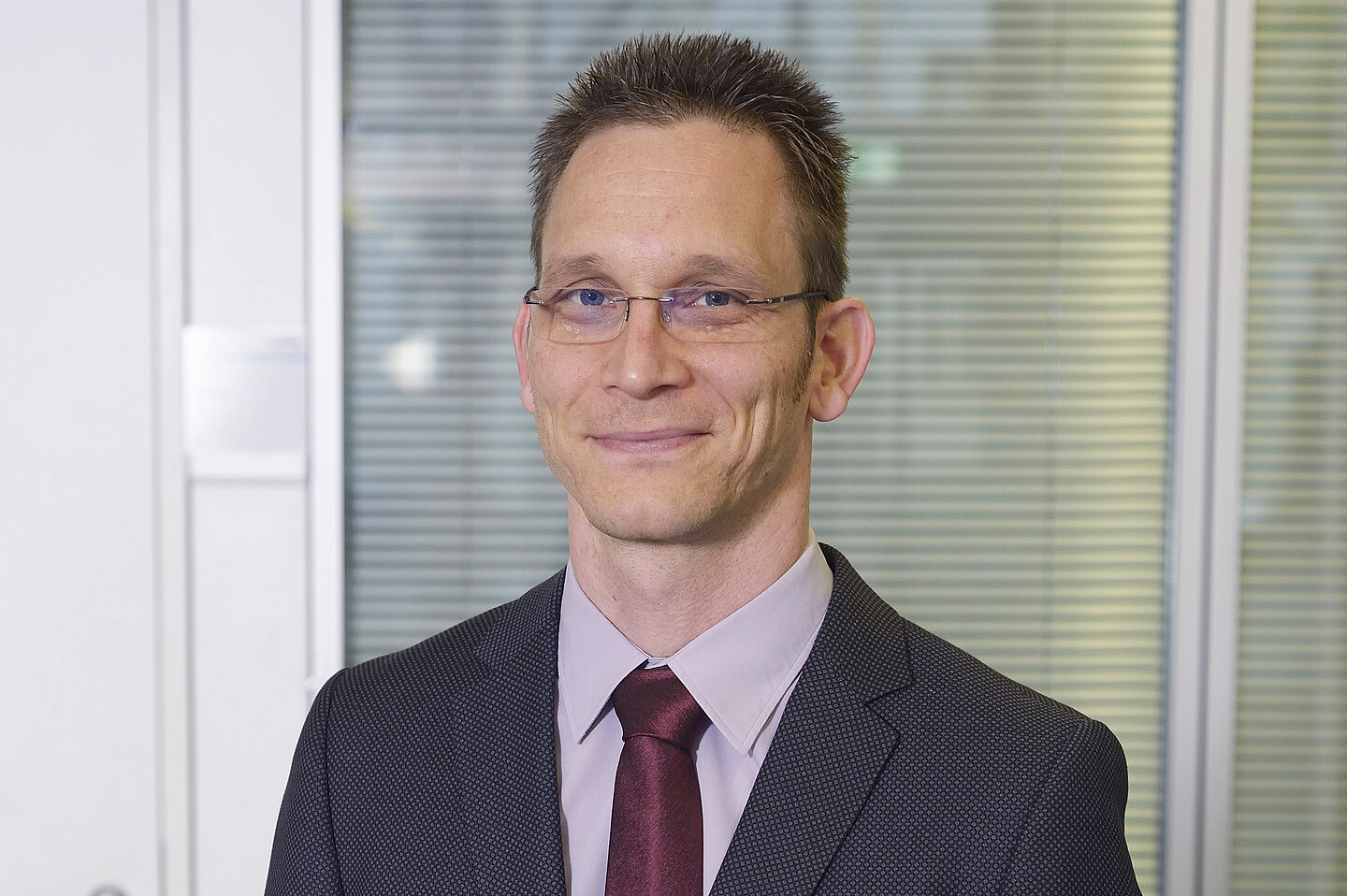
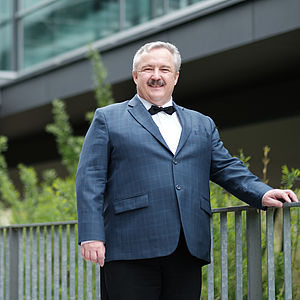
Prof. Dr.-Ing. habil. Michael Mangold is a Professor for Mathematics for Engineers at Technische Hochschule Bingen since 2016. Previously, he held an außerplanmäßige Professor position in Systemdynamik at Otto-von-Guericke-Universität Magdeburg (2011–2016). His research focuses on mathematical modeling, process control, and system dynamics with applications in chemical engineering, fuel cells, and enantioselective crystallization. He completed his Dipl.-Ing. in Technische Kybernetik (1993) and Dr.-Ing. in Nichtlineare Analyse (2000) at Universität Stuttgart, followed by a Habilitation in Rechnergestützte Modellierung (2006) at Otto-von-Guericke-Universität Magdeburg. Key roles include Auslandsbeauftragter for Mechanical Engineering programs and chair of the Prüfungsausschuss for Mechanical and Economic Engineering bachelor programs. He teaches courses on Mathematics, Thermodynamics, and Programming for engineers. Research interests span model reduction, crystallization processes, and fuel cell dynamics. Notable awards include the LEWA-Preis (2002) and best presentation award (2009). His projects involve enantiomer separation via fluidized beds and fault diagnosis in fuel cell systems. Collaborations include work with Prof. Dr. A. Seidel-Morgenstern (Max Planck Institute) on crystallization process optimization.
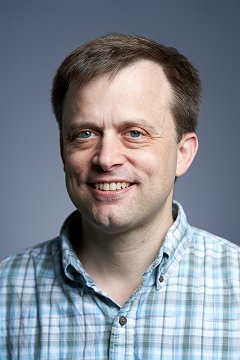
Prof. Dr. Alexander Wynands is a Professor at the Mathematical Institute of the University of Bonn, Germany. His work focuses on mathematics education, particularly in secondary school curriculum development, PISA assessment frameworks, and interactive mathematics exhibitions. He leads courses on number theory, analysis didactics, and practical school studies for teacher trainees. His research emphasizes mathematical literacy, historical development of concepts, and bridging theory with classroom practice. Education & Affiliations: Professor at University of Bonn's Mathematical Institute since [Year not explicitly stated] Co-developer of the 'Welt der Zahl' textbook series for secondary schools Chief organizer of the 'Mathematics to Touch' exhibition (2002) at the Mathematikum Research Interests: Mathematical didactics and teacher training PISA assessment methodologies and educational standards Interactive learning through exhibitions and technology Historical perspectives in mathematics education Awards & Recognition: Recipient of the Archimedes Prize (2012) Contributor to German PISA mathematics framework Grants & Projects: Coordinated teacher trainee surveys analyzing secondary education effectiveness Developed materials for PISA-aligned mathematics assessment Labs/Teams: Involved with the Mathematisches Institut's didactics group and collaborates with institutions like the Mathematikum in Giessen.
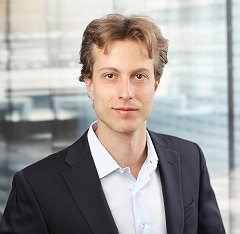
Prof. Dr. Konrad Schöbel is a Professor of Mathematics in Information and Communication Technology at the Faculty of Digital Transformation of Leipzig University of Applied Sciences (HTWK Leipzig) . His role involves teaching courses in mathematics and simulation, while also serving as a member of the Faculty Council and Deputy Chairman of the Examination Board. He is affiliated with the Mathematical and Natural Sciences Center of HTWK. Research Interests : Simulation of physical systems Image processing Inverse problems Classification of separable and superintegrable systems Differential and algebraic geometry Scientific consulting for SMEs Recent Publications focus on superintegrable systems, conformal geometry, and algebraic methods in mathematical physics, with collaborations spanning institutions like the University of New South Wales and Universität Hamburg. His work also includes patents in computational imaging and photolithography.
Andrew Myers is a Professor in the Department of Computer Science at Cornell University, specializing in programming languages, computer security, and distributed systems. He serves as the Editor-in-Chief for ACM Transactions on Programming Languages and Systems (TOPLAS) and has chaired major conferences including ACM POPL 2018, ACM CCS 2016, POST 2014, IEEE CSF 2010, and IEEE S&P 2009. Myers' research focuses on the intersection of programming languages and security, particularly in developing language-based approaches to ensure security properties in distributed systems. His pioneering work in information flow control has established foundational techniques for tracking and controlling how sensitive information propagates through programs. He has made significant contributions to secure compilation, type systems that enforce security policies, and programming models for geographically distributed applications where consistency and security are critical concerns. Analysis of Myers' publication record reveals a consistent research trajectory centered on using programming language techniques to address security challenges. His early work established fundamental approaches to information flow security, which evolved into practical systems like Jif (Java information flow) and more recently Viaduct for secure distributed programming. Recent publications show increasing focus on secure distributed programming, information flow control in complex systems, and type systems that enable secure concurrency without sacrificing performance. ACM Fellow POPL'99 Best Paper Award SOSP'01 Best Paper Award SOSP'07 Best Paper Award CIDR'13 Best Paper Award PLDI'13 Best Paper Award PLDI'15 Best Paper Award Through the Programming Languages Mentoring Workshop (PLMW) at major conferences including POPL and PLDI, Myers has been actively involved in mentoring the next generation of programming languages researchers. His service as Editor-in-Chief of TOPLAS demonstrates his leadership in the field, overseeing the publication of cutting-edge research in programming languages and systems. While specific grant information isn't detailed in the provided text, his sustained research output and leadership roles suggest significant external funding support over his career. Though specific lab affiliations aren't mentioned in the provided text, Myers' research has clearly involved collaboration with numerous students and colleagues across multiple institutions. His work on systems like Viaduct and Jif suggests the leadership of research teams focused on building practical implementations of language-based security techniques. His active participation in conference organization and program committees indicates strong connections with the broader programming languages and security research communities.
Guido Salvaneschi is a Professor at the School of Computer Science , University of St. Gallen, leading the Programming Group . His work bridges Programming Languages and Software Engineering with applications in Distributed Systems, Reactive Programming, and Secure Software Systems. Research Interests Dr. Salvaneschi focuses on: Multitier Programming Languages Consistency Models in Distributed Systems Reactive Programming for HPC and IoT Secure Software Development with Trusted Execution Environments Recent Publications Trends His recent work spans Infrastructure as Code testing ( CONFLANG ), consistency verification ( POPL ), and CRDT-based local-first software ( TSE journal ). Key themes include hybrid consistency enforcement, type-safe distributed abstractions, and automated verification of algebraic properties. Committee Roles ICSE 2026: Research Track Committee POPL 2025: Reviewer ‹Programming› 2025: Steering Committee Chair ISSTA 2025: Program Committee
Joost-Pieter Katoen is a full professor at RWTH Aachen University in Germany where he leads the Software Modeling and Verification (MOVES) group. Since 2013, he holds a distinguished professorship at RWTH Aachen University and is a member of the Academia Europaea. He also maintains a part-time association with the Formal Methods & Tools group at the University of Twente in the Netherlands. Professor Katoen's research primarily focuses on probabilistic programming, model checking, and formal verification. His work spans theoretical foundations of probabilistic systems, deductive verification techniques for probabilistic programs, and practical applications in software verification. He has made significant contributions to the development of algorithms for analyzing probabilistic models, including Markov chains and probabilistic automata. His research bridges theoretical computer science with practical verification challenges, particularly in the context of probabilistic systems. His recent publications reveal a strong focus on advancing probabilistic programming verification, with particular emphasis on generating functions, expected runtimes, and probabilistic bisimulation. The research trends show increasing sophistication in handling continuous distributions, parameter synthesis, and multi-objective verification problems. His work consistently appears in top-tier conferences including POPL, PLDI, SPLASH, and CAV. Scientific Awards and Recognition: Distinguished Professorship at RWTH Aachen University (since 2013) Member of Academia Europaea Professor Katoen has supervised numerous PhD students whose work spans various aspects of formal methods and probabilistic systems. His MOVES research group develops several verification tools including PROPHESY, PRINSYS, COMPASS, MRMC, and SMYLE. His editorial service includes membership on steering committees for major conferences such as CONCUR and ETAPS (where he serves as chair), and editorial boards for journals including STTT and PeerJ Computer Science.
Véronique Benzaken is a Full Professor at Université Paris-Saclay, affiliated with the Laboratoire de Méthodes Formelles (LRI) and INRIA Saclay's Toccata group. Her research focuses on Data-Centric Programming Languages , formal verification of data management systems, and type-safe XML/JSON processing. Key projects: ℂDuce XML-centric functional language, Datacert data certification initiative Collaboration with Oracle Labs on multi-lingual query interfaces using QIR Active in Coq formalization of SQL, Datalog, and data provenance Research interests include: Formal foundations for NoSQL/BigData languages Coq-based verification of database systems Type systems for data models Cloud computing data abstraction Her work bridges theory and practical implementation through collaborations with both academic and industrial partners.
Konstantinos Mamouras is an Assistant Professor at the Department of Computer Science, Rice University. His research focuses on programming abstractions for data streams, runtime verification for cyber-physical systems, program semantics, and Kleene Algebra with Tests. Rice University, Houston, TX Department of Computer Science Research Interests : Design of programming abstractions for streaming data Runtime verification of cyber-physical systems Formal methods in program verification Kleene Algebra with Tests (equational theories) Efficient automata-based processing Quantitative monitoring frameworks Recent Scientific Contributions : 2025: Membership Testing for Semantic Regular Expressions (PLDI 2025) 2024: HybridSA GPU regex acceleration (OOPSLA 2024) 2024: Efficient regex with lookaround (POPL 2024) 2023: Bit Vector Automata for regex (OOPSLA 2023) 2021: Quantitative monitoring framework (RV 2021) Scientific Awards : 🏆 Distinguished Paper Award, PLDI 2024 🏆 Best Paper Award, EuroSys 2021 🏆 EATCS Best Theory Paper Award, FoSSaCS 2015 Advising : Mentored PhD student Lingkun Kong (2023) Advised MSc student Zhifu Wang (2022) Current advisees: Alexis Le Glaunec and Agnishom Chattopadhyay Teaching : Spring 2023: IoT Programming and Data Analysis (COMP 418/518) Fall 2022: Reasoning about Algorithms (COMP 382) Spring 2021: Reasoning about Software (COMP 403/503)
Jonathan Immanuel Brachthäuser is a researcher at the University of Tübingen in Germany. He serves as a program committee member across multiple conferences including IWACO, ICFP, POPL, and SPLASH, and has held organizing roles such as Hybridisation Co-Chair and Sponsorship Chair . His research focuses on algebraic effects , effect handlers , and continuation-passing style in programming language design and compilation. Conference Contributions : 15+ peer-reviewed papers on effect systems, type inference, and compilation techniques. Advising & Mentorship : No formal student advising roles listed, but active participation in academic community building. Technical Leadership : Co-chair for workshops and artifact evaluation committees, reflecting his influence in effect-driven language design.
Prof. Dr. Jens Lang is a Professor at the Numerical Analysis Group within the Department of Mathematics at Technische Universität Darmstadt . His work focuses on adaptive numerical methods for partial differential equations (PDEs), particularly in computational fluid dynamics, uncertainty quantification, and optimal control.
Mirjam Dür is a Full Professor (W3) at the Department of Discrete Mathematics, Optimization and Operations Research within the Faculty of Mathematics, Natural Sciences and Technology at the University of Augsburg (since 2017). Previously, she held Full Professor positions at the University of Trier (2011-2017) and other academic roles in Groningen, Darmstadt, and Vienna. Her research focuses on mathematical optimization, particularly copositive programming, quadratic optimization, matrix theory, and conic optimization. Born in Vienna, Austria M.Sc. in Mathematics (1996) and PhD in Applied Mathematics (1999) from University of Trier Positive Habilitation evaluation at TU Darmstadt (2005) Research Interests : Global optimization, quadratic and combinatorial optimization, conic optimization and matrix theory, copositive programming, and applications to graph theory and discrete problems. She has pioneered methods like factorization-based approaches for completely positive matrices and cutting plane techniques in copositive programming. Scientific Awards : 2013 Optimization Letters Best Paper Award 2010 VICI Grant (NWO) 2012 GIF Research Grant (German-Israeli Foundation) Key Contributions : Development of algorithms for copositive optimization, theoretical advances in matrix cones, and novel applications to problems like graph stability and discrete optimization. She serves as Senior Editor for Optimization Methods and Software and editorial board member for multiple optimization journals.
Professor Dr. Jürgen Sander is a faculty member at the Institute for Mathematics, Mathematics Education and Computer Science Education of the University of Hildesheim. He serves as the Full-time Vice President for Studies, Teaching, and Student Affairs and leads key projects like Digital C@MPUS-le@rning and the Language Learning Project . He is also the Head of the Department of Algebra and Number Theory , focusing on executive board responsibilities and interdisciplinary study commissions. Research Interests : Algebra, Number Theory, Mathematics Education, and Computer Science Education. Leadership Roles : Chair of the Central Commission for Studies and Teaching (ZKSL) and the Interdisciplinary Study Commission for Teacher Training (FaStuL).
Professor Martin Kreuzer holds the Chair of Mathematics with a focus on Symbolic Computation at the University of Passau's Faculty of Computer Science and Mathematics, a position he has occupied since 2007. His academic career centers on advanced mathematical research with significant applications in computer science and cryptography. Dr. Kreuzer's research focuses primarily on computer algebra, commutative algebra, and algebraic geometry, with special emphasis on algebraic cryptography. His work involves constructing new cryptosystems and analyzing the security of existing ones using algebraic methods. He investigates how mathematical equation systems can be used to formulate attacks on cryptosystems, particularly focusing on fault injection techniques where attackers provoke miscalculations in cryptographic hardware to deduce secret keys. This research contributes significantly to IT security and has grown increasingly important in recent years. His publication record shows a strong trend toward applied algebraic research, particularly in cryptographic applications and computational algebra. Recent work demonstrates expertise in zero-dimensional schemes, border basis theory, finite Z-algebras, and SAT solving techniques. The research spans theoretical mathematics while maintaining strong connections to practical security applications, especially in hardware security and post-quantum cryptography. Professor Kreuzer leads the DFG project 'Algebraic Error Attacks' (also referred to as 'Algebraic Fault Attacks'), which investigates the protection of cryptographic hardware against fault injections. This significant research initiative demonstrates his leadership in bridging theoretical mathematics with practical security challenges. His collaborative approach is evident through numerous co-authored publications with researchers including L. Robbiano, Le N. Long, F. Walsh, and others. These collaborations span multiple institutions and demonstrate his active role in the international mathematics and cryptography communities. Professor Kreuzer emphasizes the importance of interdisciplinary work, particularly with computer engineering, for the future design of secure cryptographic systems.
Professor Moritz Müller holds the Chair of Mathematical Logic at the University of Passau since October 2022, after positions at the University of Freiburg, Barcelona, and Vienna. His research bridges mathematical logic and theoretical computer science, focusing on proof complexity and computational complexity. Current affiliation: University of Passau (Faculty of Computer Science and Mathematics) Prior affiliations: University of Freiburg, Barcelona, Vienna Research interests center on the P versus NP problem, proof complexity, and the interplay between mathematical logic and computational theory. His work explores foundational questions like the inherent difficulty of proving complexity lower bounds and the structure of proofs in restricted systems. Recent publications analyze parameterized complexity, circuit lower bounds, and logical frameworks for computational constraints. Key themes include automating proof systems, NP search problems, and algebraic approaches to complexity hierarchies. Scientific contributions have been recognized with a Best Paper Award at FOCS19. His team 'Logic in Passau' investigates logical foundations of algorithmic law and structural representations in foundational theories.