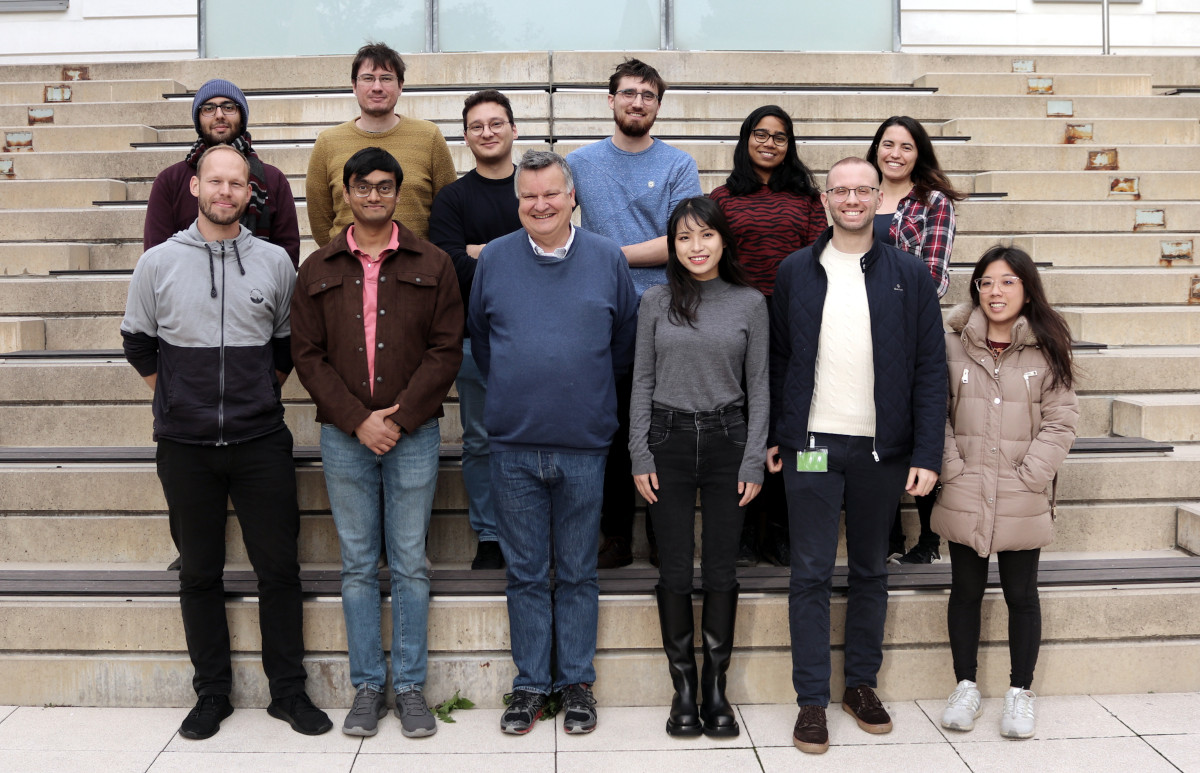
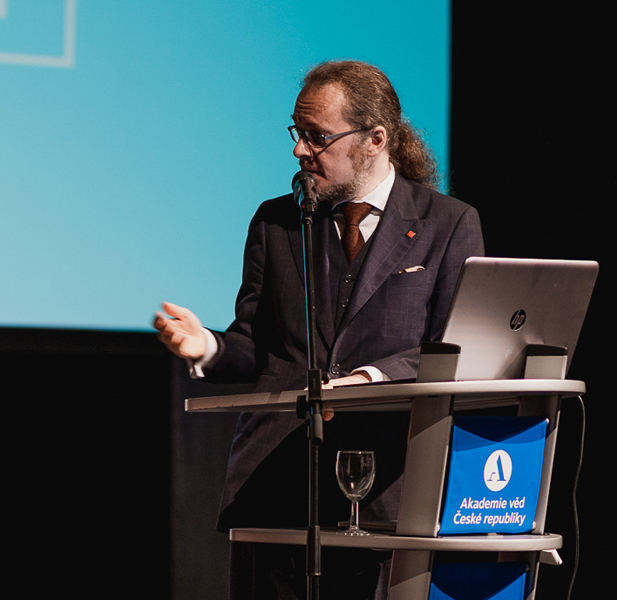
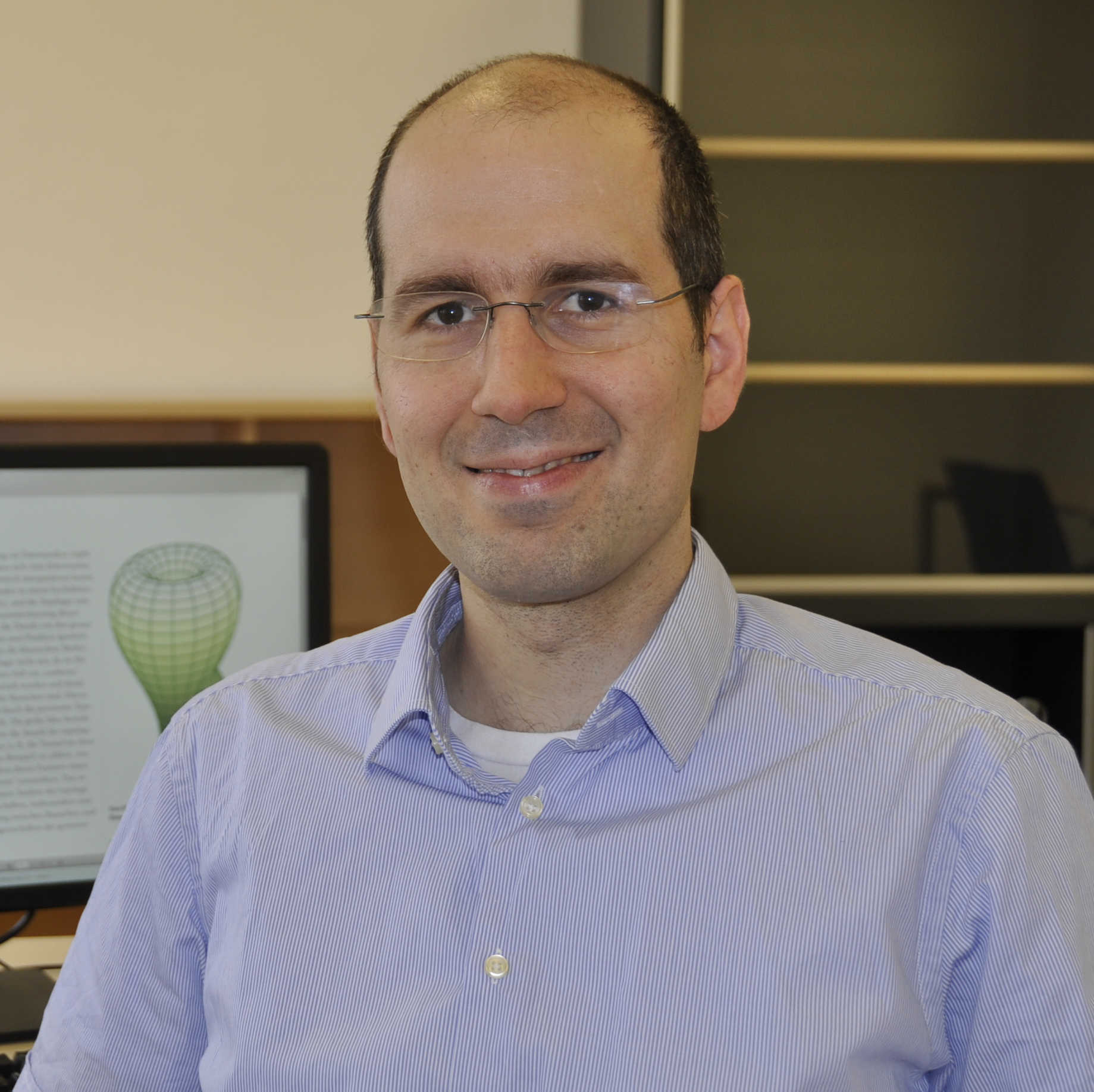
Tom Henzinger is a Professor at the Institute of Science and Technology Austria (ISTA), leading the Tom Henzinger Group. His research focuses on formal methods to enhance software quality, addressing challenges in concurrent systems, real-time and embedded systems, quantum computing, neural networks, and biochemical reaction networks. He has advised numerous PhD students and postdoctoral researchers, contributing to advancements in these fields. His work emphasizes mathematical rigor in software analysis and verification. Current projects include VAMOS (Middleware for best-effort third-party monitoring) and SPyCoDe (Semantic and Cryptographic Foundations of Security and Privacy by Compositional Design). Past projects involved model checking and runtime verification techniques. Research interests span concurrent software synthesis, quantitative modeling of reactive systems, predictability of real-time systems, and formal methods applied to quantum computation and neural networks. He is also engaged in exploring hardware-optimal solutions for quantum algorithms. Administrative Assistant Ksenja Harpprecht supports the group. Courses taught include 'Formalisms Every Computer Scientist Should Know,' focusing on logics, automata, and semantics. The group hosts regular seminars, such as the Tuesday group seminar and the Wednesday joint formal methods seminar with TU Wien's FORSYTE group.
Bart De Moor is a Full Professor at the Department of Electrical Engineering, KU Leuven, Belgium, and a guest professor at the University of Siena. He leads the STADIUS research group and has supervised 85 PhD students. His roles include chairman of Health House (2016–present), member of the Board of VIB (Biotech Institute), and former Vice-Rector for International Policy (2009–2013). Education: Master Degree in Electrical Engineering (1983), KU Leuven PhD in Engineering (1988), KU Leuven Research Interests: His work spans numerical linear algebra, optimization, algebraic geometry, systems and control theory, data-driven AI, machine learning, and applications in process industry and biomedical big data. He has contributed to subspace identification, tensor decomposition, bioinformatics, and quantum computing. Publications Trends: His publications highlight subspace identification methods, tensor decomposition, bioinformatics, and biomedical data analysis. These reflect interdisciplinary advancements in control theory, quantum physics, and mathematical engineering, with applications in industrial and healthcare domains. Scientific Awards and Honors: Leslie Fox Prize (1989) Laureate of the Belgian Royal Academy of Sciences (1992) Bi-annual Siemens Award (1994) Fellow of IEEE (since 2004) Member of the Royal Academy of Belgium for Science and Arts (since 2000) Fellow of IFAC (since 2022) Commander in the Order of King Leopold I (2020) Fellow of SIAM (since 2017) FWO Excellence Award (2010) Advising and Grants: He has led a research group of 20 PhD students and postdocs, co-founded 8 spinoff companies, and secured the ERC Advanced Grant ‘Back to the roots’ (2020–2025). He also co-holds the KU Leuven Chair on healthcare systems (2018–present). Labs and Organizations: Active in the STADIUS research group (KU Leuven), he has served on boards of the Flemish Interuniversity Institute for Biotechnology (VIB), the Alamire Foundation, and the Health Tech Experience Center Health House. His spinoffs include Trendminer, Cartagenia, and Ugentec.
Juan P. Aguilera is a researcher at the Institute of Discrete Mathematics and Geometry at TU Wien, Austria. His research focuses on mathematical logic, particularly in proof theory, set theory, reverse mathematics, and infinitary logics. He actively participates in academic events, including organizing workshops and giving invited talks globally. His research interests span foundational questions in logic, including Gödel logics, determinacy axioms, and structural reflection principles. He contributes to interdisciplinary areas such as the model theory of non-classical logics and applications of infinitary proof systems. Aguilera has been involved in major logic events like the Logic Colloquium 2025 (TU Wien) and co-organized the Philosophical Transactions of the Royal Society special issue on proof theory (2023). He has given talks at institutions like Ghent University, the University of Hamburg, and ITAM (Mexico City). No scientific awards are explicitly listed, but his prolific engagement in academic conferences and editorial work highlights his contributions to the field. He has secured grants and leads collaborative projects, though specific grant details are not provided. He is affiliated with TU Wien's discrete mathematics group and collaborates internationally on logic and set theory research.
Dr. Chloe Martindale is a Senior Lecturer at the University of Bristol , affiliated with the School of Computer Science . Her research focuses on cryptography, particularly in isogeny-based systems, public-key cryptosystems, and computational mathematics. Her recent work includes parametrizing maximal orders along supersingular isogeny paths and analyzing attacks on the SIDH protocol. She has contributed to homomorphic encryption security using abelian groups. Scientific Awards Best Paper Honorable Mention (2023) Dutch Cyber Security Research Paper Award (2019)
Anders Lindquist is Zhiyuan Chair Professor at Shanghai Jiao Tong University and Emeritus Professor at KTH Royal Institute of Technology. He earned his PhD from KTH in 1972 and began his career as a postdoctoral fellow at the University of Florida under R.E. Kalman. His academic journey includes positions as Assistant Professor (University of Florida), Associate Professor (University of Kentucky and Brown University), and Full Professor (University of Kentucky and KTH). At KTH, he served as Head of Mathematics Department (2000-2009) and Director of the Center for Industrial and Applied Mathematics (2006-2016). His research focuses on: Mathematical systems theory and control theory Stochastic realization and estimation Spectral estimation methods Moment problems with complexity constraints Applications of operator theory His publications demonstrate consistent focus on mathematical foundations of control systems, stochastic processes, and optimization techniques, with recent work expanding into multidimensional applications and image processing. Major scientific honors include: IEEE Control Systems Award (2020) Reid Prize in Mathematics (2009) Axelby Outstanding Paper Award (2003) Fellowships: IEEE, SIAM, IFAC Memberships: Royal Swedish Academy of Engineering Sciences, Chinese Academy of Sciences He holds four U.S. patents and has served on editorial boards of leading journals including Philosophical Transactions of the Royal Society and SIAM Review.
Prof. Lukas Einkemmer is a faculty member at the University of Innsbruck, holding a position in the Institute of Mathematics. He specializes in numerical analysis, plasma physics, and high-performance computing. His work focuses on developing advanced numerical methods for solving complex kinetic equations and PDEs, with applications in plasma simulation and computational fluid dynamics. Education: He earned a PhD in applied mathematics (2014) and MSc in physics (2013) from the University of Innsbruck, alongside BSc in applied mathematics (2010). He completed research stays at UC Merced and holds notable academic awards, including the SciCADE New Talent Award (2015) and participation in the Heidelberg Laureate Forum (2013). Research & Teaching: His research includes exponential integrators, dynamical low-rank methods, and semi-Lagrangian discontinuous Galerkin schemes. He teaches numerical methods, PDEs, and computational courses at both undergraduate and graduate levels. He also leads training programs in parallel computing (OpenMP/MPI) at the University’s Research Center for High-Performance Computing. Publications & Grants: Over 70 peer-reviewed articles in journals like J. Comput. Phys. and SIAM J. Sci. Comput. , focusing on numerical algorithms and their applications. He has secured grants from FWF and other agencies, advancing methods for plasma physics and kinetic theory. Awards & Recognition: Multiple honors, including the Oberwolfach Leibniz Graduate Student award (2014) and sustained scholarship support for academic excellence.
Paul Peter Hager serves as an Assistant Professor in the Department of Statistics and Operations Research at the University of Vienna, where he teaches courses including Linear Algebra and Applied Optimization. Previously, he held a junior research group leader position at Technische Universität Berlin. His research centers on: Mathematical Finance Machine Learning Stochastic Control Mean-Field Games Fractional Processes Gaussian Multiplicative Chaos Volatility Modeling Hager pioneers applications of rough path signatures in financial mathematics, developing novel frameworks for stochastic control and calibration problems. His work bridges theoretical probability with practical machine learning implementations, particularly in volatility modeling using fractional processes and log-correlated fields. Recent publications reveal a dominant trend in signature-based methods for optimal stopping and mean-field games, with significant contributions to fractional Brownian motion theory. His collaborative work with leading researchers like Peter Friz and Christian Bayer consistently targets high-impact journals in applied probability and financial mathematics. Dr. Hager maintains active research collaborations and has delivered invited talks at institutions including KAUST, focusing on computational implementations of signature methods in finance.
Reinhard Pichler is a Full Professor at the Vienna University of Technology (TU Wien), affiliated with the Faculty of Informatics and the Department of Databases and Artificial Intelligence . His research focuses on Database Theory , Computational Logic , and Parameterized Complexity . He leads multiple research projects like DeConquer (2023–2027) and HyperTrac (2018–2022), addressing challenges in query optimization and hypergraph decompositions. He holds the prestigious START Prize (2014–2022) for young researchers. His work spans theoretical foundations (e.g., hypertree decompositions) and practical applications (e.g., SPARQL query processing systems like SparqLog). He contributes to academic governance, serving on faculty councils and curriculum commissions. His research innovations bridge algorithmic theory and real-world database systems, emphasizing efficient query evaluation and tractability analysis. Key contributions include advancing fractional hypertree decompositions , SPARQL query optimization , and consistent query answering . His projects often involve collaborations with industry and international funders like the Austrian Science Fund (FWF) and Vienna Science and Technology Fund (WWTF). He actively publishes in top venues like Journal of the ACM , ACM Transactions on Database Systems , and Proceedings of the VLDB Endowment . His academic leadership extends to course design, teaching advanced topics like Complexity Theory and Theoretical Computer Science . He mentors doctoral students and oversees research teams exploring cutting-edge areas like uncertain databases and cloud-based computational social choice .
Gabriel Ciobanu is a Professor at Alexandru Ioan Cuza University of Iasi, Romania, and a Senior Researcher at the Romanian Academy, Iasi. He has held various academic positions internationally including as a Visiting Professor at Newcastle University (UK) from 2010-2015 and as a Research Fellow/Professor at the National University of Singapore (2000-2004). His educational background includes PhD studies at A.I.Cuza University and Edinburgh University (1990-1994) under the mentorship of Robin Milner, and his undergraduate studies in the Faculty of Mathematics and Computer Science at A.I.Cuza University of Iasi (1977-1982). Professor Ciobanu's research focuses on Membrane Computing and Natural Computing , Distributed Systems Models including process calculi with emphasis on semantics, behavioral equivalences, logics, and verification. He has made significant contributions to bridging membrane computing and process calculi, and to the Foundations of Mathematics and Computer Science through his work on Finitely Supported Mathematics. His research has applications in theoretical computer science, formal methods, and computational biology. His publication record shows a consistent research trajectory focusing on theoretical computer science with applications to natural computing, membrane systems, process calculi, and finitely supported structures. Recent work (2023-2025) continues to explore these areas with increasing focus on multi-agent systems, continuation semantics, and applications to medical systems and reaction systems. Scientific Awards and Recognition 2013 Grigore Moisil Award, Romanian Academy (as co-author of "Mobility in Process Calculi and Natural Computing", Springer) 2010-2013 Member of the National Research Council (CNCS) in Romania 2008-2010 Royal Society of London Joint International Project (Newcastle University, School of Computing) 2004 Octav Mayer Award for Scientific Achievements, Romanian Academy of Sciences, Iasi branch 2000 Grigore Moisil Award of the Romanian Academy of Sciences for results in Theoretical Computer Science 1995-1996 Japan Society for the Promotion of Science Fellowship (Tohoku University and Kyoto University) 1994 DAAD Research Fellowship (Institute of Computer Science, University of Kiel) 1991-1992 Royal Society of London and Romanian Academy Fellowship (University of Edinburgh) Professor Ciobanu has supervised 8 PhD students and numerous master's students. He has served as Editor-in-Chief of the Scientific Annals of Computer Science since 2006 and has been a guest editor for special issues of several international journals. He has collaborated with researchers from numerous countries including UK, France, Netherlands, Spain, Italy, Russia, China, Singapore, and India. He has been involved in various research projects and has spent research periods at prestigious institutions worldwide including Edinburgh University, Universite de Paris XI, CWI and VU Amsterdam, Tohoku and Kyoto University, National University of Singapore, and Newcastle University.
Dr. Benedikt Löwe is a Professor at the University of Hamburg since 2009, holding the CIPSH Chair 'Diversity of Mathematical Research Cultures & Practices'. He maintains affiliations with the Universiteit van Amsterdam (2003–2023) and the University of Cambridge (since 2012). His roles include research group leadership at Hamburg, editorial leadership at 'Mathematical Logic Quarterly', and governance positions in international academic organizations. Education : Master's in Mathematics (Tübingen, 1996), PhD in Mathematics (Berlin, 2001), Habilitation (Bonn, 2004), M.A. and Sc.D. from Cambridge His research bridges mathematical logic with philosophy, narratology, AI, and social sciences, with a focus on foundational questions and interdisciplinary modeling. His work has pioneered algebra-valued set theory, modal logic of forcing, and empirical approaches to modeling mathematical practices. Key contributions include the concept of 'quasigenerics' in set theory, the development of paraconsistent algebra-valued models, and the application of logic to folktale morphology. He has edited multiple journals and served on editorial boards, including as Managing Editor of 'Mathematical Logic Quarterly' (2011–2022). Scientific Awards : Fellow of the International Science Council (2023) Ordinary member of the Hamburg Academy of Sciences (2023) Simons Foundation Research Fellowship (2015) Felix-Hausdorff-Gedächtnispreis (2001) As a leader in academic governance, he has chaired the Deutsche Vereinigung für Mathematische Logik (DVMLG) and served as Secretary General of the International Union of History and Philosophy of Science and Technology's logic division (DLMPST/IUHPST).
Robert F. Tichy is a Professor at the Institute of Analysis and Number Theory , Graz University of Technology, Austria. His career spans over four decades with significant contributions to Diophantine equations , uniform distribution , and quasi-Monte Carlo methods . He has held multiple editorial board positions and administrative roles , including Dean of the Faculty of Mathematics, Physics and Geodesy (2018-2019). Research Interests : Uniform distribution, Diophantine equations, algorithmic number theory, fractal structures, quasi-Monte Carlo methods, and mathematics in finance/insurance. Awards : Austrian Mathematical Society award (1985), Honorary Doctorate (University of Debrecen, 2017), Jean-Morlet Chair (2020), and memberships in prestigious societies. Publications : Over 200 papers with recent works (2024) focusing on Diophantine problems , pseudorandom sequences , and Carlitz coefficients . Teaching : Regular courses for engineering and mathematics students, including annual lectures on insurance mathematics .
Christian Fibich is a Researcher and Lecturer at the Department of Electronic Engineering, University of Applied Sciences Technikum Wien, Austria. He leads the Research Group Embedded Systems, focusing on FPGA reliability and high-level synthesis. His roles include project management for R&D initiatives like VECS (2013-2018), INES (2018-2023), and the 2024 Drohnentechnik integration project. Fibich holds an MSc in Embedded Systems from Technikum Wien and has been active in the field since 2010. Research interests include fault-tolerant FPGA design, reliability analysis of SRAM-based FPGAs, and high-level synthesis optimization. His work emphasizes practical applications of open-source tools and automated design exploration. Recent projects explore temperature-dependent fault effects and drone integration in academic programs. Publications span FPGA reliability, fault injection methods, and embedded systems design, with a focus on open-source IP cores and hardware security. His contributions include Fiji (a fault injection tool) and HLShield (a reliability framework for HLS).
Michael Kerber is a Professor at Graz University of Technology, Institute of Geometry, specializing in computational topology and geometry. His research bridges mathematical theory with applications in data analysis, focusing on persistent homology and geometric algorithms. PhD from Max Planck Institute for Informatics (2009) Postdoc positions: Max Planck Institute, Stanford University, IST Austria His work centers on designing efficient algorithms for topological data analysis, particularly: Persistent Homology 2-Parameter Persistence Geometric Filtrations Algebraic Curve Analysis High-Dimensional Sphere Packing Recent publications emphasize: Improved Delaunay bifiltration methods NP-hardness of interleaving distance computation Sparse Čech filtrations for big data Integration with graph neural networks He has co-developed key software tools: PHAT DIPHA HERA SOPHIA
Maximilian Brunner is a Postdoc at TU Wien's Institute of Analysis and Scientific Computing (E 101), specializing in Numerics of Partial Differential Equations (PDEs). He holds a Dipl.-Ing. (MSc) and Dr.techn. (PhD) from TU Wien, with his doctoral thesis on On optimal adaptivity for semilinear PDEs earning the 2025 Study Prize from the Austrian Mathematical Society (ÖMG). His research focuses on adaptive finite element methods (FEM), iterative solvers for nonlinear PDEs, and cost-optimality analysis. He collaborates with Prof. Dirk Praetorius and contributes to projects funded by the Austrian Science Fund (FWF). Previously, he was a PhD student (2020–2024) and taught courses in numerical mathematics and scientific programming. His work bridges theoretical advancements in adaptive algorithms with practical computational efficiency, addressing challenges in nonsymmetric and semilinear PDEs. Education: PhD in Technical Mathematics, TU Wien (2024), supervised by Dirk Praetorius MSc in Technical Mathematics, TU Wien (2020), supervised by Winfried Auzinger Research Interests: His interdisciplinary work centers on developing adaptive FEM strategies for cost-optimal solutions to PDEs. Key areas include: Contractive iterative solvers for nonlinear systems Goal-oriented error estimation for targeted accuracy Quasi-optimal computational cost in adaptive algorithms His methods prioritize minimizing computational resources while maintaining solution fidelity, with applications to elliptic and semilinear PDEs. Awards: 2025 Study Prize (ÖMG) for PhD thesis Grants & Funding: FWF Projects P33216 and P28367 Vienna School of Mathematics membership (2020–present) Labs/Teams: Core member of the Numerics of PDEs research group, part of TU Wien's ASC unit. Active in collaborative projects with international conferences and workshops.
Monika Henzinger is a Professor at the Institute of Science and Technology Austria (ISTA) since 2023 and Vice President for Technology Transfer at ISTA since 2024. Her research focuses on efficient algorithms and data structures , particularly in dynamic settings where input data changes continuously. She also investigates privacy-preserving algorithms and the practical implementation of theoretically optimal algorithms. Education: PhD in Computer Science (1993, Princeton University, USA) Research Interests: Her work spans dynamic graph algorithms, differential privacy, and transforming theoretical algorithms into practical solutions. Key areas include minimizing computational resources, proving limits of efficiency, and ensuring data privacy through noise addition. Article Trends: Recent publications emphasize dynamic algorithms for graph problems , differential privacy , and clustering techniques . Topics such as minimum cut, bipartite matching, and edge coloring in dynamic environments are prominent, alongside privacy-preserving data analysis. Scientific Awards: 2024 Best Paper Award (SODA) 2021 Wittgenstein Award and ERC Advanced Grant 2019 Carus Medal (Leopoldina Academy) 2016 ACM Fellow 2014 ERC Advanced Grant 2004 European Young Investigator Award Advising & Grants: She advises PhD students and leads projects funded by grants such as the ERC Advanced Grant, Wittgenstein Award, and Austrian Science Fund initiatives. Her team includes postdocs and PhD candidates working on dynamic data structures and privacy. Labs & Teams: Leads the Henzinger_Monika Group at ISTA, focusing on algorithms, data structures, and dynamic graph problems. Collaborates with institutions globally on projects related to network optimization and privacy.