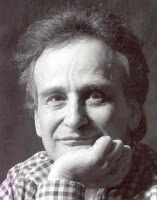
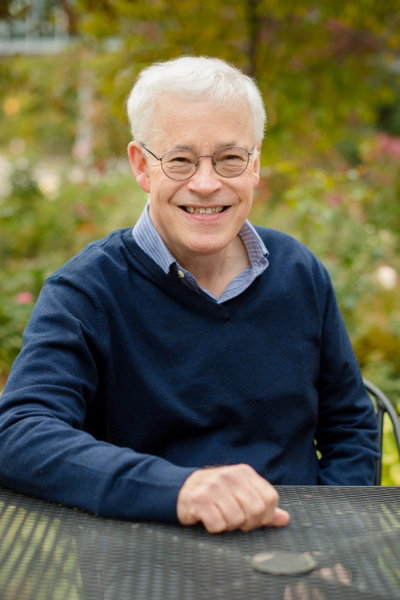
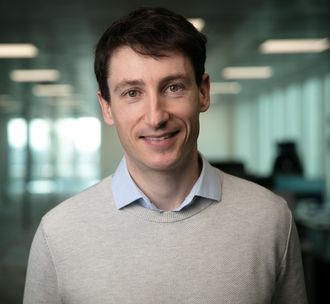
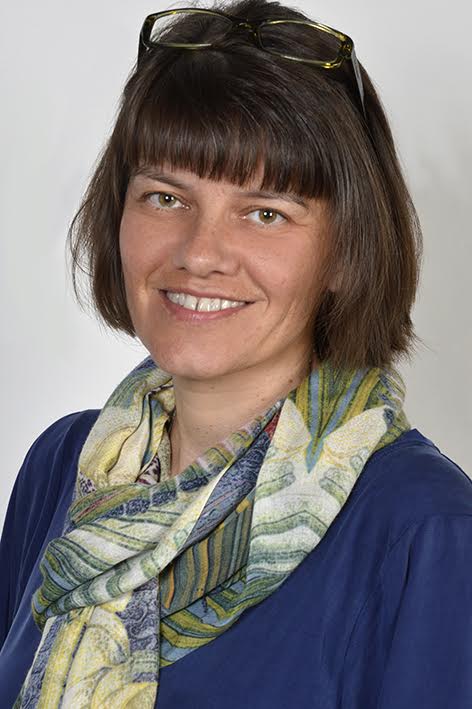
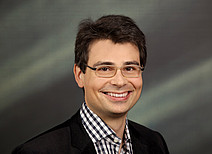
Marc Pollefeys is a Full Professor of Computer Science at ETH Zurich and Director of the Microsoft Mixed Reality and AI Zurich Lab. He has held roles such as Visiting Professor at Stanford University (2007) and Assistant/Associate Professor at UNC-Chapel Hill (2002–2009). His research focuses on 3D computer vision, robotics, machine learning, and augmented reality. Education: PhD in Computer Science from KU Leuven (1999), followed by postdoctoral research there until 2002. He transitioned to academic roles at UNC-Chapel Hill before joining ETH Zurich in 2007. Research interests include 3D reconstruction, visual localization, SLAM, and applications in archaeology, urban modeling, and robotics. Notable projects include real-time 3D scanning, city-scale reconstruction, and autonomous vision-based drones. Key awards include ACM Fellow (2022), IEEE Fellow (2012), and ERC Starting Grant (2008). He advises numerous PhD students and collaborates with institutions like Google and Microsoft. Labs and teams: Leads the Computer Vision and Geometry (CVG) lab at ETH Zurich and directs the Microsoft Mixed Reality and AI Lab. His work bridges academia and industry, focusing on perception for mixed reality and autonomous systems.
Saharon Shelah is an Israeli mathematician renowned for his groundbreaking work in mathematical logic and set theory. He currently holds the Robinson Chair for Mathematical Logic at Hebrew University, a position he has held since 1978, and has been a Professor at Hebrew University since 1974. Additionally, he serves as a Distinguished Visiting Professor at Rutgers University since 1986. His educational background includes: B.Sc. from Tel Aviv University (1964) M.Sc. from Tel Aviv University (1967) M.Sc. from Hebrew University (1968) Ph.D. from Hebrew University of Jerusalem (1969), summa cum laude, supervised by Michael Rabin Shelah's research primarily focuses on mathematical logic, particularly model theory and set theory. His work has revolutionized these fields through the development of stability theory, PCF theory, and proper forcing. He has made significant contributions to understanding the connections between logic and other mathematical disciplines including algebra, computer science, and combinatorics. His approach often involves creating general frameworks that solve multiple problems simultaneously, demonstrating extraordinary depth and breadth in mathematical thinking. An analysis of Shelah's extensive publication record reveals consistent innovation across mathematical logic. His work shows a progression from foundational model theory in the 1970s through the development of stability theory, to groundbreaking set theory results in the 1980s and 1990s, particularly in cardinal arithmetic and PCF theory. Recent publications continue to expand abstract model theory while finding new applications across mathematics. His research demonstrates remarkable consistency in quality and originality over five decades. Shelah's exceptional contributions have been recognized with numerous prestigious awards: 2013 AMS Steele Prize 2011 EMET Prize in Mathematics 2001 Wolf Prize in Mathematics 2000 Bolyai Prize 1998 Israel Prize for Mathematics 1992 SIAM George Pólya Prize 1991 Honorary Foreign Member of the American Academy of Arts and Sciences 1988 Member of the Israel Academy of Sciences and Humanities 1983 Karp Prize 1982 Rothshild Prize 1977 Erdös Prize Throughout his career, Shelah has mentored numerous students and collaborated with over 200 coauthors. His research has been supported by multiple grants from prestigious organizations including the Israel Science Foundation and the National Science Foundation. Shelah's work has fundamentally shaped modern mathematical logic, with his classification theory providing frameworks that continue to guide research directions. His ability to connect seemingly disparate areas of mathematics through logical structures has made his contributions exceptionally influential. Shelah maintains an active research group at Hebrew University, where he continues to supervise doctoral students and postdoctoral researchers. His research program, known for its depth and technical sophistication, continues to generate new directions in mathematical logic. The Shelah Archive (http://shelah.logic.at) serves as a comprehensive repository of his extensive publication record, which surpassed 1190 papers by the end of 2024.
Lloyd Nicholas Trefethen is Professor of Numerical Analysis and Fellow of Balliol College at the University of Oxford, a position he has held since 1997. He also has concurrent appointments as Global Distinguished Professor of Mathematics and Computer Science at New York University (2013–2019) and has served as Von Neumann Professor at TU Munich and Matheon Professor at TU Berlin in 2010. Education: PhD (Computer Science/Numerical Analysis), Stanford University, 1982 MS (Computer Science/Numerical Analysis), Stanford University, 1980 AB summa cum laude (Applied Mathematics), Harvard College, 1977 Research Interests: Trefethen’s work centers on numerical mathematics, with particular emphasis on spectral methods , numerical linear algebra , approximation theory , numerical conformal mapping , quadrature , and pseudospectra . His research often bridges rigorous mathematical theory and practical algorithms, most notably through the widely used Chebfun software system. Recent publications illustrate a trend toward developing fast, high-accuracy algorithms for solving classical problems such as the Laplace and Helmholtz equations, rational approximation via the AAA algorithm, and stability analysis in fluid mechanics without traditional eigenvalue techniques. Scientific Awards: Pólya Prize for Mathematical Exposition (SIAM, 2017) Naylor Prize (London Mathematical Society, 2013) Gold Medal (Institute of Mathematics and its Applications, 2011) Fellow of the Royal Society (2005) Member of the US National Academy of Engineering (2007) ERC Advanced Grant (2012–2017) Honorary doctorates from Stellenbosch University and University of Fribourg (2019) Advising & Grants: Trefethen has supervised 24 PhD/DPhil students at MIT, Cornell, and Oxford; twelve have launched academic careers. He has held major grants including an ERC Advanced Grant on “Computing with functions instead of numbers” (€2.4 M, 2012–2017) and EPSRC funding for the Chebfun System (2006–2010). Labs & Teams: He leads the Chebfun Team at Oxford, an interdisciplinary group developing open-source software for numerical computing with functions. The team collaborates globally with researchers in mathematics, computer science, and engineering.
Johannes Brandstetter is an Associate Professor at the Institute for Machine Learning at Johannes Kepler University Linz (JKU) where he leads the "AI for data-driven simulations" research group. He is also Co-founder and Chief Scientist at Emmi AI, bridging academic research with industrial applications in AI-driven physics simulation. Brandstetter earned his PhD after working at CERN's CMS experiment on Higgs boson physics. In 2018, he transitioned to machine learning, joining Sepp Hochreiter's research group in Linz. From 2021-2023, he worked at the Amsterdam Machine Learning Lab under Max Welling and Microsoft Research, developing expertise in Geometric Deep Learning and neural surrogates for partial differential equations. He returned to JKU in October 2023 to establish his own research group. His research spans Machine Learning, Deep Learning, and Physics-Informed Machine Learning with focus areas including Neural PDE solvers, Computational Fluid Dynamics, and Climate Modeling. Brandstetter believes AI is poised to revolutionize industrial-scale simulations, potentially saving thousands of compute hours across engineering domains. His work integrates computer vision, numerical simulation, and engineering components to advance data-driven approaches. Recent publications reveal a strong trend toward foundation models for scientific applications, particularly in atmospheric modeling (Aurora), geometric deep learning, and neural surrogates for complex physical systems. His interdisciplinary work spans computer vision, climate science, computational physics, and engineering, demonstrating the versatility of his research approach. Principal Investigator for "AlKa-DL: Alpine karst spring discharge prediction" (FWF-funded, 2024-2027) Principal Investigator for Cluster of Excellence "Bilateral Artificial Intelligence" (FWF-funded, 2024-2029) Co-PI for "Fast, efficient and flexible CFD simulation through generative AI" (FFG-funded, 2025-2026) As an educator and researcher, Brandstetter actively engages with the scientific community through invited talks at major conferences including presentations on "Closing the Gap Between Scientific Foundation Models and Real-World Applications" (March 2025) and "Scientific Machine Learning for Science and Engineering" (February 2025).
Ana Sokolova is a Professor in the Department of Computer Science at the University of Salzburg. She is affiliated with the Faculty of Digital and Analytical Sciences and actively contributes to research in theoretical computer science. University: University of Salzburg Faculty: Faculty of Digital and Analytical Sciences Department: Computer Science Email: ana.sokolova@plus.ac.at Her research focuses on probabilistic systems , concurrency theory , convex algebras , and formal verification . This work bridges theoretical foundations with practical applications in distributed computing and programming semantics. Recent publications highlight advancements in trace semantics , determinization , probabilistic anonymity , and coalgebraic modeling . Key trends include the integration of Markov chains , nondeterministic systems , and algebraic structures for formal verification.
Matthias Aschenbrenner is a Professor at the Faculty of Mathematics, Department of Mathematics, with expertise in model theory, differential algebra, and asymptotic analysis. His research spans valued fields, transseries, and low-dimensional topology. PhD in Mathematics from the University of Illinois at Urbana-Champaign His work focuses on the intersection of mathematical logic, differential equations, and algebraic structures. Key contributions include foundational studies on transseries, Hardy fields, and applications to topology. Recent publications address analytic Nullstellensätze, distality in valued fields, and approximation theorems in o-minimal contexts. He serves as a peer reviewer and collaborates on geometric properties of transcendental functions and valued differential fields. Scientific awards include Fellow of the American Mathematical Society (2012) and the Karp Prize (2018). His research is funded by grants on model theory and geometric transcendental functions.
Tamar Ziegler is a Professor of Mathematics at the Einstein Institute of Mathematics, Hebrew University, holding the Henry and Manya Noskwith Chair in Mathematics since 2018. She currently serves as Chair of the Einstein Institute (2020-present) and has held visiting positions at prestigious institutions including IAS Princeton (2022-2023 Distinguished Visiting Professor), MSRI (2017 Simons Professor), and Stanford University (2012-2013). Her academic journey began with a B.Sc. summa cum laude (1995), M.Sc. (1998), and Ph.D. (2003) in mathematics from Hebrew University under advisor Hillel Furstenberg. Her career progression shows steady advancement from Zassenhaus Assistant Professor at Ohio State University (2002-2005), through positions at Technion (rising from Senior Lecturer to Professor), to her current role at Hebrew University since 2013. Ziegler's research spans number theory, ergodic theory, and combinatorics, with particular focus on additive combinatorics, higher order Fourier analysis, and connections between dynamical systems and number theory. Her work frequently involves collaborations with leading mathematicians including Terence Tao, Ben Green, and David Kazhdan. Analysis of her publication record reveals consistent contributions to fundamental mathematical problems, particularly in establishing polynomial patterns in primes, inverse conjectures for Gowers norms, and connections between ergodic theory and combinatorial number theory. Her research demonstrates a progression from foundational work on characteristic factors to increasingly sophisticated applications in prime number theory. 2025-2030 ERC Advanced grant 2024 Rothschild Prize in Mathematics 2024 9th European Congress in Mathematics, Plenary Speaker 2023 AIM Alexanderson Award 2021 Elected to Academia Europaea 2016 Rector's Prize for Excellence in Research and Teaching 2016-2021 ERC Consolidator grant 2015 Michael Bruno Memorial Award Ziegler has received continuous research funding through prestigious grants including multiple ERC awards and fellowships. Her leadership role as Chair of the Einstein Institute demonstrates significant institutional responsibility. While specific advising information isn't provided in the sources, her Erdős number is 2 (via Hillel Furstenberg) and she has collaborated with many prominent mathematicians throughout her career. As Chair of the Einstein Institute of Mathematics, Ziegler leads one of Israel's premier mathematical research centers, overseeing research programs and academic activities that connect ergodic theory, number theory, and combinatorics with other mathematical disciplines.
Wilfried Gansterer is a Professor at the Faculty of Computer Science, University of Vienna, leading the Theory and Applications of Algorithms research group. His work focuses on numerical algorithms, distributed computing, and machine learning, with notable contributions to graph neural networks and fault-tolerant systems. Active in projects such as Algorithmic Data Science for Computational Drug Discovery (2020–2028) and REPEAL (Resilience vs. Performance in Numerical Linear Algebra, 2016–2020). Research Interests: Dr. Gansterer’s expertise spans graph neural networks, matrix compression, adversarial defense mechanisms, and high-performance computing. His work addresses challenges in efficient computation, resilience against node failures, and optimizing distributed systems. Projects : Algorithmic Data Science for Computational Drug Discovery (2020–2028) REPEAL: Resilience vs. Performance in Numerical Linear Algebra (2016–2020) Verteiltes Rechnen (Distributed Computing, 2007–2014) Awards : 2023 Best Paper Award for work on Crossfire: An Elastic Defense Framework for Graph Neural Networks. Labs/Teams : Directs the Theory and Applications of Algorithms group, focusing on algorithmic innovation in distributed and high-performance computing environments.
Klemens Fellner is a Professor of Mathematics/Computational Sciences and Group Leader of the Applied Analysis Group at the Institute of Mathematics and Scientific Computing, University of Graz. His research focuses on the analysis of partial differential equations and mathematical modeling across physics, chemistry, and biology. Research Interests: Prof. Fellner's work spans theoretical analysis of nonlinear PDEs (reaction-diffusion, kinetic, and non-local equations) using entropy/duality methods, with applications to: Biological systems (lipolysis, protein localization, stem-cell division) Physical processes (organic photovoltaics, semiconductor modeling) Collective behavior (swarming micro-organisms, aggregation dynamics) Interdisciplinary Mathematics-Arts collaborations Publication Trends: His recent articles (2018-2021) demonstrate strong focus on: Global existence and regularity for reaction-diffusion systems Convergence to equilibrium via entropy methods Drift-diffusion models in semiconductor physics Mathematical biology applications (prion dynamics, lipolysis) Novel approaches for non-local aggregation and hysteresis phenomena Research Leadership: Currently leads the Applied Analysis Group with members including postdocs and PhD students. Key projects: Doctoral School IGDK (International Graduate School) SFB Lipid Hydrolysis (Special Research Program) Mathematics and Arts collaborations Colibri research platform Supervises PhD candidate Reymart Lagunero studying generalized reaction-diffusion systems.
Dr. Adel Aazami is an Assistant Professor at the Institute of Transport Economics and Logistics at Vienna University of Economics and Business (WU Vienna) since 2023. His academic journey began with a B.Sc. in Industrial Engineering from University of Tehran (2010-2014), followed by an M.Sc. (2014-2016) and Ph.D. (2016-2021) from Iran University of Science and Technology (IUST), Tehran. Prior to his current position, he worked as a Postdoctoral Researcher at Sharif University of Technology (2021-2022) and was a Visiting Researcher at the University of Toronto (2020). His educational background includes: Ph.D. in Industrial Engineering (2016-2021) - Iran University of Science and Technology (IUST), Tehran, Iran M.Sc. in Industrial Engineering (2014-2016) - Iran University of Science and Technology (IUST), Tehran, Iran B.Sc. in Industrial Engineering (2010-2014) - University of Tehran, Tehran, Iran Dr. Aazami's research spans multiple interconnected domains within operations research and supply chain management. His primary focus areas include Operations Research and Optimization, Supply Chain and Logistics, Production and Distribution/Transportation Planning, Competition and Game Theory, Stochastic Programming, and Decomposition Algorithms. His work demonstrates a strong emphasis on developing mathematical models and optimization algorithms for complex supply chain problems, particularly those involving perishable goods, competitive environments, and sustainability considerations. He has made significant contributions to integrating environmental factors into traditional logistics problems and developing robust optimization approaches for supply chain networks. Analysis of Dr. Aazami's publication record reveals a consistent trajectory of increasingly sophisticated research in supply chain optimization. His work shows a clear progression from foundational mathematical optimization techniques to increasingly complex integrated problems involving multiple stakeholders, uncertainty, and environmental considerations. A notable trend is his focus on perishable products within supply chains, developing models that account for limited product lifetimes while optimizing across multiple echelons of the supply chain. More recently, his research has expanded to incorporate green logistics considerations, developing algorithms that balance economic and environmental objectives in transportation and distribution problems. His notable scientific achievements include: Winner of the 'Best Student' award among nationwide students evaluated by the Iranian Ministry of Science (2020) Winner of the Iranian Nobel Prize (known as the Alborz National Foundation Prize) (2019) Winner of the Best Student Award at IUST (2018) Winner of the Top Researcher Award at IUST (2018) Annual Awards of the National Elites Foundation Iran (2015-2020) Dr. Aazami has extensive teaching experience across multiple Iranian universities including Tehran University, Amirkabir Technical University, Isfahan University, Yazd University, Zanjan University, Damghan University, Abrar University and Iran Technical University. His peer review activities include reviewing for prestigious journals such as Soft Computing, Expert Systems with Applications, and Annals of Operations Research. While specific grant information isn't detailed in the provided text, his research output suggests active engagement with complex optimization problems relevant to transportation and logistics industries. At WU Vienna, Dr. Aazami is part of the research team at the Institute of Transport Economics and Logistics, working alongside other faculty members including Prof. Kummer and Prof. Wakolbinger. His research integrates theoretical optimization methods with practical applications in transportation and logistics, contributing to the institute's focus on sustainable and efficient supply chain solutions.
Univ.-Prof. Dr. Norbert Schuch is a Professor of Physics and Mathematics at the University of Vienna, leading the Quantum Information and Quantum Many-Body Physics group. His research bridges Quantum Information Theory, Quantum Computing, and the study of complex quantum many-body systems, with a focus on Tensor Networks, Topological Order, and Symmetry Breaking. He has offices at both the Faculty of Physics (Boltzmanngasse 9) and Faculty of Mathematics (Oskar-Morgenstern-Platz 1). Research Interests : Quantum Information at the interface of Many-Body Physics, including Entanglement Theory, Topological Quantum Computation, Tensor Network algorithms, and Symmetry-Protected Topological (SPT) phases. His work develops numerical and analytical frameworks to study entanglement order parameters and prepare/experiment with topological states in quantum simulators. Teaching : Courses on Quantum Information, Quantum Computing, Theoretical Physics, and seminars on quantum many-body topics. Prior to Vienna, he was a tenured group leader at Max-Planck-Institute of Quantum Optics and a lecturer at Technical University Munich. Scientific Awards : ERC Consolidator Grant SEQUAM (2020–2025) FWF ESPRIT Programme ESP 306 FWF SFB BeyondC FWF Entanglement Order Parameters Research Trends : His recent publications explore Quantum Algorithms, Tensor Networks for Topological Phase Transitions, Entanglement Spectra, and Symmetry-Protected Phases. Key subfields include Non-Abelian Anyons, Chiral Spin Liquids, and Computational Complexity in Many-Body Systems. Group Members : Current team includes postdocs like Dr. Ilya Kull and Dr. András Molnár, with historical alumni spanning PhDs, Masters, and BSc students now at institutions like Xanadu, MIT, and Quantinuum.
Sofia Kantorovich is a Professor at the University of Vienna, serving as Deputy Head of both the Research Platform MMM (Mathematics-Magnetism-Materials) and Computational and Soft Matter Physics group. Her departmental affiliation is with Computational and Soft Matter Physics at Kolingasse 14-16, 1090 Wien (Room 03.22). She actively teaches undergraduate and graduate courses including Linear Algebra for Computational Science, Analysis for Computational Science, and seminars on soft matter physics through the 2025 academic year. Her research centers on computational modeling of magnetic soft matter systems, with emphasis on ferrofluids, magnetic nanoparticles, nanogels, and supracolloidal polymers. She investigates how external magnetic fields influence structural properties, self-assembly dynamics, rheological behavior, and transport phenomena in complex magnetic fluids. Key applications include drug delivery systems, responsive materials design, and magnetic composites engineering, employing molecular dynamics simulations and theoretical analysis to uncover fundamental mechanisms. Analysis of her 2023-2025 publications reveals consistent focus on field-responsive dynamics in magnetic colloidal systems. Her work frequently examines coarsening phenomena in ferrogranulate networks, morphology-dependent responses in magnetic nanogels, and filamentous structure behavior under applied fields. These studies demonstrate how particle shape, concentration gradients, and interaction potentials govern macroscopic properties in magnetic soft matter. No scientific awards are documented in the available sources. Information regarding graduate student advising and grant funding details is not provided in the current materials. Professor Kantorovich leads research within the Computational and Soft Matter Physics group and co-directs the interdisciplinary MMM platform, which integrates mathematical modeling, magnetic theory, and materials science to advance understanding of complex magnetic systems and their technological applications.
Martin Bridson serves as President of the Clay Mathematics Institute since 2018 and holds the Whitehead Professorship of Pure Mathematics at the University of Oxford's Mathematical Institute, where he has been a Fellow of Magdalen College since 2007. Previously, he was Head of Oxford's Mathematical Institute (2015-2018), Professor of Pure Mathematics at Imperial College London (2002-2007), and Professor of Topology at Oxford (1999-2002). His academic journey began with undergraduate studies at Hertford College, Oxford, followed by PhD work at Cornell University. Bridson's research centers on Geometric Group Theory, Topology, and Spaces of Non-Positive Curvature. His work explores the deep connections between algebraic structures and geometric properties, particularly focusing on metric geometry, profinite completions, and the topology of non-positively curved spaces. His influential monograph "Metric Spaces of Non-Positive Curvature" (co-authored with André Haefliger) has become a foundational text in the field. His recent publications (2024-2025) demonstrate continued leadership in geometric group theory, with significant contributions to profinite rigidity, CAT(0) geometry, and automorphism groups. These works reveal evolving research directions toward computational aspects of group theory and deeper connections with low-dimensional topology. Steele Prize for Mathematical Exposition (2020, with Haefliger) Fellow of the Royal Society (2016) Fellow of the American Mathematical Society (2015) Royal Society Wolfson Research Merit Award (2012) London Mathematical Society Whitehead Prize (1999) Bridson has secured major research funding including EPSRC Senior Fellowships (2007-2012, 1997-2002), EPSRC Platform Grants (2010-2015), and multiple NSF grants. His leadership extends to directing the Mathematical Institute at Oxford and presiding over the Clay Mathematics Institute, where he influences global mathematical research directions. His collaborative work spans institutions including Princeton, Geneva, and Lausanne, reflecting his international research network.
Prof. Jens Markus Melenk is a Professor at TU Wien's Faculty of Mathematics and Geoinformation, leading the Computational Mathematics Research Group (E101-02-1). His research focuses on advanced numerical methods for partial differential equations, with a strong emphasis on hp-FEM (hp-Finite Element Method), fractional diffusion equations, and wave propagation problems. He has contributed significantly to the development of robust and efficient algorithms for complex domains and heterogeneous media. Key research interests include the application of hp-FEM to fractional operators (e.g., integral fractional Laplacian), boundary element methods (BEM), and the analysis of wavenumber-explicit convergence for Maxwell's equations and elastic wave equations. His work bridges theoretical analysis and computational implementation, addressing challenges in multiscale problems and singular perturbations. Notable contributions: Exponential convergence of hp-FEM for fractional Laplacian problems, wavenumber-explicit error estimates for wave equations in heterogeneous media. Collaborations: Active involvement with researchers like Markus Faustmann, Christoph Schwab, and Dirk Praetorius. Supervised theses: Includes works on hp-FEM for fractional operators, RBF interpolation, and error estimators for elliptic PDEs. His research group develops and analyzes numerical schemes for challenging PDE scenarios, with applications in electromagnetism, acoustics, and computational mechanics.
Leonhard Summerer is an Associate Professor at the Faculty of Mathematics, Department of Mathematics . His research primarily focuses on Diophantine Approximation , Geometry of Numbers , and Parametric Approximation . His work explores the Approximation Property in parametric settings, Lattice Theory , and Linear Dependence in number theory. Recent publications include studies on Jarník’s identity, simultaneous approximation to multiple reals, and geometric interpretations of number-theoretic problems. He has authored numerous peer-reviewed articles and contributed chapters to educational books such as 77-mal Mathematik für Zwischendurch , emphasizing mathematical outreach and pedagogical innovation . Active in academic discourse, he has delivered talks on topics like Packings and Tilings in Z and Simultane Approximation m reeller Zahlen since 2006.