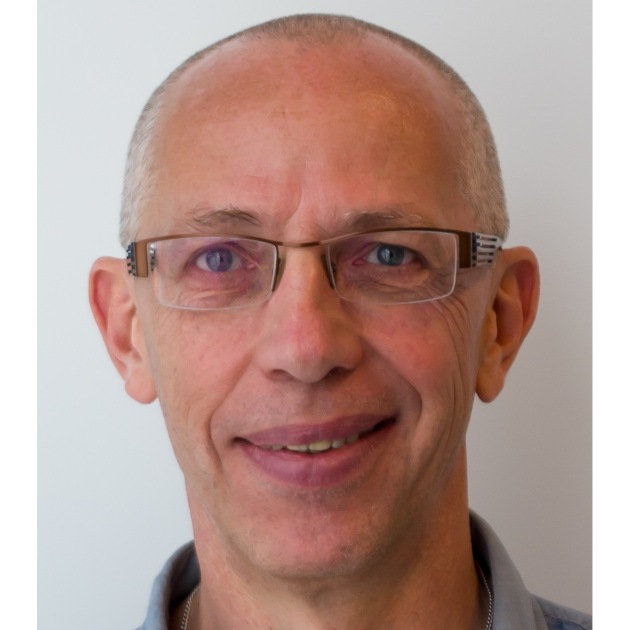
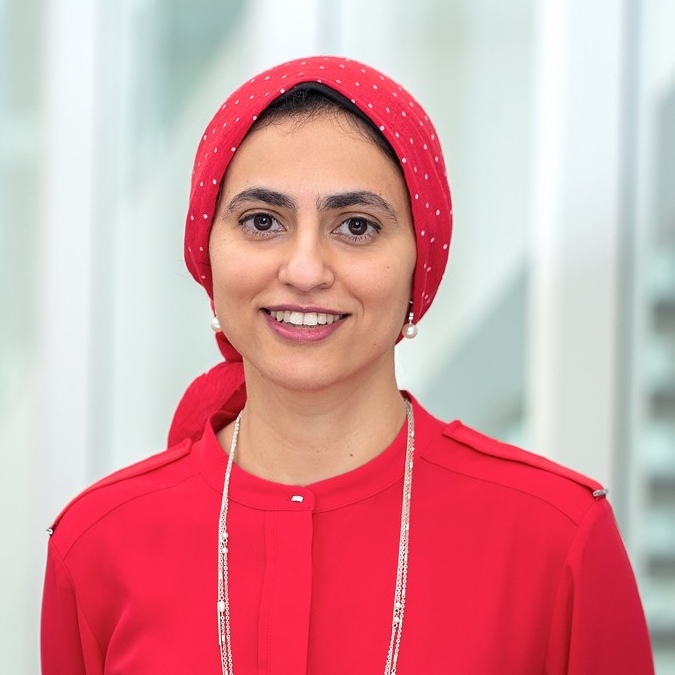
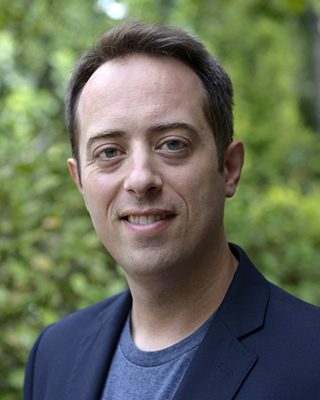
Tibor Szabó is a Professor in the Combinatorics and Graph Theory group at the Department of Mathematics, Freie Universität Berlin. He holds a PhD from The Ohio State University, advised by Ákos Seress. Prior to his current position, he held roles at McGill University, ETH Zürich, the Institute for Advanced Study (Princeton), and the University of Illinois (UIUC) as a J.L. Doob Research Assistant Professor. Research Interests: His work focuses on combinatorics and combinatorial optimization, including extremal problems, random structures and algorithms, pseudorandom graphs, positional games, and the combinatorics of linear programming. He explores tools from algebra, probability theory, and topology applied to combinatorics. Teaching: He teaches courses such as Algorithmic Combinatorics, Extremal Combinatorics, and runs the Combinatorics Seminar. His lecture notes include works on positional games and explicit constructions in extremal combinatorics. Students & Postdocs: Notable PhD advisees include Yamaan Attwa, Silas Rathke, Simona Boyadzhiyska, and Patrick Morris. Postdoctoral fellows include Olaf Parczyk and Anurag Bishnoi. His research has involved collaborations with over 50 co-authors. Funding & Grants: Supported by grants from the Swiss National Science Foundation (SNF) and German Research Foundation (DFG), focusing on topics like positional games and extremal graph theory.
Markus König is a Professor of Informatics in Civil Engineering at Ruhr University Bochum, where he has been researching and teaching since October 2009. His work focuses on Building Information Modeling (BIM), digital construction technologies, and civil engineering informatics, with significant contributions to the development and implementation of digital methods in German construction industry. Dr. König earned his degree in civil engineering with a focus on applied computer science at Leibniz University Hannover, where he also completed his doctorate on cooperative building planning at the Institute for Building Informatics. He subsequently held a junior professorship for Theoretical Methods of Project Management at Bauhaus University Weimar before joining Ruhr University Bochum. His research spans multiple cutting-edge areas including Building Information Modeling (BIM), construction process simulation, tunneling informatics, infrastructure asset management, and the application of artificial intelligence and computer vision in civil engineering. As chair of the Building Informatics Working Group from 2012-2016, he played a key role in developing the first national BIM curriculum for German universities and serves as editor of the book 'Building Information Modeling: Technological Foundations and Industrial Practice.' Analysis of his recent publications reveals a strong trend toward semantic technologies, digital twins, automated compliance checking, and the integration of AI in construction processes. His work increasingly focuses on information containers, ontology development, and the application of large language models to infrastructure data, reflecting the evolving landscape of digital construction. Dr. König's significant contributions to digital construction have been recognized with prestigious awards: Lower Saxony-Bremen Construction Industry Award (2017) for 'services in the development and introduction of digital construction in Germany' Konrad Zuse Medal (2020) While specific details about his advising and grant activities aren't explicitly mentioned in the provided text, his extensive publication record with numerous co-authors suggests active supervision of doctoral students and research staff. His involvement in multiple collaborative research projects is evident from his publication history. At Ruhr University Bochum, Professor König leads a research group focused on civil engineering informatics, with particular emphasis on BIM, digital construction technologies, and their application across the building lifecycle. His team appears to work at the intersection of computer science and civil engineering, developing innovative solutions for construction process optimization, infrastructure management, and digital transformation of the AEC industry.
Georges Gielen is Full Professor in the Department of Electrical Engineering (ESAT) at KU Leuven, Belgium, and part-time Research Director at imec. He has held multiple leadership roles including Chair of ESAT Department (2012-2013, 2020-2024) and Vice-Rector for Science, Engineering & Technology (2013-2017). His academic career spans over 30 years at KU Leuven, progressing from Assistant to Full Professor. His research focuses on analog and mixed-signal integrated circuit design automation , with expertise in CAD tools, design optimization, sensor interfaces, and neuromorphic systems. His work bridges hardware design with machine learning, particularly in hardware-efficient AI implementations and biomedical applications. He has pioneered techniques for automated analog circuit sizing, topology synthesis, and reliability-aware design in nanometer CMOS. Gielen has received numerous accolades including the IEEE CAS Mac Van Valkenburg Award (2015), IEEE CAS Charles Desoer Award (2020), and EDAA Achievement Award (2021). He holds an ERC Advanced Grant AnalogCreate and is an IEEE Fellow since 2002. As a prolific scholar, he has chaired major conferences including DATE (2006), ICCAD (2007), and ESSCIRC (2017). He has graduated over 55 PhD students through the MICAS research group at KU Leuven, currently supervising 13 doctoral candidates. His research team collaborates extensively with imec and industry partners on cutting-edge projects in carbon-aware AI accelerators, uncertainty-aware design, and neuromorphic sensor interfaces.
Lingming Zhang is an Associate Professor at the Department of Computer Science, University of Illinois Urbana-Champaign, affiliated with the Grainger College of Engineering. His research focuses on the intersection of Software Engineering, Programming Languages, and Machine Learning, with a particular emphasis on automated program repair, compiler testing, and large language model (LLM) applications in software engineering. He has published over 100 papers, achieving an h-index of 50+, and holds an ACM Distinguished Member status. Research Interests: LLM-based software testing, repair, and synthesis Fuzzing of deep-learning libraries and compilers Open-source code LLMs (e.g., StarCoder2, Magicoder) with over 1M downloads Automated program repair systems (e.g., AlphaRepair, ChatRepair, Agentless) Recent Contributions: Developed TitanFuzz for coverage-guided compiler fuzzing Released Agentless , an LLM-based coding tool adopted by OpenAI and DeepSeek Proposed SWE-RL to enhance LLM reasoning via reinforcement learning Service Roles: Program Co-Chair for ASE 2025 and LLM4Code 2025 Associate Chair for OOPSLA 2024 and Area Chair for ICSE 2025/2026 Recipient of NSF CAREER Award and ACM SIGSOFT Early Career Award Lab/Teams: Develops open-source tools like UniAPR for efficient patch validation Active in releasing industry-adopted LLM-based software engineering tools
Professor Forrest Brewer is a faculty member in the Department of Electrical and Computer Engineering at the University of California, Santa Barbara (UCSB), affiliated with the College of Engineering. His research spans VLSI design, computer-aided design tools, and low-power computing, with a focus on unconventional engineering solutions. Education: PhD in Computer Science, University of Illinois BS in Physics (with honors), California Institute of Technology His work includes CMOS pulse-gate asynchronous logic for high-performance systems, sigma-delta modulation for signal processing, and formal verification strategies for asynchronous circuits. Applications range from radiation-hardened communication links for the Large Hadron Collider (LHC) to spiking neural networks for low-power computing in LIDAR/RADAR systems. Affiliations: California Nanosystems Institute Allosphere Steering Committee (Media Technology) With over 100 publications and 40 years of systems design experience, Brewer has contributed to defense programs, founded UCSB's Computer Engineering program, and served as Intel Faculty Fellow (1997). His lab, the Systems Synthesis Lab, explores collective dynamics and high-resolution, low-latency computation.
Zachary Tatlock is an Associate Professor at the Paul G. Allen School of Computer Science & Engineering at the University of Washington, where he leads the Programming Languages & Software Engineering Group (PLSE) and the SAMPL Group. His research spans programming languages, formal verification, compilers, and computational fabrication. He is also an Amazon Scholar with AWS's Automated Reasoning Group and previously advised OctoML. Tatlock's work bridges theoretical foundations with practical systems, focusing on making it easier to write tricky code while ensuring correctness through rigorous proofs and measurements. PhD in Computer Science & Engineering, University of California, San Diego (2014) Thesis: Reducing the Costs of Proof Assistant Based Formal Verification Advisor: Sorin Lerner BS in Computer Science (Honors) and Mathematics, Purdue University (2007) Professor Tatlock's research focuses on the intersection of programming languages, formal methods, and systems. His work in compilers and formal verification aims to make it easier to write tricky code while ensuring correctness through rigorous proofs. He explores computational fabrication techniques that bridge digital design with physical manufacturing. His recent work on equality saturation (via the egg framework) has transformed program optimization and synthesis. Tatlock also investigates floating-point numerics, distributed systems verification, and hardware/software co-design, always seeking to balance theoretical rigor with practical implementation. Tatlock's recent publications demonstrate a strong focus on equality saturation techniques (egg framework), computational fabrication, and verified systems. His work increasingly integrates machine learning with program analysis and synthesis. There's a clear trajectory toward more practical applications of formal methods in real-world systems, particularly in numerical computing and fabrication. His research group has made significant contributions to e-graph technology, floating-point accuracy, and the verification of distributed systems. Distinguished Paper Award for Rewrite Rule Inference Using Equality Saturation (OOPSLA 2021) Spotlight Paper Award for Dynamic Tensor Rematerialization (ICLR 2021) Distinguished Paper Award for egg: Fast and Extensible Equality Saturation (POPL 2021) Faculty Appreciation for Career Education & Training (FACET) Award (2020) NSF CAREER Award: Verifying Distributed System Implementations (2017) Distinguished Paper Award for Automatically Improving Accuracy for Floating Point Expressions (PLDI 2015) Distinguished Teaching Award Nomination (2015) Professor Tatlock has advised numerous doctoral, master's, and undergraduate students who have gone on to prominent positions in academia and industry, including faculty positions at the University of Utah and Brown University, and leadership roles at companies like OctoML and Certora. His research is supported by significant funding from NSF, DARPA, DOE, and industry partners, totaling millions of dollars. Current grants include projects on computer-aided reasoning, formal verification, computational fabrication, and machine learning systems. He has served on numerous program committees and organized workshops including FPTalks, EGRAPHS, and PNW PLSE. As co-leader of the Programming Languages & Software Engineering (PLSE) research group and affiliate of the SAMPL Group at the University of Washington, Tatlock has developed influential tools including egg (an equality saturation toolkit), Carpentry Compiler, and Odyssey. His group actively collaborates with industry partners including Amazon Web Services, where he serves as an Amazon Scholar. The group has made significant contributions to equality saturation, floating-point accuracy, program synthesis, and computational fabrication, with applications ranging from compiler optimization to 3D printing.
Dr. Carmen Cheh is a Research Scientist in the Department of Computer Science at the University of Illinois at Urbana-Champaign. She holds a Ph.D. in Computer Science from UIUC and a Bachelor of Computing (Hons) from the National University of Singapore. Her research focuses on cyber-physical system security, threat modeling, and critical infrastructure resilience. She has served as Co-Principal Investigator on two major grants: the 2023-2024 project on threat modeling for government systems and the 2022-2025 initiative on real-time fraud detection in e-commerce platforms. Her work bridges theoretical computer security with practical applications in critical infrastructure protection. Dr. Cheh has contributed to tools like CyberSAGE, which aids in automated security argument evaluation, and frameworks for detecting business logic flaws in software systems. She collaborates extensively with industry and government entities to advance cybersecurity practices in both digital and physical domains. Education: Ph.D., Computer Science, University of Illinois at Urbana-Champaign Bachelor of Computing (Hons), National University of Singapore Her research interests emphasize real-world security challenges in interconnected systems, including automated threat modeling, vulnerability discovery in business logic, and compliance frameworks for financial services. She has pioneered constraint-based methodologies for identifying security flaws in complex systems and developed novel approaches to insider threat detection using physical access data. Recent work explores the intersection of machine learning and cybersecurity in fraud detection systems. Her publications span top venues like ACM Transactions on Modeling and Computer Simulation, IEEE Secure Development Conference, and the IEEE International Conference on Computer Communications. Collaborations include projects with institutions like Argonne National Laboratory and the National Science Foundation.
David E. Breen is a Professor in the Department of Computer Science within the College of Computing & Informatics (CCI) at Drexel University. He leads the Geometric Biomedical Computing Group and is affiliated with the Metadata Research Center and the Center for Biological Discovery from Big Data. His research spans interdisciplinary domains including biomedical image informatics, geometric modeling, textile modeling, and bio-inspired self-organization algorithms. Education: PhD, Computer and Systems Engineering, Rensselaer Polytechnic Institute MS, Computer and Systems Engineering, Rensselaer Polytechnic Institute BA, Physics, Colgate University His research interests focus on computational methods for biomedical applications, including shape and image analysis for cancer diagnosis, 3D reconstruction of biological tissues, and video analysis of animal behavior. He also investigates geometric modeling techniques for textiles and self-organizing systems. His work integrates computer science with biology, medicine, and engineering to solve complex problems in biomedical computing. The recent publications highlight a strong trend in computational modeling of textiles, biomedical image informatics, and AI-driven data analysis. Key themes include geometric modeling of knitted fabrics, deep learning for medical image classification, agent-based modeling of cancer metastasis, and metadata generation for biological image collections. His work bridges fundamental geometric algorithms with practical applications in healthcare and digital archives. Scientific Awards: No specific awards mentioned in the provided text. Breen has advised numerous students and collaborators across multiple domains, particularly in biomedical computing and textile modeling. His research has been supported through affiliations with major centers and collaborations with institutions such as Johns Hopkins University and the Max Planck Institute. He has been involved in projects related to NSF Center for Visual & Decision Informatics and has contributed to over 100 technical publications. He leads the Geometric Biomedical Computing Group , which conducts research at the intersection of biology, medicine, engineering, and computer science. The group develops algorithms and software for geometry-related computing problems in biomedical applications. Collaborations include the Drexel Integrated Laboratory for Cellular Tissue Engineering, Dr. Dan Marenda's Lab, and Dr. Aleister Saunder's Lab in Drexel's Biology Department.
Deian Stefan is an Associate Professor in the Department of Computer Science and Engineering at the University of California at San Diego. His research focuses on secure systems spanning security, programming languages, and systems. He is particularly interested in WebAssembly, JavaScript JITs, language-based security (constant-time programming, memory safety, information flow control), verification for security, and program analysis tools. Co-founder and Chief Scientist at Intrinsic (acquired by VMWare) Contributor to W3C WebAppSec and Node.js Security Working Groups Research Interests: His work addresses secure systems through principled approaches, including: Web frameworks security Browser design security Sandboxing techniques Runtime systems security Constant-time programming WebAssembly and JavaScript JITs Scientific Awards: Distinguished paper award at POPL 2023 IEEE Cybersecurity Award for Practice 2022 Best paper award at CollaborateCom 2010 Most Influential Paper Award at ICFP 2022 First place at CSAW 2020 for applied research Advising: Deian has mentored students including Shravan Narayan, Evan Johnson, Sunjay Cauligi, and Fraser Brown, focusing on security, systems, and programming languages.
Hoda Hassan is an Associate Professor in the Department of Information Sciences and Technology at George Mason University. Her work bridges theoretical and applied domains in computer networks, Mobile Ad Hoc Networks (MANETs), and the convergence of Artificial Intelligence (AI) and the Internet of Things (IoT). Education : PhD in Computer Engineering from Virginia Tech (2010), MSc and BSc in Computer Science from the American University in Cairo (2005, 1992). Research Interests focus on designing intelligent and secure network systems. She has developed innovative frameworks, including a BLE computer-aided design toolkit for MANETs, which was commercialized by Skymind Malaysia. Her work spans AI integration in IoT, anomaly detection, cloud computing models, and network architecture evolution. Academic Leadership includes pioneering roles in founding The Knowledge Hub (TKH) Universities in Egypt and leading the Computing and Computer Science Program at Coventry University's UK offshore branch (2019–2022). Her research has been supported by a significant 2 million Egyptian Pound grant from ITAC Egypt (2015–2017).
Pascal Sasdrich is a Researcher at Ruhr University Bochum, Germany, affiliated with the Faculty of Computer Science and the Security Engineering department. He holds a PhD in IT-Security/Information Technology from the same university (2018), following M.Sc. (2015) and B.Sc. (2012) degrees in the same field. His research focuses on Hardware Security, Secure Processor Design, Computer-Aided Security, and Security by Design. He has extensive experience in cryptographic hardware implementations, including countermeasures against side-channel and fault attacks. Teaching includes courses on Processor Security and Implementation of Cryptographic Schemes. His work bridges theoretical security models with practical hardware implementations, emphasizing automated tools and formal verification for secure embedded systems. Key projects include contributions to Project HEP (open-source hardware security chip design) and development of methodologies like EASIMASK for automated masking in hardware. Publications span cryptographic hardware implementations, fault and side-channel countermeasures, and formal security verification. Notable works include combined threshold implementations, secure processor extensions, and automated generation of masked hardware circuits. Current research emphasizes securing embedded systems through holistic design approaches, including ISA extensions and automated EDA tools.
Renaud Pacalet is a Researcher at Institut Mines-Télécom – Télécom Paris , affiliated with the Communications and Electronics (Comelec) Department and the System on Chip (LabSoc) research team under the Information Processing and Communication Laboratory (LTCI). His work spans hardware security, embedded systems, and software-defined radio (SDR) architectures. Current Research: Hardware security, side-channel attacks (power, timing, fault injection), RISC-V security analysis using gem5, FPGA scheduling for cloud data centers, and model-driven design methodologies. Past Research: Hardware acceleration for ray tracing, SDR front-end processing, SoC security, and memory bus protection (SecBus project). Teaching: Courses on Digital Systems, Computer Architecture, and Hardware Security at EURECOM, including lab sessions on side-channel attacks and fault analysis. Email: renaud.pacalet@telecom-paris.fr Contact: Télécom ParisTech, Campus SophiaTech, 450 route des Chappes 06410 Biot, France
Azza Abouzied is Associate Professor of Computer Science at New York University Abu Dhabi and Global Network Associate Professor at the Tandon School of Engineering. She serves as Vice Provost for Faculty Advancement and Engagement at NYUAD starting September 2024. Her research bridges database systems and human-computer interaction, focusing on intuitive tools for data querying and decision-making in uncertain, collaborative environments. PhD, Yale University (2013) MPhil, Yale University MSc, Dalhousie University BSc, Dalhousie University Her research centers on human-data interaction, designing systems that make data accessible to non-experts. She combines techniques from UI design, machine learning, and databases to build tools that simplify complex data tasks. Her earlier work focused on example-driven querying and synthetic data generation, while her recent work explores in-database prescriptive analytics and decision support in domains like disinformation mitigation and epidemic planning. Her publications span database and HCI venues, with a recurring theme of enhancing usability without sacrificing scalability. She co-founded Hadapt, a Big Data analytics platform, and has led interdisciplinary research through the Human-Data Interaction Lab and the Center for Interacting Urban Networks. Her teaching includes foundational courses such as Database Systems, Operating Systems, and Data, as well as the critical thinking course Techruption. VLDB Test of Time Award (2019) Best Paper Award in Database Systems Honorable Mention in HCI Publications Azza mentors undergraduate capstone students and advises prospective PhDs, research assistants, and postdocs. She is actively involved in academic leadership, having chaired NYUAD’s faculty council in 2024 and co-chaired the SIGMOD 2025 program. Her work emphasizes empowering users to critically engage with data and AI, both in research and education.
Alessandra Scafuro is an Associate Professor in the Department of Computer Science at North Carolina State University. Her research focuses on theoretical and applied cryptography, particularly cryptographic protocols such as zero-knowledge proofs, secure multi-party computation, and blockchain technologies. She bridges foundational theory with practical implementations to solve real-world security challenges. Ph.D., Computer Science, University of Salerno (2013) B.S., Computer Science, Technische Universität Wien (2008) Research interests include: Design of modular and composable cryptographic protocols Privacy-enhancing techniques for blockchain systems Post-quantum secure cryptographic constructions Trust and anonymity in distributed environments Recent publications explore anonymity in blockchain consensus, zero-knowledge arguments from blockchains, and secure computation paradigms. Her work is supported by grants from NSF, Horizen Labs, Protocol Labs, and Cisco Systems. Dr. Scafuro actively mentors students and contributes to program committees such as EUROCRYPT 2024 and ACM CCS 2024 . She leads the Mutually Accountable Anonymous Systems project within the Wolfpack Security and Privacy Research Lab.
Chris Thachuk is an Assistant Professor in the Paul G. Allen School of Computer Science & Engineering at the University of Washington . His research bridges computer science with molecular programming and synthetic biology, focusing on programmable matter at the nanoscale using bio-molecules like DNA. Current Position: Assistant Professor, University of Washington (2020–Present) Previous Positions: Senior Postdoctoral Researcher at Caltech (2014–2020), Postdoctoral Research Assistant & James Martin Fellow at Oxford (2012–2014) Education: PhD in Computer Science (2013), University of British Columbia MSc in Computer Science & Bioinformatics (2007), Simon Fraser University & CIHR/MSFHR Bioinformatics Training Program BCS in Computer Science (2005), University of Windsor Thachuk’s research spans computing + biology , with expertise in molecular programming , synthetic biology , and bioinformatics . His work includes algorithm design for DNA-based systems, thermodynamic modeling, and leakless strand displacement systems. Recent publications focus on DNA origami alignment , leakless strand displacement , compiler-aided DNA circuit design , and thermodynamic binding networks , reflecting interdisciplinary research in computer science, synthetic biology, and nanotechnology. Scientific Awards: James Martin Fellow at the Institute for the Future of Computing, Oxford Thachuk contributes to the Molecular Information Systems Lab (MISL) , collaborating with researchers like Erik Winfree and David Soloveichik. His work emphasizes integrating molecular biosensors with electronics for applications such as protein concentration measurement and DNA sequencing.