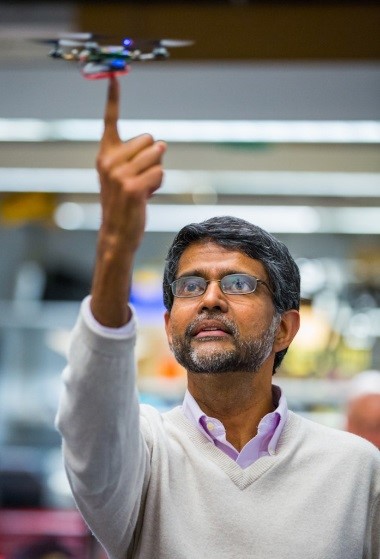
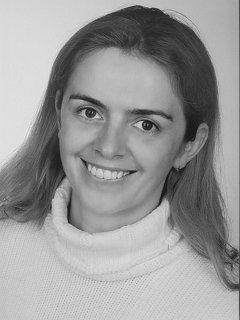
Vijay Kumar is the Nemirovsky Family Dean of Penn Engineering at the University of Pennsylvania, with faculty appointments in the Departments of Mechanical Engineering, Computer and Information Science, and Electrical and Systems Engineering. He is a leading figure in robotics and computer architecture research. Research Interests include robotics, particularly multi-robot systems and micro aerial vehicles (MAVs), as well as computer architecture innovations for machine learning, GPU acceleration, and datacenter efficiency. His work spans theoretical foundations and practical applications in autonomous systems and hardware optimization. Scientific Awards include: 1991 NSF Presidential Young Investigator Award 1996 Lindback Award for Distinguished Teaching 2012 ASME Mechanisms and Robotics Award 2014 Engelberger Robotics Award 2017 IEEE George Saridis Leadership Award Multiple best paper awards at DARS, ICRA, and RSS conferences Editorial Leadership includes serving as Editor of the ASME Journal of Mechanisms and Robotics and Advisory Board Member of AAAS Science Robotics Journal . His GRASP Lab team developed foundational frameworks for micro UAV testbeds and swarm robotics.
Michael Riegler is a Researcher at the AI Department, Simula Research Laboratory , focusing on interdisciplinary applications of Artificial Intelligence in healthcare, sports analytics, and multimedia systems. His work bridges Machine Learning , AI Alignment , and Applied AI across clinical and real-world domains. Key Affiliations: Simula Research Laboratory (AI Department Head) Research Themes: Explainable AI in medicine, multimodal data analysis, and AI-driven health monitoring Research Interests include: Developing AI/ML algorithms for medical imaging (e.g., polyp detection, embryo analysis) Addressing missing data challenges in healthcare through novel imputation techniques Creating multimodal virtual avatars for investigative interview training Designing edge AI systems for sports analytics and sustainable fishing Recent Publications highlight collaborations with institutions in Norway and globally, with a focus on: Medical Applications: Polyp segmentation, ECG analysis, and explainable models for disease detection Sports Analytics: Athlete performance prediction and soccer video processing Data Infrastructure: Lifelogging datasets (ScopeSense), semantic representation frameworks Labs & Teams include leadership in Simula’s AI Department and participation in projects like Medico Multimedia Task , ImageCLEF , and MediaEval workshops. His work emphasizes responsible AI innovation in public sectors and privacy-preserving systems for edge environments.
Shantanu Dutt is a full Professor in the Department of Electrical and Computer Engineering at the University of Illinois at Chicago , located in Chicago, IL. His office is in 930 SEO at 851 S. Morgan St, and he can be reached at dutt@uic.edu . Education Ph.D. in Computer Science and Engineering, University of Michigan, Ann Arbor (1990) M.Tech. in Computer Engineering, Indian Institute of Technology Kharagpur (1984) B.E. in Electronics and Communication Engineering, Maharaja Sayajirao University of Baroda (1983) Research Interests Professor Dutt’s research agenda centers on VLSI Computer-Aided Design (CAD) , with particular emphasis on physical design and incremental synthesis targeting both ASICs and FPGAs. He explores discrete optimization techniques to solve placement, routing, and partitioning problems. Another major thrust is FPGA built-in self-test (BIST) and trusted design , ensuring provable diagnosability and security against hardware Trojans. He also investigates fault-tolerant computing at both chip and system levels, and develops parallel and distributed computing algorithms for scalable performance. Scientific Awards 1996 Best Paper Award , ACM/IEEE Design Automation Conference, for “A probability-based approach to VLSI circuit partitioning” 1995 Most Influential Paper Award , Fault-Tolerant Computing Symposium, for “Design and reconfiguration strategies for near-optimal k-fault-tolerant tree architectures” Research Impact and Funding Professor Dutt has published extensively in top-tier journals (IEEE TVLSI, ACM TRETS, IEEE TCAD) and premier conferences (ICCAD, DAC, DATE, FTCS). His work has shaped incremental placement, timing-driven routing, FPGA security, and fault-tolerant multiprocessor architectures. While specific grant numbers are not listed, the breadth and longevity of his publication record indicate sustained funding from NSF, industry, and other agencies. Laboratory and Collaborations Although no formal laboratory name is provided, Professor Dutt’s research is conducted within the ECE department’s VLSI CAD and Fault-Tolerance groups, collaborating with graduate students and colleagues across the US and internationally.
Mohsen Lesani is an Associate Professor in the Computer Science and Engineering Department at the University of California, Santa Cruz's Baskin School of Engineering. His research focuses on reliability and security of software systems, particularly concurrent and distributed systems, with recent emphasis on secure replicated systems and distributed machine learning. Dr. Lesani received his PhD from UCLA, MS in artificial intelligence from Sharif University of Technology, and BS in software engineering from University of Tehran. He was previously a postdoc at MIT. His educational background provides a strong foundation for his interdisciplinary research spanning programming languages, distributed systems, and security. His research interests center on creating reliable and secure distributed systems. Current projects include resilient and secure distributed systems, heterogeneous and reconfigurable secure distributed systems, automatic analysis and synthesis of replicated objects, verification of distributed systems, data analytics, secure exchange across blockchains, machine learning for performance models, domain-specific languages and type systems, and automatic fence insertion for concurrent systems. His work bridges theoretical foundations with practical implementations to address real-world challenges in distributed computing. Lesani's research has been recognized with several prestigious awards including the NSF CAREER award in 2020 and DARPA YFA award in 2022. His work has also received the SIGPLAN Research Highlight in 2019, a distinguished paper award at OOPSLA 2018, and a best paper award at ISSRE 2015. These accolades reflect the impact and quality of his contributions to the field. He actively mentors PhD students in the Safe and Secure Software (S3) lab, including Xiao Li, Eric Chan, Javad Saber-Latibari, and Tejas Mane. His research has been supported by multiple NSF grants, demonstrating sustained funding for his innovative work. Lesani serves on program committees for major conferences including POPL, PLDI, OOPSLA, and DISC, contributing to the academic community. Lesani leads the Safe and Secure Software (S3) lab at UC Santa Cruz, where his team works on cutting-edge research in distributed systems, programming languages, and security. The lab fosters a collaborative environment where theoretical insights are translated into practical systems that address real-world challenges in reliability and security of distributed applications.
John Wawrzynek is a Professor of Electrical Engineering and Computer Sciences at the University of California, Berkeley. He is affiliated with the Department of Electrical Engineering and Computer Sciences in the College of Engineering and serves as Co-Director of the Berkeley Wireless Research Center and Co-PI of the CONIX Research Center, one of the six centers in the Joint University Microelectronics Program sponsored by DARPA. Dr. Wawrzynek received his B.S. in Electrical Engineering from SUNY, Buffalo (1977), M.S. in EE from the University of Illinois, Urbana/Champaign (1979), and Ph.D. in Computer Science from Caltech (1987). Before joining the Berkeley faculty in 1988, he worked as a consultant at Schlumberger Palo Alto Research. His research focuses on Computer Architecture, Reconfigurable Computing, Wireless Systems, and Integrated Circuit and System Design . His work spans both theoretical foundations and practical implementations, with particular emphasis on FPGA-based computing systems, reconfigurable architectures, and wireless communication systems. His research group has made significant contributions to the field of reconfigurable computing, including the development of the Garp architecture and various tools for reconfigurable computing systems. Analysis of his recent publications (2022-2025) reveals continued focus on reconfigurable computing, FPGA design, wireless networking, and formal methods for hardware verification. His work shows an evolution from traditional computer architecture towards specialized hardware acceleration, machine learning for EDA, and wireless systems research, with particular emphasis on SAT sampling, differentiable computing, and efficient FPGA implementation of neural networks. DAC's Most Influential Paper Award (2025) NSF Presidential Young Investigator (PYI) (1989) Charles Lee Powell Fellowship (1985) NASA Certificate of Recognition (1983) Rensselaer Engineering and Science Medal (1975) Professor Wawrzynek has advised numerous graduate students throughout his career, many of whom have gone on to prominent positions in both industry and academia including Google, Xilinx, and MIT Lincoln Laboratory. His research has been supported by various grants from NSF, DARPA, and industry partners. He leads the Berkeley Wireless Research Center, which focuses on next-generation wireless communication systems and technologies, and is actively involved in the CONIX Research Center which explores connected intelligence at the network's edge.
Georges Gielen is Full Professor in the Department of Electrical Engineering (ESAT) at KU Leuven, Belgium, and part-time Research Director at imec. He has held multiple leadership roles including Chair of ESAT Department (2012-2013, 2020-2024) and Vice-Rector for Science, Engineering & Technology (2013-2017). His academic career spans over 30 years at KU Leuven, progressing from Assistant to Full Professor. His research focuses on analog and mixed-signal integrated circuit design automation , with expertise in CAD tools, design optimization, sensor interfaces, and neuromorphic systems. His work bridges hardware design with machine learning, particularly in hardware-efficient AI implementations and biomedical applications. He has pioneered techniques for automated analog circuit sizing, topology synthesis, and reliability-aware design in nanometer CMOS. Gielen has received numerous accolades including the IEEE CAS Mac Van Valkenburg Award (2015), IEEE CAS Charles Desoer Award (2020), and EDAA Achievement Award (2021). He holds an ERC Advanced Grant AnalogCreate and is an IEEE Fellow since 2002. As a prolific scholar, he has chaired major conferences including DATE (2006), ICCAD (2007), and ESSCIRC (2017). He has graduated over 55 PhD students through the MICAS research group at KU Leuven, currently supervising 13 doctoral candidates. His research team collaborates extensively with imec and industry partners on cutting-edge projects in carbon-aware AI accelerators, uncertainty-aware design, and neuromorphic sensor interfaces.
Lingming Zhang is an Associate Professor at the Department of Computer Science, University of Illinois Urbana-Champaign, affiliated with the Grainger College of Engineering. His research focuses on the intersection of Software Engineering, Programming Languages, and Machine Learning, with a particular emphasis on automated program repair, compiler testing, and large language model (LLM) applications in software engineering. He has published over 100 papers, achieving an h-index of 50+, and holds an ACM Distinguished Member status. Research Interests: LLM-based software testing, repair, and synthesis Fuzzing of deep-learning libraries and compilers Open-source code LLMs (e.g., StarCoder2, Magicoder) with over 1M downloads Automated program repair systems (e.g., AlphaRepair, ChatRepair, Agentless) Recent Contributions: Developed TitanFuzz for coverage-guided compiler fuzzing Released Agentless , an LLM-based coding tool adopted by OpenAI and DeepSeek Proposed SWE-RL to enhance LLM reasoning via reinforcement learning Service Roles: Program Co-Chair for ASE 2025 and LLM4Code 2025 Associate Chair for OOPSLA 2024 and Area Chair for ICSE 2025/2026 Recipient of NSF CAREER Award and ACM SIGSOFT Early Career Award Lab/Teams: Develops open-source tools like UniAPR for efficient patch validation Active in releasing industry-adopted LLM-based software engineering tools
Professor Forrest Brewer is a faculty member in the Department of Electrical and Computer Engineering at the University of California, Santa Barbara (UCSB), affiliated with the College of Engineering. His research spans VLSI design, computer-aided design tools, and low-power computing, with a focus on unconventional engineering solutions. Education: PhD in Computer Science, University of Illinois BS in Physics (with honors), California Institute of Technology His work includes CMOS pulse-gate asynchronous logic for high-performance systems, sigma-delta modulation for signal processing, and formal verification strategies for asynchronous circuits. Applications range from radiation-hardened communication links for the Large Hadron Collider (LHC) to spiking neural networks for low-power computing in LIDAR/RADAR systems. Affiliations: California Nanosystems Institute Allosphere Steering Committee (Media Technology) With over 100 publications and 40 years of systems design experience, Brewer has contributed to defense programs, founded UCSB's Computer Engineering program, and served as Intel Faculty Fellow (1997). His lab, the Systems Synthesis Lab, explores collective dynamics and high-resolution, low-latency computation.
Zachary Tatlock is an Associate Professor at the Paul G. Allen School of Computer Science & Engineering at the University of Washington, where he leads the Programming Languages & Software Engineering Group (PLSE) and the SAMPL Group. His research spans programming languages, formal verification, compilers, and computational fabrication. He is also an Amazon Scholar with AWS's Automated Reasoning Group and previously advised OctoML. Tatlock's work bridges theoretical foundations with practical systems, focusing on making it easier to write tricky code while ensuring correctness through rigorous proofs and measurements. PhD in Computer Science & Engineering, University of California, San Diego (2014) Thesis: Reducing the Costs of Proof Assistant Based Formal Verification Advisor: Sorin Lerner BS in Computer Science (Honors) and Mathematics, Purdue University (2007) Professor Tatlock's research focuses on the intersection of programming languages, formal methods, and systems. His work in compilers and formal verification aims to make it easier to write tricky code while ensuring correctness through rigorous proofs. He explores computational fabrication techniques that bridge digital design with physical manufacturing. His recent work on equality saturation (via the egg framework) has transformed program optimization and synthesis. Tatlock also investigates floating-point numerics, distributed systems verification, and hardware/software co-design, always seeking to balance theoretical rigor with practical implementation. Tatlock's recent publications demonstrate a strong focus on equality saturation techniques (egg framework), computational fabrication, and verified systems. His work increasingly integrates machine learning with program analysis and synthesis. There's a clear trajectory toward more practical applications of formal methods in real-world systems, particularly in numerical computing and fabrication. His research group has made significant contributions to e-graph technology, floating-point accuracy, and the verification of distributed systems. Distinguished Paper Award for Rewrite Rule Inference Using Equality Saturation (OOPSLA 2021) Spotlight Paper Award for Dynamic Tensor Rematerialization (ICLR 2021) Distinguished Paper Award for egg: Fast and Extensible Equality Saturation (POPL 2021) Faculty Appreciation for Career Education & Training (FACET) Award (2020) NSF CAREER Award: Verifying Distributed System Implementations (2017) Distinguished Paper Award for Automatically Improving Accuracy for Floating Point Expressions (PLDI 2015) Distinguished Teaching Award Nomination (2015) Professor Tatlock has advised numerous doctoral, master's, and undergraduate students who have gone on to prominent positions in academia and industry, including faculty positions at the University of Utah and Brown University, and leadership roles at companies like OctoML and Certora. His research is supported by significant funding from NSF, DARPA, DOE, and industry partners, totaling millions of dollars. Current grants include projects on computer-aided reasoning, formal verification, computational fabrication, and machine learning systems. He has served on numerous program committees and organized workshops including FPTalks, EGRAPHS, and PNW PLSE. As co-leader of the Programming Languages & Software Engineering (PLSE) research group and affiliate of the SAMPL Group at the University of Washington, Tatlock has developed influential tools including egg (an equality saturation toolkit), Carpentry Compiler, and Odyssey. His group actively collaborates with industry partners including Amazon Web Services, where he serves as an Amazon Scholar. The group has made significant contributions to equality saturation, floating-point accuracy, program synthesis, and computational fabrication, with applications ranging from compiler optimization to 3D printing.
Chris Thachuk is an Assistant Professor in the Paul G. Allen School of Computer Science & Engineering at the University of Washington . His research bridges computer science with molecular programming and synthetic biology, focusing on programmable matter at the nanoscale using bio-molecules like DNA. Current Position: Assistant Professor, University of Washington (2020–Present) Previous Positions: Senior Postdoctoral Researcher at Caltech (2014–2020), Postdoctoral Research Assistant & James Martin Fellow at Oxford (2012–2014) Education: PhD in Computer Science (2013), University of British Columbia MSc in Computer Science & Bioinformatics (2007), Simon Fraser University & CIHR/MSFHR Bioinformatics Training Program BCS in Computer Science (2005), University of Windsor Thachuk’s research spans computing + biology , with expertise in molecular programming , synthetic biology , and bioinformatics . His work includes algorithm design for DNA-based systems, thermodynamic modeling, and leakless strand displacement systems. Recent publications focus on DNA origami alignment , leakless strand displacement , compiler-aided DNA circuit design , and thermodynamic binding networks , reflecting interdisciplinary research in computer science, synthetic biology, and nanotechnology. Scientific Awards: James Martin Fellow at the Institute for the Future of Computing, Oxford Thachuk contributes to the Molecular Information Systems Lab (MISL) , collaborating with researchers like Erik Winfree and David Soloveichik. His work emphasizes integrating molecular biosensors with electronics for applications such as protein concentration measurement and DNA sequencing.
Victor Vianu is a Professor in the Department of Computer Science and Engineering at University of California, San Diego. His work bridges database systems, computational logic, and verification of data-driven workflows. Co-author of the influential book Foundations of Databases (1995) PI of NSF grant III 1815247: Views of Data-Driven Business Processes: Foundations and Applications Research Focus He studies verification of database-driven systems, workflow views, and query language theory. His NSF-funded project explores view-based abstraction mechanisms for business processes, integrating logic, automata theory, and infinite-state system analysis. Teaching Victor teaches courses in database systems, logic for computer science, and database theory, including CSE 132A, CSE 205A, and CSE 233. Labs & Collaborations Active member of the UCSD Database Laboratory , collaborating with institutions like INRIA, ENS-Paris, and University of Lille. Leads research seminars in database theory.
Jing-Yang Jou is the current President and K.T. Li Chair Professor at National Central University in Taiwan. He holds MS (1983) and PhD (1985) degrees in Computer Science from the University of Illinois. His research focuses on logic synthesis, physical synthesis, design verification, CAD for low-power systems, and Network-on-Chips (NoC). With over 200 technical publications, he has made significant contributions to digital circuit design automation. Former Deputy Minister of National Science Council, Taiwan (2010-2012) Vice Chancellor for Academic Affairs, University System of Taiwan (2007-2010) Executive Director of National SoC Program (2007-2010) Director General of National Chip Implementation Center (2004-2007) Recipient of prestigious awards including IEEE Fellow distinction and multiple industry-academia collaboration recognitions. His career includes roles at AT&T Bell Laboratories (1986-1994) and GTE Laboratories (1985-1986). Research emphasizes bridging theoretical computer science with practical semiconductor design challenges.
Pedro Orvalho is a Research Associate in the Department of Computer Science at the University of Oxford, working with Professor Marta Kwiatkowska on the FUN2MODEL ERC project. His research bridges theoretical computer science with practical applications in software engineering and programming education. His educational background includes: PhD in Computer Science and Engineering (2025) from Instituto Superior Técnico, Universidade de Lisboa MSc in Information Systems and Computer Engineering (2019) from Instituto Superior Técnico BSc in Information Systems and Computer Engineering (2017) from Instituto Superior Técnico Orvalho's research spans Artificial Intelligence, Automated Reasoning, Formal Methods, and Program Repair, with significant contributions to programming education tools. His work integrates formal methods with machine learning techniques to develop novel approaches for program verification and repair, particularly focused on introductory programming assignments. His scientific achievements have been recognized with prestigious awards: Vencer o Adamastor (VoA) - 3rd Edition (2025) ELISE Mobility Grant (2024) COST Travel Grant (2022) Excellence in Teaching IST Awards (2021 and 2024) ACM SIGSOFT Distinguished Paper Award (ESEC/FSE 2021) FCT PhD Scholarship (2020-2024) With five years of teaching experience at Instituto Superior Técnico, Orvalho has developed educational tools like GitSEED and MENTOR that bridge his research with practical classroom applications. His research has been supported by multiple grants including the ERC FUN2MODEL project and FCT PhD Scholarship, demonstrating both academic and practical impact. He maintains active collaborations with researchers from Czech Technical University in Prague, Carnegie Mellon University, and industry partners like OutSystems, contributing to an international research network focused on software reliability and educational technology.
Max Willsey is an Assistant Professor in the Department of Electrical Engineering and Computer Sciences at the University of California, Berkeley, since 2024. He specializes in program optimization, leveraging techniques from programming languages, databases, and systems to develop robust and accessible compiler frameworks. His research focuses on equality saturation, E-Graphs, and the integration of Datalog with compiler optimizations. He has contributed to advancements in unifying algorithmic approaches, enabling faster and more extensible program analysis. Teaching: CS 164 (Programming Languages and Compilers, Spring 2025), CS 265 (Compiler Optimization, Fall 2024), and CS 294-260 (Declarative Program Analysis and Optimization, Spring 2024). Research Highlights: Development of the egg and egglog projects, co-organizing the EGRAPHS workshop, and leading the EGRAPHS Community for e-graphs researchers. His recent articles highlight trends in unifying traditional hash joins with worst-case optimal joins, applying equality saturation to diverse domains like Datalog and tensor graph optimization, and advancing E-Graphs for program synthesis and formal verification. Scientific Awards: SIGMOD Record Research Highlight, 2024 MIT PL Review Selection, 2024 Distinguished Paper, OOPSLA 2021 and POPL 2021 NSF Graduate Research Fellowship Honorable Mention, 2018 Qualcomm Innovation Fellow, 2019 Service: Committee Member, PLDI 2025, POPL 2025, ASPLOS 2025 Co-organizer, EGRAPHS 2024 and 2023 workshops Interviewer, UC Berkeley Graduate Admissions Committee, 2024
Ruzica Piskac is a Professor of Computer Science at Yale University, where she leads the Rigorous Software Engineering (ROSE) group. She has made significant contributions to the fields of software verification, security, automated reasoning, and code synthesis, focusing on improving software reliability and trustworthiness through formal techniques. Dr. Piskac received her PhD from the Swiss Federal Institute of Technology (EPFL) in 2011, where her dissertation won the Patrick Denantes Prize. Prior to joining Yale, she led an independent research group at the Max Planck Institute for Software Systems in Germany (2012-2013). Her research spans several key areas: symbolic execution for Haskell (G2), privacy-preserving formal methods (PPFM), functional reactive synthesis, verification of configuration files, and analysis of software updates. Her work consistently bridges theoretical formal methods with practical applications in real-world systems. Dr. Piskac's recent publications demonstrate a strong trend toward applying formal verification techniques to emerging challenges including large language models, quantum computing security, legal accountability of automated systems, and cyber-physical systems. Her research increasingly intersects with AI, cryptography, and legal domains while maintaining strong foundations in formal methods. Her scientific achievements have been recognized with numerous prestigious awards: Multiple Amazon Research Awards Yale University's Ackerman Award for Teaching and Mentoring Facebook Communications and Networking Award Microsoft Research Award for the Software Engineering Innovation Foundation (SEIF) Patrick Denantes Prize for her PhD dissertation Dr. Piskac has graduated five PhD students, four of whom have gone on to become assistant professors of computer science. She has served as Program Chair of the 37th International Conference on Computer Aided Verification and is on the Steering Committee of the Formal Methods in Computer-Aided Design conference. She leads the Rigorous Software Engineering (ROSE) group at Yale, which focuses on several key projects including: Symbolic Execution Engine for Haskell (G2) Privacy Preserving Formal Methods (PPFM) Functional Reactive Synthesis Verifications for Configuration Files Analysis of Software Updates and Configuration Files