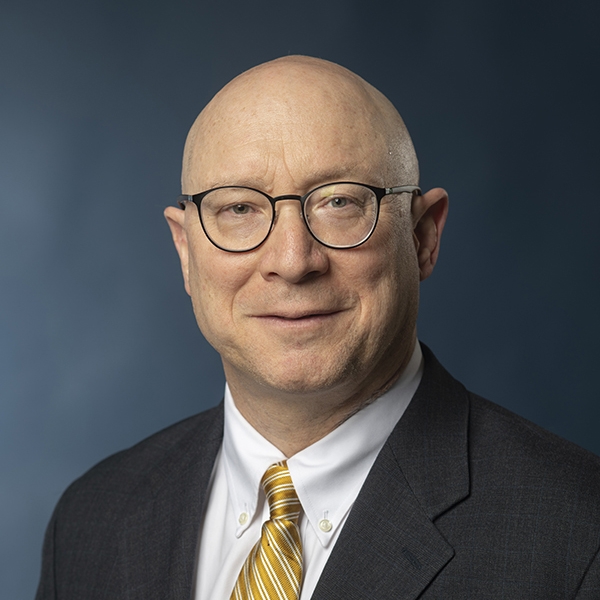
Lawrence M. Wolf is an Associate Professor of Chemistry in the College of Sciences at the University of Massachusetts Lowell. His research focuses on computational and theoretical approaches to understanding organic and organometallic reaction mechanisms, with particular expertise in catalysis. Dr. Wolf's work bridges experimental chemistry with computational modeling to elucidate fundamental principles of chemical reactivity. Education: Ph.D. in Organic Chemistry (2012), University of Illinois at Urbana-Champaign Computational/Theoretical Chemistry (2016), Max-Planck-Institut für Kohlenforschung, Mülheim an der Ruhr, Germany B.S. in Chemistry (2006), Drexel University, with Physics as supporting area Dr. Wolf's research interests center on developing modern reactivity models for elucidating reactivity and selectivity principles in transition metal-mediated catalysis and organocatalysis. His work employs computational chemistry approaches including quantum mechanical calculations, molecular dynamics simulations, and quantitative structure-activity relationship (QSAR) methods. He has made significant contributions to understanding asymmetric phase transfer catalysis, palladium-mediated reactions, and ruthenium-catalyzed alkyne transformations. His research group applies strategies in computer-aided catalyst design to develop more efficient and selective catalytic systems. Analysis of Dr. Wolf's publication record reveals a strong focus on computational investigations of reaction mechanisms across organic and organometallic chemistry. His recent work has expanded into materials science applications, particularly regarding graphene functionalization and 2D materials. The research consistently combines theoretical calculations with experimental validation, demonstrating the power of computational chemistry to predict and explain chemical behavior. Key thematic areas include transition metal catalysis, reaction dynamics, and the development of computational tools for predicting stereoselectivity. Dr. Wolf has presented his research at numerous international conferences including the Symposium on Electronic Structure and Dynamics of Complex Systems in Beijing (2019), the International Kyoto Conference on New Aspects of Organic Chemistry (2015), and multiple Gordon Research Conferences. His presentations consistently focus on mechanistic insights gained through computational studies of catalytic reactions.