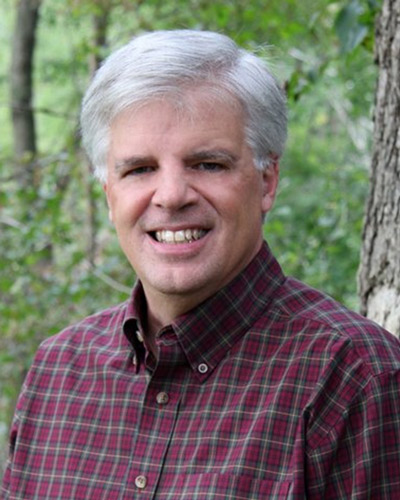
Professor Mo Saraee holds a chair in Data Science at the University of Salford , where he serves as the head of Computer Science and Software Engineering and program leader for the MSc Data Science and MSc IoT programs. With a PhD in Computer Science from the University of Manchester, he has published over 180 research outputs and led projects funded by Innovate UK, ERDF, and HEIF. His work bridges data science, machine learning, and real-world applications in healthcare, transportation, and cybersecurity. Head of Computer Science and Software Engineering Program Leader for MSc Data Science and MSc IoT Editor-in-Chief of International Journal of Web Research £1.4M+ in project funding Research Areas include: Data Science Machine Learning NLP Medical Informatics Big Data Connected Autonomous Vehicles (CAVs) Recent Publications demonstrate expertise in anomaly detection, deepfake classification, and healthcare applications of machine learning, with a focus on industrial and societal impact. His scientific contributions include: Shortlisted for Data Strategy Awards Editorial leadership in computational fields Collaborations span NHS, Salford City Council, Irwin Mitchell, and Bupa, with a commitment to translating research into practical solutions.
Khaled Elleithy is the Dean of the College of Engineering, Business & Education, Associate Vice President for Graduate Studies and Research, and Professor of Computer Science and Engineering at the University of Bridgeport. He holds multiple administrative roles in addition to his academic responsibilities. Dr. Elleithy has extensive experience in teaching and research, having developed courses and laboratories in quantum computing, network security, and embedded systems design. He holds a B.Sc. in Computer Science and Automatic Control from Alexandria University (1983), an M.S. in Computer Networks from the same institution (1986), and subsequent M.S. and Ph.D. degrees in Computer Science from the University of Louisiana at Lafayette (1988 and 1990). His research focuses on wireless sensor networks, mobile communications, quantum computing, and formal design verification. He has published over 350 papers and edited 12 Springer books, showcasing his expertise in these areas. Notable research topics include quantum cryptography protocols, energy-efficient robotics algorithms, and assistive technologies for visually impaired individuals. Dr. Elleithy has received prestigious awards such as the 2015 Connecticut Quality Improvement Award (CQIA) Gold Innovation Prize and the 2006-2007 Distinguished Professor of the Year. His students have won over 20 awards from IEEE, ACM, and ASEE for their work in steganography, robotics, and network security. He has secured grants totaling over $2.5 million as Principal Investigator or Co-Investigator, including projects on hybrid projectiles, mobile content management, and enterprise network security. His work often bridges theoretical computer science with practical applications like defense systems and healthcare technologies. Elleithy has established multiple teaching/research laboratories and contributed to the development of hybrid educational conferences like the Annual International Joint Conferences on Computer, Information, and Systems Sciences. He is a Senior Member of the IEEE Computer Society and has held leadership roles in organizing major international conferences since 2005.
Dr. Grażyna Ślusarczyk is a Professor at the Department of Design and Computer Graphics at Jagiellonian University, serving as its Head. Her research focuses on interactive computer-aided design systems, graph-based knowledge representation, and evolutionary design methods. She specializes in integrating BIM (Building Information Modeling) with machine learning for architectural and engineering applications. Research Interests: Interactive CAD systems, Visual Languages, Graph Transformations, Evolutionary Design, and Machine Learning in Architecture. Her work bridges computational methods with practical design challenges, emphasizing ontology-based systems and automated design solutions. Publications: Recent work includes advancements in BIM-based applications (2024 review), crisis housing design (2025), and ontology integration for rare disease data (2025). Her research trends highlight interdisciplinary approaches combining AI, graph theory, and architectural design. Labs/Teams: Leads the Department of Design and Computer Graphics, collaborating with teams on projects involving BIM, graph databases, and evolutionary algorithms.
Andrei Lobov is an Associate Professor at the Department of Mechanical Engineering and Manufacturing, Faculty of Engineering at NTNU. His research focuses on Knowledge-Based Engineering (KBE), advanced manufacturing systems, IoT integration, and robotics automation. He has extensive experience in developing ontology-based solutions for CAD integration, industrial robotics programming, and human-robot collaboration systems. His work emphasizes interoperability, sustainability, and digital thread implementation across engineering domains. Key research areas include parametric design automation, semantic web applications in engineering, and IoT-driven environmental systems. Recent projects involve optimizing warehouse systems using modular Petri nets, smart textile waste management, and AI-enhanced bearing condition monitoring. He has supervised doctoral research such as Yu Wang's thesis on acoustic emission-based bearing monitoring. Lobov actively publishes in journals like Advanced Engineering Informatics and The International Journal of Advanced Manufacturing Technology. His work bridges theoretical KBE frameworks with practical industrial applications, contributing to both academic conferences (IEEE, AIP) and industry-focused forums. He has organized international conferences like the IEET series and presented at venues such as Nor-Fishing 2024 on digital twin applications in fisheries.
Dr. Wendy Lecluyse is an Associate Dean at the University of Suffolk 's School of Health, Sciences and Society , focusing on strategic management of learning, teaching, and research. She is a registered Speech and Language Therapist with a PhD in Psychology from the University of Essex and a MA in Speech Therapy and Audiology from the University of Ghent. Research Interests : Computational modeling of auditory processes Biologically-inspired hearing aid algorithms Development of assessment procedures for hearing profiles Transversal skills in higher education Blended learning pedagogies Early childhood music therapy (via the Early Ears project) Article Trends : Her publications since 2009 focus on auditory modeling, hearing aid algorithms, and hearing loss assessment, with recent work (2018) exploring compressive properties in hearing aids and a 2024 software release ( Model of the Auditory Periphery ) for hearing simulation. Scientific Awards : Senior Fellow of the Higher Education Academy (SFHEA) Teaching Expertise : She has led Childhood routes within the School of Social Sciences and Humanities and taught modules on child development and research methods. Her work includes the BioAid project for iOS-based hearing aid algorithms and the Early Ears initiative for music therapy in deprived areas. Labs and Teams : She collaborates with the BioAid project team and Future Projects charity. She is part of the Model of the Auditory Periphery development group.
Prof Ahmed Al-Dubai is a Professor at the School of Computing Engineering and the Built Environment , Napier University. His research spans eHealth , Cyber-security , and Internet of Things domains. Research interests include: Edge computing, Network security, Smart cities, Energy harvesting Recent projects focus on: AI-driven emergency vehicle tracking Temporal transcriptomics for sepsis research Chaos-based encryption for IoT He supervises students in areas like: Network optimization Medical data analytics Security protocols Current funded work includes: £3.2M EPSRC grant for multi-modal hearing aids Kuwait College funded energy harvesting solutions Royal Society security research in vehicular networks
Ekaterina Kim is an Associate Professor at the Department of Marine Technology, Norwegian University of Science and Technology (NTNU), within the Faculty of Engineering. She specializes in Arctic engineering, focusing on ice mechanics, structural analysis, and AI-driven solutions for extreme environments. Her work bridges fundamental material science principles with engineering applications, addressing challenges such as ice-structure interactions, risk management in ice-covered waters, and autonomous systems for sea ice monitoring. Education: Formal engineering training at Peter the Great Polytechnic University (St. Petersburg), followed by a PhD at NTNU (2010–2017). Her research integrates interdisciplinary approaches, including machine learning for sea ice classification, probabilistic risk models, and numerical simulations of ice dynamics. Research Interests: Arctic technology and digitalization AI applications in extreme environments Risk analysis for ice navigation Sea ice parametrization and segmentation Structural analysis of icebreakers Publications: Over 30 peer-reviewed articles, focusing on Bayesian networks for risk modeling, autonomous sea ice mapping systems, and material models for ice impact. Recent work emphasizes AI-driven solutions for operational safety and data-driven decision support in the Arctic. Awards & Recognition: While no specific awards are listed, her contributions to Arctic research are highlighted through collaborative projects like the Arctic Hive Mind Group and the AIDing Arctic initiative. She also contributes to education, teaching courses on finite element methods and ice-structure interaction. Labs & Teams: Leads the Arctic Hive Mind Group at NTNU, fostering interdisciplinary collaboration between engineers, data scientists, and Arctic experts. Involved in the Risk Group within the Department of Marine Technology.
Professor Cees Bil is a Professor in the School of Engineering at RMIT University, specializing in Aerospace Engineering. His academic career includes roles as Associate Professor (1998–present) and Senior Lecturer (1995–1998) at RMIT, and prior positions at Delft University of Technology in the Netherlands. He leads research in Aerospace Design and Optimization , Aerodynamics , Computer-Aided Engineering , and Simulation and Modelling . His research spans unmanned systems , hybrid-electric propulsion , digital twin technology , and sustainable aerospace systems . Recent projects include AI-driven drone simulations, air traffic optimization, and bi-modal unmanned systems. Over 400+ publications demonstrate expertise in aerospace innovation, robotics, and aviation safety. Professor Bil’s work integrates transdisciplinary approaches, addressing challenges in Industry 4.0 , healthcare logistics (e.g., air mobile stroke units), and environmental sustainability via life cycle assessments. He supervises PhD/Master’s research in advanced propulsion, autonomous systems, and aviation safety. Key contributions include the Air Mobile Stroke Unit concept, bi-modal UAV systems , and expert systems for aviation incident analysis . His research bridges academia and industry, fostering solutions for aerospace, robotics, and smart transportation.
Maciej Banach is an Assistant Professor at the Institute of Civil Engineering, part of the Faculty of Civil Engineering, Mechanics and Petrochemistry at Warsaw University of Technology. His research focuses on civil engineering, construction processes, transportation systems, and material science, particularly in concrete and structural analysis. He has authored 19 publications, supervised 14 promoted theses, and contributed to 3 research projects. With a PhD awarded in 2019, his work emphasizes sustainable construction practices, advanced materials, and optimization of construction workflows. Education: PhD in Civil Engineering (2019). Research interests include construction assembly optimization, crane and equipment selection, cost estimation methodologies, and thermal analysis of structures. His studies on concrete with recycled materials and cubature construction techniques demonstrate a focus on innovation and practical application in civil engineering. Publications reflect a trend toward interdisciplinary solutions, blending computational tools with traditional construction challenges. His work has addressed topics like crane optimization, transportation logistics, and sustainable building materials. Achievements: 1 notable achievement recorded in institutional records, though specifics are not detailed. He has contributed to 3 research projects, though their nature is unspecified. Advising: Supervised 14 promoted theses, indicating significant contribution to academic mentorship. Grants and funding details are not explicitly provided.
Kenneth Wilson is a Part-Time Lecturer in the School of Engineering at Geneva College, teaching courses in Structural Analysis, Engineering Design, and Christian Ethics. He holds degrees in Civil Engineering, Structural Engineering, and Theological Studies, blending technical expertise with ethical and spiritual perspectives. M.A. in Theological Studies (1984), Gordon-Conwell Theological Seminary M.S. in Structural Engineering (1980), University of Illinois at Urbana-Champaign B.S. in Civil Engineering (1979), Cornell University Wilson's research focuses on structural engineering, particularly bridge design, fatigue analysis, and Load and Resistance Factor Design (LRFD) standards. His work bridges technical innovation with aesthetic and functional considerations, including strut-and-tie modeling and influence line-based load ratings. His technical publications span 1990-2017, addressing concrete structures, steel bridges, and software tools. Key themes include 3D analysis, LRFD compliance, and infrastructure resilience. Excellence in Part-Time Teaching award, Geneva College (2023) Denman Evangelism Award (1993) Wilson's professional experience includes roles at Michael Baker International, HNTB, and Modjeski & Masters, with certifications as a Registered Structural Engineer in Illinois and Professional Engineer in Pennsylvania. He also engages in Christian education missions in Uganda and campus ministry.
Mahdi Bashiri is an Associate Professor in the Department of Analytics, Technology and Operations at Leeds University Business School, University of Leeds. He is also affiliated with the Centre for Decision Research (CDR). Previously, he held leadership roles at Coventry University, including Co-lead of the Sustainable Operations and Consumption research cluster and Associate Head of School in Research. Education: Details not explicitly provided in the text. His research spans Supply Chain Analytics, Operations Research, Stochastic Programming, Matheuristics, Home Healthcare Planning, and Wildfire Risk Management . He develops mathematical models and algorithms to solve complex decision-making problems in both public and private sectors. His work enables policymakers and business leaders to make data-driven, impactful decisions. He teaches modules in operations management, supply chain management, and business analytics at undergraduate, postgraduate, and doctoral levels. The recent articles reflect a strong trend in applying stochastic programming and matheuristic algorithms to real-world challenges such as wildfire risk management, home healthcare planning, sustainable logistics, and automated delivery systems . His publications appear in elite journals like European Journal of Operational Research and Transportation Research Part E , indicating consistent high-impact contributions to operations research and supply chain management. Scientific Awards: Exceptional Performance Award, Coventry University, 2021 Young National Top Scientist Award, Academy of Sciences of the Islamic Republic of Iran, 2013 Mahdi has secured multiple research grants, including from the British Academy and USAID, focusing on humanitarian logistics and environmental resilience. He has successfully supervised over 10 PhD students and welcomes new PhD candidates and visiting researchers. He is an active reviewer and serves on the editorial advisory board of Transportation Research Part E . He is a member of the Operational Research Society. Labs and Research Groups: Centre for Decision Research (CDR), University of Leeds Formerly Co-lead, Sustainable Operations and Consumption Research Cluster, Coventry University
JProf. Dr. Pascal Warnking is a Junior Professor for Maritime Antiquity in the Department of History at the University of Trier , Faculty III (Humanities). His work bridges ancient history, archaeology, and computational modeling to explore maritime trade and economic systems in the ancient Mediterranean. Institution: University of Trier School: Faculty of Humanities Department: Department of History Position: Junior Professor for Maritime Antiquity Office: Room BZ31 Contact: +49 651 201-2438 | warnking@uni-trier.de His research is deeply interdisciplinary, combining historical methods with oceanographic modeling, material culture analysis, and economic theory to reconstruct and quantify ancient maritime networks. His research interests include: Quantification of ancient economies Maritime trade and economic interdependence in antiquity Computer-aided simulation of ancient sea routes and sailing times Impact of shipbuilding technology on trade connectivity Maritime networks and their role in shaping ancient communities His recent and ongoing publications and projects focus heavily on modeling Roman maritime trade and analyzing amphora evidence to understand local and long-distance trade in the Roman world. The thematic trend across his work is the application of modern simulation techniques and interdisciplinary data to ancient economic questions. He is currently leading or co-leading the following major research initiatives: ERC CoG MarDepend (2025–2030) : A major project on maritime dependencies in antiquity, using Syracuse as a case study to analyze trade, environment, and conflict. The Amphora Stamps of Kerameikos (2024–2029) : A publication project with Dr. Mateo González Vázquez. TreAsurE – Treveris Amphorae Survey and the Local Economy : An interdisciplinary project with Prof. Dr. Patrick Reinard and Dr. Mateo González Vázquez, analyzing Roman amphorae from Trier to understand regional trade dynamics. He is actively involved in experimental archaeology through the reconstruction and survey voyages of the Roman merchant ship Bissula , which serves as a platform for testing historical maritime capabilities. He teaches courses such as "Seafaring in Antiquity," "Ancient Economy," and supervises master’s theses. He also contributes to public outreach through lecture series and student-led initiatives like the "Ad Porta(m)" brochure.
Andrea Bottino is an Associate Professor at the Department of Control and Computer Engineering (DAUIN) at the Polytechnic University of Turin. He has been actively involved in the Computer Graphics and Vision Group and leads various VR@POLITO initiatives. Chair of the Master HUMANAIZE program Coordinator of multiple Machine Learning for Vision and Multimedia courses Research Focus : Augmented and Virtual Reality for education and safety Computer Vision with applications to medical imaging and kinship analysis Human-Computer Interaction in immersive environments Multimodal Learning systems XR for Cultural Heritage Publication Trends : Recent works focus on AI applications , XR training systems , and computer vision techniques applied to medical diagnostics and cultural preservation . Leadership Roles : Scientific Director for MEI - Interactive Egyptian Museum Coordinator of PNRR Mission 4 projects Principal Investigator for Holo-BLSD and ALPTECH initiatives Labs and Collaborations : Active in Visionary LAB and VR@POLITO Collaborates with Balletto Teatro di Torino for cultural XR applications Partners with Fondazione Museo Egizio and Robin Studio
Professor David Andrews is Professor of Engineering Design in the Department of Mechanical Engineering at University College London (UCL). A globally recognised authority on naval architecture and ship design methodology, he has held continuous academic appointments at UCL since 1980, punctuated by distinguished service in the UK Ministry of Defence where he rose to Director of Frigates and Mine Countermeasures. Since 2000 he has occupied the Chair in Engineering Design at UCL, leading major research initiatives funded by EPSRC, ONR and the EU, and forging strategic industrial partnerships. Education Bachelor of Engineering, UCL (1970) MSc Naval Architecture, UCL (1971) PhD “Synthesis in Ship Design”, UCL (1984) Research Focus Professor Andrews is acknowledged as the world-leading expert in naval ship design methodology, with seminal contributions to early-stage design processes, submarine architecture, trimaran/multi-hull vessels, and distributed ship service systems. His pioneering Design Building Block approach and SURFCON CAD tool have been integrated into industry-standard platforms such as PARAMARINE. Current work addresses energy balance frameworks, computer-aided sketching, and philosophical foundations of engineering design. Across more than 150 publications, a clear trajectory emerges: from fundamental design theory through tool development to practical application in warship, submarine and advanced multi-hull projects. Recent outputs (2021-2024) emphasise automation of early-stage synthesis, network-based modelling of complex distributed systems, and integration of operational availability considerations into concept design. Honours & Awards Fellow of the Royal Academy of Engineering (2000) Fellow of the Royal Institution of Naval Architects (RINA) Fellow of the Society of Naval Architects and Marine Engineers (SNAME) William Froude Medal, RINA (2020) – highest award David W Taylor Medal, SNAME (2021) – lifetime contribution Advising & Grant Leadership Since flexible retirement in 2012 he continues to lecture and supervise MSc projects in Naval Architecture, Marine Engineering and Submarine Design CPD courses. He has led or co-led research grants exceeding £2 million from EPSRC, EU and industry (BAE Systems, Rolls-Royce, BMT, Dstl). These projects have funded numerous CASE studentships and collaborative PhD programmes that bridge UCL and industrial stakeholders. Research Team & Industrial Links Professor Andrews heads the Design Research group at UCL, mentoring successive MoD Professors of Naval Architecture and maintaining active Memoranda of Understanding with BAE Systems and other maritime primes. He chairs the tri-annual International Marine Design Conference’s Design Methodology Panel and has delivered keynote addresses worldwide, uniquely representing non-US expertise at successive US Navy Ship Design Process Workshops.


/prod01/channel_2/media/uniofsuffolk/website/content-assets/images/staff-profile-photos/ssh/Wendy-Lecluyse-2.jpg)