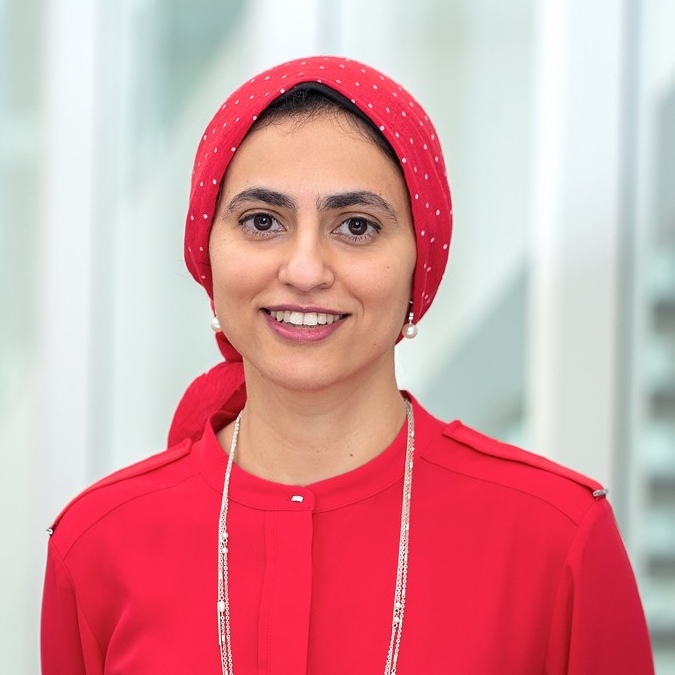
Núria Agell Jané is a Full Professor at ESADE Business School , Universitat Ramon Llull, specializing in Artificial Intelligence and Decision-Making Systems. She leads the JUICE (Judgements and Decisions in the Market Place) research group and the ESADE D3 - Institute for Data-Driven Decisions . Doctorate in Applied Mathematics (Qualitative Reasoning Modelling), UPC-BarcelonaTech Bachelor's in Mathematics, University of Barcelona Her research focuses on Artificial Intelligence , Decision-Making Systems , and Fuzzy Logic , with applications in Business, Marketing, and Sustainability. Recent publications emphasize Hesitant Fuzzy Linguistic Term Sets , Consensus Modeling , and AI in Sustainable Development . She coordinates multiple publicly and privately funded projects applying AI to Business and Marketing challenges. As PhD Programme Director (2005-2013) and current Department Director of Operations, Innovation and Data Sciences , she has shaped academic and research strategies at ESADE. Her work spans collaborations with institutions like LAAS-CNRS (France) and University of Edinburgh Business School , with over 40 journal publications and 50 conference contributions. She has directly supervised 11 PhD students in AI and Decision Sciences.
Isabelle Augenstein is a Professor at the University of Copenhagen, Department of Computer Science (DIKU), where she heads the Copenhagen Natural Language Understanding (CopeNLU) research group and the Natural Language Processing section. She is also a co-lead of the Danish Pioneer Centre for Artificial Intelligence, Denmark's largest research center initiated by the Danish Ministry of Higher Education and Science. In October 2022, she became Denmark's youngest ever female full professor. Dr. Augenstein earned her undergraduate degree in Computational Linguistics and Psychology from Heidelberg University, followed by a Master's in Computational Linguistics. She completed her PhD in Computer Science at the University of Sheffield under the supervision of Dr. Diana Maynard and Prof. Fabio Ciravegna. In 2021, she earned a Habilitation at the University of Copenhagen in Explainable Fact-checking. Professor Augenstein's primary research focuses on fair and accountable Natural Language Processing, with particular emphasis on explainability, factuality, and bias detection. Her work spans multiple subfields including automated fact-checking, stance detection, gender bias analysis, and cultural bias in language models. She has pioneered research in explainable fact-checking, developing methods that not only predict claim veracity but also provide meaningful explanations of the decision-making process. Her research group has produced numerous influential papers on measuring model fragility, quantifying gender biases, and developing robust fact-checking systems that account for distribution shifts. Her significant contributions have been recognized with several prestigious awards: ERC Starting Grant on 'Explainable and Robust Automatic Fact Checking' DFF Sapere Aude Research Leader fellowship on 'Learning to Explain Attitudes on Social Media' Karen Spärck Jones Award from the British Computing Society and Bloomberg Hartmann Diploma Prize from the Hartmann Foundation Member of the Royal Danish Academy of Sciences and Letters since 2024 Professor Augenstein has secured significant research funding including her ERC Starting Grant supporting five years of blue-sky research. She actively mentors PhD students and postdoctoral researchers through her 'ExplainYourself' project. She served as President of SIGDAT (which organizes the EMNLP conference series), having previously held leadership roles as Vice President and Vice President-Elect. She is a co-founder of Widening NLP (WiNLP), an initiative to increase diversity in the NLP community, and maintains the BIG Directory of underrepresented groups in NLP. She leads the Copenhagen Natural Language Understanding (CopeNLU) research group, which relocated to the historic Østervold Observatory in Copenhagen's Botanical Gardens in 2023. The group focuses on developing methods for explainable and robust natural language understanding, with applications in fact-checking, bias detection, and social media analysis. Professor Augenstein also co-leads the Speech and Language collaboratory at the Pioneer Centre for Artificial Intelligence, where her team investigates how language models can better serve diverse populations while maintaining accountability and transparency.
Zachary Tatlock is an Associate Professor at the Paul G. Allen School of Computer Science & Engineering at the University of Washington, where he leads the Programming Languages & Software Engineering Group (PLSE) and the SAMPL Group. His research spans programming languages, formal verification, compilers, and computational fabrication. He is also an Amazon Scholar with AWS's Automated Reasoning Group and previously advised OctoML. Tatlock's work bridges theoretical foundations with practical systems, focusing on making it easier to write tricky code while ensuring correctness through rigorous proofs and measurements. PhD in Computer Science & Engineering, University of California, San Diego (2014) Thesis: Reducing the Costs of Proof Assistant Based Formal Verification Advisor: Sorin Lerner BS in Computer Science (Honors) and Mathematics, Purdue University (2007) Professor Tatlock's research focuses on the intersection of programming languages, formal methods, and systems. His work in compilers and formal verification aims to make it easier to write tricky code while ensuring correctness through rigorous proofs. He explores computational fabrication techniques that bridge digital design with physical manufacturing. His recent work on equality saturation (via the egg framework) has transformed program optimization and synthesis. Tatlock also investigates floating-point numerics, distributed systems verification, and hardware/software co-design, always seeking to balance theoretical rigor with practical implementation. Tatlock's recent publications demonstrate a strong focus on equality saturation techniques (egg framework), computational fabrication, and verified systems. His work increasingly integrates machine learning with program analysis and synthesis. There's a clear trajectory toward more practical applications of formal methods in real-world systems, particularly in numerical computing and fabrication. His research group has made significant contributions to e-graph technology, floating-point accuracy, and the verification of distributed systems. Distinguished Paper Award for Rewrite Rule Inference Using Equality Saturation (OOPSLA 2021) Spotlight Paper Award for Dynamic Tensor Rematerialization (ICLR 2021) Distinguished Paper Award for egg: Fast and Extensible Equality Saturation (POPL 2021) Faculty Appreciation for Career Education & Training (FACET) Award (2020) NSF CAREER Award: Verifying Distributed System Implementations (2017) Distinguished Paper Award for Automatically Improving Accuracy for Floating Point Expressions (PLDI 2015) Distinguished Teaching Award Nomination (2015) Professor Tatlock has advised numerous doctoral, master's, and undergraduate students who have gone on to prominent positions in academia and industry, including faculty positions at the University of Utah and Brown University, and leadership roles at companies like OctoML and Certora. His research is supported by significant funding from NSF, DARPA, DOE, and industry partners, totaling millions of dollars. Current grants include projects on computer-aided reasoning, formal verification, computational fabrication, and machine learning systems. He has served on numerous program committees and organized workshops including FPTalks, EGRAPHS, and PNW PLSE. As co-leader of the Programming Languages & Software Engineering (PLSE) research group and affiliate of the SAMPL Group at the University of Washington, Tatlock has developed influential tools including egg (an equality saturation toolkit), Carpentry Compiler, and Odyssey. His group actively collaborates with industry partners including Amazon Web Services, where he serves as an Amazon Scholar. The group has made significant contributions to equality saturation, floating-point accuracy, program synthesis, and computational fabrication, with applications ranging from compiler optimization to 3D printing.
Albert Yoon is a Professor and holds the Michael J. Trebilcock Chair in Law and Economics at the University of Toronto Faculty of Law. He previously served as Associate Dean (Research & Curriculum) from 2018–2020 and has held academic positions at Northwestern University. His research focuses on labor markets in legal professions, legal ethics, and applications of AI to law. He co-founded Blue J, an AI startup aiding tax and legal professionals. Education: BA from Yale, JD and PhD (Political Science) from Stanford. Professional experience includes clerkship at the U.S. Court of Appeals for the Sixth Circuit. Fellowships include the Pierre Elliott Trudeau Fellowship (2022), Princeton University, and Robert Wood Johnson Foundation. Research interests span legal economics, judicial behavior, and technology's impact on law. Notable awards include the Ronald H. Coase Prize and American Law Institute membership. His work bridges empirical legal studies and computational methods, addressing topics like Supreme Court clerkships, AI-driven legal predictions, and tax law analytics. Publications include over 47 scholarly articles in top journals like Chicago Law Review , Stanford Law Review , and Journal of Law & Economics . Recent work examines AI in legal practice, gender disparities in M&A legal teams, and judicial decision-making dynamics.
Luis Novoa is an Associate Professor in the Department of Computer Information Systems and Business Analytics at James Madison University’s College of Business, where he also contributes to the MBA program. His academic journey includes a Ph.D. in Decision Sciences from The George Washington University (2016), an M.S. and B.S. in Industrial Engineering from Universidad de los Andes (2007 and 2005, respectively). He has held roles such as Assistant Professor at JMU since 2017, Visiting Assistant Professor at The George Washington University (2016–2017), and Instructor at Universidad de los Andes (2007–2011). His research focuses on business analysis, management science, and applied decision analysis under uncertainty, particularly in supply chain management, logistics, education, and healthcare. Notable work includes optimizing automated package sorting systems, developing educational tools like STRATA for operations research assessment, and Bayesian methods for academic motivation analysis in business analytics courses. Recent articles highlight contributions to bike-sharing system decision-making, supply chain curriculum alignment with industry practices, and stochastic optimization in energy systems. His awards include JMU College of Business Distinguished Teacher (2021–2022) and recognition for summer research excellence (2011). Dr. Novoa’s teaching and research emphasize practical applications of analytics, bridging academic theory with real-world challenges in business and public sectors. He has authored or co-authored over 15 peer-reviewed publications spanning operations research, education, and industry case studies.
Dr. Micah Goldwater is an Associate Professor at the University of Sydney, affiliated with the Sydney Southeast Asia Centre, Brain and Mind Centre, and Charles Perkins Centre. His research focuses on cognitive development, decision-making, and the application of cognitive science to education and public health. He holds a BA in Linguistics from the University of Rochester (2003), a PhD in Psychology from the University of Texas at Austin (2009), and joined the University of Sydney in 2013 following a postdoctoral fellowship at Northwestern University. His research explores how individuals recognize structural commonalities across situations, with a focus on learning transfer, prefrontal cortex function, and evidence-based decision-making. Key themes include causal reasoning, expert-novice differences, and language acquisition. Current research students are investigating topics like systemic racism education, misinformation detection, and diagnostic accuracy in ADHD/Autism. Recent articles (2023–2025) address intergenerational programs, medical decision-making biases, and the cognitive foundations of combating misinformation. Grants include projects on psychological warfare resilience and the ontogeny of cumulative culture. Dr. Goldwater collaborates across disciplines, integrating cognitive science with educational design and public health policy.
Dr. Christopher Gilliam is an Assistant Professor in Applied Signal Processing at the University of Birmingham's Department of Electronic, Electrical and Systems Engineering. He holds an MEng (1st Class Hons) in Electrical & Electronic Engineering (2008) and a Ph.D. in Signal Processing (2013), both from Imperial College London. Prior to joining Birmingham in 2022, he was a Postdoctoral Fellow at The Chinese University of Hong Kong (2013–2017) and a Research Fellow at RMIT University, Australia (2017–2022). Research Interests: Sensor signal processing, radar imaging, sampling theory, motion estimation, quantum navigation, and medical imaging. Labs: Microwave Integrated Systems Laboratory (MISL). Committees: Member of IEEE Signal Processing Society and APSIPA Technical Committees. His work focuses on advancing signal processing techniques for radar systems, navigation, and medical imaging. Recent research highlights include drone-based SAR imaging, motion correction in MRI, and fusion of classical/quantum sensors for inertial navigation. He is actively supervising PhD students and contributes to projects sponsored by DSTG. Publications span radar SLAM, probabilistic navigation algorithms, and deep learning-driven medical imaging solutions. His research bridges theoretical signal processing with practical applications in autonomous systems and healthcare.
Azza Abouzied is Associate Professor of Computer Science at New York University Abu Dhabi and Global Network Associate Professor at the Tandon School of Engineering. She serves as Vice Provost for Faculty Advancement and Engagement at NYUAD starting September 2024. Her research bridges database systems and human-computer interaction, focusing on intuitive tools for data querying and decision-making in uncertain, collaborative environments. PhD, Yale University (2013) MPhil, Yale University MSc, Dalhousie University BSc, Dalhousie University Her research centers on human-data interaction, designing systems that make data accessible to non-experts. She combines techniques from UI design, machine learning, and databases to build tools that simplify complex data tasks. Her earlier work focused on example-driven querying and synthetic data generation, while her recent work explores in-database prescriptive analytics and decision support in domains like disinformation mitigation and epidemic planning. Her publications span database and HCI venues, with a recurring theme of enhancing usability without sacrificing scalability. She co-founded Hadapt, a Big Data analytics platform, and has led interdisciplinary research through the Human-Data Interaction Lab and the Center for Interacting Urban Networks. Her teaching includes foundational courses such as Database Systems, Operating Systems, and Data, as well as the critical thinking course Techruption. VLDB Test of Time Award (2019) Best Paper Award in Database Systems Honorable Mention in HCI Publications Azza mentors undergraduate capstone students and advises prospective PhDs, research assistants, and postdocs. She is actively involved in academic leadership, having chaired NYUAD’s faculty council in 2024 and co-chaired the SIGMOD 2025 program. Her work emphasizes empowering users to critically engage with data and AI, both in research and education.
Christopher J. Earls is a Professor in the Department of Civil and Environmental Engineering at Cornell University's College of Engineering. His work bridges applied mathematics, artificial intelligence, and scientific computing to address challenges in understanding natural and engineered systems, particularly focusing on uncertainty quantification, sparse sensing, and complexity. B.S. (Civil Engineering), Virginia Tech 1990 M.S. (Civil Engineering), Virginia Tech 1992 Ph.D. (Civil Engineering), University of Minnesota 1995 Earls' research explores Scientific Artificial Intelligence (SciAI) and Inverse Problems, with applications to computer-aided diagnosis and complex systems. His recent publications highlight intersections with Large Language Models (LLMs), geometric analysis, and neural scaling laws in dynamical systems. Outstanding Young Alumni Award (Virginia Tech) 2004 Outstanding Professor of the Year Award (ASCE) 2001 James and Mary Tien Teaching Award (Cornell) 2016 Ralph E. Powe Junior Faculty Enhancement Award (ORAU) 2000 Peter S. Michie Outstanding Teacher Award (West Point) 1998
Jorge Camba is an Associate Professor at the School of Engineering Technology and holds a courtesy appointment in the Department of Computer Graphics Technology at Purdue University . He also serves as a Senior Research Scientist (by courtesy) in the Department of Industrial Engineering at the University of Naples Federico II , Italy. PhD in Systems and Engineering Management (Universidad Politécnica de Valencia, Spain) MSc in Digital Media (East Tennessee State University) MSc in Computer Science (Universidad de Vigo, Spain) His research explores intelligent CAD systems , digital manufacturing , and mixed reality environments , focusing on model quality assurance , design intent communication , and collaborative design tools . Recent work investigates spatial cognition in CAD education , geometric variability analysis , and annotation-driven knowledge management . Key trends in his publications include parametric modeling strategies , 3D annotation systems , and XR applications in design evaluation. Awards include the Purdue Faculty Scholar (2021) and I3B Fellow (2021). He has presented at conferences on topics like Industry 4.0 , space habitat design , and digital product quality .
Niels Henrik Mortensen is a Professor and Head of Section in the Department of Civil and Mechanical Engineering at the Technical University of Denmark (DTU). His research focuses on engineering design and manufacturing systems, with emphasis on product architecture, modularization, maintenance performance, and AI-driven design solutions. He leads initiatives in engineer-to-order systems, lifecycle costing, and digital transformation in manufacturing. Key research interests include optimizing product architectures for modular systems, enhancing maintenance strategies through data analytics, and applying AI to improve CAD design reuse. His work aligns with UN Sustainable Development Goals related to innovation and infrastructure, and sustainable energy systems. Supervisor for 5 active PhD projects focused on modular architectures, logistics services, and configuration systems Published 175+ peer-reviewed articles, including work on AI-based maintenance frameworks and configurator development Recipient of industry collaboration projects with offshore energy and manufacturing sectors Notable contributions include frameworks for maintenance performance diagnostics and adaptable configuration models. His team operates through MEK and CONSTRUCT research groups at DTU.
Bartosz Grzybowski serves as Distinguished Affiliate Professor at the Institute of Organic Chemistry, Polish Academy of Sciences (PAS), leading the Laboratory of Computer-Assisted Synthesis. His work bridges artificial intelligence and experimental organic chemistry to transform synthesis from trial-and-error into algorithmic science. His research focuses on AI-driven synthesis planning , reaction network analysis , and computational prediction of chemical properties . Key contributions include pioneering algorithms for multistep organic synthesis of complex targets, discovery of novel organic reactions through AI, and design of temporally/spatially synchronized reaction networks. His group develops methods for sustainable chemistry, drug analog design, and enzymatic process optimization. Analysis of his 2023-2025 publications reveals dominant trends in retrosynthetic AI (87% of articles), sustainable chemistry applications (63%), and integration of mechanistic understanding with machine learning. Work frequently appears in Nature , Science , and JACS , emphasizing experimental validation of computational predictions. Prof. Grzybowski currently advises three PhD students and collaborates with a multidisciplinary team: Core team : Assoc. Prof. Michał Michalak (Adjunct), Dr. Anna Żądło-Dobrowolska, Dr. Aleksei Koshevarnikov Active grant : NCN SONATA 2020/39/D/ST4/01890 on hazardous chemical degradation (PI: Żądło-Dobrowolska) The Laboratory of Computer-Assisted Synthesis operates as an integrated computational-experimental unit at IBS-IOC PAS. Current projects include blockchain-orchestrated reaction networks, AI-guided catalyst selection, and metabolic-cycle emulation. The group maintains strong industry/academic partnerships for validating algorithms in drug discovery and green chemistry applications.
CHENG Shih-Fen is an Associate Professor of Computer Science at Singapore Management University (SMU) and a Principal Research Scientist at Amazon. He holds a PhD in Industrial and Operations Engineering from the University of Michigan and a BSE in Mechanical Engineering from National Taiwan University. His research focuses on modeling and optimization of complex systems in urban computing, decision-making, and transportation, with notable contributions to taxi fleet management, ride-hailing systems, and sustainable logistics. Research interests include Artificial Intelligence , Decision Optimization , Machine Learning , and Urban Sustainability . Notable achievements include prestigious awards from CIKM, AAMAS, and INFORMS. He has advised students such as Qian Shao and Pang Jin Tan, who received SMU Presidential Doctoral Fellowships. Key contributions include the Driver Guidance System (DGS) for taxis and patented taxi demand prediction models. Publications span top venues like IJCAI, AAAI, and Transportation Science. He is a Senior Editor of Electronic Commerce Research and Applications and actively contributes to professional communities like INFORMS and AAAI.
Lynne Grewe serves as a Professor in the Department of Computer Science at California State University, East Bay, where she maintains active research and teaching responsibilities with current office hours and contact information. Her work bridges theoretical computer science with real-world applications across healthcare, education, and emergency response domains. Her research portfolio centers on three interconnected thrusts: Medical Technology : Development of computer vision systems for stroke detection through facial pattern analysis (StrokeChange), infrared-based disease monitoring, and assistive navigation tools for the visually impaired (Seeing Eye Drone) Educational Innovation : Creation of multimodal systems like ULearn that detect student frustration using deep learning, alongside community college partnerships to broaden participation in computing Sensor Fusion Applications : Integration of multi-modal data for disaster response, infrastructure monitoring, and mobile health platforms using advanced machine learning techniques Publication analysis reveals consistent evolution toward real-time, deployable systems—particularly mobile health applications and educational tools—while maintaining foundational work in sensor fusion. Her 2020-2024 output shows increasing emphasis on healthcare applications (40% of recent work) and educational technology (25%), often combining computer vision with mobile platforms. Grewe demonstrates significant commitment to educational equity through the Faculty in Residence program, collaborating with community colleges to prepare underrepresented students for computing careers. Her Google partnership and focus on practical applications indicate strong industry engagement, though specific grant details aren't documented in source materials. Current projects suggest ongoing expansion into in-situ health monitoring and AI-driven educational support systems.
Anne McLaughlin is a Professor in the Department of Psychology at North Carolina State University, affiliated with the College of Humanities and Social Sciences. She directs the LACElab (Learning, Aging, and Cognitive Ergonomics), focusing on human factors, cognitive aging, and technology usability. She holds a Ph.D. in Engineering Psychology from Georgia Tech (2007) and has been at NC State since 2007. Her education includes a B.A. in Psychology and English Literature from Trinity University (1998), an M.S. in Engineering Psychology from Georgia Tech (2003), and her Ph.D. from the same institution (2007). Her research integrates cognitive science principles with real-world applications, emphasizing aging populations and technology design. Key research interests include cognitive aid design, augmented/virtual reality applications, human-robot interaction, and medical device usability. Recent work explores diminished reality techniques for attention management, trust dynamics in autonomous systems, and veterinary patient safety culture. Her articles highlight trends in human-centered technology development, particularly addressing individual differences in attention control, automation trust, and healthcare system optimization. She advocates for inclusive design principles to enhance older adults' engagement with technology and improve medical screening accessibility. McLaughlin’s work bridges academic research and practical implementation, with collaborations in healthcare, robotics, and educational technology. Her lab’s focus on aging-related challenges underscores her commitment to improving quality of life through human-centered solutions.