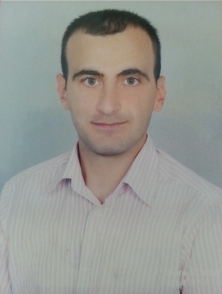
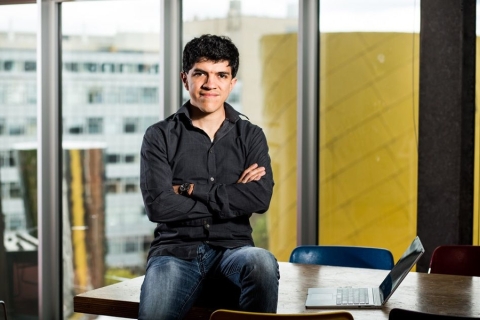
Ismail Rakip Karas is a Professor of Computer Engineering and Head of the 3D GeoInformatics Research Group at Karabuk University, Turkey. He holds a BSc from Selcuk University (1997), MSc from Gebze Institute of Technology (2001), and PhD from Yildiz Technical University (2007). His career includes roles as Visiting Researcher at Universiti Teknologi Malaysia (2010–2014) and Research Assistant at Gebze Institute of Technology (2000–2009). Currently, he serves as Deputy Rector of Karabuk University and has held administrative positions including Dean of Safranbolu Fine Art and Design Faculty, Director of Safranbolu Vocational School, and acting Dean of the Faculty of Architecture. Research interests span GeoInformatics, 3D GIS, network analysis, spatial data structures, and intelligent transportation systems. He has led over 20 national/international projects, including EU-funded initiatives and collaborations with institutions like Nara Institute of Science and Technology and University of Szeged. His work emphasizes smart city applications, indoor navigation, and emergency evacuation models. Publications include over 100 peer-reviewed articles and book chapters, focusing on GIS applications, machine learning in geospatial analysis, and 3D modeling. He has organized conferences like Geo-Advances 2017 and serves on editorial boards of journals such as the International Journal of Geo-Spatial Knowledge and Intelligence.
Álvaro Rocha is an Honorary Professor at the University of Lisbon's ISEG (Lisbon School of Economics & Management), where he holds a D.Sc. in Information Science and teaches Information Systems. His research focuses on maturity models, e-Government, e-Health, and IT in education. He leads the ADVANCE research center and collaborates with LIACC and CINTESIS. Key roles include Vice-Chair of the IEEE Portugal Section and Editor-in-Chief of JISEM and RISTI journals. He advises international bodies like the European Commission and multiple governments. His educational background includes degrees in Computer Science, Mathematics, and Information Management. Recent work spans AI applications in healthcare, blockchain, and digital learning environments. Education: Aggregation in Information Systems (2011, Universidade Fernando Pessoa), Ph.D. in Information Systems (2001, Universidade do Minho), M.Sc. in Information Management (1995, Universidade Católica Portuguesa), and B.Sc. in Applied Mathematics (1990, Universidade Lusíada). Research highlights include developing maturity models for higher education institutions and health systems, AI-driven diagnostics, and metaverse-based learning frameworks. He has published extensively in journals like Neural Computing and Applications, and Springer book series. His grants include leadership in EU-funded projects and international advisory roles. Professional contributions include founding two Scopus-indexed journals and managing Springer's Information Systems Engineering & Management book series. He actively participates in conferences and collaborates globally on cybersecurity, IoT, and educational innovation.
Selçuk FIRAT is an Assistant Professor in the Department of Educational Sciences at Adıyaman University's Faculty of Education. He holds a Doctorate in Mathematics Education from Inonu University (2018), an MA in Primary Mathematics Education from Adiyaman University (2011), and a BSc in Computer Engineering from Marmara University (2008). His career includes roles as a Research Assistant (2009-2019) and Lecturer (2019 onwards). Research interests focus on educational technology integration in mathematics teaching, particularly probability education, teacher training, and collaborative learning environments. He has developed computer-aided materials and explored the use of argumentation-based and activity-based methods to address student misconceptions. Publications emphasize cross-cultural curriculum analysis, teacher perspectives on probability instruction, and the impact of Web 3.0 technologies. He led projects like 'I Learn, I Teach, I Produce' (2015-2016) and contributed to the Technological Infrastructure Project for the Faculty of Education (2013-2016). Co-authored books include Teaching Probability and Statistics from Theory to Practice (2023) and textbooks on primary/secondary mathematics teaching fundamentals. His work bridges computer science foundations with pedagogical innovation in STEM education.
Armando Solar-Lezama is a Professor at the MIT Schwarzman College of Computing , Associate Director and COO of MIT CSAIL, and leads the Computer-Aided Programming Group . He earned his BS in Computer Science and Mathematics from Texas A&M University and PhD (2008) from UC Berkeley under Rastislav Bodik. His research focuses on program synthesis at the intersection of Programming Systems and Artificial Intelligence, with recent work on neurosymbolic programming. Education: BS (Texas A&M), PhD (UC Berkeley) Labs: CSAIL, Center for Deployable Machine Learning His research explores automated reasoning and learning to reduce programming effort, including the development of the Sketch programming language. Current neurosymbolic work combines deep learning with logical reasoning for applications in multi-agent systems, RNA splicing, and interpretable policy generation. Recent projects include VLMaterial for procedural asset generation and CRUXEval for code evaluation benchmarks. Scientific awards include: Robin Milner Young Researcher Award (2024) Best Paper (PLDI 2005, PPoPP 2016) Outstanding Paper (EMNLP 2023) He advises graduate students through MIT's EECS PhD program and has developed courses like 6.820 Foundations of Program Analysis and Program Synthesis . His work impacts software synthesis automation, programming language design, and deployable machine learning.
Yonghuai Liu is a Professor of Computer Games & Graphics affiliated with the Computer Science Health Research Institute. He holds dual PhDs in Pattern Recognition (University of Hull, 2001) and Artificial Intelligence (Northwestern Polytechnical University, 1997). His research focuses on deep learning, medical imaging, 3D computer vision, and intelligent systems. He actively supervises PhD students and leads projects in augmented reality, medical diagnostics, and agricultural robotics. Key contributions include domain-adaptive learning for retinal OCT angiography, early dementia detection via retinal imaging, and hybrid attention networks for facial expression recognition. He is a co-investigator in major initiatives like CHARM (human activity monitoring in vehicles) and iRice (smart crop management). He has been recognized with the AI 2000 Most Influential Scholar (2023), Outstanding Reviewer (2022), and Top Reviewer (2023). His work bridges theoretical advances in AI with applied domains like healthcare, education, and agriculture.
Leonidas Guibas is the Paul Pigott Professor of Engineering and Professor (by courtesy) of Electrical Engineering at Stanford University's Department of Computer Science. He leads the Geometric Computation group and is affiliated with the Computer Graphics and Artificial Intelligence Laboratories. His research focuses on algorithms for sensing, modeling, and reasoning about the physical world, with expertise in computational geometry, robotics, sensor networks, and topological data analysis. Current work includes geometric modeling with point clouds, 3D reconstruction, and mobility data analysis. He holds prestigious awards including ACM Fellow (1999), Allen Newell Award (2008), and membership in the National Academy of Sciences (2022). Education: PhD, Stanford University (1976) MS & BS, California Institute of Technology (1971) Research Interests: Geometric and topological data analysis 3D reconstruction and 3D shape analysis Sensor networks and robotics Biological structure modeling Machine learning for geometric problems Recent Articles Focus: Recent work emphasizes neural radiance fields (NeRF), dynamic Gaussian splatting, and physically plausible 3D shape generation. Publications span advancements in symmetry detection, articulated object manipulation, and multi-view video generation. Awards & Honors: Fellow, ACM (1999) Allen Newell Award (2008) Fellow, IEEE (2011) Member, National Academy of Engineering (2017) Member, National Academy of Sciences (2022) Advising & Teams: Advises doctoral and master's students on topics like geometric computing and robotics. Leads interdisciplinary teams at Stanford's ICME, HAI, and Woods Institute. Current advisees include Ian Huang, Boxiao Pan, and Colton Stearns. Labs & Collaborations: Active in the Geometric Computation group and collaborates with the Stanford AI Lab. Works on projects funded by grants in robotics, computer vision, and computational biology.
Zhigang Zhu is the Herbert G. Kayser Professor of Computer Science at The City College of New York (CUNY), affiliated with the Grove School of Engineering. He holds academic roles in the Computer Science PhD Program and M.S. Program in Cognitive Neuroscience at the CUNY Graduate Center. As Director of the City College Visual Computing Laboratory (CCVCL) and Co-Director of the Master’s Program in Data Science and Engineering, he focuses on advancing assistive technologies, computer vision, and human-computer interaction. His research emphasizes accessibility solutions for visually impaired individuals, leveraging AR/VR, machine learning, and multimodal perception. Education: Ph.D. (Computer Science, with honor) from Tsinghua University (1997), M.E. (1991), B.E. (1988) Affiliations: Department of Computer Science, CCNY; CUNY Graduate Center Research interests include assistive technology applications, augmented reality systems, and energy efficiency analysis. Notable projects include the BLV App Arcade for visually impaired navigation and MAC-U-Vision+ for AMD patients. He has received awards such as the President’s Award for Excellence (2013) and the CUNY Salute to Scholars recognition. His work integrates AI, computer vision, and IoT to address urban accessibility challenges, with contributions to sidewalk material analysis, real-time indoor navigation, and emotion recognition systems. Ongoing projects explore multimodal data fusion and energy-efficient building systems.
Barrett Caldwell is a Professor of Industrial Engineering at Purdue University's Edwardson School of Industrial Engineering, with dual affiliation in Aeronautics and Astronautics. Based in the GRIS building on West Lafayette campus, he directs the GrouperLab research group and serves on the EPICS Curriculum Committee. His research centers on Human-Systems Integration across aerospace human factors (aviation weather decision-making, spaceflight crew coordination), healthcare systems engineering (sleep management, chronic care), and distributed team coordination (humanitarian operations, cyber security). He applies systems engineering principles to design safety-critical solutions that enhance human performance through physiological monitoring, machine learning, and augmented reality technologies. Analysis of his 2023-2025 publications reveals a strong trend toward transdisciplinary integration of physiological data streams, resilience engineering, and user-centered design to address challenges in high-stakes environments. His work consistently bridges theoretical human factors with practical applications in aviation, space exploration, and healthcare delivery systems. The GrouperLab serves as the primary research hub for Caldwell's investigations, fostering collaboration across engineering disciplines to develop innovative approaches for complex system coordination and human-automation interaction.
Monica Sanchez Soler is a Full Professor at the Universitat Politècnica de Catalunya (UPC), affiliated with the School of Computer Science and the Department of Mathematics . She leads and participates in multiple research projects within the GREC - Grup de Recerca en Enginyeria del Coneixement and IDEAI-UPC - Intelligent Data Science and Artificial Intelligence Research Group .
Dr. Binod Bhattarai is a Lecturer (equivalent to Assistant Professor in the US) in the School of Natural and Computing Sciences at the University of Aberdeen, UK. He is also an Honorary Lecturer at University College London and a Co-founder and Adjunct Research Scientist at NAAMII, Nepal. Dr. Bhattarai heads the Multimodal Learning Lab, a cross-border initiative between the University of Aberdeen and NAAMII, Nepal. His educational background includes a PhD in Computer Science from Universite de Caen, France, and previous work experience as a Senior Research Fellow at University College London, a Postdoctoral Research Associate at Imperial College London, and a Data Scientist at Telenor Group, Norway. Dr. Bhattarai's research focuses on developing robust and interpretable machine learning algorithms that can reason across complex, heterogeneous data. His work spans multiple domains including surgical videos, medical imaging, and low-resource languages, with applications in healthcare, energy, and global agriculture. He follows a core philosophy of building AI that is not only powerful but also trustworthy and explainable, with a belief that true intelligence lies in the ability to seamlessly integrate diverse data sources. His publications demonstrate strong trends in multimodal learning, particularly in medical applications. A significant portion of his recent work focuses on gastrointestinal image analysis, out-of-distribution detection in medical contexts, and federated learning approaches for healthcare data. His research often bridges computer vision, natural language processing, and medical imaging to create practical AI solutions for healthcare challenges. Best Paper Award Finalist, MIUA 2025 Runner-up, ARCADE Challenge, MICCAI 2023 Google Cloud Research Innovator, 2022 Outstanding Reviewer Award, BMVC, 2021 Winner FetReg Endoscopic Vision Challenge at MICCAI 2021 Outstanding Reviewer Award, BMVC, 2019 Best Student Paper Award of Image, Video and Multidimensional Signal Processing, ICASSP, 2016 Best Paper Award Runner up, ACM ICVGIP, 2016 DAAD Postdoc Net-AI-Fellow, 2020 (top 22 out of 192) Dr. Bhattarai actively mentors PhD students and research assistants through the Multimodal Learning Lab. Current PhD students include Jardin Ruari (Assessing AI algorithms for Capsule Endoscopy) and Krit Duangprom (Surgical Tool and Hand Pose Estimation). His lab has successfully guided numerous researchers who have gone on to PhD programs at prestigious institutions including MILA, Dartmouth College, University of Utah, and RIT. He has secured multiple research grants including a Co-PI role for "Non-constrast CT Head Image Analysis" funded by The Ronald Sutton Academic Trust (30.8K GBP, 2024-27), and a PI role for "Frontiers Seed Funding" by the Royal Academy of Engineering (20K GBP, 2023-2024). The Multimodal Learning Lab, which Dr. Bhattarai heads, is a cross-border initiative between the University of Aberdeen and NAAMII, Nepal. The lab focuses on developing robust and interpretable machine learning algorithms that can reason across complex, heterogeneous data. Current research projects include explainable anomaly detection in GI endoscopy, surgical vision world models, multimodal federated learning, surgical data science, and synthetic data generation. The lab operates with a global research pipeline that fosters talent and innovation across borders.
Peter Lushing is a Professor of Law at the Benjamin N. Cardozo School of Law, Yeshiva University. Previously, he served as a trial attorney in the Legal Aid Society, administrative assistant district attorney in New York County, chief of the Appeals Bureau, and law clerk to Judge Wilfred Feinberg of the U.S. Court of Appeals for the Second Circuit. He has also held roles in private practice, academia, and legal organizations such as the New York Council of Defense Lawyers. Education: B.A., 1962 LL.B., 1965 (Columbia University) Research focuses on judicial proof dynamics, evidentiary inference, and the intersection of law with probabilistic reasoning. Notable themes include Bayesian analysis in legal contexts, the role of computation in adjudication, and the tension between quantitative methods and traditional legal principles. His work critiques adversarial systems while proposing frameworks for improving factual evaluation in courts. Scientific Awards: Kent Scholar (Columbia Law Review, 1st Year) Harlan Fiske Stone Scholar (twice awarded) Advising and grants: No formal students or grants listed, but his career includes extensive mentorship through legal practice and organizational leadership. Active in legal education and reform through think tanks and bar associations. Labs/Teams: No dedicated research labs, but collaborates with interdisciplinary groups on AI applications in legal evidence and judicial proof systems.
Andreas Brannstrom is a Postdoctoral Fellow at the Department of Computing Science, Umeå University, Sweden, conducting research on formal and neuro-symbolic methods for trustworthy, human-centered artificial intelligence. His work spans theoretical foundations in knowledge representation to applied verification of interactive systems and intelligent decision support. His research focuses on formal verification of human-agent interaction, neuro-symbolic AI integration, and ethical AI development. Key methodologies include Answer Set Programming (ASP), formal argumentation, and Description Logic (DL), targeting applications in deception detection, computational empathy, and behavior-change systems. Recent work emphasizes security in information-seeking dialogues and socio-technical aspects of AI deployment. Analysis of his 2023-2025 publications reveals a dominant trend in verifying social engineering vulnerabilities through formal methods, with significant contributions to machine ethics ontologies and multicultural affective computing. His research consistently bridges theoretical AI frameworks with real-world applications in healthcare, industrial logistics, and public safety. Brannstrom is affiliated with Umeå University's Agents and Reasoning Group, Formal Methods for Trustworthy Hybrid Intelligence, and Responsible Artificial Intelligence research groups. His active projects include "Strategic Argumentation to deal with interactions between intelligent systems and humans" (2020-2024) and "Collaborative mixed-reality aid for children with autism" (2019-2020), demonstrating commitment to socially impactful AI research.
Christoph Matheja is an Associate Professor at the Technical University of Denmark , affiliated with the Department of Applied Mathematics and Computer Science . His work focuses on formal verification, probabilistic programming, and software systems engineering. Research Highlights : Operational semantics for probabilistic programs, fixed-point characterizations of rewards in MDPs, and data-driven Petri net modeling for process mining. Publications span formal verification techniques, probabilistic programming paradigms, and tools for process mining, emphasizing interdisciplinary applications in computer science and software engineering. Scientific Awards : POPL 2021 Distinguished Paper Advising & Grants : Supervises PhD students in automated reasoning about randomized algorithms, with project funding active from 2023 to 2026. Professional Activities : Serves on committees for ACM SIGPLAN Symposium on Principles of Programming Languages (2022–present), International Conference on Computer Aided Verification (2023–present), and Formal Methods Symposium (2022–present). Organizer of the 2022 Workshop on Verification of Probabilistic Programs.
Alexander Alexandrovich Trofimov is an Associate Professor at the Department of Engineering Graphics within the Institute of Mining, Geology and Geotechnology at Siberian Federal University. Born on September 25, 1971, in Zaozerny, Krasnoyarsk Krai, he graduated from the Krasnoyarsk Institute of Non-Ferrous Metals in 1996 with a specialization in "Mining Machinery and Equipment," qualifying as a mining electrical engineer. He received his associate professorship in 2009 and has authored 30 scientific and educational works. Education Krasnoyarsk Institute of Non-Ferrous Metals (1996), Mining Machinery and Equipment, Mining Electrical Engineer Research Interests Professor Trofimov's research focuses on Engineering Graphics , Descriptive Geometry , and specialized applications in Mining and Geological Graphics . His work integrates pedagogical methods for technical education, computer-aided design, and geometric problem-solving in mining contexts. Recent investigations emphasize educational adaptations for engineering students and technological innovations in graphic instruction. Professional Development Integration of project activities of teachers into the educational process (Siberian Federal University, 2013) Management of an educational project (Siberian Federal University, 2017)
Josh Sunshine is an Associate Professor in the Software and Societal Systems Department (S3D) at Carnegie Mellon University's School of Computer Science, with a courtesy appointment in the Human-Computer Interaction Institute. He directs the NSF-funded REUSE program (Research Experiences for Undergraduates in interdisciplinary Software Engineering), providing summer research opportunities for diverse undergraduates across computer science domains including human-computer interaction, programming languages, and software security. His educational background includes a PhD in Software Engineering from Carnegie Mellon University (2013) under Jonathan Aldrich, and a BS from Brandeis University (2004) followed by four years as a software engineer. Prior academic training informs his industry-relevant research approach. Professor Sunshine's research spans programming languages, software engineering, and human-computer interaction with concentrated focus on usability of reusable software components. He investigates how developers interact with libraries, APIs, and testing tools, seeking to bridge formal methods with practical usability through human-centered design. Recent work develops tools that make verification and testing more accessible without sacrificing rigor. Analysis of his 15 most recent publications reveals strong emphasis on human-in-the-loop systems: 60% address software testing/tooling (e.g., TerzoN, Nanofuzz), 25% focus on visualization/education (e.g., Edgeworth), and 15% explore programming language safety (e.g., Rust studies). The work consistently combines empirical user studies with technical innovation, targeting real-world developer pain points. Scientific recognition includes: NSF CAREER Award (2024) for "Scientist-in-the-loop software testing" Best Paper Nominee at ACM Conference on Learning @ Scale (2024) for Edgeworth research Through the REUSE program, Professor Sunshine mentors 15-20 undergraduates annually in collaborative research with faculty including Charlie Garrod and Claire Le Goues. His grant portfolio centers on two major NSF awards: the REUSE site ($1.2M) and CAREER grant ($500k), supporting both research and educational outreach. Current projects integrate testing automation with human judgment and develop scalable tools for visual thinking in STEM education. As a core S3D faculty member, he contributes to CMU's interdisciplinary mission through the Human-Computer Interaction Institute collaboration. His REUSE program specifically builds inclusive research pathways, with 40% participation from underrepresented groups in computing. Future work focuses on expanding the "scientist-in-the-loop" paradigm across software engineering tasks.