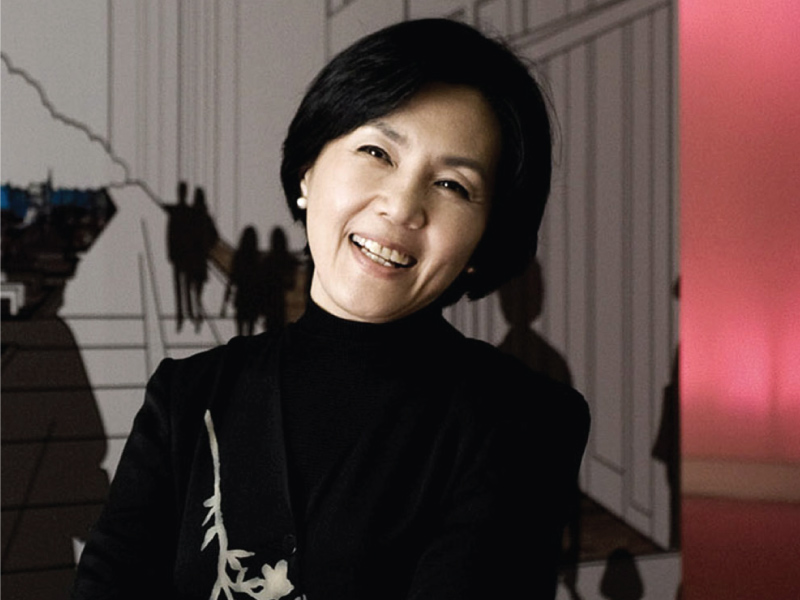
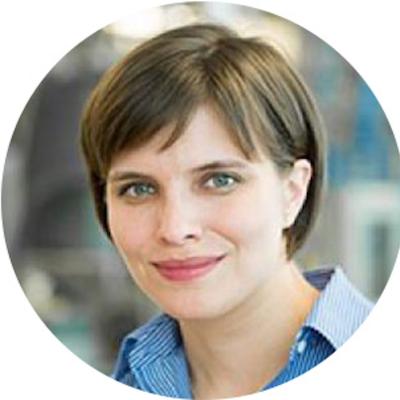
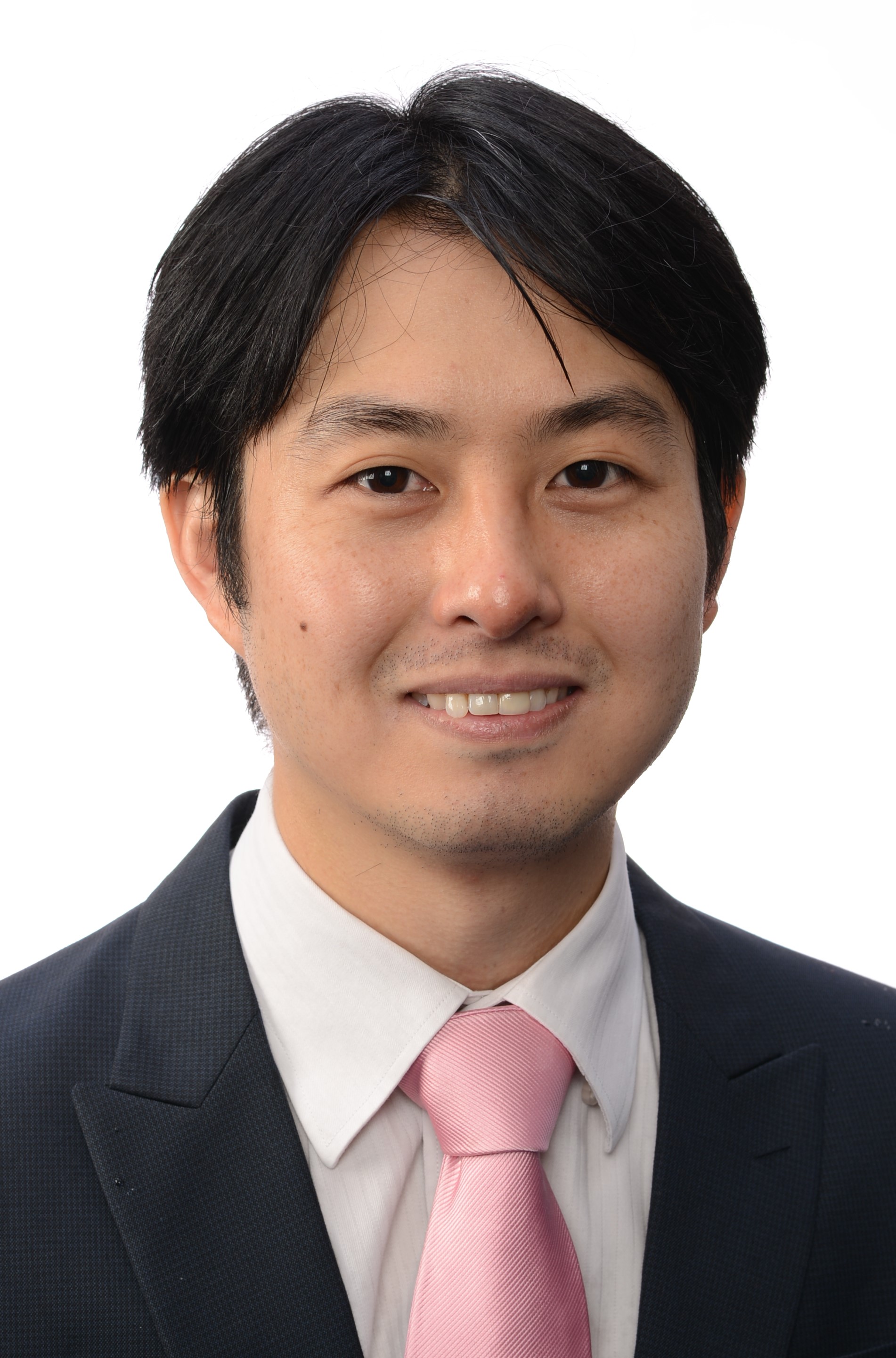
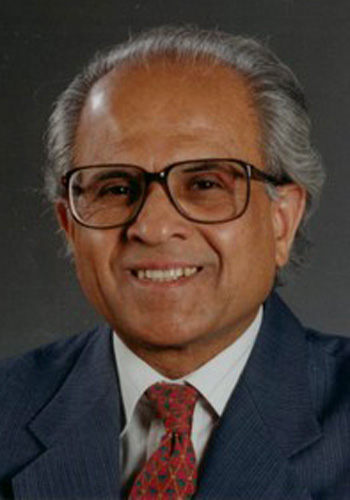
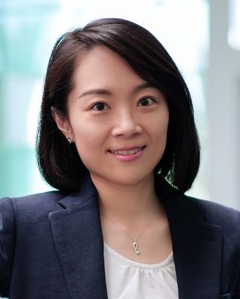
EunSook Kwon is a Professor and Chair of the School of Industrial Design at Georgia Institute of Technology. Previously, she was Director of the Industrial Design Program at the University of Houston (2003–2021), where she established foundational curricula for BS and MS programs. She has been honored as a 'Most Admired Educator' by DesignIntelligence and directed the Seoul Design Olympiad 2008. Education includes a BFA from Seoul National University, MFA/MA degrees in Industrial Design from Seoul National University and Ohio State University, and a Ph.D. in Arts Education from Ohio State University. Her research focuses on healthcare products, wearable systems, and design education, emphasizing sustainability, gamification, and inclusive design. She has advised corporations and governments on design strategies and served as a juror for global competitions like IDEA and Microsoft’s Next-Generation PC Design. Publications span design education, interactive technologies, and cultural design, reflecting her commitment to bridging design practice with societal impact.
Professor Tim Wheeler is a leading academic at the University of Reading, specializing in climate change impacts on agriculture and global food systems. His research focuses on crop productivity, climate modeling, and adaptation strategies in developing regions. He has contributed to high-impact studies on climate risks to food security, published in journals like Science and Nature . His work integrates large-area crop models with climate projections to assess vulnerabilities in Africa, South Asia, and China. Key contributions include the development of the JULES-crop model and analyses of crop responses to elevated CO2 and temperature stresses. He has authored reports for the UNFCCC and FAO, addressing adaptation costs and policy implications of climate change. His research spans interdisciplinary collaborations, including UK-China projects on sustainable agriculture and studies on GM crops' role in food security debates. He explores intersections between climate science, agricultural systems, and socio-economic resilience, particularly in contexts like Uganda's rural livelihoods. His publications also address methodological advances in crop-climate coupling and the use of seasonal forecasts for agricultural planning. Notably, his work highlights the urgency of addressing climate variability in crop yields and the need for tailored adaptation measures. Despite extensive contributions, no specific scientific awards are explicitly mentioned in the provided texts.
Dr. Heather Trajano is a faculty member in the Department of Chemical and Biological Engineering at the University of British Columbia's Faculty of Applied Science. Her research focuses on sustainable biomass fractionation and conversion processes, aiming to maximize economic and environmental benefits through innovative biorefining strategies. Research Interests: Fundamentals of biomass deconstruction to separate carbohydrates from lignin Recovery and purification of extractives from biomass Heterogeneous catalysis for chemical production Integration of biorefining opportunities with existing forestry operations Utilization of waste streams and by-products for sustainable processes Her work emphasizes the development of processes that complement traditional forestry operations by transforming waste materials into valuable chemicals and fuels. This research spans fundamental studies of biomass deconstruction mechanisms to applied process optimization using advanced modeling techniques including machine learning approaches. Research Trends: Dr. Trajano's recent publications demonstrate a strong focus on xylan and hemicellulose processing from birch and softwood sources, with particular attention to kinetic modeling of hydrolysis processes. Her work integrates experimental studies with computational modeling, including machine learning applications for yield prediction. The research also encompasses lignin valorization through depolymerization and upgrading of pyrolysis oils, cellulose hydrolysis optimization, and the development of sustainable catalytic processes for biomass conversion. Contact Information: Email: heather.trajano@ubc.ca
Jorge Camba is an Associate Professor at the School of Engineering Technology and holds a courtesy appointment in the Department of Computer Graphics Technology at Purdue University . He also serves as a Senior Research Scientist (by courtesy) in the Department of Industrial Engineering at the University of Naples Federico II , Italy. PhD in Systems and Engineering Management (Universidad Politécnica de Valencia, Spain) MSc in Digital Media (East Tennessee State University) MSc in Computer Science (Universidad de Vigo, Spain) His research explores intelligent CAD systems , digital manufacturing , and mixed reality environments , focusing on model quality assurance , design intent communication , and collaborative design tools . Recent work investigates spatial cognition in CAD education , geometric variability analysis , and annotation-driven knowledge management . Key trends in his publications include parametric modeling strategies , 3D annotation systems , and XR applications in design evaluation. Awards include the Purdue Faculty Scholar (2021) and I3B Fellow (2021). He has presented at conferences on topics like Industry 4.0 , space habitat design , and digital product quality .
Niels Henrik Mortensen is a Professor and Head of Section in the Department of Civil and Mechanical Engineering at the Technical University of Denmark (DTU). His research focuses on engineering design and manufacturing systems, with emphasis on product architecture, modularization, maintenance performance, and AI-driven design solutions. He leads initiatives in engineer-to-order systems, lifecycle costing, and digital transformation in manufacturing. Key research interests include optimizing product architectures for modular systems, enhancing maintenance strategies through data analytics, and applying AI to improve CAD design reuse. His work aligns with UN Sustainable Development Goals related to innovation and infrastructure, and sustainable energy systems. Supervisor for 5 active PhD projects focused on modular architectures, logistics services, and configuration systems Published 175+ peer-reviewed articles, including work on AI-based maintenance frameworks and configurator development Recipient of industry collaboration projects with offshore energy and manufacturing sectors Notable contributions include frameworks for maintenance performance diagnostics and adaptable configuration models. His team operates through MEK and CONSTRUCT research groups at DTU.
Dr. Yeoh Ker-Wei, Justin is a Senior Lecturer and Director of the Centre for Built Environment 4.0 Cluster (BE4) at the Department of Civil and Environmental Engineering, National University of Singapore (NUS). He holds a PhD (Civil Engineering) from NUS (2012) and a BEng (Civil Engineering) from NUS (2006). His research focuses on applying artificial intelligence, building information modeling (BIM), and computer-aided analysis to optimize construction management processes. He has led projects involving BIM for site layout planning, equipment optimization, and cost estimation, as well as system dynamics for construction workflows. Education: PhD in Civil Engineering, National University of Singapore, 2012 BEng (Honors) in Civil Engineering, National University of Singapore, 2006 Research Interests: His work integrates AI with construction management, BIM applications for project efficiency, and automated constructability analysis. Recent studies include crane optimization in multistage construction and automated scheduling frameworks derived from functional requirements. Publications Overview: Dr. Yeoh’s publications span 4D CAD modeling, construction scheduling algorithms, and BIM-driven project planning. His work emphasizes practical solutions for congestion reduction, cost efficiency, and equipment optimization in complex construction environments. Lab/Teams: He oversees the Centre for Built Environment 4.0 Cluster (BE4), focusing on innovation in smart construction technologies and BIM integration.
Dr Adelaide Marzano is a Lecturer at the School of Computing Engineering and the Built Environment, Edinburgh Napier University, and a Visiting Professor at Pentecost University, Ghana. Her research focuses on manufacturing systems, CAD integration, tolerance analysis, and educational technology. She actively contributes to the Centre for Engineering and Mathematical Modelling, examining topics such as digital twin simulations for industrial ergonomics and e-learning efficacy. She serves as a PhD External Examiner and is a member of the Institution of Mechanical Engineers. Affiliations: Edinburgh Napier University (Primary), Pentecost University (Visiting) Key Roles: PhD Examiner, Research Group Member (Centre for Engineering and Mathematical Modelling) Her research spans manufacturing processes, including tolerance-aware product development and virtual reality applications in aerospace training. Recent work includes optimizing distillery operations via digital twin frameworks and investigating student preferences for e-learning tools across UK and Portuguese institutions. She also collaborates with industries like COMAU on ergonomic work cell design. Her current PhD project supervision involves machining optimization of additively manufactured medical components, emphasizing interdisciplinary approaches to advance manufacturing precision and efficiency.
Farouq Ali is a Distinguished Professor in the Department of Petroleum Engineering at the University of Houston's Cullen College of Engineering. With over 40 years of experience spanning academia and industry, he is globally recognized as a leading expert in reservoir engineering and enhanced oil recovery techniques. Previously holding the Encana/Petroleum Society Chair at the University of Calgary, he has also served as a professor at Pennsylvania State University, University of Alberta, and University of Regina. His educational background includes: Ph.D. in Petroleum and Natural Gas Engineering, Pennsylvania State University M.S. in Petroleum and Natural Gas Engineering, Pennsylvania State University B.Sc. (Hons.) in Petroleum Production Engineering, Birmingham University, England B.Eng. in Electrical and Mechanical Engineering, Karachi University, Pakistan Professor Ali's research focuses on breakthrough methods for oil recovery from challenging reservoirs, particularly heavy oil systems. His pioneering work established micellar-polymer flooding as an industry standard and developed foundational steam injection techniques. Current investigations center on solvent-assisted thermal processes, pore-scale modeling of bitumen mobilization, and advanced reservoir simulation for optimizing steam-assisted gravity drainage (SAGD) and in-situ combustion. His 2015-2018 publications reveal a concentrated research trajectory toward integrating solvents with thermal recovery methods, developing non-equilibrium pore-scale simulators, and optimizing SAGD performance through analytical modeling. Key thematic clusters include solvent-steam synergies, temperature-dependent reservoir behavior, and field-scale implementation of advanced recovery techniques for oil sands and heavy oil deposits. His exceptional contributions are evidenced by prestigious accolades including: Election to the US National Academy of Engineering (2009) Anthony F. Lucas Gold Medal (SPE's highest technical honor, 2007) Kapitsa Gold Medal from Russian Academy of Sciences (1998) SPE Lester C. Uren Award (1996) Multiple SPE Distinguished Lecturer appointments Professor Ali maintains active industry engagement through over 250 reservoir studies and 30 major oilfield designs, advising governments and corporations on production strategies. His academic mentorship includes current Ph.D. candidate Seyed Mahdi Razavi, continuing his legacy of training petroleum engineering leaders. Research funding stems from extensive consulting contracts and collaborative industry projects focused on thermal recovery optimization. His laboratory investigations emphasize thermal recovery mechanisms and reservoir simulation, with current projects developing integrated solvent-steam models and advanced analytical tools for SAGD performance prediction. The research team maintains close industry partnerships for field validation of novel recovery techniques.
David M. Bevly is an Assistant Professor in the Department of Mechanical Engineering at Auburn University, where he has been on the faculty since 2001. He directs the GPS and Vehicle Dynamics Laboratory (GAVLAB) and teaches a range of courses spanning system dynamics, vehicle dynamics, optimal estimation and control, and GPS navigation. Education Ph.D. Mechanical Engineering, Stanford University, 2001 M.S. Mechanical Engineering, Massachusetts Institute of Technology, 1997 B.S. Mechanical Engineering, Texas A&M University, 1995 Research Interests His research integrates control theory with real-world vehicle applications, focusing on control of dynamic systems, optimal estimation and control, GPS and sensor fusion, vehicle dynamics and control, and vehicle state estimation . Combining low-cost GPS receivers with inertial sensors, he develops algorithms that enable precise state estimation for passenger cars, agricultural tractors, and off-road platforms, enhancing safety and autonomy. Publication Trends Between 1999 and 2004, Bevly authored or co-authored more than a dozen journal and conference papers that collectively advance the fields of GPS-aided vehicle control and precision agriculture. The works explore theoretical contributions—such as dead-reckoning error analysis and yaw-dynamic modeling—and demonstrate practical implementations on farm tractors and high-speed ground vehicles. Awards & Recognition Best Paper of Session, 2000 ION-GPS Meeting SAE Arch T. Colwell Award (Myers Award) for Outstanding Student Paper, 2000 Laboratory & Teams As head of the GPS and Vehicle Dynamics Laboratory (GAVLAB) at Auburn, Bevly leads interdisciplinary projects that integrate mechanical design, real-time embedded systems, and field experimentation. The lab collaborates with industry partners and federal agencies to transition research results into commercial vehicle-safety and agricultural-autonomy products.
Bartosz Grzybowski serves as Distinguished Affiliate Professor at the Institute of Organic Chemistry, Polish Academy of Sciences (PAS), leading the Laboratory of Computer-Assisted Synthesis. His work bridges artificial intelligence and experimental organic chemistry to transform synthesis from trial-and-error into algorithmic science. His research focuses on AI-driven synthesis planning , reaction network analysis , and computational prediction of chemical properties . Key contributions include pioneering algorithms for multistep organic synthesis of complex targets, discovery of novel organic reactions through AI, and design of temporally/spatially synchronized reaction networks. His group develops methods for sustainable chemistry, drug analog design, and enzymatic process optimization. Analysis of his 2023-2025 publications reveals dominant trends in retrosynthetic AI (87% of articles), sustainable chemistry applications (63%), and integration of mechanistic understanding with machine learning. Work frequently appears in Nature , Science , and JACS , emphasizing experimental validation of computational predictions. Prof. Grzybowski currently advises three PhD students and collaborates with a multidisciplinary team: Core team : Assoc. Prof. Michał Michalak (Adjunct), Dr. Anna Żądło-Dobrowolska, Dr. Aleksei Koshevarnikov Active grant : NCN SONATA 2020/39/D/ST4/01890 on hazardous chemical degradation (PI: Żądło-Dobrowolska) The Laboratory of Computer-Assisted Synthesis operates as an integrated computational-experimental unit at IBS-IOC PAS. Current projects include blockchain-orchestrated reaction networks, AI-guided catalyst selection, and metabolic-cycle emulation. The group maintains strong industry/academic partnerships for validating algorithms in drug discovery and green chemistry applications.
Dr. Amon Göppert serves as Professor and Chair of the Intelligence in Quality Sensing group at RWTH Aachen University's Laboratory for Machine Tools and Production Engineering (WZL). His work integrates artificial intelligence into manufacturing processes to enhance quality control, production efficiency, and sustainable practices. Göppert's research spans intelligent manufacturing systems with core expertise in AI-driven production engineering, circular economy applications, and advanced assembly systems. He investigates how machine learning optimizes production ramp-up, disassembly processes, and flexible manufacturing while developing sensor-based quality control solutions for industrial applications. His recent publications reveal strong trends toward AI implementation in production planning, with emphasis on worker assistance systems for disassembly, digital twin applications for real-time control, and mobile robotics in line-less assembly environments. Key focus areas include sustainable manufacturing, metrology innovation, and adaptive scheduling systems. Göppert leads multiple high-impact research initiatives: AI-driven Product Development: Machine learning for smart measurement strategies in metrology MetaVision Consortium: Industrial metaverse applications for AI-supported vision systems Generative AI for Non-Destructive Testing optimization Cluster of Excellence Internet of Production participation As Chief Engineer at WZL, he oversees technical implementation of research projects and collaborates with industry partners to translate innovations into practical manufacturing solutions, particularly in adaptive assembly systems and quality sensing technologies.
Paulo Jorge Da Silva Bartolo is a Professor at the School of Mechanical & Aerospace Engineering, Nanyang Technological University (NTU), and Executive Director of the Singapore Centre for 3D Printing (SC3DP). He holds the President's Chair in Additive Manufacturing and has previously served as Chair Professor of Advanced Manufacturing at the University of Manchester (2014-2021) and founded the Centre for Rapid and Sustainable Product Development at the Polytechnic Institute of Leiria (2007-2013). Current: Professor, NTU Singapore 2014-2021: Chair Professor, University of Manchester 2007-2013: Director, Centre for Rapid and Sustainable Product Development (Portugal) His research spans the interface of biology and engineering , focusing on additive manufacturing for medical applications. Key areas include 3D-printed scaffolds for bone tissue engineering , graphene composites , biomanufacturing , and functionally graded materials in construction. His work integrates materials science with mechanical engineering to advance regenerative medicine and sustainable manufacturing. Prominent trends in his recent publications include multi-material scaffolds for bone regeneration, electrospinning techniques , and smart nanogels for environmental sensing. These studies emphasize nanotechnology integration , biomimetic design , and precision manufacturing across biomedical and civil engineering domains. Fellow of CIRP (International Academy of Production Engineering) Commendation from Portuguese Government (2021) Commendation from Polytechnic Institute of Leiria (2014) Council Award Afonso Lopes Vieira for Innovation (2009) With over 600 publications, 22 edited books, and 16 patents, Bartolo's work drives cross-disciplinary innovation. He has served on evaluation panels for the European Research Council , EPSRC , BBSRC , and funding agencies across Portugal, Italy, Netherlands, Belgium, France, Canada, Switzerland, and South Africa. As Academic Lead for Industry 4.0 at the Thomas Ashton Institute and former Head of the Manufacturing Group at the University of Manchester, he bridges digital manufacturing with health and safety research. His leadership extends to the EPSRC Global Challenges Research Fund and Manufacturing Futures panels.
Professor J. Ramkumar is a faculty member in the Department of Mechanical Engineering at the Indian Institute of Technology Kanpur. His research focuses on advanced manufacturing techniques and processes with applications in precision engineering and assistive technologies. Education: PhD, IIT Madras, 2003 - Thesis: "Multimode techniques for defect constrained drilling of GFRP composites" M.Tech, IIT Madras, 2000 (Gold medalist) B.E., National Institute of Technology, Trichy, 1996 Research Interests: Professor Ramkumar specializes in Micro/Nano Manufacturing and New product/process development. His work spans Tribology, composite materials, and Manufacturing Process modeling. He has particular expertise in Micro Electric Discharge Milling, Micro Electro Chemical Milling, Excimer Laser micro machining, Abrasive flow finishing, and Magnetic abrasive finishing. His research also extends to fabrication and machining of composites, as well as wheelchair development for stair climbing applications. Awards and Honors: Gold medalist in M. Tech, IIT Madras, 2000 Innovation Potential of Student Projects Awards - Indian National Academy of Engineering (INAE), 2004 Young Scientist Award - Engineering Science Division- Indian Science Congress Association, 2007 Young Scientist Award - Dept. of Atomic Energy, India, 2007 Rajkumar Varshney Awards - System Society of India, 2010 IEI Young Engineers Award, 2011 Class of 1984 fellowship award from 2012-2015 Teaching: Professor Ramkumar teaches courses including Manufacturing Processes II, Manufacturing Science & Technology, Manufacturing Systems, and Computer Aided Manufacturing across undergraduate and postgraduate programs at IIT Kanpur.
Shurui Zhou is an Assistant Professor at the University of Toronto , with primary appointment in the Department of Electrical & Computer Engineering and cross-appointments in the Department of Computer Science and the Department of Mechanical & Industrial Engineering . She is also affiliated with the Schwartz Reisman Institute and a member of the Data Sciences Institute . Zhou directs the FORCOLAB , focusing on enhancing collaboration in distributed software teams, especially in open-source and AI-enabled systems development. Her research integrates software engineering principles with human collaboration insights from organizational behavior, aiming to improve collaboration efficiency through tooling and interdisciplinary methods. Recent publications (2023-2025) explore LLM integration in software development , sustainability in scientific open-source communities , and collaborative challenges in computer-aided design . Education: PhD (2020) from Carnegie Mellon University's Software and Societal Systems Department , MSc from Peking University , BSc from Xi'an Jiaotong University Scientific Awards: Gordon Slemon Teaching of Design Award (2022) Grants: Collaborator on NSERC Alliance-Mitacs Accelerate Grant (2025) for LLM analysis in political data Her lab, FORCOLAB, develops tools like forks-insight.com to analyze GitHub forks and Redundant PR detection bots . Zhou organizes events like the Responsible LLM-Human Collaboration Hackathon (2024) and actively serves on conference committees including ICSE 2025 and ICSME 2024 .
Francesco Strada is a Fixed-term Assistant Professor at the Department of Control and Computer Engineering (DAUIN) at Politecnico di Torino. He serves as a Course Lecturer for Virtual Reality and Technical Art for Cinema and Video Games, and as a Course Collaborator for multiple courses across Computer Engineering, Film and Media Engineering, and Architecture programs. He is an active member of the College of Computer, Film and Mechatronics Engineering and the College of Architecture and Design teaching committees. Dr. Strada's research focuses on Computer Graphics, Virtual Reality, Augmented Reality, and Human-Computer Interaction with particular emphasis on Embodied Conversational Agents, emotion recognition, and serious games applications. His work bridges technical computer science with psychological and human factors considerations to create more believable and effective virtual experiences. His research spans applications in education, healthcare, automotive interfaces, cultural heritage, and emergency response training. His recent publications demonstrate a strong trend toward emotionally intelligent virtual agents, VR/AR applications in specialized domains, and technical innovations in latency management and digital human representation. His work often combines psychological principles with technical implementations to enhance user experience and system effectiveness. Dr. Strada actively supervises PhD students including Alessandro Emmanuel Pecora, Stefano Calzolari, and Leonardo Vezzani, whose research focuses on Emotionally Aware Embodied Conversational Agents (E2CA) and Car AR-HUD design. He leads significant research projects including Holo-BLSD (2024-2025), a Mixed Reality tool for first aid emergency response training, and '50 shadows of AI' (2025), focusing on personalized education in corporate settings. He is a member of the CGVG - Computer Graphics and Vision Group at DAUIN, where his team develops cutting-edge applications in AR/VR, Human-Computer Interaction, User Experience, Computer Vision, Machine Learning, and Artificial Intelligence. His research has practical applications in education, training, healthcare, automotive interfaces, and cultural heritage preservation.