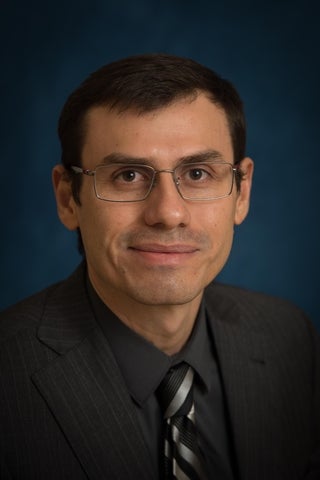
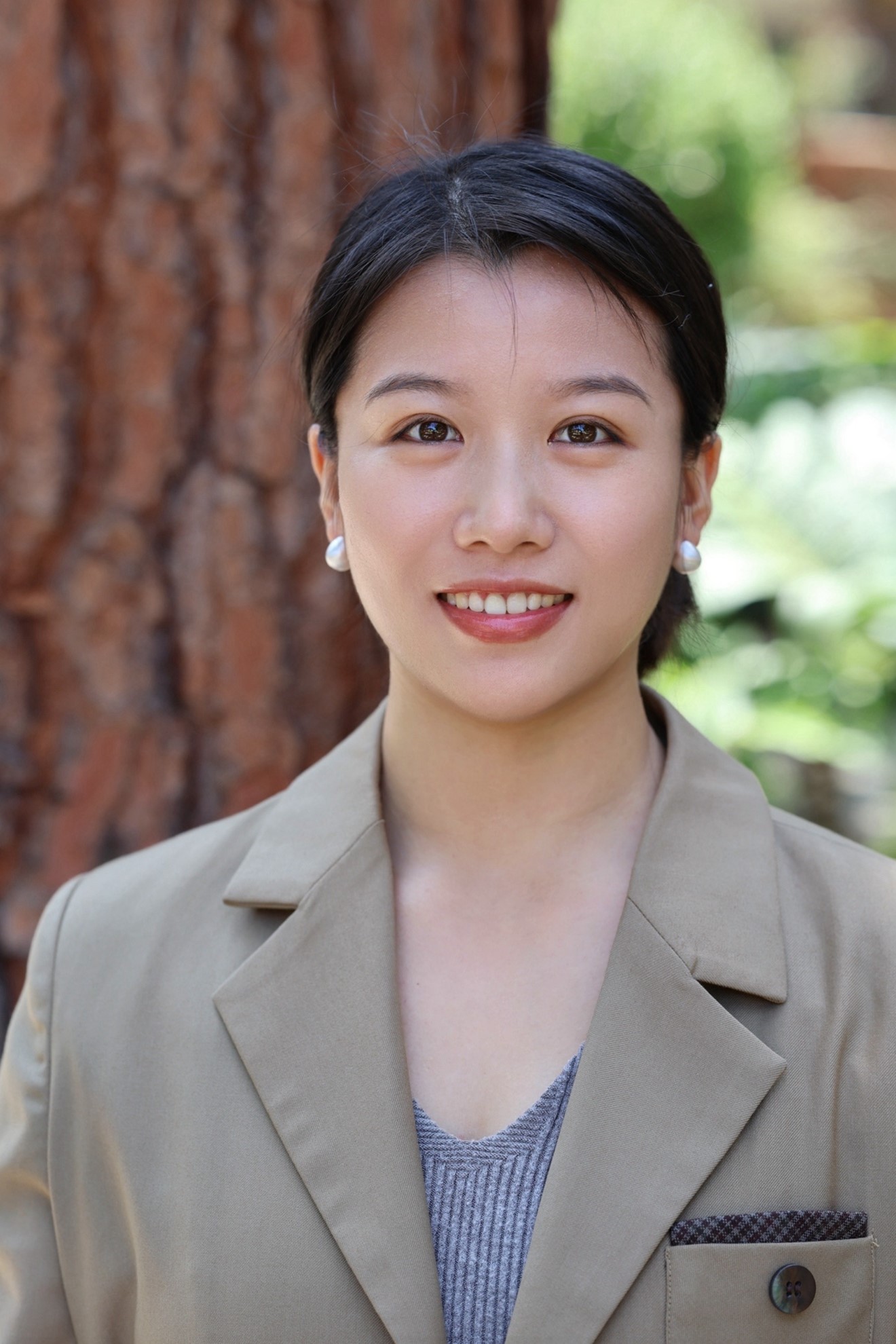
Luis A. Ricardez-Sandoval is an Associate Professor in the Department of Chemical Engineering at the University of Waterloo and holds a Tier II Canada Research Chair in Multiscale Modelling and Process Systems. His research group develops advanced computational tools for optimizing chemical processes across multiple scales. Doctorate: Chemical Engineering, University of Waterloo (2008) MASc: Chemical Engineering, Instituto Tecnologico de Celaya (2000) BASc: Chemical Engineering, Instituto Tecnologico de Orizaba (1997) The research group focuses on multiscale modelling and process systems engineering , particularly for CO2 capture , energy systems , and heterogeneous catalysis . Their work combines advanced mathematics, machine learning , and uncertainty analysis to optimize chemical processes before physical implementation. Recent publications emphasize dynamic system optimization under uncertainty, multiscale simulation , and CO2 conversion technologies . Key methodologies include probabilistic uncertainty quantification and economic predictive control . Scientific Awards : 1997: First Place, XII National Creativity Contest 1998: Best Student Award, Instituto Tecnologico de Orizaba 1999: Third Place, XIV National Creativity Contest 2000: J.M. Smith Award for Best MASc Student He has collaborated with international institutions like CONACyT-Mexico, China Scholarship Council, and Universidad de Los Andes. His teaching includes graduate courses in process control, optimization, and computer-aided design.
Dr. Yali Ling serves as an Assistant Professor in the Fashion Merchandising and Design program within the Department of Family and Consumer Sciences at California State University, Long Beach's College of Health and Human Services. Her research bridges traditional textile engineering with cutting-edge sustainable material innovation. Education: Ph.D. in Textile Technology Management, North Carolina State University (2021-2024) M.S. in Fashion Design and Engineering, Wuhan Textile University (2018-2021) B.S. in Fashion Design, Wuhan Textile University (2014-2018) Research Focus: Dr. Ling's work pioneers sustainable textile production through hemp/cotton blends and recycled materials, while advancing digital fashion technologies via 3D body scanning applications. Her expertise spans yarn engineering for performance textiles and functional apparel design addressing ergonomic challenges in diverse populations. This dual focus creates synergies between eco-conscious manufacturing and precision garment engineering. Publication Trends: Her 15 most recent publications (2019-2025) reveal three converging trajectories: (1) Sustainable material innovation (hemp textiles, eco-spinning), (2) Triboelectric wearable technology development, and (3) Anthropometric-driven apparel design. These strands collectively address industry demands for environmentally responsible production while enhancing human-technology interfaces in textile applications. Scientific Recognition: 2024 Best Poster Presentation at Textile Research Open House (NCSU) 2022 VF Graduate Student Impact Award ($5,000) 2021 Wuhan Textile University Special Graduate Scholarship ($1,500) 2020 Chinese Ministry of Education National Scholarship ($3,000) 2020 CNTAC "Maker China" Innovation Excellence Award 2019 China Natural Dialectics Research Association Symposium Prize Professional Engagement: Dr. Ling maintains active industry partnerships through her sustainable textile research while mentoring undergraduate students in the Fashion Merchandising and Design program. Her current work focuses on scaling hemp-based textile production and developing AI-integrated pattern generation systems. Research Infrastructure: While specific laboratory facilities aren't detailed in available materials, her publications indicate collaborations with Wilson College of Textiles' advanced manufacturing facilities and access to 3D body scanning technologies for anthropometric research.
Hannes Hick is a Professor at Graz University of Technology , affiliated with the Institute of Machine Elements and Development Methodology . His research focuses on mechanical development, tribology, and systems engineering for automotive and industrial applications. He actively contributes to engineering education and methodology standardization. Research Interests Hydrogen internal combustion engines System modeling and digital twins Tribology in electric drivetrains Sustainable engineering practices MBSE (Model-Based Systems Engineering) Friction and wear analysis Article Trends His recent work emphasizes hydrogen propulsion systems, model-based approaches for interdisciplinary engineering challenges, tribological optimization for sustainable mobility, and integrating AI with mechanical design workflows. Labs and Teams He leads research at the Institute of Machine Elements, focusing on mechanical validation and development methodologies for advanced powertrain systems.
Roland N. Horne is the Thomas Davies Barrow Professor of Earth Sciences at Stanford University and Senior Fellow at the Precourt Institute for Energy. He holds positions in the Department of Energy Science & Engineering and is an Affiliate at the Stanford Woods Institute for the Environment. With degrees from the University of Auckland (BE, PhD, DSc), Horne has established himself as a leading expert in geothermal reservoir engineering and energy production optimization. His research focuses on inverse problems in reservoir modeling, including tracer analysis of fractures, computer-aided well test analysis, production schedule optimization, and automated history matching. Horne has made significant contributions to understanding geothermal reservoir engineering and multiphase flow of boiling fluids through porous materials and fractures. The analysis of his recent publications (2023-2025) reveals a strong emphasis on enhanced geothermal systems (EGS), with particular focus on flexible operations, economic modeling, and advanced characterization techniques. His work increasingly incorporates machine learning approaches for reservoir analysis and has expanded into microbial tracing methods for interwell connectivity assessment. There's also significant attention to US geothermal resource potential and integration into the broader energy transition. Honorary Member of the Society of Petroleum Engineers Member of the US National Academy of Engineering Multiple SPE Distinguished Lecturer appointments (1998, 2009, 2020) John Franklin Carl Award recipient Five Best Paper awards from Geothermal Resources Council Patricius Medal from German Geothermal Society Core Values Award from Women in Geothermal (2023) Horne has supervised 60 PhD and 135 MS students throughout his career. His current teaching includes undergraduate and graduate courses in Fundamentals of Energy Processes, Geothermal Reservoir Engineering, Mass and Energy Transport in Porous Media, and Well Test Analysis. He previously served as President of the International Geothermal Association (2010-2013) and Technical Program Chair for multiple World Geothermal Congress events. Horne maintains active research collaborations worldwide, including with the University of Tokyo (where he was a Fellow of the School of Engineering in 2016) and China University of Petroleum. His current research group focuses on advancing EGS technologies and developing more accurate reservoir characterization methods for geothermal applications.
Binil Starly is an Adjunct Professor at North Carolina State University's Edward P. Fitts Department of Industrial and Systems Engineering, part of the College of Engineering. He leads the Data Intensive Manufacturing Laboratory (DIME Lab), focusing on digital-physical integration in manufacturing, additive manufacturing, and biofabrication. His work emphasizes democratizing manufacturing access through machine learning and smart systems. Starly holds a B.S. in Mechanical Engineering from the University of Kerala (2001) and a Ph.D. from Drexel University (2006). He previously worked at the University of Oklahoma on tissue engineering platforms. His research spans digital factories, smart manufacturing, and biometrology, with over 45 journal publications. His awards include the NSF CAREER Award (2009), SME Young Manufacturing Engineer Award (2011), and multiple teaching/research recognitions at NC State. He teaches courses on product development, additive manufacturing, and Python for industrial engineers. Starly’s research trends emphasize blockchain in manufacturing ecosystems, cybersecurity for IoT devices, and knowledge graphs for service discovery. He co-leads the Functional Tissue Engineering (FTE) Program, integrating regenerative medicine with scalable manufacturing processes. His grants focus on smart manufacturing innovation, blockchain platforms, and real-time bioprinting monitoring. He advises 7 graduate and 3 undergraduate students, having guided 22 M.S. and 6 Ph.D. students. His outreach includes online courses on smart manufacturing and Python programming through NC State’s Wolfware Outreach. The DIME Lab develops advanced manufacturing technologies, including digital twins for industrial metaverse applications and machine authentication systems. Collaborations span academia, industry, and government to advance personalized manufacturing solutions.
Núria Agell Jané is a Full Professor at ESADE Business School , Universitat Ramon Llull, specializing in Artificial Intelligence and Decision-Making Systems. She leads the JUICE (Judgements and Decisions in the Market Place) research group and the ESADE D3 - Institute for Data-Driven Decisions . Doctorate in Applied Mathematics (Qualitative Reasoning Modelling), UPC-BarcelonaTech Bachelor's in Mathematics, University of Barcelona Her research focuses on Artificial Intelligence , Decision-Making Systems , and Fuzzy Logic , with applications in Business, Marketing, and Sustainability. Recent publications emphasize Hesitant Fuzzy Linguistic Term Sets , Consensus Modeling , and AI in Sustainable Development . She coordinates multiple publicly and privately funded projects applying AI to Business and Marketing challenges. As PhD Programme Director (2005-2013) and current Department Director of Operations, Innovation and Data Sciences , she has shaped academic and research strategies at ESADE. Her work spans collaborations with institutions like LAAS-CNRS (France) and University of Edinburgh Business School , with over 40 journal publications and 50 conference contributions. She has directly supervised 11 PhD students in AI and Decision Sciences.
Kathryn Stolee is an Associate Professor in the Department of Computer Science at North Carolina State University. She received her Ph.D. in Computer Science from the University of Nebraska-Lincoln under Sebastian Elbaum after graduating from the Jeffrey S. Raikes School of Computer Science and Management. Her research spans multiple perspectives in software engineering: technical (program analysis), human (human aspects of software engineering, software product management), and educational (comparative comprehension of algorithms). Notable contributions include work on regular expression refactoring for improved comprehension, constraint solvers for code reuse identification, and cross-language code-to-code search to aid developers learning new languages. Dr. Stolee has secured over $2,000,000 in federal grants, including an NSF CAREER award. Her research combines analysis techniques (refactoring, semantic code search, code-to-code search) with human factors (comprehension, reuse, learning). Her scholarly contributions have been recognized with a National Science Foundation Faculty Early CAREER Award (2018) and a Best Paper Award at the International Symposium on Empirical Software Engineering and Measurement (ESEM, 2011). Actively engaged in the software engineering research community, Dr. Stolee serves as an author, reviewer, and organizer at top conferences. She is committed to mentoring the next generation of computer scientists and has developed educational interventions focused on software testing and code comprehension.
Prof. Ing. Juraj Beniak, PhD is a leading academic at the Institute of Production Engineering and Production Quality (Faculty of Mechanical Engineering, Slovak University of Technology in Bratislava, STU). He serves as a Professor CSc., PhD and holds external collaborator roles at the Institute of Computer Engineering and Applied Informatics (FIIT) and the Institute of Manufacturing Technologies (MTF). His research bridges mechanical engineering and sustainable production. Office: U.V.I.P. SjF, Office 537 Contact: +421 2 57296 537 | +421 905 593 953 (mobile) Beniak's research focuses on additive manufacturing , biomass compaction , and smart production technologies . He investigates 3D printing parameter optimization, surface modification techniques, and composite material development from renewable sources. His work addresses both industrial applications and environmental sustainability through advanced manufacturing. Key projects include: OP R&I: Automation in freight railway vehicle production (2019–2023) APVV-18-0527: Additive manufacturing technology development (2019–2022) Recovery Plan: AI-driven waste management systems (2024–2026) As a KEGA grant guarantor and APVV co-investigator , he leads initiatives in CAx education, virtual laboratories, and biofuel production optimization. His contributions span from experimental equipment design to mathematical modeling of compaction processes.
Michael Gadermayr serves as a Senior Lecturer and Head of the Research Group within the Department of Information Technologies and Digitalisation at Salzburg University of Applied Sciences. Based at Campus Urstein (Room 423), he can be contacted via michael.gadermayr@fh-salzburg.ac.at or +43-50-2211-1341. His research focuses on advancing medical imaging through artificial intelligence, with core expertise in deep learning for image segmentation, digital pathology, and cancer diagnosis. Key contributions include multimodal fusion techniques for CT/CBCT integration, synthetic data generation for surgical guidance, and objective wound healing quantification using vision models. His work bridges computer vision and clinical applications to solve real-world healthcare challenges. Analysis of his 15 most recent publications reveals a dominant trend toward leveraging synthetic data and multimodal fusion to enhance segmentation accuracy in oncology and surgical contexts. Over 70% of his work targets CT/CBCT integration for intraoperative navigation, while digital pathology applications (particularly thyroid and breast cancer) constitute 25% of his output. Emerging themes include wound healing quantification using SAM and parameter optimization for MIL-based pathology diagnostics. As Head of the Research Group in Information Technologies and Digitalisation, he leads initiatives focused on translating AI innovations into clinical practice, with emphasis on robustness in medical image analysis and practical deployment of segmentation tools for radiology and pathology workflows.
Professor Ola Isaksson is a faculty member in Product Development at Chalmers University of Technology, where he leads the Systems Engineering Design research group. With over 40 research projects nationally and internationally, his work bridges academic research and industrial application, particularly in aviation and transport-related manufacturing sectors. His expertise spans digitalization, sustainability, and advanced manufacturing methods in product development. Ola Isaksson received his PhD in Computer Aided Machine Design from Luleå University of Technology in 1999. Prior to his academic career, he had a specialist career at GKN Aerospace Engine Systems (formerly Volvo Aero) in Trollhättan, focusing on design and product development until 2015. Professor Isaksson's research focuses on developing new product development capabilities to address societal and industrial needs through digitalization and advanced manufacturing. His primary interests include platform-based development, Set Based Engineering, multidisciplinary engineering methods, Value-driven development, and knowledge-intensive system support. He has particular expertise in additive manufacturing integration, design space exploration, and sustainability transition in product development. Analysis of Professor Isaksson's recent publications reveals a strong focus on integrating digital technologies with sustainable manufacturing practices. His work demonstrates a progression from traditional design methodologies toward AI-assisted design, digital twins, and advanced data analytics. Key thematic areas include additive manufacturing implementation, design margin management, sustainability integration, and aerospace component optimization, reflecting his commitment to bridging theoretical research with industrial applications. Professor Isaksson is one of the founders of the Swedish Product Development Academy and maintains active membership in the Design Society, ASME, and SIG PM, reflecting his significant contributions to the field of engineering design. With over 100 scientific publications and leadership in more than 40 research projects, Professor Isaksson has established himself as a leading figure in product development research. His work frequently involves close collaboration with industry partners, particularly in the aviation sector, securing substantial research funding for projects addressing digitalization, sustainability, and advanced manufacturing challenges. Professor Isaksson leads the Systems Engineering Design research group at Chalmers University of Technology. His team focuses on developing methodologies for complex product development, with particular emphasis on digital tools, sustainability integration, and manufacturing innovation. The group maintains strong industry connections, especially with aerospace manufacturers, facilitating the translation of research into practical applications.
Jürgen Sauer is a Full Professor at the University of Fribourg , affiliated with the Department of Psychology under the Faculty of Letters and Human Sciences . With over 120 publications, his research focuses on Human-Machine Interaction , Usability Testing , User Experience (UX) , and Automation Design , particularly in high-stakes environments like X-ray baggage screening and spaceflight simulations . Email: juergen.sauer@unifr.ch Phone: +41 26 300 7622 Address: RM 01 bu. C-1.117, Rue PA de Faucigny 2, 1700 Fribourg Orcid: 0000-0003-2105-1694 His research projects, funded by the Swiss National Science Foundation (FNS), include: Improving work design for airport security officers (2019-2024): Developed pictorial scales for measuring psychological constructs in security environments. Social stress and support in hybrid teams (2018-2023): Investigated machine-induced social stressors and mitigation through social support. Automation in visual inspection tasks (2014-2018): Examined adaptable automation for baggage screening and system reliability effects. Usability testing effectiveness (2012-2016): Analyzed cultural background impacts and non-usability product features influencing test outcomes. Key contributions include the Luggage Inspection Simulation (LIS) environment for modeling work environments and the development of pictorial usability scales for multilingual applicability. His work bridges ergonomics , human factors , and applied psychology , with notable collaborations with researchers like Adrian Schwaninger and Andreas Sonderegger . His recent publications (2025-2014) analyze: Human-machine performance under false alarms and miscues Social stressor dynamics in hybrid teams Usability scale animation effects Phubbing behavior in professional contexts Accessible website design for non-disabled users
Sam Allen is a Senior Lecturer in Sports Biomechanics at Loughborough University's School of Sport, Exercise, and Health Sciences. He is affiliated with the National Centre for Sport and Exercise Medicine (NCSEM) and specializes in biomechanical research related to sports performance and injury prevention. His academic journey includes a BSc from the University of Birmingham (2000), an MSc from Loughborough (2004), and a PhD in triple jump simulation (2009). Education: BSc Sport and Exercise Sciences, University of Birmingham, 2000 MSc Sports Biomechanics, Loughborough University, 2004 PhD in Computer Simulation of Triple Jump, Loughborough University, 2009 Research focuses on biomechanics of running, sprinting, and jumping, with an emphasis on injury mechanisms, muscle morphology, and performance optimization. Notable areas include sex differences in biomechanics, hamstring injury prevention, and neuromechanical adaptations during exercise. Publications highlight advanced topics like machine learning for injury prediction, force-velocity relationships in sprinting, and biomechanical modeling of prosthetic limbs. His work bridges theoretical simulations and practical athletic performance improvements. No scientific awards are explicitly mentioned. Advising and grants sections remain unreported in the provided text. He is associated with the Lifestyle for Health and Wellbeing and Sport Performance research groups. Labs/teams: Active contributor to NCSEM and biomechanics research teams at Loughborough University.
Professor Gerhard Wolber leads the Molecular Drug Design research group at the Institute of Pharmacy , Freie Universitaet Berlin. His work focuses on computational approaches to drug discovery, with expertise in G-protein coupled receptors (GPCRs) , cytochrome P450 enzymes , Toll-like receptors , and viral protease inhibitors . He supervises a team of 13 PhD candidates 3 researchers 2 Master's students engaged in projects ranging from calcium channel blockers to CYP enzyme modulators for cancer therapy. Recent publications highlight his lab's contributions to pan-coronavirus drug discovery, TLR8 antagonism, and calcium channel inhibition. The team employs advanced methodologies including Molecular dynamics simulations Fragment-based de novo design Bayesian neural networks DFT calculations 3D pharmacophore modeling to bridge computational predictions with experimental validation. Notable projects include Virtual screening for TREM2-targeted glioblastoma therapeutics Allosteric communication path analysis via MDPath Immune checkpoint inhibitors for cancer immunotherapy Biased GPCR ligand development demonstrating a multidisciplinary approach to contemporary drug design challenges.
Bopaya Bidanda serves as the Ernest E. Roth Professor and Chairman of the Department of Industrial Engineering at the University of Pittsburgh, where he has led since joining the faculty in 1987 after completing his PhD at Penn State. His institutional impact includes founding the Manufacturing Assistance Center, Automated Data Collection Laboratory, and Swanson Center for New Product Innovation. His research expertise spans manufacturing systems with concentrated focus on Group Technology, Reverse Engineering, Cellular Manufacturing, Lean Manufacturing, and Human Issues in Manufacturing. This work bridges advanced computational methods with industrial applications to solve real-world production challenges. Publication trends from 2000-2002 reveal strong emphasis on human capital integration in cellular systems, reverse engineering applications in biomedical contexts, and virtual laboratory development for manufacturing education. Key thematic threads connect workforce skills assessment with lean transformation and advanced computing techniques for production optimization. Scientific recognition includes: Fellow of the Institute of Industrial Engineers His grant portfolio demonstrates exceptional funding diversity, securing support from NSF, Department of Commerce, W.M. Keck Foundation, and industry partners like FedEx Ground for initiatives in manufacturing modernization and workforce development. He actively mentors doctoral candidates through flexible international programs and industry-university collaborations. Leadership extends to operational hubs including the Manufacturing Assistance Center which provides direct technical support to regional manufacturers, and the Swanson Center driving product innovation through interdisciplinary industry partnerships.
Jih-Fei Cheng is Associate Professor and Chair of the Department of Feminist, Gender, and Sexuality Studies at Scripps College, where he teaches and researches at the intersection of science, media, surveillance, and social movements. He holds a PhD in American Studies and Ethnicity with an emphasis in Visual Studies from the University of Southern California, an MA in Asian American Studies from UCLA, and a BA in Communication from UC San Diego. His interdisciplinary scholarship engages feminist, queer, and decolonial theories to analyze the political economies of virology, global health, and racial capitalism. His research centers on the historical and transnational entanglements of science, empire, and social justice. Key areas include the institutionalization of queer politics, the geopolitics of HIV/AIDS, and the racialized foundations of virology. His co-edited volume AIDS and the Distribution of Crises (Duke UP, 2020) rethinks the pandemic as a network of overlapping crises shaped by colonialism and neoliberalism. He is currently working on a book project titled Materialist Virology , which historicizes virology within Euro-American empire. Cheng’s recent publications span journals such as History and Technology , Radical History Review , and GLQ , with 2025 articles on financial contagion and reservoirs signaling his continued engagement with interdisciplinary frameworks linking finance, disease, and history. His work often collaborates with artists and activists, exemplified by writings on Candice Lin’s art and co-organized dialogues on care and intravention during the pandemic. He has been recognized with multiple awards, including the Lavender Graduation Award (2023, 2016), Professional Development Grants (2019–2020, 2016–2017), and fellowships from USC and the American Antiquarian Society. His teaching and service reflect a deep commitment to LGBTQIA inclusion, racial justice, and community-based scholarship. Lavender Graduation Award for providing safe and inclusive spaces for LGBTQIA students, Queer Resource Center, The Claremont Colleges (2023) Professional Development Networks Grant at The Claremont Colleges (2019–2020) Diversity Teaching Award Nominee, The Claremont Colleges (2018) EnviroLab Asia Research and Conference Award (2017–2018) Lavender Graduation Award (2016) Professional Development Networks Grant (2016–2017) Research Fellow, Summer Institute for the Center for Historic American Visual Culture, American Antiquarian Society (2014) Visual Studies Summer Research Award, USC (2014) New Directions Fellow, USC Center for Feminist Research (2011–2012) Tritia Toyota Fellowship (2001–2002) Cheng has advised and collaborated with numerous scholars and activists, though no formal advisees are listed. His work is deeply rooted in community engagement, having previously worked in HIV/AIDS social services and served on the Board of Directors at the HIV League. He was managing editor of American Quarterly (2010–2013) and has taught at UCLA and Hunter College. His research is supported by interdisciplinary networks and collaborative projects, including digital humanities initiatives and art-theory praxis. He is involved in multiple collaborative research and publishing projects, often working with artists like Candice Lin and scholars such as Alexandra Juhasz and Nishant Shahani. His recent special issue on 'Reservoirs' brings together scholars from anthropology, media studies, and philosophy to rethink historical and ecological crises. His lab-like collaborative environments include feminist media praxis collectives and interdisciplinary workshops on crisis, care, and decolonial knowledge.