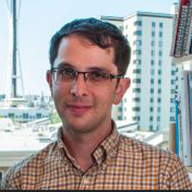
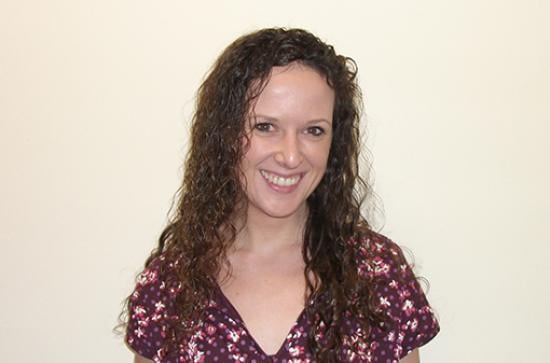
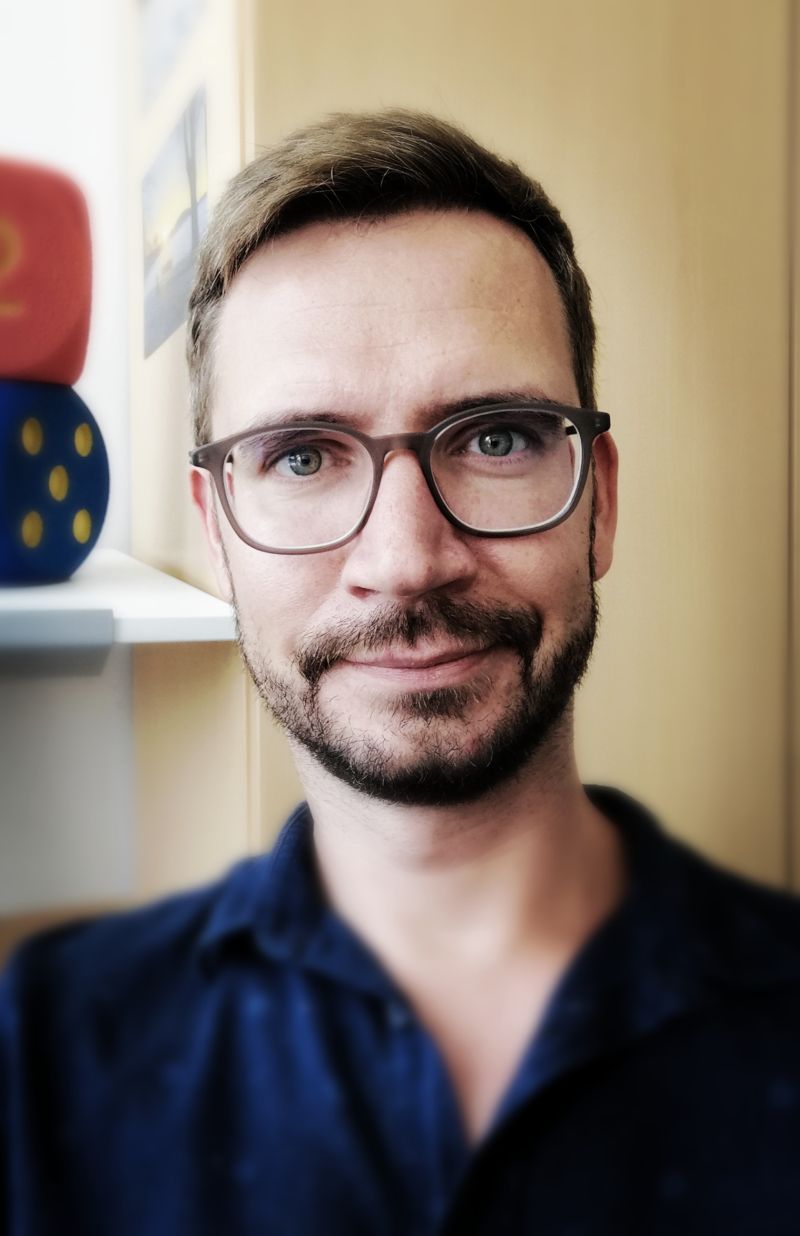
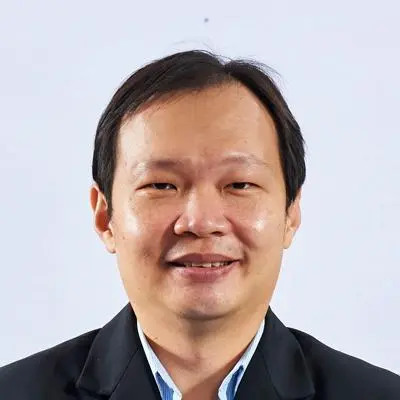
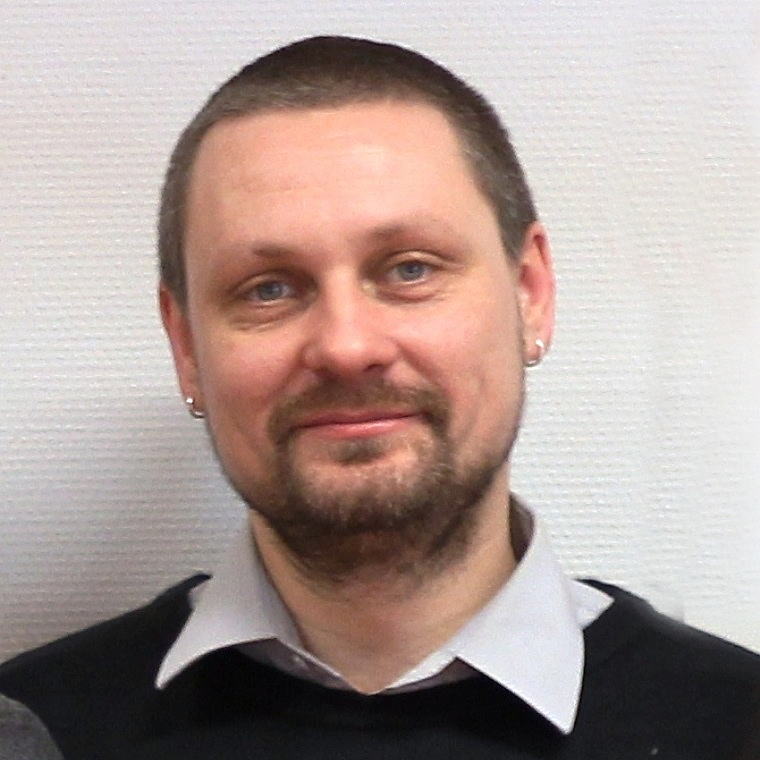
HAGIYA Masami is a Senior Professor at the Graduate School of Information Science and Technology , University of Tokyo. His research spans theoretical and practical aspects of computing, including software verification, molecular robotics, and DNA computing. Specialty : Computer science Research Themes : Analysis, verification, and synthesis of computational models Research Interests focus on bridging formal methods with biochemical computation systems. His work integrates software engineering and mathematical logic to develop novel approaches in symbolic execution and runtime verification , while pioneering research in molecular robots and DNA-based computing architectures. Scientific Awards include multiple Japanese government grants across diverse domains: Grant-in-Aid for Scientific Research (C) (2020-2022) Challenging Research (Exploratory) (2017-2020) Scientific Research on Innovative Areas (multiple projects 2012-2016) Scientific Research (B) (2014-2016)
Marina Petrova Mladenova is a Professor at the University of Forestry, affiliated with the Faculty of Forest Industry and Department of Mathematics, Physics and Informatics. She has served the institution since 1996, progressing from Assistant Professor to Associate Professor in 2011 and achieving full Professorship in 2020. Education Graduated from Technical University - Sofia in 1991 with a major in Electronic Engineering and Microelectronics Research Focus Her work centers on applied computational systems with emphasis on: Integration of CAD/CAM technologies in industrial workflows Database architecture for production management systems Implementation of balanced scorecard frameworks in business analytics Web-based information systems for environmental protection Academic Contributions Teaches core courses across multiple degree programs including Computer Aided Design for Business Management undergraduates, Informatics for Agronomy specialists, and advanced Web Design systems for Ecology Master's students. Her pedagogical approach bridges theoretical computing principles with practical industry applications. Scientific Recognition No awards or fellowships documented in source materials Professional Activities Leads seminar instruction for seven distinct courses spanning Bachelor's and Master's programs while maintaining active research in production management technologies. Office operations are conducted from Building A, Room 124 at the university's Sofia campus.
Bruce Randall Donald is the James B. Duke Distinguished Professor of Computer Science and Biochemistry at Duke University, with additional professorships in Chemistry and Mathematics. He is a member of the Duke Cancer Institute and Faculty Network Member of the Duke Institute for Brain Sciences, as well as a Bass Fellow. Donald received his B.A. from Yale University and Ph.D. from the MIT Artificial Intelligence Laboratory, and has held academic positions at Cornell University, Interval Research Corporation, and Duke University since 2006. Education B.A., Yale University Ph.D., MIT Artificial Intelligence Laboratory Donald's research spans Computational Biology , Structural Biology , NMR , MEMS , Robotics , and Physical Geometric Algorithms . His work focuses on algorithmic solutions for structural proteomics, protein design, and rational drug development, integrating computational methods with experimental validation. Recent publications emphasize AI-driven drug discovery and predicting cancer resistance mutations , with key articles in Cell , PLoS Computational Biology , and Nature Communications Biology . His lab employs ensemble-based modeling and non-proteinogenic amino acid design to tackle challenges in infectious diseases and oncology. Scientific honors include the Presidential Young Investigator Award , Guggenheim Fellowship , and fellowships from the ACM , AAAS , and IEEE . Donald's lab is supported by the NIH Outstanding Investigator Grant and a $3M MIRA award . Advising highlights: Over 30 PhD and Master’s students trained, with alumni leading roles at institutions like MIT, Stanford, and companies such as Genentech, NVIDIA, and Ten63 Therapeutics. His lab maintains state-of-the-art dry and wet facilities at Duke's Levine Science Research Center and French Family Science Center.
Abraham Flaxman is an Associate Professor of Global Health at the Institute for Health Metrics and Evaluation (IHME) at the University of Washington, with an adjunct appointment in the Paul G. Allen School of Computer Science and Engineering. His work bridges mathematics, computer science, and health metrics. Education: BS in Mathematics from MIT (2001), PhD in Algorithms, Combinatorics, and Optimization from Carnegie Mellon University (2006). Research Interests: Focus on Integrative Systems Modeling to combine system dynamics and statistical models. Key areas include cost-effectiveness analysis , verbal autopsy , and microsimulation . He develops software tools like DisMod-MR and the Bednet Stock-and-Flow Model. Publications: Contributions to the Global Burden of Disease Study, malaria prevention modeling, and conflict-related mortality analysis. Articles span journals like The Lancet and PLoS Med . Labs & Affiliations: Affiliated with the Institute for Health Metrics and Evaluation (IHME) and the Paul G. Allen School of Computer Science and Engineering. Country affiliations include Mexico and the United States.
Niamh Cahill is a Professor in the Department of Mathematics and Statistics within the Faculty of Science & Engineering at Maynooth University. Her academic work spans environmental statistics and public health, with a particular focus on developing statistical models to address societal and environmental concerns. She is affiliated with both the Hamilton Institute and ICARUS (the Maynooth University Climate and Environmental Change Research Centre), reflecting the interdisciplinary nature of her research. Dr. Cahill holds a BSc in Chemistry and Statistics from Maynooth University, followed by an MSc and PhD in Statistics from University College Dublin. Prior to joining Maynooth University, she served as a Lecturer/Assistant Professor at University College Dublin (2017-2023) and completed a postdoctoral research associate position at UMASS Amherst (2016-2017). Her research ethos centers on developing statistical models to address societal and environmental concerns. One major research focus involves creating statistical models to assess and interpret indicators of climate change, particularly sea-level change and sea-level extremes. Her work explores and quantifies the spatial non-uniformity and uncertain magnitude of current and future sea-level rise, which aids coastal risk-management decision makers in developing mitigation and adaptation strategies. Another significant research area involves the statistical analysis of population-level health trends, with particular attention to family-planning indicators at national and sub-national levels, especially in the world's poorest countries. This work assesses progress toward meeting Sustainable Development Goals related to health (Goal 3) and gender equality. Dr. Cahill employs a Bayesian approach to statistical modeling, which is particularly suitable for developing complex hierarchical models, accounting for uncertainties related to model parameters, incorporating prior knowledge, and sharing information across data populations. Her recent publications reveal a consistent focus on sea-level reconstruction, climate change indicators, and family planning statistics, demonstrating the dual environmental and public health applications of her statistical methodology. Dr. Cahill has secured significant research funding, including as Principal Investigator for the "Predicting Sea Levels and Sea Level Extremes for Ireland" project (€258,529, 2021-2024) and as Co-PI for several other substantial projects including HydroDare and IHRN. Her research team includes postdoctoral fellows such as Fernando Mayer working on sea-level estimation projects. Within the university community, Dr. Cahill serves on multiple committees including the Academic Council, Faculty of Science and Engineering EDI Committee, and the Department of Mathematics and Statistics PR Committee. She has also held leadership positions such as Outreach Officer for Y-ISA (2021-2022). Dr. Cahill teaches several courses at Maynooth University including DS152 Introduction to Data Science, ST405 Bayesian Data Analysis, ST201 Data Analysis, ST466 Advanced Statistical Modelling, and DS151 Introduction to Data Science, reflecting her expertise in statistical methodology and data science applications.
YILDIRIM BAYAZIT is a Lecturer at Gaziantep University's Islahiye Vocational School (Department of Accounting and Tax), where he teaches courses in statistics, business mathematics, and computational applications. He has held this role since 2011, concurrently serving administrative positions including Deputy Head of Department (2011–2016), Dean (2012–2013), and Faculty Secretary (2013–2014). Education: Bachelor of Arts/Sciences, İnönü University, Faculty of Arts and Sciences (2001–2005) Bachelor of Applied Mathematics, Gaziantep University, Faculty of Arts and Sciences (2012–2014) His research focuses on mathematical applications in business and economics, emphasizing statistical modeling and quantitative analysis. He authored the textbook Extraordinary Analysis (2021) and presented the paper 'THE WORLD OF MATHEMATICS' (2014), exploring interdisciplinary mathematical education. Before academia, he worked as a teacher for Turkey's Ministry of Education (2005–2011). He teaches extensively across associate and bachelor's programs, covering 30+ courses including Statistics, Business Mathematics, and Computer-Aided Statistics Applications.
Jan Modersitzki is a Full Professor of Applied Mathematics at the University of Lübeck, where he leads research at the Institute of Mathematics and Image Computing. He holds a secondary affiliation with Fraunhofer MEVIS, focusing on image registration projects. His academic journey includes a Diploma (1990) and PhD (1995) from the University of Hamburg, followed by a Habilitation (2003) from the University of Lübeck. Career milestones include positions at Emory University, McMaster University, and CAU Kiel. Modersitzki's research centers on computational methods for medical imaging , with emphasis on variational techniques, optimization, and deformable registration. He developed the widely used FAIR toolbox (Flexible Algorithms for Image Registration) and has contributed to foundational theories in image alignment. His work bridges mathematical rigor with clinical applications in oncology, ophthalmology, and pulmonology. Analysis of his 15 most recent publications (2017–2025) reveals dominant themes: multiscale registration , discontinuous deformation modeling , and high-performance computing solutions for medical images. Trends include GPU acceleration, inverse problem optimization, and integration of machine learning with traditional variational frameworks. He actively contributes to academic societies including GAMM, MICCAI, and SIAM. No awards, grants, or supervised students are detailed in available materials.
Professor Michael S. Floater is affiliated with the Department of Mathematics at the University of Oslo , specializing in Differential Equations and Computational Mathematics . His research spans approximation theory, numerical analysis, and geometric modeling, with a focus on polynomial and spline-based data approximation, recursive subdivision techniques, and optimal function spaces. Fields of Interest: Approximation Theory, Numerical Analysis, Geometric Modelling, Computational Mathematics, Differential Equations Recent publications address B-spline properties, supersmoothness in Alfeld splits, and advanced polynomial interpolation methods. His work often intersects with applications in computer-aided geometric design (CAGD) and numerical solutions to partial differential equations. He serves on the editorial boards of Computer Aided Geometric Design (CAGD) and BIT Numerical Mathematics , and has supervised technical reports and collaborative projects in computational methods.
Dr. Thomas Krohn is a Researcher in the Department of Didactics at the Mathematical Institute of the University of Leipzig since October 2012. His work bridges mathematics education, probability theory, and the history of early modern mathematics and astronomy, with a focus on integrating historical methods into contemporary teaching through projects like LUPI (Lowest Unique Positive Integer Game) and GeoGebra applications. Education: Teacher training (2003–2008) at the University of Rostock and Martin Luther University Halle-Wittenberg; Doctorate (2014) at Halle-Wittenberg on 17th-century Wittenberg mathematical teaching. Research: Explores intersections of chance/strategy in stochastics education, historical astronomical data, and didactic reconstruction of logarithmic understanding and proportionality concepts. Article Trends show recurring engagement with: Probability education through interactive games like LUPI Historical instruments (Organum mathematicum, Jacob's staff) for geometric and astronomical teaching 17th-century Wittenberg scholars' contributions to heliocentric theory and observatory development GeoGebra integration for digital learning paths in elementary and secondary education Didactic reconstruction of historical algorithms and misconceptions Interdisciplinary projects merging mathematics with cultural-historical contexts Collaborates frequently with S. Schumacher (Bielefeld) and S. Schöneburg-Lehnert (Leipzig) on didactic innovations. Office hours available in-person or digitally by arrangement for summer semester 2025.
Varvara Kouznetsova is an Associate Professor in Multi-scale Mechanics of Solids in the Mechanics of Materials group at the Department of Mechanical Engineering of Eindhoven University of Technology (TU/e). Her research focuses on understanding, predicting, and tailoring structure-property-performance relations in various materials based on underlying microstructural phenomena. Dr. Kouznetsova holds a degree in Applied Mathematics from Perm State Technical University, Russia, and a PhD in Mechanical Engineering from TU/e. From 2002 to 2009 she was a research fellow at the Netherlands Institute for Metals Research (NIMR) and the Materials innovation institute (M2i). She served as an Assistant Professor at Eindhoven University of Technology from 2006 to 2018 before becoming an Associate Professor. Her research interests include: Multi-scale mechanics of solids Computational homogenization techniques Metamaterials and their emergent properties Wave propagation phenomena in structured materials Damage and fracture mechanics Mechanics of advanced high-strength steels Dr. Kouznetsova's recent publications demonstrate a strong focus on multi-scale modeling approaches applied to metamaterials, porous solids, and advanced metallic materials. Her work bridges fundamental methodological developments with practical applications across various materials systems. She has made significant contributions to computational homogenization techniques, particularly for transient phenomena and locally resonant structures. She has received substantial research recognition with over 6,000 citations according to Scopus metrics. Dr. Kouznetsova teaches courses including "Composite and light-weight materials: design and analysis," "Advanced computational continuum mechanics," "Computer aided engineering," and "Material models." She also engages in research collaboration and co-supervision of PhD researchers with Keio University.
Dr. John See Su Yang is an Associate Professor at Heriot-Watt University's School of Mathematical and Computer Sciences, Malaysia Campus. He serves as Programme Director for BSc Computing Science and leads the Multimedia Data Analysis (MuDA) Lab. Previously, he was a Senior Lecturer at Multimedia University and founded the Visual Processing (ViPr) Lab, and served as a Visiting Research Fellow at Shanghai Jiao Tong University from 2017-2019. Received Bachelor, Masters, and PhD degrees from Multimedia University Published over 140 articles in top journals and conferences including IEEE T-PAMI, CVPR, and NeurIPS Secured over MYR 3 million in research funding as PI/Co-PI Dr. See's research spans multimedia signal processing and computer vision with particular focus on affect and emotion understanding from images and videos. His work includes facial micro-expression analysis, image aesthetics, visual surveillance tasks, activity recognition, and classical image/video processing algorithms. His research has practical applications in micro-expression detection, human-robot interaction, and multimodal content generation. His recent publications (2023-2025) demonstrate strong activity in wind turbine blade inspection using UAVs, micro-expression analysis networks, drowsiness detection, and human-robot interaction. His work bridges theoretical computer vision advances with practical applications in renewable energy, transportation safety, and human-computer interaction. Best Reviewer Award, IEEE ICIP 2020 Outstanding Reviewer Award, CVPR 2021 Dr. See actively mentors PhD students and serves on editorial boards for Signal Processing (as Subject Editor), IEEE Transactions on Multimedia, and several other prestigious journals. He is a Senior Member of IEEE and has served on technical committees for IEEE Multimedia Systems and Applications and Multimedia Signal Processing. His MuDA Lab collaborates with the Visual Processing Lab at Multimedia University and Shanghai Jiao Tong University, focusing on emotional analysis and multimodal systems for solving real-world problems. Dr. See accepts PhD students for projects on aesthetics and emotion processing in media and new paradigms for understanding human emotions in real-world scenarios.
Professor Eike Kiltz is a faculty member at Ruhr-University Bochum, serving as Professor and Head of the Cryptography department within the Faculty of Computer Science. His primary research focuses on theoretical cryptography, the design and analysis of cryptographic protocols, and complexity theory. He teaches courses including Post-Quantum Cryptography, Elliptic Curves and Cryptography, and Bachelor/Master Seminars in Cryptography. Prof. Kiltz's research spans numerous areas within modern cryptography, with particular emphasis on post-quantum cryptography, lattice-based cryptographic systems, and the theoretical foundations of cryptographic protocols. His work addresses critical challenges in cryptographic security including tight security proofs, multi-user security models, and the transition to quantum-resistant cryptographic algorithms. He has made significant contributions to understanding the security of digital signature schemes, key exchange protocols, and lattice-based constructions that form the basis for many post-quantum cryptographic standards. Analysis of Prof. Kiltz's recent publications (2021-2024) reveals a strong focus on post-quantum cryptography, with particular attention to NTRU instantiations, lattice-based key encapsulation mechanisms, and the security of digital signature schemes in the quantum era. His research also addresses fundamental questions in cryptographic theory including the limits of provable security, generic models for group actions, and tightly-secure authenticated key exchange protocols. A significant portion of his recent work contributes to the standardization efforts for post-quantum cryptography, particularly with regard to the NIST PQC standardization process. Member of BITSI (Bochumer Verein zur Förderung der IT-Sicherheit und Informatik) Member of CASA (DFG Excellence Cluster) Member of QSI (EU Marie Curie Network) Member of HGI (Horst Görtz Institute) Member of IACR (International Association for Cryptologic Research) Prof. Kiltz has supervised numerous PhD students to completion, with graduates spanning from 2010 to 2024. His supervision record demonstrates a consistent contribution to training the next generation of cryptographers, with recent graduates working on cutting-edge topics in post-quantum cryptography and advanced cryptographic protocols. His research has been supported through various institutional affiliations and collaborations with leading cryptographic research groups worldwide. Prof. Kiltz is actively involved with the Horst Görtz Institute for IT Security at Ruhr-University Bochum, contributing to one of Europe's leading centers for cryptographic research. His work intersects with multiple research teams focusing on both theoretical foundations and practical implementations of cryptographic systems, particularly those addressing the challenges posed by quantum computing.
Professor Povilas Treigys is a Senior Researcher and Group Leader at the Image and Signal Analysis Group within the Institute of Data Science and Digital Technologies at Vilnius University's Faculty of Mathematics and Informatics. With extensive experience in digital signal processing and machine learning applications, he leads research efforts in medical image analysis, speech processing, and maritime traffic modeling. Dr. Treigys earned his Doctor of Science in Computer Science Engineering in 2010 with a dissertation on "Development and application of graphical methods for analyzing ophthalmological and thermovision data." His academic journey has been marked by significant contributions to interdisciplinary research connecting computer science with medical applications. His research primarily focuses on digital signal processing across multiple domains including medical imaging (MRI, eye fundus), audio signals, and maritime traffic data. A key emphasis of his work is the development and application of deep learning methods to solve real-world problems in healthcare diagnostics, retail automation, and transportation safety. His recent work demonstrates a strong trend toward explainable AI in medical applications and sophisticated time series analysis for prediction tasks. Professor Treigys serves in numerous leadership roles including as a EuroHPC JU Board Member representing Lithuania, VU MIF representative on the Lithuanian Quantum Technology Association board, and as a delegate to multiple professional committees. He is an active reviewer for several prestigious journals including Computer Science, Nonlinear Analysis, Baltic Journal of Modern Computing, MDPI Sensors, and MDPI Electronics. His laboratory focuses on bridging theoretical machine learning advancements with practical applications, particularly in medical diagnostics where his team has made significant contributions to prostate cancer detection, arrhythmia classification, and ophthalmological image analysis. The group maintains strong international collaborations and regularly presents findings at major conferences in computer vision, medical imaging, and artificial intelligence.
Suzanne Shontz is a Professor at the Department of Electrical Engineering and Computer Science and Department of Mechanical Engineering at the University of Kansas. She serves as Associate Dean for Research in the School of Engineering and directs the Mathematical Methods in Interdisciplinary Computing Research Center. Her educational background includes a Ph.D. in Applied Mathematics from Cornell University (2005), M.S. degrees in Computer Science and Applied Mathematics from Cornell (2002), and dual B.A. and B.S. degrees in Mathematics and Chemistry from the University of Northern Iowa (1999). Ph.D.: Applied Mathematics, Cornell University (2005) M.S.: Computer Science (2002), Applied Mathematics (2002) B.A./B.S.: Mathematics/Chemistry, University of Northern Iowa (1999) Research Interests focus on parallel scientific computing and mesh generation , particularly for computational medicine , imaging sciences , and materials science . Her work addresses unstructured meshing algorithms , numerical optimization , and model order reduction in domains ranging from medical devices to solid mechanics . Key projects include NSF CDS&E (2018-2021), NSF CISE (2017-2021), and NSF CAREER (2011-2017) grants. Scientific Awards include the prestigious NSF PECASE (2011), International Meshing Roundtable Fellow (2021), Miller Professional Award (2021), and Big 12 Faculty Fellowship (2015). She has mentored over 30 students across multiple departments and institutions, including Ph.D. candidates in Computer Science , Bioengineering , and Mechanical Engineering . NSF PECASE Awardee (2011) International Meshing Roundtable Fellow (2021) Miller Scholar Award (2016) Big 12 Faculty Fellowship (2015) Collaborators span institutions like University of Waterloo , University of Minnesota , Lawrence Livermore National Laboratory , and Iowa State University . Her teaching portfolio includes graduate courses in Scientific Computing , Parallel Computing , and Numerical PDEs , alongside outreach initiatives such as high school summer camps on computer-aided engineering .
James V Carnahan is an Adjunct Professor (10 % appointment) in the Department of Industrial and Enterprise Systems Engineering at the University of Illinois at Urbana-Champaign, a role he has held since December 2004. Previously he served as Lecturer and Adjunct Professor (50 %), Coordinator of Project Design Activity (100 %), Visiting Assistant Dean in the College of Engineering, and Assistant Professor in what was then the Department of General Engineering. Education Ph.D., Engineering Sciences, Purdue University (1973) M.S., Engineering Sciences, Purdue University (1970) B.S., Engineering Sciences, Purdue University (1968) Research Interests Carnahan’s scholarship is notable for its breadth. Core themes include probabilistic modeling and maximum-likelihood estimation—especially for Beta distributions—reliability engineering, and life-cycle cost analysis of infrastructure systems. He has applied these tools to pavement management, underground heat distribution networks, bulk-material conveyor design, and vehicular-accident injury analysis. Additional curiosity-driven projects span human factors in speed/distance perception, pedestrian-flow congestion, optimization of flavor manufacturing, and even statistical analysis of golf-putting performance. Publications & Trends Across more than three decades Carnahan has published extensively in journals such as Management Science , Accident Analysis & Prevention , ASCE Journal of Transportation Engineering , Decision Sciences , and ASME Journal of Mechanical Design . Early work focused on transportation safety and pavement maintenance optimization; mid-career contributions advanced fuzzy multi-attribute decision making and environmentally conscious design; recent studies shift toward medical and sports analytics, illustrating an evolving interdisciplinary trajectory grounded in rigorous statistical methods. Scientific Awards & Recognition Engineering Council (Accenture) Award for Excellence in Advising, UIUC College of Engineering (2001, 2002) Anderson Consulting Award for Excellence in Advising, UIUC College of Engineering (1990–93, 1999–2000) Department of General Engineering Outstanding Professor (1986, 1991, 2003) Finalist, All-Campus Award for Excellence in Undergraduate Teaching (1990) Everitt Award for Undergraduate Engineering Teaching Excellence (1989) Advising, Grants & Senior Design Leadership Carnahan has coordinated large-scale multidisciplinary senior design projects since 1993, guiding student teams working with industry partners such as Harger International, NTN-Bower, Marmon Industries, Magnetrol, and FONA International. These efforts have garnered multiple James F. Lincoln Engineering Awards and continuous corporate sponsorship, providing students with authentic design-build experiences in reliability, process optimization, and product redesign. Laboratory & Consulting Activity While no dedicated lab is explicitly named, Carnahan maintains active consulting practices through Carnahan Engineering and Surveying (principal, 1979-1983) and ongoing advisory roles with The PERTAN Group, FONA International, Ruhl Forensic, Inc., and the U.S. Army Construction Engineering Research Laboratory, focusing on reliability, forensic accident investigation, and energy-system life-cycle analysis.