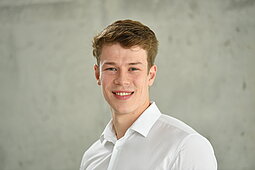
Fabrizia CAIAZZO is a Full Professor at the University of Salerno , affiliated with the Department of Industrial Engineering. She teaches courses such as General Materials Technologies , Computer-Aided Production , and Innovative Production Processes . Location: Fisciano Campus, Building L5, First Floor, Room 001 (U.FL-ING04.P01.001) Contact: f.caiazzo@unisa.it Reception Hours: Mondays and Wednesdays, 9:30 - 11:30, Laboratory L5 Her teaching involves remote and in-person exams, with strict adherence to procedural guidelines for written and oral assessments. She oversees laboratory activities and manages technical and administrative protocols for academic evaluations.
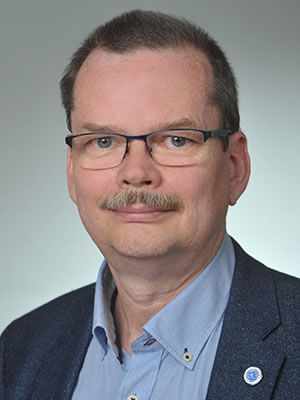
Prof. Dr. Ali Zahedi is a faculty member at Westfälische Hochschule, located in Gelsenkirchen, Germany. He is affiliated with the Department of Mechanical Engineering, Environmental and Building Technology (FB 1), where he contributes to teaching and research in advanced manufacturing and engineering systems. His primary teaching and research interests include manufacturing processes, production systems, surface and coordinate measurement technology, and computer-aided experimental design. These areas reflect a strong focus on precision engineering, industrial quality assurance, and optimization of manufacturing technologies. Prof. Zahedi’s work supports the practical and applied engineering education mission of the university of applied sciences. Although no specific publications or research projects are listed, his expertise lies in the integration of modern metrology and statistical methods into industrial production environments. There is no information available regarding scientific awards, grants, or student supervision.
Ao. Univ.-Prof. Dipl.-Ing. Dr. Martin Held is an Associate Professor in the Department of Computer Science at the University of Salzburg. He leads the Geometric Algorithms Group , focusing on computational geometry, optimization, and geometric design applications. His research spans algorithms, data structures, and virtual reality frameworks. Born in 1962, re-established academic career at University of Salzburg (founded 1622) Office: Jakob-Haringer-Str. 2, Room 1.20, Salzburg (5020) Research impact: Computational geometry foundations for manufacturing and GIS systems As a senior faculty member in Austria's largest educational institution, Held contributes to research-based teaching across 90 degree programs. The University of Salzburg's 2,000 academics drive innovation through local/international networks, with Held's work particularly influencing geometric algorithms and computer-aided design domains. His group's work connects theoretical computer science with industrial applications.
Mehmet Coşar is an Assistant Professor at Canakkale Onsekiz Mart University, Faculty of Fine Arts, Department of Ceramics. He holds a Proficiency in Art degree from Dokuz Eylul University (2021) and a Master's in Ceramic Main Art Branch from Canakkale Onsekiz Mart University (2008). His research focuses on ceramics and glasswork, plastic arts, with special emphasis on Trojan cultural heritage, digital ceramic design, and traditional-to-contemporary transitions. Education: PhD (ongoing), Proficiency in Art (2021), MA (2008), BA (2005) from Canakkale Onsekiz Mart University His work integrates historical ceramic analysis with modern design, particularly in Trojan ceramic style applications , whistling ceramic innovation , and digital design techniques . Recent projects explore ceramic mosaics for public spaces and cross-cultural collaborations with Japanese institutions. Scientific awards include: 2007: Third Prize, 44th International Canakkale Trojan Festival Ceramic Competition 2006: Second Prize, Canakkale Original Ceramic Design Competition 2005: Third Prize, 'Canakkale Ceramics from Old to New' competition He leads ceramic workshops, contributes to international exhibitions, and participates in interdisciplinary research projects focused on local identity and cultural preservation.
Vaso Manojlović is an Associate Professor at the Department of Metallurgical Engineering, Faculty of Technology and Metallurgy, University of Belgrade. He was elected to his current position on October 10, 2022, specializing in Metallurgy with a strong focus on computational applications in metal casting and processing. His research spans multiple specialized areas within metallurgical engineering: Computer-aided casting simulation and gating system design Physico-chemical processes at metal-mold interfaces Iron and steel production metallurgy Powder metallurgy techniques Non-ferrous and rare metals processing Machine learning applications for material property prediction Dr. Manojlović has pioneered the integration of advanced computational methods with traditional metallurgical processes, particularly in applying artificial intelligence to solve industrial casting challenges and develop biocompatible materials for medical applications. He maintains an extensive teaching portfolio across all academic levels, instructing courses ranging from fundamental metallurgical theory to specialized topics like rapid prototyping in foundry and computer applications in casting design. His academic mentorship includes supervising multiple master's theses focusing on cutting-edge intersections of metallurgy and computational science: Olivera Dragutinović (2023): 'Investigation of properties of Co-Cr-W and Co-Cr-Mo alloys coated with hydroxyapatite for dental implants' Gordana Marković (2022): 'Prediction of mechanical properties of biocompatible titanium alloys using machine learning' Ognjen Stanković (2024): 'Analysis and detection of defects in cast parts using advanced machine learning methods' Dr. Manojlović's work exemplifies a successful fusion of traditional metallurgical expertise with modern computational approaches, addressing both industrial manufacturing challenges and biomedical material development needs.
Dr. Rui Ramos Cardoso serves as a Senior Lecturer in Aerospace Engineering and Postgraduate Research (PGR) Director at Brunel University London. He is affiliated with the Department of Mechanical and Aerospace Engineering within the College of Engineering, Design and Physical Sciences. His academic leadership extends to serving as Course Director for Undergraduate Aerospace Engineering programs. Dr. Cardoso's research expertise spans multiple areas of computational mechanics and structural analysis: Computational Mechanics for Structural Analysis Finite Element Method and Meshless Methods IsoGeometric Analysis with Non-Uniform Rational B-Splines (NURBS) Modelling of Plasticity, Crystal Plasticity and Multi-Scale Modelling Modelling of Metal Forming Processes, Additive Layer Manufacturing, and Cold Spray Processes Development of Innovative Numerical Methods His teaching portfolio includes fundamental courses in Solid Body Mechanics, Aerodynamics, Aircraft Design, and Aircraft Structures, reflecting his expertise in aerospace engineering principles and applications. Dr. Cardoso's research publications demonstrate a consistent focus on advancing computational methods for structural analysis, with particular emphasis on aircraft structures, material behavior under various conditions, and innovative numerical approaches to engineering problems. His work spans theoretical developments, practical applications, and validation through experimental research. Dr. Cardoso actively supervises PhD students on research topics including: Modelling of texture evolution during production of high strength 6xxx aluminium alloys Simulation and experimental research of different bending processes The scaling of nonlinear structural dynamics and aeroelastic systems He is associated with the IMM research group and maintains strong collaborative relationships with researchers such as Mayo Adetoro, Hamid Bahai, and Mian Zhou, demonstrating his active engagement in the academic community.
Prof. Dr.-Ing. Hans-Georg Enkler is a faculty member at Furtwangen University, specializing in engineering applications of virtual reality and mechatronic systems. His research focuses on VR simulations for medical training, haptic feedback systems, and product development methodologies. With expertise in Virtual reality-based surgical training Haptically enabled simulation systems Product generation engineering Medical device development Digital education technologies , Enkler bridges mechanical engineering with immersive learning environments. Recent publications demonstrate a clear trend toward VR-based medical training platforms (2024-2025) and advanced simulation methodologies (2022-2023), particularly emphasizing haptic feedback integration and ergonomic assessment in virtual environments . While no specific scientific awards are documented in this dataset, Enkler's work has been continuously funded through institutional grants and development projects since 2006. His research group has produced numerous publications covering microsystem validation, simulation processes, and mechatronic system design. Enkler's laboratory at Furtwangen University focuses on VR simulation development Medical device prototyping Simulation-aided design Advanced haptic system engineering Digital product development Micro-mechanical system optimization , maintaining strong industry and academic collaborations.
Rafael Molina Carmona is a Professor of Computer Science and Artificial Intelligence at the University of Alicante, where he leads the research group 'Smart Learning, Intelligent Technologies for Learning.' He currently serves as Vice-Rector for Digital Transformation and directs the Education Laboratory of the Scientific Unit of Business Innovation 'Ars Innovatio' under the Valencian Innovation Agency. Molina Carmona is a member of the international GTI4U research team, the Santander-UA Chair of Digital Transformation, and the Association of University Professors of Computer Science (AENUI). His career spans roles as Department Director (2008–2012) and Secretary (2002–2008), and he has evaluated projects for the National Agency for Evaluation and Prospective Studies (ANEP) and the Valencian Agency for Evaluation and Prospective Studies (AVAP). PhD in Computer Engineering (cum laude), University of Alicante (2002) Doctorate in Computer Engineering and Computing, University of Alicante (2002) Graduate in Computer Science, Polytechnic University of Valencia (1994) Molina Carmona's research focuses on Artificial Intelligence applications in computer-aided design, manufacturing, education, and IT governance. His early work explored spatial reconstruction and grammatical models for virtual worlds, while his current line investigates technology-enhanced learning through video games, gamification, intelligent learning systems, and digital maturity frameworks like the Digital Maturity Model for Universities (MD4U). He has contributed to 38 high-impact journal articles, 29 book chapters, and 4 research books. His leadership in teaching innovation includes pioneering the Multimedia Engineering Project-Based Learning (PBL) experience, one of Spain's most influential PBL initiatives. He has participated in over 80 conference presentations and led 7 national/regional research projects as Principal Investigator (PI), including collaborations with companies and institutions. Outstanding Doctorate Award, University of Alicante (2004) Molina Carmona has supervised seven doctoral theses and contributed to European research projects and the UNIVERSITIC report on ICT in Spanish universities. His affiliations include the 'I3A, Industrial Computing and Artificial Intelligence' research group and the GTI4U team, which analyzes digital transformation in higher education systems globally.
Dr.-Ing. Georg Schnell is a researcher at the University of Rostock specializing in laser microstructuring and surface functionalization. He leads the Laser Micromachining and Surface Functionalization (LaserSurf) group established in 2022 after completing his PhD on 'Effect of femtosecond laser processing on the physical and chemical surface properties of Ti6Al4V' . Research Focus : Tribological optimization of mechanical components through laser texturing Bioinspired superhydrophobic surface engineering Mechanistic studies of dynamic droplet-surface interactions Biomedical applications in implant surface functionalization Integration of machine learning for automated surface analysis Development of collagenase-free stem cell isolation systems Publication Trends : His work centers on laser-induced surface modifications of Ti6Al4V alloys for biomedical and industrial applications, with recent emphasis on computational modeling of microstructures, machine learning classification of surface patterns, and sustainable superhydrophobic coating techniques. Technical Expertise : Femtosecond laser machining Surface characterization methods Tribological testing protocols Microfluidic system development 3D printing of functional composites Adhesion and wettability analysis
James Lenn is an Assistant Professor at the College of Engineering, Wayne State University, specializing in Engineering Education through the Beginning Engineering Programs. His teaching focuses on foundational courses such as BE1200 - Basic Engineering I: Design in Engineering , ECE3320 - Introduction to Electrical Circuits , and ECE3330 - Electrical Circuits II . Research interests span Engineering Education , Electromagnetic Compatibility , and Materials Science , with a focus on integrating Computer-Aided Design (CAD) 3D Printing Embedded Systems into first-year curricula. His work explores computational modeling of ferrite materials and practical student engagement strategies. Recent publications highlight pedagogical innovations in CAD/3D printing student success via undergraduate teaching assistants embedded control implementation for novice programmers at the ASEE FYEE 2020 Conference. Earlier studies addressed electromagnetic shielding and gasket design (2007-2009).
Prof. Dr.-Ing. habil. Mathias Nowottnick is Full Professor and Chair of Reliability and Security of Electronic Systems at the University of Rostock , Germany. He is concurrently Director of the Institute of Device Systems and Circuit Technology (IGS) , Scientific Director of the annual symposium “Electronic Assemblies and Printed Circuit Boards – EBL”, Head of the Steinbeis Transfer Center for Assembly and Connection Technology, Deputy Chairman of the DIN Standards Committee “Soldering”, and Deputy Chairman of the DVS Soldering Society. Education : While specific degrees are not listed in the source text, the designation “Dr.-Ing. habil.” indicates that he holds a German doctoral degree in engineering and has completed the post-doctoral habilitation, the traditional qualification for a full professorship in Germany. Research Interests Reliability testing and corrosion protection in electronics Packaging and connection technology for high-temperature electronics Thermal management of electronic assemblies using phase-change materials Advanced soldering processes (induction, diffusion, infrared) Failure mechanisms under harsh environments and high-voltage loads Machine-learning–based quality inspection of solder joints His work bridges fundamental materials science and practical manufacturing engineering, aiming to extend lifetime and robustness of electronic systems in automotive, renewable-energy, and industrial applications. Selected Trends in Publications Across more than 50 peer-reviewed papers since 2010, Prof. Nowottnick’s research exhibits three dominant trajectories: (1) development of novel solder alloys and interconnection technologies for operation above 200 °C, (2) integration of phase-change materials and advanced coatings for thermal buffering and peak-temperature limitation, and (3) application of machine-learning techniques to real-time quality control and lifetime prediction in surface-mount technology. Scientific & Professional Service Deputy Chairman, DIN Standards Committee “Soldering” Deputy Chairman, DVS Soldering Society Member: VDE/GMM, SMTA, FED, IMAPS Teaching & Labs He teaches undergraduate and graduate courses including Materials Science and Mechanics , Basics of Electronics I , Device Technology , Computer-Aided Assembly Design , and High-Temperature Electronics – Design and Manufacturing . The institute operates state-of-the-art laboratories for reliability testing, thermal characterization, and advanced soldering experimentation, serving both academic education and industrial contract research.
Adrian Krenzer is a researcher at the University of Würzburg, affiliated with the Faculty of Mathematics and Computer Science and the Department for Artificial Intelligence and Knowledge Systems. His work focuses on applying artificial intelligence to medical imaging, particularly in endoscopic analysis for gastrointestinal diseases. His research spans deep learning architectures, automated polyp detection and segmentation, temporal analysis in endoscopic videos, and the development of benchmark datasets like ENDOTEST. He collaborates with medical professionals on projects integrating AI into clinical workflows, including user interface design and evaluation of AI systems in colonoscopies. Krenzer's publications highlight his contributions to improving computer-aided detection systems, analyzing AI performance in clinical settings, and addressing usability challenges for medical practitioners. His work bridges computer science and gastroenterology, emphasizing practical AI implementation for real-world healthcare applications.
Aloysius K. Mok is a Professor in the Department of Computer Science at the University of Texas at Austin, affiliated with the College of Natural Sciences. His research focuses on distributed real-time systems, cyber-physical systems, and fault-tolerant hard-real-time systems, with applications in robotics, avionics, and industrial process control. He is funded by the Office of Naval Research to develop automated design environments for time-critical systems. Research interests include system architecture, computer-aided design tools, and software engineering for real-time systems. His work explores trade-offs between robustness and response times in time-critical applications. Recent publications highlight trends in robotic task automation, RT-WiFi reliability, cyber-physical design for autonomous robots, laser control systems, and skill-based programming for furniture assembly, reflecting interdisciplinary applications of real-time computing. Funding is provided by the Office of Naval Research to develop a formal framework for automating analysis and synthesis of robust real-time systems.
Mariateresa Campolongo serves as Contract Professor in the Department of Naval, Electrical, Electronic, and Telecommunications Engineering (DITEN) and Researcher in the Department of Architecture and Design (DAD) at the University of Genoa. She teaches Interior Design and Yacht Design courses for Master's Degree programs in Naval and Nautical Design and Yacht Design, covering both theoretical frameworks and practical applications in marine vessel construction. Her research centers on innovative yacht design methodologies , specializing in asymmetrical hull configurations , AI-driven design processes , and engineering-functionality integration for luxury vessels. Current projects examine structural integrity in high-end yachts from manufacturers like Sanlorenzo and Tankoa, while exploring alloy construction techniques and pontoon engineering solutions that bridge naval architecture with aesthetic refinement. Her 2025 publications reveal a cohesive research trajectory focused on Italian nautical innovation, with recurring themes of technological advancement in yacht manufacturing. The work demonstrates increasing integration of artificial intelligence in design workflows while maintaining emphasis on traditional craftsmanship, particularly evident in studies of Sanlorenzo's SL86A and Tankoa's Diamond Binta models alongside explorations of aluminum alloy applications in modern yacht construction.
Ionel Iacob is a Lecturer in Economic Informatics at the Romanian-American University, affiliated with both the Department of Informatics, Statistics and Mathematics and the Faculty of Managerial Informatics. With over 20 years of teaching experience, he has established himself as a dedicated academic specializing in database systems and information technology applications in business contexts. Dr. Iacob holds a PhD in Economic Informatics from the Bucharest Academy of Economic Studies. His academic journey has focused on the practical application of information systems in economic environments, bridging theoretical knowledge with real-world business solutions. His primary research interests include: Databases : specializing in both relational and object-oriented database systems Information Systems Development : with emphasis on design and implementation of economic applications Modern Database Applications : exploring current trends in computer systems with databases applied in economics Communication Theory : particularly as it relates to media systems and information flow in organizations Dr. Iacob's scholarly output demonstrates a consistent focus on practical applications of information technology in business environments. His work spans decision support systems, e-commerce strategies, quality control automation, and database application development. A notable trend in his research is the emphasis on connecting theoretical database concepts with practical business implementations, particularly using Oracle platform technologies. His publications reflect a strong commitment to addressing real-world business challenges through technological solutions. Dr. Iacob has published over 25 articles in specialized journals, presented 15 papers at disciplinary conferences, and authored 9 books as sole author with 4 additional co-authored publications. His teaching encompasses both Bachelor's and Master's degree programs, with a focus on developing students' practical skills in database application development and information systems design. His professional activities extend beyond teaching and research to include specialized documentation both domestically and internationally, as well as a commitment to advancing teaching techniques and pedagogical knowledge.