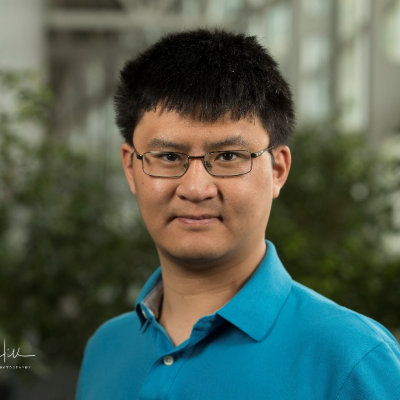
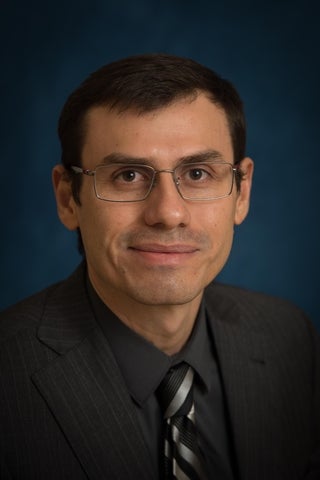
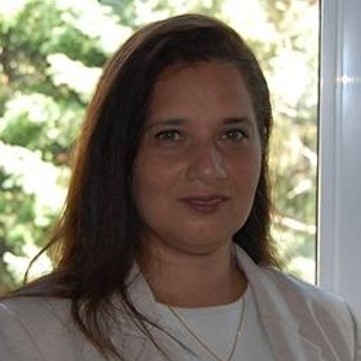
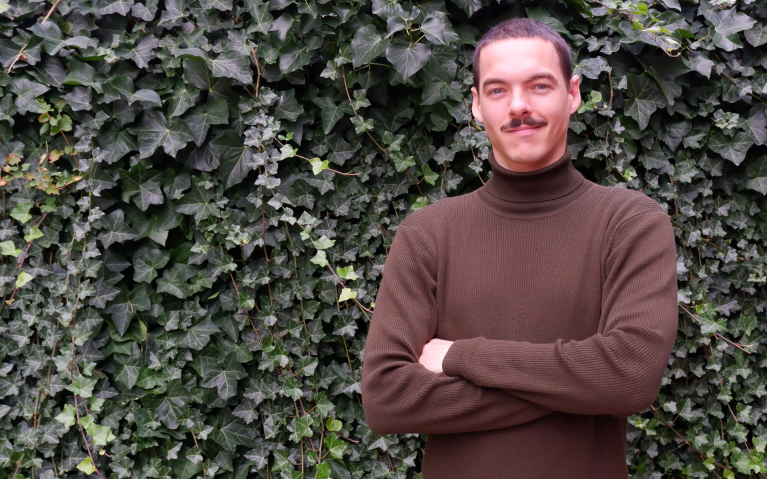
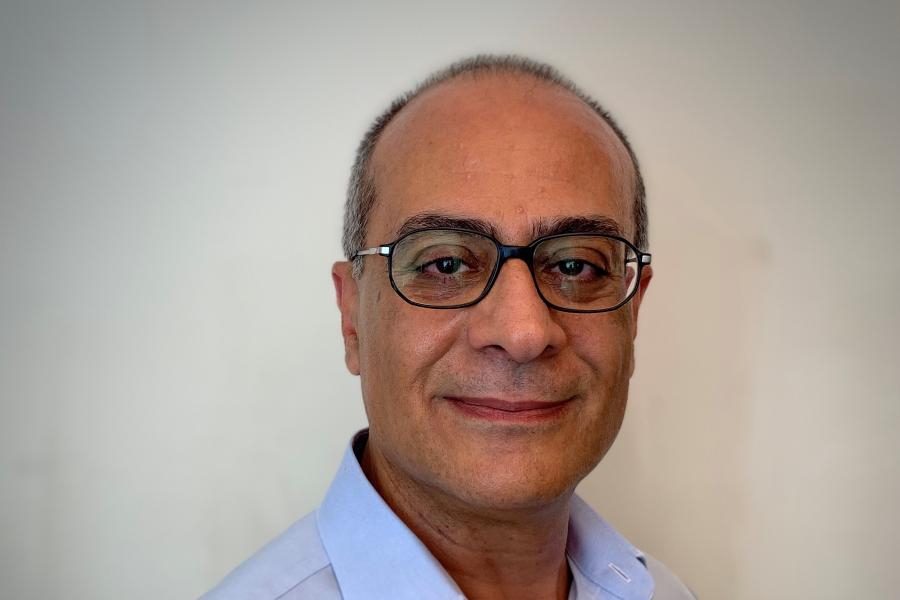
Qingguo Li is a Professor and Associate Head at the Department of Mechanical and Materials Engineering , Queen's University , and a member of the Ingenuity Labs Research Institute . He specializes in biomechanical system design, energy harvesting, wearable sensors, gait analysis, and load carriage systems. His research integrates robotics, biomedical engineering, and sensor technology to develop human-centric devices and mobility aids. Current Roles : Professor, Associate Head, Queen's University Research Institute : Ingenuity Labs Research Institute Lab : Bio-Mechatronics and Robotics Laboratory His work focuses on biomechanical energy harvesting , IMU-based motion analysis , and assistive device development . Key applications include stroke rehabilitation, gait monitoring, and wearable power generation systems. Articles span cable-driven robots , smart walkers , and 3D printing mechanisms , emphasizing human-robot interaction and dynamic modeling . The lab explores sensor calibration , adaptive control algorithms , and human movement optimization . Areas of impact include rehabilitation engineering , load carriage stability , wearable sensor accuracy , and assistive robotics . His team develops solutions for gait asymmetry detection , post-stroke mobility , and low-cost energy systems , leveraging machine learning and kinetic modeling .
Nicola Nicolici is a Professor in the Department of Electrical and Computer Engineering at McMaster University. His research focuses on methods and algorithms for the design of digital integrated circuits and systems, with significant contributions in manufacturing test, post-silicon validation and debug. His work has expanded to include embedded systems, low-energy computing, and custom hardware-accelerated computing systems. Professor Nicolici's research interests span multiple areas of digital system design and validation. His early work focused on manufacturing test methodologies and power-aware testing strategies for integrated circuits. More recently, he has made significant contributions to post-silicon validation techniques, including constrained-random stimuli generation, trace signal selection, and bit-flip detection. His research has evolved to address emerging challenges in embedded computing systems, low-energy design, and specialized hardware acceleration for various applications including deep neural networks and signal processing. His recent publications reveal a strong trend toward hardware acceleration for specialized computing tasks. The research spans matrix multiplication algorithms (Strassen and Karatsuba), memory system optimization (DDR5 calibration), FPGA-based radar processing, and neural network acceleration. His work consistently bridges theoretical algorithm development with practical hardware implementation considerations, particularly focusing on precision analysis, fault tolerance, and energy efficiency. The research demonstrates a clear progression from traditional digital circuit testing to more complex system-level validation and acceleration techniques. Professor Nicolici has been actively involved in teaching courses related to system-on-chip design and test, digital systems, and embedded systems. His teaching portfolio includes advanced courses such as System-on-Chip (SOC) Design and Test and Digital Systems Design , reflecting his expertise in the field. While specific grant information isn't detailed in the provided text, his extensive publication record suggests ongoing research funding support. His research has contributed significantly to the fields of digital circuit testing, post-silicon validation, and hardware acceleration. The work has practical applications in semiconductor manufacturing, embedded systems design, and specialized computing architectures. His recent focus on neural network acceleration and memory system optimization reflects the evolving landscape of computer architecture research.
Simon Yang is a Professor in the School of Engineering at the University of Guelph, part of the College of Engineering and Physical Sciences. His research focuses on artificial intelligence, robotics, sensors, control systems, and bio-inspired intelligence. He has contributed to advanced robotics applications, including mobile robot navigation, underwater vehicle control, and agricultural automation. Dr. Yang holds editorial roles for journals such as the International Journal of Robotics and Automation and IEEE Transactions on Cybernetics . His work bridges theoretical advancements with practical implementations in areas like sensor networks, machine learning, and multi-agent systems. Recent projects include developing robust control frameworks for autonomous systems, digital twin applications, and bio-inspired neural network algorithms. His research emphasizes real-world challenges in robotics, environmental monitoring, and precision agriculture, with a focus on integrating AI-driven solutions for enhanced decision-making and system reliability. Professional contributions include advisory roles in multiple journals and conference committees, reflecting his leadership in the field.
Yusuf Altintas is a Professor in the Department of Mechanical Engineering at the University of British Columbia's Faculty of Applied Science, holding the NSERC–P&WC-Sandrik Coromant Industrial Research Chair and coordinating the Mechatronics Option. An internationally acclaimed scholar, he is a Fellow of 10 prestigious academies including the National Academy of Engineering (NAE), Royal Society of Canada (RSC), and ASME. His academic credentials include a Ph.D. from McMaster University, an Honorary Doctor of Engineering from the University of Stuttgart, and a Doctor of Technical Sciences from Budapest University of Technology and Economics. Professor Altintas's research pioneers the integration of physics-based modeling and data-driven approaches for machining systems. His work spans virtual high-performance machining simulation, machine tool dynamics, chatter stability prediction, and intelligent process control for CNC systems. Current projects focus on digital twin development for machining processes, spindle health diagnostics, ultrasonic vibration-assisted tooling, and adaptive damping systems for aerospace manufacturing applications. His methodologies bridge theoretical mechanics with industrial implementation in die/mold and aerospace sectors. Analysis of his 2022-2025 publications reveals dominant trends in physics-informed machine learning for spindle fault detection, topology-optimized tool design, and chatter avoidance in thin-walled component machining. Key thematic clusters include digital twin implementation (28% of recent work), dynamics modeling of multi-axis systems (35%), and intelligent monitoring algorithms (22%), with growing emphasis on anisotropic material machining and 3D printing process control. Georg Schlesinger Award (2016) NSERC Strategic Research Network in Virtual Machining Grant (2016) NSERC Synergy Award (2013) ASME Blackall Machine Tool and Gage Award (2013) Special Distinguished Scientist Award from Turkey's Scientific and Technical Research Council (2013) He directs the Manufacturing Automation Laboratory at UBC, leading an international research consortium on virtual machining systems supported by NSERC and industry partners including Sandvik Coromant and Pratt & Whitney Canada. His team develops real-time process monitoring frameworks and physics-based simulation tools that have been adopted in aerospace manufacturing for blade machining and die/mold production. The laboratory maintains advanced testbeds for five-axis machining dynamics, spindle health monitoring, and ultrasonic vibration-assisted tooling, serving as a hub for industry-academic collaboration in next-generation manufacturing technologies.
Robert Xiao is an Assistant Professor in the Department of Computer Science at the University of British Columbia (UBC), affiliated with the Designing for People research cluster. He holds a Ph.D. from Carnegie Mellon University and a BMath from the University of Waterloo. His research focuses on interactive technologies, including VR/AR interfaces, sensing systems, and cybersecurity. Notable contributions include Lumitrack (tracking system), TouchTools (touch interaction), and CVE-2023-37271 (Python sandbox exploit). Education: Ph.D., Human-Computer Interaction Institute, Carnegie Mellon University; BMath, Computer Science & Combinatorics, University of Waterloo Affiliations: Core member of UBC's Designing for People cluster Research interests span novel input modalities, mixed-reality systems, and security challenges. He actively competes in DEF CON CTF (multiple 1st places) and publishes in top venues like CHI, UIST, and ISMAR. Recent work explores VR decision-making, low-latency tracking, and collaborative AR/VR environments. Awards: SIGCHI Outstanding Dissertation Award, CHI Honorable Mention, DIS Honourable Mention Teaching includes courses on computer systems (CPSC 213), human-computer interaction (CPSC 554X), and cybersecurity (CPSC 436S). His lab develops tools like SurfShare (surface sharing) and VirtualNexus (collaborative AR).
Christophe Danjou is an Associate Professor in the Department of Mathematical and Industrial Engineering at Polytechnique Montréal . He joined as a professor in January 2018 and serves as Scientific Director of the Poly-Industries 4.0 Laboratory since June 2021. His expertise spans Industrial Engineering , Industry 4.0/5.0 , Manufacturing Systems , and Blockchain . His research focuses on solving interoperability challenges in digital transformation through ontological approaches (OntoSTEP-NC) and blockchain technology. Key themes include strategic positioning frameworks for Industry 4.0/5.0, knowledge management , and smart manufacturing . Recent work explores digital twins for system-of-systems resilience , data integrity in IoT , and AI-driven food processing optimization . He teaches courses like Industry 4.0 and Manufacturing Processes . Under his supervision, 7 PhD and 6 Master’s students are advancing research in areas such as blockchain-based smart maintenance , distributed manufacturing , and carbon emission traceability . He is affiliated with institutions including IVADO (Member), CIRRELT (Member), and Data Intelligence Lab (Member). His publications highlight contributions to digital transformation across construction, agri-food, and SMEs, with 83 total publications (15+ recent articles shown).
Luis A. Ricardez-Sandoval is an Associate Professor in the Department of Chemical Engineering at the University of Waterloo and holds a Tier II Canada Research Chair in Multiscale Modelling and Process Systems. His research group develops advanced computational tools for optimizing chemical processes across multiple scales. Doctorate: Chemical Engineering, University of Waterloo (2008) MASc: Chemical Engineering, Instituto Tecnologico de Celaya (2000) BASc: Chemical Engineering, Instituto Tecnologico de Orizaba (1997) The research group focuses on multiscale modelling and process systems engineering , particularly for CO2 capture , energy systems , and heterogeneous catalysis . Their work combines advanced mathematics, machine learning , and uncertainty analysis to optimize chemical processes before physical implementation. Recent publications emphasize dynamic system optimization under uncertainty, multiscale simulation , and CO2 conversion technologies . Key methodologies include probabilistic uncertainty quantification and economic predictive control . Scientific Awards : 1997: First Place, XII National Creativity Contest 1998: Best Student Award, Instituto Tecnologico de Orizaba 1999: Third Place, XIV National Creativity Contest 2000: J.M. Smith Award for Best MASc Student He has collaborated with international institutions like CONACyT-Mexico, China Scholarship Council, and Universidad de Los Andes. His teaching includes graduate courses in process control, optimization, and computer-aided design.
Naglaa Elagamy is an Associate Teaching Professor in the Department of Mechanical and Manufacturing Engineering at Ontario Tech University. She holds a Ph.D. in Mechanical Engineering from Carleton University (2015), an M.A.Sc. in Engineering from Alexandria University (2002), and a B.Sc. in Engineering from the same institution (1994). As a licensed Professional Engineer (P.Eng.) in Ontario (2016–present) and a Certified SolidWorks Associate (CSWA), her expertise spans advanced composite materials, micro-CT imaging, stress simulation, and fatigue assessment of composite structures. Her research focuses on predicting progressive damage in materials and applying micro-CT for quantitative and qualitative damage analysis in carbon fiber reinforced polymers (CFRP). She has also explored aerodynamic performance optimization of small unmanned aerial vehicles (UAVs) through propeller design studies. Elagamy’s publications and presentations emphasize interdisciplinary approaches, combining experimental techniques like micro-CT with computational methods such as the Cohesive Zone Model and Finite Element Analysis. Her work addresses challenges in composite material durability, structural integrity, and multi-mode fatigue behavior. Beyond research, she contributes to teaching core mechanical engineering courses, including Kinematics and Dynamics of Machines, Statics, Solid Mechanics, and Computer-aided Design. Her professional recognitions include the Carleton University Development Grant (2014) and the AUD Recognition for Services (2018). Her advising and grants activities are not explicitly detailed here, but she has secured funding for her research at Carleton University. She is affiliated with the Faculty of Engineering and Applied Science and collaborates with industry and academic conferences such as SAMPE and CAMX. While specific lab affiliations are not mentioned, her research aligns with cutting-edge structural and materials analysis within the department.
Philippe le Billon is a Professor at the University of British Columbia , affiliated with both the School of Public Policy and Global Affairs and the Department of Geography . His work bridges the environment-development-security nexus , with a focus on climate change, ocean governance, extractive sectors, and conflicts. He collaborates extensively with NGOs and international organizations, particularly on environmental defenders' issues. Research Expertise: Development, Energy Policy, Environment and Climate Change, International Security, Oceans and Fisheries, Social Justice Geographic Focus: Africa, Canada/US, Latin America, Southeast Asia His research explores global challenges such as green transition mineral risks , fish crimes , reparative capitalism , and neoliberalized violence . Recent work examines the techno-utopianism of space mining , AI in anti-corruption , and ocean defender human rights . He has contributed to leading journals like Global Environmental Change and Nature Sustainability , while engaging public audiences via The Guardian and The Conversation . Scientific Contributions: 8 2025 publications on AI in extractives, energy transitions, and ocean governance 7 2024 works addressing carbon neutrality, green extractivism, and fisheries 2023 PNAS study on climate-smart conservation in Africa Awards & Appointments: Scholar, Institute for Advanced Study (Princeton) Fulbright Research Chair, UC Berkeley Research Fellowship, Science-Po Paris Founding Director, Environmental Peacebuilding Association Supervision: Mentored 15+ graduate students including Erik Post (green energy conflicts), Nick Middeldorp (environmental defenders), and Larissa Santos (microhydropower). Current advisees include Erik Post and Philippe's former students hold academic posts at institutions like University of Toronto and University of Sheffield.
Dr. Farida Cheriet is a Full Professor in the Department of Computer Engineering and Software Engineering at Polytechnique Montréal . She serves as Director of the 4D Imaging and Vision Laboratory (LIV4D) and holds membership in the Institute of Biomedical Engineering and the Institute for Data Valorization (IVADO) . Her research spans medical imaging , biomedical technology , artificial vision , and 3D movement estimation . Ph.D. (Montreal), DEA (France), Ing. (Algeria) Her work focuses on interpretable AI models for retinal pathology diagnosis, 3D anatomical reconstruction from medical imaging, and automated segmentation of vascular and spinal structures. She leads innovations in deep learning applications for diabetic retinopathy screening, coronary artery analysis , and spine surgery planning . Recent publications highlight her leadership in computer vision for biomedical applications, with 15 featured articles covering ICU readmission prediction, retinal vessel analysis, dental crown design, and spinal ultrasound processing. She received CFI funding (2021) for cutting-edge facilities and collaborates on pan-Canadian ophthalmic image databases (2018). Dr. Cheriet has supervised 28 Ph.D. students and 46 Master's students in biomedical computing, including projects on scoliosis analysis, retinal imaging, and cardiac MRI. Her teaching includes digital communications and computer graphics courses.
O. Remus Tutunea-Fatan is a Professor in the Department of Mechanical & Materials Engineering at Western University, with cross appointments in Biomedical Engineering and Electrical and Computer Engineering. His work focuses on laser polishing, CNC machining, and surface structuring for drag reduction and biomedical applications. Ph.D. in Mechanical Engineering, The University of Western Ontario M.E.Sc. and B.E.Sc. in Mechanical Engineering, Transilvania University, Romania Research interests include: Advanced CAD/CAM frameworks Laser remelting process optimization Biomedical device design Composite manufacturing techniques Surface topography analysis Artificial intelligence in process control Recent publications indicate expertise in: Laser polishing of metallic surfaces Riblet microstructures for drag reduction AI-driven process monitoring 5-axis machining error compensation Scientific recognition includes: Edward G. Pleva Award for Excellence in Teaching (Western University, 2023) Dr. Terry Base Memorial Teaching Award (2022 co-winner, 2021, 2019) R. Mohan Mathur Award (Faculty of Engineering, 2020) University Students' Council Teaching Honour Roll (2011-2012) Prof. Tutunea-Fatan serves as Associate Chair for Graduate Research Programs (2025-2027) Acting Associate Dean for Undergraduate Studies (2023-2024) Acting Chair, Department of Mechanical and Materials Engineering (2021-2022) He supervises over 40 graduate students and collaborates with industry partners including DuPont Safety and Construction, General Motors, and Active Industrial Solutions Inc.
Cezary Gajewski serves as an Associate Professor in the Department of Design Studies at the University of Alberta and coordinates the Art & Design Fundamentals program, with his office located in the Fine Arts Building (3-81). His academic credentials include: MFA in Sculpture from the University of Alberta (1998) MDes in Industrial Design from the University of Alberta (2003) PhD in Fine Arts, Applied Arts and Industrial Design from the Eugeniusz Geppert Academy of Fine Arts in Wrocław (2016) Gajewski's research integrates technological and traditional design methodologies with human-centered principles, focusing on 3D form, user experience, and seamless hardware-software interaction in systems like virtual reality environments. His work emphasizes the designer's role from conceptual sketch to physical prototype, translating complex user needs into intuitive, innovative products. Recent industry collaborations include the ViCCi I/II digital way-finding systems, N-Zone network gaming for Alberta's tech sector, and the Canola Bioproducts interactive exhibit for the Science Alberta Foundation. He teaches industrial design methodologies, product design, and Computer Aided Industrial Design (CAID), leveraging cutting-edge tools to bridge theoretical frameworks with practical application in design education.
Dr. Nariman Sepehri is a Professor in the Department of Mechanical Engineering at the Price Faculty of Engineering, University of Manitoba, Canada. He has held significant administrative roles including Department Associate Head (Graduate Studies), Associate Dean of Engineering (Undergraduate Programs), and Acting Dean of Engineering. His research focuses on fluid power systems, robotics, and control with applications in rehabilitation and heavy machinery. Education: Post-Doctorate, Electrical & Computer Engineering, University of British Columbia, Canada (Tele-Robotics, Mechatronics) PhD, Mechanical Engineering, University of British Columbia, Canada (Control, Fluid Power Systems, Robotics) MSc, Mechanical Engineering, University of British Columbia, Canada (Computer-Aided Manufacturing Planning) BSc, Mechanical Engineering, Sharif University of Technology, Iran (Machine Design) Dr. Sepehri's research interests span Fluid Power Systems and Technology , Robotics and Teleoperation , Control Systems , Condition Monitoring , and Mechatronics of Rehabilitation Devices . His work integrates advanced control theory with practical applications in hydraulic and pneumatic systems, aiming to improve energy efficiency and reliability in robotics, manufacturing, aerospace, and healthcare. Notably, he has developed innovative rehabilitation devices using game-based interfaces for stroke and cerebral palsy patients. His recent publications (2022-2025) demonstrate a strong trend towards energy-efficient hydraulic systems, fault detection using machine learning, and the development of soft robotic actuators for rehabilitation. Key areas include electro-hydrostatic actuators, pump-controlled circuits, and the application of advanced algorithms for condition monitoring and control. Scientific Awards: Dean of Engineering’s Award for Superior Academic Performance University of Manitoba Rh Award for outstanding contributions to scholarships and research in Applied Sciences Fellow of the Canadian Academy of Engineering (CAE) Fellow of the American Society of Mechanical Engineers (ASME) Fellow of the Canadian Society for Mechanical Engineering (CSME) Dr. Sepehri has supervised over 100 graduate and postdoctoral students, contributing significantly to the field of fluid power and robotics. His research has been supported by major grants from the Natural Sciences and Engineering Research Council of Canada (NSERC) and other sources, enabling the establishment of the Fluid Power Research Laboratory. This lab features state-of-the-art equipment including a human-robot-in-the-loop simulator and hardware-in-the-loop test facilities for condition monitoring. The Fluid Power Research Laboratory at the University of Manitoba, under Dr. Sepehri's leadership, is a hub for innovation in fluid power technology. The lab collaborates internationally with researchers in USA, Brazil, China, Hungary, Romania, Denmark, Sweden and France, and has developed interdisciplinary projects bridging engineering with healthcare applications.
Dr. Greg L. Rohrauer is the Department Chair and Associate Professor at the Department of Automotive and Mechatronics Engineering, Ontario Tech University. He holds a PhD in Mechanical Engineering from Concordia University (1999), alongside earlier degrees from Concordia and Dawson College. His research focuses on advanced composite materials, vehicle dynamics, and manufacturing technology, with notable contributions to composite pressure vessel design and hybrid vehicle development. Education: PhD (Mechanical Engineering, Concordia, 1999); BEng (Mechanical Engineering, Concordia, 1985); DEC (Mechanical Engineering Technology, Dawson College, 1981). Research interests include materials testing, alternate-fueled vehicles, and manufacturing applications. He has authored over a dozen peer-reviewed publications, including work on trailer dynamics control and composite elasticity solutions. Awardees of multiple scholarships and honors, including the Governor General’s medal nomination (1999), SAE Doctoral Scholarships, and academic excellence awards. He has held academic roles at Concordia University and the University of Windsor, alongside industrial experience in motorsports engineering. Teaching responsibilities include courses on automotive fundamentals, capstone design, and materials science. His professional activities include SAE faculty advising (2003–2005) and senate membership at the University of Windsor.
Dr. Ahmad Barari is a Professor in the Department of Mechanical and Manufacturing Engineering at the University of Ontario Institute of Technology. He holds a PhD in Mechanical Engineering from Western University (2006), MSc from Sharif University of Technology (1997), and BSc from Amirkabir University of Technology (1995). His research focuses on advanced manufacturing technologies, additive manufacturing, coordinate metrology, surface integrity, and design optimization. He has authored numerous publications and serves on multiple international conference committees. Education highlights include: PhD, Mechanical Engineering, Western University, 2006 MSc, Mechanical Engineering, Sharif University of Technology, 1997 BSc, Mechanical Engineering, Amirkabir University of Technology, 1995 Research interests span Advanced Manufacturing Technologies, Digital Manufacturing, Precision Manufacturing, and FEA-Based Design Optimization. He has contributed to innovations in additive manufacturing processes, surface quality analysis, and computational metrology. His work addresses challenges like measurement uncertainty, surface tribology, and topology optimization. Notable awards include the Best Paper Award at IMS2016 and multiple recognitions as academic advisor for student projects. He actively participates in professional activities such as organizing conference sessions and serving on review panels for NSERC, CFI, and OCE. His professional roles include organizing tracks at ASME, CAD Conferences, and IMECE events, reflecting his leadership in advancing manufacturing research. He also contributes to academic governance through roles like Design Chair for capstone projects.