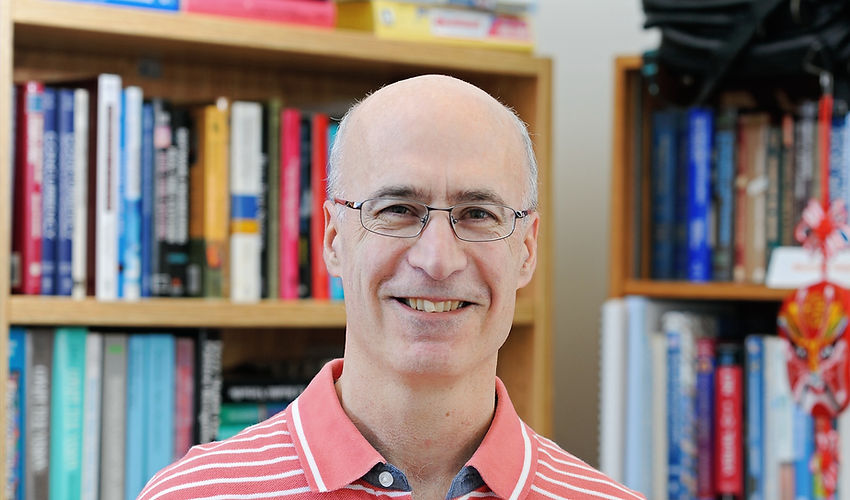
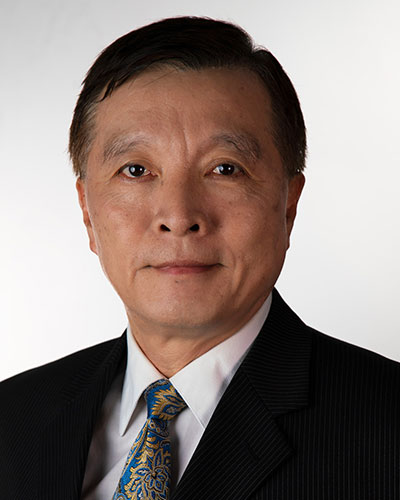
Andrea Tigrini serves as a Researcher in the Department of Information Engineering at Marche Polytechnic University's School of Engineering in Ancona, Italy. His scientific sector is Bioengineering (IBIO-01/A), with research spanning biomedical signal processing and human motion analysis. Dr. Tigrini's research interests focus on the intersection of biomedical engineering and machine learning, particularly in developing innovative approaches for human motion analysis through electromyography (EMG) and inertial sensing. His work emphasizes creating minimal-sensor solutions for practical applications in rehabilitation technologies, gait analysis, and assistive devices. He investigates neuromuscular control mechanisms during various activities including walking, balance maintenance, and hand gestures. Analysis of his recent publications (2023-2025) reveals a strong trend toward developing accessible diagnostic and assistive technologies using machine learning approaches. His research consistently addresses real-world challenges in diabetic neuropathy detection, prosthetic control, and rehabilitation monitoring, with particular emphasis on creating solutions that require minimal sensor setups to enhance practicality and adoption in clinical settings. His work demonstrates significant contributions to understanding the relationship between neuromuscular signals and movement patterns, with applications spanning rehabilitation engineering, human-computer interaction, and clinical diagnostics. The interdisciplinary nature of his research bridges engineering principles with physiological understanding to create practical healthcare solutions.
Timo Kretschmer M.A. is a Lecturer at HTWK Leipzig's Faculty of Architecture and Social Sciences, specializing in Building Information Modeling (BIM), computer-aided design, and architectural animation. He has been affiliated with the university since 2004, initially working in the Faculty of Civil Engineering before moving to the Faculty of Architecture and Social Sciences in 2014. As Webmaster of the IT organization and Member of the Faculty Council, he plays a significant role in the university's digital infrastructure. His research focuses on BIM implementation, digital building applications, and virtual construction monitoring. He has been involved in significant projects including the cooperative doctoral procedure with Leipzig University on the reconstruction of Max Klinger's 'Christus im Olymp' and the Saxon Ministry of Justice's model project (2007-2008). His current research (2023-2025) continues to advance digital methods in architectural practice. Kretschmer's publications and presentations demonstrate a clear trajectory from foundational BIM concepts to advanced implementation strategies. His 2024 handbook 'BIMcert Handbuch Grundlagenwissen openBIM' represents the culmination of his expertise, while his earlier works from 2004-2015 established his contributions to architectural history and education. His conference presentations since 2015 show increasing specialization in BIM competence development, data security, and interdisciplinary applications. Chairman of DIN NA 005-13-05 AA 'Professional Competence' Spokesperson for buildingSMART eV Specialist Group 'Certification' Member of buildingSMART International PCert Sub-Committee Member of CEN/TC 442/WG8 'Competence' Founding member of buildingSMART eV Regional Groups in Saxony and Central Germany As an active participant in professional organizations, Kretschmer contributes significantly to standardizing BIM competence frameworks. His work with the Saxony Chamber of Architects on the 'Digital Building Application' working group demonstrates his commitment to bridging academic research and professional practice. His jury work for the BIM Champions awards (2021-2025) further establishes his authority in the field. The IT infrastructure he helps maintain, including the BIMcloud system, supports numerous architectural design projects across the faculty.
Manfredo Atzori serves as Associate Professor at the Department of Neuroscience, University of Padova, and has been a research scientist at the Institute of Information Systems of the University of Applied Sciences Western Switzerland (HES-SO Valais) since 2011. Education M.Sc. in Physics, University of Padova, 2006 Ph.D. in Bioengineering, University of Padova, 2009 Research Focus Dr. Atzori pioneers machine learning applications for biomedical multimodal data analysis. His work spans convolutional neural networks for surface electromyography (a field he helped establish globally in 2015), computer-aided cancer diagnosis in biopsies, and 3D-printed robotic prosthetic hands controlled via machine learning. He leads the Horizon 2020 ExaMode project for weakly-supervised knowledge discovery in digital pathology, integrating text and image analysis for medical diagnostics. Research Leadership As Scientific Coordinator of the Horizon 2020 ExaMode project (2019-present), he manages a seven-partner consortium advancing multimodal medical data analysis. He previously coordinated the Hasler Foundation's ProHand project for 3D-printed prosthetics and led the MeganePro Project (2016-2019), which investigated eye-hand coordination in robotic prostheses and neurocognitive effects of amputations using multimodal datasets. Since 2011, he has curated the Ninapro database—a globally utilized resource with thousands of users for robotic hand prosthesis research. Professional Recognition With over 80 peer-reviewed publications exceeding 2,000 citations, Dr. Atzori frequently presents as an invited speaker at international conferences. He serves on the editorial board of Scientific Data (Nature Publishing Group), reflecting his standing in computational biomedical research.
Nasim Parsa serves as Assistant Professor in the Gastroenterology, Hepatology, and Nutrition Division within the Department of Medicine at the University of Minnesota Medical School, focusing on AI-enhanced endoscopic diagnostics and therapeutic interventions. Her research pioneers artificial intelligence applications in gastrointestinal endoscopy, with specialized expertise in: Barrett's Esophagus surveillance and dysplasia detection Peroral Endoscopic Myotomy (POEM) for achalasia management AI-human collaboration frameworks in real-time endoscopy Ultrasound image segmentation using self-supervised learning Rare esophageal conditions like lichen planus Analysis of her 47 publications (2017-2026) reveals escalating research momentum, with recent work (2025-2026) concentrating on clinical AI integration for Barrett's Esophagus, human-AI interaction paradigms, and advanced imaging techniques across gastrointestinal endoscopy. Dr. Parsa maintains active international collaborations reflected in co-authorship networks spanning multiple continents, with research output including 29 articles, 8 reviews, and 5 commentaries. Her work contributes to UN Sustainable Development Goals through AI-driven healthcare innovation.
Robert Bergevin is a Full Professor in the Department of Electrical Engineering and Computer Engineering at Laval University's Faculty of Science and Engineering, where he has been employed since 1990 and achieved full professor status in 2001. He is also a member of CeRVIM (Research Center in Robotics, Vision and Machine Intelligence) and actively participates in graduate recruitment. Dr. Bergevin's educational background includes: Ph.D. in Electrical Engineering from McGill University (1985-1990), with thesis titled "Primal Access Recognition of Visual Objects" under Professor Martin D. Levine M.Sc.A. in Biomedical Engineering from École Polytechnique de Montréal (1982-1984), with thesis on "Modeling and numerical simulation of a nuclear magnetic resonance imaging system" under Professor Robert Guardo B.Sc.A. in Electrical Engineering (Communications specialty) from École Polytechnique de Montréal (1978-1982) Professor Bergevin's research spans cognitive computer vision, pattern recognition, and information systems design methodologies. His work is guided by a unique methodology that progresses "from the general to the particular" to achieve "simply communicable and universally applicable understanding." He has been a researcher in cognitive computer vision since 1985, with particular focus on ontology, methodology, and categorization. His research interests include Ontology of Cognitive Digital Vision, Cognitive Digital Vision Development Methodology, Categorization in cognitive digital vision, Analysis and understanding of images and videos, and Understandable artificial intelligence. As a generalist, he is also a proponent of the science of global anticipatory design (R. Buckminster Fuller) and general semantics (Alfred Korzybski). Analysis of Professor Bergevin's recent publications reveals a strong focus on video anomaly detection, carried object detection, and human activity recognition. His work consistently applies cognitive principles to computer vision problems, often developing novel methodologies for segmentation, tracking, and recognition. The research shows progression from foundational work on image analysis to more complex spatio-temporal understanding of video content, with increasing integration of deep learning techniques in recent years while maintaining a focus on interpretable and cognitively-inspired approaches. Among his professional recognitions: Teaching Star, Faculty of Science and Engineering (2019, 2012) Professor Bergevin has supervised numerous graduate students throughout his career, including four PhD candidates and four Master's students in recent years. His current research includes the "Cyber-physical systems and materialized machine intelligence" project funded by Université Laval, École de technologie supérieure, and Fonds de recherche du Québec - Nature and technologies, running from 2019 to 2026. He was also the director of the bachelor's program in computer engineering from 2001 to 2010 and served as Area Editor for the journal Computer Vision and Image Understanding from 2002 to 2017. As a member of CeRVIM (Research Center in Robotics, Vision and Machine Intelligence), Professor Bergevin collaborates with researchers across multiple disciplines to advance the fields of robotics, computer vision, and machine intelligence. His work bridges theoretical foundations with practical applications, particularly in the analysis of human activities and object recognition in complex visual scenes.
Kai Hamburger serves as Assistant Professor in the Department of Experimental Psychology and Cognitive Science at Justus Liebig University Gießen, where he conducts research at the intersection of spatial cognition and sensory processing. His institutional role is evidenced by office location (Room F 161, Phil. I) and inclusion in the university's research team listings. His academic credentials include: Dipl.-Psych. from University of Frankfurt (2004) Dr. rer. nat. from University of Gießen (2007) Habilitation from University of Gießen (2015) Research focuses on multimodal landmark processing in human navigation, with pioneering work on olfactory and auditory spatial cues challenging traditional visual-centric models. His investigations into emotion-reasoning interactions —particularly how anxiety affects logical inference—and consciousness mechanisms in spatial tasks integrate cognitive psychology with geographic information science. Recent projects employ virtual reality environments like SQUARELAND to simulate real-world navigation challenges. Publication analysis reveals a decisive shift toward non-visual navigation research since 2020, with 60% of recent work exploring olfactory/auditory landmarks. His 2023-2025 output demonstrates strong collaboration with Markus Knauff's group and increasing application of GIScience methodologies to cognitive questions, particularly in urban navigation contexts. Dr. Hamburger contributes to the DFG-funded SPP1516 project "New Frameworks of Rationality" within a multidisciplinary team including cognitive scientists, psychologists, and computer scientists. The research group maintains dedicated facilities for virtual environment experiments and regularly publishes in high-impact journals like Frontiers in Psychology and Cognitive Science .
F. Frank Chen is a Professor in the Department of Mechanical Engineering at the University of Texas at San Antonio (UTSA) and holds the Lutcher Brown Distinguished Chair in Advanced Manufacturing. He is a Fellow of both the Society of Manufacturing Engineers (SME) and the Institute of Industrial and Systems Engineers (IISE). Ph.D. & MS, University of Missouri-Columbia BS, Tunghai University (Taiwan) Dr. Chen specializes in flexible manufacturing, lean systems, and AI integration. His research spans predictive maintenance, computer vision for defect detection, cybersecurity in industrial IoT, and sustainable production. He actively combines AI (deep learning, NLP) with lean methodologies to optimize manufacturing and healthcare workflows. Recent publications focus on AI-enabled sustainability (waste reduction, parking efficiency), advanced diagnostics (cancer detection via CNNs, transformers), and cybersecurity enhancements. His work bridges theoretical innovation with practical applications in smart manufacturing and lean healthcare. Fellow, IISE (2019) Operational Excellence Division Teaching Award, IISE (2015) SME College of Fellows (2011) Dr. Chen leads the Flexible Manufacturing and Lean Systems Lab, contributing to AI-aided lean manufacturing, intrusion detection systems, and voice-of-customer extraction. His interdisciplinary approach impacts both industrial processes and healthcare diagnostics, emphasizing efficiency, sustainability, and technological integration.
Jaakko Sahlsten is a Postdoctoral Researcher at the Department of Computer Science, Aalto University . His work focuses on applying deep learning and Bayesian methods to medical imaging challenges, particularly in radiotherapy and VR-based image manipulation . He collaborates with interdisciplinary teams across oncology, dentistry, and computational biology . Key Research Areas : Medical image segmentation, uncertainty quantification, VR applications, diabetic retinopathy analysis Methodologies : Deep learning, DualUNet architectures, large language models (DR-GPT), Bayesian modeling Clinical Domains : Oropharyngeal cancer, head and neck tumors, dentistry, diabetic retinopathy His recent publications analyze 3D medical image manipulation in VR , AI-driven tumor segmentation , and uncertainty estimation in radiotherapy. He actively explores model robustness and reproducibility in healthcare AI applications, with collaborations spanning institutions in radiation oncology and medical imaging .
Auxiliadora Sarmiento Vega is a full professor at the University of Seville 's School of Engineering within the Department of Signal Theory and Communications . With over two decades of research experience, her work bridges audio signal processing and biomedical applications, focusing on blind source separation, entropy-based methods, and machine learning for healthcare diagnostics. Research Pillars : Audio source separation, biomedical signal/image analysis, and virtual reality integration Key Projects : ACACIA (Signal Analysis), NEUBIAS (Bioimage Analysts Network), and multiple NIH-funded biomedical imaging initiatives Academic Contributions span 15+ years, with groundbreaking work in: Alpha-Beta divergence clustering algorithms EEG processing for motor imagery BCI systems Automated breast cancer grading from histological images Glaucoma and diabetic retinopathy diagnostics via retinal image analysis Virtual reality platforms for emotion analysis research She actively collaborates with institutions like the IEEE Women in Engineering (Spanish section secretary) and NEUBIAS network , while mentoring through outreach programs like g4g Day that empower young women in STEM.
Dr. Lecturer Cengiz GÜNDÜZALP is a Turkish academic at Kafkas University's Kazım Karabekir Technical Sciences Vocational School , Department of Computer Technologies since 2012. Promoted to Assistant Professor in 2022, their work focuses on educational technology integration in STEM fields, particularly through Web 2.0 tools , interactive video , and artificial intelligence applications. Current roles: Assistant Professor (2022-), Lecturer (2012-2022) Institutional committees: Education and Ethics Commission (2023-), Academic Unit Quality Committee (2020-2021) Research interests include metacognitive skill development , digital game-based learning , and technology proficiency in teacher training. Their 15 most recent articles (2015-2025) examine: Augmented reality gamification in science education AI adoption frameworks for STEM teachers Interactive video effectiveness in web-based courses Project/resource-based teaching methods Robotics integration in education Collaboration network includes: Hüseyin Ateş (Kırşehir Ahi Evran University) Yüksel Göktaş (Atatürk University) Ezgi Pelin Yıldız (Kafkas University) Academic metrics: 36 publications, 89 citations, h-index 5 (YÖKSIS); Google Scholar: 162 citations, h-index 7.
Dr. W.J. (Wilson) dos Santos Silva is an Assistant Professor at the Faculty of Science , University of Utrecht, specializing in AI & Data Science and Biology . His research focuses on creating explainable and robust AI models for multimodal multi-centre medical data , with emphasis on privacy-preserving machine learning and out-of-distribution generalization . PhD in Electrical and Computer Engineering (2022), University of Porto Master's and Bachelor's in Electrical and Computer Engineering (2016), University of Porto Research Interests include: Explainable AI for medical decision-making transparency Privacy-Preserving Machine Learning in healthcare Multi-Centre Data Analysis across institutions Medical Imaging applications in oncology and neurology Recent Publications demonstrate expertise in: Medical image segmentation techniques Cross-modal learning approaches Federated learning for privacy Biomedical data interpretation Generalization in heterogeneous datasets Scientific Contributions include organizing the iMIMIC workshop at MICCAI 2024 and mentoring students receiving competitive awards. Students & Collaborators : PhD Candidates: Valentina Corbetta, Daan Boeke, Miriam Cobo, Aniek Eijpe, Jan van Eck Postdoctoral Researchers: Soufyan Lakbir Former Students: Tingyang Jiao, Laura Latorre, Filipe Campos, etc. Laboratory develops AI solutions for medical imaging , multi-centre collaboration , and ethical AI in healthcare contexts.
Vincent BARRA is a full professor in Computer Science at the LIMOS lab of Clermont-Auvergne University and CNRS. He serves as Vice dean of Clermont-Auvergne-INP (education and training), Assistant director of LIMOS, and Artificial Intelligence Special Advisor for Clermont-Auvergne University. He is also a member of the scientific board and Executive committee of MIAI Cluster. His academic work is primarily conducted through ISIMA, the engineering school in computer science of Clermont-Auvergne INP. Professor BARRA's research focuses on data analysis from both methodological and applicative perspectives. His work spans image and video processing, mesh processing, computational geometry, and machine/deep learning techniques. His interdisciplinary research connects computer science with applications in medical imaging, geothermal systems, polymer dynamics, mental health diagnostics, semiconductor manufacturing, and environmental monitoring. His publications demonstrate consistent innovation in developing algorithms for segmentation, feature extraction, and pattern recognition across diverse domains. The analysis of his recent publications reveals strong trends toward deep learning applications in specialized domains. His work shows increasing focus on medical applications (depression diagnosis, preterm birth prediction), geoscience (geothermal systems analysis), and industrial applications (semiconductor metrology, structural health monitoring). A consistent theme across his research is the development of robust, domain-specific deep learning architectures that address unique challenges in data analysis across different scientific fields. Professor BARRA maintains active collaborations across multiple institutions and disciplines, as evidenced by his extensive co-authorship network. His work bridges theoretical computer science with practical applications in diverse fields, demonstrating a commitment to solving real-world problems through innovative computational approaches. He leads research within the LIMOS laboratory, which focuses on computer science, modeling, and systems optimization.
Dr. Jonas Biehler is a Research Fellow at the Chair of Numerical Mechanics within the Institute for Computational Mechanics at the Technical University of Munich (TUM). His work focuses on computational methods for biomechanical systems, with expertise in uncertainty quantification, high-performance computing, and machine learning applications in respiratory and cardiovascular modeling. Education: PhD in Mechanical Engineering, Technical University of Munich, 2016 His primary research spans Computational Biomechanics, Computational Solid Mechanics, and Experimental Biomechanics, with specialization in Inverse Problems and Uncertainty Quantification. He integrates High-performance parallel computing with Machine Learning and Bayesian Optimization to advance Respiratory Mechanics and Semantic Segmentation of medical images. His methodologies address complex challenges in patient-specific modeling where experimental validation is constrained. Analysis of his 2021-2025 publications reveals dominant themes in respiratory system modeling (35%), uncertainty quantification frameworks (30%), and cardiovascular biomechanics (25%). Key trends include the development of open-source tools like QUEENS for solver-independent analyses, physics-informed machine learning for drug delivery optimization, and multi-fidelity approaches that reduce computational costs by 40-60% in large-scale simulations. His work increasingly bridges computational models with clinical applications in ARDS and pulmonary fibrosis. No scientific awards were documented in the provided materials. Dr. Biehler has supervised 15+ student projects with emphasis on methodological innovation and experimental validation: Deep Neural Networks as Surrogate Models for Uncertainty Quantification Multi-Level Monte Carlo Schemes for Uncertainty Quantification Experimental and Numerical Analysis of Nonlinear Anisotropic Polymer Membranes Uncertainty Quantification for Human Respiratory System Models Biaxial Measurement of Porcine Aorta Mechanical Properties He operates within the LNM (Lehrstuhl für Numerische Mechanik) research ecosystem at TUM, which maintains high-performance computing clusters and biomechanics testing facilities. The group collaborates extensively with clinical partners at Klinikum rechts der Isar on translational projects involving abdominal aortic aneurysms and respiratory mechanics, with current efforts focused on integrating real-time patient data into computational frameworks.
Dr. Anđelija Mitrović is an Assistant Professor at the Department of Mechatronics, Faculty of Technical Sciences in Čačak, University of Kragujevac. She holds a PhD in Technical Sciences (Mechanical Engineering) from 2016 and Master of Science in Information Technology from 2010. Her academic career spans multiple institutions including College of Technical Vocational Studies Čačak (2006-2011) and Faculty of Technical Sciences Čačak (2020-present). BSc in Hydropower Engineering, Mechanical Engineering Faculty Belgrade (1996) Profesor in Engineering and Informatics, Technology Faculty Čačak (2006) MSc in Information Technology, Technology Faculty Čačak (2010) PhD in Technical Sciences, Faculty of Technical Sciences Novi Sad (2016) Her research focuses on Production Technologies with emphasis on metal cutting thermal analysis, CAD/CAM systems, and educational technology innovations. Key research trends include: Thermal modeling in conventional and unconventional machining 3D virtual environment applications for engineering education Finite element analysis of milling processes Software-based cutting parameter optimization Integration of immersive learning platforms Publications demonstrate expertise in Thermal Analysis , Manufacturing Simulation , and Virtual Learning Environments . While no formal awards are listed, her work appears in reputable journals and international conference proceedings.
Milan Marjanović is an Assistant Professor at the Department of Mechanical Engineering, Faculty of Technical Sciences in Čačak, University of Kragujevac. Holding an M.Sc. in Mechanical Engineering, he teaches Thermodynamics, Applied Thermodynamics, Renewable Energy Sources, and Machine Elements. His research focuses on Thermal Engineering, Thermoenergetics, and Renewable Energy systems. Born 1990 in Užice Completed primary/secondary education in Požega Faculty of Mechanical Engineering and Civil Engineering, Kraljevo (2012) Master's in Energy Engineering (2014) Research spans biomass combustion optimization, solar energy systems, and hydraulic simulation tools. Active in academic projects like the national PRIZMA 2023 initiative for Active Condensation Hybrid Systems. Key publications include work on: Biomass-fired district heating efficiency AI-driven solar energy prediction models Hybrid photovoltaic-thermal collector testing Industry 4.0 curriculum development for Mechatronics Scientific contributions appear in journals like Case Studies in Thermal Engineering and conferences including COAST 2024. Awards include Ministry scholarships and 'Mašinijada' competition victories. Collaborates with industry partners on mechanical testing equipment development.