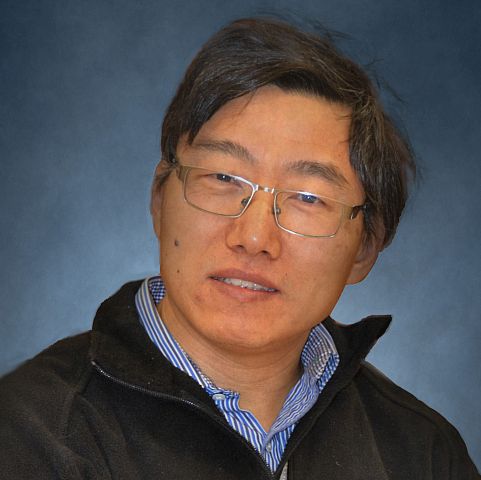
Qingguo Li is a Professor and Associate Head at the Department of Mechanical and Materials Engineering , Queen's University , and a member of the Ingenuity Labs Research Institute . He specializes in biomechanical system design, energy harvesting, wearable sensors, gait analysis, and load carriage systems. His research integrates robotics, biomedical engineering, and sensor technology to develop human-centric devices and mobility aids. Current Roles : Professor, Associate Head, Queen's University Research Institute : Ingenuity Labs Research Institute Lab : Bio-Mechatronics and Robotics Laboratory His work focuses on biomechanical energy harvesting , IMU-based motion analysis , and assistive device development . Key applications include stroke rehabilitation, gait monitoring, and wearable power generation systems. Articles span cable-driven robots , smart walkers , and 3D printing mechanisms , emphasizing human-robot interaction and dynamic modeling . The lab explores sensor calibration , adaptive control algorithms , and human movement optimization . Areas of impact include rehabilitation engineering , load carriage stability , wearable sensor accuracy , and assistive robotics . His team develops solutions for gait asymmetry detection , post-stroke mobility , and low-cost energy systems , leveraging machine learning and kinetic modeling .
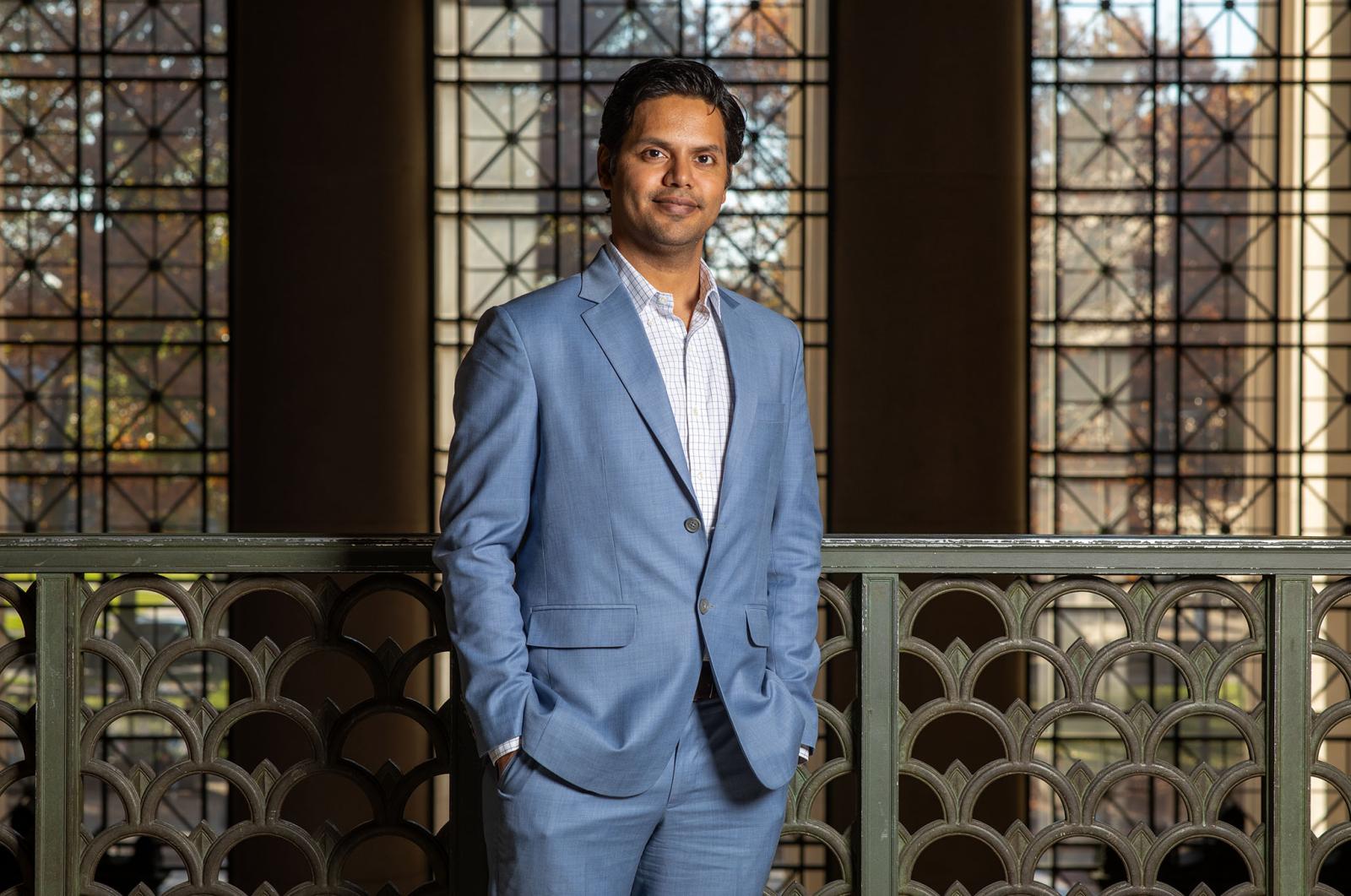
John MacLaren Walsh is a Professor in the Department of Electrical and Computer Engineering at Drexel University, where he leads the Adaptive Signal Processing and Information Theory Research Group. He holds BS, MS, and PhD degrees from Cornell University, all completed under Dr. C. Richard Johnson, Jr. His research spans information theory, network coding, distributed computing, and machine learning applications in patent analysis. His work focuses on: Bounding entropic vectors and their impact on communication networks Rate region computation for network coding and distributed storage Information theory for distributed function computation Machine learning-enhanced patent processing systems Publications emphasize entropy geometry, network coding complexity, distributed algorithms, and patent analysis, with consistent themes of optimization and combinatorial methods. Recent work (2016-2019) shows increased focus on probabilistic supports and computational efficiency in network coding. Awards: 2011 NSF CAREER Award for 'Entropy Geometry in Variational Inference Signal Processing' He has advised PhD students on topics like entropy region mapping, network coding, and distributed control. Key grants include NSF CAREER and AFOSR funding for wireless network overhead control. He directs the Adaptive Signal Processing and Information Theory Research Group, which develops algorithms for network coding, distributed storage, and patent analysis systems.
Prof. Dr. Julia Vogt is an Assistant Professor at the Department of Computer Science at ETH Zürich, leading the Professur für Medizin. Datenwiss. Her research focuses on medical machine learning, data science, and AI applications in healthcare. She specializes in developing interpretable AI systems for clinical decision support, particularly in pediatric diabetes management, medical imaging analysis, and anomaly detection. Her work bridges translational gaps by emphasizing causal approaches and clinical validation. Her academic role includes teaching courses like the Data Science Lab (263-3300-00L/10L) and Topics in Medical Machine Learning (263-5100-00L). Her lab's research spans predictive modeling for nocturnal hypoglycemia, echocardiogram analysis for pulmonary hypertension detection, and multimodal learning in radiology. She also contributes to national pediatric data initiatives like SwissPedHealth. Key technical areas include concept bottleneck models, stochastic AI frameworks, and generative models for medical signal denoising. Her work often emphasizes model interpretability, fairness, and robustness to distribution shifts. She collaborates on projects involving wearable devices for pediatric monitoring and AI-driven rehabilitation tools for post-stroke gait analysis.
Jiajun Wu is an Assistant Professor of Computer Science and, by courtesy, of Psychology at Stanford University. He holds multiple affiliations including membership in Bio-X, Faculty Affiliate status at the Institute for Human-Centered Artificial Intelligence (HAI), and membership in both the Wu Tsai Human Performance Alliance and Wu Tsai Neurosciences Institute. Dr. Wu earned his Ph.D. and S.M. in Electrical Engineering and Computer Science from the Massachusetts Institute of Technology before joining Stanford. Dr. Wu's research program focuses on creating AI systems that understand and interact with the physical world through the integration of computer vision, machine learning, robotics, and cognitive science. His work emphasizes physics-based modeling combined with deep learning to develop systems capable of perceiving, reasoning about, and predicting physical interactions. Key research areas include 3D scene understanding, neurosymbolic AI approaches, multimodal perception (combining vision, sound, and language), and embodied intelligence for robotics applications. His lab develops novel frameworks that bridge the gap between neural networks and symbolic reasoning to create more interpretable and robust AI systems. Analysis of Dr. Wu's recent publications reveals a strong trajectory toward integrated multimodal understanding for embodied AI. His work increasingly combines vision, sound, and language processing with physical reasoning to create systems that can interact meaningfully with the physical world. There's a clear progression from foundational computer vision research toward practical robotics applications, with significant emphasis on foundation models for robotics, sim2real transfer techniques, and creating comprehensive datasets for embodied AI research. Dr. Wu's exceptional contributions have been recognized with numerous prestigious awards including the NSF CAREER award (2024), Young Investigator Programs from ONR (2024) and AFOSR (2023), the Okawa research grant (2024), and being named to IEEE Intelligent Systems' 'AI's 10 to Watch' (2024). He has received multiple best paper awards at leading conferences including ICRA (2024), SIGGRAPH Asia (2023), and CoRL (2023). Dr. Wu actively mentors a large cohort of students across multiple levels, serving as primary advisor for doctoral candidates, master's students, and numerous independent researchers. His research is supported by substantial funding from major technology companies including Google, Meta, Amazon, Samsung, and J.P. Morgan, as well as government agencies like NSF, ONR, and AFOSR, reflecting the significance and impact of his work in physical AI and multimodal perception systems. Dr. Wu leads a dynamic research group at Stanford that collaborates extensively with the Wu Tsai Neurosciences Institute and Institute for Human-Centered AI. Current projects include developing neurosymbolic models for computer graphics, creating multisensory datasets like OBJECTFOLDER 2.0 for sim2real transfer in robotics, and building foundation models for embodied intelligence that can understand and manipulate objects with human-like physical intuition.
Maciej A Mazurowski is an Associate Professor at Duke University School of Medicine, with dual appointments in the Department of Biostatistics & Bioinformatics and Radiology. He is also affiliated with the Department of Electrical and Computer Engineering and is a member of the Duke Cancer Institute. His research focuses on applying machine learning to medical imaging for improved diagnosis and treatment. Ph.D. in Computer Science from the University of Louisville (2008) Dr. Mazurowski's research emphasizes medical imaging , machine learning , and computer vision applications in radiology. His work includes automated segmentation , domain adaptation , prognostic modeling , and foundation models for MRI/CT analysis. His recent publications highlight trends in universal segmentation models (SegmentAnyBone, SegmentAnyMuscle), foundation models for MRI (MRI-CORE), and AI-driven diagnostic tools for breast cancer, glioblastoma, and thyroid nodules. Key challenges addressed include domain generalization , image harmonization , and ethical considerations in clinical AI. Incubation Award for innovative research commercialization Dr. Mazurowski has secured significant research funding from agencies including the National Institutes of Health , National Institute of Biomedical Imaging and Bioengineering , and American Roentgen Ray Society . His work spans CT segmentation , MRI analysis , and AI-based quality assessment across multiple imaging modalities.
Faez Ahmed is an Associate Professor at the Department of Mechanical Engineering, Massachusetts Institute of Technology (MIT), where he serves as the Doherty Chair in Ocean Utilization. He leads the Design Computation and Digital Engineering (DeCoDE) Lab, focusing on integrating machine learning and optimization with engineering design to enhance human-AI collaboration and accelerate design processes. Ph.D., Mechanical Engineering, University of Maryland College Park (2019) B.Tech.-M.Tech., Mechanical Engineering, Indian Institute of Technology Kanpur (2012) His research interests include generative design methodologies, AI-driven optimization techniques, and the development of algorithms that facilitate collaboration between human designers and artificial intelligence systems. This interdisciplinary work spans applications in automotive design , ship hull synthesis , and wind turbine optimization , with a strong emphasis on creating open-source tools and datasets for the engineering community. Recent publications demonstrate his lab's leadership in fields such as 3D CAD generation , multimodal design datasets , and constraint-aware generative models . These works often address challenges in design space exploration , performance prediction , and data-driven design frameworks . Scientific Awards NSF CAREER Award (2025) ASME Young Investigator Award (2024) Google Research Scholar Award (2024) 3M Non-Tenured Faculty Award (2022) University of Maryland Alumni Research Award (2022) Faez Ahmed's lab has trained numerous Ph.D. candidates and postdoctoral researchers, fostering a collaborative research environment that bridges mechanical engineering , artificial intelligence , and computational methods . The DeCoDE Lab actively engages with industry partners and academic institutions, contributing to large-scale datasets and benchmarks that power the next generation of engineering design research.
Ping He is a Professor in the Department of Molecular, Cellular, and Developmental Biology (MCDB) at the University of Michigan in Ann Arbor. His research focuses on plant immunity mechanisms, particularly using Arabidopsis as a model system to study pathogen defense activation, signaling pathways, and the interplay between immunity and environmental stress responses. He also leads the Molecular, Plant-Microbe Interaction Laboratory, applying interdisciplinary approaches (genetics, biochemistry, cellular biology) to enhance crop resilience through foundational plant science discoveries. His work bridges plant biology and computational biology, with recent contributions to AI-driven medical imaging applications such as bladder cancer treatment response assessment, lung cancer early detection, and breast tomosynthesis denoising. These efforts emphasize integrating machine learning into clinical workflows and establishing best practices for AI in healthcare. Research Highlights: Plant immunity signaling and environmental stress crosstalk Radiomics and deep learning for cancer diagnosis/prognosis AI model validation and multi-institutional clinical trials Medical imaging artifact correction (e.g., motion blur, noise) Publications emphasize AI applications in oncology imaging, radiologist decision support systems, and multimodal data fusion. He has contributed to AAPM task group guidelines for AI in computer-aided diagnosis and advocates for rigorous quality assurance frameworks in medical AI deployment.
Bryan Pardo is a Professor of Computer Science at Northwestern University and head of the Interactive Audio Lab. He co-directs the Northwestern Center for Human Computer Interaction + Design and chairs the Computer Science Diversity Committee. He teaches courses in Deep Learning, Machine Learning, Generative Modeling, and Digital Music Instrument Design. PhD in Computer Science and Engineering, University of Michigan MMus in Jazz and Improvisation, University of Michigan MS in Computer Science, Ohio State University BMus in Jazz Composition, Ohio State University His research focuses on machine understanding and manipulation of sound, particularly in music and speech domains. Key areas include Machine Learning (e.g., automated gradient clipping), Signal Processing (e.g., Multi-scale Common-fate Transform), and Human Computer Interaction. Applications involve inclusive audio interfaces, audio search engines, source separation, natural language-controlled audio effects, privacy-preserving adversarial attacks on voice recognition, and music co-creation tools. Recent publications highlight advancements in neural watermarking (MaskMark), masked acoustic modeling (VampNet), and real-time adversarial privacy systems for speech. His lab's work has been applied in Adobe's AI-powered audio editor and Lexie B2 hearing aids. Scientific Awards: $1.8 million NSF Future of Work award $440K NSF grant for accessible music programming $200K Toyota grant $100K Sony grant TorchCrepe pitch tracker: 20 million+ downloads Bryan Pardo advises PhD student Max Morrison and collaborates with researchers like Patrick O'Reilly, Zeyu Jin, and Prem Seetharaman. His lab develops technologies for blind and visually impaired audio creators, including HaptEQ and Eyes-free tools.
Dr. Matloob Khushi serves as a Senior Lecturer in Computer Science at Brunel University London's College of Engineering, Design and Physical Sciences. With over 25 years of combined academic and industry experience, his work bridges theoretical AI advancements with practical applications in finance, healthcare, and public health domains. His research has established significant collaborations with international banks, healthcare institutions, and technology startups. Dr. Khushi earned his PhD in AI and Data Science from the University of Sydney, developing novel algorithms for genomic data analysis. His postdoctoral research at the Children's Medical Research Institute (2014-2017) pioneered AI-based diagnostic tools for medical condition detection. More recently, he developed bioinformatics tools for environmental assessment under a UKRI NEC grant. Research Focus FinTech Innovation : Creator of the SS Ratio (incorporating volatility and drawdown sensitivities), advanced portfolio optimization models, and synthetic data generation techniques for fraud detection and credit risk assessment Bioinformatics Leadership : Developer of AI tools for genomic analysis and early cancer detection, featured in SBS News and The Daily Telegraph Public Health NLP : Architect of systems for vaccine misinformation detection, mental health monitoring, and health surveillance on social media His publication portfolio shows consistent growth from foundational bioinformatics work to current multimodal AI applications, with increasing interdisciplinary collaboration across finance and healthcare sectors. Awards and Recognition Ranked among Stanford/Elsevier's top 2% of global AI scientists Recipient of Best Paper Awards from IEEE Transactions on Computational Social Systems and PeerJ Media recognition for cancer detection research by major news outlets Mentorship and Teaching Dr. Khushi has supervised six PhD candidates to completion and over 100 postgraduate dissertations. He teaches CS3002 Artificial Intelligence and mentors students in Final Year Projects. His supervision focuses on Deep Learning/NLP for FinTech prediction and Public Health Surveillance applications, emphasizing practical implementation of theoretical concepts.
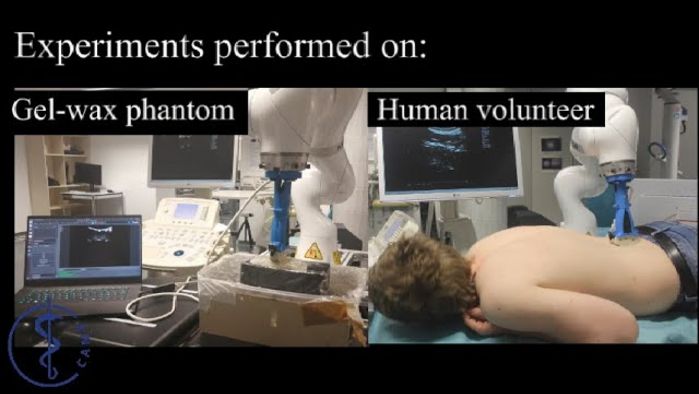
Dr. Zhongliang Jiang is a senior research scientist and leader of the Robotics and Ultrasound team (RobUSt) at the Chair of Computer Aided Medical Procedures (CAMP) at Technische Universität München. He holds a Ph.D. in computer sciences (summa cum laude) and has authored/co-authored over 40 top-tier publications in robotics and medical imaging. His research focuses on robotic ultrasound systems, medical image processing, and robotic learning. Education: Ph.D. in Computer Sciences, TUM (2022, summa cum laude) M.Eng. in Harbin Institute of Technology (2017) Research Assistant at SIAT (2017-2018) Research Interests: Medical Robotics: autonomous robotic ultrasound systems Image Processing: RGB-D/ultrasound segmentation, registration Robotic Learning: reinforcement/imitation learning Robotic Control: MPC, shared control, human-robot interaction Professional Contributions: Associate Editor for ICRA 2024/2025 Guest Editor for IEEE TRO special issue on Robot-Assisted Medical Imaging Main organizer of RAMI workshops at ICRA (2023-2025) Awards: MICCAI 2023 Best Paper Runner-up Gold Medal for Master's Thesis (2017) Lab & Teaching: Leading the RobUSt team developing advanced robotic ultrasound solutions Teaching courses like Computer Aided Medical Procedures and Medical Augmented Reality Supervised over 15 Master/PhD projects in robotic ultrasound and medical imaging
Chantal Pellegrini is a Lecturer and PhD student at the Chair of Computer Aided Medical Procedures (Prof. Navab) at Technical University of Munich (TUM). Her research focuses on Deep Learning applications in medical imaging, including explainable AI for radiology report generation and Vision-Language Models for clinical decision support. She actively contributes to the DHM, NARVIS Lab, and RobUSt research groups. Teaching responsibilities include courses such as 'Computer Aided Medical Procedures', 'Medical Augmented Reality', and 'Surgical Robotics'. She supervises student projects in medical AI and healthcare innovation, with recent projects involving multimodal report generation and graph pretraining for medical applications. Education: BSc/MSc Computer Science (TUM), current PhD student since 2022 Labs: DHM (German Heart Center), NARVIS Lab, RobUSt Robotics & Ultrasound Research Keywords: Medical Image Understanding, Radiology Reports, LLMs in Healthcare Her publications span surgical OR dataset development, reinforcement learning for clinical decisions, and explainable X-ray diagnosis systems. She mentors MA/BA students in medical AI and project management for healthcare applications.
Dr. Tan Viet Tuyen Nguyen is a New Frontiers Fellow (Lecturer) in AI at the University of Southampton, specializing in Human-Centered Artificial Intelligence and Social Human-Robot Interaction. His research focuses on multimodal learning for robots to adapt their behavior to human social needs, with applications in healthcare, education, and service environments. Prior to this role, he was a Research Associate at King’s College London and a Research Assistant on the EU-funded CARESSES project, developing culturally-aware assistive robots for elderly support. Education: PhD in Information Science (Robotics) from Japan Advanced Institute of Science and Technology. He has organized conferences such as the IEEE RO-MAN 2022 special session on nonverbal communication and served as a reviewer for top-tier robotics and AI conferences. Research Interests include: Human-Robot Collaboration, Multimodal Perception, Generative AI for Social Interaction, and Context-Aware Robot Behavior Generation. His work has been recognized with awards including the Best Paper Award at ROMAN 2022 and the Prospective Research Award at ICServ 2023. Teaching Responsibilities include courses on Biologically Inspired Robotics, High-Level Programming, and MSc/Undergraduate project supervision. He currently oversees two PhD students and collaborates on projects like 'Exploring the impact of AI-driven writing of engagement in climate change' and 'Bridging Generations and Cultures through Generative AI.' Labs/Teams: Member of the Agents, Interaction and Complexity Centre and the Centre for Robotics Research at Southampton.
Reiko Heckel is a Professor of Software Engineering at the University of Leicester, serving as Director of Postgraduate Teaching for Computing degrees and Data Analytics Lead at the Leicester Innovation Hub. She previously held academic roles at the Technical Universities of Dresden and Berlin before joining Leicester in 2004. Her research focuses on graph transformation systems, model-based development, stochastic modeling, and formal methods in software engineering. She earned her PhD (Dr.-Ing.) in Computer Science from TU Berlin in 1998. Her research interests span software engineering pedagogy, formal specification techniques, and applications of graph grammars in system modeling. Recent work explores stochastic graph transformations for social networks, transparency engineering in AI systems, and blockchain-based smart contract frameworks. Her contributions bridge theoretical foundations with practical applications in cybersecurity, data integration, and human-centric systems design. Key contributions include advancements in automated test case generation via graph transformations, visual contracts for software reverse engineering, and formal methods for complex system analysis. Her work frequently intersects with industry through collaborations via the Leicester Innovation Hub, emphasizing data analytics and technology transfer. Education: MSc Computer Science, Technical University of Dresden PhD (Dr.-Ing.), Computer Science, TU Berlin (1998) Leadership Roles: Head of Department (2014-2018) Director of Postgraduate Teaching (Ongoing) Research Themes: Model-Based Development Stochastic Systems Analysis Graph Neural Networks Trustworthy AI Her publications reflect a focus on formal methods, with recent trends in applying graph transformation techniques to social network modeling, blockchain smart contracts, and educational pedagogy.
Angela Crow is an Associate Professor at James Madison University (JMU) in the School of Writing, Rhetoric and Technical Communication, where she has served since 2012. Her research bridges literacy studies, design, and urban mobility, focusing on how communities advocate for car-free infrastructure and equitable public spaces. She explores the role of digital communication in fostering feminist interventions, particularly around cycling advocacy and street design. Her work intersects with gender studies, urban studies, and rhetorical theory. Educated at the University of Kansas (Ph.D., 1997) and Point Loma College (B.A., 1987), she has authored books on writing programs and composition studies, including Aging Literacies (2006) and Field of Dreams (2002). Recent publications analyze surveillance, privacy in digital contexts, and transportation equity. Her research often highlights marginalized voices in shaping public discourse. Research Interests: Her current projects examine embodied literacies in mobility advocacy, social media practices of grassroots movements, and the rhetoric of urban infrastructure. She critiques car-centric planning through feminist and critical frameworks, emphasizing accessibility and safety for non-car users. Her work also addresses aging populations’ digital literacies and the intersection of technology with social inequality. Publications: Her articles span rhetorical analysis of social movements, educational assessment frameworks, and the sociotechnical dimensions of writing. Recent trends include collaborations on privacy in big data and participatory design for community mobility.
WonSook Lee is a tenured Full Professor in the School of Electrical Engineering and Computer Science at the University of Ottawa’s Faculty of Engineering. Her expertise spans medical imaging, machine/deep learning, computer graphics, and computer vision. She earned her Ph.D. in Computer Science from the University of Geneva (Switzerland) and holds degrees from POSTECH (Korea) and NUS (Singapore). Before academia, she worked at Korea Telecom, Samsung Advanced Institute of Technology, and Eyematic Interfaces Inc. (USA). Her research focuses on applications such as virtual/augmented reality, MRI/CT/Ultrasound analysis, and 3D mesh modeling. She has authored over 130 publications, including 30+ journal papers, and serves on conference committees and editorial boards. Lee has secured major grants (NSERC, CFI, ORF) as Principal Investigator and contributed to global initiatives like South Korea’s National Research Foundation. Her lab explores cutting-edge techniques in medical imaging, AI-driven object detection, and multimodal systems. Notable projects include adversarial perturbation analysis for model robustness, cross-domain GANs for semantic segmentation, and real-time ultrasound-enhanced pronunciation training. She actively promotes interdisciplinary research in healthcare technology and autonomous systems.