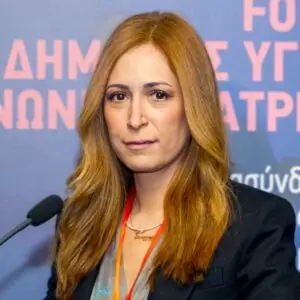
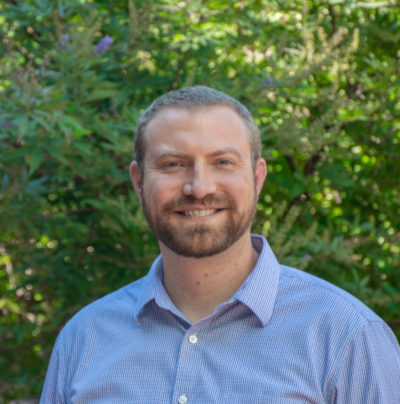
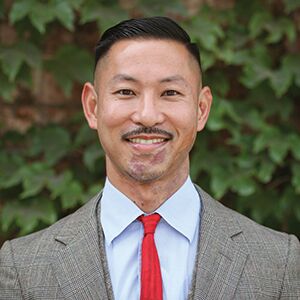
Evangelia Georgia Kostaki is a Biostatistician and Epidemiologist serving as a Lecturer in the Department of Hygiene, Epidemiology, and Medical Statistics at the School of Medicine, National and Kapodistrian University of Athens (NKUA). She holds a PhD in Molecular Epidemiology from NKUA and has extensive teaching experience in medical statistics, epidemiology, and public health at the undergraduate and postgraduate levels. Her research focuses on molecular epidemiology of infectious diseases (HIV, HCV, HBV, and SARS-CoV-2), with emphasis on public health applications such as outbreak response and transmission network analysis. Education: Bachelor’s degree (NKUA) MSc in Biostatistics (NKUA) PhD in Molecular Epidemiology (NKUA) Research interests include HIV transmission dynamics, antiretroviral resistance surveillance, and pandemic response strategies. She has contributed to over 50 peer-reviewed articles and 2 book chapters, with active participation in global initiatives like the European AIDS Clinical Society (EACS) YING network and the Greek National Action Plan for HIV. Notable achievements include a New Investigator Scholarship (NSRF 2014-2020) and over 160 conference presentations internationally. Advisory roles include supervising 25+ MSc theses and supporting PhD candidates. Grants include co-investigator roles in national/international projects. She actively contributes to scientific societies, editorial boards, and guideline development for HIV testing protocols in Europe. Labs/Teams: Collaborates with the European Virus Bioinformatics Center (EVBC) and global networks addressing HIV and viral hepatitis epidemiology.
Samah Fodeh is an Associate Professor in the Department of Emergency Medicine at Yale School of Medicine, with a secondary appointment in Biostatistics and affiliation with the VA Connecticut Healthcare System. Her research focuses on leveraging AI and machine learning to improve patient-centered care, particularly in healthcare communication, opioid addiction, HIV outcomes, and pandemic response. She leads the Fodeh Lab and collaborates on NIH-funded projects like the Bridge2AI Program. Education: PhD in Biomedical Informatics from Michigan State University (2010). Research Interests: Her work integrates AI techniques to analyze patient-generated and clinical data, including social media and electronic health records. Key areas include detecting patient preferences, improving pain care quality, and addressing public health crises like opioid misuse and suicide risk through Twitter-based analyses. She also develops predictive models for fall risks in aging populations with HIV. Publications: Over 39 peer-reviewed articles, emphasizing AI-driven solutions in healthcare. Recent work includes risk models for HIV patients, opioid misuse detection on social media, and pandemic-related sentiment analysis. Labs/Teams: Director of the Fodeh Lab, part of Yale’s Data Mining and Health Informatics initiatives. Collaborates with interdisciplinary teams at the Yale School of Public Health and computational biology programs.
Alan Kuntz is an Assistant Professor at the University of Utah's Kahlert School of Computing (KSoC) and a core member of the Robotics Center. He leads the interdisciplinary Kuntz Research Lab, focusing on robotics and computational methods with medical applications, particularly in healthcare and surgery. His work spans robot motion planning, autonomous systems, and robot design optimization. Education: Ph.D. in Computer Science from the University of North Carolina at Chapel Hill, with research in the Computational Robotics Research Group. Previously a postdoctoral scholar at Vanderbilt University's Medical Engineering and Discovery Lab. Research interests include surgical robotics, continuum robots, needle steering, and medical device design. Recent projects include autonomous needle navigation, continuum lung staplers, and metamaterial-based robots. His team has published extensively on topics like kinematic modeling, uncertainty quantification, and medical intervention systems. Notable awards include the 2022 IEEE Access Best Video Award for his group's work, and mentoring over 15 students through the University of Utah's Undergraduate Research Opportunities Program. The Kuntz Lab actively collaborates on clinical applications, presenting at top conferences like IROS, Hamlyn Symposium, and ISMR. Labs/Teams: Directs the Kuntz Research Lab, known for its innovative medical robotics projects. The lab's work has been featured in Forbes and other media outlets for breakthroughs like in vivo needle steering demonstrations.
Kate Mancey is an Assistant Professor of Music and Media at Utrecht University's Department of Media and Culture Studies , affiliated with the Institute for Cultural Inquiry . Originally from the UK, she holds a BA and MA in Music from the University of Liverpool and a PhD in Music Theory from Harvard University. Research Interests: Her work explores intersections of music, technology, and society, combining computer-aided analysis with traditional musicology. Key projects include analyzing human-technology relationships through everyday sounds (smartphones, appliances), virtual reality music dynamics, and digital humanities datasets like CoSoD for popular music collaborations. Publications Trends: Recent work spans interdisciplinary topics from emergency medicine (music interventions for pain relief) to virtual reality audiovisual analysis and historical sound studies in commerce. Scientific Awards: Kennedy Memorial Trust Fellowship Harry and Majorie Ann Slim Memorial Fellowship Sandra Ohrn Dissertation Fellowship Funding & Collaboration: Supported by multiple fellowships for research in Tokyo, Osaka, and the Smithsonian Institute. Collaborator on projects like Boston Rock City (linked data) and music-related legal consultancy.
Oz Hassan is a Reader in National Security and Deputy Head of the Politics and International Studies Department at the University of Warwick. He serves as Director of Equality, Diversity, and Inclusion and co-leads the Royal Society of Arts (RSA) International Development Network. His career spans over 15 years at Warwick, with affiliations at institutions like LSE Ideas, Carnegie Endowment for International Peace, and the Library of Congress. He was recognized by The Huffington Post Live as a 'Rising Young Foreign Policy Analyst' in 2015 and received the Middle East Policy Council's prestigious '40 under 40' award in 2023. Education: ESRC 1+3 Postgraduate Studentship (2004-2009), The University of Birmingham Dr. Hassan's research focuses on Transatlantic relations with the Greater Middle East, tensions between democracy and security, and the application of advanced qualitative data analysis tools. He pioneers methodologies combining Critical Realist and Constructivist Institutionalist frameworks with AI technologies like machine learning and computer vision. His work extends to cyberdiplomacy, WMD policies, terrorism, and techno-geopolitics. Recent publications emphasize the EU's strategic failures in Afghanistan, cybersecurity in the Gulf, and evolving US foreign policy. His 2024 monograph, Why the European Union Failed in Afghanistan , critically examines Western interventions and regional dynamics. He actively collaborates with institutions such as Georgetown University and the European Commission's Framework 7 Programme. Scientific Awards: Middle East Policy Council's 40 under 40 award (2023) Fellow of the Royal Society for the encouragement of Arts (FRSA) Fellow of the Higher Education Academy (FHEA) UKRI Future Leaders Fellowship (2013-2016) British Research Council Fellowship at the Library of Congress (2008) Dr. Hassan has secured significant grants, including a £215,000 ESRC Future Research Leaders Award and RCUK Global Uncertainties funding. He has trained public and private sectors globally in AI and data analysis and contributes to policy-making through roles on scientific committees and advisory panels.
Jih-Fei Cheng is Associate Professor and Chair of the Department of Feminist, Gender, and Sexuality Studies at Scripps College, where he teaches and researches at the intersection of science, media, surveillance, and social movements. He holds a PhD in American Studies and Ethnicity with an emphasis in Visual Studies from the University of Southern California, an MA in Asian American Studies from UCLA, and a BA in Communication from UC San Diego. His interdisciplinary scholarship engages feminist, queer, and decolonial theories to analyze the political economies of virology, global health, and racial capitalism. His research centers on the historical and transnational entanglements of science, empire, and social justice. Key areas include the institutionalization of queer politics, the geopolitics of HIV/AIDS, and the racialized foundations of virology. His co-edited volume AIDS and the Distribution of Crises (Duke UP, 2020) rethinks the pandemic as a network of overlapping crises shaped by colonialism and neoliberalism. He is currently working on a book project titled Materialist Virology , which historicizes virology within Euro-American empire. Cheng’s recent publications span journals such as History and Technology , Radical History Review , and GLQ , with 2025 articles on financial contagion and reservoirs signaling his continued engagement with interdisciplinary frameworks linking finance, disease, and history. His work often collaborates with artists and activists, exemplified by writings on Candice Lin’s art and co-organized dialogues on care and intravention during the pandemic. He has been recognized with multiple awards, including the Lavender Graduation Award (2023, 2016), Professional Development Grants (2019–2020, 2016–2017), and fellowships from USC and the American Antiquarian Society. His teaching and service reflect a deep commitment to LGBTQIA inclusion, racial justice, and community-based scholarship. Lavender Graduation Award for providing safe and inclusive spaces for LGBTQIA students, Queer Resource Center, The Claremont Colleges (2023) Professional Development Networks Grant at The Claremont Colleges (2019–2020) Diversity Teaching Award Nominee, The Claremont Colleges (2018) EnviroLab Asia Research and Conference Award (2017–2018) Lavender Graduation Award (2016) Professional Development Networks Grant (2016–2017) Research Fellow, Summer Institute for the Center for Historic American Visual Culture, American Antiquarian Society (2014) Visual Studies Summer Research Award, USC (2014) New Directions Fellow, USC Center for Feminist Research (2011–2012) Tritia Toyota Fellowship (2001–2002) Cheng has advised and collaborated with numerous scholars and activists, though no formal advisees are listed. His work is deeply rooted in community engagement, having previously worked in HIV/AIDS social services and served on the Board of Directors at the HIV League. He was managing editor of American Quarterly (2010–2013) and has taught at UCLA and Hunter College. His research is supported by interdisciplinary networks and collaborative projects, including digital humanities initiatives and art-theory praxis. He is involved in multiple collaborative research and publishing projects, often working with artists like Candice Lin and scholars such as Alexandra Juhasz and Nishant Shahani. His recent special issue on 'Reservoirs' brings together scholars from anthropology, media studies, and philosophy to rethink historical and ecological crises. His lab-like collaborative environments include feminist media praxis collectives and interdisciplinary workshops on crisis, care, and decolonial knowledge.
Peter Kazanzides is a Research Professor in the Department of Computer Science at the Whiting School of Engineering, Johns Hopkins University, where he joined the faculty in 2002. His research focuses on robotics, medical robotics, augmented reality, and computer-assisted interventions with primary applications in computer-integrated surgery. His educational background includes multiple degrees from Brown University: ScB (1983) in Electrical Engineering AB (1983) in Computer Science ScM (1985) in Electrical Engineering ScM (1987) in Applied Mathematics PhD (1988) in Electrical Engineering Kazanzides is a member of the Robotics, Vision, and Graphics research group and directs the Sensing, Manipulation, and Real-Time Systems (SMARTS) laboratory. His work spans surgical robotics, mixed reality, and systems engineering, with emphasis on computer-assisted surgery in extreme environments including minimally invasive surgery, microsurgery, and space teleoperation. The SMARTS lab develops real-time sensing systems, augmented/mixed reality interfaces using head-mounted displays, high-performance motor control, and sensor fusion technologies, with strong focus on system integration and open-source platforms like the da Vinci Research Kit (dVRK). Analysis of his recent publications (2024-2025) reveals dominant trends in surgical robotics autonomy, augmented reality navigation, force estimation, and digital twin technologies. Key themes include AI-driven task automation, haptic feedback enhancement, real-time instrument segmentation, and simulation environments for surgical training, primarily leveraging the da Vinci Research Kit framework. As director of the SMARTS lab within the Laboratory for Computational Sensing and Robotics (LCSR), Kazanzides leads a collaborative ecosystem including the Computer Integrated Interventional Systems (CIIS) Lab, Advanced Medical Instrumentation and Robotics (AMIRO) Lab, Dynamical Systems and Controls Lab (DSCL), Computer Aided Medical Procedures (CAMP) Lab, Medical UltraSound Imaging & Intervention Collaboration (MUSiiC) Lab, and Photoacoustic & ULtrasonic Systems Engineering (PULSE) Lab. His lab maintains responsibility for the development and support of the open-source da Vinci Research Kit, a critical resource for surgical robotics research worldwide.
Dr. Micah Goldwater is an Associate Professor at the University of Sydney, affiliated with the Sydney Southeast Asia Centre, Brain and Mind Centre, and Charles Perkins Centre. His research focuses on cognitive development, decision-making, and the application of cognitive science to education and public health. He holds a BA in Linguistics from the University of Rochester (2003), a PhD in Psychology from the University of Texas at Austin (2009), and joined the University of Sydney in 2013 following a postdoctoral fellowship at Northwestern University. His research explores how individuals recognize structural commonalities across situations, with a focus on learning transfer, prefrontal cortex function, and evidence-based decision-making. Key themes include causal reasoning, expert-novice differences, and language acquisition. Current research students are investigating topics like systemic racism education, misinformation detection, and diagnostic accuracy in ADHD/Autism. Recent articles (2023–2025) address intergenerational programs, medical decision-making biases, and the cognitive foundations of combating misinformation. Grants include projects on psychological warfare resilience and the ontogeny of cumulative culture. Dr. Goldwater collaborates across disciplines, integrating cognitive science with educational design and public health policy.
Professor Tim Wheeler is a leading academic at the University of Reading, specializing in climate change impacts on agriculture and global food systems. His research focuses on crop productivity, climate modeling, and adaptation strategies in developing regions. He has contributed to high-impact studies on climate risks to food security, published in journals like Science and Nature . His work integrates large-area crop models with climate projections to assess vulnerabilities in Africa, South Asia, and China. Key contributions include the development of the JULES-crop model and analyses of crop responses to elevated CO2 and temperature stresses. He has authored reports for the UNFCCC and FAO, addressing adaptation costs and policy implications of climate change. His research spans interdisciplinary collaborations, including UK-China projects on sustainable agriculture and studies on GM crops' role in food security debates. He explores intersections between climate science, agricultural systems, and socio-economic resilience, particularly in contexts like Uganda's rural livelihoods. His publications also address methodological advances in crop-climate coupling and the use of seasonal forecasts for agricultural planning. Notably, his work highlights the urgency of addressing climate variability in crop yields and the need for tailored adaptation measures. Despite extensive contributions, no specific scientific awards are explicitly mentioned in the provided texts.
Simon Spencer is a Professor of Statistics at the University of Warwick, affiliated with the Zeeman Institute for Systems Biology and Infectious Disease Epidemiology Research (SBIDER) and the Warwick Analytical Sciences Centre (WASC). His research focuses on Bayesian inference applied to epidemiology, stochastic epidemic models, and statistical methods for analytical science. He has held previous positions at the University of Nottingham and Massey University in New Zealand. His teaching includes advanced courses such as CH923: Statistics for Data Analysis , ST925: Graduate Topics in Statistics , and MA4M1/MA6M1: Epidemiology by Example . His research group currently includes PhD students Matthew Adeoye and Richard Haughey, and MSc students Olli Smith and Sangavi Pirabakaran. He collaborates extensively with global health institutions on projects addressing infectious disease modeling and public health policy. Spencer’s work bridges statistical methodology and real-world applications, with a focus on outbreak detection, model comparison, and the integration of geostatistical data with transmission models. His recent contributions include frameworks for lymphatic filariasis elimination projections and analyses of HIV transmission dynamics in Uganda. He actively contributes to interdisciplinary research in systems biology and analytical chemistry, leveraging advanced statistical techniques to address complex health challenges.
X. Lucas Lu is a Professor in the Department of Mechanical Engineering at the University of Delaware. His research focuses on biomechanical engineering, specifically investigating osteoarthritis and cartilage biomechanics. He holds a PhD in Biomedical Engineering from Columbia University. Research Interests: Prevention and treatment of post-traumatic osteoarthritis Mechanical forces' role in cartilage and bone cell signaling Advanced techniques: nanotechnology, proteomics, computational modeling Specific projects: statin therapy for osteoarthritis prevention, calcium signaling in chondrocytes, resveratrol treatments, temporomandibular joint biomechanics, post-surgery rehabilitation protocols, and tumor cell detection with nano-materials Publications emphasize global education policy, teacher effectiveness, and health systems in developing regions, though these appear unrelated to his stated biomedical engineering focus. Collaborates with graduate student Annie Porter on undergraduate research initiatives. Labs/Teams: Active in biomechanics research labs at the University of Delaware, mentoring students in interdisciplinary projects combining engineering and clinical applications.
Sijia Yang is an Associate Professor at the School of Journalism and Mass Communication at the University of Wisconsin-Madison . His research focuses on message effects and persuasion in digital media, particularly in public health and science communication. He employs experimental, computational (e.g., causal machine learning, multimodal analysis), and community-engaged methods to address challenges in health communication interventions. Ph.D. in Communication: Annenberg School for Communication, University of Pennsylvania (2019) M.A. in Communication: University of Illinois at Urbana-Champaign (2012) B.A. in English Language and Literature: Renmin University of China (2010) His current research explores three key areas: (1) moralization/politicization of health issues and intervention design, (2) causal machine learning for evaluating multimodal messages, and (3) leveraging AI for pro-social messaging in underserved communities. His work bridges computational methods with societal impact, emphasizing ethical considerations and practical applications. Recent articles highlight his contributions to topics like cannabis warning labels, misinformation correction via TikTok, and AI-driven health chatbots. Despite no explicitly listed awards, his active research portfolio reflects significant scholarly engagement in health communication and digital media studies. His advising and grants focus on collaborative projects with rural communities and under-resourced populations, though specific grants are not detailed here. No lab or team affiliations are mentioned in the provided texts.
Dr. Ala Alrababah is an Assistant Professor in the Department of Social and Political Sciences at Bocconi University, with affiliations including the Evidence in Governance and Politics (EGAP) network, Immigration Policy Lab (IPL) at ETH Zurich and Stanford, BAFFI Center on Economics, Finance and Regulation at Bocconi, and the Abdul Latif Jameel Poverty Action Lab (J-PAL). She holds a Ph.D. in Political Science from Stanford University (2021). Her research examines immigration, refugees, and political violence using innovative mixed-methods approaches combining fieldwork with experimental and computational techniques. Primary domains include comparative analysis of migration policies, conflict dynamics in the Middle East, prejudice reduction strategies, and quantitative analysis of political discourse. She maintains active field research programs focused on Syrian refugee communities. Publications demonstrate consistent focus on migration policy impacts, refugee decision-making, and political violence analysis across multiple contexts. Computational methods feature prominently alongside field experiments, with strong methodological contributions to survey research and text analysis. As an active member of international research networks, Dr. Alrababah collaborates on large-scale projects examining refugee integration policies, transitional justice mechanisms, and political behavior in conflict regions. Her work has received international media coverage in outlets including The Economist, Foreign Policy, and BBC Arabic.
Dr. Hongbin Liu is a Senior Lecturer at the Department of Informatics, King’s College London, UK, affiliated with the Centre for Robotics Research. His work focuses on robotic tactile sensing, soft robot design, and haptic exploration. Research Interests: Robotic tactile sensing Learning objects by touch Soft and flexible robot design Modelling of soft interactions Dr. Liu’s recent publications highlight advancements in robotics and sensor technology , particularly in tactile perception, medical device design, and continuum robot navigation. His work integrates Bayesian classifiers for autonomous object recognition, polymer-based optical waveguides for triaxial tactile sensors, and deep learning for medical diagnostics. Collaborations span institutions like Imperial College London, The University of Hong Kong, and Medical University of Vienna. Professional Affiliation: King’s College London Department of Informatics Centre for Robotics Research (research group)
Robin Lemmens is a Professor at the Faculty of Medicine, KU Leuven, and leads the Laboratory of Neurobiology (VIB-KU Leuven). He serves as head of Academic Consultants Training in Specialist Medicine and Program Director of the POC Medical Specialist in Training. His affiliations include the LBI - KU Leuven Brain Institute and membership in multiple institutional committees including the Metaforum Steering Committee and Faculty Council of Medicine. Dr. Lemmens' research focuses on stroke neurology with particular expertise in neuroimaging, cerebrovascular diseases, and endovascular therapy. His work spans ischemic stroke management, anticoagulation therapy, intracerebral hemorrhage, and advanced imaging techniques for stroke diagnosis and treatment planning. Current research explores AI applications in stroke imaging, optimal timing of anticoagulation after stroke, and endovascular therapy in extended time windows. Analysis of recent publications reveals a strong emphasis on translational stroke research with significant contributions to clinical trial methodology. Key themes include validation of imaging biomarkers, optimization of thrombolytic and anticoagulant therapies, and development of AI tools for stroke lesion segmentation. His work frequently appears in high-impact journals including Stroke , Neurology , and The Lancet . Dr. Lemmens supervises research projects and students, with recent supervision including Oosterbos, C. on peroneal nerve entrapment research. His grant portfolio includes multiple active projects totaling millions in funding, with recent grants focusing on secondary stroke prevention, comprehensive stroke management systems, and AI for stroke outcome prediction. He leads the Laboratory of Neurobiology at VIB-KU Leuven, which collaborates extensively with international stroke research networks. Current research directions include developing patient-centered stroke care pathways, advanced imaging techniques for early ischemic changes, and personalized stroke diagnostics and treatment protocols.