Hua Fangمشاهده پروفایل
استاد مدعو
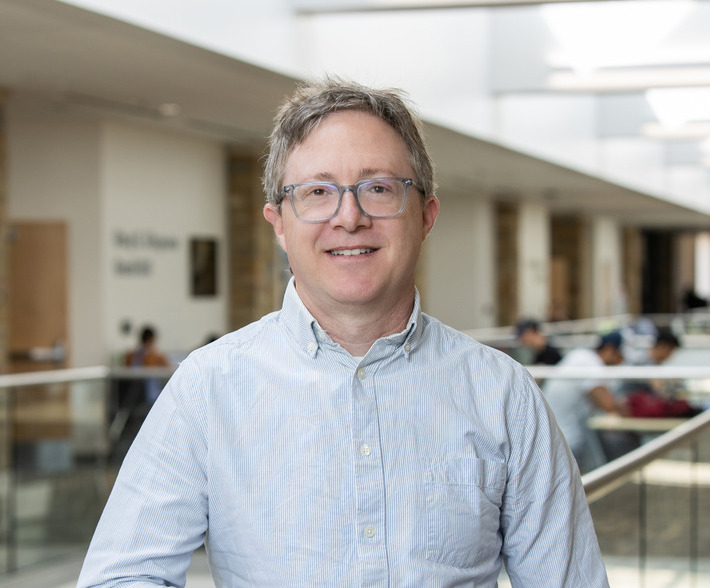
Hua Fang is an Adjunct Professor in the Department of Population and Quantitative Health Sciences at UMass Chan Medical School and the T.H. Chan School of Medicine. She serves as Principal Investigator of the Computational Statistics and Data Science (CSDS) lab, which focuses on developing computational methods for health and behavior studies through the integration of statistics and computer science. Her educational background includes: BA in Business English from Sichuan International Studies University, China MA in Financial Economics from Ohio University, United States PhD in Statistics from Ohio University, United States Dr. Fang's research spans multiple domains at the intersection of computational statistics, data science, and healthcare. Her work primarily focuses on developing advanced methods for analyzing longitudinal data, particularly in the context of behavioral interventions and health monitoring. She has pioneered the Multiple-imputation based Fuzzy Clustering (MIFuzzy) approach for trajectory pattern recognition in incomplete longitudinal data, which has been applied across various health domains including substance use, dietary patterns, and mental health. Her research integrates statistical theory with computational approaches to address challenges in missing data, pattern recognition, and real-time monitoring through wearable biosensors. She leads multiple NIH and NSF-funded projects exploring computational methods for health applications, with a particular emphasis on digital health interventions and precision medicine. Her recent publications demonstrate a strong trend toward digital twin technology, federated learning approaches for healthcare data, and advanced neural network architectures for medical applications. There's a clear progression from traditional statistical methods to more sophisticated AI-driven approaches, with increasing focus on privacy-preserving techniques like federated learning for multi-site clinical data analysis. Her work bridges computational statistics with practical healthcare applications, particularly in substance use detection, dietary pattern analysis, and real-time health monitoring. Dr. Fang's scientific recognition includes: Patent "System and methods for trajectory pattern recognition" (US20160358040A1), issued June 1, 2021 Best Paper Award for "Deep Learning-based adaptive beam forming for 5G mmWave Wireless body area network" at GLOBECOM2020 Abstract Citation Award from the Society of Behavioral Medicine As an advisor, Dr. Fang has mentored numerous graduate students and researchers who have gone on to positions at prestigious institutions including Harvard, Stanford, MIT, and faculty positions at universities. Her research is supported by multiple NIH grants including R01, R56, and P30 awards, as well as NSF funding for projects related to wireless body area networks and connected vehicle technology. Current major projects include iPAT (NIH/NIDDK R01), VIP (NIH/NIDDK R56), and several NSF-funded initiatives in wireless communication and machine learning. The Computational Statistics and Data Science (CSDS) lab, led by Dr. Fang, collaborates with researchers across multiple disciplines including psychiatry, behavior medicine, emergency medicine, immunology, infectious diseases, and healthcare systems. The lab works closely with the IoT and Data Engineering Lab and the UConn Center for mHealth and Social Media, creating an interdisciplinary research environment that bridges computational methods with real-world health applications. Current research focuses on developing computational tools for adaptive interventions, pragmatic clinical trials, causal inference, and risk prediction using longitudinal data from diverse health domains.