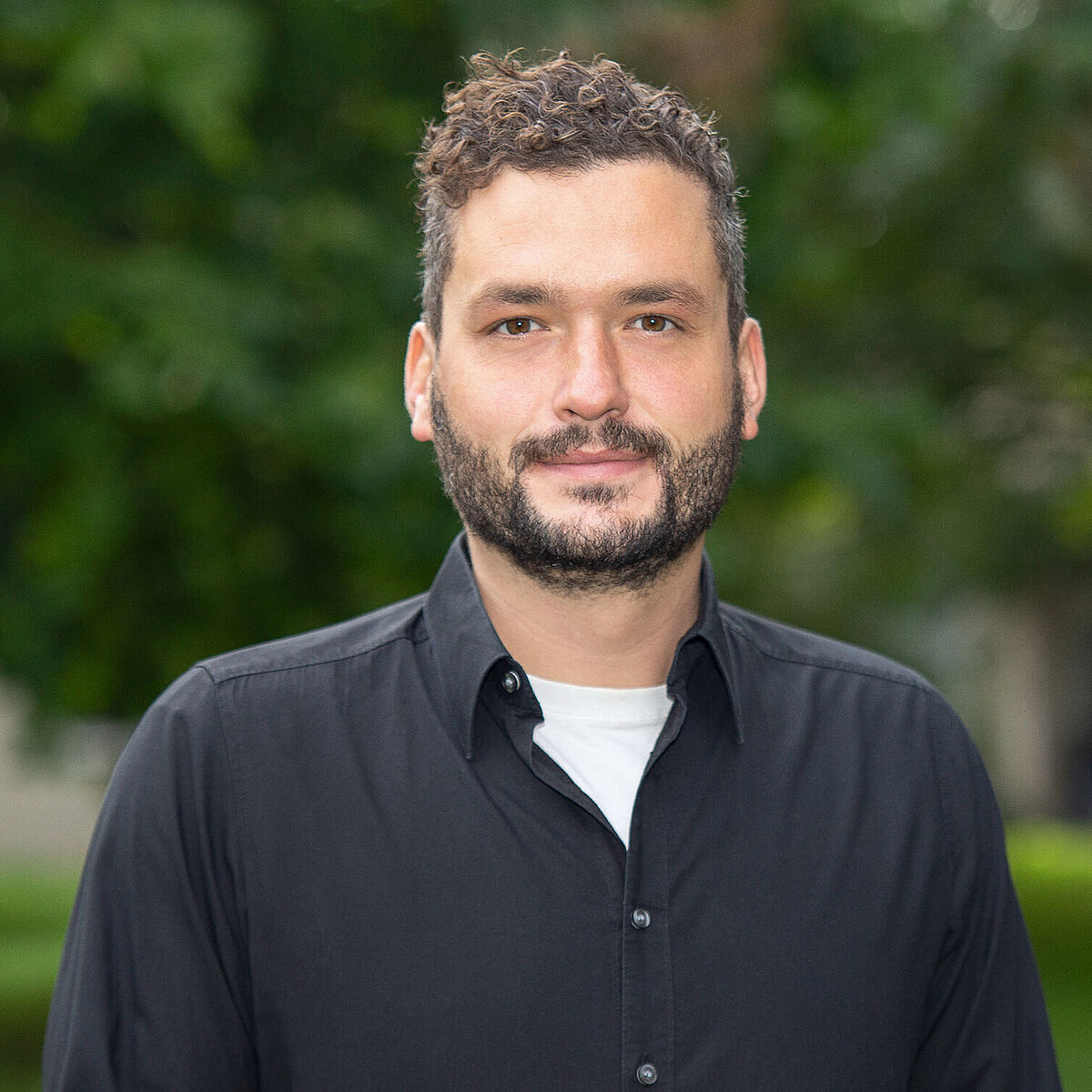
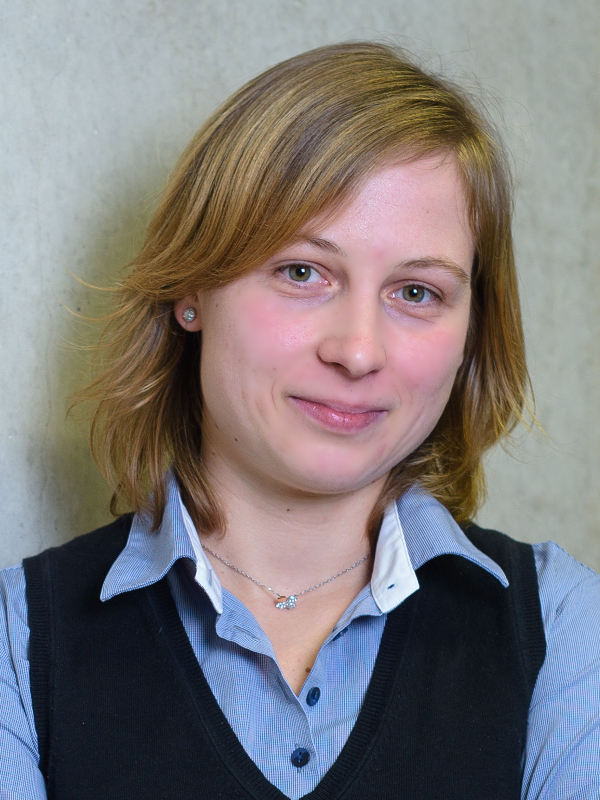
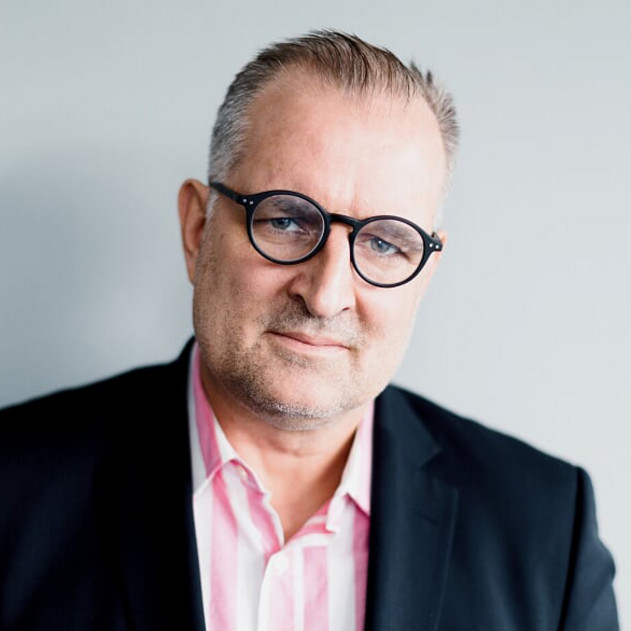
Konstantinos Gkrispanis is a Researcher at the Chair of Computing in Civil and Building Engineering at the Technical University of Munich (TUM) . His work focuses on Artificial Intelligence , Building Information Modeling (BIM) , and CAD processing for industrial applications. His research projects include AI4CADCAM , which explores AI-driven automation of manufacturing planning through CAD model analysis. Recent publications highlight contributions to machining feature recognition and model optimization using techniques like BRepNet and geometric median criteria. At TUM, he contributes to teaching courses related to BIM , Artificial Intelligence in Engineering , and Computational Linear Algebra , while supervising theses in these domains.
Prof. Uwe Bäsel is affiliated with the Faculty of Engineering at Leipzig University of Applied Sciences , focusing on Mechanical Engineering . His research spans geometry, kinematics, and probability theory, with applications in gear technology and random processes. He contributes to the EMB | Institute for Development-Oriented Mechanical Engineering , particularly in transmission technology and stochastic geometry. His work emphasizes non-uniform gear ratios , geometric probability , and kinematic synthesis . Key projects include modeling cam mechanisms for non-uniform motion and analyzing Buffon-Laplace needle problems. His publications address integral geometry, random point distances, and oloid properties. Prof. Bäsel’s recent research explores complex-valued functions in plane differential geometry , incomplete beta functions for motion transfer , and sinc integrals . He integrates mathematical rigor with engineering applications, particularly in transmission systems and geometric modeling.
Hao Yang is a Professor at Southeast University's School of Computer Science and Engineering, specializing in computer vision, deep learning, and robotics. His research spans multiple domains including medical imaging, infrastructure inspection, and multimodal AI systems. His research interests focus on advancing computer vision techniques for practical applications. He develops innovative deep learning architectures for object detection, image segmentation, and quality assessment, with particular emphasis on solving challenges in complex real-world scenarios including rotated object detection, ancient character recognition, and 3D point cloud analysis. His work often integrates novel transformer variants and Mamba architectures to address domain-specific challenges. His publication record shows significant contributions across multiple IEEE and ACM journals, with a strong emphasis on practical applications of AI in engineering contexts. His recent work demonstrates expertise in adapting cutting-edge neural network architectures to solve domain-specific problems in civil engineering, medical imaging, and transportation systems. Hao Yang actively collaborates across disciplines, with publications spanning computer science, electrical engineering, civil engineering, and biomedical applications. His work frequently appears in top-tier conferences including CVPR, AAAI, and ACL, demonstrating his broad impact across multiple AI subfields.
Qian Wang is a Professor at Southeast University's School of Computer Science and Engineering, with significant contributions across multiple research domains in computer science and engineering. Their work spans machine learning, computer vision, data science, and optimization algorithms, demonstrating interdisciplinary expertise. Research interests focus on advancing artificial intelligence methodologies with practical applications. Key areas include neural network architectures, feature selection techniques, image processing algorithms, and optimization methods. Their work bridges theoretical foundations with real-world applications in medical imaging, environmental monitoring, and power systems. The publication record shows a strong trend toward multi-disciplinary AI applications, particularly in medical diagnostics, environmental science, and engineering systems. Recent work emphasizes robustness in optimization algorithms, efficient neural network architectures, and practical implementations of deep learning techniques for specialized domains. As an active researcher, Qian Wang has contributed to numerous collaborative projects across institutions, with publications appearing in top-tier journals and conferences including IEEE Access, Pattern Recognition, and CVPR. Their work demonstrates consistent productivity with over 100 publications in the last five years.
Ulrich Reif is a Professor in the Department of Mathematics at Technische Universität Darmstadt. His research focuses on geometric modeling, numerical analysis, approximation theory, and computer-aided geometric design. He explores advanced topics such as isogeometric analysis, subdivision algorithms, and spline-based methods. Key research interests include the theoretical foundations of geometric modeling, computational methods for solving complex mathematical problems, and applications in engineering and computer graphics. His work addresses challenges in surface approximation, numerical stability, and algorithm development for geometric problems. Recent publications highlight contributions to Sobolev regularity analysis, subdivision surface techniques, and the application of deep learning in regression tasks on manifolds. His work often bridges pure mathematics and computational engineering, emphasizing practical implementations and theoretical rigor. No scientific awards or grants are explicitly listed in the provided materials. His academic contributions span over three decades, with a focus on advancing numerical methods and geometric modeling theories.
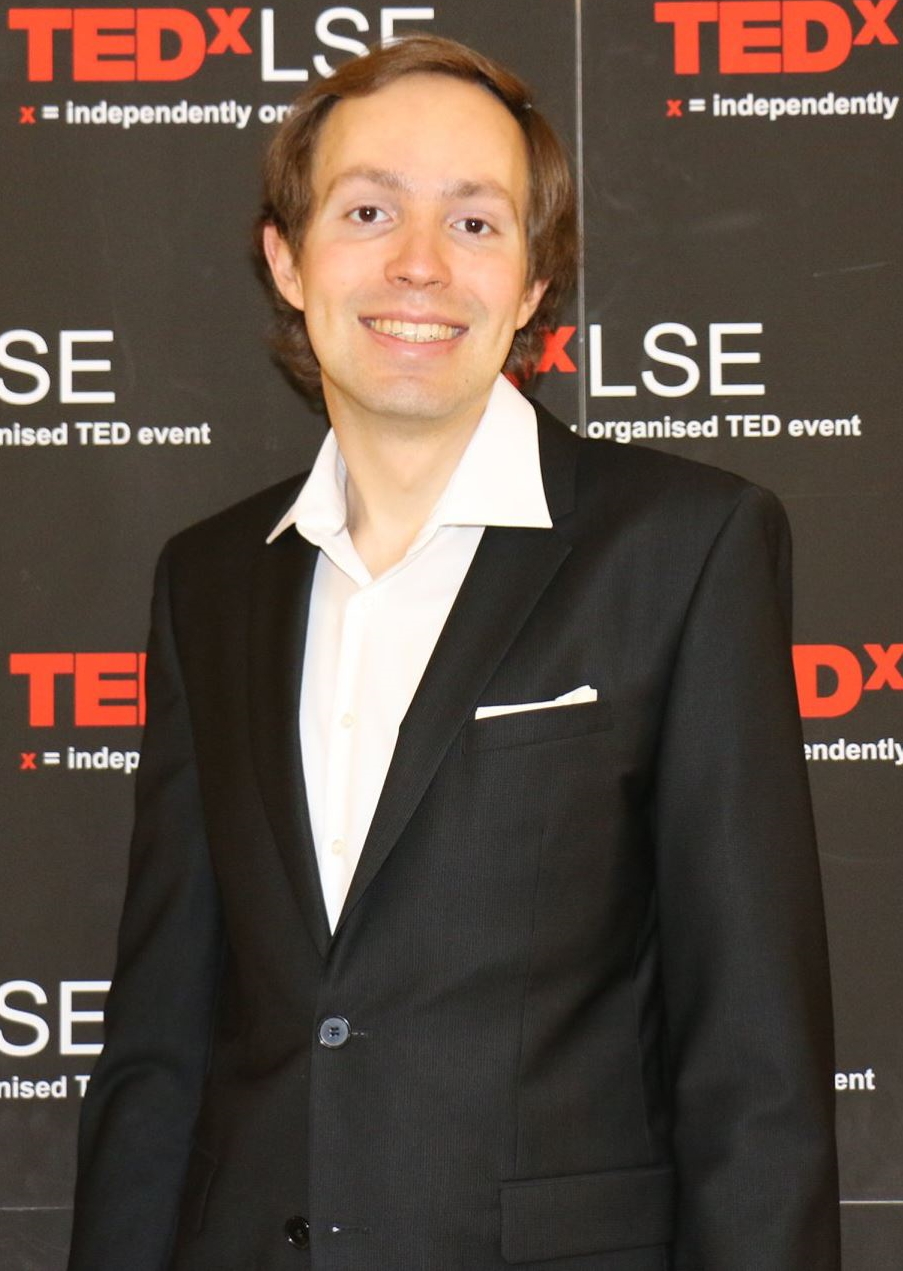
Felix Günther is a Research Fellow at the Department of Mathematics, Technische Universität Berlin. His research focuses on discrete differential geometry, discrete complex analysis, and integrable systems. He has held postdoctoral positions at institutions including TU Berlin, IHES, and the Erwin Schrödinger Institute. Günther earned his PhD in Mathematics (2014) and a Diploma in Mathematics (2011) from Humboldt-Universität zu Berlin and Technische Universität Berlin, respectively. He has received awards such as the Friedrich Hirzebruch-Promotionspreis and a Best Paper Award at AAG 2016. His academic journey includes extensive research on discrete Riemann surfaces, smooth polyhedral surfaces, and Lorentzian manifolds. Key contributions include foundational work in discrete complex analysis and applications in architectural geometry. Günther is actively involved in science communication, delivering lectures at events like the Heidelberg Laureate Forum and TEDx, and teaching mathematics to students and refugees. As a Trustee of Otto-Benecke-Stiftung and Fellow of the Young Academy Mainz, he promotes interdisciplinary research and education. His publications span topics from geometric analysis to educational outreach, reflecting his commitment to both theoretical and applied mathematics.
Dr. Junpeng Wang is a Postdoctoral Researcher (since June 2023) in the Chair of Computer Graphics and Visualization at the Technical University of Munich, working under Prof. Rüdiger Westermann. Previously, he completed his PhD at the same institution from November 2018 to June 2023. His research focuses on lightweight structural design and optimization with geometry-based approaches, as well as scientific visualization of tensor and mesh data. Wang's research interests span lightweight structural design , structural optimization , and scientific visualization . His work integrates computational mechanics with computer graphics to develop novel methods for stress analysis, lattice structure optimization, and 3D data visualization. His research has practical applications in mechanical engineering, additive manufacturing, and scientific data analysis. His publication portfolio shows a strong trend toward integrating machine learning with traditional computational mechanics methods, particularly in the areas of 3D Gaussian Splatting and neural data structures. Wang has developed the 3D-TSV (3D Trajectory-based Stress Visualizer), a significant tool for exploring principal stress directions in 3D solids under load, which has been published in Advances in Engineering Software (2022). Wang serves as a reviewer for prestigious journals including IEEE Transactions on Visualization and Computer Graphics (TVCG), Computer Methods in Applied Mechanics and Engineering (CMAME), Journal of Mechanical Design (JMD), Optics Express (OPTE), Computer-Aided Geometric Design (CAG), and Shape Modeling International Conference (SPM[C]). His collaborative work primarily involves Prof. Rüdiger Westermann at TUM and Jun Wu at other institutions, demonstrating strong interdisciplinary connections between computer graphics and mechanical engineering research groups.
Chandrakana Nandi is the Director of US R&D at Certora and an Affiliate Assistant Professor at the University of Washington (UW), Seattle. She earned her PhD from the UW PLSE group under advisors Zachary Tatlock and Dan Grossman. Education & Affiliation PhD in Computer Science (2021) from University of Washington MS in Computer Science (2014) from Georgia Institute of Technology BS in Computer Science (2012) from Georgia Institute of Technology Research Interests Her work focuses on automated formal verification for real-world programs, particularly DeFi applications. She develops verification tools for languages like WASM and uses mutation testing to simplify specification writing. She pioneered equality saturation applications in synthesis, verification, and optimization through projects like egg and Ruler . Her computational fabrication research includes LambdaCAD and Reincarnate. Publications & Awards Distinguished Paper Award (OOPSLA 2021) Distinguished Paper Award and Sigplan Research Highlight (POPL 2021) Community Involvement She chairs sessions at PLDI and OOPSLA, co-organizes EGRAPHS workshops, and contributes to the egg open-source library. Her NSF grants (#1813166, #1644558) and Adobe Research Fellowship support her work. Contact Email: chandra@certora.com
Professor Wolfgang Reif serves as Director of the Institute for Software & Systems Engineering at the University of Augsburg's Faculty of Applied Computer Science. His research spans multiple domains where formal methods meet practical engineering applications, particularly in software engineering, robotics, and self-organizing systems. Prof. Reif's research interests focus on applying formal verification techniques to complex systems engineering challenges. His work bridges theoretical computer science with practical applications in robotics, manufacturing, and autonomous systems. He has developed approaches for verification of concurrent systems, self-organizing production cells, and human-robot collaboration frameworks. His research demonstrates a consistent pattern of translating theoretical formal methods into practical engineering solutions for real-world problems. The recent publications reveal a strong trend toward integrating artificial intelligence with traditional engineering domains. His team has been particularly active in applying machine learning techniques to robotics, manufacturing processes, and verification problems. The publications show increasing focus on practical implementations of self-organizing systems, with applications in drone swarms, production automation, and composite material manufacturing. The work consistently demonstrates how formal verification can be applied to increasingly complex systems involving AI components. Prof. Reif leads a substantial research group with numerous PhD students and collaborators. His team operates within the Institute for Software & Systems Engineering, where they maintain active collaborations with both academic and industrial partners. The research environment supports work across multiple domains including formal verification, robotics, manufacturing systems, and AI applications. The team has developed several notable frameworks including PROTEASE for swarm robotics, SensorClouds for multi-modal sensor processing, and various verification tools built around the KIV system.
Dr.-Ing. Georg Schnell is a researcher at the University of Rostock specializing in laser microstructuring and surface functionalization. He leads the Laser Micromachining and Surface Functionalization (LaserSurf) group established in 2022 after completing his PhD on 'Effect of femtosecond laser processing on the physical and chemical surface properties of Ti6Al4V' . Research Focus : Tribological optimization of mechanical components through laser texturing Bioinspired superhydrophobic surface engineering Mechanistic studies of dynamic droplet-surface interactions Biomedical applications in implant surface functionalization Integration of machine learning for automated surface analysis Development of collagenase-free stem cell isolation systems Publication Trends : His work centers on laser-induced surface modifications of Ti6Al4V alloys for biomedical and industrial applications, with recent emphasis on computational modeling of microstructures, machine learning classification of surface patterns, and sustainable superhydrophobic coating techniques. Technical Expertise : Femtosecond laser machining Surface characterization methods Tribological testing protocols Microfluidic system development 3D printing of functional composites Adhesion and wettability analysis
Tobias Lehrer is a Doctoral Candidate at the Chair of Computational Solid Mechanics at the Technical University of Munich since 2023. His research focuses on integrating machine learning with computational mechanics for manufacturing optimization. 2023 - Present: Doctoral Candidate, Chair of Computational Solid Mechanics, TU Munich 2020 - 2023: Doctoral Candidate, Laboratory of Finite-Element-Method, OTH Regensburg 2018 - 2020: M.Sc. in Mechanical Engineering, OTH Regensburg His research interests span machine learning, surrogate modeling, data augmentation, synthetic data, generative AI, sheet metal forming, and sensitivity analysis. His publications emphasize deep drawing processes , parametric CAD modeling , and surrogate-based optimization for manufacturability assessment. Key projects include AMEDEO and eEgO, aiming to enhance early-stage prediction of sheet metal part feasibility through simulation-driven machine learning frameworks. In teaching, Tobias has led courses on structural optimization , computational mechanics for car body design , and structural mechanics modeling . His work bridges computational methods with industrial applications, particularly in automotive manufacturing.
Ismail Ahmed, M.Sc., is a Researcher at the Chair of Control Engineering (Lehrstuhl für Regelungstechnik) under Prof. Dr.-Ing. habil. Boris Lohmann at the Technical University of Munich's School of Engineering and Design. He has been working at TUM since April 2020, with previous research positions at the Technical University of Lübeck (May 2019-March 2020) and the University of Paderborn (January 2018-March 2019). Dr. Ahmed's educational background includes a Master's degree in Mechatronics from the University of Paderborn (2016-2019), a Diploma scholarship in Mechatronics at the Information Technology Institute in Cairo (2014-2015), and a Bachelor's degree in Electromechanics from Alexandria University, Egypt (2009-2014). His research focuses on nonlinear control, model order reduction, and optimal control with specific applications in freeform bending processes . His work centers on developing control systems for geometry and mechanical properties during tube manufacturing, with particular attention to residual stress management. Ahmed is actively involved in the Priority Program 2183 of the German Research Foundation (DFG-SPP 2183) focusing on 'Property-controlled process design of free-form bending taking into account semi-finished product properties.' Analysis of his publication record from 2021-2025 reveals a consistent research trajectory in applying advanced control techniques to manufacturing processes, particularly freeform bending. His work demonstrates increasing sophistication in integrating predictive modeling, soft sensors, and optimization strategies to control both geometric and material properties in real-time manufacturing environments. As an educator, Ahmed teaches practical courses in 'Modern Methods of Control Engineering' and 'Computer-aided control design,' focusing on hands-on experiments with physical systems. He currently supervises at least one Bachelor's thesis on Model Predictive Control applications for freeform bending processes. His research is conducted within the Control Engineering Chair environment at TUM, which appears to have strong connections to industrial manufacturing applications and collaborates with multiple research groups working on mechanical systems, model reduction techniques, and interconnected systems.
Eva Darulova is an Associate Professor at the Department of Information Technology, Uppsala University, and Adjunct Faculty at Max Planck Institute for Software Systems (MPI-SWS). Previously held tenure-track faculty at MPI-SWS and completed her PhD at École Polytechnique Fédérale de Lausanne (EPFL) under Viktor Kuncak. Current research: Applications in numerical/embedded domains, program synthesis, software verification, approximate computing Key projects: Blossom (fuzzing), Lassie (HOL4 tactics), Pine (floating-point loops), LTLTalk (robot instruction), Incarnate (3D printing), Icing (compiler semantics), Flipper (NLP interface), FloVer (error checking), Daisy (accuracy analysis), Rosa (real compiler) Teaching: Program Design (2021/22), Program Synthesis (2021), Program Analysis (multiple years), Advanced Program Analysis (2019), Static Program Analysis (2017), Approximate Computing seminar (2016) Service: Artifact evaluation chair (ASPLOS'22), PC member (ECOOP'22, ESEC/FSE'22, EMSOFT'21, PLDI'21) Research Trends: Focus on numerical computing verification, approximate computing frameworks, and program synthesis techniques. Publications span TACAS, EMSOFT, ISSTA, POPL, CAV, FMCAD, TOPLAS, with emphasis on floating-point error analysis, mixed-precision optimization, and compiler verification. Scientific Recognition: Nominated for EAPLS best paper award (TACAS'21). Co-advisor for Anastasiia Izycheva and mentor for multiple MSc/BSc students including Mustafa Hafidi, Joachim Bard, Nikita Zyuzin, Youcef Merah, Safya Alzayat, Anastasiia Izycheva. Collaborations: Works with researchers at EPFL, MPI-SWS, University of Saarland, University of Washington, and Saarbrücken/Kaiserslautern institutions.
Marc Zimmermann is a Lecturer and Campus Manager at Ludwigsburg University of Education. He holds a Master's degree in subject didactics (mathematics, physics) and has extensive experience in education and academic administration. His roles include serving as a Senate Elected Member and coordinating the introduction of HISinOne university management software. Zimmermann has held positions as a Research Associate and Lecturer at the Institute of Mathematics and Computer Science, with additional academic staff roles at the University of Economics and the Environment Nürtingen-Geislingen. Educational background includes a first state examination for teaching secondary schools (history, mathematics, physics) and advanced studies in mathematics and physics didactics. His research focuses on mathematics education innovation, including intelligent assessment tools, active learning strategies, and didactic frameworks for STEM subjects. Notable projects include the SAiL-M project addressing teaching methodologies and the development of the 'open math room' concept for active learning environments. Zimmermann’s work emphasizes bridging theory and practice in education through technology integration, such as e-learning tools and lecture recordings. His recent publications explore chemical reaction mechanisms, self-efficacy in mathematics learners, and conceptual understanding in STEM fields. He has contributed to curriculum development across multiple institutions and remains active in improving teaching quality through collaborative academic initiatives.
Prof. Dr. Norbert Palz is Professor for Digital and Experimental Design at Berlin University of Arts, where he served as President (2020-2025). His research explores digital fabrication processes, large-format additive manufacturing, and computational design methods. Education includes architecture studies at TU Berlin following a draftsman apprenticeship. Professional experience includes work with UN Studio, NOX Architects, and founding TARGADESIGN (art/architecture practice). Research contributions include EU Horizon 2020 projects on textile architectures and investigations into historical construction geometries for digital pedagogy. Current investigations focus on material behavior in large-scale 3D printing applications and computer art's architectural implications.