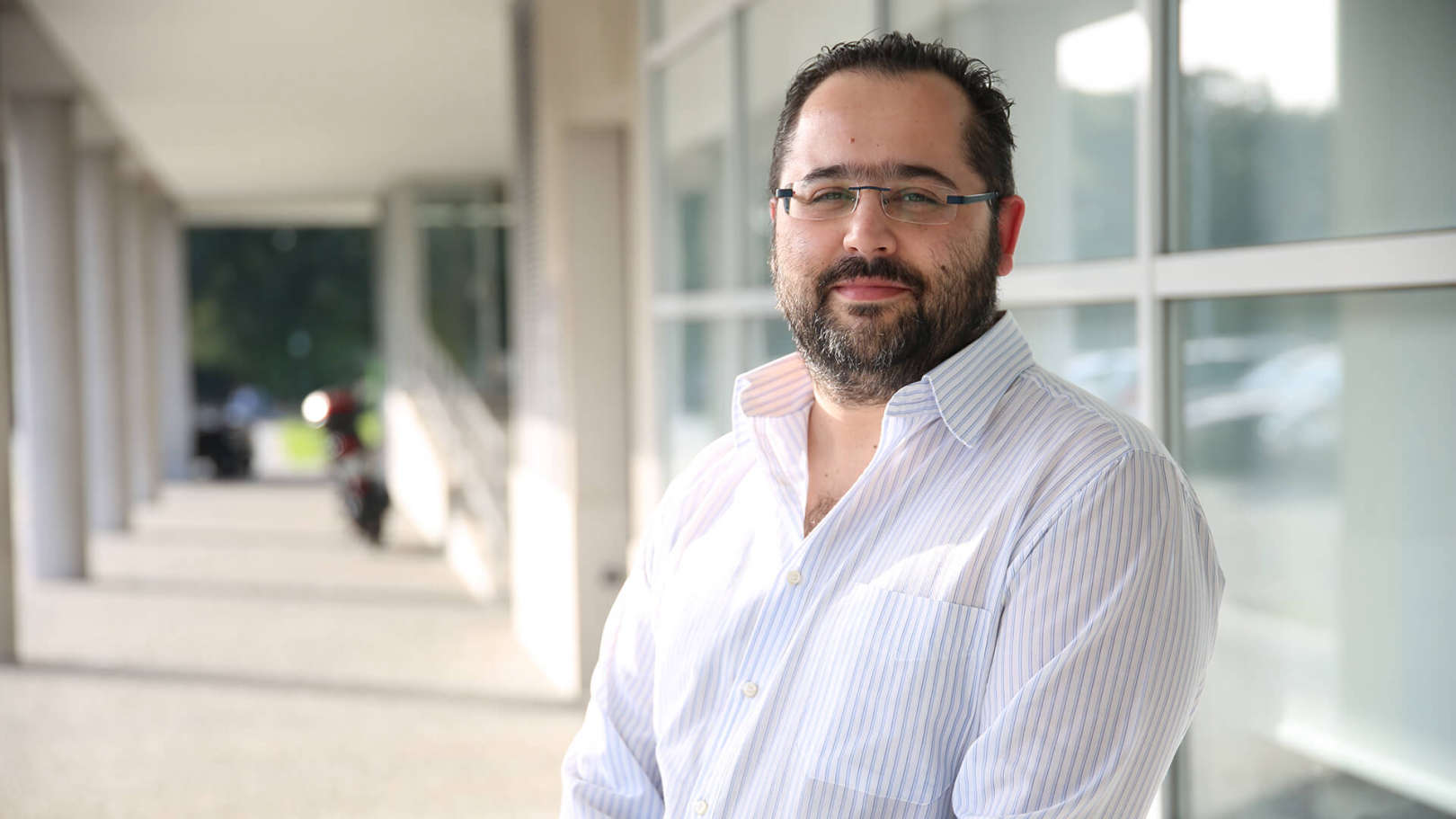
Hélder Filipe Oliveira is a Senior Researcher at INESC TEC and an Invited Assistant Professor at the University of Porto's Computer Science Department. He holds a Ph.D. in Electrical and Computer Engineering from FEUP. His roles include leading the Visual Computing and Machine Intelligence Area at INESC TEC and coordinating the Data Science Hub. He has extensive experience in research projects, including leading the LuCaS and MICOS initiatives, and has supervised 6 current PhD students, 1 concluded PhD, and 56 MSc students. Education: B.Sc. (2004), M.Sc. (2008), and Ph.D. (2013) in Electrical and Computer Engineering from FEUP. Research focuses on medical image analysis, bio-image processing, computer vision, and machine learning applications in healthcare. His work includes developing AI models for TBI patient prediction and lung cancer diagnosis, with notable contributions to interpretable deep learning systems. Publications span over 80+ peer-reviewed works, 1 patent, and datasets. He actively participates in academic events, organizing the VISUM summer school and serving as a keynote speaker. Labs/Groups: Visual Computing and Machine Intelligence Area, Breast Research Group, and Centre for Telecommunications and Multimedia.
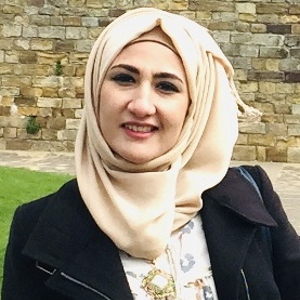
Baidaa Al-Bander is a Lecturer at Keele University's School of Computing and Mathematics. She holds an MSc in Computer Engineering from the University of Baghdad and a PhD in Electrical Engineering from the University of Liverpool (2018), followed by a Postdoctoral Research position at the University of Dundee. Her research focuses on AI-driven solutions for healthcare and real-world applications, including medical imaging analysis, explainable AI, and deep learning algorithms. She collaborates with experts in medicine, engineering, and computer science to address practical challenges, emphasizing interdisciplinary approaches. Al-Bander's work spans glaucoma diagnosis, melanoma detection, and autonomous medical systems, with publications in top-tier journals like PLoS One and Electronics . She actively reviews for leading conferences and journals, contributing to advancing AI ethics and applications. Her educational background and industry partnerships position her as a key figure in computational healthcare research. Education: MSc Computer Engineering, University of Baghdad (Iraq) PhD Electrical Engineering, University of Liverpool (2018) Research Interests: AI in Healthcare Computer Vision Explainable AI Deep Learning for Medical Imaging Data Science in Structural Engineering Key Contributions: Developed AI models for automated software testing using large language models. Pioneered emotion-aware mental health chatbots integrating BERT and GPT frameworks. Advanced glaucoma diagnosis techniques via deep learning-based retinal image analysis. Benchmarked deep learning algorithms for skin cancer and melanoma detection. Collaborations: Works with interdisciplinary teams in medicine, civil engineering, and cybersecurity to apply AI to real-world problems like seismic risk assessment and network intrusion detection.
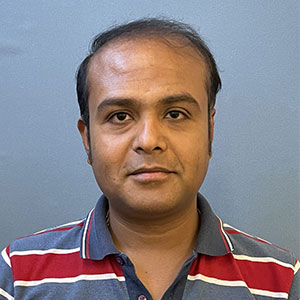
Bappaditya Mandal is a Senior Lecturer in Computer Science at Keele University's School of Computer Science and Mathematics, Faculty of Natural Sciences. He holds positions as an Academic Conduct Officer and actively contributes to both teaching and research. His academic journey includes a B.Tech in Electrical Engineering from IIT Roorkee, a Ph.D. in Electrical and Electronic Engineering from Nanyang Technological University, Singapore, and an MA in Higher Education Practice from Keele University. Dr. Mandal's research spans computer vision and machine learning with specific applications in biomedical image analysis, civil infrastructure inspection, human behavior analysis, and marine life detection. His work focuses on attention mechanisms, deep learning architectures, and subspace modeling, with recent publications demonstrating applications in medical diagnostics, structural engineering, and traffic prediction systems. His research demonstrates a consistent trajectory from foundational computer vision work to increasingly applied, interdisciplinary projects addressing real-world problems. His scholarly contributions include numerous publications in top-tier journals and conferences, with recent work focusing on attention-based deep learning models for concrete defect recognition, macular disease classification, and traffic flow prediction. The publications reveal a strong emphasis on developing interpretable attention mechanisms that can be applied across diverse domains while maintaining high accuracy. Award for Leading, Educating and Nurturing Talent (TALENT) from A*STAR Singapore Best Student Paper Award 2016: Honourable Mention Award from IAPR in Singapore Long service award from the Institute in 2014 Best Biometric Student Paper Award at the 19th International Conference on Pattern Recognition, Florida, USA, 2008 Research Scholarship Award from Nanyang Technological University (2004-2008) Dr. Mandal supervises PhD students including Asad Inamdar, Jenni Watson, and Kody Mistry, with research spanning medical applications, structural analysis, and AI systems. His work demonstrates strong industry connections, having collaborated with SMEs in both Singapore and the UK to develop practical solutions for research and development challenges. He is actively involved in grant-funded research, particularly in healthcare technology and infrastructure monitoring applications, and maintains affiliations with professional organizations including IEEE (Senior Member), British Computer Society (Fellow), and Higher Education Academy (Fellow).
Joel H. Dobbs is Senior Instructor in the Department of Management, Information Systems and Quantitative Methods at the University of Alabama at Birmingham’s Collat School of Business, where he also serves as Executive-in-Residence and co-director of the Healthcare Leadership Academy. He is a veteran life-sciences executive with more than three decades of leadership experience spanning pharmaceutical, biotechnology, regulatory, and academic arenas. Education Doctor of Pharmacy (PharmD), University of Tennessee System – Knoxville, 1976 Master of Public Health (MPH), University of Alabama at Birmingham, 1982 Bachelor of Science in Pharmacy, Samford University, 1975 Research & Teaching Interests Dr. Dobbs focuses on innovation, entrepreneurship, strategic management, and leadership within healthcare ecosystems. His pedagogy integrates multidisciplinary team science, bringing together engineering, business, and clinical trainees to tackle real-world medical-device challenges. He routinely leads executive-education modules, boot camps, and capstone experiences that emphasize translational research, commercialization pathways, and transformational leadership. Publication Trends Across four decades his peer-reviewed work has migrated from clinical pharmacology and regulatory informatics in the late 1970s–1990s to contemporary scholarship on experiential, cross-disciplinary education. Recent outputs emphasize team-based medical-device design, commercialization curricula, and integrative capstone models that leverage university–industry partnerships. Grants & Programs CTSA UM1 – National Center for Advancing Translational Sciences/NIH (2022) UAB Master of Engineering in Design and Commercialization – VentureWell (2015) Engineering Design Projects to Aid Persons with Disabilities – NSF (2012) Invention 2 Innovation at UAB – National Collegiate Inventors and Innovators Alliance (2011) Labs, Teams & Initiatives Dr. Dobbs co-directs the Healthcare Leadership Academy and mentors within the NSF I-Corps, UAB Innovation Council, and Blazer Innovation Challenge ecosystems. Through The Compass Talent Management Group LLC—where he is CEO—he advises organizations on talent strategy and structural design for innovation.
Dr. Yang Jing is an Assistant Professor in the Department of Industrial and Systems Engineering at the University at Buffalo. Their research focuses on human-robot interaction, adaptive automation, and human factors in healthcare and autonomous systems. Dr. Yang holds a PhD in Industrial Engineering from Purdue University (2023). Research Interests: Human factors engineering, robotic-assisted surgery, cognitive modeling, medical performance assessment, and multimodal sensing for situation awareness. Their work integrates physiological measurements (EEG, eye-tracking) with computational intelligence to improve human-technology collaboration. Key Research Contributions: Pioneered adaptive human-robotic interaction architectures for surgical environments, developed EEG-based techniques for driver state monitoring, and created computer-vision systems for ergonomics assessment. Recent work explores neurotechnological aids for semi-autonomous surgical tools and automated driving situation awareness classification. Labs & Teams: Leads the Human Factors in Robotics Lab, focusing on interdisciplinary projects at the intersection of industrial engineering, neuroscience, and medical technology. Collaborates with automotive and healthcare industries to translate research into practical applications.
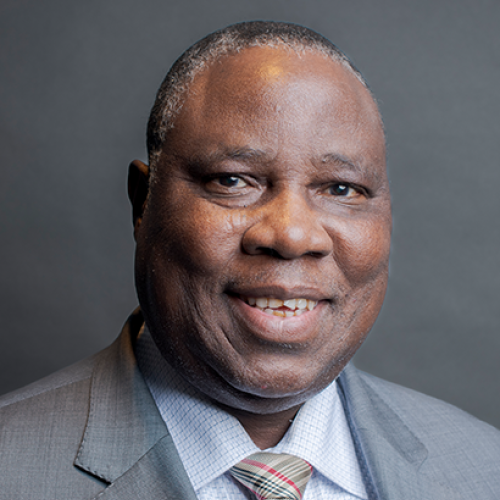
Emmanuel O. Akala, R.Ph., Ph.D. serves as Professor of Pharmaceutics in the Department of Pharmaceutical Sciences at Howard University's College of Pharmacy. He holds additional leadership roles as Chair of the Howard University Institutional Animal Care and Use Committee (IACUC) and Director of the Laboratory for Nanomedicine, Drug Delivery, and Pharmaceutical & Biopharmaceutical Drug Products Design. His research program has secured over $10 million in NIH, NSF, and DoD funding. His academic journey includes: Bachelor of Pharmacy (1980) and M.Sc. in Pharmaceutics (1983) from University of Ife (now Obafemi Awolowo University), Nigeria DAAD Research Fellowship in Biopharmaceutics (1983) at University of Münster, Germany Ph.D. in Pharmaceutics (1986) from University of Manchester, England as Commonwealth Scholar NIH Postdoctoral Fellowship in Pharmaceutics and Bioengineering (1994-1997) at University of Utah Akala's research focuses on nanotechnology-based drug delivery systems for cancer and HIV/AIDS treatment, integrating Quality by Design (QbD) and process analytical technology. His work spans biodegradable nanoparticles, pH-responsive carriers, and sterile dosage form optimization. He teaches advanced courses including Nanotherapeutics, Drug Stability and Packaging, and Advances in Drug Delivery Systems. His publication record shows consistent innovation from 1998 to 2017, with emphasis on polymeric nanoparticles for targeted delivery, particularly in oncology and antiretroviral therapy. Key trends include stealth coating technologies, computer-aided formulation optimization, and pH-sensitive systems for colon-specific delivery. Major recognitions include: AACR Minority-Serving Institution Faculty Scholar Award (2014) Washington DC Pharmacy Association NASPA Excellence in Innovation Award (2016) Howard University Distinguished Faculty Award (2013) USP Expert Committee appointment (2015) Akala has mentored numerous Pharm.D. and Ph.D. students alongside postdoctoral fellows, including participants in the Brazil Scientific Mobility Program. His $10+ million research portfolio includes NIH/NCI and NIH/NIAID grants focused on nanomedicine applications for HIV cure research and triple-negative breast cancer. The Laboratory for Nanomedicine he directs facilitates interdisciplinary collaborations across the U.S., Germany, UK, and Denmark. His leadership extends to the U.S. Pharmacopeia's Center for Pharmaceutical Advancement and Training Advisory Group since 2013, where he contributes to national pharmaceutical standards development.
Gordana Jovičić is a Professor at the Department for Applied Mechanics and Automatic Control, Faculty of Engineering, University of Kragujevac. Her research focuses on structural integrity, computational biomechanics, and material fatigue analysis with applications in aerospace, biomedical, and mechanical engineering. She leads projects involving AI integration for medical diagnostics and fracture mechanics of aircraft components. Her work spans finite element analysis (FEA), neural network modeling, and advanced material testing. Education details are not explicitly stated in the provided texts, but her academic career includes extensive contributions to applied mechanics and interdisciplinary research. She collaborates on projects related to coronary stent durability, dental restoration mechanics, and fracture prediction in osteoporosis treatment. Her research also extends to municipal solid waste management optimization using GIS and route-planning algorithms. Notable research themes include: Structural analysis of aircraft engine components (e.g., cylinder assemblies) Biomechanical modeling of human joints and dental systems Fatigue behavior of steel grades (S355J2+N, STRENX 700) Integration of AI for medical decision support (e.g., INTELHEART project) Numerical methods for fracture mechanics and stress analysis Her work often combines experimental validation with computational modeling, emphasizing practical applications in healthcare, aerospace, and civil engineering. She has contributed to open-source frameworks like OpenMandible for mandibular physiology simulation and collaborated on projects funded by the Ministry of Education, Science, and Technological Development of Serbia.
Sabah Jassim is a Professor of Mathematics at the University of Buckingham, specifically within the School of Computing. He holds a BSc and MSc from Baghdad University and a PhD in Mathematics from Swansea University (formerly University of Wales). His roles also include visiting lecturer positions at City University, London, and Fachhochschule Wedel, Germany. Education: BSc in Mathematics, Baghdad University MSc in Mathematics, Baghdad University PhD in Mathematics, University of Wales (Swansea) Research Interests: Dr. Jassim focuses on interdisciplinary research at the intersection of mathematics, computer science, and biomedical engineering. His work spans biometric authentication systems , medical image analysis , cryptography , and machine learning . Specific areas include biometrics security, dynamic encryption protocols, and automated classification of medical imaging data (e.g., ultrasound, histology). Research Trends (2010–2024): Recent work emphasizes applications of topological data analysis in forgery detection and medical imaging. His publications address challenges in ultrasound-based tumor classification , crack detection in building facades , and automated diagnosis support systems . He actively explores steganography techniques for secure data embedding and develops algorithms for clustering evolving data streams. Advising & Grants: Supervises research students in biometric authentication, biomedical image analysis, and dynamic encryption. His projects often involve collaborations with clinical partners for medical imaging applications. Active in securing funding for interdisciplinary research initiatives. Labs/Teams: Leads efforts in the School of Computing’s research groups focused on applied mathematics and computational security . Collaborates with medical institutions on diagnostic imaging projects.
Huihui Chen is an Associate Professor in the Department of Computer Science and Engineering at Northwestern Polytechnical University, specializing in mobile crowd sensing, medical imaging analysis, and control systems for autonomous vehicles. With over 50 publications spanning from 2013 to 2025, Dr. Chen has established a significant research presence in interdisciplinary areas combining computer science, engineering, and medical applications. Dr. Chen's research interests focus on mobile crowd sensing systems , particularly visual crowdsensing applications for smart cities and transportation. Their work extends to medical imaging analysis for conditions like Fragile X syndrome and granulosa cell tumors, as well as control systems for unmanned surface vehicles. The research demonstrates a progression from fundamental crowd sensing frameworks to sophisticated applications in medical diagnostics and autonomous systems. Key methodological approaches include sensor fusion techniques, neural network modeling, and optimization algorithms for dynamic environments. Recent publications reveal a growing emphasis on interdisciplinary applications, particularly at the intersection of computer vision and medical diagnostics. The 15 most recent articles demonstrate expertise across multiple domains including transportation systems optimization, neural network synchronization, and medical imaging analysis. This diverse portfolio shows a research trajectory that bridges theoretical computer science with practical applications in healthcare and autonomous systems. Dr. Chen actively collaborates with researchers including Bin Guo (31 joint publications), Zhiwen Yu, Chundi Zheng, and Aiguo Wang, forming a productive research group focused on mobile sensing technologies. The collaborative network extends across multiple Chinese institutions, with significant contributions to IEEE journals and international conferences in computer science and engineering.
Jérémy Vezinet is a Researcher at Ecole Nationale de l’Aviation Civile (ENAC) since 2014, affiliated with the TELECOM Research Team. He holds a Ph.D. in multi-sensors hybridization and specializes in navigation systems. His research interests encompass GNSS technology, inertial navigation, multi-sensor hybridization, integrity monitoring, and video-based navigation. These areas emphasize robust navigation solutions in challenging environments, integrating diverse sensor modalities for enhanced accuracy and reliability. Notable research trends include hybrid navigation systems leveraging GPS/Galileo/5G, spoofing attack analysis (e.g., meaconing), and innovative applications like inertial-vision fusion for aircraft precision approaches. His work also extends to railway positioning systems and biomedical device accuracy assessments using Kalman filters. No scientific awards explicitly mentioned in the provided texts. His advisory role shows no listed students, but he has contributed to projects involving multi-antenna GNSS receivers, space launcher navigation, and diagnostics of virtual balises in rail systems. Collaborations likely exist through his research team affiliations. He is part of the TELECOM Research Team at ENAC, which operates under the Signal Processing and Navigation (SIGNAV) group. This team focuses on interdisciplinary navigation solutions combining telecommunications and sensor technologies.
Aime Lay-Ekuakille is an Associate Professor at the Department of Innovation Engineering, University of Salento, Italy. Their research spans multiple domains of instrumentation and measurement systems, with particular expertise in biomedical applications, environmental monitoring, industrial instrumentation, nanotechnology, machine learning, and photovoltaic panel aging. The academic maintains an active research profile with numerous collaborations across international institutions. Research interests focus on developing advanced sensor systems and measurement techniques for diverse applications. This includes biomedical instrumentation for healthcare monitoring and diagnostics, environmental sensing for pollution detection and water management, industrial applications for harsh environments, and nanotechnology-based sensing solutions. Machine learning approaches are frequently integrated into their work to enhance data analysis and system performance. Recent publication trends demonstrate consistent output in high-impact journals with a strong emphasis on practical applications of sensor technology. The work spans from fundamental sensor development to system integration for specific applications in healthcare, environmental monitoring, and industrial settings. A significant portion of research involves interdisciplinary collaboration, particularly between engineering disciplines and medical or environmental applications. Research activities include leadership in multiple projects related to sensor development, with particular focus on instrumentation for biomedical applications, environmental monitoring systems, and nanotechnology-based sensing solutions. The academic has established collaborations with numerous international researchers across Europe and beyond. Current work involves several research groups focused on sensor development, with particular emphasis on biomedical instrumentation, environmental monitoring systems, and nanotechnology applications. The laboratory environment supports interdisciplinary research bridging engineering, medical science, and environmental science through advanced instrumentation development.
Yi Hong is an Adjunct Assistant Professor in the Department of Computer Science at the University of Georgia, Franklin College of Arts & Sciences. Her research focuses on medical image analysis, statistical shape analysis, computer vision, and interdisciplinary applications. She has led grants including an NSF-funded project on Human-Robot Collaboration and another on Image Metamorphosis Analysis. She holds a PhD from the University of North Carolina at Chapel Hill (2016), MSc from the Chinese Academy of Sciences (2011), and BSc from Wuhan University (2007). Research Interests: Medical Imaging, Computer Vision, Statistical Shape Analysis, Deep Learning, Biomedical Engineering Funding: NSF Grant: NRI: FND (2018-2021) NSF Grant: CRII: SCH (2018-2020) Smart Cyber-Physical Systems for Controlled-Environment Agriculture (2017-2018) Awards: NSF Early-Career Research Grants (2018) Her work bridges computational methodologies with clinical applications, including pediatric airway analysis, neurodegenerative disease diagnostics, and image registration techniques. She collaborates across disciplines to advance medical imaging technologies.
Johanna Margaret Seddon, MD, ScM, is a Professor at UMass Chan Medical School, holding multiple appointments across the T.H. Chan School of Medicine in the Department of Ophthalmology and Visual Sciences, Department of Population and Quantitative Health Sciences, and at the Morningside Graduate School of Biomedical Sciences in the Departments of Masters in Clinical Investigation, MD/PhD Program, and Population Health Sciences. University of Pittsburgh: BS in Chemistry/Physics Harvard University School of Public Health: MS in Epidemiology University of Pittsburgh School of Medicine: MD Dr. Seddon is a leading researcher in age-related macular degeneration (AMD), with a research focus spanning genetic epidemiology, complement system involvement in eye disease, nutritional factors affecting eye health, and development of risk prediction models. Her work integrates genomic data with clinical and imaging biomarkers to understand AMD progression and develop personalized prevention strategies. She has pioneered research on the role of rare genetic variants in complement pathway genes and their interaction with environmental factors in determining AMD risk. Analysis of her recent publications reveals a strong emphasis on integrating genetic, imaging, and clinical data to develop predictive models for AMD progression. Her research increasingly incorporates advanced computational methods including deep learning for retinal image analysis and sophisticated statistical approaches for risk prediction with hierarchical data structures. Her work spans basic science investigations of complement pathway genetics through to clinical applications of risk prediction models and preventive strategies. Development of AMD risk prediction algorithms incorporating genetic, demographic, and lifestyle factors Investigation of rare genetic variants in complement pathway genes (CFH, CFI, C4A) Analysis of nutritional factors and their interaction with genetic susceptibility in AMD Development of screening tools for AMD risk assessment Application of AI and deep learning to retinal imaging analysis Dr. Seddon's research has significant implications for personalized medicine approaches to AMD prevention and management, with potential to transform clinical practice through genetically-informed risk stratification and targeted interventions.
Dr. Quentin Lohmeyer is a Lecturer at the Department of Mechanical and Process Engineering at ETH Zurich, affiliated with the Chair of Product Development & Engineering Design (D-MAVT). His research focuses on human factors engineering, augmented reality applications in training, and medical procedural skill assessment. He integrates eye-tracking technology, pose estimation, and machine learning to improve healthcare education, surgical training, and design education. Key areas include gaze behavior analysis in critical care tasks, AR visualization effectiveness, and algorithmic tools for medical simulation. His work bridges mechanical engineering with biomedical applications, addressing challenges in user interface design, procedural error prevention, and expertise development. Recent projects explore dynamic-3D reconstruction techniques and self-supervised learning for medical diagnostics. Lohmeyer collaborates on datasets like 'Pov-surgery' for surgical activity analysis and contributes to improving patient safety through human-centered design methodologies.
Jian Qiu Zhang is a Professor at Fudan University in the School of Information Science and Technology , affiliated with the Key Laboratory for Information Science of Electromagnetic Waves and Research Center of Smart Networks and Systems in Shanghai, China. Previously, he was at the University of Greenwich (1999-2002) and earned his PhD in 1996 from Harbin Institute of Technology in the Department of Electrical Engineering . His research interests span Signal Processing , Image Analysis , and Machine Learning , with a focus on applications in Biomedical Imaging , Hyperspectral Data Analysis , and Smart Network Systems . His work often integrates Wavelet Transforms , Tensor Decomposition , and Bayesian Filtering to solve complex problems in Medical Imaging and Wireless Sensor Networks . Recent publications highlight advancements in Deep Learning for 3D Ultrasound , PARAFAC Decomposition , and Graph Neural Networks for Hyperspectral Classification . His technical contributions include Adaptive Filtering Algorithms , Nonlinear Unmixing , and Wavelet-Based Sensor Analysis . Key collaborations include researchers from institutions such as Harbin Institute of Technology, University of Greenwich, and international teams in IEEE Transactions and IGARSS conferences.