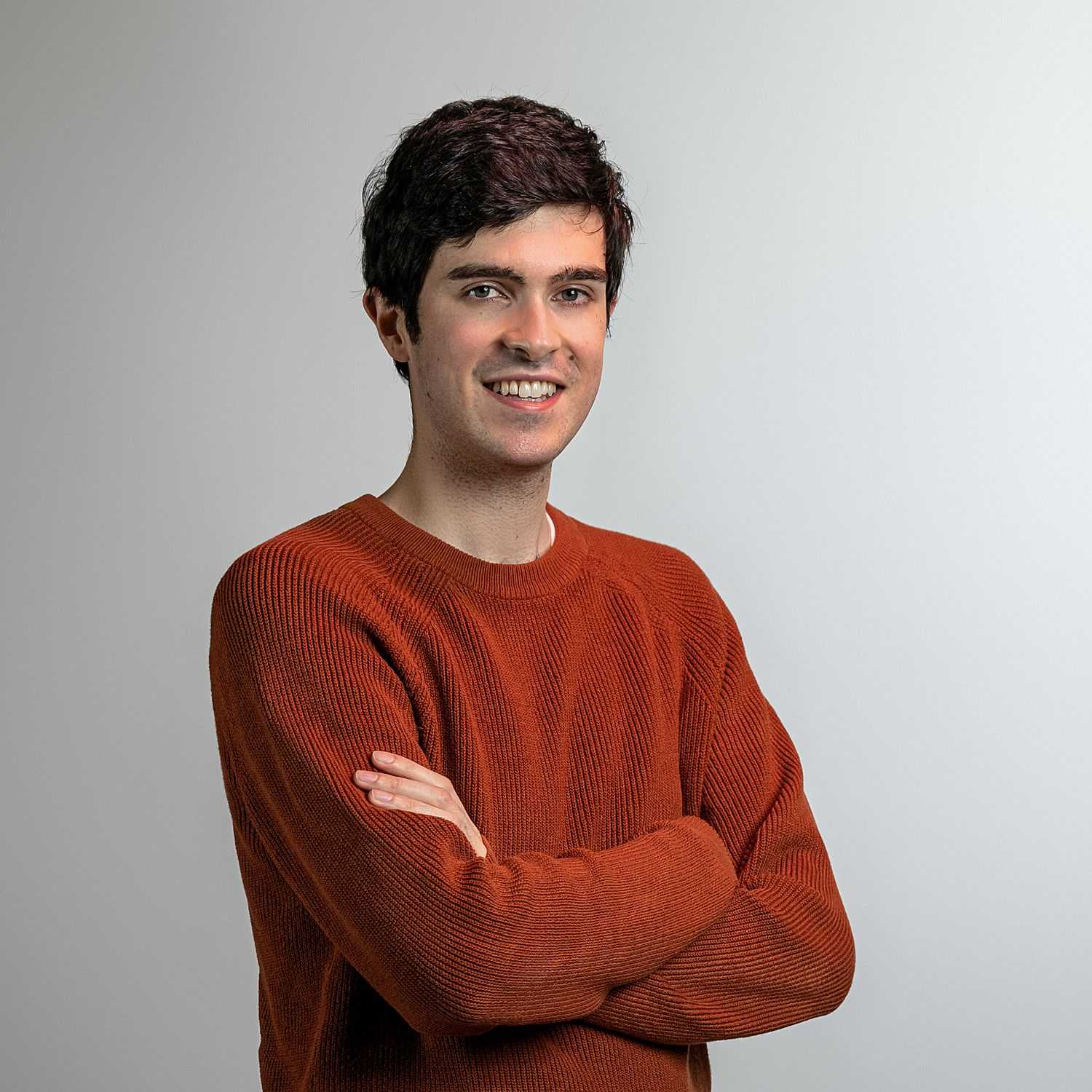
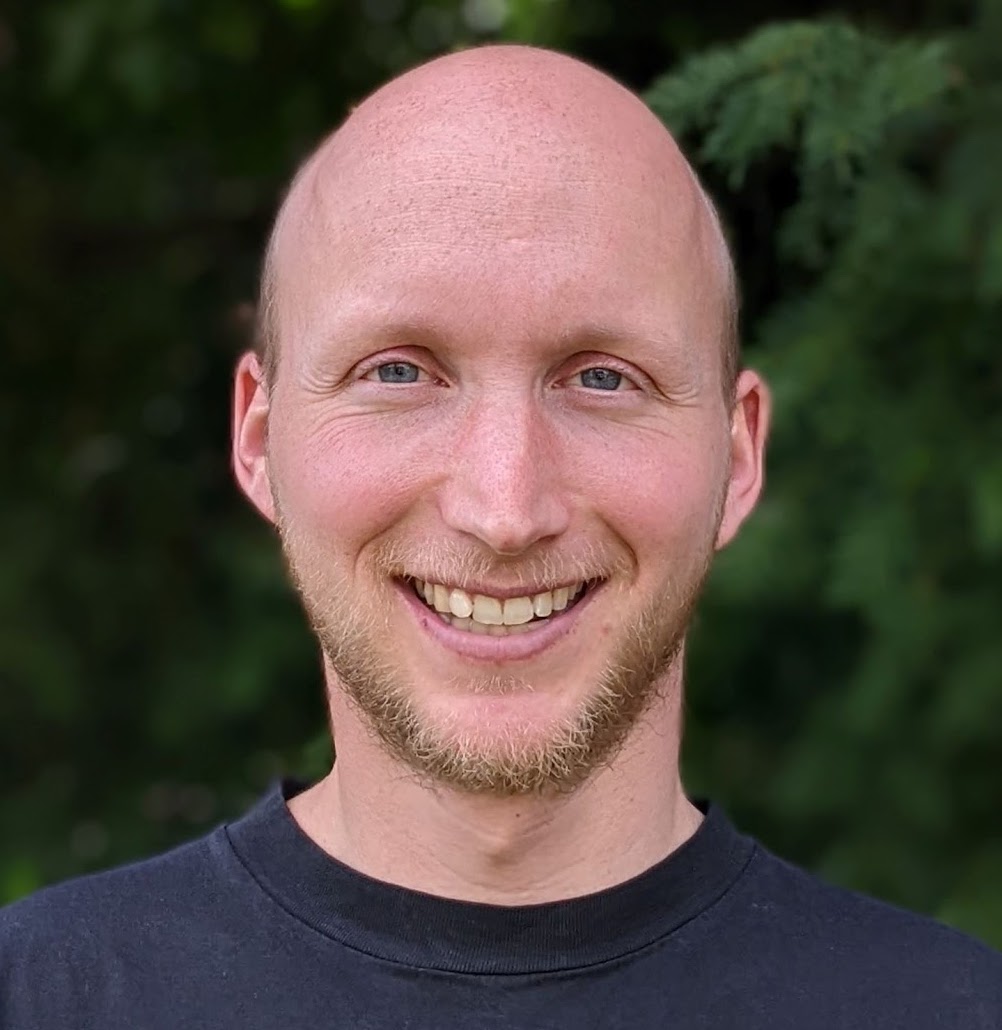
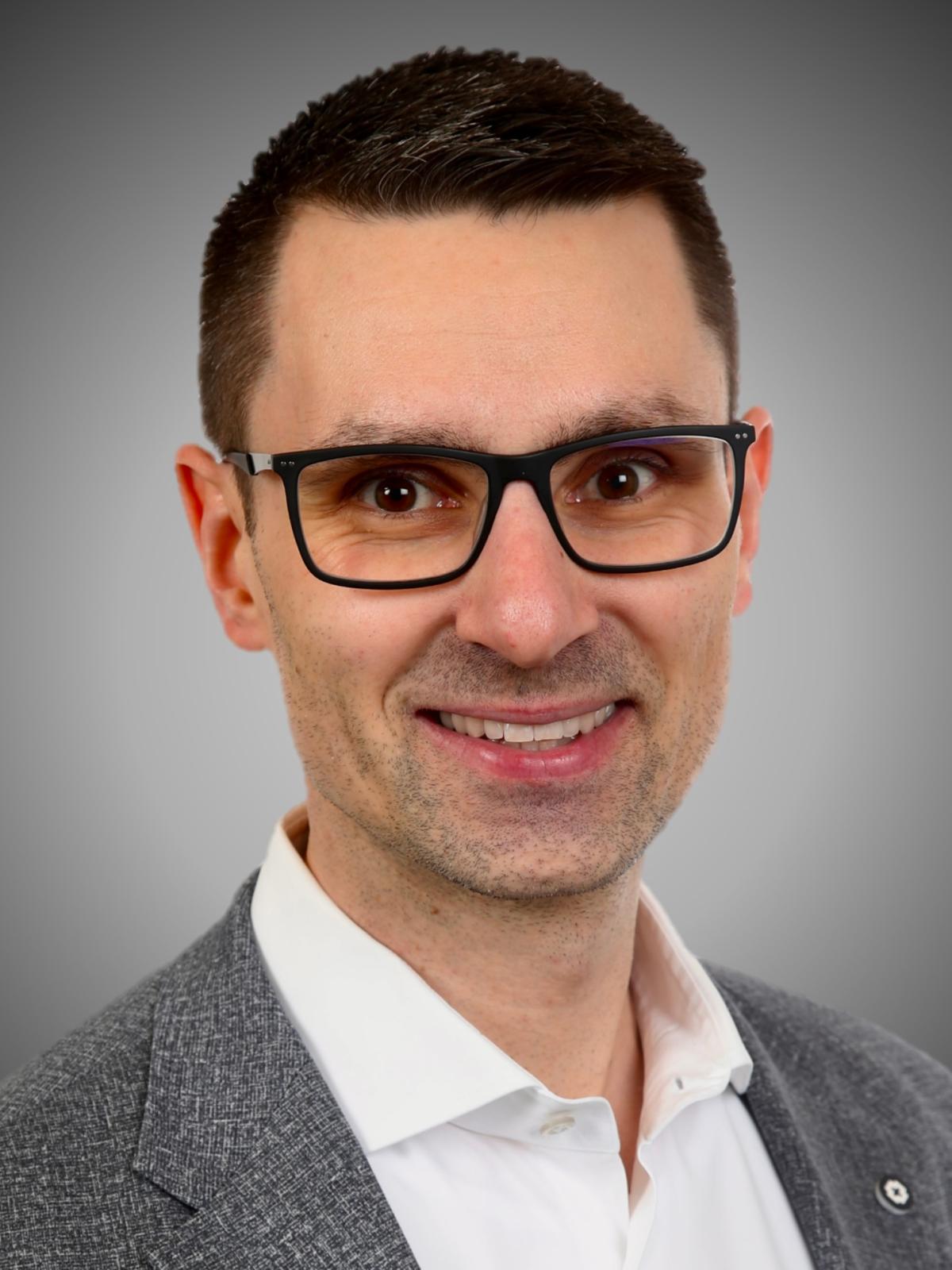
Dr. Andreas Streich is a Lecturer at the Department of Computer Science at ETH Zurich. His research focuses on Machine Learning, Data Science, and their applications in fields like medical imaging and signal processing. He teaches courses including Computer Science I, Building ML/AI Applications, and Data Science & Machine Learning. His work spans neural networks, clustering algorithms, and multi-label classification. He has contributed to advancements in medical diagnostics via deep learning and acoustics-based signal processing. No scientific awards or student advisees are explicitly mentioned in the provided texts.
Jean-Luc Emery is a Lecturer at the Department of Mechanical and Process Engineering at ETH Zurich. He specializes in the application of CAD (Computer-Aided Design) and CAE (Computer-Aided Engineering) in engineering projects, with a focus on practical implementation and process optimization. Role: Lecturer Department: Mechanical and Process Engineering Research Interests: Computer-Aided Design (CAD) Computer-Aided Engineering (CAE) Mechanical Systems Development Industrial Process Optimization
Anne Polikeit is a Professor at HES-SO, affiliated with Haute Ecole Arc - Ingénierie, where she leads the Industrial Design Engineering department. Her research focuses on biomechanics, biomedical engineering, and medical device development, with significant contributions to finite element analysis in spinal surgery and ergonomic design. Doctorate from University of Bern (2002) Her work spans biomedical engineering projects like the Aspivix atraumatic suction device for gynecological procedures and spinal implant research. She has developed ecodesign methodologies and contributed to offender monitoring systems through the Geosatis project. Recent publications highlight her expertise in clinical applications of computational modeling and sustainable design practices. Key projects include: RiseUp (2021-2022): Autonomous chair for elderly/disabled mobility Bootstrap Ecodesign (2015-2022): Life cycle analysis and sustainable materials education Aspivix (2016-2018): Reducing pain and lesions in uterine procedures Hysteropen (2010-2012): Optical guidance for hysteroscopy Geosatis (2013-2015): Secure electronic monitoring systems Polikeit collaborates with institutions like Aspivix SA, Fair&Square, and Demetrio José, integrating clinical needs with engineering solutions through HES-SO networks.
Sara Irina Fabrikant is a Professor in the Department of Geography at the University of Zurich, where she leads cutting-edge research at the intersection of cartography, cognitive science, and geographic information systems. Her work focuses on understanding how humans interact with spatial information, particularly through mobile and neuroadaptive interfaces that respond to users' cognitive states. Department of Geography, University of Zurich Editor for major cartography journals and conference proceedings Principal investigator on multiple research projects in spatial cognition Active collaborator with international researchers across cognitive science, neuroscience, and GIScience Professor Fabrikant's research centers on spatial cognition and human-computer interaction in geographic contexts. She investigates how people process spatial information through various display modalities, with particular emphasis on mobile map navigation, landmark recognition, and spatial learning. Her work bridges theoretical cartography with practical applications in wayfinding systems, incorporating methods from cognitive psychology, neuroscience, and human-computer interaction. Recent research has increasingly integrated physiological measures like EEG to develop neuroadaptive geographic information displays that respond to users' cognitive load and spatial learning needs. Analysis of her recent publications reveals a clear trajectory toward more sophisticated integration of neuroscience methods with cartographic design principles. Her work has evolved from foundational studies on spatialization and information visualization to cutting-edge research on neuroadaptive location-based services. Key themes across her publications include the impact of visualization design on spatial learning, the role of landmarks in navigation, the effects of uncertainty representation on decision-making, and the development of context-aware mapping systems that adapt to users' cognitive states in real-time. Professor Fabrikant has served as editor for numerous special issues and conference proceedings, including multiple COSIT (Conference on Spatial Information Theory) volumes, demonstrating her leadership in the field. Her extensive publication record in top-tier journals reflects consistent contributions to cartographic theory and practice over multiple decades. Her research program demonstrates significant advising activity through numerous co-authored publications with emerging scholars, though specific student names aren't listed in the provided materials. Her work frequently involves interdisciplinary collaboration across geography, computer science, cognitive psychology, and neuroscience, suggesting a well-funded research program with multiple ongoing projects. She has organized and edited proceedings for major international conferences, indicating substantial recognition within her field. While specific lab structures aren't detailed in the provided text, Professor Fabrikant's research appears to involve multiple experimental setups including virtual reality environments, real-world navigation studies with mobile eye-tracking, and neurophysiological measurement systems. Her work with teams across Switzerland and internationally suggests a collaborative research environment focused on pushing the boundaries of how geographic information is designed and experienced.
Yves Weinand serves as Full Professor of Timber Construction at École Polytechnique Fédérale de Lausanne (EPFL), where he directs the transdisciplinary Wood Construction Laboratory (IBOIS) within the School of Architecture, Civil and Environmental Engineering. His appointment spans the Institute of Civil and Environmental Engineering (IIC) and teaching units in Architecture (SAR) and Civil Engineering (SGC), reflecting his interdisciplinary focus at the intersection of structural engineering and architectural design. His research expertise spans computational geometry processing, robotic timber construction, and experimental joinery techniques, with particular emphasis on digital fabrication workflows for complex wood structures. Weinand's work integrates augmented reality systems with traditional craftsmanship and develops novel computational methods for timber plate structures and through-tenon connections. Analysis of his recent publications reveals a strong trend toward hybrid digital-physical construction workflows, with increasing focus on AI-assisted fabrication, real-time quality control, and sustainable material utilization. His research bridges fundamental structural mechanics with practical building applications through technology transfer projects. Lignum Prize - Western Region Mention (2018) French Academy of Architecture silver medal (2017) Grand Prix d'architecture de Wallonie for Vidy theater (2019) Wood Distinction 2019 for Vaud Parliament building (2019) Medal for Research and Technique from French Academy of Architecture (2017) Weinand supervises numerous doctoral candidates while teaching ten courses across bachelor to postgraduate levels, including computational architecture and digital timber construction. His laboratory collaborates with industry partners through technology transfer contracts for projects like the Annen Vault, Rossinière Centre, and Brussels Sportstower, implementing EPFL-developed computational methods in real-world construction. The IBOIS laboratory operates as a transdisciplinary research hub connecting architectural design exploration with structural engineering innovation, maintaining active partnerships with timber industry stakeholders and architectural practices across Europe.
Sébastien Vaucher serves as a Lecturer in the Department of Materials Science and Engineering at the School of Engineering, École Polytechnique Fédérale de Lausanne (EPFL), holding an invited guest status that indicates a non-permanent academic appointment. His primary institutional affiliation spans EPFL's STI faculty hierarchy through STI-SMX and SMX-ENS units. His research focuses on computational approaches to materials science, specifically leveraging Ashby plots for cross-property analysis of mechanical, thermal, and chemical characteristics. This methodology enables systematic materials selection for engineering design and production optimization: Materials Science and Engineering fundamentals Computer-aided materials selection Mechanical property optimization Thermal behavior modeling Chemical compatibility assessment Production route design Scientific recognition includes: No awards or fellowships documented in source materials Academic supervision encompasses PhD mentorship, with documented advisees completing doctoral research under his guidance. Teaching responsibilities include the core course "Materials Selection," which implements Prof. Mike Ashby's established frameworks for comparative materials analysis across performance criteria. Operational context indicates activity within EPFL's SMX-ENS teaching unit without documented laboratory facilities or research teams.
Pablo Antolin Sanchez is a Researcher and Lecturer at École Polytechnique Fédérale de Lausanne (EPFL), affiliated with the School of Basic Sciences (SB) and the Department of Mathematics . He leads research at the Numerical Modelling and Simulation chair and contributes to teaching in mathematics and computational methods. Research interests include Isogeometric Analysis Computational Mechanics Numerical Methods for Structural Dynamics High-Performance Computing Machine Learning in Multiscale Modeling Recent publications focus on advanced isogeometric methods for shell structures reduced-order modeling for lattice systems machine learning integration in mechanics geometric modeling and mesh intersection Teaching roles encompass courses such as Numerical Approximation of PDEs and Parallel & High-Performance Computing . He has advised PhD student Ondine Gabrielle Chanon at EPFL.
Jean-Philippe Bacher is a Full Professor at the University of Applied Sciences and Arts Western Switzerland (HES-SO), specifically affiliated with the Fribourg School of Engineering and Architecture. He serves as a key researcher at the Institute for Applied Research in Energy Systems, where he leads multiple significant research initiatives focused on energy transition and building performance optimization. His work bridges academic research with practical applications in the energy sector, particularly in the context of Switzerland's Energy Strategy 2050. Professor Bacher's research interests span the critical domains of energy transition, energy efficiency and management, Smart Building technologies, and building performance analysis. His expertise extends to photovoltaic systems, energy storage solutions, Building Information Modeling (BIM), and the intersection of Internet of Things (IoT) technologies with building management. He has developed a particular focus on understanding human behavior in built environments and its impact on energy consumption patterns. His work often addresses the complex challenges of district energy systems and innovative approaches to building decarbonization strategies, with numerous publications demonstrating his leadership in these fields. An analysis of his recent publications reveals a strong trajectory toward integrated solutions for energy transition in the built environment. His work increasingly focuses on the convergence of multiple technologies - particularly the combination of BIM, IoT, and virtual reality for facility management, as well as the integration of photovoltaics with hydrogen-based storage systems for seasonal energy balancing. His research demonstrates a methodological shift toward data-driven approaches using machine learning techniques to optimize energy systems at multiple scales, from individual buildings to district-level infrastructure. The consistent theme across his publications is the practical application of research to address Switzerland's and Europe's energy transition challenges, with particular attention to grid stability issues arising from decentralized renewable energy production. EXPOSITION project (2024-2025): Experimentation Platform for Smart Districts focusing on grid stability issues ProRen project (2019-2021): Interventions on existing building stock for large-scale energy optimization Multi-Confort project (2011-2020): Comprehensive approach to workplace comfort considering physiological, psychological, and functional components CityPulse project (2017-2020): Sensor platform for urban quality of life monitoring in Fribourg's BlueFactory district Professor Bacher leads a substantial research team within HES-SO, collaborating with numerous colleagues across multiple disciplines. His work demonstrates strong industry engagement through practical applications of research findings and technology transfer initiatives. He serves as a bridge between academic research and practical implementation in the energy sector, particularly in the context of Switzerland's Energy Strategy 2050 and the challenges of integrating renewable energy sources into existing infrastructure.
Nicolás Vila Blanco is an Assistant Professor at the University of Santiago de Compostela, primarily affiliated with the Information Technologies Research Center (CiTiUS). His work bridges Medical Image Processing and Deep Learning through software development and algorithm optimization. Education includes: PhD in Information Technology Research (Universities of Santiago de Compostela and Coruña) M.Sc. in Data Science and Computer Engineering (University of Granada) B.Sc. in Computer Science (University of Vigo) Research focuses on applying Artificial Intelligence to biomedical challenges, particularly in dental imaging and cardiac diagnostics . Key contributions include: Developing IDALib (Image Data Augmentation Library) Creating DenTiUS Deep Plaque software for dental plaque analysis Designing PrimerEvalPy for microbiome primer evaluation Building gVARVI for heart rate response analysis Recent publications demonstrate expertise in: Clinical software development Deep learning architectures (U-Net, Few-Shot Learning) Medical imaging applications Biomedical data processing AI in dental diagnostics Microbiome sequencing techniques
Ning Wang is a Researcher at the University of Zurich 's Digital Society Initiative . Since 2017, she has combined expertise in ethics and political science to explore the responsible governance of emerging technologies like AI, robotics, and autonomous systems. Education: PhD in Biomedical Ethics and Law (University of Zurich), Master's in Applied Ethics (Sweden/Norway/Netherlands), Master's in Political Science Research Focus: Ethics assessment, value-sensitive design, societal implications of digitalization, transdisciplinary co-creation Her projects address humanitarian drones , urban drone acceptance , and digital education , funded by institutions like the Digitalization Initiative of Zurich Higher Education Institutions and Swiss National Science Foundation . She actively engages with the World Economic Forum , IEEE , and Swiss Academy of Engineering Sciences .
Malte Baader is a Postdoctoral Researcher at the University of Zurich's Department of Banking & Finance and Research Data Manager at FAIR (Norwegian School of Economics). His interdisciplinary research integrates experimental economics , social psychology , and computer sciences , focusing on behavioral ethics , organizational innovation , and creative cognition . Primary Affiliation: University of Zurich, Department of Banking & Finance Secondary Affiliation: Norwegian School of Economics, FAIR His methodological contributions include novel tools like IOS 11 for relationship closeness measurement and Flexi-DPE for preference elicitation. Current work investigates unintended consequences of ethical decision aids and organizational mistake-reporting dynamics . Key collaborative networks include the Digital Society Initiative at University of Zurich and FAIR at Norwegian School of Economics. He employs experimental methods to analyze social preferences , conditional cooperation , and team cohesion across diverse contexts.
Prof. Alireza Darvishy is a Professor at the ZHAW School of Engineering, leading research in accessibility technologies and assistive systems. He specializes in enhancing accessibility for people with disabilities through AI, SLAM systems, and digital tools. His work focuses on improving access to educational materials, navigation aids for visually impaired individuals, and inclusive design principles across digital platforms. He has pioneered projects like the 'Sight Guide' wearable navigation system for the Cybathlon and developed the PAVE tool for PDF accessibility. His research also addresses challenges in higher education accessibility, generative AI ethics, and SLAM applications. Key research areas include chart accessibility, PDF remediation, and assistive technologies for mobility impairments. He has collaborated on over 30 projects, including 'Accessible Scientific PDFs for All' and 'Age-Appropriate Digital Channels'. His work emphasizes real-world implementation through datasets like InCrowd-VI and user-centric design approaches. Notable contributions include advancing SLAM systems for indoor navigation, guidelines for accessible teaching at universities, and studies on AI's impact on students with disabilities. He advocates for inclusive technology policies and accessible digital infrastructure in education and tourism.
Dr. Iva Barisic is a Lecturer at the Department of Humanities, Social and Political Sciences at ETH Zürich, affiliated with the Chair of Cognitive Science. Her work focuses on interdisciplinary research at the intersection of cognitive science, human-computer interaction, and spatial behavior. Her research interests encompass wayfinding usability in complex environments, social dynamics in navigation, and the application of neuroimaging techniques such as fMRI and eye-tracking to study joint attention mechanisms in autism spectrum disorder. She teaches courses like Human-Computer Interaction: Cognition and Usability, emphasizing the integration of cognitive principles into technology design. Dr. Barisic’s recent publications explore topics such as digital assistant delegation expectations, spatial learning with mobile maps, and the neural underpinnings of social interactions. Her work bridges theoretical cognitive science with practical applications in urban design, user experience research, and assistive technology development. Her research has been published in top-tier journals, with a focus on understanding human spatial cognition and social behavior through both experimental and computational methods. She collaborates with interdisciplinary teams to advance knowledge in human-centered design and neurocognitive mechanisms.
Dr. Quentin Lohmeyer is a Lecturer at the Department of Mechanical and Process Engineering at ETH Zurich, affiliated with the Chair of Product Development & Engineering Design (D-MAVT). His research focuses on human factors engineering, augmented reality applications in training, and medical procedural skill assessment. He integrates eye-tracking technology, pose estimation, and machine learning to improve healthcare education, surgical training, and design education. Key areas include gaze behavior analysis in critical care tasks, AR visualization effectiveness, and algorithmic tools for medical simulation. His work bridges mechanical engineering with biomedical applications, addressing challenges in user interface design, procedural error prevention, and expertise development. Recent projects explore dynamic-3D reconstruction techniques and self-supervised learning for medical diagnostics. Lohmeyer collaborates on datasets like 'Pov-surgery' for surgical activity analysis and contributes to improving patient safety through human-centered design methodologies.
Dr. Johannes Schilling is a Researcher affiliated with the Professorship for Energy and Process Systems Engineering at ETH Zürich. He holds a PhD in Mechanical Engineering from RWTH Aachen University (2020), where he focused on integrated thermo-economic design of processes and molecules. Since 2020, he has led research teams in molecular design, carbon capture, and AI-driven thermodynamic property prediction at ETH Zürich under Prof. André Bardow. His work emphasizes bridging academia and industry through innovations like the PrISMa platform for sorbent-based carbon capture screening. Education: Bachelor's/Master's in Mechanical Engineering (2009–2014), RWTH Aachen University PhD in Technical Thermodynamics (2015–2020), RWTH Aachen University Postdoc (2020–present), ETH Zürich Research Interests: AI-driven prediction of physical properties (e.g., SMILES-based models) Carbon capture, utilization, and storage (CCUS) Integrated design of molecules and processes Life cycle assessment (LCA) for sustainable chemical systems Grants & Recognition: NCCR Turbo Grant (2023) for AI-driven chemical property prediction Key Projects: Leader of the PrISMa platform for holistic carbon capture material screening and co-developer of the SPT-PC-SAFT model for thermodynamic property prediction. His work spans AI integration into traditional thermodynamics and sustainable process design. Labs/Teams: Heads research teams focused on molecular design, carbon technologies, and high-throughput material screening at ETH Zürich's Energy and Process Systems Engineering Group.