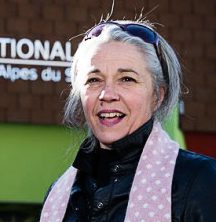
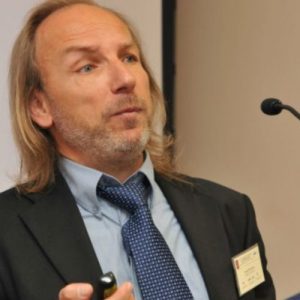
Guillaume Loizillon is a Lecturer in the Department of Music at University of Paris 8 , actively contributing to the EA 1572 Reception Team (Aesthetics, Musicology, and Dance) and Musical Creation research areas. He co-leads the Master's program in Musical and Sound Creation , bridging academic and artistic practices. Research Interests: Electroacoustic and improvised music Interdisciplinary encounters between music and arts (cinema, poetry, dance) Sound synthesis and modeling Sound ecology theoretical/practical frameworks Phenomenological approaches to music technology Historical and technical analysis of avant-garde Artistic Productions: Regularly creates sound installations ( Zoophonie , Ex Voto ) and concerts internationally (Canada, Greece, France). Collaborates with artists like Merce Cunningham and sound poets. Notable projects include Paris Dadaphone for Cities Memory (UK) and Babel Babil at University Paris 8. Academic Contributions: Co-edited two special issues on sound ecology in Filigrane review (2015-2016). Has 11 personal contributions to the Phono-Photo collaborative system. Presented at major international conferences including ICMC, EMS, and Spark Festival.
René Chalon is a Lecturer in Computer Science at the Department of Mathematics and Computer Science, École Centrale de Lyon. He has been affiliated with the institution since 2000, contributing to both research and teaching. His work focuses on Human-Computer Interaction , Computer-Aided Collaborative Work , and Ambient Intelligence , with applications in Smart Cities , Mobile Learning , and Serious Games .
Paul Muraille is an Associate Lecturer in English at the University of Paris 8, specializing in translation studies and translation practices. He coordinates the LISH (Literature, Digital Interfaces and Human Sciences) Master's program in Translation and teaches courses on computer-assisted translation (CAT), terminology management, and post-editing techniques. His research focuses on the application of digital tools to language professions, particularly in multilingual terminology development and quality assurance in professional translation contexts. He holds expertise in internationalization projects, standards compliance (ISO 16642/12620), and the technical and linguistic optimization of terminological data. His work bridges theoretical linguistics with practical translation challenges, addressing issues like abbreviation typology in specialized languages and equivalence problems in interlingual audit terminology. Muraille collaborates with institutions like the European Parliament on terminology standardization and has contributed to African language documentation projects in Mauritania and Senegal. His publications analyze multilingual dictionaries, XML corpus development, and the role of digital tools in language policy. No scientific awards are explicitly mentioned, though his scholarly contributions reflect sustained engagement with professional translation challenges. His advising and grants sections remain underdeveloped in available texts, though his coordination of the LISH program indicates a leadership role in academic translation initiatives.
National Institute of Applied Sciences of StrasbourgFrance
Emmanuel Alby is a Lecturer in the Civil Engineering and Topography Department at the University of Strasbourg, affiliated with INSA Strasbourg. He is a Researcher in the ICUBE Research Unit's TRIO Team and a member of the PAGE team. His work focuses on integrating geomatics technologies such as photogrammetry, laser scanning, and 3D modeling for archaeological and cultural heritage documentation. Research Interests: Alby's research emphasizes digital documentation of archaeological sites, 3D modeling of heritage structures, and the development of low-cost solutions for artifact and site recording. His work bridges traditional archaeological methods with cutting-edge technologies like UAV imagery, point cloud processing, and semantic segmentation for heritage preservation. Key Contributions: Alby has pioneered methodologies for combining photogrammetry and laser scanning data to create comprehensive 3D models of sites such as the Bronze Age cave "Les Fraux" and the Monastery of Saint Hilarion in Gaza. He has also developed open-source tools for real-time 3D visualization and semantic analysis of archaeological data. Articles Trends: His publications highlight advancements in 3D reconstruction techniques, artifact identification algorithms, and the application of machine learning to architectural heritage. Recent work includes real-time smartphone-based depth mapping and long-term monitoring of excavation sites in Jordan and France. Labs/Teams: Active in ICUBE's TRIO and PAGE teams, Alby collaborates on projects involving heritage preservation, archaeological surveying, and interdisciplinary geomatics applications.
Adrien Bousseau is a Senior Researcher at Inria within the GraphDeco group at Université Côte d'Azur. He earned his PhD from Inria Rhône-Alpes under Joëlle Thollot and François X. Sillion, with internships at Adobe and MIT. His postdoctoral research at UC Berkeley focused on computational design and graphics. Notable roles include leading the ANR DRAO project (2012–2015) and coordinating the CRISP associate team with UC Berkeley. He has received prestigious awards such as the Eurographics 2011 PhD Award and ERC grants for projects on 3D design and circular design. Research interests span image creation, stylization, vector graphics, and sketch-based modeling. Recent work explores computational methods for circular design and AI-driven design tools. He has supervised over 13 PhD students, including Nicolas Rosset (aerodynamics) and Emilie Yu (VR sketching). Key projects include ERC-funded initiatives on drawing interpretation and material acquisition. Service contributions include co-chairing Eurographics 2025 and EGSR 2021, and editorial roles at Computer Graphics Forum. Publicly accessible tools include Photoshop watercolor filters and academic resources like BendFields tutorials.
Pascale Le Gall is an active researcher specializing in formal methods and computer science, with primary research conducted through the Mathematics and Computer Science for Complexity and Systems laboratory. Their work spans theoretical computer science, software engineering, and interdisciplinary applications in biological systems modeling. Le Gall's research focuses on formal verification techniques, particularly in conformance testing, symbolic execution, and graph transformations. Their work bridges theoretical computer science with practical applications in distributed systems verification, geometric modeling, and biological network analysis. Key research themes include developing frameworks for stochastic process discovery, feature interaction resolution, and topological operations in geometric modeling, demonstrating both theoretical depth and practical implementation value across multiple domains. Analysis of their recent publications reveals a strong trend toward interdisciplinary applications of formal methods, particularly in biological systems. Their work increasingly integrates statistical approaches with traditional formal verification techniques, as seen in Bayesian inference for process discovery and statistical model checking of biological pathways. The research shows consistent development of symbolic execution techniques applied to increasingly complex systems, from abstract data types to distributed biological networks. Pascale Le Gall maintains active collaborations with researchers including Christophe Gaston, Marc Aiguier, and Paolo Ballarini across multiple projects. Their publication record shows consistent output with significant contributions to model-based testing frameworks, geometric modeling using graph transformations, and formal analysis of biological systems. The researcher has contributed to both theoretical foundations and practical implementations of verification techniques, with numerous conference papers and journal articles spanning over 15 years of active research.
Alborz Hassanzadeh is an Assistant Professor of Operations and Supply Chain Analytics at NEOMA Business School, France. His research focuses on humanitarian operations, sustainable operations, and retail analytics. He has published in top-tier journals like European Journal of Operational Research and Applied Soft Computing. Ph.D. in Operations and Data Analytics from ESSEC Business School (France) Postdoctoral Fellow at HEC Montréal (Canada) Visiting Research Scholar at IESE Business School (Spain) His work addresses complex challenges in humanitarian aid supply chains, contract design, and multi-objective optimization. Key methodological domains include heuristic algorithms, decision support systems, and sustainable logistics. Recent publications demonstrate expertise in resource allocation, scheduling, and consumer behavior modeling. He serves as an ad hoc reviewer for multiple journals and applies his industry experience in manufacturing and retail to academic research. Collaborations span international institutions, with presentations at conferences like EURO, POMS, and ISMP.
Anne Gombert is a Lecturer in Cognitive Psychology at Inspé Aix-Marseille, affiliated with Aix Marseille University’s Research Center in Psychology of Knowledge, Language and Emotion (UR 3273). Her primary research focuses on Special Educational Needs, inclusive education, and school accessibility, particularly for students with learning disabilities, autism spectrum disorders, or intellectual impairments. She has contributed to developing adaptive pedagogical strategies and evaluating teaching practices to enhance accessibility in educational settings. Her work emphasizes universal design for learning (UDL) principles and has involved collaborations with international organizations like UNICEF and Tunisian education ministries. Gombert’s research bridges cognitive psychology and educational practices, aiming to foster inclusive environments through contextualized teaching methodologies. Key research areas include: Adaptive teaching strategies for students with disabilities Social representations of disability among students Educational policies promoting accessibility Impact of contextual factors on learning outcomes She has published extensively in peer-reviewed journals, focusing on topics such as dyscalculia adaptation, inclusive education frameworks, and the role of emotional lexicon in writing. Her recent work (2020–2022) continues to explore transformative teacher training approaches for inclusive education.
Christian Germain is a Professor of Computer Science at Bordeaux Sciences Agro, an engineering school specializing in agronomy. He focuses on information technologies and their applications to agriculture and environmental science, conducting research in image analysis at the IMS laboratory. His work spans remote sensing, embedded agricultural imaging, and digital tool development for vineyards. Key Roles: Co-holder of the AgroTIC business chair (29 corporate sponsors), Scientific Director of DigiLab (open platform for wine-growing experiments). Research Themes: Remote sensing, agricultural imaging systems, covariance pooling in machine learning, and texture analysis for material science. His recent publications highlight collaborations with industry and academic partners, emphasizing applications in vineyard health monitoring, carbon composite modeling, and vine disease detection. Germain’s team utilizes CNNs, Gaussian mixture models, and SAR imaging techniques to advance agricultural and materials engineering. He has contributed to international conferences and journals, integrating computational methods with real-world agricultural challenges, including proximal sensing for crop management and 3D microstructure simulation.
Nira Dyn is a Professor of Applied Mathematics at Tel Aviv University's School of Mathematics, where she has established herself as a leading researcher in geometric modeling and approximation theory. Her academic career spans decades of contributions to subdivision methods and computational mathematics, with a consistent focus on both theoretical foundations and practical applications in computer graphics and image processing. Research Interests Professor Dyn's primary research areas include Geometric Modeling , Subdivision methods , and Multivariate approximation theory , with significant contributions to Computer-Aided Geometric Design (CAGD) and Image Compression. Her current work centers on Nonlinear subdivision schemes and the Approximation of set-valued functions , representing cutting-edge extensions of classical approximation theory to handle complex geometric structures and uncertain data. These interests form a cohesive research program that bridges pure mathematical analysis with computational applications, particularly in handling geometric data through innovative subdivision techniques. Publication Trends Analysis of her recent publications reveals a strong emphasis on advancing subdivision methodologies beyond linear frameworks, with increasing focus on nonlinear schemes capable of handling complex geometries and set-valued data. Her work demonstrates consistent progression from foundational subdivision theory toward practical applications in image compression and geometric modeling, with notable contributions to metric-based approximation techniques. The publications showcase interdisciplinary reach spanning mathematics, computer science, and engineering applications, while maintaining rigorous mathematical foundations in approximation theory. Professional Activities While specific advising relationships and grant information aren't detailed in the available materials, Professor Dyn's extensive publication record in top-tier journals indicates active research leadership. Her collaborations span multiple institutions and disciplines, reflecting the interdisciplinary nature of modern geometric modeling research. The absence of explicit laboratory or team information suggests her work may be primarily theoretical or conducted through collaborative networks rather than a dedicated physical research space.
Dominique Leclet-Groux serves as a Lecturer at Université de Picardie Jules Verne, affiliated with the Robotic Perception Team within the MIS laboratory (Modélisation, Information et Systèmes). With twenty-five years of research experience, she specializes in Computer Environments for Human Learning, emphasizing interdisciplinarity and user-centered participatory design. Her current work focuses on the Autonomous and Assisted Navigation axis, developing accessible virtual systems for diverse user needs. Her research spans Context Sensitivity, Adaptation and Personalization, Knowledge Modeling, and 3D Navigation, with particular expertise in designing virtual tour scenarios and educational frameworks for Serious Games. Since 2018, she has pioneered the PHARES project to make 3D heritage accessible to visually impaired individuals through innovative mid-air haptic interfaces and multi-sensory experiences, addressing critical gaps in digital accessibility. Recent publication trends (2024) reveal strong concentration on accessibility solutions, with all three articles addressing visually impaired user needs through co-design methodologies. Her work bridges Human-Computer Interaction, Accessibility Engineering, and Virtual Reality, consistently applying interdisciplinary approaches to transform how marginalized users interact with digital environments. As an HDR-qualified researcher, she supervises advanced students within the E-Cathédr@le research program and PHARES project. Her collaborative network includes Audrey Amblès and Alexis Potelle, with publications spanning software engineering, computer vision, and human-computer interaction conferences. Funding appears secured through institutional research programs focused on accessibility innovation. She leads specialized research within the MIS laboratory's Robotic Perception Team, directing the Autonomous and Assisted Navigation axis. Her lab environment integrates robotics, perception systems, and human-centered computing to develop practical accessibility solutions, with the E-Cathédr@le program serving as a key platform for translating research into educational applications.
Christine Barrot is a Professor at the University Institute of Technology in Mechanical and Production Engineering of Toulouse (IUT GMP), part of the University of Toulouse, and a member of the Modeling of Mechanical Systems and Microsystems group (MS2M) at Espace Clément Ader. She serves as Director of the IUT of Toulouse Auch Castres, demonstrating significant leadership in academic administration. Her research focuses on microfluidics and experimental fluid dynamics, with particular expertise in molecular tagging velocimetry and thermometry techniques for studying liquid and gas flows in microchannels and microsystems. Dr. Barrot's work spans multiple applications including medical devices (micro-pumps for drug delivery), aerospace engineering, and environmental monitoring systems. Her recent publications (2019-2024) demonstrate a consistent research trajectory focused on molecular tagging techniques for measuring diffusion coefficients, temperature-dependent photoluminescence of vapors, thermally driven micropumps, and advanced optical thermometry methods for microscale gas flows. These works reveal her specialization in experimental characterization of mini- and micro-systems with applications across multiple engineering disciplines. Dr. Barrot has led and participated in numerous significant research projects including PUCK (2023-2027), PERSEUS (2020-2022), MACAO (2016-2020), MIGRATE (2015-2019), and GASMEMS (2008-2012), with funding from European programs including H2020 Clean Sky projects and Franco-German ANR-DFG collaborations. Her teaching portfolio includes Computer-aided manufacturing (CAM), Numerical Control/Machining, Non-destructive testing, Aeronautical Sciences, and Active Pedagogies such as Problem/Project Based Learning. She has made substantial contributions to pedagogical approaches in engineering education, particularly in peer learning frameworks.
Higher School of Economic and Commercial SciencesFrance
Karine Lamiraud is a full Professor of Economics at ESSEC Business School, France, where she has held faculty positions since 2010, progressing from Assistant to Associate to full Professor. She concurrently serves as Full Professor of the Innovation and Health Chair (2016-2026) and Co-Academic Director of the Executive Master in Strategy and Management of Health Industries. Her academic affiliations extend to membership in THEMA research center at University of Cergy-Pontoise and multiple visiting professorships at Stanford University (2014, 2019, 2022), Harvard University, and University of Lausanne. Her educational foundation includes dual Ph.D. degrees in Economics from University of Lausanne and Paris School of Economics (2004), an M.A. in Economics from Paris School of Economics (1998), and dual M.Sc. degrees in Management from HEC Paris and International Management from Wirtschaftsuniversität Wien (1997) through the CEMS program. Ph.D. in Economics, University of Lausanne & Paris School of Economics (2004) M.A. in Economics, Paris School of Economics (1998) M.Sc. in Management, HEC Paris (1997) M.Sc. in International Management, Wirtschaftsuniversität Wien (1997) Lamiraud's research program investigates critical intersections between economic theory and health system functionality. She examines how insurance market structures affect consumer behavior, particularly how supplementary insurance creates switching barriers in basic health plans. Her work on medical technology diffusion analyzes the causal relationship between payment reforms like DRG financing and diagnostic technology adoption, while her HIV adherence research reveals bidirectional relationships between treatment success and continued adherence. Recent publications increasingly explore behavioral dimensions, including gender composition effects on team decision-making using experimental business simulations. Her 15 most recent publications demonstrate consistent focus on European health systems (particularly Swiss and French contexts), with methodological strengths in microeconometric analysis of administrative data and experimental approaches. Key thematic clusters include insurance market competition (38% of recent work), technology adoption dynamics (27%), and behavioral health economics (35%), frequently appearing in top journals like Health Economics , Journal of Economic Behavior and Organization , and Health Policy . Her research impact is recognized through significant awards and funding: WILEY Best Paper Award in Health Economics (2009) Fulbright Fellowship and Swiss National Science Foundation grants (2005-2008) ANR-funded LySAIRI cancer research project (2021) Continuous grant support since 2005 from major European funders As an educator, she teaches core health economics courses at ESSEC while directing executive education for health industry leaders. Her academic service includes co-editing Health Economics journal and serving on the International Health Economics Association's Arrow Award Committee. She maintains active research collaborations across institutions including Stanford University, Harvard University, and Gustave Roussy Cancer Center, positioning her at the nexus of European health policy research and global academic networks.
National School of Arts and Textile IndustriesFrance
Pascal Bruniaux is a Full Professor and Research Supervisor at the École Nationale Supérieure des Arts et Industries Textiles (ENSAIT) in Roubaix, France, where he leads research in textile engineering and human-centered design. His work focuses on the intersection of textile science, digital technologies, and human anatomy, with particular emphasis on creating innovative solutions for garment design and customization. Professor Bruniaux's research spans four major themes: (1) Modeling, simulation and multi-scale perception of textile materials; (2) Modeling of the Human/Clothing/Environment interface; (3) Analysis and classification of typical and atypical human morphologies; and (4) Development of personalized co-creation processes integrating 3D virtual prototyping, human perception, and knowledge. His work bridges the gap between traditional textile manufacturing and cutting-edge digital technologies, with applications ranging from everyday apparel to specialized medical garments and protective clothing. His recent publications demonstrate a strong trend toward integrating artificial intelligence and machine learning with 3D garment design and virtual prototyping. The research spans disciplines including textile engineering, computer science, human factors engineering, and sustainable fashion, with particular emphasis on improving garment fit, comfort, and customization through digital technologies. His work addresses critical challenges in the fashion industry, including reducing waste through virtual prototyping and improving accessibility for people with atypical body morphologies. Professor Bruniaux has received significant recognition for his contributions to the field: 2016 Gratitude Diploma from Gheorghe Asachi Technical University of Iasi for supporting and promoting their interests PEDR Award for PhD students and research supervision, received annually from the French Ministry of National Education since 2021 Throughout his career, Professor Bruniaux has supervised numerous PhD students and led multiple significant research projects funded by various programs including FUI, Erasmus Mundus, and European H2020. His research has been supported by collaborations with institutions across Europe and Asia, demonstrating the international impact of his work. He has also contributed to the development of innovative teaching methods in textile and apparel design, integrating digital tools into the curriculum. As a key member of the GEMTEX laboratory at ENSAIT, Professor Bruniaux leads the Human Centered Design Group, which focuses on developing technologies that place human needs at the center of textile and apparel innovation. The group's work has applications in diverse areas including adaptive clothing for people with physical disabilities, personalized sportswear, and advanced protective garments.