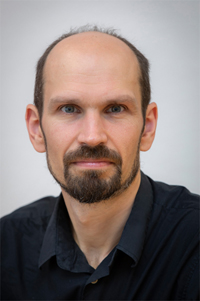
Dr. Robert Legenstein is a Full Professor and Institute Head at the Institute of Machine Learning and Neural Computation , Graz University of Technology. He serves as Speaker of the Graz Center for Machine Learning and Action Editor for Transactions on Machine Learning Research (TMLR) . His research bridges computational neuroscience and machine learning, focusing on neuromorphic computing systems that mimic biological neural networks. Research Leadership: Leads EU-funded projects like Adaptive Optical Dendrites (FET-Open) , SYNCH (FET-Proactive) , and Stochastic Assemblies in SNNs (FWF) . Scientific Contributions: Develops learning algorithms for spiking neural networks (SNNs), with applications to memristive architectures, neuroprosthetics, and energy-efficient AI systems. Key Publications: 15+ recent works on topics including dendritic computing, hardware-aware training, and context-dependent neural processing. Teaching Roles: Offers courses like Deep Learning , Principles of Brain Computation , and Data Structures & Algorithms . Contact: robert.legenstein@tugraz.at | +43 316 873 5824 | Inffeldgasse 16b/I, 8010 Graz, Austria.
Ao. Univ.-Prof. Dipl.-Ing. Dr. Martin Held is an Associate Professor in the Department of Computer Science at the University of Salzburg. He leads the Geometric Algorithms Group , focusing on computational geometry, optimization, and geometric design applications. His research spans algorithms, data structures, and virtual reality frameworks. Born in 1962, re-established academic career at University of Salzburg (founded 1622) Office: Jakob-Haringer-Str. 2, Room 1.20, Salzburg (5020) Research impact: Computational geometry foundations for manufacturing and GIS systems As a senior faculty member in Austria's largest educational institution, Held contributes to research-based teaching across 90 degree programs. The University of Salzburg's 2,000 academics drive innovation through local/international networks, with Held's work particularly influencing geometric algorithms and computer-aided design domains. His group's work connects theoretical computer science with industrial applications.
Tom van Dijk serves as an Assistant Professor in the Formal Methods and Tools group at the University of Twente, where he conducts cutting-edge research in formal verification and develops practical software tools for the verification community. His work bridges theoretical computer science with real-world applications in model checking and synthesis. His educational background includes: PhD in Computer Science (2016), University of Twente. Thesis: Sylvan: Multi-core Decision Diagrams MSc in Computer Science (2012, cum laude), University of Twente. Thesis: The parallelization of binary decision diagram operations for model checking BSc in Computer Science (2010), University of Twente. Thesis: Analysing And Improving Hash Table Performance Van Dijk's research centers on formal verification with specialization in parity games and binary decision diagrams . He pioneers multi-core parallel algorithms for symbolic model checking, focusing on practical implementations that scale to industrial problems. His work integrates SAT/SMT solving , reactive synthesis , and algorithm optimization to advance the state-of-the-art in verification tooling. His publication trajectory reveals consistent innovation in parity game solving, evolving from foundational work on tangle-based algorithms to recent contributions in reproducibility and AI-aided verification. The 2024 papers demonstrate expanding scope into educational technology while maintaining core focus on game-solving efficiency and synthesis techniques. His key recognitions include: Dutch national M&I Informatie Scriptieprijs 2012 (2nd place) for MSc thesis Best paper award at SPIN 2017 for distributed BDD research Van Dijk actively mentors students and seeks collaborations: Student Supervision : Welcomes BSc/MSc students for projects on parity games and BDDs Tool Development : Maintains open-source research tools (Sylvan, Oink, Knor) Community Service : Serves on 20+ program committees including CAV and TACAS As core member of the Formal Methods and Tools group, he contributes to major verification frameworks including LTSmin, Storm, and IscasMC. His Lace work-stealing framework underpins parallelization in multiple verification tools, while ongoing projects focus on polynomial-time parity game solutions and AI integration in verification workflows.
Ulrich Bodenhofer serves as a full-time Professor for Artificial Intelligence at Upper Austria University of Applied Sciences (Hagenberg campus) since September 2020, while maintaining a part-time role as Chief Artificial Intelligence Officer at QUOMATIC.AI since June 2018. His institutional affiliations include Research Center Hagenberg AIST and multiple Centers of Excellence: Automotive/Mobility, Medical Technology/TIMed, Smart Production, Computed Tomography, and Digital Transformation within the Strength area of ICT - Information & Communication Technology. His academic credentials include a Habilitation (2003), Dr. techn. (1998), and Dipl.-Ing. (1996), all in Technical Mathematics from Johannes Kepler University Linz. His research focuses on applying fuzzy logic systems to practical problems across healthcare, industry, and finance. Key areas include: Machine Learning & Artificial Intelligence in Sales Analytics Healthcare and Bioinformatics applications Nondestructive Testing methodologies Financial Condition Monitoring systems His publication record shows consistent output since 1996 with 74 publications, demonstrating evolving expertise from foundational fuzzy logic research to current AI applications in medical imaging and industrial processes. Recent work emphasizes human-centered AI approaches, explainable systems, and practical implementations addressing real-world challenges in critical infrastructure and healthcare diagnostics. Bodenhofer actively leads and participates in significant research projects including HCAI (2022-2027), FLARE (2025-2027), and iReduce (2025-2026), securing funding from diverse sources including FWF - doc.funds.connect and KIRAS cooperative research programs. His collaborative approach spans multiple disciplines and institutions, reflecting the interdisciplinary nature of modern AI research. His professional activities include 54 scientific engagements through 2025, featuring numerous invited lectures on AI applications across finance, healthcare, and industrial contexts. He has supervised 9 academic works according to institutional records, mentoring the next generation of AI practitioners through hands-on research projects focused on practical implementation challenges.
Gerald Adam Zwettler is a researcher at the University of Applied Sciences Upper Austria (FH Hagenberg) with a focus on digital transformation in Information and Communication Technology (ICT). His work spans machine learning applications in non-destructive testing, human-robot interaction, and sensor data classification. Active in projects like FLARE (Human-Centered AI for NDT), MARIE (Mobile Robotic Assistance), and MOVE (Orthosis Modeling) Collaborates internationally on railway infrastructure analysis and medical imaging Research interests include deep learning , medical image processing , IoT sensor analysis , and AI-driven customization of orthopedic devices . Recent work explores edge computing for low-energy IoT systems and multimodal interaction frameworks for office robots. Publications emphasize applied AI in technical domains, with methodological contributions to presegmentation techniques , Levenshtein distance optimization , and human-centered robotics . Project roles include principal investigator in knowledge databases for industrial plastic manufacturing.
Florian Christian Holzinger is a Researcher at the University of Applied Sciences Upper Austria, Campus Hagenberg, specializing in predictive maintenance and industrial optimization. He is affiliated with the Center of Excellence for Smart Production and the HEAL Produktion und Operations Management department. His research focuses on Predictive Maintenance (83%) , Machine Learning , and Multi-criteria Optimization with applications in radial fan systems and manufacturing. Key research areas include sensor-based health prediction, concept drift detection, and data acquisition systems for industrial applications. His publication trends show consistent output in computer-aided systems theory with emphasis on EUROCAST conference proceedings. Recent work (2023-2025) explores constraint-based regression methods, composable evolutionary computation, and workflow optimization in manufacturing. Dr. Holzinger has participated in multiple research projects including DigiVent (2017-2020) for predictive maintenance of industrial radial fans and FlashCheck (2017-2020) for arc detection in DC networks using compressed sensing.
Barbara Heinisch is a researcher at the Faculty of Computer Science, specializing in citizen science and terminology. Her work bridges computer science with social sciences through interdisciplinary approaches. Research Focus: Citizen science, biocultural diversity, terminology, and knowledge translation Recent Work: Explores large language models’ impact on terminology, ethical frameworks in citizen science, and community-building in digital platforms Her research contributes to UN Sustainable Development Goals via democratization and inclusive knowledge systems. Key projects include ReTrans and eTransFair, focusing on crisis translation, multilingualism, and translator training. Scientific Awards Impact.Award (2022) LDK 2021 Best Student Paper Award (2021) Heinisch actively participates in conferences, workshops, and public engagement activities, emphasizing science communication and multilingual Europe initiatives.
Roles & Affiliations: Bruno Buchberger is a Research Professor at the Research Institute for Symbolic Computation (RISC) and the University of Linz (Johannes Kepler University), Austria. He is also the Honorary Professor at the Technical University of Vienna and the founder of the Softwarepark Hagenberg. He has held visiting positions at institutions worldwide, including Kyoto University, Texas A&M, and the University of Timisoara. Head of Softwarepark Hagenberg Member of Academia Europaea, London Corresponding Member of the Bavarian Academy of Science Education: PhD in Mathematics (1966), University of Innsbruck, under Wolfgang Gröbner Matura Exam (1960), Realgymnasium Angerzellgasse, Innsbruck Research Focus: Buchberger is renowned for inventing the Gröbner Bases theory and developing the Theorema system for natural-style mathematical reasoning. His work bridges symbolic computation, automated theorem proving, and algorithm synthesis. Key areas include: Algorithmic Mathematics Computer Algebra Systems Formal Methods Mathematical Theory Exploration Article Trends: Recent works explore automated theorem proving, AI integration in mathematics education (e.g., ChatGPT analysis), and algorithmic methods for special functions (e.g., Ramanujan-Sato series). His contributions emphasize interdisciplinary applications in software science and computational mathematics. Awards: ACM Kanellakis Award (2007) Austrian Cross of Honors (2003) Austrian of the Year (2010) Multiple honorary doctorates (Bath, Nijmegen, Timisoara) Grants & Teams: Led the Gröbner Bases Special Semester 2006 at RICAM. Involved in the SFB13 consortium for Scientific Computing. Collaborated with the Japanese Society for Symbolic Computation and the Radon Institute. Labs & Initiatives: Founded RISC (1987) and Softwarepark Hagenberg (1991), catalyzing Austria’s tech ecosystem. Key projects include the Theorema system and educational programs like the Informatics Master’s program in Hagenberg.
Niels Lubbes is a Lecturer at the Research Institute for Symbolic Computation (RISC) at Johannes Kepler University in Linz, Austria. His research focuses on algebraic geometry, computational methods, and their applications in geometric modeling and kinematics. He contributes to interdisciplinary fields such as geometric design, graph theory, and symbolic computation. His work includes studies on rational surfaces, kinematic geometry, and the enumeration of graph realizations. Recent publications highlight advancements in calibrating geometric figures, projective isomorphism analysis, and computational approaches to Laman graph problems. Lubbes collaborates with institutions like RISC and has published in journals such as Computer Aided Geometric Design and Journal of Algebra . He maintains an active research profile with a focus on algorithmic solutions to geometric problems and their theoretical foundations. His contributions often bridge pure mathematics and applied computational techniques.
Veronika Pillwein is an Associate Professor at the Research Institute for Symbolic Computation (RISC) within Johannes Kepler University in Linz, Austria. Her research focuses on symbolic computation, high-order finite elements, special functions, and algorithmic combinatorics. She contributes to advancing computational methods for sequence analysis, recurrence relations, and polynomial systems, with applications in numerical analysis and engineering. Pillwein has authored/co-authored numerous publications in top-tier journals and conference proceedings, including work on C²-finite sequences, hp-FEM element matrices, and positivity proofs for rational functions. She serves as an editor for academic volumes and actively participates in computational mathematics research. Her work integrates symbolic computation techniques with numerical methods, addressing challenges in high-order finite element analysis and algorithm design. Recent research emphasizes generalizing holonomic sequences, optimizing sparse shape functions for finite elements, and developing automated tools for proving mathematical properties. Pillwein collaborates internationally, contributing to interdisciplinary projects in computational mathematics and computer algebra systems. Affiliations: RISC Faculty, Johannes Kepler University (JKU) Key Research Areas: Symbolic computation, finite element methods, combinatorial algorithms, polynomial analysis Technical Contributions: Development of C²-finite sequence theory, hp-FEM element matrix evaluation, algorithmic proofs for positivity
Nikolaj Popov is a Research Professor at the Research Institute for Symbolic Computation (RISC) of Johannes Kepler University, Linz, Austria. His work focuses on program verification, formal methods, and automated reasoning, particularly within the Theorema system. He specializes in verifying functional and recursive programs, combining symbolic computation with logical techniques to ensure correctness and termination. Education: PhD in Computer Science, RISC, Johannes Kepler University (2008) Research Interests: Popov’s research bridges theoretical computer science and practical applications, emphasizing automated theorem proving, program analysis, and formal verification. He develops methods for verifying complex program structures like mutual recursion and nested recursion, leveraging computer algebra systems. His work also explores the integration of formal methods into software engineering workflows. Key Contributions: Popov has co-authored foundational papers on verification condition generation, termination proofs, and automated debugging frameworks. His collaborations with Tudor Jebelean and others have advanced Theorema’s capabilities in handling functional programs and bridging logical and algebraic methodologies. Labs/Teams: Core member of RISC, contributing to its mission in symbolic computation and mathematical theory exploration.
Josef Schicho is a Full Professor at the Research Institute for Symbolic Computation (RISC), Johannes Kepler University in Linz, Austria. His research focuses on algebraic geometry, computational mathematics, and their applications in kinematics, robotics, and geometric modeling. He leads projects exploring flexible polyhedra, mechanism design, and symbolic computation techniques for solving geometric problems. Key research interests include the study of rigid and flexible frameworks, algebraic methods in robotics, and the application of geometric algorithms to problems in computer vision and sensor networks. His work bridges theoretical mathematics with practical engineering solutions, particularly in mechanism synthesis and geometric modeling. Recent contributions include advancements in the theory of flexible polyhedra, classification of linkages with high mobility, and computational tools for analyzing robot kinematics. His publications often address problems at the intersection of algebraic geometry and engineering, such as reconstructing geometric configurations from partial data or optimizing motion planning for robotic systems. Dr. Schicho's affiliations include the RISC Faculty at JKU, where he actively contributes to the development of symbolic computation software and collaborates with international researchers in computational algebraic geometry. His office is located at Schloss Hagenberg, Room 2.6-1.
Franz Aurenhammer is a University Professor (Univ.-Prof.) at the Institute of Machine Learning and Neural Computation, Graz University of Technology, Austria. He holds the academic title DI Dr. techn. and has been active in computational geometry research for several decades. His position as Full Professor was appointed in October 1992 at the Institute of Theoretical Computer Science, where he also served as head of the research group on algorithms, geometry, and optimization. Professor Aurenhammer earned his academic credentials at Graz University of Technology: his MS degree (Dipl. Ing.) in Technical Mathematics in April 1982, his PhD degree (Dr. techn.) in November 1984, and completed his Habilitation (Universitätsdozent) in Theoretical Computer Science in May 1989. Prior to his current position, he served as Assistant Professor at the Institute for Information Processing from January 1985 to April 1989, and held research positions including at the Free University of Berlin (April 1990 to May 1992). Aurenhammer's research focuses primarily on computational and combinatorial geometry, data structures and algorithms, and graph algorithms. His work has particularly emphasized Voronoi diagrams and straight skeletons, with numerous publications on these topics spanning several decades. His research has strong theoretical foundations while also addressing practical applications in computer science, optimization, and geometric modeling. Analysis of his recent publications reveals a continued focus on geometric structures, particularly Voronoi diagrams in various forms (including piecewise-linear farthest-site variants) and straight skeletons in both 2D and 3D contexts. His work often bridges theoretical computational geometry with practical applications in computer-aided design, shape analysis, and spatial data structures. The research demonstrates progression from fundamental theoretical work to increasingly sophisticated applications in 3D modeling and complex geometric structures. Professor Aurenhammer has been actively involved in research funding, with grants from major institutions including the Austrian Ministry of Science (BMWFK), Austrian National Bank (ÖNB), National Science Foundation (FWF), Austrian Academic Exchange Program (ÖAD), and the Special Research Council (SFB) 'Optimization and Control'. His current project FWF I1836-N15 (2015-2020) focuses on Voronoi diagrams as versatile data structures for spatial proximity problems. As an educator, Aurenhammer has supervised numerous MS and PhD theses in theoretical computer science and taught courses including Basic Data Structures & Algorithms, Languages and Automata, Design & Analysis of Algorithms, Computational Geometry, and Information Theory. His teaching responsibilities include Privatissimum courses on Algorithms and Geometry and Dissertation seminars. His international research collaborations span numerous institutions across Europe, the United States, Canada, Japan, Taiwan, Korea, and China, reflecting the global significance of his work in computational geometry. These collaborations have resulted in significant contributions to the field, particularly through the DACH project on Voronoi diagrams and related geometric structures.
Dr. Thomas Takacs is a Project Leader in the Geometry in Simulations research group at the RICAM (Research Institute for Symbolic Computation), part of the Austrian Academy of Sciences. His work focuses on advancing computational methods for solving partial differential equations, particularly through isogeometric analysis and spline-based numerical techniques . His research interests include smooth basis constructions, multi-patch domain coupling, and adaptive mesh refinement strategies. Key contributions involve developing C1-continuous spline spaces over planar mixed meshes and unstructured quadrilateral meshes, with applications to engineering problems like linear elasticity. He explores the integration of machine learning (e.g., CNNs) for optimizing quad meshing and employs artificial neural networks in adaptive optimization frameworks. His work bridges geometric modeling and numerical analysis, addressing challenges such as singularity treatment in isogeometric analysis and approximation properties over self-similar meshes. Dr. Takacs collaborates on multi-institutional projects, including the Geometry in Simulations group at RICAM. His publications span computational mechanics, numerical methods, and geometric algorithms, with a focus on advancing the theoretical foundations and practical implementations of isogeometric analysis.
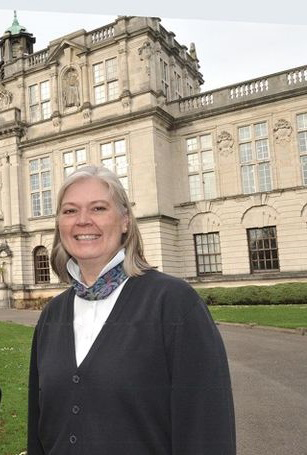
Nora Henriette de Leeuw is a Professor of Computational Chemistry and Executive Dean of the Faculty of Engineering and Physical Sciences at the University of Leeds, UK. Previously, she held roles such as Pro-Vice Chancellor (International & Doctoral Research) at Cardiff University and Professor of Theoretical Geochemistry & Mineralogy at Utrecht University. Her research focuses on computational materials chemistry, including catalyst design for sustainable energy, geochemical processes, and biomaterials. She has pioneered studies on photo-catalytic materials, collagen structure modeling, and the origin of Earth's water. Her honors include membership in Academia Europaea (2017), Fellowship of the Learned Society of Wales (2016), and the Royal Society Industry Fellowship (2012). Key contributions include explaining enhanced photoresponse in FeS₂ films, demonstrating bioinspired CO₂ conversion via iron sulfide catalysts, and modeling collagen fibril structures. Her work integrates computational methods to address challenges in energy sustainability, biomaterials, and Earth science. She has led interdisciplinary teams and contributed to software for solid solution modeling, now widely used in catalysis and mineralogy.