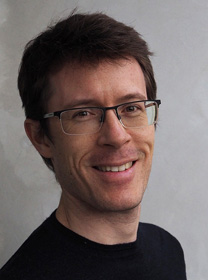
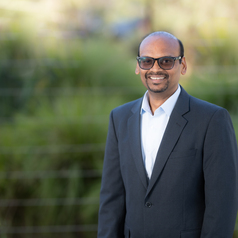
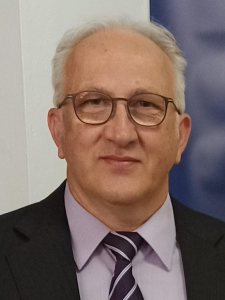
Adrien Bousseau is a Senior Researcher at Inria within the GraphDeco group at Université Côte d'Azur. He earned his PhD from Inria Rhône-Alpes under Joëlle Thollot and François X. Sillion, with internships at Adobe and MIT. His postdoctoral research at UC Berkeley focused on computational design and graphics. Notable roles include leading the ANR DRAO project (2012–2015) and coordinating the CRISP associate team with UC Berkeley. He has received prestigious awards such as the Eurographics 2011 PhD Award and ERC grants for projects on 3D design and circular design. Research interests span image creation, stylization, vector graphics, and sketch-based modeling. Recent work explores computational methods for circular design and AI-driven design tools. He has supervised over 13 PhD students, including Nicolas Rosset (aerodynamics) and Emilie Yu (VR sketching). Key projects include ERC-funded initiatives on drawing interpretation and material acquisition. Service contributions include co-chairing Eurographics 2025 and EGSR 2021, and editorial roles at Computer Graphics Forum. Publicly accessible tools include Photoshop watercolor filters and academic resources like BendFields tutorials.
Professor Alex Dickinson is a leading academic at the University of Southampton , specializing in the biomechanics and design of prosthetic limbs . He actively supervises PhD students and teaches undergraduate courses in Engineering Design , Finite Element Analysis , and Biomaterials . Education: MEng in Mechanical Engineering, University of Southampton (2006) PhD in Biomechanical Engineering, University of Southampton (2010) Research Interests focus on prosthetic innovation , computer-aided design (CAD) , data-driven healthcare , and musculoskeletal engineering . His work integrates digital fabrication , patient perspectives , and interdisciplinary collaboration to address global challenges in prosthetics. Trends in Recent Publications include open-source prosthetic modeling , patient-centric design evaluation , and global health data analysis . His research spans digital fabrication , smart implant technologies , and epidemiological studies in low-resource settings. Scientific Awards Royal Academy of Engineering Research Fellowship (2015) Hornsby Cup (2021) Medilink South West Partnership Award (2025) ISPO World Congress Best Paper Prize (2025) Advising : Supervises four PhD students in Biomedical Engineering and Health Sciences . Key grants include EPSRC , NIHR , and European Union funding for global prosthetic initiatives. Research Groups : Co-founder of the People Powered Prosthetics group, member of the Bioengineering Science Research Group and Institute for Life Sciences .
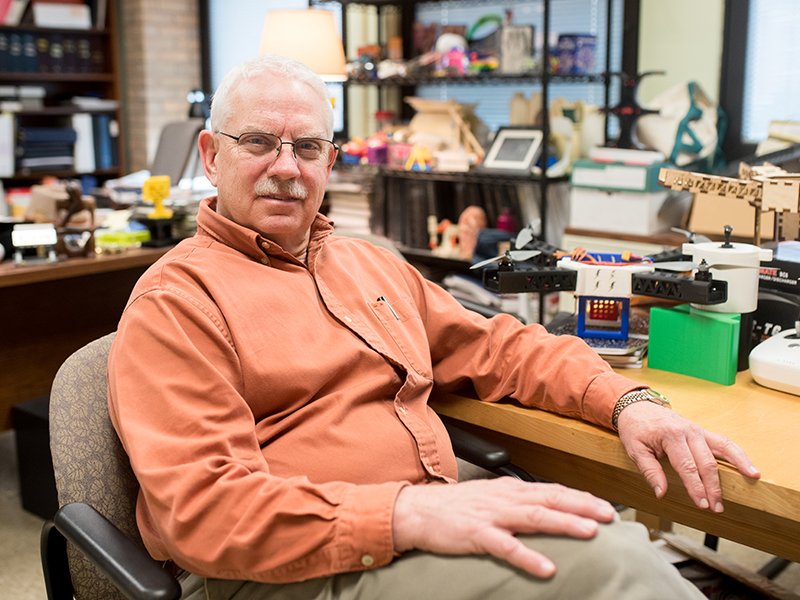
Dr. Richard H. Crawford is a Professor of Mechanical Engineering at the University of Texas at Austin, holding the Earl N. & Margaret Brasfield Endowed Faculty Fellowship. He directs the Design Projects Program and has been affiliated with the university since 1990. His expertise spans mechanical design, geometric modeling, and engineering education. Education: BSME from Louisiana State University (1982), MSME and PhD from Purdue University (1985, 1989). Research focuses on computer-aided design, additive manufacturing, and pre-college engineering education. Notable initiatives include the DTEACh program and the UTeach Engineering track, which developed the Engineer Your World curriculum adopted by over 200 US school districts. Awards include the 1995 Fred Merryfield Design Award, 2010 Ralph Coates Roe Award, and 2011 Regents’ Outstanding Teaching Award. His work bridges academia and industry through collaborations with Ford, IBM, and Sandia National Lab. Recent research emphasizes watertight spline modeling, additive manufacturing processes, and educational frameworks for integrating engineering into science curricula. He leads the annual International Solid Freeform Fabrication Symposium.
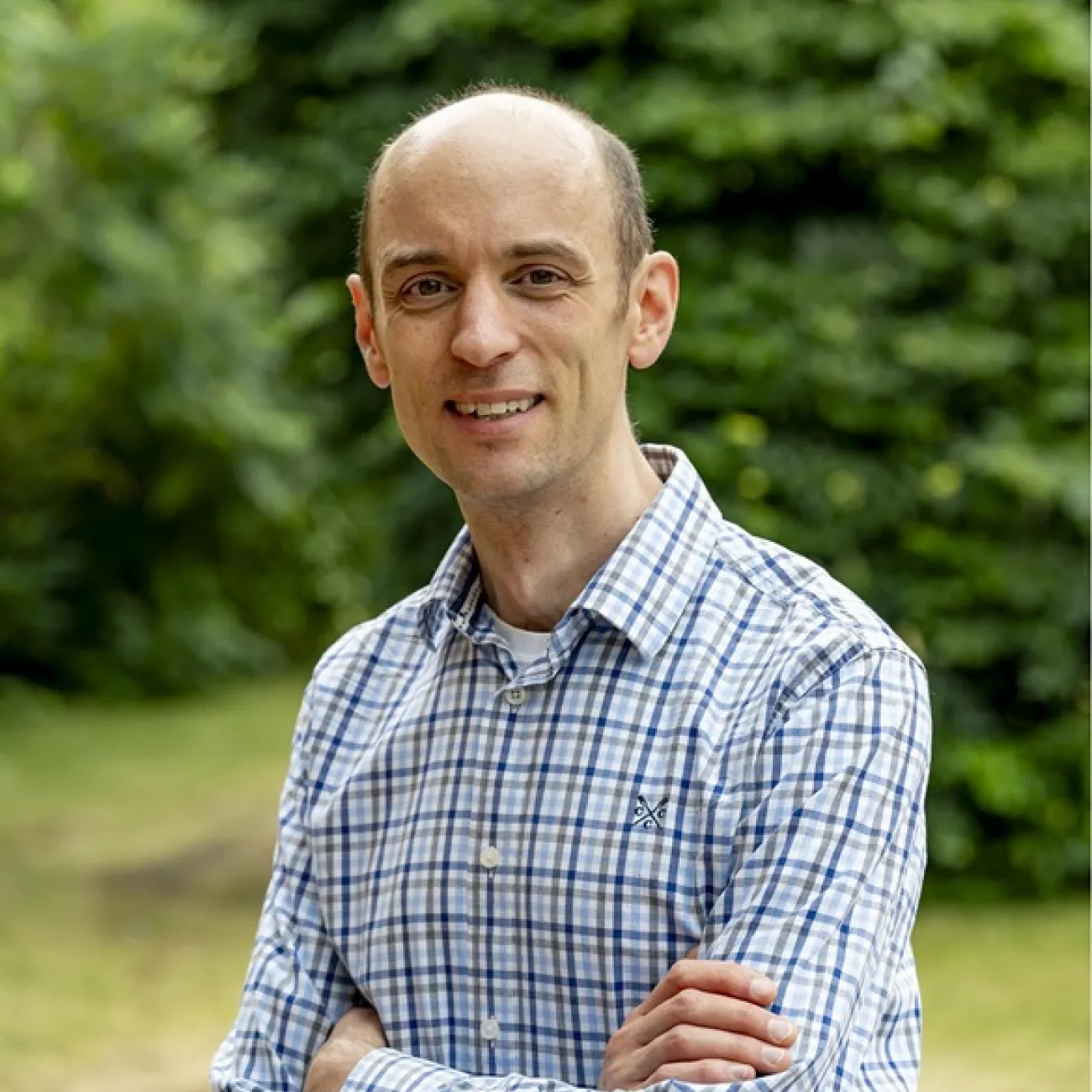
Rebecca Taylor is a Professor in the Department of Mechanical Engineering at Carnegie Mellon University's College of Engineering, with courtesy appointments in Biomedical Engineering and Electrical and Computer Engineering. Her research spans DNA nanotechnology, advanced manufacturing, and bio-inspired micro/nanosystems, focusing on integrating self-assembly with top-down microfabrication. 2013 Ph.D. in Mechanical Engineering (minor in Bioengineering), Stanford University 2010 MS in Mechanical Engineering, Stanford University 2001 BS in Mechanical Engineering with Robotics Certificate, Princeton University Her research centers on: (1) DNA nanotechnology for molecular and cellular mechanobiology (AFOSR YIP, NIH R21), (2) bio-inspired materials using gammaPNA (NSF CAREER), and (3) biomanufacturing with DNA robotics. She also develops workforce training tools like voice assistants for skill mastery. Recent publications highlight DNA microswimmers, compliance in colloidal assemblies, and generative design for origami nanostructures. Awards include the NSF CAREER Award and Ansys Career Development Chair. She advises interdisciplinary students and leads the Microsystems and Mechanobiology Lab, collaborating with Biomedical Engineering, Chemistry, and Cardiovascular Medicine teams. NSF CAREER Award Ansys Career Development Chair Lab members include postdocs (Grace Rohaley, Sarah Weintraub), Ph.D. students (Taryn Imamura, Vismaya Walawalkar), and undergraduates (Irene Yap). She teaches courses like Nanoscale Manufacturing Using Structural DNA Nanotechnology and Modern Manufacturing in Steeltown , emphasizing design and automation.
Christopher McComb is an Associate Professor in the Department of Mechanical Engineering at Carnegie Mellon University's College of Engineering. He leads research in sociotechnical systems, machine learning for engineering design, and human-AI collaboration. He is affiliated with the Block Center for Technology and Society, Manufacturing Futures Institute, NextManufacturing Center, and Wilton E. Scott Institute for Energy Innovation. Previously, he was an assistant professor at Penn State, where he directed the Center for Research in Design and Innovation and led the Technology and Human Research in Engineering Design Group. Ph.D., Mechanical Engineering, Carnegie Mellon University M.S., Mechanical Engineering, Carnegie Mellon University B.S., Civil Engineering and Mechanical Engineering, California State University-Fresno His research centers on human-AI teaming , sociotechnical systems , and computational design , with applications in additive manufacturing, STEM education, and energy systems. He explores how machine learning can enhance engineering design processes, particularly through human-centered AI, generative design, and agent-based modeling. His work emphasizes the integration of human cognition and behavior into AI systems to improve collaboration and innovation. The 15 most recent publications (2025) demonstrate a strong trend in AI-driven design automation , neural surrogate modeling , human-AI interaction , and data generation for engineering simulations . Topics span from using large language models for material selection and design concept generation to developing datasets and benchmarks for advanced manufacturing and CAD systems. There is a clear emphasis on real-world applications in aerospace, finance, and global manufacturing, particularly in Africa. National Science Foundation Graduate Research Fellow McComb has received research funding from NSF, DARPA, and private corporations, and has collaborated with Boeing through their Visiting Professorship Program. He advises students in mechanical engineering and design, and leads the Human+AI Design Initiative and the Design Research Collective. His research has been applied in partnerships with NASA and in addressing manufacturing challenges in Africa. He leads or contributes to interdisciplinary research teams focused on AI in design, additive manufacturing, and energy systems. His labs and initiatives include the Human+AI Design Initiative and the Design Research Collective, which foster collaboration between human-centered design and artificial intelligence.
Dr. Binayak Bhandari is a Research Associate at the Automated Manufacture of Advanced Composites (AMAC) Research Centre at the University of New South Wales (UNSW Sydney). He previously served as Assistant Professor & Department Chair at Woosong University, South Korea, and earned his PhD in Mechanical Engineering from Seoul National University (2014). His research spans interdisciplinary engineering domains including artificial intelligence, advanced composites, renewable energy systems, robotics, and manufacturing processes. Bhandari has led projects such as the National Research Foundation grant (2017–2020) on AI-driven robotics for object identification. He has been recognized for contributions in renewable energy and teaching, including the 2022 Young Researcher Award and the 2020 Special Achievement Award. Education: PhD in Mechanical Engineering (2014, Seoul National University). Research Interests: Dr. Bhandari’s work focuses on integrating AI with manufacturing and energy systems. Key areas include nondestructive evaluation of composites using deep learning, optimization of hybrid renewable energy systems, and smart manufacturing processes. His expertise spans computer vision applications for quality assurance, acoustic emission analysis, and sustainable energy solutions for remote regions. Key Contributions: Over 50 peer-reviewed publications across journals like Journal of Composite Materials and International Journal of Precision Engineering . Notable works include studies on hybrid energy models, composite material characterization, and machine learning-based anomaly detection. Awards: Recipient of multiple accolades including the 2022 Young Researcher Award (ASAT), 2018 IJPEM-GT Most Cited Article Award, and 2010 Grand Prize for precision engineering innovation. Grants & Activities: Led a $150,000 National Research Foundation grant (2017–2020) on AI-based robotics. Collaborates on projects involving automated fiber placement, renewable energy integration, and smart factory systems. Labs & Teams: Principal researcher at AMAC Centre, UNSW, focusing on advanced composite manufacturing and AI-driven solutions for industry challenges.
Leonidas Guibas is the Paul Pigott Professor of Engineering and Professor (by courtesy) of Electrical Engineering at Stanford University's Department of Computer Science. He leads the Geometric Computation group and is affiliated with the Computer Graphics and Artificial Intelligence Laboratories. His research focuses on algorithms for sensing, modeling, and reasoning about the physical world, with expertise in computational geometry, robotics, sensor networks, and topological data analysis. Current work includes geometric modeling with point clouds, 3D reconstruction, and mobility data analysis. He holds prestigious awards including ACM Fellow (1999), Allen Newell Award (2008), and membership in the National Academy of Sciences (2022). Education: PhD, Stanford University (1976) MS & BS, California Institute of Technology (1971) Research Interests: Geometric and topological data analysis 3D reconstruction and 3D shape analysis Sensor networks and robotics Biological structure modeling Machine learning for geometric problems Recent Articles Focus: Recent work emphasizes neural radiance fields (NeRF), dynamic Gaussian splatting, and physically plausible 3D shape generation. Publications span advancements in symmetry detection, articulated object manipulation, and multi-view video generation. Awards & Honors: Fellow, ACM (1999) Allen Newell Award (2008) Fellow, IEEE (2011) Member, National Academy of Engineering (2017) Member, National Academy of Sciences (2022) Advising & Teams: Advises doctoral and master's students on topics like geometric computing and robotics. Leads interdisciplinary teams at Stanford's ICME, HAI, and Woods Institute. Current advisees include Ian Huang, Boxiao Pan, and Colton Stearns. Labs & Collaborations: Active in the Geometric Computation group and collaborates with the Stanford AI Lab. Works on projects funded by grants in robotics, computer vision, and computational biology.
Dr. Matthew Ng is a Research Fellow and research data scientist at the City Futures Research Centre, University of New South Wales (UNSW), within the School of Arts, Design & Architecture. His work focuses on applying spatial analytics, machine learning, and AI to address urban challenges in housing, planning, transport, and property markets. As UNSW’s first Industry Scientia Fellow (since 2022), he collaborates with PEXA to improve valuation systems through scalable modeling. He also leads the Asia-Pacific arm of the Colouring Cities Research Programme, aiming to enhance urban data accessibility and reliability. Education : PhD in Spatial Data Science, University College London (UCL) MSc in International Planning, UCL BSc (Hons) in Biology, University of Manchester Research Interests : Dr. Ng’s research bridges data science and urban policy, with a focus on spatial modeling, housing systems, and applied machine learning. His work emphasizes practical solutions for governments and communities, such as advising NSW on housing strategies and addressing rental vulnerability through data-driven methods. Grants & Partnerships : His collaborations include projects with the NSW Government, non-profits, and global initiatives like the Alan Turing Institute. He currently supervises five research students and welcomes inquiries on urban data infrastructure and machine learning applications. Labs & Teams : He is part of the City Futures Research Centre and contributes to the Colouring Cities Programme, fostering international partnerships to improve urban data systems.
Carlo H. Séquin is a Professor of Computer Science in the EECS Department at the University of California, Berkeley. He is affiliated with the Graphics (GR) and Human-Computer Interaction (HCI) research areas, and associated with the Berkeley Center for New Media (BCNM), Berkeley Institute of Design (BID), CITRIS, and the Visual Computing Lab (VCL). His research focuses on geometric modeling, artistic geometry, mathematical visualizations, and CAD tools. Education: Ph.D. in Experimental Physics (1969), University of Basel, Switzerland. Past Roles: Head of Computer Science Division (1980–1983), co-inventor of RISC architecture with David Patterson. His work spans computer graphics, VLSI design, and the intersection of art and mathematics. He has pioneered functional optimization for surface design and contributed to CCD technology at Bell Labs. Séquin's awards include the Berkeley Citation (2016), ACM Fellow (1997), and teaching excellence awards. He advises students in Ph.D. and M.S. programs, as seen in his Ph.D. alumni list . His research is supported through CITRIS and other institutional collaborations. Séquin's artistic projects, such as mathematical sculptures and architectural designs, bridge engineering and art, exemplified by his work on the Pillar of Engineering and Twisted Tori .
Khaled Zbeeb is a Professor at the School of Engineering and Technology of Western Illinois University (WIU Quad Cities campus), where he has been affiliated since at least 2011. He holds formal academic qualifications in Mechanical and Aerospace Engineering, with a career focus on computational methods and applied mechanical systems. Education Ph.D. in Mechanical Engineering (2011), Florida Atlantic University M.S. in Mechanical Engineering (2009), Florida Atlantic University B.S. in Aerospace Engineering (1992), University of Kansas Research and Academic Contributions Khaled Zbeeb specializes in Computational Fluid Dynamics (CFD) and its applications in thermodynamics, heat transfer, and applied combustion. His work extends to advanced dynamics and control systems, finite element analysis, solid mechanics, stability and stress analysis, and mechanical design principles including computer-aided design (CAD) methodologies. He teaches core engineering courses such as Fluid Mechanics, Thermodynamics, Heat Transfer, and Mechanical Engineering Laboratory, often integrating hands-on learning with software tools like SolidWorks and MATLAB.
Professor Santosh Kumar Tadakamadla serves as the Head of Dentistry and Oral Health at La Trobe Rural Health School, La Trobe University, Australia. With over 15 years of international experience as a dental academic and researcher, he specializes in public health dentistry and has made significant contributions to oral health policy and practice. His leadership extends to adjunct professorial appointments at University of Bari Aldo Moro (Italy), Dr D Y Patil Dental College & Hospital (India), and SRM Dental College (India). Professor Tadakamadla completed his PhD at Griffith University, Master of Public Health Dentistry at Rajasthan University of Health Sciences, and Bachelor of Dental Surgery at Rajiv Gandhi University of Health Sciences. He also holds a Postgraduate Diploma in Health Promotion from Public Health Foundation of India and a Graduate Certificate in University Learning and Teaching from Griffith University. His research focuses on oral health promotion, workforce distribution, health inequalities, oral epidemiology, and community-based interventions to address oral health disparities. Professor Tadakamadla has published over 170 peer-reviewed articles in high-impact journals including The Lancet and Journal of Dental Research. His work has influenced health policy, featured in OECD and Cochrane documents, and translated into large-scale health promotion initiatives. His recent publications demonstrate expertise across digital dentistry, oral health promotion interventions, substance-related oral trauma, and addressing health disparities among vulnerable populations. Professor Tadakamadla's scientific recognition includes: NHMRC Early Career Fellowship International Association for Dental Research (IADR) Centennial Emerging Leader Award for Asia-Pacific (2020) IADR Distinguished Scientist Young Investigator Award (2025) Honorary membership from the Australian Dental Association Victoria Branch Fellowships from the Pierre Fauchard Academy and International College of Dentists Senior Fellow of the Higher Education Academy As an experienced HDR supervisor, thesis examiner, and grant assessor, Professor Tadakamadla has mentored numerous early- to mid-career academics. He actively engages with Indigenous and rural communities, serves on international editorial boards, and collaborates globally to advance oral health equity. His research leadership extends to National Health and Medical Research Council-funded projects in Australia, with findings influencing health policy and practice.
José Antonio López Vázquez is a faculty member at the University of A Coruña , specifically within the Industrial Engineering Department at the School of Engineering of Ferrol . His academic career focuses on teaching and research in areas such as Graphic Expression in Engineering and BIM (Building Information Modeling) applied to industrial and sustainable projects. He has contributed to research through collaborations on topics including energy efficiency in buildings, BIM methodology for healthcare centers, and renewable energy installations. His work spans both theoretical and practical applications, with involvement in projects like the development of BIM models for health centers and energy-efficient design of industrial facilities. José Antonio López Vázquez provides mandatory and optional courses such as Graphic Expression and BIM Methodology , with significant teaching hours dedicated to Industrial Engineering and Energy Efficiency and Sustainability programs. He also supervises Bachelor's and Master's theses related to industrial design, renewable energy, and construction projects.
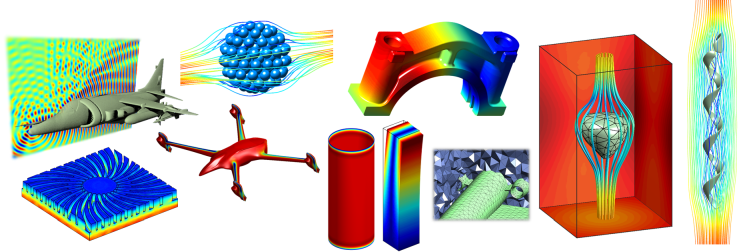
Professor Rubén Sevilla is a Computational Engineering academic at the Faculty of Science and Engineering , Swansea University . He holds a Chair in Civil Engineering and has held leadership roles including President of the UK Association for Computational Mechanics and Chief Editor of the European Journal of Computational Mechanics . PhD in Civil Engineering (2009), UPC-BarcelonaTech Postdoctoral Researcher (2009-2012), Zienkiewicz Centre for Computational Engineering Lecturer (2012), Senior Lecturer (2015), Associate Professor (2016), Full Professor (2021) Research Interests focus on high-order numerical methods for engineering problems, including: Face-Centred Finite Volume Methods (FCFV) Hybridizable Discontinuous Galerkin (HDG) NURBS-Enhanced Finite Element Methods (NEFEM) Reduced Order Modeling Machine Learning for Mesh Optimization Computational Fluid and Electromagnetic Dynamics Geometrically Parametrized Problems Article Trends show a focus on hybrid numerical methods for fluid-structure interaction, geometrically accurate mesh generation using NURBS, machine learning integration for flow simulations, and parametric modeling of complex systems. His work bridges CAD and FEM through NEFEM while advancing reduced-order models for real-time engineering applications. Scientific Awards include: European Association for Computational Methods in Applied Sciences award Spanish Association for Computational Methods in Engineering award Birkhauser-Verlag Best Thesis award (Spain/Europe) EMERALD award SIAM award Welsh Government recognition Teaching & Supervision spans modules like Finite Element Computational Analysis and Problem Solving with MATLAB . He supervises PhD students in computational mechanics and co-led the International MSc in Computational Mechanics since 2012. Grants & Projects include: EPSRC-funded "Feature-Independent Mesh Generation" (2020-2023, £427,929) ELEMENT - Exascale Mesh Network (2020-2021, £245,611) EPSRC Solar Absorber Project (2017-2020, £315,556) H2020 Advanced Model Reduction (2015-2019, €2,080,164.96)
Ivica Lacković is a Senior Lecturer at the University of Slavonski Brod, Faculty of Mechanical Engineering, within the Department of Production Engineering. He holds a B.Sc. in Mechanical Engineering from the Faculty of Mechanical Engineering and Naval Architecture in Zagreb (1994) and has been actively contributing to engineering education and research since 2009. Education: B.Sc. in Mechanical Engineering, Faculty of Mechanical Engineering and Naval Architecture, University of Zagreb (1994) His research interests span mechanical design, manufacturing technologies, sustainable energy systems, computer-aided modeling, agricultural engineering, and renewable energy. He teaches core courses such as Mechanics I & II, Technical Drawing and Computer Graphics, Structural Elements, and Construction Theory in the Professional Undergraduate Study in Production Engineering. The analysis of his recent publications reveals a strong focus on applied engineering solutions for sustainable development. His work addresses real-world challenges in energy efficiency, waste-to-energy conversion, agricultural technology, and adaptive manufacturing. Key themes include photovoltaic system resilience, thermal insulation economics, biofuel production from plastic waste, and digitalization in agriculture, demonstrating a multidisciplinary approach to engineering innovation. Scientific Awards: No scientific awards mentioned in the provided text. Ivica Lacković actively mentors students, supervising final and diploma theses in mechanical and production engineering, though specific student names are not listed. He has contributed to institutional research projects such as "ZELGO" (2021–2025) and "ZETRA" (2025–). His professional engagement includes organizing study trips, facilitating international academic collaboration, and co-authoring a textbook on computer-aided modeling of spatial models. He continues to publish in national and international engineering conferences, maintaining an active role in both teaching and applied research. Labs and Research Teams: Involved in institutional projects "ZELGO" and "ZETRA" at the University of Slavonski Brod. Collaborates with researchers such as Mladen Bošnjaković, Slaven Šimunić, and Nataša Veljić on sustainable energy and agricultural engineering projects. Part of the teaching and research staff in the Department of Production Engineering, contributing to curriculum development and applied research.
Peter Jellitsch is a Lecturer at the Academy of Fine Arts Vienna, affiliated with the Department of Fine Arts. He is actively involved in teaching courses focused on the technical aspects of sculpture and spatial representation techniques in the Summer Semester 2025. His research and teaching interests lie at the intersection of traditional sculptural practices and digital representation tools. Key areas include: Technical foundations of wood-based sculpture Computer-Aided Design (CAD) in artistic spatial modeling Methods of visual and structural representation in art The available data does not include any recent publications; therefore, no article trend analysis can be performed. However, his instructional focus suggests a strong applied and technical orientation within fine arts education. He has not been mentioned as receiving any scientific awards. Peter Jellitsch is actively contributing to academic instruction, particularly in foundational and technical courses. There is no information available regarding graduate student supervision or external research grants. He is associated with teaching activities within the core curriculum of the Department of Fine Arts, particularly in technical training modules for sculptural practice.