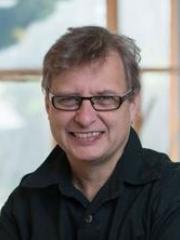
Prof. Songlin Ding is a Professor of Manufacturing Engineering at RMIT University's School of Engineering. He joined RMIT in 2005 as a Lecturer, progressing to Senior Lecturer (2009), Associate Professor (2015), and Professor (2020). He currently manages the Master of Engineering (Manufacturing) program. His research focuses on advanced manufacturing technologies, including CAD/CAM, geometric modeling, and machining of difficult materials like synthetic diamonds and titanium alloys using CNC and non-traditional methods. He pioneered the 'adaptive iso-planar' machining strategy, now widely adopted in CAD/CAM software. His work on high-speed machining of ultra-hard materials and additive manufacturing has been supported by ARC, CRCs, Victorian Government, and industry. Teaching interests include advanced manufacturing technologies and supervision of projects in areas like electrical discharge machining, additive manufacturing, and robotic applications. He coordinates over 20 courses and has published >100 papers in manufacturing, mechanical, and control engineering. Key contributions include developing post-processing techniques for additive manufacturing biomedical components and creating novel cutting tools for robotic bone tumor excision. His research emphasizes industry impact, particularly in aerospace and medical applications.
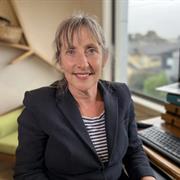
Assoc Prof Geraldine Torrisi is the Deputy Head of School (Learning & Teaching) at the School of Information and Communication Technology at Griffith University. With a PhD in Educational Studies and degrees in Science (Physics/Mathematics) and Education, she focuses on Human-Computer Interaction (HCI) , User Experience , and Learning Theory . She is a Senior Fellow of the Higher Education Academy and Griffith Learning and Teaching Academy . Education: PhD in Educational Studies (Griffith University) Masters of Educational Studies (James Cook University) Bachelor of Education (Secondary Science and Maths) (James Cook University) Bachelor of Science (Physics/Mathematics) (James Cook University) Research Interests include Interactive Digital Media , Educational Technology , and Data Literacy . Her 2025 book chapters explore AI's role in education, while 2024-2023 articles address data literacy frameworks and hybrid teaching models. Scientific Awards include Griffith Award for Excellence in Teaching (2011) , Excellence in Teaching Award (2015) , and Senior Fellow of the Higher Education Academy (2018) . She also received multiple Group Learning and Teaching Commendations (2009, 2017, 2019). Grants include The Dignity Project (2024-2025), Promoting Renewable Energy Adoption (2022-2025), and Smart Environmental Sensing (2022-2023). She supervises PhD students on topics like Human-Machine Teaming and Instructional AR Design .
Adjunct Professor Andrew Bradley is affiliated with Queensland University of Technology (QUT), where he serves as the Associate Dean (Research) for the Science and Engineering Faculty. He holds positions in the Faculty of Engineering and School of Electrical Engineering & Robotics at QUT. Bradley has a PhD from the University of Queensland and extensive industry experience, including roles as Chief Technology Officer at Ausonex Pty Ltd and Principal Biomedical Engineer at Maxwell MRI. His expertise spans biomedical and electrical engineering, computing science, and communications technology. His research focuses on computer-aided diagnosis (CAD) systems in medical imaging, machine learning, medical device design, and statistical pattern recognition. He has contributed to projects involving deep brain stimulation, artificial hearts, neonatal hearing screening, and cancer diagnosis imaging. His work bridges academia and industry, emphasizing commercially oriented solutions while maintaining a strong publication record. Bradley has published over 140 peer-reviewed papers and holds 20 patents across multiple regions. His research has garnered over 8,400 citations with an h-index of 35. He has secured $6M+ in competitive grants and supported startups raising $4M in venture capital. His awards include the ARC Future Fellowship and Fellow of Engineers Australia. He has advised 21 PhD and 4 Research Masters graduates, with three current advisory roles. Bradley’s contributions span interdisciplinary collaborations and innovation in labs focusing on medical imaging, AI, and biomedical engineering applications.
Associate Professor Warren Smith is a faculty member in the School of Engineering and Information Technology at the University of New South Wales (UNSW) Canberra campus. He serves as the Naval Architecture Coordinator and has held various leadership positions including Head of School from 2003-2009. With a background in naval architecture and operations research, Professor Smith has established himself as a leading educator and researcher in maritime engineering and design education. Professor Smith holds a PhD in Operations Research from the University of Houston, an MS in Mechanical Engineering from the same institution, and a BE in Naval Architecture with First Class Honours from UNSW Sydney. His extensive professional experience includes 20 years as a Naval Architect with the Australian Department of Defence (1978-1998), where he held various specialist engineering, research and managerial positions. Professor Smith's primary research interests span Naval Architecture, Ship Design and Safety, Engineering Design Education, and Complex Systems. He has pioneered authentic and immersive experiential learning approaches, particularly through student design competitions. His work in systems modeling, decision-based design, and optimization methods has contributed significantly to both naval architecture and engineering education fields. Professor Smith has developed innovative frameworks for ship design optimization, particularly for high-speed planing craft, and has explored the application of evolutionary algorithms to complex engineering problems. His recent scholarly output demonstrates a continued focus on naval architecture education, maritime engineering, and interdisciplinary applications of optimization techniques. Professor Smith has expanded his research into aircraft proximity systems and air traffic management, showing the transferability of his systems engineering approach across domains. His work consistently bridges theoretical advances with practical applications in both maritime and aerospace contexts. AGM Michell Medal, Mechanical College Board of Engineers Australia for outstanding service to mechanical engineering (2018) Australian Council of Engineering Deans National Award for Engineering Education Excellence Re-Engineering Australia Foundation Founder's Award for Outstanding Contributions to the F1inSchools Program (2017, 2013) Australian Society for Operations Research Conference Best Paper Award (2016) UNSW Canberra Community Engagement Award for Services to the F1inSchools Program (2013) UNSW Canberra Rector's Commendation for Excellence in Classroom Teaching (2010) ALTC Citation for Outstanding Contributions to Student Learning (2008) AAEE Citation for Outstanding Contributions to Student Learning (2008) Ship Shape 2000, Royal Institution of Naval Architects Walter Atkinson Prize (1993) Professor Smith has been instrumental in developing and leading numerous student design competitions that provide authentic learning experiences. He has served as Faculty Advisor for the Formula SAE Student Design & Build Competition (2003-2013 at UNSW Canberra, 2013-2014 at University of Oklahoma) and as National Coordinator for the Warman Design & Build Project & Competition (2002-2021). He currently chairs the Re-Engineering Australia National Rules Committee and serves as Chair of Judges for F1inSchools and Subs in Schools competitions. His educational leadership extends to mentoring first-year engineering students and researching the development of student teamwork competencies. Professor Smith leads the UNSW Canberra Warman Design and Build Project & Competition (1998-present) and is actively involved with the Re-Engineering Australia Foundation as ACT Hub Chair (2007-present). His work connects academic research with practical engineering challenges through student competitions that engage thousands of participants annually. These initiatives form an integrated ecosystem for engineering education that spans from primary school through to university level.
Michael Dickson is an Honorary Lecturer at the School of Architecture, Design and Planning, The University of Queensland. His work focuses on architecture education, design pedagogy, and sustainable design methodologies. He has contributed to conferences and publications addressing studio practices, technology integration in design education, and material science applications. His research spans creative installations (e.g., 2012 Venice Biennale project), design education theory, and structural material assessments. Notable projects include the 2011 research report on hardwood products and participation in the Hobart Waterfront International Design Competition (2007). Educational Focus: Studio pedagogy, CAD integration, design thinking Research Themes: Experimental education models, sustainable materials, spatial metaphors Key Contributions: 5+ academic publications, design competition entries, and collaborative creative works
Dr. Tim Fitzpatrick is an Associate Professor at the University of Sydney , affiliated with the Discipline of Theatre and Performance Studies within the College of Arts and Social Sciences. His research focuses on the spatial dynamics of early modern performance, particularly Shakespearean theatre and Commedia dell'Arte traditions. Email: tim.fitzpatrick@sydney.edu.au Location: Room A26, R.C. Mills Building, University of Sydney Key research areas include: Theatrical spatial semiotics Elizabethan playhouse reconstruction Performance history methodology Playwright-stage relationship His recent publications emphasize: 2024 - Theoretical frameworks for analyzing Elizabethan theatre architecture 2023 - Educational applications of replica theatre spaces 2019 - Cognitive approaches to commedia dell'arte performance 2018 - Digital modeling of historical performance spaces Major grants include: Australian Research Council funding for rehearsal history studies University of Sydney bridging grants for European theatre research
Dr. Matthew Mindrup is an Associate Professor at the University of Sydney's School of Architecture, Design and Planning, where he also serves as Undergraduate Co-ordinator and Program Director for the Bachelor of Design in Architecture and Co-Program Director for the Bachelor of Architecture & Environments. He holds a PhD in Architecture and Design from Virginia Tech, an M.Arch from the University of Pennsylvania, and a B.Arch and B.Phil from Pennsylvania State University. His research focuses on architectural history and theory, particularly the role of materials in design processes and the significance of architectural models. Notable publications include The Architectural Model: Histories of the Miniature and the Prototype (MIT Press, 2019) and Remote Practices: Architecture at a Distance (Lund Humphries, 2022). He has presented globally at conferences such as the Frascari Symposium and the Society of Architectural Historians Australia and New Zealand (SAHANZ). Dr. Mindrup's work explores themes like material imagination, anagogical symbolism in architecture, and the intersection of historical and contemporary design practices. His research has been supported by grants including the Lackawanna County Department of Arts and Culture awards for Partitioning Place (2012) and Nominal Topographies (2011). He actively engages in academic supervision, offering PhD and master's opportunities in architectural theory and history.
Mithran Goonewardene is a Senior Lecturer in the Oral Developmental and Behavioural Sciences department at the Dental School, University of Western Australia . His research focuses on orthodontic biomechanics, orthognathic surgery outcomes, and craniofacial deformity analysis. He leads projects funded by organizations including Johnson & Johnson Medical and the Australian Society of Orthodontists. Notable collaborations include work on surgical simulation technologies and guided bone regeneration membranes. Research interests span malocclusion epidemiology , orthodontic-periodontal interactions , sleep apnoea treatment , and cell biology of stressed connective tissues . He has published extensively on topics like mandibular autorotation accuracy, aesthetic dental implant preferences, and pulp blood flow dynamics post-surgery. Over 67 peer-reviewed articles and 10 grants highlight his contributions to oral health science. Grants include studies on 3D computer-aided surgical planning (Johnson & Johnson Medical, 2019–2021) Pulp blood flow changes during maxillary expansion (Burstone Foundation, 2018–2019) Facial soft tissue modeling for deformity analysis (Australian Society of Orthodontists, 2014–2015) Labs/Teams: Involved in interdisciplinary teams addressing complex dentofacial problems, combining orthodontic and surgical approaches. Active in developing novel collagen-based materials for bone regeneration.
Adam Hamilton is a Senior Lecturer at the Dental School, University of Western Australia (UWA), and serves as Discipline Lead in Prosthodontics and Program Convenor for the D Clin Dent Prosthodontics program. Previously, he was Director of the Division of Regenerative Sciences and Implant Dentistry at Harvard School of Dental Medicine. He holds a Doctorate in Clinical Dentistry from the University of Melbourne and is a Fellow of the Royal Australasian College of Dental Surgeons. His research focuses on implant placement protocols, digital technology in prosthodontics, and rehabilitation of edentulous patients. He maintains a clinical practice in prosthodontics and implant surgery. Education: BDSc (Hons) from University of Western Australia FRACDS (Fellowship) DCD (Doctorate in Clinical Dentistry) from University of Melbourne MRACDS (Membership in Prosthodontics) Fellowship in Oral and Maxillofacial Surgery from University of Florida Research Interests: Implant dentistry and prosthodontics Digital workflows for implant rehabilitation Impact of computer-aided design/ manufacturing (CAD/CAM) Implant placement protocols and loading strategies Edentulous patient management Grants & Awards: Recipient of Harvard School of Dental Medicine RDBS Career Achievement Award (2018) Academy of Osseointegration award for best research presentation (2023) International Team for Implantology (ITI) Case Cloud Competition Winner (2015) Multiple editorial roles in journals like Journal of Prosthetic Dentistry and Clinical Oral Investigations Grants: Lead investigator on 'Clinical Methods for Evaluation of Implant Framework Misfit' funded by Academy of Osseointegration (2023–2027) Labs/Teams: Oral Health Centre of WA (OHCWA) Collaborations in implant dentistry research with institutions globally
Dr. Tim Williams is a Senior Lecturer in Industrial Design at Queensland University of Technology (QUT), where he has been teaching since 2008. He holds a PhD in Product Ecosystem Design (2019) and a Bachelor of Design (Industrial Design, 1988) from the University of South Australia. Specializing in computer-aided design, manufacturing technology, and transportation design, his career spans nearly two decades of professional practice with notable contributions in medical devices, electronics, outdoor equipment, and play systems. Academic Leadership: Served as Study Area Coordinator for Industrial Design (2014-2017) Industry Collaboration: Led projects at ARM Hub including AI-driven shipping container automation (Young Guns Shoot for AI) and AI façade inspection systems (Voltin) Technological Innovation: Pioneering use of virtual reality and artificial intelligence in design education Global Engagement: Developed international study tours and longitudinal research on cross-cultural learning Research Focus: His work on product ecosystems explores how interconnected systems influence sustainable design, with applications in urban mobility (CityCar case studies), environmental robotics (IRBEE project), and AI integration in creative processes. Publications emphasize technological adoption, educational innovation, and sustainable transportation solutions. Awards & Contributions: 2000 Design Industry Association Award of Merit for Minelab Explorer metal detector Author of 15+ peer-reviewed works across design theory, educational technologies, and sustainable systems Active participant in design education reform and cross-cultural pedagogy research
Mr. Simon Curlis is a Lecturer in the School of Design at RMIT University, based at the City Campus in Australia. His roles include teaching and research supervision, with expertise in Industrial Design Practice, CAD instruction, and Sustainable Mobility. He actively supervises Masters and PhD students in projects like the 'Mission Impossible' Solar Car initiative. Teaching Roles: Instructs advanced manufacturing courses for Industrial Design students, as well as foundational CAD courses (GRAP1050/GRAP1051) for first-year students. Oversees Honours projects in Industrial Design. Research Focus: Explores Industrial Design education methodologies, sustainable mobility solutions, and solar car innovation. His work bridges practical design applications with global educational practices, particularly in transnational contexts. Availability: Open to supervising postgraduate research in design and manufacturing, emphasizing interdisciplinary approaches to design challenges.
Professor Tele Tan is a Deputy Head of School at Curtin University's School of Electrical Engineering, Computing and Mathematical Sciences (EECMS), affiliated with the Faculty of Science and Engineering. He holds a B.Eng (First Class Hons) and PhD from the University of Surrey, UK. His work focuses on advancing technology for neurodivergent individuals, particularly in physiological signal processing and social robotics. He co-founded the Autism Academy for Software Quality Assurance (AASQA) to support autistic students' transition into tech careers. Key roles include leading initiatives in inclusive education and research programs in STEM and entrepreneurship. Research interests span pattern recognition, computer vision, EEG analysis, and human factors in visual analytics. He actively advises on neurodivergent-friendly technologies and has contributed to over 100 publications. Awards include the 2023 Global QS Reimagined Education Award, Triple E Awards, and Member of the Order of Australia (2021). Teaching includes Engineering Programming and Final Year Projects. Notable achievements include pioneering strength-based programs for autistic adolescents, winning WA IT Awards for collaborative projects, and developing bio-signal sensors for medical applications. His work bridges academia and industry, emphasizing accessibility, innovation, and neurodiversity advocacy.
Eddi PIANCA is an Assistant Professor of Industrial Design at the University of Canberra's Design & Built Environment school. His research focuses on high performance sporting products, with collaborations involving the Australian Institute of Sport and Olympic Winter Institute of Australia. He holds a PhD in Environmental Design from the University of Canberra, alongside an Industrial Design degree from the same institution and a Mechanical Engineering Certificate from ACT TAFE. Key research areas include advanced CAD/CAM systems, 3D printing applications, high-performance composites, and the intersection of design with engineering and human perception. His work emphasizes practical innovation in sports equipment and agricultural technology. Notable projects include developing snowboard bindings for Winter Olympians and a smart beehive frame design. PIANCA has led 7 research projects since 2013, including advanced manufacturing initiatives and biosecurity-related environmental DNA monitoring systems. His academic contributions span peer-reviewed articles, book chapters, and patents, reflecting a multidisciplinary approach to design challenges.
Stanislav Roudavski is a Senior Lecturer in Digital Architectural Design at the University of Melbourne's Melbourne School of Design. He holds a PhD from the University of Cambridge, with prior academic roles at MIT and research engagements in Europe. His work bridges architecture, ecology, and technology through the Deep Design Lab, focusing on interspecies coexistence, AI-driven habitat design, and post-anthropocentric creativity. Education: PhD, University of Cambridge (UK) MSc in Computer-Aided Architectural Design, University of Strathclyde (UK) Master of Architecture/Master of Fine Arts, Academy of Arts in St. Petersburg (Russia) Roudavski's research explores philosophy of ecology, generative design processes, and virtual environments. He co-founded Elseware and ExLab, creative initiatives addressing design fiction and conceptual design. His projects include prosthetic owl nests, AI-driven habitat modeling, and collaborative tools for multispecies urban planning. He serves on editorial boards for International Journal of Architectural Computing and Journal of Digital Creativity , and advises international conferences like CAADRIA. Collaborations & Impact: Deep Design Lab: A multidisciplinary team exploring sustainable design through ecology, technology, and ethics. System Garden: Living laboratory for testing habitat structures and urban biodiversity solutions. Global partnerships with institutions like CNRS (France), WWF, and the Australian Synchrotron.
Richard Lee serves as a Senior Lecturer in the Department of Oral Developmental and Behavioural Sciences at the Dental School, University of Western Australia. His clinical and research activities focus on advancing orthodontic techniques and surgical interventions within contemporary dental practice. His research spans Orthodontics , Orthognathic Surgery , and Aesthetic Dentistry , with particular emphasis on Digital workflow integration (CAD/CAM surgical guides) Clear aligner treatment predictability Gingival tissue characterization Maxillary incisor replacement aesthetics These investigations address critical gaps in evidence-based orthodontic and surgical decision-making. Recent publications (2023-2025) reveal a pronounced shift toward technology-driven solutions, including computer-aided surgical planning and digital orthodontic systems. This trajectory demonstrates consistent innovation in improving clinical accuracy while addressing practitioner and patient aesthetic expectations across dental specialties. Scientific awards: No specific awards were documented in the provided materials. Dr. Lee contributed as Investigator 07 to the Johnson & Johnson-funded project Accuracy of mandibular condyle position and mandibular repositioning surgery using CASS surgical planning and CAD-CAM titanium surgical cutting and positioning guides (2019-2021). No student advisement activities were referenced in the available documentation. His collaborative research patterns—evident through recurring co-authorship with Naoum, Goonewardene, and Hartsfield—indicate integration within UWA's multidisciplinary dental research consortium focused on translational orthodontic and surgical applications.