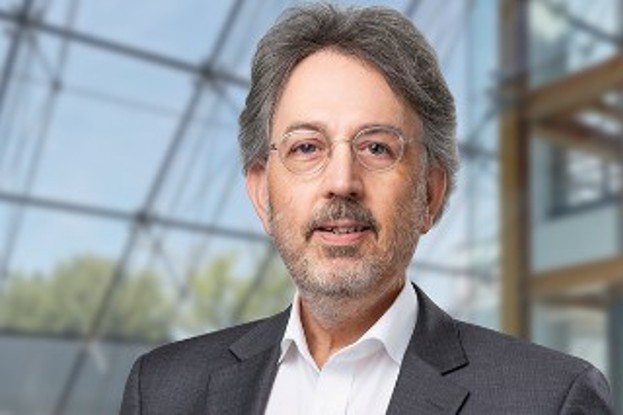
Simon Gehring is an Academic Staff Member for 3D – CAD at the Central Facilities of Karlsruhe University of Arts and Design (HfG Karlsruhe). His role focuses on supporting academic activities related to computer-aided design and digital production tools. Institution: Karlsruhe University of Arts and Design (HfG Karlsruhe) Department: Central Facilities Role: Academic Staff Member for 3D – CAD Contact: sgehring@hfg-karlsruhe.de His research interests include Computer-Aided Design , 3D Modeling , and Digital Design Tools , aligning with the institution's mission to integrate traditional arts with media technology. No specific scientific awards, publications, or student advising details were mentioned in the provided texts.
Prof. Dr.-Ing. Stephan Eder holds the position of Professor of Engineering Mechanics and Design (CAD/CAE) at the Technische Hochschule Bingen, affiliated with Department 1. His expertise centers on advanced design methodologies, computational engineering tools, and mechanical systems analysis. Research interests include the integration of CAD/CAE technologies in engineering education and industry applications, with a focus on optimizing design processes through computational methods. He contributes to the Hermann Hoepke Institute's collaborative projects, advancing engineering innovation. No specific academic awards or grants are explicitly listed in the text. His involvement in curriculum development is implied through his association with programs like Mechanical Engineering B.Eng. and Green Engineering. Currently active in teaching and research, Prof. Eder's role emphasizes bridging theoretical engineering principles with practical design applications through modern software tools.
Wolfgang Oertel serves as Professor of Computer Graphics at Dresden University of Applied Sciences (HTW Dresden) within the Faculty of Informatics and Mathematics. He has held significant leadership roles including Dean of Studies (2009-2012) and Dean (2012-2015) for his faculty, and coordinated international university partnerships (2007-2011). His academic career spans over four decades with appointments at TU Dresden (1984-1998), FhG/IVI Dresden (1999-2004), and TUBA Freiberg (visiting positions in 1998-1999 and 2004-2005). Professor Oertel's research spans computer graphics, computer vision, virtual reality, and artificial intelligence with emphasis on practical applications. His work integrates knowledge representation with visual systems, focusing on spatiotemporal modeling, scientific-technological visualization, and CAD-oriented IT systems. Current projects include the Saxony5 Co-Creation Lab for Artificial Intelligence (2021) and systems for image data processing in scientific infrastructure (SEVVBWG series 2020-2023). His publication trends reveal consistent evolution from database/knowledge processing (1980s-1990s) to computer vision applications (2000s) and sophisticated AI-integrated visualization systems (2010s-present). Recent work focuses on heterogeneous traffic data visualization, knowledge-based graphic object synthesis, and conceptual frameworks bridging AI with virtual reality. Key technical domains include VRML/X3D, OpenCV, VTK, and specialized hardware integration. Award for integrated data processing (Integrata AG Tübingen, 1995) Oertel actively supervises graduate works and leads multiple research projects including Saxony5CCLKI (2021), SEVVBWG2 (2023), and GWMSV traffic simulation (2021). His laboratory maintains extensive equipment including stereo displays, 3D cameras, microscopes, VR headsets, and robotic platforms supporting research in virtual intelligent environments. Current teaching includes Computer Graphics I/II, CAD systems, and Computer Vision courses across multiple informatics programs.
Prof. Dr. Wolfgang Funk is a full-time Professor in the Business Information Systems program at the Faculty of Business, Baden-Württemberg Cooperative State University Villingen-Schwenningen. With a doctorate in Computer Science from Technische Universität Darmstadt and extensive experience in applied research, he specializes in software engineering, digital watermarking, and biometric recognition systems. PhD in Engineering from TU Darmstadt (2008) Diploma in Physics from University of Würzburg (1994) His research focuses on: Digital watermarking techniques for multimedia data Biometric system security and liveness detection Software engineering for business applications Image compression algorithms in recognition systems Publications demonstrate expertise in: 3D CAD model watermarking Multimedia security frameworks MPEG-4 compression impacts Biometric anti-spoofing methods Scientific achievements include: Joseph von Fraunhofer Prize (1998) Three granted European patents in digital watermarking and biometric systems
Prof. Joachim Friedhoff is a Professor at the Department of Mechanical Engineering, Ruhr West University of Applied Sciences. His teaching focuses on CAX-Technologien (Computer-Aided Technologies). Contact: Email or office hours via eLearning platform . Research interests center on advanced CAX technologies, including CAD/CAE/CAM integration, simulation-driven design, and automation in mechanical engineering workflows. His work emphasizes practical applications in manufacturing and design optimization. No scientific awards, recent publications, or grant activities are explicitly listed in the provided text.
David Z. Pan is a Professor at the University of Texas at Austin, where he leads a prominent research group specializing in Electronic Design Automation (EDA) and Computer-Aided Design for Integrated Circuits. His extensive publication record spanning from 1997 to the present demonstrates his leadership in advancing the field of electronic design. Dr. Pan's research focuses on solving fundamental challenges in analog/mixed-signal circuit design automation, physical design methodologies, and the integration of machine learning techniques with traditional EDA problems. His work bridges theoretical advances with practical applications in semiconductor design, with particular emphasis on photonic computing, quantum circuit design, and FPGA optimization. His research has evolved from traditional layout and placement algorithms to incorporate cutting-edge AI and machine learning approaches for next-generation design automation. Analysis of his recent publications reveals a strong trend toward integrating artificial intelligence with EDA, including the use of large language models for circuit design automation, reinforcement learning for placement optimization, and deep learning for various aspects of the design flow. His work consistently addresses critical industry challenges while pushing the boundaries of what's possible in electronic design. Dr. Pan has advised numerous graduate students who have become significant contributors to the field, with many continuing their research careers in academia and industry. His research group has developed several influential tools and methodologies that have been adopted by both academic and industrial researchers. He actively contributes to major conferences in the field including ICCAD, DAC, ASP-DAC, and ISPD, often presenting invited talks that shape the future direction of EDA research. His work on open-source EDA tools has been particularly impactful, promoting accessibility and reproducibility in electronic design research.
Frank Bauer is a Professor of Digital Fabrication at the University of Applied Sciences Erfurt (FHE) and holds a PhD fellowship at Berlin University of the Arts (UdK). He explores computational design and manufacturing, focusing on ontologies of digital modeling and fabrication processes. His research extends to industry applications and artistic production, with affiliations in the Cluster of Excellence 'Matters of Activity' and co-founding the planning agency Büro Vogel Bauer. Roles: Professor (FHE), PhD Fellow (UdK), Research Associate (Matters of Activity) Education: M.A. Architecture (UdK 2017), MA in Art History/Social Sciences (2012) Teaching: UdK B.A./M.A. Programs, Design&Computation MA (UdK/TU Berlin), Bartlett UCL's Design for Manufacture Research interests span computational manufacturing, material experimentation, and interdisciplinary art-fabrication workflows. He investigates historical and contemporary methods, bridging academic and industrial practices. Key Projects: Virtual Matters Lab, LogDesignBuild Suhl, Open Design M.A. Program Awards: Elsa-Neumann Fellowship, Margot & Paul Baumgarten Prize, Max Taut Award Bauer's work integrates art, architecture, and technology, emphasizing constraints and material agency. He advises on digital fabrication projects and collaborates with artists like Olafur Eliasson, gaining insights into contemporary art production processes.
Prof. André Stork is a Professor at Technische Universität Darmstadt and Industry Director (Automotive) at Fraunhofer IGD. He holds a PhD in Computer Science (2000) and a diploma (1992) from TU Darmstadt. His research focuses on geometry modeling/processing, 3D interaction, simulation, and visualization. He leads projects in automotive/ manufacturing industries, coordinating over 200 R&D initiatives. His work emphasizes real-time simulation, CAD-AM integration, and GPU-based algorithms. Education: PhD in Computer Science (TU Darmstadt, 2000) Key Roles: Department Head (2002–2023), Editor-in-Chief of IEEE CG&A Research interests include graded multi-material CAD, iso-geometric analysis, and interactive design tools. He has authored/co-authored 200+ papers (h-index 25), focusing on fields like real-time rendering, mesh processing, and Industry 4.0 applications. Recent articles highlight trends in GPU-accelerated simulation, digital twin technologies, and metaverse infrastructure. His work bridges academia and industry, addressing challenges in additive manufacturing and virtual prototyping. Students advised: 6 doctoral/master’s students (e.g., Daniel Ströter, Christian Altenhofen) Key Projects: GraMMaCAD, CloudiFacturing, and Industry 4.0 studies He chairs conferences like VAST and serves on editorial boards for journals including IEEE CG&A and Applied Sciences.
Prof. Dr.-Ing. Christian Hochberger is a Professor at Technische Universität Darmstadt, affiliated with the Department of Computer Science. His research focuses on reconfigurable computing, FPGA architecture, embedded systems, and hardware/software co-design. He teaches courses such as 'Rechnersysteme I/II' and 'High-Level Synthese.' University: Technische Universität Darmstadt Department: Department of Computer Science Research interests span FPGA-based acceleration, CAD tools for reconfigurable systems, and energy-efficient computing. His work frequently addresses challenges in hardware design, parallelization, and fault tolerance. Publications from 2022-2024 highlight contributions to memristive devices, genetic circuit design automation, and CGRA optimization. His recent work emphasizes experimental methodologies and novel techniques in resistive switching and memristor-based FPGAs. Awards: None explicitly listed in the provided text.
Dr. Benjamin Vogt is a researcher at the Offenbach am Main University of Art and Design, affiliated with the Department of Design. His work explores the evolving intersection of traditional design methodologies and digital technologies, focusing on how design processes—from initial sketches to 3D modeling—are transformed by tools like tablets, touchscreens, and virtual reality (VR) systems. University: Offenbach am Main University of Art and Design Department: Department of Design Vogt’s research investigates the conceptual and practical implications of digitization in design, particularly the role of the line as a foundational element. He examines how digital tools like CAD programs and VR systems alter the relationship between human creativity and machine processing, challenging traditional assumptions about spatiality and design workflows. His project draws on academic knowledge from art and architecture, applying it to contemporary design practices. Vogt’s work seeks to redefine the understanding of the line through its mathematization in digital environments, asking how rules and configurations govern its transformation into three-dimensional models.
Michael Klimmer is a Professor at the Faculty of Industrial Engineering, Mannheim University of Applied Sciences. He specializes in Marketing, Organization, and Project Management, with a focus on industrial marketing and organizational design. His research areas include Organizational Design Change Management Industrial Marketing Project Management Business Administration Operations Management His publications trend toward organizational structures, service marketing challenges, and manufacturing efficiency, with recent works addressing CAD/NC integration and sales process optimization. His email address is m.klimmer@hs-mannheim.de . He teaches courses in Learning and Working Techniques, Organization, Product Planning, and Project Management.
Konstantinos Gkrispanis is a Researcher at the Chair of Computing in Civil and Building Engineering at the Technical University of Munich (TUM) . His work focuses on Artificial Intelligence , Building Information Modeling (BIM) , and CAD processing for industrial applications. His research projects include AI4CADCAM , which explores AI-driven automation of manufacturing planning through CAD model analysis. Recent publications highlight contributions to machining feature recognition and model optimization using techniques like BRepNet and geometric median criteria. At TUM, he contributes to teaching courses related to BIM , Artificial Intelligence in Engineering , and Computational Linear Algebra , while supervising theses in these domains.
Stephan Lorenz serves as a Professor within the Faculty of Mechanical Engineering at Munich University of Applied Sciences, holding key administrative roles as Head of the Automotive Engineering Master's Program and Deputy Chairman of the Examination Board. His research specialization focuses on automotive systems engineering, with core competencies in: Product development lifecycle management Advanced CAD methodologies and construction techniques Body development with integrated ergonomics analysis The professor leads the KCA Laboratory (Laboratory for Design and CAx), driving innovation in computer-aided design and engineering applications for automotive contexts. His work bridges theoretical principles with industrial implementation standards in vehicle development processes.
Prof. Karsten Pietsch is a Professor of Mechatronics at Berlin University of Technology's Department VII (Electrical Engineering, Mechatronics, and Optometry). He holds roles including Program Spokesperson for the Master's Mechatronics Program, Head of the Laboratory for Design and CAD Technology, and Member of the Mechatronics Industry Advisory Board. His research focuses on Energy Harvesting and Tolerance Management, with a strong emphasis on mechanical design and mechatronic systems. He teaches courses ranging from foundational Mechanical Design in the BA to advanced topics like Multibody Systems using Robotics in the MA. His work integrates practical industry collaboration, reflected in patents and competitions like the IGUS 'Manus' contest. He advises Master's theses and oversees projects in mechatronic systems development. Contact: pietsch@bht-berlin.de, based at Haus Gauß B, Room B414. Research highlights include innovations in electromagnetic micro-generators, parametric CAD methods (SAXSIM), and tolerance optimization in mechanical systems. He has contributed to industry-relevant technologies such as clutch designs, gearboxes, and lighting systems. His teaching portfolio spans Finite Element Analysis (FEMM), Multibody System Dynamics, and Computer-Aided Engineering (CAE), emphasizing hands-on learning through guided tours and lab projects.
Deng Cai is a Professor at Zhejiang University's College of Computer Science, working in the State Key Laboratory of CAD&CG in Hangzhou, China. He also maintains an affiliation with Tencent AI Lab, demonstrating his strong connection between academic research and industry applications in artificial intelligence. His academic background includes a PhD from the University of Illinois at Urbana-Champaign, Department of Computer Science (2009). Professor Cai's research spans multiple domains within artificial intelligence, with particular emphasis on computer vision, deep learning, and their applications. His work shows strong focus on 3D object detection, lane detection for autonomous vehicles, and the application of large language models to various vision tasks. He has made significant contributions to traffic forecasting, trajectory prediction, and CAD generation systems. His recent work increasingly integrates large language models with computer vision tasks, demonstrating the evolving nature of his research interests toward multimodal AI systems. The trajectory of Professor Cai's publications reveals a clear progression from foundational computer vision and machine learning research toward increasingly complex and applied systems. His work shows strong emphasis on practical applications in autonomous driving, with numerous papers on 3D object detection, lane detection, and trajectory prediction. More recently, his research has expanded to include generative models for CAD systems and video customization, often leveraging large language models in innovative ways. The consistent publication output across top-tier venues including CVPR, ICCV, AAAI, and NeurIPS demonstrates sustained research productivity and impact. Professor Cai has established significant research collaborations, particularly with Xiaofei He (161 joint publications), Haifeng Liu (50), Zhou Zhao (42), Wenxiao Wang (41), and Binbin Lin (39). His work appears across diverse publication venues including IEEE Transactions on Pattern Analysis and Machine Intelligence, IEEE Transactions on Image Processing, and proceedings of major AI conferences. The breadth of his publication venues reflects the interdisciplinary nature of his research spanning theoretical machine learning to applied computer vision systems. Professor Cai leads research activities within Zhejiang University's College of Computer Science, particularly focusing on the State Key Laboratory of CAD&CG. His work bridges academic research with practical industry applications through his affiliation with Tencent AI Lab. The laboratory environment supports research in computer vision, machine learning, and their applications to real-world problems in autonomous systems, content generation, and intelligent transportation.