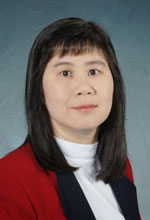
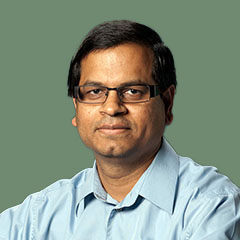
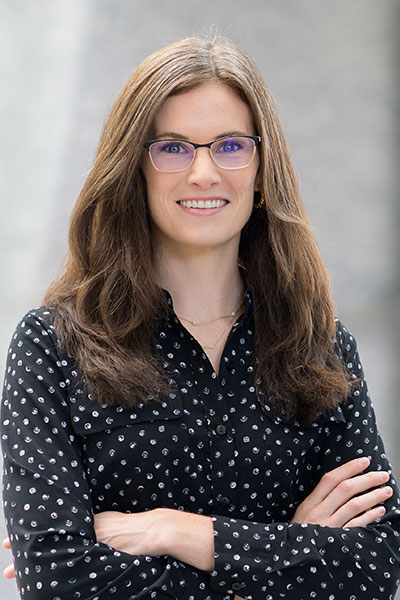
Ruchi Mittal is a Senior Health Economist at the School of Public Health within the Faculty of Health and Medical Sciences at The University of Adelaide, working with Adelaide Health Technology Assessment (AHTA). Her research focuses on health economics, decision analytic modeling, and evidence-based medicine, with an emphasis on evaluating healthcare technologies and interventions. Her work includes assessments of genetic testing for conditions like Lynch syndrome, fertility preservation techniques (e.g., ovarian and semen cryopreservation), and imaging modalities such as PET/CT and cardiac MRI. Publications also span computational chemistry methodologies, including QSAR modeling for drug discovery. Key contributions include economic evaluations of medical technologies and policy-relevant analyses for bodies like MSAC. Her research bridges clinical decision-making and cost-effectiveness, addressing challenges in healthcare resource allocation. Publications highlight collaborations on genetic testing policies, fertility preservation strategies, and diagnostic imaging innovations. Her work supports evidence-based healthcare through rigorous health technology assessments and economic modeling.
Fokeltje Cnossen is an Associate Professor at the University of Groningen with dual appointments in the Faculty of Science and Engineering (Department of Artificial Intelligence) and the Faculty of Medical Sciences (UMCG) through the Lifelong Learning, Education & Assessment Research Network (LEARN). Her work integrates Cognitive Psychology, Human Factors, and Artificial Intelligence to enhance patient safety, medical technology design, and clinical education. Her research prioritizes optimizing patient safety through cognitive engineering of medical systems, with focus areas including trustworthy AI implementation , stress/workload impact on clinical performance , and medical skill acquisition pedagogy . Key specialties span mental fatigue mitigation, usability evaluation, and autonomy in healthcare systems, contributing directly to UN Sustainable Development Goals for health and wellbeing. Recent publications reveal strong interdisciplinary convergence: AI-driven surgical planning tools (e.g., 3D fracture reduction visualization), physiological workload monitoring in cardiac surgery, and policy analyses of physician wellness frameworks. Her work bridges computer science, surgical practice, and healthcare administration with consistent patient-safety outcomes. Scientific Awards: Best Teacher Award - Faculty of Mathematics and Natural Sciences (2010) Dr. Cnossen supervises graduate research through the LEARN network and maintains active professional engagement, including keynote presentations at the Max Planck Institute of Human Cognition & Brain Sciences and Dutch Vascular Courses. Her team focuses on translating cognitive science into clinical safety improvements through the LEARN research consortium.
Ming C. Lin is the Barry Mersky & Capital One E-Nnovate Endowed Professor and Distinguished University Professor in the Department of Computer Science at the University of Maryland, College Park . Previously, he held the Elizabeth Stevinson Iribe Chair at UNC Chapel Hill. His research spans Machine Learning , Physically-based Modeling and Simulation , Autonomous Systems , and Human-Computer Interaction . He leads the UMD GAMMA Research Group , focusing on differentiable physics, robotics, and traffic simulation. Key achievements include pioneering work in collision detection (RAPID algorithm), physically-based sound synthesis, and autonomous driving systems. Lin has authored over 500 papers and holds numerous awards, including ACM and IEEE Fellowships. His teaching includes courses on Differentiable Programming and Autonomous Systems . Research Highlights : Developed Genesis , a universal physics engine for robotics Advanced differentiable mesh representations (DMesh++/DMesh) Contributed to traffic-aware autonomous driving via differentiable traffic simulation Leadership in collision detection (RAPID algorithm) Awards : ACM Fellow, IEEE Fellow, National Academy of Inventors, Virtual Reality Academy, and over 20 best paper awards. Labs/Teams : Co-director of UMD and UNC GAMMA Groups, active in robotics and graphics research communities.
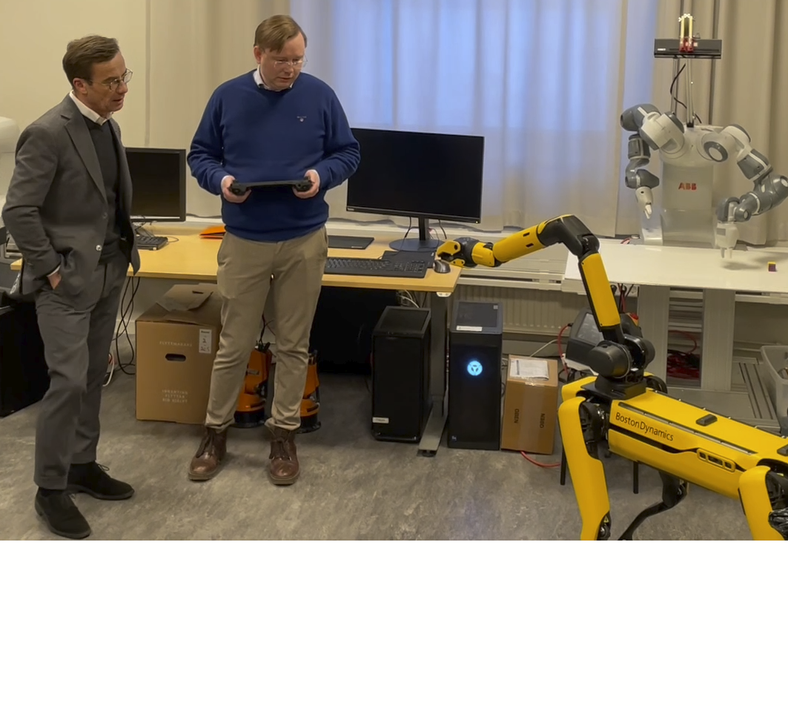
Olov Andersson is an Assistant Professor and WASP Fellow in AI for Autonomous Systems at KTH Royal Institute of Technology, leading the Division of Robotics, Perception and Learning. His research focuses on Embodied AI for autonomous robots and vehicles, combining advancements in Vision-Language Models (VLM), Large Language Models (LLM), and real-world navigation challenges. Key projects include the DARPA SubT Challenge-winning team CERBERUS and the EU H2020 Heron project for robotic road repair. He supervises multiple PhD students and postdocs, including Timon Homberger, Finn Lukas Busch, and Jesper Eriksson. Research interests emphasize full-stack autonomy in dynamic environments, including planning, mapping, and navigation. Notable contributions include the OneMap real-time open-vocabulary mapping system and self-supervised scene flow methods like Seflow. He has been recognized for technical leadership in autonomous systems through awards like the WASP Fellowship. Professional activities include co-chairing the 2024 IROS workshop on robot perception in dynamic environments and advising the Swedish Prime Minister’s AI initiative. Teaching roles span multiple graduate courses in machine learning, robotics, and systems engineering at KTH.
Dr. Saraju P. Mohanty is a Professor in the Department of Computer Science and Engineering at the University of North Texas (UNT), where he leads the Smart Electronic Systems Laboratory (SESL). He holds honorary and adjunct positions at IIIT-Naya Raipur, MNIT Jaipur, and Oriental University, Indore, in India. Education: Ph.D. in Computer Science and Engineering, University of South Florida (USF), 2003 Masters in Systems Science and Automation (AI), Indian Institute of Science (IISc), 1999 B.E. in Electrical Engineering (Honors), College of Engineering and Technology, Bhubaneswar (OUAT), 1995 Dr. Mohanty's research is centered on Smart Electronic Systems, with a strong focus on IoT, VLSI, hardware security, and healthcare applications. His work integrates machine learning, embedded systems, and nanoelectronics to develop secure and efficient solutions for smart cities, agriculture, and medical devices. He has authored over 550 peer-reviewed publications and five books, including a PROSE Award-winning textbook. His recent publications reflect a growing emphasis on AI-driven solutions for synthetic media detection, smart farming, driver monitoring, and personalized health. These works demonstrate a trend toward intelligent, edge-based systems that leverage sensor data and lightweight AI for real-time decision-making. Scientific Awards and Honors: Fulbright Specialist Award (2021) IEEE Consumer Electronics Society Outstanding Service Award (2020) IEEE-CS-TCVLSI Distinguished Leadership Award (2018) PROSE Award for Best Textbook (2016) Top 2% Scientist globally (PLOS Biology, 2019–2022) Multiple Best Paper and Best Poster Awards UNT Toulouse Scholars Award (2016–2017) President’s Scout Award, India (1988) Dr. Mohanty has supervised 3 postdocs, 18 Ph.D. students, 29 M.S. theses, and over 40 undergraduate research projects. Eleven of his advisees have received outstanding student awards. He has received multiple UNT Provost’s Thank a Teacher and Honors Day recognitions. His research has been funded by NSF, SRC, US Air Force, NIDILRR, and Mission Innovation. He has held key editorial roles, including Editor-in-Chief of IEEE Consumer Electronics Magazine and founding EiC of IEEE VLSI Circuits and Systems Letter. He is actively involved in IEEE leadership and conference organization, serving on steering committees for IEEE-iSES, ISVLSI, and OCIT. Laboratories and Teams: He directs the Smart Electronic Systems Laboratory (SESL) at UNT, which focuses on cutting-edge research in IoT, edge computing, hardware security, and smart healthcare. The lab fosters interdisciplinary collaboration and has produced numerous award-winning student projects and publications.
Dr. Sierra Young is an Assistant Professor in the Department of Civil and Environmental Engineering and the Utah Water Research Laboratory at Utah State University, where she leads the DAISy (Digital Agro-environment and Intelligent Systems) Lab. Her research integrates robotics, computer vision, and environmental sensing to advance monitoring in agriculture and hydrology. PhD, Civil and Environmental Engineering, University of Illinois at Urbana-Champaign, 2018 MS, Civil and Environmental Engineering, University of Illinois at Urbana-Champaign, 2015 BS, Civil and Environmental Engineering, Cornell University, 2014 Dr. Young's research focuses on field robotics, automation, and optical sensing systems for environmental and agricultural applications. She specializes in unmanned aerial systems (UAS), developing robotic payloads for tasks such as aerial pollination, soil moisture measurement, and water quality sampling. Her work also emphasizes hyperspectral imaging and machine learning for non-destructive evaluation of crops like industrial hemp and loblolly pine, enabling high-throughput phenotyping and disease detection. Her recent publications demonstrate a strong trend in intelligent robotics for agriculture, computer vision for environmental monitoring, and sensor fusion for hydrological applications. Key themes include autonomous decision-making in UAS, hyperspectral analysis for plant health, and real-time data processing for operational field deployment. NSF CAREER Award, 2024 Outstanding Reviewer, Journal of Sustainable Water in the Built Environment, 2024 Educational Aids Blue Ribbon Award, ASABE, 2024 ASABE Outstanding Reviewer, 2023 Dr. Young mentors graduate students in civil, environmental, and electrical engineering, guiding research in robotics, sensing, and data science. She has secured funding from agencies including the U.S. Geological Survey and the National Robotics Initiative to support projects on camera-based hydrologic monitoring and autonomous water sampling. Her teaching includes courses in computer programming and computer vision for engineers. The DAISy Lab fosters interdisciplinary collaboration, particularly with NC State University, focusing on scalable robotic solutions for agricultural and environmental challenges. The DAISy Lab is actively developing mobile sensor systems for applications in precision agriculture, hydrology, and aquaculture. Current projects include autonomous water quality monitoring using aerial and surface vehicles, hyperspectral imaging for crop breeding, and low-cost camera networks for operational hydrology.
Stephen Mellon is Associate Professor of Orthopaedic Biomechanics at the University of Oxford, based at the Oxford Orthopaedic Engineering Centre (OOEC) within the Nuffield Department of Orthopaedics, Rheumatology and Musculoskeletal Sciences (NDORMS). He is also a Stipendiary Lecturer in Engineering Science at Lady Margaret Hall and teaches on the MSc in Musculoskeletal Sciences. His research focuses on translational biomechanics in joint replacement, particularly knee and hip arthroplasty, with strong collaborations with Professor David Murray, Dr Jack Tu, and Professor Maurice Fallon at the Oxford Robotics Institute. BSc (Hons) and PhD in Biomedical Engineering Stephen's research interests lie at the intersection of engineering and orthopaedic surgery. He specializes in radiostereometric analysis (RSA), finite element modeling, and the development of novel imaging systems like CAT&MAUS (Computer-Aided Tracking and Motion Analysis with Ultrasound) for 3D joint motion assessment. His work explores how patient and surgical factors affect implant outcomes, with a focus on implant design, fixation, and wear. He also investigates the application of artificial intelligence and computer vision to enhance surgical navigation and clinical decision-making in orthopaedics. The recent publications highlight a consistent focus on biomechanical evaluation of orthopaedic implants, particularly the Oxford Unicompartmental Knee Replacement. Themes include surgical risk factors for complications, implant fixation strategies, polyethylene wear, and advanced imaging for dynamic joint analysis. The integration of computational modeling, experimental validation, and clinical data underscores a multidisciplinary approach to improving joint replacement outcomes. Stephen Mellon has not been awarded any publicly listed scientific awards in the provided text. He supervises students from the Podium Institute for Sports Medicine and Technology and is involved in teaching biomechanics at the postgraduate level. His research has been supported by major funding bodies including Versus Arthritis, EPSRC Impact Acceleration Account, and the Medical and Life Sciences Translational Fund (MLSTF), reflecting the translational and impactful nature of his work. Stephen is a key member of the Oxford Orthopaedic Engineering Centre (OOEC), a leading research group in musculoskeletal engineering. He also collaborates with the Oxford Robotics Institute, contributing to the development of infrastructure-free tracking systems for navigated surgery. His work bridges engineering innovation with clinical application, aiming to transform orthopaedic assessment and surgical precision.
Shirley Timmons , PhD, MN, RN-BC, CNE, is a Professor at Clemson University’s School of Nursing , College of Behavioral, Social and Health Sciences. Her clinical and research work focuses on population health, cultural competence, and faith-based interventions to address health disparities among African Americans. Education: PhD in Nursing Science, University of South Carolina MN in Community Health/Nursing Education, University of South Carolina BSN in Nursing, University of South Carolina Research Interests center on cultural factors influencing health disparities, particularly among African Americans. She examines the role of the church in health promotion, HIV/AIDS prevention, hypertension, and cardiometabolic health. Her work emphasizes equitable decision-making in academic-community partnerships to improve health outcomes. Scientific Contributions include 15+ peer-reviewed publications in journals like Journal of Health Disparities , Journal of Religion and Health , and Nursing Education Perspectives . Her studies span agent-based modeling for hypertension, mentoring in nursing education, and faith-based recovery programs. Awards: 2023 AACN Diversity Leadership Fellow, 2015 Clemson School of Health Faculty Scholar Grants: Director of the $4.8M CDC-funded South Carolina Public Health Preparedness Student Corps Service includes serving as Reviewing Editor for Journal of Christian Nursing and reviewer for NIH, PCORI, and multiple journals.
Dr. Henry Han is a Professor and holds the McCollum Family Chair in Data Science at Baylor University’s Hankamer School of Business, Department of Data Science. His interdisciplinary research spans data science, fintech, artificial intelligence, bioinformatics, health informatics, cybersecurity, and quantum computing. PhD, Applied Mathematical & Computational Sciences, University of Iowa (2004) MS, Computer Science, University of Iowa (2001) MS, Applied Mathematics, University of Iowa (2001) Dr. Han’s research integrates advanced machine learning, optimization, and data analytics techniques to solve complex problems in finance, healthcare, and cybersecurity. His work emphasizes manifold learning , deep neural networks , evolutionary computation , and graph-based learning for real-world applications such as high-frequency trading, automobile damage classification, and single-cell genomics. He applies these methods across domains including financial modeling, biomedical data analysis, and sports forecasting. His recent publications demonstrate a strong trend toward interdisciplinary machine learning , with applications in computational finance, bioinformatics, and intelligent systems. Many of his works utilize optimization-based deep learning and unsupervised representation learning to extract meaningful patterns from high-dimensional data. Dr. Han has received recognition through prestigious appointments: McCollum Family Chair in Data Science He actively collaborates on research projects and has secured funding for advanced data science initiatives, though specific grant details are not listed. His work supports both academic advancement and practical innovation in data-driven decision-making. He advises graduate students and contributes to the development of next-generation data science methodologies. Dr. Han is a key member of the data science research team at the Hankamer School of Business, contributing to interdisciplinary labs and research groups focused on fintech, AI, and health informatics.
Qian Wang is a Professor at Southeast University's School of Computer Science and Engineering, with significant contributions across multiple research domains in computer science and engineering. Their work spans machine learning, computer vision, data science, and optimization algorithms, demonstrating interdisciplinary expertise. Research interests focus on advancing artificial intelligence methodologies with practical applications. Key areas include neural network architectures, feature selection techniques, image processing algorithms, and optimization methods. Their work bridges theoretical foundations with real-world applications in medical imaging, environmental monitoring, and power systems. The publication record shows a strong trend toward multi-disciplinary AI applications, particularly in medical diagnostics, environmental science, and engineering systems. Recent work emphasizes robustness in optimization algorithms, efficient neural network architectures, and practical implementations of deep learning techniques for specialized domains. As an active researcher, Qian Wang has contributed to numerous collaborative projects across institutions, with publications appearing in top-tier journals and conferences including IEEE Access, Pattern Recognition, and CVPR. Their work demonstrates consistent productivity with over 100 publications in the last five years.
Meltem Öztürk is a Full Professor in Computer Sciences at Université Paris-Dauphine (LAMSADE). She has held visiting researcher positions at Rutgers University, Université Libre de Bruxelles, and CSIR (South Africa). Her work focuses on decision-making methodologies, social choice, and preference modeling, with applications in industrial risk assessment, toxic substance evaluation, and train comfort analysis. She has organized international and national conferences, summer schools, and colloquia, and has supervised three PhD students. Teaching expertise includes decision-making, game theory, programming, and database systems. Affiliations: LAMSADE lab, Université Paris-Dauphine. Key Projects: Real-world decision-aid applications in transportation and risk management. Her research emphasizes bridging theoretical models with practical decision-support systems, particularly in multi-criteria contexts. A notable recent contribution is the 2023 Sustainability Seminar presentation on aggregative decision frameworks.
Bart K Jacobs is a researcher at the Clinical Trial Centre of the Institute of Tropical Medicine Antwerp, with expertise in infectious disease diagnostics, particularly focusing on tuberculosis, Ebola, and other tropical diseases. His work spans multiple countries including Democratic Republic of the Congo, Ethiopia, Lesotho, and South Africa. His research interests center on diagnostic test evaluation, statistical methods for clinical decision making, and implementation of diagnostic strategies in resource-limited settings. Key areas include latent class analysis, point-of-care testing, computer-aided detection in radiography, and addressing verification and reference standard biases in diagnostic studies. Dr. Jacobs' recent publications (2023-2024) demonstrate a strong focus on tuberculosis diagnostics, with significant work on chest X-ray interpretation algorithms, C-reactive protein testing, and CD4 monitoring for HIV. His methodological expertise in statistical approaches for diagnostic evaluation is evident across multiple publications. His research has been referenced in policy sources, picked up by news outlets, and shared across academic social media platforms, indicating impact beyond academia into public health implementation. Dr. Jacobs has supervised at least one research project and has been involved in a PhD project titled 'Statistical methods to guide clinical decision making in TB' (2020-2023), demonstrating his role in academic mentoring and research leadership.
Professor Richard John Harvey is a leading academic surgeon and researcher in rhinology and skull base surgery, holding dual professorships at the University of New South Wales (UNSW) and Macquarie University. He serves as Program Head of Rhinology & Skull Base Surgery at UNSW's Applied Medical Research Center and practices at Macquarie University and St Vincent’s Hospitals in Sydney. Recognized as Australia’s top otolaryngology researcher, he has an H-index over 60 and appears in Stanford’s Top 2% of global scientists. His work spans inflammatory sinus disease, nasal reconstruction, pituitary tumors, and endoscopic skull base surgery. Harvey has authored over 300 publications and secured grants totaling millions, including studies on biologic medications and nasal polyp treatments. He holds leadership roles in professional societies such as the Australian & New Zealand Skull Base Society and has received prestigious awards, including the Australian Society of Otolaryngology Medal. His research focuses on type 2 inflammation in chronic rhinosinusitis, biologic therapies, and surgical innovation. Harvey trains surgeons globally, runs annual education courses, and oversees a tissue bank for collaborative research. He supervises numerous PhD and clinical students, contributing to advancements in nasal physiology, immunology, and surgical techniques. His administrative roles include Editor-in-Chief of the Australian Journal of Otolaryngology and involvement in international guidelines (e.g., EPOS 2012). Harvey’s research lab at St Vincent’s AMR Center addresses clinical outcomes, nasal airflow, and molecular mechanisms in airway diseases. He advocates for interdisciplinary collaboration, integrating surgery, immunology, and patient-centered care.
Huayue Zhang is a Researcher at the Professorship of Audio Information Processing, Technical University of Munich. He holds a Master's in Architectural Technology from Harbin Institute of Technology (2019–2022) and a Bachelor's in Civil Engineering from Harbin University of Science and Technology (2014–2018). Since 2023, he has served as a Scientific Assistant at TUM. Research Areas : Virtual Acoustic Environments for Learning Spaces Psychoacoustics and Auditory Modeling Applications of Hearing Aids and Cochlear Implants Acoustic Monitoring and Virtual Acoustics Zhang’s work spans interdisciplinary fields, including deep learning for remote sensing , slope stabilization monitoring , and image processing techniques . His recent publications focus on neural network architectures for image denoising, SAR-based disaster assessment, and LiDAR semantic segmentation. Key Projects : HAPPAA: Exploring human auditory perception in acoustic environments Auralization: Sound-field simulation for virtual spaces Binaural Unmasking: Enhancing speech intelligibility in noise He collaborates with international teams on environmental monitoring, leveraging multi-source satellite data and drone imagery for flood and landslide assessments. His technical expertise includes signal processing and multimedia systems design.
Luke Strickland is an Honorary Research Fellow at the School of Psychological Science, The University of Western Australia, with 30 research outputs and an h-index of 12. His work bridges cognitive psychology and human factors, focusing on real-world applications in high-stakes environments like submarine operations and automation systems. His research expertise spans: Prospective Memory (100% fingerprint match) Executive Function (36%) Cognitive Processes (26%) Automation Failure (15%) Human Decision Making (11%) Traffic Control (11%) Recent publications (2024-2025) reveal a cohesive trend: investigating cognitive control mechanisms during multitasking under time pressure, human learning of automation reliability, and team communication dynamics in simulated control rooms. His work combines experimental paradigms with computational modeling to address gaps in human-automation teaming. Dr. Strickland maintains active international collaborations across eight similar-profile researchers, contributing to UN Sustainable Development Goals for health and well-being through applied cognitive science. He has supervised at least one student, as indicated by institutional records.