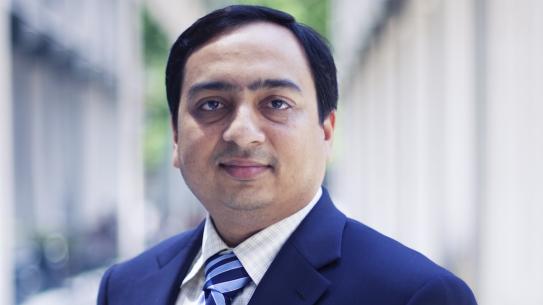
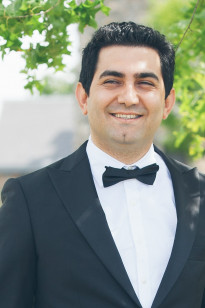
Rumen Kozhuharov is an Assistant Professor at New Bulgarian University's Department of Arts and Design, where he has held roles including Chief Assistant (since 2021/22), Guest Lecturer, and Honorary Lecturer. His academic journey includes dual Bachelor's degrees (Interior Design and Painting), dual Master's degrees (Spatial Design and Painting), and a PhD in Fine Arts focused on material environments. His research bridges traditional and digital art, with emphasis on: Digital Tools : Advanced applications of Photoshop, Illustrator, and 3D modeling in design AI Integration : Ethical and practical challenges in generative art Painting Innovation : Impasto techniques and texture experimentation Exhibition Design : Curatorial strategies for public and gallery spaces Publications (2019-2025) demonstrate strong trends in digital art evolution and AI disruption, particularly examining: Midjourney's impact on design workflows Hybrid physical-digital art methodologies Cultural reinterpretation through technology Awards highlight multidisciplinary excellence: NBU Rector's 'Best Student' (2014) CERN/CHEP 2018 design competition winner Allianz Bulgaria National Painting nomination Early-career web/art competition prizes He leads intensive ERUA painting workshops, advises institutional design projects (e.g., school museum installations), and maintains active exhibition curation—including international shows like 'FINE ARTS & ERUA'.
Dr. Nikhil Gupta is a Professor in the Department of Mechanical and Aerospace Engineering at the NYU Tandon School of Engineering , with affiliations to the Department of Civil and Urban Engineering and the Composite Materials and Mechanics Laboratory (CMML). He focuses on cybersecurity in additive manufacturing , dynamic materials characterization , and machine learning for composites . Education : Bachelor of Engineering, Metallurgical Engineering, Malaviya National Institute of Technology, Jaipur (1996) Master of Engineering, Metallurgical Engineering, Indian Institute of Science (1998) PhD, Mechanical Engineering, Louisiana State University (2003) His research explores additive manufacturing of complex composites , structural health monitoring , and cybersecurity threats in digital manufacturing . Notably, he co-developed embedded authentication codes to prevent 3D printing counterfeiting and pioneered machine learning techniques for defect detection in AM parts. His work is supported by the National Science Foundation and Texas A&M Engineering Experiment Station. The 15 most recent articles highlight trends in metamaterial design , bioprinting for tissue engineering , and cybersecurity frameworks for cyber-physical manufacturing , with a strong emphasis on experimental validation, computational modeling, and industrial applications. Scientific Honors : Fellow, ASM International (2022) Fellow, American Society for Composites (2022) Senior Member, National Academy of Inventors (2024) Brimacombe Medalist Award, TMS (2020) ASM Silver Medal (2013) As advisor to PhD student Youssef AbouelNour , Gupta investigates viscoelastic material modeling and in-situ monitoring for additive manufacturing. His lab, CMML, integrates fiber-optic sensors and AI-driven diagnostics to enhance manufacturing security and material performance.
Dr. Muhammad Younas is a Lecturer at the School of Computing, Engineering & Technology at Robert Gordon University (RGU) in Aberdeen, UK. He specializes in Manufacturing Engineering with a focus on conventional and non-conventional manufacturing processes, characteristics and performance of metals and alloys, optimization, and sustainable production. As a Fellow of the Higher Education Academy, he brings significant teaching expertise to his role. Dr. Younas's research interests center on sustainable manufacturing practices that minimize environmental impact, optimization of manufacturing processes to enhance efficiency and resource utilization, and energy analysis in manufacturing to identify energy-saving opportunities. His work addresses critical challenges in reducing greenhouse gas emissions and improving the environmental performance of industrial processes. His recent publications demonstrate a strong focus on machining of titanium alloys (particularly Ti6Al4V), polymer composites, digital manufacturing technologies including cognitive twins and digital twins, and hydrogen energy systems. This research spans both fundamental material processing investigations and applied sustainability analyses for emerging energy technologies. Fellow of the Higher Education Academy Dr. Younas actively supervises PhD students, currently advising two doctoral candidates on projects related to titanium alloy machining and blue hydrogen policy analysis. His teaching portfolio includes Manufacturing Technology, Engineering Materials, Design, Materials and Manufacture, and Computer Aided Engineering courses. As a member of the Composite Materials Manufacturing Research Group and affiliated with RGU's Environment, Energy & Sustainability theme, Dr. Younas contributes to interdisciplinary research efforts focused on sustainable industrial practices and advanced manufacturing technologies.
Stefan Zintel is a lecturer and sound artist at Hochschule der Bildenden Künste Saar (HBK Saar), where he has headed the Studio for Acoustic Communication since 1996. Born in 1967 in St. Ingbert, he lives and works in Saarbrücken, Saarland, Germany. Previously, he taught electronic music at Saarbrücken University of Music for ten years. Zintel's research interests center on sound art, electronic music composition, real-time audio processing, and therapeutic sound applications. His work explores the intersection of technology and acoustic communication, with a particular focus on Pure Data (Pd) software and sound installations. Recent projects include 'Sounding Vera Molnár,' which examines human-machine relationships through AI-generated interviews and quadraphonic sound interventions. Zintel's artistic output shows a clear evolution from early electronic music acts like Caterpillar and SCAN to contemporary therapeutic sound applications. His recent publications focus on white noise, pink noise, and natural soundscapes designed for sleep, focus, and tinnitus relief, demonstrating practical applications of his acoustic research. Key artistic achievements: International success since early 1990s with tracks on over 300 compilations Founder of Tildmusic® label (2006) with extensive catalog of therapeutic sound applications Sound installations and performances since 1996, including 'Sounding Vera Molnár' (2024) Extensive teaching career spanning over 25 years in audio technology and electronic music Zintel maintains an active practice balancing academic instruction with creative production. His Studio for Acoustic Communication serves as both a teaching facility and research laboratory, while Tildmusic provides the commercial outlet for his applied acoustic research. This integration of academic and artistic work creates a unique ecosystem where theoretical exploration directly informs practical applications in therapeutic sound technology.
Kamyar Pashayi serves as an Associate Professor in the Applied Physics program at Siena University (formerly Siena College), having rejoined the institution in 2022 after previously teaching there as an adjunct lecturer since 2019. His academic career includes a faculty position at Penn State University at Harrisburg and a role as faculty program director at Excelsior University, alongside industry experience in aerospace manufacturing. His educational qualifications are: Bachelor of Science in Materials Science and Engineering, Sharif University of Technology Master of Science in Metallurgical Engineering PhD in Mechanical Engineering, Rensselaer Polytechnic Institute (2012) MBA, University at Albany Dr. Pashayi's research interests center on innovative engineering education, particularly the application of augmented reality to create immersive, hands-on learning environments. His prior research focused on thermal management solutions using nanomaterials, including the development of high thermal conductivity composites for thermal interface applications in electronics and aerospace systems. His scholarly publications from 2012-2015 demonstrate expertise in thermal conductivity enhancement of polymer composites through nanostructured fillers, with recent work pivoting toward educational technology. This transition reflects his commitment to improving engineering pedagogy through practical, technology-integrated approaches. As an educator, Dr. Pashayi employs Team-Based Learning and Project-Based Learning methodologies across courses including General Physics, Computer-Aided Design, and Engineering Design. He holds a Professional Engineer license in New York and leverages industry experience to prepare students for real-world engineering challenges, having received research funding during his tenure at Penn State University.
Michał Baranowski serves as an Assistant lecturer at the Department of Microwave and Antenna Engineering within the Faculty of Electronics Telecommunications and Informatics at Gdańsk University of Technology since 2021. He is simultaneously pursuing his PhD at the same institution, demonstrating a strong commitment to both teaching and research in microwave engineering. His research interests focus on advanced microwave component design, particularly in the areas of microwave filters, design optimization techniques, electronic design automation, finite element method applications, computational electromagnetics, and specialized microwave design methodologies. His work bridges theoretical concepts with practical manufacturing approaches, especially regarding additive manufacturing techniques for microwave components. Baranowski's publication record (13 papers from 2020-2025) reveals a clear research trajectory centered on innovative approaches to microwave filter design and waveguide component manufacturing. His most recent work (2024-2025) emphasizes 3D-printed microwave components, shape deformation techniques for resonator design, and methods to improve surface quality of additively manufactured waveguides. This research has direct applications in satellite communications, Earth observation systems, and 5G technology infrastructure. His technical expertise spans computational electromagnetics, optimization algorithms, and advanced manufacturing techniques for high-frequency components, with a particular emphasis on making these technologies more accessible through open platform tools and cost-effective manufacturing approaches. As an active researcher and educator, Baranowski contributes to both the theoretical advancement and practical implementation of microwave engineering solutions, with his work appearing in prestigious journals including IEEE Microwave and Wireless Technology Letters, IEEE Transactions on Microwave Theory and Techniques, and IEEE Access.
Prof. Dr. Sonja Grothe is a Professor of Physics and Applied Mathematics in the Department of Mechanical Engineering, Environmental and Building Technology at Westfälische Hochschule in Gelsenkirchen, Germany, a position she has held since September 2016. Her academic journey includes significant industrial experience in chemical manufacturing prior to her current faculty role. Professor of Physics and Applied Mathematics, Westfälische Hochschule (2016-present) Plant Manager for Titanium Dioxide White Production, Huntsman P&A Germany GmbH (2015-2016) Project Manager in Process Development, Huntsman (Sachtleben Chemie GmbH) (2014-2015) Laboratory Manager, Sachtleben Chemie GmbH in Product and Application Development (2008-2014) Prof. Grothe's research focuses on nanotechnology and materials science with particular emphasis on nanoparticle synthesis, composite materials, and surface modification. Her doctoral work on FePt nanoparticles from the gas phase established her expertise in nanomaterials, which she has since translated into numerous industrial applications. Her research bridges fundamental physics with practical industrial solutions, particularly in the fields of titanium dioxide and barium sulfate composites. Her publication record shows a clear evolution from fundamental nanoparticle research toward applied industrial materials science. Recent work demonstrates expertise in nanoparticle reinforcement of polymers, functionalization of inorganic particles, and development of specialized composites with enhanced mechanical, optical, and processing properties. The interdisciplinary nature of her work spans physics, chemistry, and engineering disciplines. Graduate Prize of the Year 2000 for exceptional academic achievement PhD in Physics completed with distinction ("mit Auszeichnung") Prof. Grothe teaches core physics courses including Physics 1, Physics 2, Electrical Engineering and Electrical Machines, and Computer-Aided Engineering Mathematics 2. Her extensive industrial experience in chemical manufacturing and materials development provides practical context to her academic instruction, creating a valuable bridge between theoretical principles and real-world engineering applications.
Katarzyna Kobiela-Mendrek is an Assistant Professor at the University of Bielsko-Biala, Faculty of Materials, Civil and Environmental Engineering, where she has been employed since November 2006. Her academic career spans nearly two decades of research focusing on natural fiber applications, particularly wool-based materials for engineering solutions. Dr. Kobiela-Mendrek's research interests center on sustainable material applications with emphasis on wool fiber biodegradation , geotextiles engineering , acoustic performance of materials , and environmental applications of natural fibers . Her work bridges materials science, civil engineering, and environmental sustainability, developing practical solutions that replace synthetic materials with biodegradable alternatives. Analysis of her publication record reveals a consistent research trajectory focused on practical applications of wool fibers across multiple domains. Her recent work (2022-2025) shows increased emphasis on circular economy principles, waste valorization, and sustainable alternatives to plastic, while maintaining her foundational work on geotextiles and soil stabilization. The interdisciplinary nature of her research connects textile engineering with environmental applications. Her scientific contributions include: Development of biodegradable geotextiles for erosion control Acoustic materials from wool waste streams Natural mulching solutions for agricultural applications Waste prevention strategies through optimal material use Fatigue testing methodologies for textile composites Dr. Kobiela-Mendrek maintains active international collaborations, particularly with researchers in Norway and other European countries, focusing on sustainable textile applications and environmental engineering solutions. Her research demonstrates strong practical application potential across civil infrastructure, agricultural practices, and sustainable product development.
Karine Lamiraud is a full Professor of Economics at ESSEC Business School, France, where she has held faculty positions since 2010, progressing from Assistant to Associate to full Professor. She concurrently serves as Full Professor of the Innovation and Health Chair (2016-2026) and Co-Academic Director of the Executive Master in Strategy and Management of Health Industries. Her academic affiliations extend to membership in THEMA research center at University of Cergy-Pontoise and multiple visiting professorships at Stanford University (2014, 2019, 2022), Harvard University, and University of Lausanne. Her educational foundation includes dual Ph.D. degrees in Economics from University of Lausanne and Paris School of Economics (2004), an M.A. in Economics from Paris School of Economics (1998), and dual M.Sc. degrees in Management from HEC Paris and International Management from Wirtschaftsuniversität Wien (1997) through the CEMS program. Ph.D. in Economics, University of Lausanne & Paris School of Economics (2004) M.A. in Economics, Paris School of Economics (1998) M.Sc. in Management, HEC Paris (1997) M.Sc. in International Management, Wirtschaftsuniversität Wien (1997) Lamiraud's research program investigates critical intersections between economic theory and health system functionality. She examines how insurance market structures affect consumer behavior, particularly how supplementary insurance creates switching barriers in basic health plans. Her work on medical technology diffusion analyzes the causal relationship between payment reforms like DRG financing and diagnostic technology adoption, while her HIV adherence research reveals bidirectional relationships between treatment success and continued adherence. Recent publications increasingly explore behavioral dimensions, including gender composition effects on team decision-making using experimental business simulations. Her 15 most recent publications demonstrate consistent focus on European health systems (particularly Swiss and French contexts), with methodological strengths in microeconometric analysis of administrative data and experimental approaches. Key thematic clusters include insurance market competition (38% of recent work), technology adoption dynamics (27%), and behavioral health economics (35%), frequently appearing in top journals like Health Economics , Journal of Economic Behavior and Organization , and Health Policy . Her research impact is recognized through significant awards and funding: WILEY Best Paper Award in Health Economics (2009) Fulbright Fellowship and Swiss National Science Foundation grants (2005-2008) ANR-funded LySAIRI cancer research project (2021) Continuous grant support since 2005 from major European funders As an educator, she teaches core health economics courses at ESSEC while directing executive education for health industry leaders. Her academic service includes co-editing Health Economics journal and serving on the International Health Economics Association's Arrow Award Committee. She maintains active research collaborations across institutions including Stanford University, Harvard University, and Gustave Roussy Cancer Center, positioning her at the nexus of European health policy research and global academic networks.
Dr. Naoto Tanibata is an Assistant Professor at Nagoya Institute of Technology, affiliated with the Department of Life and Applied Chemistry in the Graduate School of Engineering. He also holds a concurrent position at Kyoto University's Catalyst & Battery Elemental Strategy Unit. His research focuses on developing advanced materials for next-generation energy storage systems, particularly solid-state batteries. Dr. Tanibata received his academic training at Osaka Prefecture University: PhD in Engineering (2014-2017) Master of Engineering in Material & Chemical Engineering (2012-2014) Bachelor of Engineering in Applied Chemistry (2008-2012) Dr. Tanibata's research centers on advanced battery materials , with particular expertise in all-solid-state batteries using chloride and other novel electrolytes. His work combines computational materials science with experimental electrochemistry to develop high-energy-density storage solutions. Recent projects have focused on: Design principles for high-voltage chloride-based electrodes using HSAB theory Amorphization strategies for enhancing anion redox reactions Machine learning approaches for battery material discovery and optimization Deformability properties of solid electrolytes to prevent lithium dendrite formation His publication record demonstrates a strong focus on overcoming key challenges in solid-state battery technology, particularly addressing issues of ionic conductivity, interfacial stability, and high-voltage operation. Recent work has increasingly incorporated advanced simulation techniques and machine learning to accelerate materials discovery. Dr. Tanibata has received numerous awards for his contributions to battery research: Battery Technology Committee Award (2024) for 'Redox-level tuning for high-potential chloride electrodes' Best Oral Presentation Award (2024) from the Ceramic Society of Japan ECS Japan Branch Young Researcher Special Award (2024) Multiple Young Research Innovator Encouragement Awards Dr. Tanibata leads multiple research projects funded by prestigious organizations including the Japan Society for the Promotion of Science (JSPS), Fujikura Foundation, and Naito Science and Technology Promotion Foundation. His current research focuses on: Redox-level design for high-energy-density chloride electrodes (JSPS Grant 24K17755, 2024-2029) Establishing design guidelines for high-deformability materials for all-solid-state batteries Verification of amorphization-based anion redox utilization for microgrid applications At Nagoya Institute of Technology, Dr. Tanibata leads research within the Department of Life and Applied Chemistry, focusing on the rational design of solid-state battery materials based on solid-state chemistry principles. His work bridges fundamental materials science with practical battery applications for electric vehicles and grid-scale storage.
Brittany Nelson-Cheeseman is a Professor and Director of Materials Science and Engineering in the Mechanical Engineering Department at the University of St. Thomas' School of Engineering. She holds leadership responsibilities as Director while maintaining an active research program and teaching undergraduate and graduate courses in materials science and engineering. Her educational background includes: PhD in Materials Science and Engineering from University of California, Berkeley (with Designated Emphasis in Nanoscale Science and Engineering) MS in Materials Science and Engineering from University of California, Berkeley BS in Materials Science and Engineering from University of Wisconsin, Madison Nelson-Cheeseman's research focuses on novel composite materials for additive manufacturing, particularly magnetic elastomer smart materials that achieve remote contactless motion for soft robotic applications. Her expertise spans electronic and magnetic materials, nanomaterials, thin films, functional composites, 3D-printing, smart materials, and materials characterization. She has extensive experience utilizing national laboratory facilities across the US, particularly with synchrotron radiation techniques for materials characterization. Her work bridges fundamental materials science with practical applications in soft robotics, medical devices, and energy systems. Analysis of her recent publications reveals a clear research trajectory from fundamental studies of complex oxides and thin film heterostructures toward applied research in magnetic materials for additive manufacturing. Her work demonstrates increasing focus on 3D printed magnetic composites, with particular emphasis on controlling magnetic properties through printing parameters, infill patterns, and magnetic annealing techniques. This evolution shows her ability to translate fundamental materials knowledge into practical engineering applications. Her scientific recognition includes: Editor's Pick selection in AIP Advances (2022) APL Materials Editor's Pick (2014) PRB Editor's Suggestion (2010) Featured in Virtual Journal of Nanoscale Science and Technology (2010 and 2007) Nelson-Cheeseman is actively involved in engineering education, teaching courses including Engineering Materials, Smart Materials, and Materials Engineering. She serves as an advisor for the Senior Design Clinic in Peru, demonstrating her commitment to global engineering education. Her educational background includes postdoctoral research at Argonne National Laboratory and work at the Institut de Ciencia de Materials at the Universitat Autonoma de Barcelona. She has also participated in Semester at Sea, taking liberal arts courses while visiting 11 different countries, reflecting her passion for intercultural learning. Her research group develops novel composite materials for additive manufacturing, focusing on magnetic elastomer smart materials for soft robotic applications inside the human body or vessels. She maintains national and international collaborations and utilizes advanced facilities including oxide molecular beam epitaxy (MBE) at national laboratories.
Stephen P. Johnston is a Professor in the Department of Plastics Engineering at the University of Massachusetts Lowell's Francis College of Engineering. He holds a B.S. in Plastics Engineering Technology from Pennsylvania State University, an M.S. in Plastics Engineering (2005), and a Ph.D. in Plastics Engineering (2007) from UMass Lowell. His industrial experience includes positions at Moldflow Corp., Bausch & Lomb, and Lord Corp. Dr. Johnston's research focuses on polymer processing and product design with specialization in: Injection molding process monitoring, control, and development Computer-aided engineering for part and mold design Process instrumentation and finite element analysis Industrial applications of polymer processing technologies His publication portfolio demonstrates consistent focus on injection molding optimization, sensor-based process control, and polymer characterization. Recent work explores capillary rheometry, microstructured surfaces, and thermally conductive polymers. Significant Awards: Teaching Excellence Awards (2014, 2011) Faculty Member of the Year (2013) Outstanding Paper Award from SPE (2011) Multiple graduate research awards (2004-2006) He leads industrially-funded research supported by over 25 companies, resulting in 40+ publications, a book chapter, and three patents. Johnston advises the Student Chapter of the Society of Plastics Engineers and teaches courses including Mold Design Engineering, Product Design, and Introduction to Engineering.