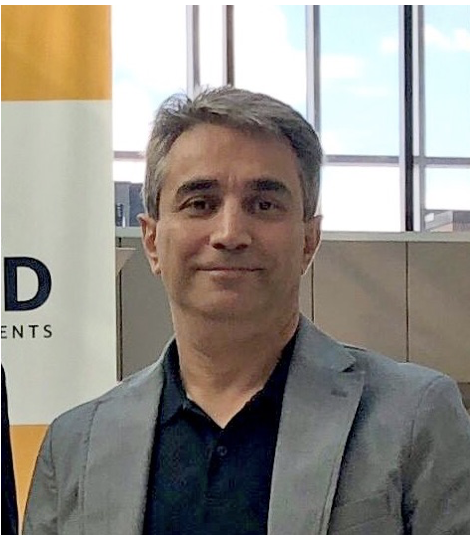
David Alberto Cabrera is a Researcher at KTH Royal Institute of Technology (Sweden), affiliated with the Division of Speech, Music and Hearing, and collaborating with the MTG-UPF (Music Technology Group at Pompeu Fabra University, Barcelona). His research focuses on Music Composition and Artificial Intelligence, particularly modeling harmony trajectories for real-time interactive systems using Transformer networks. He also explores Machine Learning applications in Music Gesture Recognition within the TELMI project. He teaches programming courses in Python and workshops on Interactive Design using Processing, Max/MSP, and C++ frameworks like Cinder and OpenFrameworks. His creative work includes immersive installations such as Academia del Lincei and The Music Dimensions , as well as projects like Specs: BrainX3 and DDS: Internet Para Todos (The Game) . Key collaborations involve the MUSAiC project led by Prof. Bob L. T. Sturm. His technical expertise spans Python (with libraries like Scikit-learn, Keras-TensorFlow), Max/MSP for electronic music, and interactive design tools.
Hao Xiao is a Part-Time Lecturer in the Department of Mathematics at the University of Pittsburgh, while concurrently completing his Master's degree in Mathematics at the University of Bonn. His academic journey includes previous research in theoretical and computational physics, with a current focus on arithmetic geometry and representation theory under the supervision of Dr. Arnaud Eteve and Prof. Jessica Fintzen. He will commence his PhD studies at the University of Pittsburgh in Fall 202X. Education: Master of Mathematics, University of Bonn (ongoing) Previous computational physics work Research Interests: Arithmetic geometry and Langlands duality Geometric Satake correspondence Representation theory Past work in mathematical/theoretical/computational physics Recent Articles Trends: His work spans medical imaging AI (e.g., tissue layer segmentation in ultrasound) and pure mathematics. Early publications include counterexamples in surface fibration and collaborative computational physics projects. Awards: Currently none listed. Advising/Grants: Actively involved in thesis research (Master's thesis on Langlands duality). No grants explicitly mentioned. Labs/Teams: Collaborates with Dr. Arnaud Eteve's research group at Bonn, and will join University of Pittsburgh's mathematics research community starting Fall 202X.
Guillaume Loizillon is a Lecturer in the Department of Music at University of Paris 8 , actively contributing to the EA 1572 Reception Team (Aesthetics, Musicology, and Dance) and Musical Creation research areas. He co-leads the Master's program in Musical and Sound Creation , bridging academic and artistic practices. Research Interests: Electroacoustic and improvised music Interdisciplinary encounters between music and arts (cinema, poetry, dance) Sound synthesis and modeling Sound ecology theoretical/practical frameworks Phenomenological approaches to music technology Historical and technical analysis of avant-garde Artistic Productions: Regularly creates sound installations ( Zoophonie , Ex Voto ) and concerts internationally (Canada, Greece, France). Collaborates with artists like Merce Cunningham and sound poets. Notable projects include Paris Dadaphone for Cities Memory (UK) and Babel Babil at University Paris 8. Academic Contributions: Co-edited two special issues on sound ecology in Filigrane review (2015-2016). Has 11 personal contributions to the Phono-Photo collaborative system. Presented at major international conferences including ICMC, EMS, and Spark Festival.
Michael Rosenthal, MD, PhD is an Assistant Professor of Radiology at Harvard Medical School and a physician-scientist at the Dana-Farber Cancer Institute and Brigham and Women’s Hospital. His work bridges diagnostic radiology and data science, with a focus on gastrointestinal and pancreatic cancers. Dr. Rosenthal earned his MD and PhD in Computer Science from the University of North Carolina at Chapel Hill. He completed his diagnostic radiology residency at Brigham and Women’s Hospital and a fellowship in cancer imaging at Dana-Farber Cancer Institute. His research centers on extracting imaging biomarkers from routine CT scans to understand cancer-related metabolic changes and tumor dynamics. Key projects include automated measurement of body composition (muscle and fat) and tumor volumetry, enabling large-scale analysis of over 100,000 scans. These methods aim to identify individuals at risk for pancreatic cancer and improve cancer management. His recent publications reflect a strong interdisciplinary focus on oncologic imaging, data science, and precision medicine. Themes include tumor biomarker discovery, imaging in gastrointestinal cancers, radiation safety, and anatomical variations relevant to surgery. He collaborates with the Wolpin Lab, MGH-BWH Center for Clinical Data Science, and Dana-Farber Informatics and Analytics group. While no formal students are listed, he co-publishes with numerous researchers and clinicians in oncology and radiology.
Dragana Grujić is a full professor at the Faculty of Technology, University of Banja Luka, specializing in textile engineering and functional materials. She leads research on antimicrobial textiles, dielectric properties of materials, and sustainable textile processing. Her work integrates chemical, physical, and biomedical approaches to enhance textile functionality. University: University of Banja Luka Faculty: Faculty of Technology Department: Department of Textile Engineering Her research focuses on antimicrobial treatments using plant extracts and nanomaterials, dielectric behavior of modified textiles, and thermal comfort in sports apparel. She has pioneered methods for optimizing textile finishing processes and developed automated tools for material testing. Recent projects include studies on bentonite-modified textiles, inkjet printing parameters for fabric properties, and UV-resistant antimicrobial materials. Her work has been published in journals like Journal of Materials Science , Cellulose Chemistry and Technology , and Antioxidants . Dr. Grujić has secured grants for projects such as 'Dielectric Properties of Polymer Composites' and 'Phase-Change Materials in Textile Finishing'. She collaborates internationally on bio-based materials and antimicrobial solutions. Her contributions span over 100 peer-reviewed articles and several textbook chapters on textile technology and material science.
Çetin ÇİMEN is a Lecturer at Kafkas Üniversitesi's Kazım Karabekir Technical Sciences Vocational School, Department of Machinery and Metal Technologies. He holds a PhD in Mechanical Engineering from Atatürk University (2020) and has been a full-time academic staff member since 2018. His research focuses on manufacturing technologies, machine design, biomechanics, and alternative energy systems. Professional Roles: Program Director, Education Coordinator, and Member of Academic Councils Teaching: Courses include Thermodynamics, Computer-Aided Design, and Renewable Energy Systems Education: PhD: Atatürk University, Mechanical Engineering (2020) MSc: Fırat University, Mechanical Education (2004) BSc: Fırat University, Mechanical Education (1997) Research Highlights: Specializes in advanced manufacturing techniques including Selective Laser Melting (SLM) and thin film coatings. Explores antimicrobial surface treatments for biomedical applications, sustainable energy systems, and polymer nanocomposite technologies. Active in renewable energy integration for land vehicles and robotics modeling. Project Leadership: Principal Investigator for the 2022-2025 research project investigating thin films on SLM-fabricated biomaterials.
Vincenzo Spallina is a Reader in Chemical Engineering at the University of Manchester, leading the Sustainable Process Intensification Group and the Industrial Hub for Sustainable Engineering in the James Chadwick Building. He specializes in developing intensified reactors for energy, chemical, and biochemical processes with a focus on chemical looping technologies, waste valorization, and membrane-aided reactors. Education: Doctor of Engineering, Politecnico di Milano (2013) Master of Engineering, Politecnico di Milano (2008) Bachelor of Engineering, Politecnico di Milano (2005) Research interests include chemical looping for hydrogen production, carbon capture in steel industries, and glycerol valorization. His work combines numerical modeling and experimental testing to demonstrate sustainable technologies, contributing to UN goals for clean energy and climate action. Recent projects include the HYS2 RECYCLE (hydrogen production via chemical looping) and GLAMOUR (aviation fuel from glycerol), as well as C4U for steel industry carbon capture. He has secured £ millions in grants and coordinates international collaborations with industries like Johnson Matthey and ArcelorMittal. Recipient of the 2021 Techno-economic analysis award for carbon capture innovations. Academic lead for facilities like the Sustainable Process Intensification Group Lab and Pilot Low Carbon Hydrogen systems.
Pascale Le Gall is an active researcher specializing in formal methods and computer science, with primary research conducted through the Mathematics and Computer Science for Complexity and Systems laboratory. Their work spans theoretical computer science, software engineering, and interdisciplinary applications in biological systems modeling. Le Gall's research focuses on formal verification techniques, particularly in conformance testing, symbolic execution, and graph transformations. Their work bridges theoretical computer science with practical applications in distributed systems verification, geometric modeling, and biological network analysis. Key research themes include developing frameworks for stochastic process discovery, feature interaction resolution, and topological operations in geometric modeling, demonstrating both theoretical depth and practical implementation value across multiple domains. Analysis of their recent publications reveals a strong trend toward interdisciplinary applications of formal methods, particularly in biological systems. Their work increasingly integrates statistical approaches with traditional formal verification techniques, as seen in Bayesian inference for process discovery and statistical model checking of biological pathways. The research shows consistent development of symbolic execution techniques applied to increasingly complex systems, from abstract data types to distributed biological networks. Pascale Le Gall maintains active collaborations with researchers including Christophe Gaston, Marc Aiguier, and Paolo Ballarini across multiple projects. Their publication record shows consistent output with significant contributions to model-based testing frameworks, geometric modeling using graph transformations, and formal analysis of biological systems. The researcher has contributed to both theoretical foundations and practical implementations of verification techniques, with numerous conference papers and journal articles spanning over 15 years of active research.
Dr. Binayak Bhandari is a Research Associate at the Automated Manufacture of Advanced Composites (AMAC) Research Centre at the University of New South Wales (UNSW Sydney). He previously served as Assistant Professor & Department Chair at Woosong University, South Korea, and earned his PhD in Mechanical Engineering from Seoul National University (2014). His research spans interdisciplinary engineering domains including artificial intelligence, advanced composites, renewable energy systems, robotics, and manufacturing processes. Bhandari has led projects such as the National Research Foundation grant (2017–2020) on AI-driven robotics for object identification. He has been recognized for contributions in renewable energy and teaching, including the 2022 Young Researcher Award and the 2020 Special Achievement Award. Education: PhD in Mechanical Engineering (2014, Seoul National University). Research Interests: Dr. Bhandari’s work focuses on integrating AI with manufacturing and energy systems. Key areas include nondestructive evaluation of composites using deep learning, optimization of hybrid renewable energy systems, and smart manufacturing processes. His expertise spans computer vision applications for quality assurance, acoustic emission analysis, and sustainable energy solutions for remote regions. Key Contributions: Over 50 peer-reviewed publications across journals like Journal of Composite Materials and International Journal of Precision Engineering . Notable works include studies on hybrid energy models, composite material characterization, and machine learning-based anomaly detection. Awards: Recipient of multiple accolades including the 2022 Young Researcher Award (ASAT), 2018 IJPEM-GT Most Cited Article Award, and 2010 Grand Prize for precision engineering innovation. Grants & Activities: Led a $150,000 National Research Foundation grant (2017–2020) on AI-based robotics. Collaborates on projects involving automated fiber placement, renewable energy integration, and smart factory systems. Labs & Teams: Principal researcher at AMAC Centre, UNSW, focusing on advanced composite manufacturing and AI-driven solutions for industry challenges.
Saleh Rezaeiravesh is a Lecturer in Engineering Simulation and Data Science within the Department of Mechanical and Aerospace Engineering. He holds a PhD in Scientific Computing (Numerical Analysis) from Uppsala University (2018) and previously worked at the FLOW Centre, KTH Royal Institute of Technology. His research focuses on Computational Fluid Dynamics (CFD), uncertainty quantification (UQ), and data-driven techniques applied to turbulent flows. He teaches courses such as Numerical Methods & Computing and Data-driven Modelling & Simulation. He is part of the active Fluids Research Group, contributing to projects on turbulent flow dynamics and CFD applications. Education: PhD in Scientific Computing (Uppsala University, 2018); MSc and BSc in unspecified fields. Research interests include scale-resolving simulations of wall-bounded turbulent flows, Bayesian optimization, and multifidelity modeling. He develops tools like the UQit Python package for uncertainty quantification in CFD. His work aligns with UN Sustainable Development Goals through contributions to efficient fluid dynamics modeling, aiding sustainable engineering solutions. Recent research trends in his articles emphasize numerical uncertainties, precision effects in simulations, and advanced machine learning techniques for turbulence modeling. His contributions address challenges in CFD accuracy, robustness, and computational efficiency. He actively supervises PhD students in areas like uncertainty quantification and data-driven optimization of fluid dynamics problems. He collaborates on interdisciplinary projects, including porous-fluid systems and flow control using Bayesian methods. His team participates in global research networks, with notable collaborations on turbulence statistics and LES modeling.
Brent Payne is a Professor at the School of Engineering and Technology, Western Illinois University (WIU), with over two decades of experience in engineering education and manufacturing technologies. His role emphasizes hands-on learning and industry collaboration. Education: Ph.D. in Electrical Engineering (2003, Southern Illinois University), MS in Mechanical Engineering (1993, University of North Texas), BS in Engineering Technology (1988, Western Illinois University) His research focuses on integrating practical skills into academic curricula through lab-based instruction and developing partnerships between educational institutions and manufacturing industries. Key areas include: CNC machining techniques Precision measurement (Metrology) Composite material applications Computer-aided manufacturing workflows
Dr. Sipei Zhao is a Senior Lecturer at the School of Mechanical and Mechatronic Engineering at the University of Technology Sydney (UTS), where he has been employed since January 2021. Prior to this, he worked as a Post-doctoral Research Fellow at the Centre for Audio, Acoustics and Vibration of UTS from July 2018 to December 2020. His educational background includes a PhD in Electrical Engineering from RMIT University (2018), a Master's degree in Acoustics from Nanjing University (2015), and a Bachelor's degree in Electronics Engineering from Nanjing University (2012). Dr. Zhao's research focuses on acoustics and noise control, dynamics and vibration control, and signal processing. His work spans theoretical development and practical applications in active noise control, architectural acoustics, and machine learning for acoustic analysis. He has made significant contributions to distributed acoustic systems, neural network applications in sound field reconstruction, and innovative approaches to sound zone control. His recent publications demonstrate a strong trajectory in distributed acoustic systems, neural network applications in acoustics, and innovative approaches to sound field control and reproduction. His work combines theoretical rigor with practical implementations, often resulting in significant reductions in computational complexity while maintaining or improving performance. Best Student Paper at the 22nd International Congress on Sound and Vibration (ICSV22) in 2015 Best Paper Prize at the 21st International Conference of the Association for Computer-Aided Architectural Design Research in Asia (CAADRA2016) in 2016 Best Paper Award at the 23rd International Congress on Acoustics (ICA2019) in 2019 Young Professionals Grant from the International Institute of Noise Control Engineering (I-INCE) Ford Publication Commendation Prize from RMIT University in 2017 ARC Early Career Industry Fellowship in 2024 Dr. Zhao has successfully secured multiple research grants and contracts from organizations including the Australian Research Council, NSW Environment Protection Authority, and industry partners like Noizend Pty Ltd. His research has practical applications in industrial settings, transportation, and building acoustics. He serves as a peer reviewer for prestigious journals including the Journal of Sound and Vibration and IEEE/ACM Transactions on Audio, Speech, and Language Processing.
Anita Zeidler is a Senior Lecturer in the Department of Physics at the University of Bath. Her work focuses on the structural analysis of glassy and liquid materials under extreme conditions of high pressure (up to 20 GPa) and high temperature (up to 2000 K). University: University of Bath Department: Department of Physics Rank: Senior Lecturer Her research aims to establish predictive models linking atomic structure to macroscopic properties, aiding both materials design and geological hazard prediction. Key methods include neutron diffraction with isotope substitution, X-ray diffraction, and molecular dynamics simulations. Recent publications highlight structural transformations in aluminosilicates, magnesium silicates, and NASICON systems under pressure. Her work has applications in optoelectronics, geophysics, and nuclear waste storage. She leads projects such as the Mercator Fellowship and collaborates internationally on high-pressure material characterization. Scientific Awards: Mercator Fellowship She supervises doctoral students and contributes to open-access datasets, enabling reproducibility and computational modeling advancements.
Dr. Ramakiran Chavali is an Associate Professor in the Department of Prosthodontics at the University of Alabama at Birmingham (UAB) School of Dentistry since 2012. He also holds a secondary appointment as a Scientist at UAB's Global Center for Craniofacial, Oral and Dental Disorders (GC-CODED). Key research areas include CAD/CAM resin composite crowns, dental zirconia polishing, and implantology. Academic focus on dental biomaterials and mechanical fatigue testing Developed protocols for optimal zirconia polishing (15,000 RPM speed) Investigated bonding mechanisms for CAD/CAM restorations Contributed to understanding implant pathologies in diabetic patients Teaching responsibilities include advanced dental prosthetics and implantology courses at UAB. His work has been cited over 115 times, with recent studies examining polymer-containing CAD/CAM materials.
Homayoun Najjaran is a Professor of Mechanical Engineering and Electrical and Computer Engineering at the University of Victoria (UVic), cross-listed between departments. He founded the Advanced Control and Intelligent Systems (ACIS) laboratory, focusing on AI, robotics, and control systems. Dr. Najjaran earned his Ph.D. from the University of Toronto in 2002 and holds a Professional Engineer (P.Eng.) license in British Columbia. As a Fellow of the Canadian Society for Mechanical Engineering (CSME), he leads research in autonomous systems, industrial automation, and smart manufacturing. His work integrates machine learning, computer vision, and MEMS technologies to enhance system reliability and safety. Research interests span control systems, robotics, AI-driven manufacturing, and wearable technologies. Notable projects include vacuum bagging leakage prediction in composite manufacturing and sim-to-real domain adaptation for robotics. He collaborates with industry partners in aerospace, healthcare, and automation, emphasizing practical applications. Dr. Najjaran also serves as President of Advanced Engineering Solutions Inc., providing technical consulting services. Awards & Recognition Fellow of the Canadian Society for Mechanical Engineering (CSME) Professional Engineer (P.Eng.) in British Columbia Lab & Collaborations The ACIS Lab develops AI-driven solutions for industrial automation, human-robot collaboration, and digital twins. Partnerships include aerospace, automotive, and healthcare sectors.