Dr. Liting Zhou is an Assistant Professor at Dublin City University's School of Computing, specializing in multimedia retrieval and information systems. She completed her PhD in Computer Science at DCU under Dr. Cathal Gurrin's supervision, focusing on multimedia analysis. Her research develops algorithms for video understanding, multimodal learning, and lifelog retrieval applied to education, healthcare, and personal informatics domains. Key research areas include: Cross-modal video-text matching and retrieval Lifelog question answering systems Multimodal fusion techniques User-friendly retrieval interfaces She serves as reviewer for top conferences/journals and has chaired sessions at MMM (2023-2024) and ECIR (2023).
Dr. Helard Becerra is an Assistant Professor in the School of Computer Science at University College Dublin (UCD). He holds a PhD from the University of Brasília and has held postdoctoral roles at UCD's Insight Centre for Data Analytics and Samsung R&D Institute Brazil. His research focuses on multimedia quality assessment (audio/video/speech) and AI-driven healthcare solutions for stroke rehabilitation. Key contributions include developing NAViDAd (a deep learning-based quality metric) and predictive models for stroke recovery outcomes. Education: B.Sc. (UNSAAC, Peru, 2010); M.Sc. & Ph.D. (UnB, Brazil, 2013/2019). Professional experience includes roles at Samsung (2019), DIT (2017-2018), and leadership in EU projects like Precise4Q (Horizon 2020). Research interests span: 1) Perceived quality in multimedia systems, 2) Explainable AI for healthcare, 3) Predictive modeling in stroke rehabilitation. Notable work includes gradient boosting models for social risk prediction and Elo rating systems for personalized therapy. Teaching responsibilities include coordinating modules on Software Engineering, Parallel Computing, and Programming. He actively supervises graduate students and serves on UCD's Equality, Diversity & Inclusion Committee. Awards include the 2019 Best Student Paper Award at International Symposium on Electronic Imaging. He reviews for top conferences (ACM MMSys, IEEE ICIP) and journals (IEEE Access, IEEE Signal Processing Letters).
Ciaran Eising is an Associate Professor in the Department of Electronics & Computer Engineering at the University of Limerick. His research focuses on computer vision, machine learning, and their applications in intelligent transportation systems, particularly autonomous driving and driver assistance systems. He is a member of the Centre for Sustainable Digital (Re)Manufacturing, Data-Driven Computer Engineering Research Centre, and Lero – the SFI Research Centre for Software. Education: PhD from the National University of Ireland Galway (2010), BE (2003). External roles include Senior Expert at Valeo Vision Systems (2009–2020) and Adjunct Lecturer at NUI Galway (2016–present). His expertise spans automotive vision systems, embedded systems, and sensor fusion. Research Interests: Driver Assistance Systems, Autonomous Driving, Object Detection, Motion Segmentation, and Sensor Fusion. Over 94 publications since 2007, with recent work on BEV perception, multimodal fusion, and DDoS mitigation in healthcare IoT. Grants/Advising: Accepting PhD students; collaborations include industry partnerships and cross-disciplinary research. Labs/Teams: Active in Lero and other university research centers, contributing to UN SDGs via sustainable transportation innovations.
Junli Xu is an Associate Professor at the School of Biosystems and Food Engineering at University College Dublin (UCD), under the UCD Ad Astra Fellowship. She holds a Bachelor's degree from Zhejiang University (2014) and a PhD in Food Engineering from UCD (2018). Her research focuses on spectral imaging combined with advanced data analysis (machine learning/deep learning) for solving problems in environmental science, food safety, and biomedical engineering. Key projects include developing spectral imaging frameworks for detecting microplastics and assessing their health impacts. Her research interests span spectral imaging, machine learning applications, environmental monitoring, and toxicology. She has secured grants such as the ERC Starting Grant and SFI-IRC Pathway Programme. Xu leads the UCD Spectral Imaging Research Group and has supervised multiple PhD students. She has published extensively in journals like Science of the Total Environment and Environmental Pollution . Her work includes innovations like the BOX-YOLOv8 framework for hyperspectral core analysis and machine learning-driven methodologies for microplastic detection. She also contributes to professional activities, including editorial roles in Current Research in Food Science and peer review for journals like Food Control .
Fazilat Hojaji Najafabadi is an Associate Professor in the Department of Computer Science & Information Systems, affiliated with Lero – the SFI Research Centre for Software. Their research focuses on AI-driven analytics in gaming and simulated racing, machine learning applications, and software governance frameworks. Formerly a Senior Software Analysis & Design Leader at ICT Organization of Isfahan Municipality (2018–2020), they hold a PhD in Software Engineering from the University of Isfahan, alongside a Master’s in Information Technology and Management from Amirkabir University of Technology and a Bachelor’s in Computer Science from Isfahan University of Technology. Research Interests: Machine learning for driver behavior analysis, telemetry data modeling, esports performance prediction, and governance frameworks for service-oriented architectures. Their work combines theoretical models with practical applications in software engineering and automotive simulations. Publications: Recent contributions include studies on AI techniques for esports KPI identification, sim racing performance prediction via telemetry, and frameworks for optimizing model-driven systems. Their work bridges machine learning with real-world applications in gaming and automotive domains. Labs/Teams: Active member of Lero, Ireland’s national software research center, contributing to interdisciplinary projects in AI and software engineering.
Professor Barak Pearlmutter is affiliated with Maynooth University in the Faculty of Science & Engineering . His research spans multiple domains including automatic differentiation , neural networks , machine learning , and neuroscience . He has contributed significantly to adaptive systems , brain imaging , and programming language design . Research Interests include: Adaptive systems, automatic differentiation, theoretical neurobiology, neural networks, machine learning, acoustic source separation/localization, neuroscience, brain imaging, programming language design, and computational neuroscience. Publications focus on applying algorithmic differentiation to machine learning, developing neural ODE models for biomedical signals, advancing sparse NMF techniques, and integrating functional programming with numerical methods. Collaborations span institutions like MIT, Oxford, and IEEE societies, with work in brain-computer interfaces , MEG source localization , and neuromodulation for tinnitus treatment. Technical Contributions include the DiffSharp AD library for .NET languages and foundational work on reverse-mode automatic differentiation in functional frameworks. His 2018 Journal of Machine Learning Research survey on AD remains a seminal reference in the field. Application Areas cover biomedical signal processing , optical brain-computer interfaces , cognitive modeling , and neural code optimization . His work intersects computer science, neuroscience, and mathematical computing through sparse decomposition and probabilistic modeling .
Prof. Noel E. O’Connor is a Full Professor at the School of Electronic Engineering , Dublin City University, and the CEO of the Insight SFI Research Centre for Data Analytics , Ireland’s largest SFI-funded research center. His research spans multimedia content analysis, computer vision, machine learning, and multi-modal analysis with applications in security, autonomous vehicles, IoT, smart cities, and environmental monitoring. Area Editor for Signal Processing: Image Communication (Elsevier) Associate Editor for the Journal of Image and Video Processing (Springer) Member of ACM and IEEE
Prof. Tahar Kechadi is a Principal Investigator at the Insight Centre for Data Analytics , specializing in Machine Learning & Statistics and Optimisation & Decision Analytics . His research spans interdisciplinary domains including agriculture, healthcare, and cybersecurity. University : Insight Centre for Data Analytics Role : Principal Investigator Ranks : Professor His current research focuses on applying machine learning to smart agriculture (e.g., crop yield prediction, data engineering), blockchain technologies (e.g., energy trading, e-voting), and privacy-preserving systems in healthcare and cybersecurity. Publications highlight advancements in multi-modal analysis , deep learning architectures , and game-theoretic clustering . Recent work explores data contamination in LLMs , privacy-aware blockchain systems , and distributed reputation management . His team develops tools for agro-climate modeling , medical diagnostics , and cloud forensic readiness . Contact: tahar.kechadi@insight-centre.org
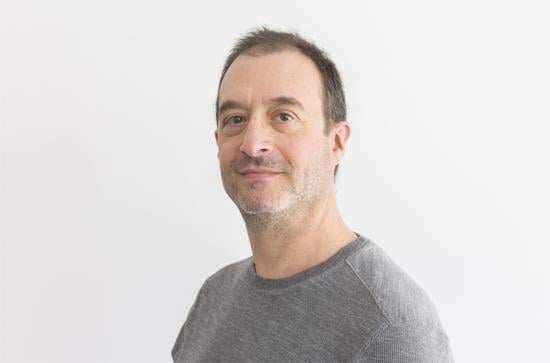
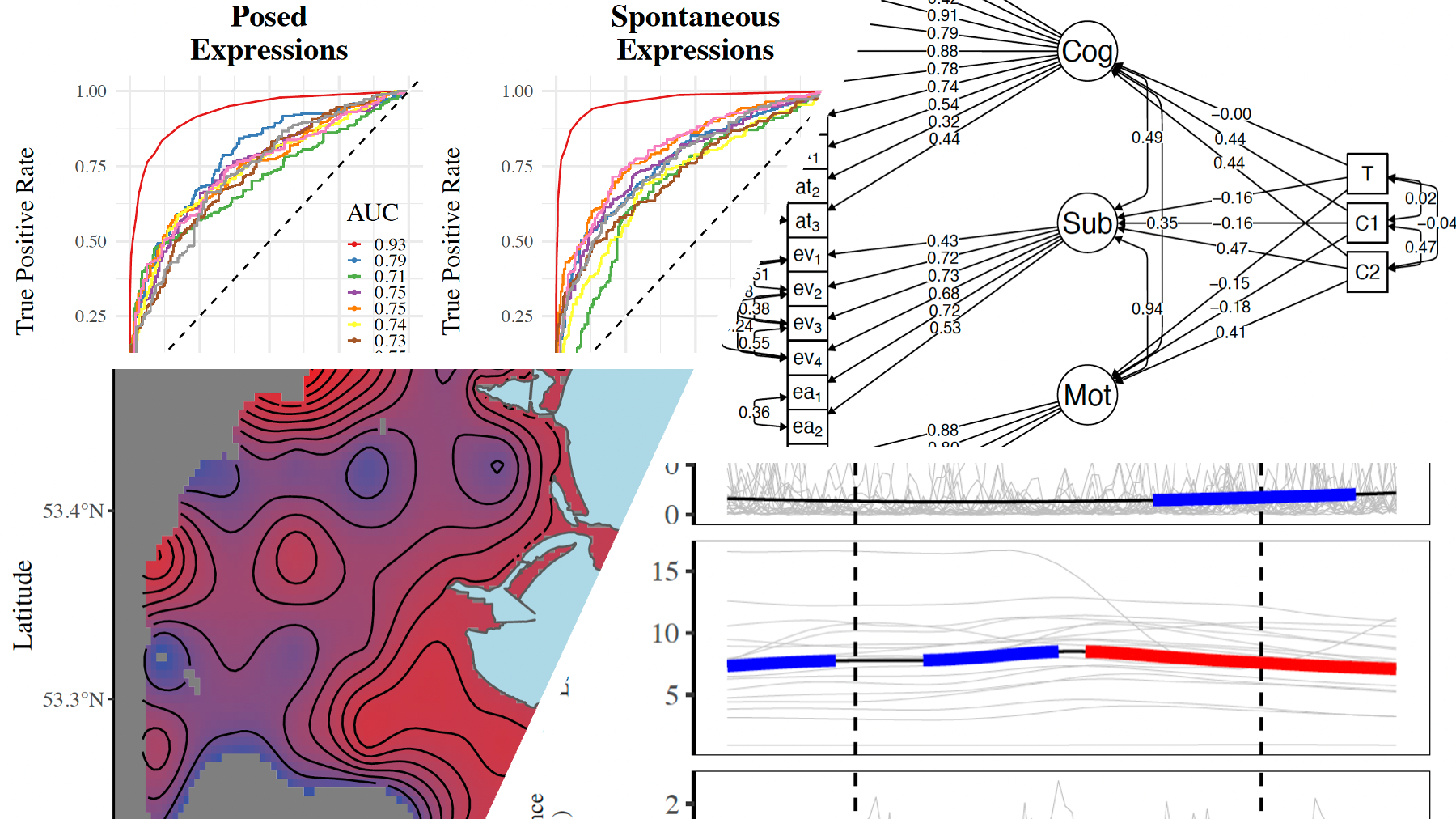
Dr. Damien Dupré is an Assistant Professor of Business Research Methods at Dublin City University's Business School. He holds a Ph.D. in Social and Experimental Psychology from Université Grenoble-Alpes, France. His research focuses on psycho-physiological responses in real-world settings, particularly through the analysis of facial expressions and wearable device data. He co-developed the DynEmo database for dynamic facial emotion analysis and collaborated with institutions like Queen’s University, Sensum Ltd, and UCD’s Insight Centre. His expertise includes multivariate time series analysis for machine learning applications in emotion recognition and human-computer interaction. Education: Ph.D. in Social and Experimental Psychology (Université Grenoble-Alpes), postdoctoral work involving physiological measurements of marathon runners. Key collaborations include projects with Sensum Ltd (emotion sensors), Queen’s University (facial expression analysis), and Ixiade (emotional UX evaluation). Research interests span emotion statistics, wearable devices, and physiological computing. Recent work emphasizes automatic facial expression recognition systems and their validation through dynamic datasets. His publications address challenges in emotion detection accuracy across commercial classifiers and the impact of facial interface designs on emotional perception. Teaching responsibilities include Data Analytics for Business, Quantitative Research Methods, and Strategic Consultancy modules. He leads the DCU R Stats Club and actively contributes to open-source tools for data science education. Current projects include the Motoklik–AI-PoC initiative as DCU PI. Professional engagement includes Mastodon activity promoting RStats pedagogy and GitHub repositories showcasing code for emotion analysis (e.g., machine_challenge repo). His work bridges psychological theory, technological innovation, and business analytics applications.
Nikolaos Papakostas is an Associate Professor at the School of Mechanical and Materials Engineering, University College Dublin (UCD), and Director of the Master of Engineering with Business Programme. His expertise spans simulation, control, and scheduling of manufacturing systems, digital manufacturing, Industry 4.0 technologies, and IoT applications in supply chains. He holds a PhD in Engineering (2000) and a Diploma in Mechanical Engineering (1995) from the University of Patras, Greece. Prior to UCD, he worked at the Laboratory for Manufacturing Systems and Automation (LMS) and served as CIO at INTRAMET Steel. He has led numerous European projects and collaborated with industries in automotive, aerospace, and biotechnology. Research: Focuses on additive manufacturing, robotics, and digital twins. Recent work includes porosity prediction in AM, human-robot collaboration in bioprocessing, and blockchain for product development. He has over 80 peer-reviewed publications and 500+ citations. Key grants include the SHERLOCK project (EU-funded) on collaborative workplaces and I-Form, an Advanced Manufacturing Research Centre. Teaching: Coordinates modules like Applied Robotics Research, Robotic Applications, and Operations Management. His teaching emphasizes integrating business and engineering through project-based learning. Affiliations: Member of CIRP, IEEE, and the Technical Chamber of Greece. His work bridges academia and industry, addressing challenges in flexible manufacturing, sustainability, and smart technologies.
Dr. Ekin Ozer is an Assistant Professor at University College Dublin's School of Civil Engineering. His research focuses on vibration-based structural health monitoring (SHM), earthquake engineering, and mobile sensor technologies. He holds a PhD from Columbia University (2016) and has prior experience in academia (Middle East Technical University) and industry (Novum Structures). His work emphasizes smartphone and participatory sensing for bridge and building monitoring, with contributions to Bayesian risk assessment and machine learning applications. Education: BSc/MSc in Civil Engineering from Bogazici University, MPhil/PhD from Columbia University. Grants include the FLAME project (UCD SATLE) for 3D learning tools and transnational university initiatives. Key research trends in his articles include smartphone-driven SHM innovations, seismic risk assessment frameworks, and integration of cyber-physical systems for infrastructure resilience. He actively supervises PhD students and teaches modules like Structural Analysis, Bridge Engineering, and Case Studies in Infrastructure Design.
Dr. James Garland is a Lecturer in the Department of Electronic Engineering and Communications at South-East Technological University (SETU), part of the engCORE academic unit. He holds a PhD in Computer Science from Trinity College Dublin (2022). His research focuses on micro-architectural implementations of deep learning algorithms in FPGA/ASIC/embedded systems, with applications in robotics and aerospace engineering. Key areas include defect detection via unmanned aircraft systems, image classification, and GAN-based enhancement for license plate recognition. Education: PhD in Computer Science (Trinity College Dublin, 2022). Research interests span machine learning optimization, embedded systems design, and aerospace robotics. His work emphasizes low-complexity hardware solutions for high-performance computing and energy efficiency. Recent articles explore topics like super-resolution GANs, zero-shot learning in pre-trained models, and spatial mapping for aircraft defect localization. He actively contributes to peer-reviewed journals, including Journal of Universal Computer Science and IEEE Access . Media coverage includes collaborations with the Irish Department of Aerospace and Mechanical Engineering. Teaching responsibilities include courses on artificial intelligence, control systems, and avionics fundamentals.
Dr Oisin Cawley is a Lecturer in the Department of Computing at South East Technological University. His work spans software engineering methodologies, artificial intelligence applications, and educational technology innovation. He holds a PhD in Software Engineering from the University of Limerick (2009), an MBA from Dublin City University, and a BSc in Computer Science from University College Dublin. Education Background: BSc (Hons) Computer Science, University College Dublin MBA, Dublin City University PhD in Software Engineering, University of Limerick Research focuses on regulatory impacts on software development, particularly in medical devices, and applies agile/lean methods to regulated environments. Recent work explores AI applications in gaming, academic writing support tools, and healthcare technology education. He has collaborated internationally across Ireland, Sweden, and the Netherlands. Professional Experience: Lecturer, South East Technological University (current) Lecturer, Institute of Technology Tallaght Research Assistant, Lero-The Irish Software Research Centre Labs/Teams: Part of compuCORE, a research cluster focused on computing innovation. Collaborates with industry partners on healthcare technology projects and educational AI solutions.
Dr. Xiaojun Wang is an Associate Professor at the School of Electronic Engineering, Dublin City University (DCU). He holds a BEng and MEng from Beijing University of Posts and Telecommunications (BUPT) and a PhD from Staffordshire University (UK). His research focuses on energy-efficient networking, hardware acceleration for packet classification/deep inspection, and cryptography algorithms. He has been instrumental in establishing China-Ireland academic collaborations, including the China-Ireland International Conference on Information and Communications Technologies (CIICT), and coordinated a successful joint Telecommunications Engineering program with Wuhan University (2006–2012). He is also a member of DCU's Entwine Research Centre. Key roles include Head of China Affairs at DCU (2002–2007), contributing to institutional partnerships. His technical work spans green energy solutions for networks, quantum computing protocols, and hardware-software co-design for cryptographic systems. He has led projects on edge computing security, vehicular communication optimization, and blockchain-based trust frameworks. Educations: BEng in Computer & Communications, BUPT (1984) MEng in Computer Applications, BUPT (1987) PhD in Engineering, Staffordshire University (1992) Affiliations: Member of Entwine Research Centre Former Head of China Affairs, DCU His recent publications emphasize secure edge computing, quantum steganography, and 5G resource orchestration. He has pioneered energy-efficient router architectures and contributed to standards for vehicular networks and blockchain trust systems.
Professor Anil Kokaram is a distinguished academic and researcher in Electronic Engineering at Trinity College Dublin (TCD), Ireland. He holds a PhD in Signal Processing from the University of Cambridge (1993). As a Fellow of Engineers Ireland and recipient of an Academy Award (Oscar) for his work in video processing, he is renowned for contributions to digital video restoration, multimedia forensics, and video compression. From 2011–2017, he led the Media Algorithms Team at YouTube/Google, advancing cloud-based video transcoding and enhancement technologies. His research bridges academia and industry, with innovations in Bayesian inference, motion estimation, and neural network applications for video processing. **Education**: PhD in Signal Processing, University of Cambridge (1993). **Key Roles**: Former Associate Editor of IEEE Transactions on Video Technology and Image Processing. Founded GreenParrotPictures (acquired by Google), producing video enhancement software. **Research Focus**: Video compression artifacts, perceptual quality metrics (e.g., ViSQOL), and adaptive streaming algorithms. **Notable Projects**: Developed frameworks for automated sports broadcasting, noise reduction in medical imaging, and synchronization of user-generated videos. **Awards**: 2007 Science & Engineering Academy Award (Oscar), 2007 Fellow of Engineers Ireland. **Labs/Teams**: Leads the Signal Media Algorithms group at TCD, collaborating with industry partners like Google on large-scale video analysis systems. His work emphasizes practical applications of signal processing in creative industries, including film post-production and virtual production.